
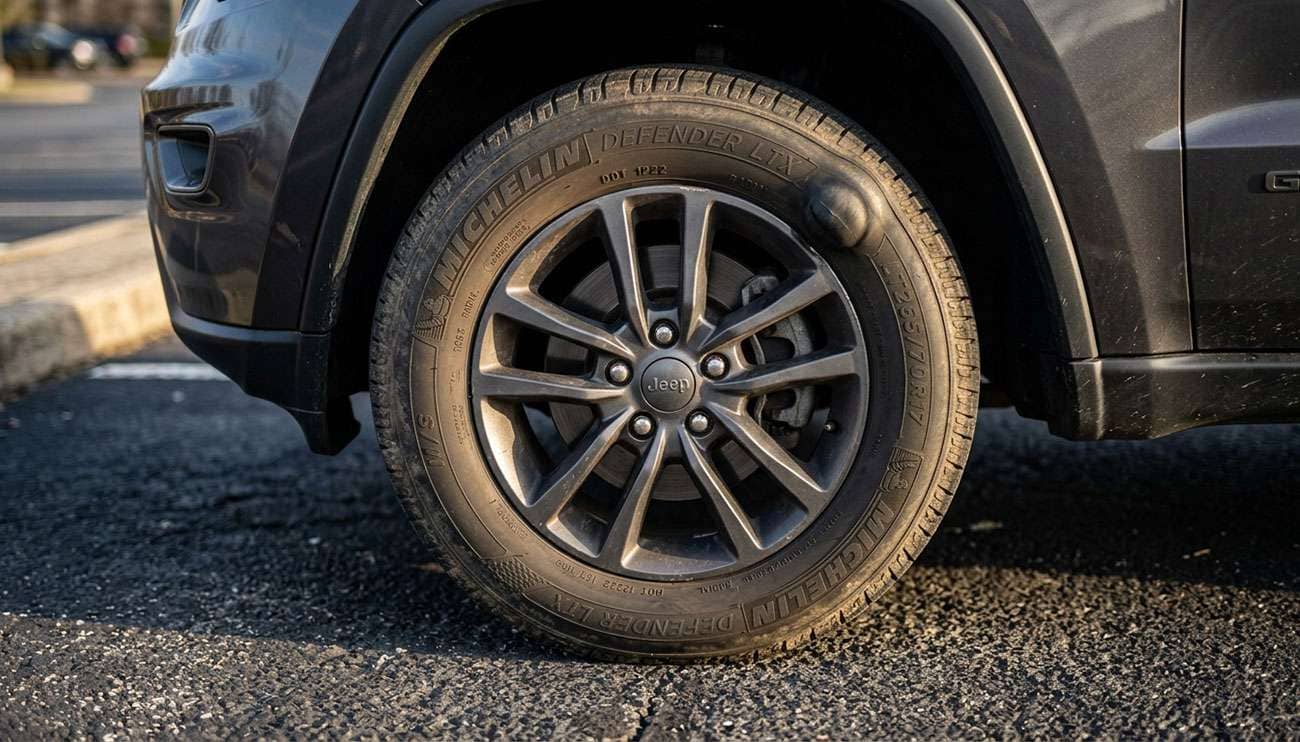
You're heading to your car one morning, glance down at your tires, and something stops you cold — a rounded, soft lump pushing outward from the sidewall. That's a tire sidewall bubble, and the moment you see one, you stop driving on that tire. No exceptions, no "let me just get to the shop." A tire sidewall bubble isn't a cosmetic flaw or something you can keep an eye on for another week. It's a structural failure inside the tire carcass that can trigger a sudden blowout at highway speed, with zero warning.
I've seen too many drivers assume a sidewall bubble is just a visual quirk — or worse, that it can be patched like a nail hole. It can't. Once that bubble forms, the internal damage is done. No patch, plug, or sealant touches it. The only safe answer is replacement. In this guide, I'm going to walk you through exactly what causes a tire sidewall bubble, why it's genuinely dangerous, how to pick the right replacement, and which tires stand out across different driving needs and budgets. Let's get into it.
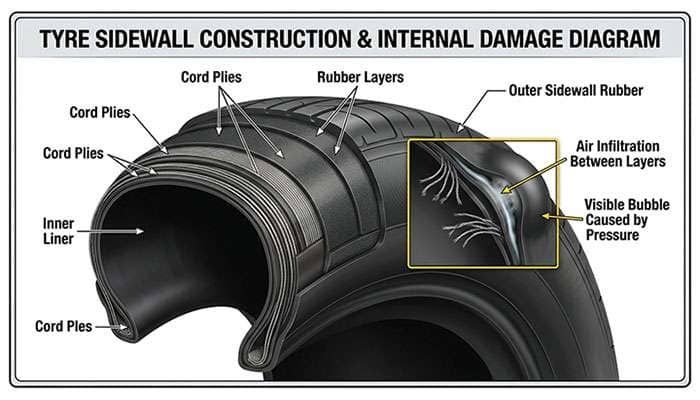
A tire sidewall bubble — sometimes called a bulge in the tire sidewall — forms when the inner liner is breached and pressurized air escapes into the layers of the tire's carcass. Modern radial tires are built from multiple layers of rubber, nylon, steel belts, and cord fabric. When one or more of those inner layers fails, air forces its way through the breach. The outer sidewall rubber — relatively thin and flexible compared to the structural cords beneath it — stretches under that internal pressure and creates the bulge you can see. Picture a bubble forming under a sticker when air gets trapped beneath it. Now imagine the "sticker" is the only thing standing between you and a blowout at 70 mph.
Knowing what you're actually looking at starts with understanding how a tire is built. A standard passenger tire's sidewall runs 6mm to 15mm thick depending on the load rating and application. Inside that sidewall, radial cord plies run perpendicular to the direction of travel, delivering lateral strength and the controlled flex your ride depends on. When an impact — a sharp pothole strike, a hard curb hit — breaks those cords, the tire loses its ability to contain air pressure at that exact point. Air infiltrates the break and begins migrating between the rubber layers.
The bubble itself can range widely in size. A minor one might protrude just a quarter inch. A severe one can push out an inch or more. Here's what matters: size doesn't reliably predict how close the tire is to failure. Even a small bubble represents a serious structural compromise. Your tire's interior runs 32–36 PSI for passenger cars, up to 80 PSI or higher for truck tires. All of that pressure is now pushing against nothing but a thin layer of outer rubber — and that layer can fail instantly under load, heat, or high-speed stress.
The most common mistake drivers make is keep driving on a bubbled tire because "it hasn't blown yet." Every mile you put on a sidewall bubble raises the odds of catastrophic failure. Driving heat accelerates degradation of the rubber around the bubble. Cornering loads and weight shifts hammer the compromised zone with every turn and lane change. The second most common mistake is trying to repair it. A tread puncture can sometimes be safely fixed if it meets strict size and location criteria — a sidewall bubble cannot. Full stop. No reputable shop will touch it, and any shop that offers to is putting your life at risk.
A third mistake worth addressing is blaming underinflation as the root cause. Many drivers assume the bubble formed because their tires were running low. The reality is the opposite — underinflated tires are more vulnerable to impact damage because they flex more than designed, making cord breakage from pothole strikes more likely. But underinflation alone doesn't create the bubble. The bubble only forms after a physical impact breaks the internal structure. Checking your tire pressure regularly is one of the simplest, most effective ways to reduce your exposure to this kind of damage.
When you're assessing the situation, location matters as much as size. A bubble on the outer sidewall is easy to spot. A bubble on the inner sidewall — the side facing the vehicle — is much harder to find without getting under the car or putting it on a lift. That's exactly why a professional inspection is worth every minute if you've hit something hard and aren't sure of the damage. Your tire's load index and speed rating define the structural limits it was engineered to meet. A tire rated at load index 100, for example, is built to safely carry 1,389 lbs with its structure intact. The moment internal cords break, those ratings mean nothing at the damaged location. Your tire is now operating outside every parameter it was designed for.
Here's a quick reference table comparing a healthy tire sidewall versus one with a bubble, across the criteria that matter most for safety assessment:
Assessment Criteria |
Healthy Tire Sidewall |
Tire with Sidewall Bubble |
|---|---|---|
Structural Integrity |
All internal cords intact |
One or more cord plies broken |
Blowout Risk |
Minimal under normal conditions |
High — can fail without warning |
Repairability |
Tread punctures up to 1/4" may qualify |
Not repairable — must be replaced |
Safe to Drive? |
Yes, with proper maintenance |
No — immediate replacement required |
Visible Warning Signs |
Smooth, uniform surface |
Visible outward protrusion on sidewall |
Cause |
N/A — no damage present |
Impact damage, road hazard, pothole strike |
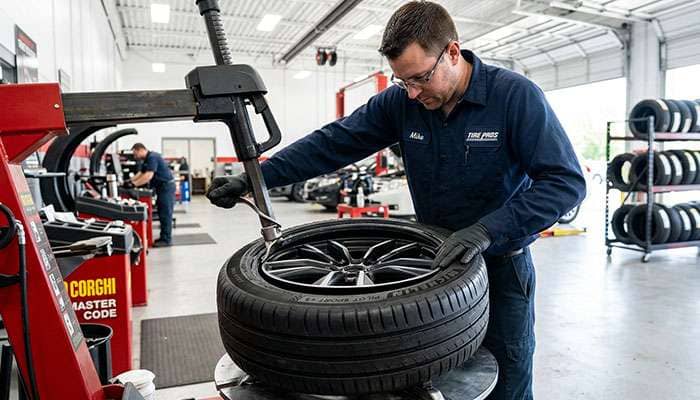
Once you've confirmed a tire sidewall bubble, your next move is getting the right replacement as fast as possible. The process is straightforward when you come in with the right information — but a few key decisions separate a tire that delivers 60,000 miles of solid service from one that disappoints you in six months. Start with your vehicle's tire placard, located on the driver's door jamb or in your owner's manual. It lists the OEM-specified tire size, load rating, and inflation pressure. Those are your baseline requirements. Don't deviate from them without a clear understanding of the trade-offs.
Your vehicle's weight, suspension geometry, and intended use all determine what tire construction belongs on it. A light sedan running 195/65R15 needs an entirely different tire than a three-quarter-ton pickup on 265/70R17. Don't default to the cheapest tire in your size — verify that the load index meets or exceeds your vehicle's requirements. For trucks and SUVs, this is especially critical. A tire with a load index too low for your vehicle can fail under the weight it's being asked to carry — which is a particularly bad outcome when you're already replacing a tire that failed structurally.
Also think about whether you're replacing one tire or all four. On all-wheel-drive vehicles, mismatched tread depths across an axle can stress the differential. Replacing tires in pairs — both fronts or both rears — is the standard recommendation; replacing all four at once is ideal. If budget limits you to one tire, make sure its tread depth closely matches what's already on that axle. Use our Tire Size Comparison Calculator to confirm your new tire's overall diameter matches what's currently on your vehicle.
Where and how you drive should drive your tire selection. If you're primarily logging highway miles in a moderate climate, a grand touring all-season is your best match — long tread life, comfortable ride, confident wet-weather traction. If you live somewhere that gets serious winter weather, a dedicated winter tire paired with an all-season for warmer months will outperform any all-season compromise when temperatures drop below 45°F and snow hits the road. If you push your car on winding roads or take it to a track, a performance or ultra-high-performance tire gives you the grip and response you're after — though typically at the cost of tread life and ride comfort.
If potholes are a regular part of your commute — and in many parts of the US, they're unavoidable — look for tires with reinforced sidewalls or a higher aspect ratio. A 65 or 70 series tire (sidewall height equals 65% or 70% of tread width) absorbs impacts far better than a low-profile 35 or 40 series. That extra sidewall buffer is exactly what reduces your vulnerability to the cord damage that causes sidewall bubbles in the first place.
Budget is a real factor, and there's no reason to pretend otherwise. The good news: the tire market offers genuinely capable options at every price point. That said, certain qualities — cord construction density, rubber compound quality, manufacturing consistency — do improve as you move up in price. Here's the honest breakdown of how the tiers stack up.
Premium tier tires from brands like Michelin, Continental, and Bridgestone deliver the best combination of tread life, wet traction, ride quality, and structural durability. If you're buying one tire and thinking long-term, a premium tire often costs less per mile over its lifespan than a cheaper option that wears out faster. Mid-tier tires from Hankook, Falken, and Cooper offer genuinely solid performance at a lower upfront cost — excellent choices for most everyday drivers. Budget-tier tires from value-focused brands get you back on the road affordably, but check the load and speed ratings carefully and set realistic expectations for tread life and wet-weather confidence compared to tier-one options.
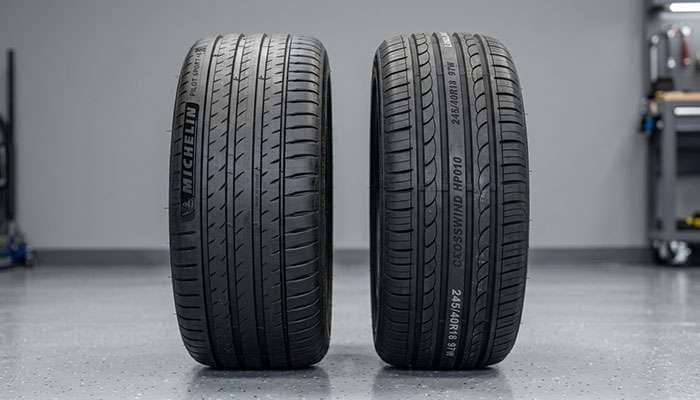
Now that you know what caused your sidewall bubble and what to look for in a replacement, here are my top picks organized by driving category. These are tires I'd put on my own car or recommend to a friend — chosen based on real-world performance data, customer feedback, and genuine value for money. Browse the full selection at Performance Plus Tire to find these and hundreds more options sorted by your exact tire size.
For most daily drivers replacing a bubbled tire, a grand touring all-season is the right call. These tires are engineered to deliver the combination of long tread life, comfortable ride, capable wet-weather traction, and predictable handling that everyday driving demands. The Michelin Defender2 is one of the best-reviewed tires in this class — it carries an 80,000-mile tread warranty and delivers excellent all-weather performance across the board. The Continental TrueContact Tour is another strong choice, consistently praised for fuel efficiency and wet braking distance. If you want to stay mid-range without cutting corners on safety, the Hankook Kinergy PT delivers touring comfort and solid traction at a price typically 20–30% below the premium tier.
Daily commuters should also factor in road noise and ride compliance. You spend a lot of time on these tires, and comfort compounds over thousands of miles. All three options above score well in ride quality testing — which isn't a given even at premium prices.
Replacing a tire on a sport sedan, coupe, or any vehicle where handling response matters means looking at the performance category. The Michelin Pilot Sport 4S is widely regarded as one of the best ultra-high-performance street tires available — exceptional dry grip, genuinely capable wet traction, and steering feel that's communicative and precise. The Pirelli P Zero is another top-shelf option, favored by European performance car manufacturers as original equipment, and available in a wide range of low-profile sizes that fit today's performance platforms.
For performance drivers who want top-tier capability without the top-tier price, the Falken Azenis FK520 punches well above its class. Strong dry and wet grip at a price typically 25–35% below the flagship options — if you drive a performance car on occasionally wet roads and want one tire that handles both confidently, this one deserves serious consideration. Browse our full ultra-high-performance tire selection to find the right fitment for your vehicle.
A tighter budget doesn't mean you have to compromise on safety. Several value-tier tires have earned real respect in independent testing. The Hankook Kinergy ST backs up its low price with a 70,000-mile tread warranty and solid all-season capability. The Kumho Solus TA31 is another strong value pick, scoring well for wet traction and ride comfort. For truck and SUV owners watching costs, the Ironman All Country A/T delivers capable all-terrain performance at an entry-level price that makes replacing all four tires financially realistic.
When you're shopping budget tires, always verify three things: the load index meets or exceeds your vehicle's specification, the speed rating matches your driving conditions, and the tire was manufactured recently. Check the DOT date code — the last four digits indicate the week and year of manufacture, and you want tires no more than one to two years from their build date. If you need help spreading out the cost of a new set, check out our tire financing options — including buy now, pay later plans that let you replace all four tires without a large upfront payment.
Category |
Top Pick |
Runner-Up |
Best Value |
|---|---|---|---|
Daily Commuter |
Michelin Defender2 |
Continental TrueContact Tour |
Hankook Kinergy PT |
Performance Driver |
Michelin Pilot Sport 4S |
Pirelli P Zero |
Falken Azenis FK520 |
Budget |
Hankook Kinergy ST |
Kumho Solus TA31 |
Ironman All Country A/T |
Truck/SUV Daily |
Michelin Defender LTX M/S |
Goodyear Wrangler SR-A |
Ironman All Country HT |
A tire sidewall bubble is one of the clearest safety signals your vehicle will ever send you — and it demands an immediate response. There's no gray area: a bubble in the tire sidewall means the internal structure is broken, the tire cannot be repaired, and driving on it puts you and everyone around you at real risk of a sudden blowout. The cause is almost always impact damage — a pothole, a curb strike, road debris — and the fix is always the same: replace it with the right tire for your vehicle and the way you drive.
The good news is getting back on the road safely doesn't have to be complicated or expensive. Whether you need a premium long-life touring tire, an ultra-high-performance option for a sport vehicle, or a budget-friendly replacement that still meets your safety requirements, there are excellent options at every price point. Take the time to match your replacement to your vehicle's specifications, your climate, and your driving style — and you'll end up with a tire that earns your trust for years to come.
Ready to find the right replacement? Start with your tire size at Performance Plus Tire. We carry thousands of options across all major brands and categories, ship fast, and our team is ready to help you find the right match. Don't sit on a sidewall bubble — get it handled today.
Here's what every driver needs to remember about tire sidewall bubbles:
• A sidewall bubble is always a safety emergency: It means the internal cord structure of your tire has been compromised by impact damage, and the tire can blow out suddenly without any additional warning.
• There is no repair for a sidewall bubble: Unlike a tread puncture, a bubble in the tire sidewall cannot be patched, plugged, or sealed. The only solution is immediate replacement with a properly rated tire.
• Driving on a bubbled tire multiplies the risk: Heat, load, and cornering forces all accelerate failure of the remaining rubber. Every mile driven on a sidewall bubble increases the likelihood of a blowout.
• The right replacement depends on your vehicle and driving needs: Match the load index and speed rating to your OEM specification, then choose the performance tier that fits your climate, driving style, and budget.
• Prevention starts with proper inflation and road awareness: Keeping tires at the correct PSI reduces flex on impact, lowering the risk of cord damage from potholes and road hazards that cause sidewall bubbles in the first place.
No — driving on a tire with a sidewall bubble is not safe under any circumstances. That bubble tells you the internal cord plies have broken and your tire's structural integrity is gone at that point. The only thing containing your tire pressure there is the thin outer rubber of the sidewall, and it can fail without warning at any speed. The moment you spot a sidewall bubble, stop driving on that tire, mount your spare, and arrange for a replacement. Even a short, slow drive to a nearby tire shop carries real risk if the bubble is pronounced.
A tire sidewall bubble forms when an impact — a pothole strike, a hard curb hit, a collision with road debris — breaks one or more of the internal cord plies inside the tire's sidewall. Once those cords break, air from inside the tire migrates through the breached inner liner and becomes trapped between the layers of the tire carcass. That pressurized air pushes outward against the outer sidewall rubber, creating the visible bubble. Underinflation increases your vulnerability to this type of damage because an underinflated tire flexes more on impact, putting more stress on the internal cords with every hit.
No. A tire sidewall bubble cannot be repaired — period. A tread puncture can sometimes be safely patched if it meets specific size and location criteria, but a sidewall bubble involves broken structural cords that cannot be replaced or reinforced by any repair method. No patch, plug, sealant, or temporary fix restores the tire's ability to safely contain pressure. Any shop that offers to repair a sidewall bubble is giving you dangerous advice. The tire must be replaced.
There's no predictable timeline — and that's exactly the problem. A sidewall bubble can fail in the next mile or hold for a few more days, but neither outcome changes the fact that failure can happen suddenly and without warning. Driving heat, cornering stress, load shifts, and road surface variations all affect the stability of the remaining rubber. Blowout risk is highest at highway speeds, where a sudden failure can cause loss of vehicle control in an instant. The answer is always the same: don't drive on a bubbled tire at all.
Not necessarily — it depends on the age and condition of your remaining tires. If your tires are relatively new and the other three show good tread depth and no damage, replacing just the affected tire or the pair on that axle may be all you need. But if your tires are several years old or showing significant wear, replacing all four is often the smarter and more economical decision over the long run. On all-wheel-drive vehicles, significant tread depth differences between tires can stress the differential, so matching tread depths on all four matters. A tire professional can assess your specific situation and give you a clear recommendation.



