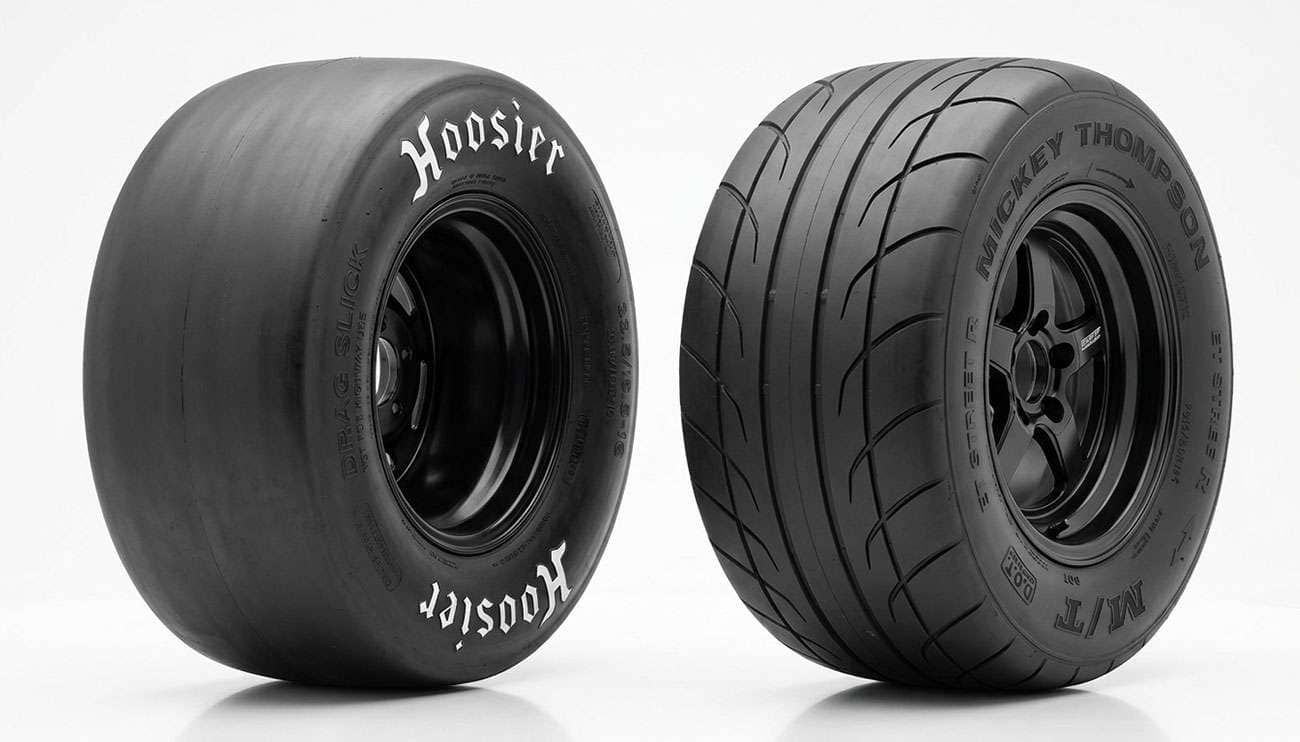
I've been standing in the staging lanes for the better part of fifty years, and there's one argument that never dies down there. A fella rolls up, pops the trunk, and there's the debate sitting right next to the cooler: should I be running drag slicks or drag radials? Half the guys swear by the old smoke-the-hides slicks their daddy ran. The other half tell you radials are the only thing that makes sense on a modern car. Both of them are a little bit right and a little bit wrong.
Here's the truth nobody wants to hear over the loudspeaker: there is no single winner. The faster tire is the one that fits your car, your power, and how you get yourself to the track on Saturday morning. Let me walk you through it the way I'd explain it leaning on your fender, and by the end you'll know exactly which one belongs under your back end.
People throw these words around like they all mean the same thing. They don't. The real difference comes down to how the tire is built underneath the rubber — the cords and belts that give the carcass its shape. Once you understand the construction, everything else about how the tire behaves starts to make sense. If you want the full story on how these things come out of the mold, we wrote up how drag racing tires are made, but here's the short version.
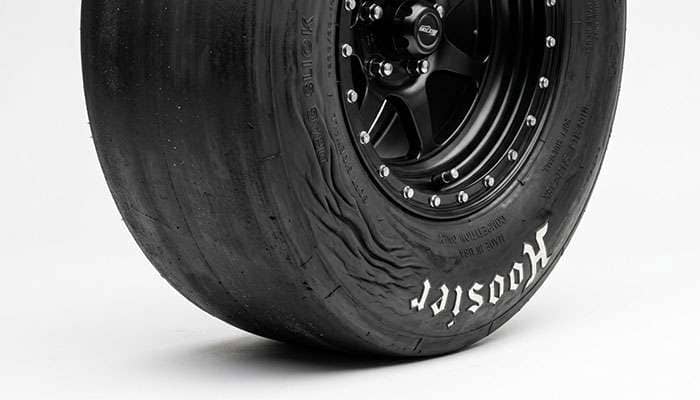
This is the original article. A bias-ply slick has its cords running diagonally across the tire, layer over layer, with a soft, two-ply sidewall designed to wrinkle on the launch. That wrinkle is the magic — when you dump the clutch or hit the trans-brake, the sidewall folds and absorbs the shock, then springs back and plants the tread. Slicks have no tread pattern at all, just a big smooth contact patch of soft rubber. They bite like nothing else, but they are not street tires and they never will be.
A radial slick is still a full racing slick with no real tread, but the cords run straight across from bead to bead with belts on top, just like a modern street tire. That gives it a stiffer, more controlled sidewall — less of that big wrinkle, more stability at the top end. The bracket racing crowd loves these because they're consistent pass after pass. The construction debate here is the same one that's been going on with street cars for decades, which we covered in our piece on radial vs. bias-ply tires for classic cars.
This is the tire that changed the game for the weekend warrior. A drag radial looks like a regular street tire — it's got a real tread pattern and it's DOT stamped — but it's built on a soft, sticky compound with a slightly softer sidewall. The idea is simple: you get traction close to a slick, but you can legally drive the car to the track and back home. They wear faster than a normal tire and they're not meant for daily duty, but they'll get you there. We put together a full drag radials street and strip buyer's guide if you want to go deeper on that side.
Alright, the question you actually came here for. On a well-prepped track, a full slick will almost always give you a better sixty-foot time and a quicker ET — especially if you're making the kind of power that demands every bit of contact patch you can find. The soft compound and that wrinkling sidewall just hook harder off the line. That's been true since before I had gray in my beard.
But — and it's a big but — drag radials have a trick of their own. Because the radial carcass has less rolling resistance and less flex at speed, a lot of racers actually pick up more miles per hour at the top end and cross the stripe faster overall once they learn to launch them. The catch is the launch itself. A radial punishes a sloppy launch; you've got to ease into it and let the tire load up instead of shocking it. Get the tune right and a radial car can flat-out fly. Get it wrong and you'll just light 'em up.
So which is faster? Slicks usually win the sixty-foot. Radials often win the trap speed. The guy with the best launch tune and the most seat time usually wins the round, no matter what's bolted on. I've watched more races decided by the driver than the tire than I can count.
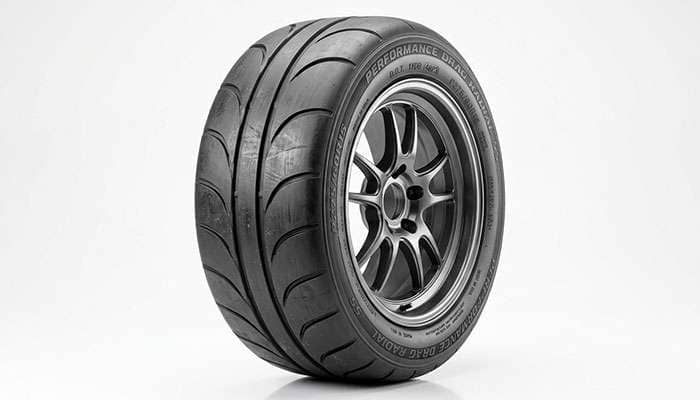
This is where the decision gets made for most folks, and it's got nothing to do with ET. A full slick has no tread and a paper-thin, soft sidewall. Catch a puddle on the way home and you'll hydroplane into the next county. They are not legal for the street, period. If you're running slicks, you need a trailer or a truck and a way to haul the car to the strip.
A DOT drag radial, on the other hand, lets you drive the car to the track, make your passes, and drive home — carefully, and not in the rain. For the guy with one car, one garage, and no trailer, that flexibility is worth more than a tenth on the clock. If your build is a true street-strip machine that sees real road miles, the radial wins before the light ever turns green. And if you're wondering how long those radials hold up to that double duty, we dug into exactly that in how many miles Mickey Thompson ET Street drag radials last.
Here's something the magazines don't always tell you. Slicks and radials want completely different track prep, and they react completely differently when the track isn't perfect. On a marginal surface that isn't well prepped, a bias-ply slick will usually still find bite and hook up. A drag radial on that same poor track will spin and shake — and that tire shake is no joke. It can rattle your teeth loose and, worse, break driveline parts. I've seen radials snap axles and grenade rear gears on a track that a set of slicks would've walked away from.
The flip side is that on a really well-prepped, sticky surface, the radial comes alive and often edges out the slick. So part of your answer depends on where you race. If your local track gets a glass-smooth, freshly-prepped surface, radials are a great bet. If you're running a rougher bullring on a hot afternoon, the forgiveness of a slick might serve you better. Either way, the right rim matters as much as the rubber — a proper drag wheel keeps that tire planted, which is the whole point of drag racing wheels in the first place.
Slicks are a consumable. That soft compound gives you incredible grip, but it doesn't last — slicks wear quickly, they're prone to punctures because of their thin construction, and they need to be warmed up with a proper burnout before every run. If you race often, you'll be buying slicks often. Budget for it.
Drag radials generally give you more passes for your money and survive the trip to and from the track. They still heat-cycle and lose their edge over time like any soft tire, but they're more forgiving of the abuse. If you're curious how compound life is measured on the sticker itself, our guide on how to read tire treadwear ratings explains why these soft race compounds wear the way they do. When you total up tire cost over a season, the radial often comes out cheaper per run even if the sticker price is similar.
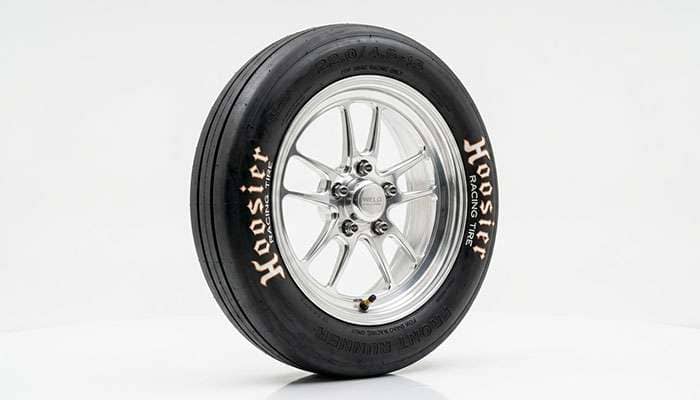
Whatever you bolt on the back, the front of the car matters too. Drag racing is all about getting from point A to point B as fast as you can, so out front a lot of racers run a skinny, lightweight tire called a front runner. The narrow tread cuts rolling resistance and takes weight off the nose, which helps the car transfer weight to the rear and hook harder. Front runners come in both bias-ply and radial flavors, and they pair with either slicks or drag radials out back. It's a small detail that makes a real difference at the stripe.
Strip away all the arguing and it comes down to three questions: How do you get to the track? How good is your launch? And what does your local surface look like? Here's how I'd lay it out for a customer standing at my counter.
Feature |
Drag Slicks |
Drag Radials |
|---|---|---|
Best 60-foot launch |
Usually quicker off the line |
Needs a dialed launch tune |
Top-end stability / MPH |
Can get loose at speed |
More stable, often higher trap |
Street legal |
No — trailer it |
Yes — DOT, drive to the track |
Marginal / rough track |
More forgiving, still bites |
Can shake and spin |
Durability / passes |
Wear fast, more fragile |
Last longer, tougher |
Best for |
Dedicated race car, max grip |
Street-strip cars, one-car garage |
If you've got a trailered, dedicated drag car making big power and you want the absolute quickest sixty-foot, run slicks. If you've got a street-strip car you drive to the track, or your local surface isn't always perfect, run drag radials. It's that simple ninety percent of the time.
We stock both sides of this fight, so here's what I'd actually pull off the shelf for you.
On the slick side: the M&H Cheater Slick 26/10.50R15 is a proven hooker for the dedicated guy, and the Mickey Thompson ET Drag 28x9.00-15 is about as classic a bias-ply slick as you'll find. For the smaller-tire bracket crowd, the M&H Rear Drag Race Slick 8.0/22-13 RWL is a workhorse.
On the drag radial side: the Mickey Thompson ET Street R 275/50R15 is the street-strip benchmark, the Mickey Thompson ET Street Radial Pro 275/60R15 steps it up for higher-power cars, and the Atturo AZ850 DR Drag Radial 285/30R20 covers the modern big-wheel builds. Running a consistent bracket program? The Mickey Thompson Pro Bracket Radial 29.5/10.50R15 is built for repeatable passes. And don't forget a matched skinny up front like the M&H Bias Ply Front Runner 3.5/22-15.
Not sure which brand to trust? We laid out our take on the strongest names in our roundup of the 5 best drag racing wheel brands in 2026, and our Fitment Team is always a phone call away to match the right tire to your exact car and wheel width.
Drag slicks versus drag radials isn't a question of which tire is better — it's a question of which tire is right for your car and your situation. Slicks give you the hardest launch and the maximum grip, but you'll trailer the car and replace them often. Drag radials let you drive to the track, hold up to more abuse, and reward a clean launch with serious trap speed. Pick the one that matches how you race, get your launch dialed in, and the clock will take care of itself. Come see us at Performance Plus Tire and we'll set you up right.
On a well-prepped track, full slicks usually deliver a quicker sixty-foot and a faster launch because of their soft compound and wrinkling sidewall. However, drag radials often pick up more trap speed at the top end and can post a quicker overall ET once the launch is properly tuned. The faster tire ultimately depends on your car, your power, and your launch.
No. Full drag slicks have no tread and a very soft, thin sidewall, so they hydroplane instantly in any water and are not legal or safe for the street. You need to trailer the car to the track. DOT drag radials, by contrast, are street legal and can be driven to and from the track, though not in the rain.
Drag radials rely on a well-prepped, sticky surface. On a marginal or poorly prepped track they can lose traction and develop severe tire shake, which can damage driveline parts like axles and rear gears. Bias-ply slicks tend to be more forgiving and will often still bite on a rough surface.
Drag radials generally last longer and survive more passes than full slicks. Slicks use a very soft compound and thin construction that wears quickly and is prone to punctures, so frequent racers replace them often. Radials are tougher and usually cost less per run over a season.
A front runner is a narrow, lightweight front tire that reduces rolling resistance and takes weight off the nose to help weight transfer and traction. You can run front runners with either slicks or drag radials out back. They aren't strictly required, but they're a common and worthwhile upgrade on a dedicated drag car.
Reviewed by Hank Feldman, Founder, Performance Plus Tire