
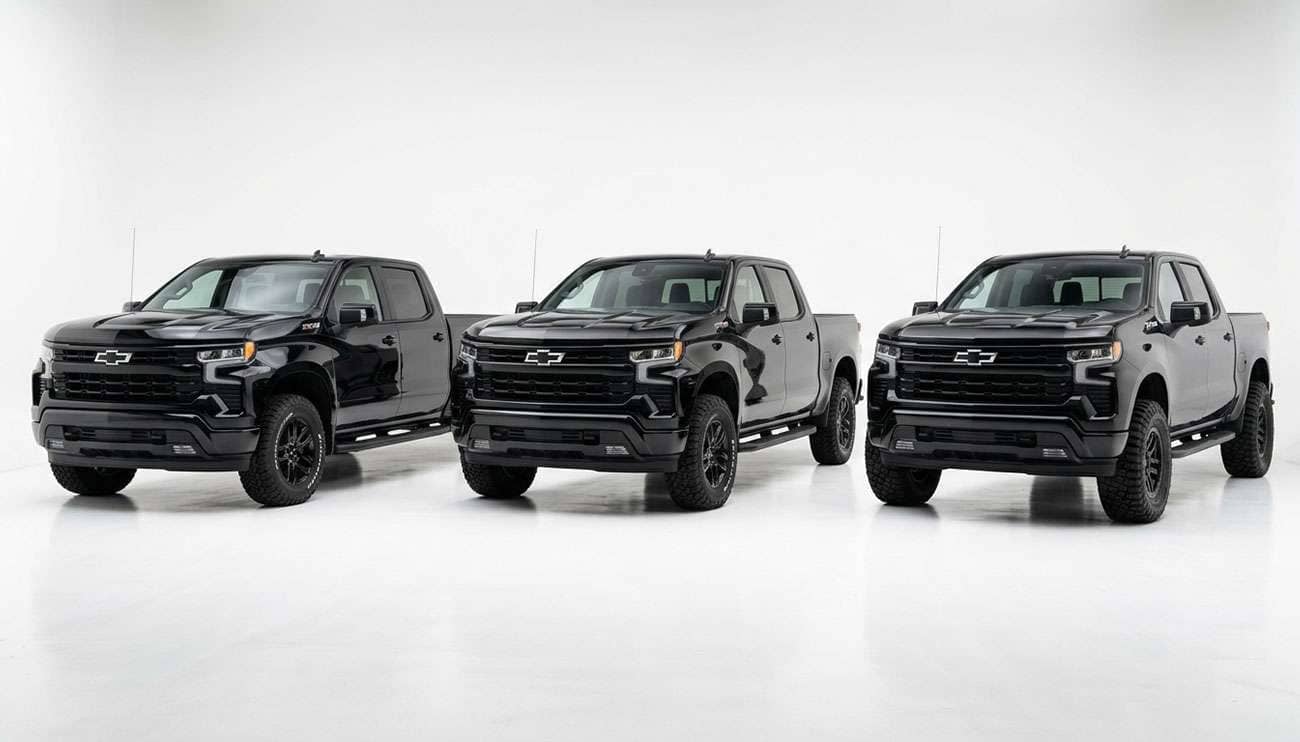
Every truck owner hits this moment. You're scrolling through photos of trucks with aggressive tires, the wheel wells look packed with rubber, and you start wondering: how big can I go? Can I fit 33s? What about 35s? Do I need a lift kit, or can I just bolt them on and go?
I've been answering this question for decades, and the honest answer hasn't changed: it depends on your truck, your wheels, and how much rubbing you're willing to live with. But there are some reliable rules of thumb that work across virtually every popular truck and SUV platform. Let me walk you through what 31s, 33s, and 35s actually look like, what fits on stock suspension, and what happens when you push past what your truck was designed for.
Before we compare sizes, let's clear up the math. When someone says "33-inch tires," they're talking about the overall diameter of the tire — from the ground to the top of the tread when mounted and inflated. But tires are sold in two different sizing systems, and that confuses a lot of people.
The old-school system is straightforward: 33x12.50R15 means the tire is 33 inches tall, 12.50 inches wide, and fits a 15-inch wheel. Easy. The metric system is where it gets tricky: 285/75R16 doesn't tell you the overall diameter directly. You have to calculate it — and a 285/75R16 is actually about 32.8 inches tall, which makes it a "33" in real-world terms.
Here's a quick conversion chart for the most common sizes:
Inch Size |
Metric Equivalent |
Actual Diameter |
|---|---|---|
31" |
265/70R17 or 265/75R16 |
30.6"–31.6" |
33" |
285/75R16 or 285/70R17 |
32.7"–32.8" |
35" |
315/70R17 or 35x12.50R17 |
34.4"–35.0" |
The numbers don't always land exactly on the inch mark. A "33-inch" tire is often 32.7 or 32.8 inches. A "35" might be 34.4. Don't get hung up on exact numbers — focus on the category. The real differences between these three sizes are in how they look, how they affect your truck, and whether they physically fit.
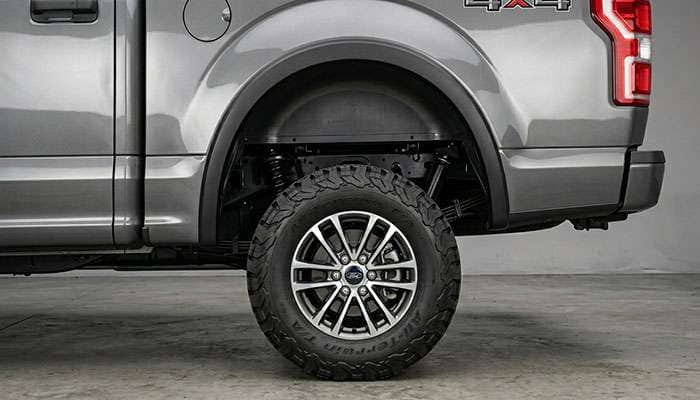
31-inch tires are the gateway drug of the truck tire world. They're close enough to stock size on most trucks that they bolt right on with zero modifications — no lift, no leveling kit, no fender trimming, no rubbing. For a lot of truck owners, 31s are already on the truck from the factory. A stock Tacoma, Ranger, Colorado, or base-model F-150 typically comes with tires in the 30-32 inch range.
The advantage of 31s is that everything stays stock. Your speedometer stays accurate. Your gear ratios stay matched. Your fuel economy barely changes. Your brakes are still sized correctly for the rotating mass. You give up nothing and gain a modest visual upgrade — slightly taller sidewall, slightly more aggressive stance, and access to the full range of all-terrain tire options.
You want a tougher look without any modifications. Your truck is a daily driver and you don't want to sacrifice fuel economy or ride quality. You're on a budget — 31-inch tires are the cheapest of the three sizes. You drive a midsize truck (Tacoma, Ranger, Colorado) where bigger tires would look proportionally wrong.
33-inch tires are where things get interesting. This is the size that transforms a truck's appearance from "nice commuter" to "this guy actually goes places." The tire fills the wheel well noticeably more than stock, the stance gets wider, and the ground clearance increases by about an inch. It's a real visual upgrade that changes the character of the truck.
Here's the critical question: can you fit 33s without a lift? On most full-size trucks — F-150, Silverado 1500, Ram 1500, Tundra — the answer is usually yes, with some caveats. Many of these trucks come from the factory with tires in the 31-32 inch range, so a jump to 33 inches is only 1-2 inches of additional diameter. That small increase usually fits within the stock fender well without rubbing at full steering lock or full suspension compression.
The caveats: wheel width and offset matter enormously. A 33x12.50 tire on a wheel with aggressive offset (one that pushes the tire outward) may rub the fender at full lock even on a stock-height truck. The safest approach for a no-lift 33-inch setup is to stick with wheels that have close-to-stock offset and a tire width of 12.50 inches or less. That combination clears most full-size trucks without issues.
You want a meaningful visual transformation without a lift kit. You drive a full-size truck and want the most aggressive look you can get on stock suspension. You're willing to accept a minor speedometer error (typically 3-4% fast — your actual speed is slightly higher than displayed). You want access to the widest selection of aggressive off-road tires in the market.
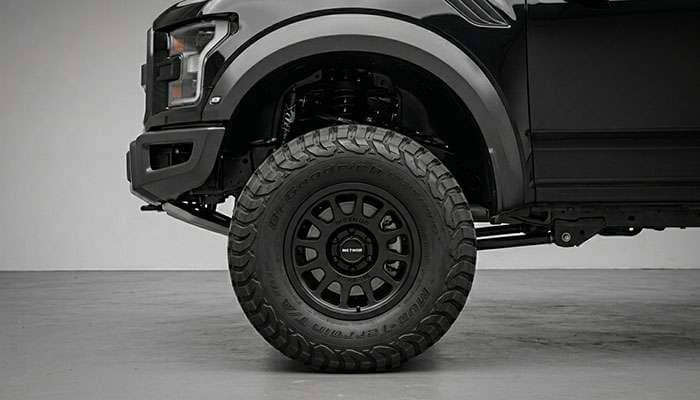
35-inch tires are where most trucks cross the line from "bolt-on upgrade" to "you're going to need to modify some things." A 35 is typically 3-4 inches taller than stock on a full-size truck. That extra diameter needs room — room in the fender well, room behind the bumper at full steering lock, room for the suspension to compress over bumps without the tire contacting the frame or control arms.
Can you physically mount 35s on a stock truck? On some full-size trucks, technically yes — they'll bolt on and you can roll out of the driveway. But the first time you hit a bump while turning, you'll hear rubber grinding against sheet metal or plastic. Full-lock turning in a parking lot will rub. Loading the truck bed with weight compresses the rear suspension and closes the gap further. It's a frustrating way to live with a truck you drive every day.
The right way to run 35s is with either a leveling kit (front only, 2-3 inches) or a proper lift kit (2.5-4 inches all around). A leveling kit addresses the factory rake — most trucks sit lower in the front than the rear from the factory — and gives you just enough room for 35s to clear up front. A lift kit provides clearance all around and is the better solution if you plan to load the bed or go off-road where the suspension compresses fully.
You're building a dedicated off-road truck or overlander where maximum ground clearance and tire footprint matter. You're prepared to invest in a leveling or lift kit. You understand that 35s will noticeably reduce fuel economy (2-4 MPG), accelerate drivetrain wear, and may require regearing for acceptable performance. You want the truck to command attention in every parking lot it enters.
Here are the general rules I follow for the most popular trucks and SUVs. These assume stock suspension, stock wheels or aftermarket wheels with close-to-stock offset, and no fender modifications:
Vehicle |
Stock Tire Size |
Max Without Lift |
With Leveling Kit |
|---|---|---|---|
Ford F-150 (2015+) |
265/70R17 (31.6") |
33" (285/70R17) |
35" (315/70R17) |
Chevy Silverado 1500 (2019+) |
265/65R18 (31.6") |
33" (275/70R18) |
35" (295/70R18) |
Ram 1500 (2019+) |
275/55R20 (31.9") |
33" (285/65R20) |
35" (305/65R20) |
Toyota Tundra (2022+) |
265/60R20 (32.5") |
33" (275/65R20) |
35" (295/65R20) |
Jeep Wrangler JL |
245/75R17 (31.5") |
33" (285/70R17) |
35" (315/70R17) |
Toyota Tacoma (2016+) |
265/70R16 (30.6") |
32" (265/75R16) |
33" (285/75R16) |
Ford Bronco (2021+) |
255/70R18 (32.1") |
33" (285/70R17) |
35" (315/70R17) |
These are guidelines, not guarantees. Wheel offset, tire width, and individual vehicle tolerances can change what fits. If you're pushing the limits, always test-fit before committing. Call us at 888-926-2689 — we've fitted these trucks hundreds of times and can tell you exactly what clears on your specific year, trim, and wheel combination.
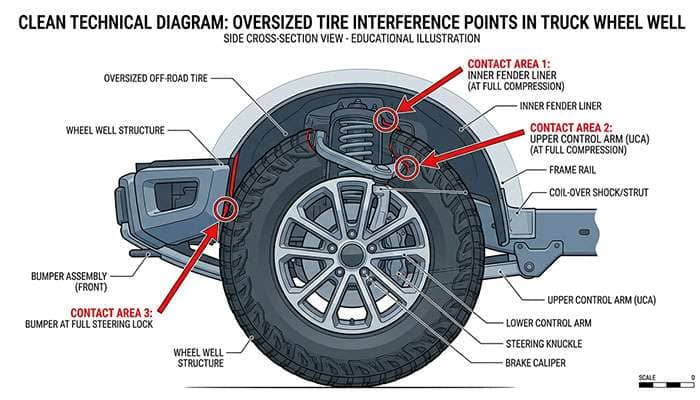
Running tires that are too big for your truck's suspension and fender clearance creates real problems — not just cosmetic annoyances:
Fender rubbing happens at full steering lock and over bumps. The tire contacts the inner fender liner, the fender flare, or the bumper. It wears through plastic liners quickly and can damage sheet metal. It's also an unnerving sound when you're parking in a tight spot.
Suspension contact is more serious. When the suspension compresses fully — hitting a pothole, loading the bed, or flexing off-road — an oversized tire can contact the upper control arm, sway bar, or frame. This damages components and can create a dangerous loss of control if the tire binds against the suspension.
Speedometer error increases with tire size. A 33-inch tire on a truck calibrated for 31s reads about 3-4% fast — your speedo says 60 but you're actually doing 62. At 35 inches, the error grows to 6-8%. Your odometer also underreports mileage, which affects resale value and maintenance schedules.
Drivetrain stress compounds over time. Larger, heavier tires increase the load on your transmission, differential, and axle shafts. The engine has to work harder to turn them, which accelerates wear on U-joints, CV joints, and wheel bearings. Many truck owners who jump to 35s eventually regear their differentials (typically from 3.21 or 3.55 to 4.10 or 4.56) to restore acceleration and reduce drivetrain strain.
A leveling kit is the most popular modification for running bigger tires because it's simple, affordable, and effective. Most trucks come from the factory with a "rake" — the front sits 1-2 inches lower than the rear to compensate for bed loads. A leveling kit raises the front to match the rear, which gives you 1.5-2.5 inches of additional front fender clearance.
That extra clearance is usually enough to go from 33s to 35s on most full-size trucks. A basic leveling kit costs $100-$400 for parts and $200-$400 for installation — a fraction of a full lift kit's $1,500-$4,000+ price tag. It doesn't change the truck's ride quality significantly, doesn't require new shocks in most cases, and doesn't void your warranty on most platforms.
If you want 35s but don't want to invest in a full lift, a leveling kit plus the right wheel offset is the move. Browse our truck tire selection or build a complete wheel and tire package matched to your truck.
On most full-size trucks (F-150, Silverado 1500, Ram 1500, Tundra), yes. These trucks typically come with 31-32 inch tires from the factory, so a jump to 33 inches is only 1-2 inches of additional diameter. That usually fits within the stock fender well without rubbing, provided you use wheels with close-to-stock offset. On midsize trucks (Tacoma, Ranger, Colorado), 33s are tighter — you may need minor trimming of the fender liner or a small leveling kit. Always confirm with your specific year, model, and wheel specs before ordering.
Yes. Bigger tires are heavier, have more rolling resistance, and change the effective gear ratio — all of which reduce fuel economy. Going from 31 to 33 inch tires typically costs 1-2 MPG. Going from 31 to 35 inch tires can cost 2-4 MPG. On a truck driven 15,000 miles per year at $3.50 per gallon, that's roughly $130-$275 per year for 33s and $290-$650 per year for 35s in additional fuel cost. The exact impact depends on your truck, your driving style, and the specific tires you choose.
It depends on your current gear ratio and your engine. Trucks with 3.21 or 3.31 gears will feel noticeably sluggish with 35-inch tires — the engine has to rev higher to maintain highway speed, which reduces fuel economy and makes the truck feel underpowered. Regearing to 4.10 or 4.56 ratios restores the original acceleration feel and improves drivability. Trucks that already have 3.73 or higher ratios from the factory handle 35s better without regearing, though many owners still prefer to go to 4.10s. Regearing costs $1,500-$2,500 per axle installed, so factor that into your 35-inch tire budget.
A leveling kit raises the front of your truck by 1.5-2.5 inches to eliminate the factory rake (where the front sits lower than the rear). This gives you additional fender clearance at the front wheels, which is typically the tightest fitment point for larger tires. For 33-inch tires on most full-size trucks, a leveling kit is usually not necessary. For 35-inch tires, a leveling kit is the minimum modification needed to prevent rubbing on most platforms. Leveling kits cost $100-$400 for parts plus $200-$400 for professional installation.
Installing larger tires alone does not automatically void your warranty. Under the Magnuson-Moss Warranty Act, a dealer must prove that the modification caused the specific failure being claimed. If you install 33-inch tires and your air conditioning compressor fails, the dealer cannot deny that warranty claim. If you install 35-inch tires and your transmission fails prematurely due to the increased load, the dealer has a legitimate argument. The practical advice: staying at 33 inches or below on a stock truck is unlikely to create warranty issues. Jumping to 35s with a lift kit introduces more risk, especially for drivetrain-related claims.
For full-size trucks, 33-inch tires offer the best balance of off-road capability, visual impact, and compatibility with stock suspension. They provide about an inch of additional ground clearance over stock, fit without modifications on most platforms, and are available in the widest range of all-terrain and mud-terrain tread patterns. For midsize trucks, 31-32 inch tires are the sweet spot for the same reasons. Going to 33s on a midsize usually requires at least a leveling kit and possibly fender trimming.



