
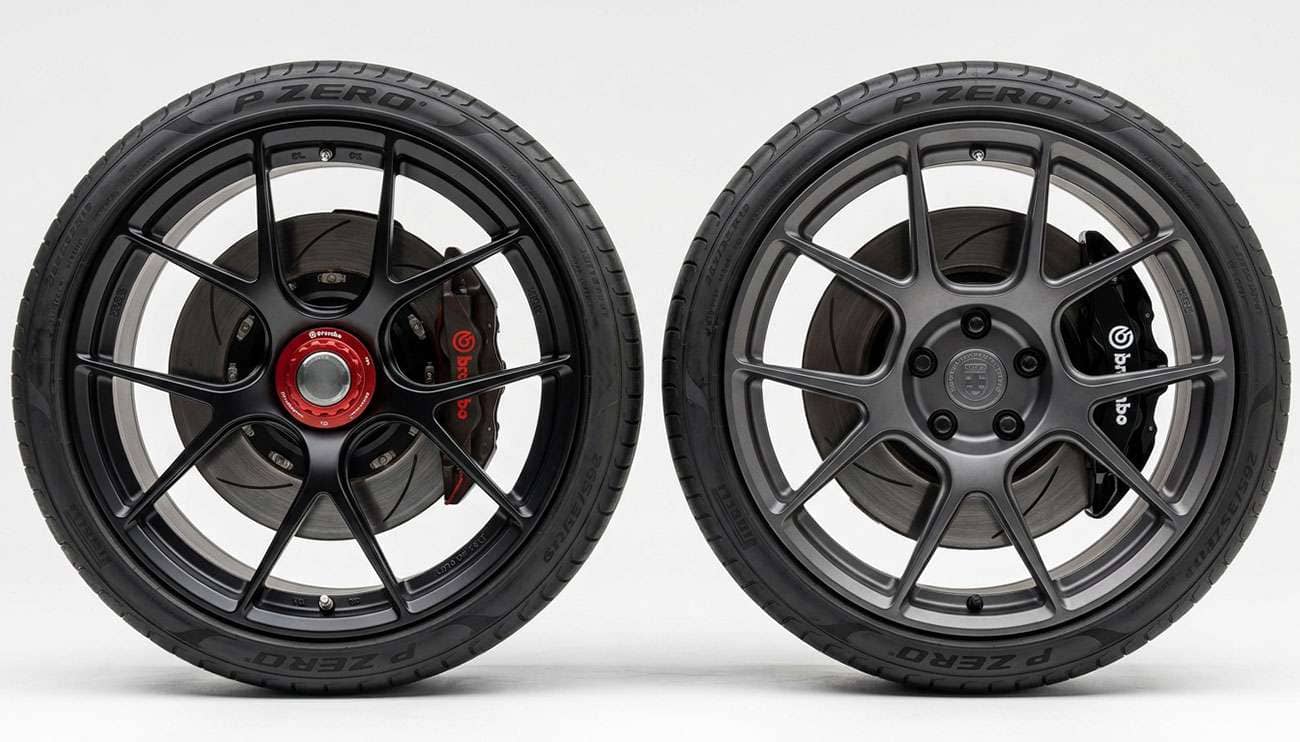
A centerlock wheel is held on by one large central nut. A lug-mount wheel uses a ring of four, five, or six lug nuts or bolts — the setup on nearly every car you will ever own. Centerlock comes straight from racing, where a single nut means a sub-two-second wheel change in the pits. But for a street car, lug-mount wins on cost, serviceability, and the safety margin of multiple fasteners. The popular idea that centerlock is lighter is mostly a myth. Here is the engineering, number by number, so you can decide what belongs on your car.
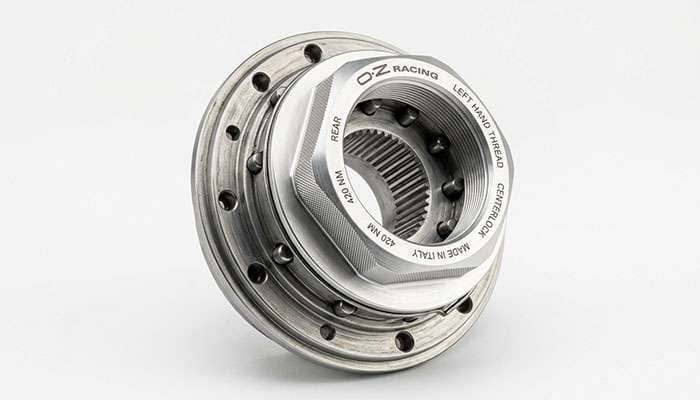
A centerlock wheel mounts to the hub with a single threaded nut at the center instead of a ring of lug nuts. The wheel locates on a tapered, splined hub, and on most modern designs a set of drive pins on the hub engages matching holes in the back of the wheel to transmit torque. The big central nut clamps everything together. Because all the clamping force runs through that one fastener, it has to be torqued to a much higher figure than any single lug nut.
The idea is older than you might think. It traces back to the Rudge-Whitworth quick-release hubs of the early 1900s, patented by 1908 and used on the wire wheels of early Grand Prix cars. Those were the original knock-off hubs, fastened with a winged nut you tapped tight with a soft mallet. United States and West German safety rules in the late 1960s ended the winged projections on road cars, but the splined-hub concept carried straight into modern motorsport. Formula 1, sports car racing, and NASCAR's seventh-generation Cup car all run a form of centerlock today. Porsche is the most familiar road-car example, offering it on the 911 and select models. The classic knock-off lives on in lowrider and show culture, which we cover in our knock-off wheels guide.
A lug-mount wheel is the standard: the wheel bolts to the hub with four, five, six, or eight lug nuts or bolts arranged in a circle. The number and spacing of those fasteners is the bolt pattern, and matching it correctly is the first rule of fitment. Most lug-mount wheels are also hub-centric, meaning a machined center bore seats precisely on the hub flange so the lugs handle clamping while the hub carries the load and centers the wheel. We break that distinction down in our guide to hub-centric vs. lug-centric wheels.
The advantage of spreading the load across multiple fasteners is redundancy and serviceability. Each lug nut needs a modest, manageable torque — typically 80 to 150 lb-ft depending on the vehicle — and you can tighten it with an ordinary impact wrench and a torque wrench. Any tire shop on the planet can service a lug-mount wheel without specialty tooling. Getting that torque right still matters, which is why we wrote a full walkthrough on how to torque lug nuts perfectly.
Here is the honest comparison across the metrics that actually matter to a car owner. Centerlock wins clearly on exactly one thing — the speed of a wheel change — and that one thing is what racing cares about most.
Feature |
Centerlock |
Lug-Mount |
|---|---|---|
Fasteners |
One central nut |
Four to eight lug nuts or bolts |
Wheel-change speed |
Fastest — one nut, pit-stop quick |
Slower — multiple nuts per wheel |
Torque required |
Very high (400+ lb-ft on Porsche) |
Moderate (80-150 lb-ft per lug) |
Tools |
Specialty torque gun or long breaker bar |
Standard impact and torque wrench |
Weight |
Often equal or heavier |
Usually lighter for the same wheel |
Safety redundancy |
Single fastener, no redundancy |
Multiple fasteners share the load |
Cost |
Two to three times more |
Standard pricing |
Yes, and this is the whole reason they exist. With the right gun, removing and replacing a single nut is dramatically faster than working five separate lug nuts. That is why a modern Formula 1 crew can swap all four corners in under two seconds, and why sports car racing and NASCAR adopted the system. On a race weekend where tire changes happen constantly, that time advantage is enormous. On a street car that sees a wheel-off service maybe once or twice a year, it buys you nothing.
Usually not. The pitch is that one central nut means less rotating mass than several lug nuts spinning out near the bolt circle. In practice, the centerlock nut and its mechanism have to be much stronger and thicker, and the added mass tends to cancel the savings. Porsche's factory centerlock wheels have measured only about 200 grams lighter than the five-lug versions they replace, and many aftermarket centerlock wheels actually come out heavier than their lug-mount equivalents. If you want a real, measurable weight reduction, it comes from wheel construction, not the fastener — a point we cover in detail in our look at whether unsprung weight matters.
There is a small benefit here. A centerlock hub can be more compact at the center than a multi-lug flange, which can free up a little room for a larger brake disc. It is a real advantage on a purpose-built race car packaging the biggest possible rotor, but it is a minor factor on a street build. If brake clearance is your concern, the bigger variables are wheel diameter, spoke design, and offset — see our big brake kit wheel clearance guide.
This is where centerlock gets demanding. On a lug-mount wheel, clamping force is shared across multiple fasteners, so each one needs only a moderate torque. On a centerlock wheel, that entire clamping job lands on one nut, so the torque figure is enormous. Porsche specifies over 440 lb-ft on its centerlock nut — roughly three to five times what a single lug nut sees. To put that in perspective, a torque wrench capable of 440 lb-ft is close to four feet long, and Formula 1 wheel guns drive specially shaped nuts to over 3,000 lb-ft without stripping them.
That torque has practical consequences. You cannot service a centerlock wheel with ordinary hand tools. It takes a long breaker bar or a specialty impact gun, and Porsche's procedure calls for a tighten-loosen-tighten sequence to seat the nut correctly. Some owners report the nut self-tightening on track past spec, taking well over 500 lb-ft to break loose. None of that is a problem for a race team with the right equipment and trained hands. It is a real inconvenience for an owner who just wants to rotate tires in the garage.
You can, with an adapter that bolts to your existing hub and provides the threaded centerlock nose, but it is expensive and worth thinking through carefully. The adapter kits generally start north of 2,000 dollars, and the centerlock wheels themselves typically begin around 1,500 dollars each and climb fast from there. Add the specialty torque tools, and a full Porsche conversion can run in the neighborhood of 7,000 dollars. Because the wheel attachment is one of the most safety-critical joints on the car, any conversion should use quality hardware from a reputable source and be installed correctly.
Feature |
Typical Cost |
Notes |
|---|---|---|
Centerlock adapter kit |
USD 2,000+ |
Bolts to existing hub |
Centerlock wheels (each) |
USD 1,500+ |
Often forged, climbs quickly |
Torque tooling |
USD 2,000-5,000 |
Specialty gun or long breaker bar |
No. A centerlock wheel has no bolt circle because there are no lug holes — it locates on a splined, tapered hub and is held by the single nut. What matters for fitment is the specific centerlock standard the hub and wheel use, plus the usual diameter, width, and offset. Lug-mount wheels are the ones defined by a bolt pattern, which is the first number to match when you shop them.
When properly designed, torqued, and maintained, yes — they hold up to the most demanding motorsport in the world. The engineering tradeoff is redundancy. A five-lug wheel has built-in margin: even if maintenance is imperfect, multiple fasteners share the load. A centerlock puts everything on one nut, so correct torque and a functioning secondary lock are non-negotiable. That is a fair tradeoff in a controlled race environment with trained crews, and a heavier responsibility on a street car serviced by whoever happens to mount your tires.
For the vast majority of drivers, the answer is lug-mount, and it is not close. Unless you are running a race program where two-second wheel changes earn you positions, the single-nut system costs more, demands specialty tools, gives up safety redundancy, and delivers no real performance gain on the street. Centerlock looks fantastic and carries genuine race-car credibility — if that is what you are paying for, go in clear-eyed about the cost and the hassle.
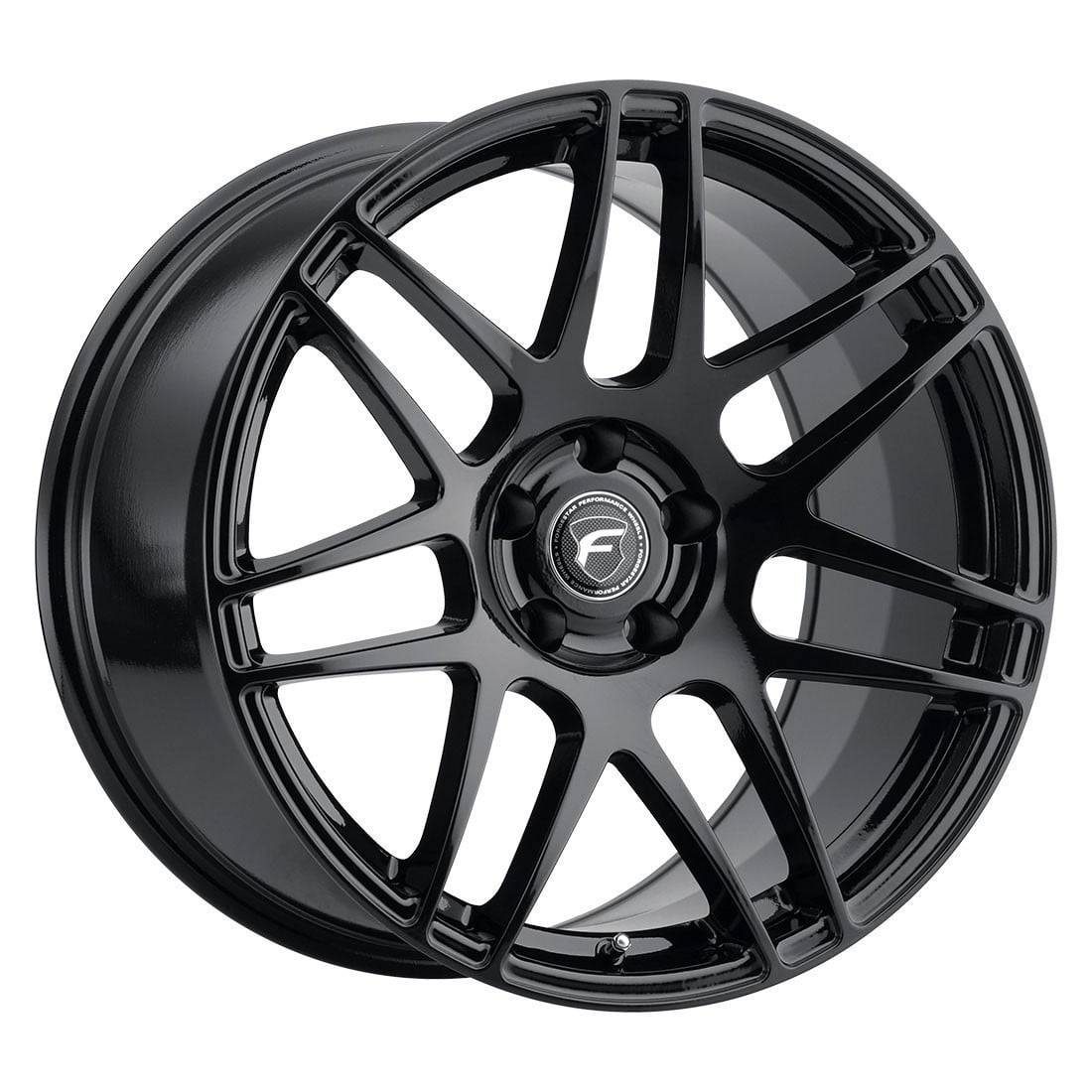
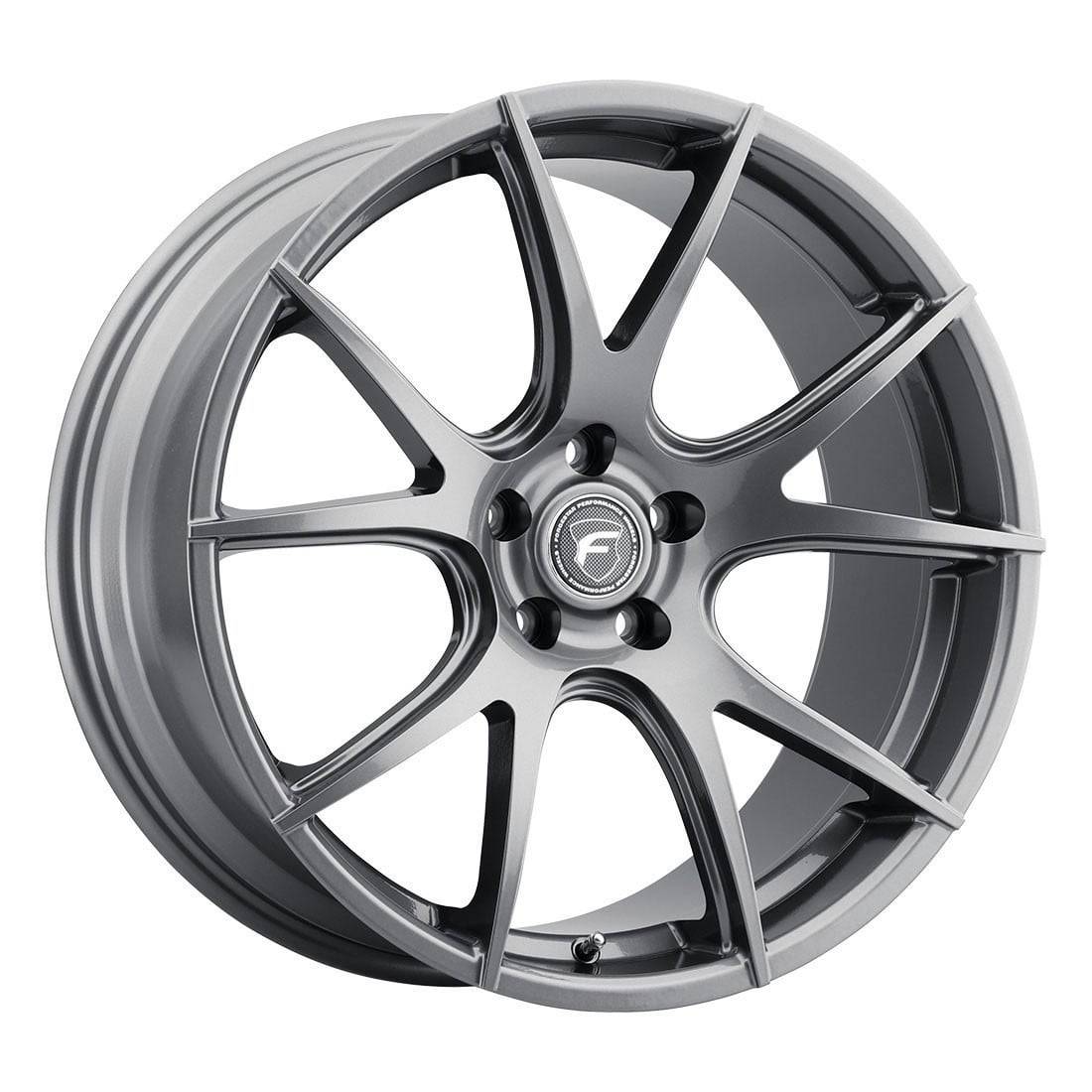
If your actual goal is performance, you get it from how the wheel is built, not from the fastener holding it on. A forged or flow-formed lug-mount wheel delivers the strength-to-weight that genuinely moves the needle, and it bolts on with conventional lug nuts. The Forgestar F14 in 19-inch gloss black is a flow-formed favorite across the Mustang, BMW, and Subaru crowd. The Forgestar CF5V in anthracite adds a deep concave face that suits aggressive staggered fitments. And the American Racing VN430 in 18-inch polished is a two-piece forged option with a clean five-spoke face. For the full picture on how construction drives weight and strength, our breakdown of cast vs. forged vs. flow-formed wheels and the deeper dive on mono-block to multi-piece forged wheels are both worth your time. Browse the full lineup on our forged wheels page.
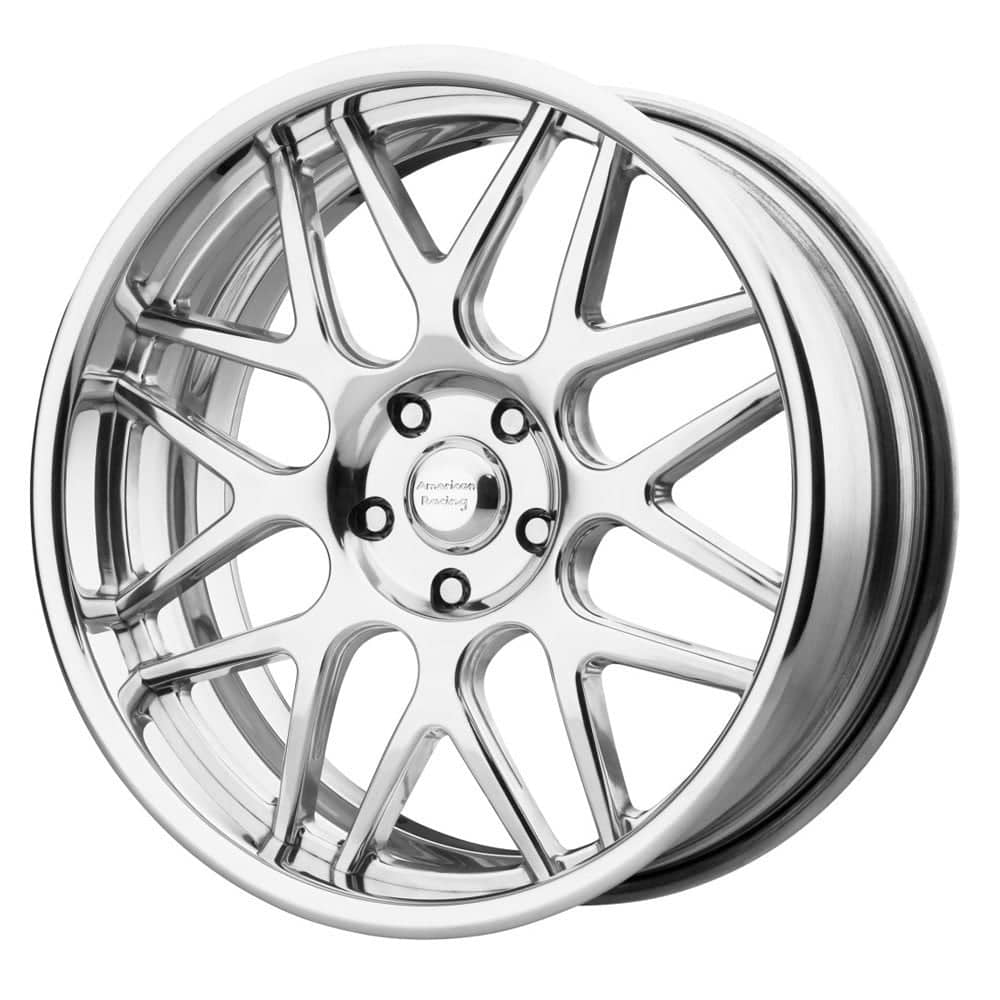
Centerlock and lug-mount wheels answer two different questions. Centerlock answers "how do I change four wheels in under two seconds," and it is the right tool for a race car packing a single nut, drive pins, and a 440-plus lb-ft torque spec. Lug-mount answers "how do I hold a wheel on safely, affordably, and serviceably anywhere in the world," which is what a street car actually needs. The lighter-weight argument for centerlock mostly does not hold up, the cost is several times higher, and the real performance gains live in the wheel's construction, not its fastener. For nearly every driver, a quality forged or flow-formed lug-mount wheel is the smarter buy.
For racing, yes, because a single nut allows dramatically faster wheel changes. For a street car, no. Lug-mount wheels are cheaper, serviceable with standard tools, offer safety redundancy across multiple fasteners, and give up no real performance. Centerlock's appeal on the street is mainly its race-car look.
Speed. Removing and replacing a single central nut is far quicker than working four or five lug nuts, which lets a pit crew change all four wheels in seconds. A more compact central hub can also free up a little room for larger brake discs. Both matter in racing and rarely matter on the street.
Yes, using an adapter that bolts to your existing hub and accepts a centerlock nut, but it is costly. Kits generally start above USD 2,000, centerlock wheels begin around USD 1,500 each, and you also need specialty torque tools. Because wheel attachment is safety-critical, use quality hardware and have it installed correctly.
No. Centerlock wheels have no bolt circle because there are no lug holes. The wheel locates on a splined, tapered hub and is held by one central nut. Fitment depends on the specific centerlock standard plus diameter, width, and offset. Only lug-mount wheels are defined by a bolt pattern.
A lot more than a lug nut. Porsche specifies over 440 lb-ft on its centerlock nut, compared with roughly 80 to 150 lb-ft for a single lug nut. That requires a long breaker bar or a specialty torque gun, and Porsche's procedure uses a tighten-loosen-tighten sequence to seat the nut correctly.
Usually not. The single nut and its mechanism must be much stronger and thicker, which cancels most of the savings from deleting several lug nuts. Porsche's factory centerlock wheels measure only about 200 grams lighter than the five-lug versions, and many aftermarket centerlock wheels are heavier. Real weight reduction comes from forged or flow-formed construction.



