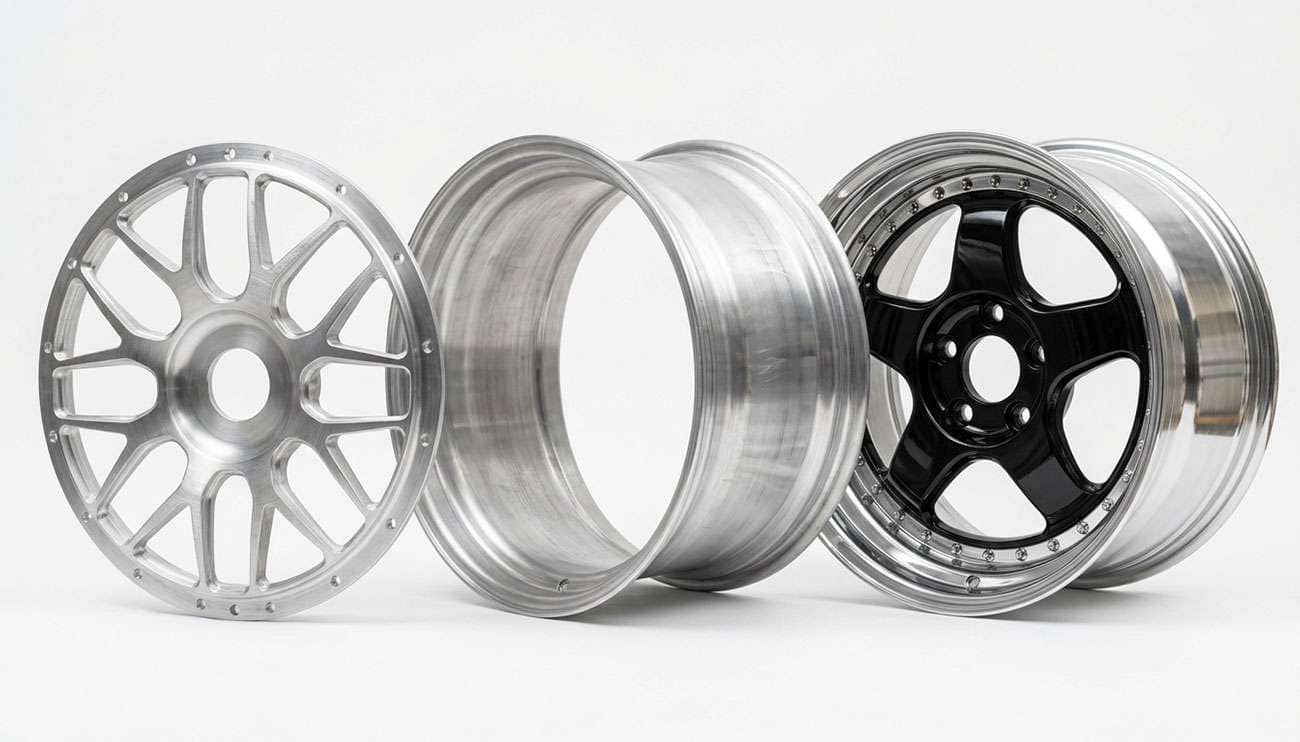
Yes. You can get wheels built to your exact diameter, width, backspacing, bolt pattern, and finish. But "custom" covers three very different purchases, and most people need the middle one: an existing forged design built to their numbers, not a wheel designed from scratch. The spec that decides whether a custom wheel is safe on your vehicle is also the one almost nobody asks about: its load rating. Across the built-to-order forged wheels on the market, about two out of three are rated at 1,900 pounds per wheel or less. That's plenty for a sports car and a problem for a heavy truck, SUV, or EV. Order the look you want, but check the capacity before you pay the deposit.
I'm Dennis Feldman, and I handle fitment at Performance Plus Tire. A custom wheel order is the one wheel purchase where a wrong number usually can't be returned, so I'm going to walk through it the same way I would at the counter: what you're actually buying, which numbers you're specifying, and which numbers you're not.
Start with the problem you're trying to solve. Find it in the left column, and the table tells you which tier of "custom" solves it, what it typically costs, and how long it takes.
Feature |
Tier That Solves It |
Typical Price Per Wheel |
Typical Lead Time |
|---|---|---|---|
A common size and offset in a style you like |
Off-the-shelf wheel (cast or flow-formed) |
Market median around $330 |
Days |
An offset between the ones sold off the shelf |
Built-to-spec 2-piece or 3-piece on an existing design |
Market median around $1,470 (2-piece) to $2,150 (3-piece) |
Several weeks |
An unusual bolt pattern with a specific backspacing |
Built-to-spec wheel drilled to order |
Same as built-to-spec |
Several weeks |
Different front and rear widths and backspacing (staggered) |
Built-to-spec, specified per axle |
Same as built-to-spec |
Several weeks |
A face design nobody sells, or a widebody one-off |
Fully bespoke forged design |
Highest; quoted per project |
Longest; design approval first |
Your current wheels fit; you want a new color |
Refinish or powder coat |
Lowest |
Days to a couple of weeks |
Before you choose a tier, check one more axis: how much weight each wheel has to carry. That decides which tiers are even on the table for your vehicle.
Feature |
Typical Per-Wheel Load Needed |
Built-to-Spec Multi-Piece |
What to Do |
|---|---|---|---|
Sports car, sedan, coupe |
Commonly 1,200 to 1,500 lb |
Usually fine |
Confirm against your door label and order |
Classic car or hot rod |
Commonly 1,100 to 1,500 lb |
Usually fine |
Focus on backspacing and brake clearance |
Midsize SUV or crossover |
Commonly 1,500 to 1,900 lb |
Check closely |
Divide your heavier axle rating by two and compare |
Half-ton pickup, full-size SUV, heavy EV |
Commonly 1,900 to 2,300 lb |
Many designs fall short |
Ask for a higher-rated build or choose a truck-rated wheel |
Heavy-duty pickup, towing rig |
Commonly 3,000 lb and up |
Most fall short |
Use wheels engineered and rated for HD trucks |
When you order a built-to-spec wheel, you're filling out a spec sheet. Here's what goes on it, and how much freedom you actually have on each line.
Fixed by the design's available sizes. A built-to-spec line offers a menu of diameters, and multi-piece wheels let you choose width in small steps, usually half an inch, because the barrel is assembled from inner and outer sections. Our breakdown of how 3-piece wheel width and offset are built shows the math.
This is the main reason most people order custom. Most built-to-order 2-piece and 3-piece forged wheels are listed with a backspacing range rather than a single number. The typical range runs nearly 5 inches from minimum to maximum. You pick the exact backspacing inside that window, and the wheel is assembled to it. If offset and backspacing are still fuzzy, our guide to wheel offset, backspacing, and bolt patterns covers the basics.
Most built-to-order wheels start as undrilled blanks and get drilled to your bolt pattern. That's what makes custom the answer for odd patterns or rare pattern-and-backspacing combinations. Hub bore and lug seat type (conical, ball, or flat) should be specified at the same time, because they're machined together.
On a built-to-spec order, construction is usually the first choice you make, because it determines how far the other numbers can move. A 2-piece wheel joins a forged center to a single barrel, so it's lighter on hardware and simpler to maintain. A 3-piece wheel bolts a center between separate inner and outer barrel halves, which gives you the widest backspacing window and the deepest lip options, and lets a damaged lip be replaced without scrapping the whole wheel. It also adds an assembly joint that needs sealing and periodic hardware checks. Our head-to-head on 2-piece vs. 3-piece custom wheels breaks down when each one makes sense.
Many built-to-order wheels are machined with a large universal hub bore so one blank can fit many vehicles. That's fine, but it means the wheel centers on the lug nuts rather than the hub unless you add hub-centric rings sized to your hub. On a heavy vehicle or a car that sees high speeds, specify the hub bore to match your hub, or order the rings with the wheels so a mild vibration doesn't send you hunting for a balance problem that isn't there.
Finish, lip polish, hardware color, and center caps are the easy part. They change the look, not the fitment.
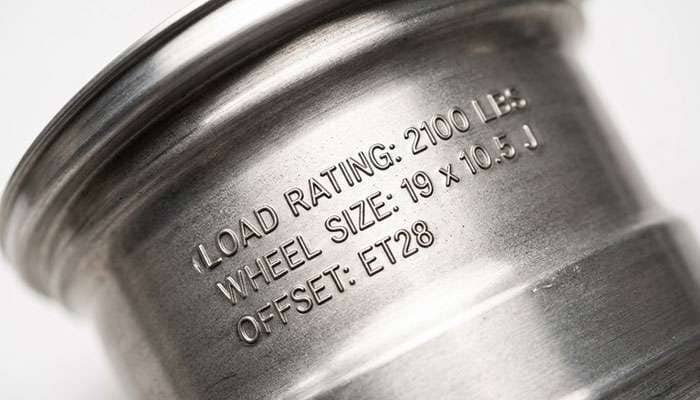
Here's the line most people never see on the spec sheet: on most built-to-spec lines, you can't customize it. Load rating is set by the design: the center's forging, spoke section, and barrel construction. Pick any diameter, width, and backspacing you like, and you still get whatever load rating that design carries. That's why it belongs at the top of your checklist, not the bottom.
Often, off-the-shelf already covers the spec you want. Check before you pay for custom. The off-the-shelf market is deeper than most people expect.
A 20x9 wheel in the 6x5.5 truck pattern is sold off the shelf in more than 30 different offsets, from -25mm to +45mm, across hundreds of designs. A 17x9 in 5x5 comes in more than 20 offsets, from -44mm to +30mm. Even a classic 15x8 in 5x4.75 is available in roughly 20 offsets from -27mm to +27mm. If your target offset sits within a few millimeters of one of those, you probably don't need a built-to-order wheel to hit it.
Custom starts earning its price in a few specific situations:
If none of those apply, custom is a style choice, which is fine. Just know you're paying for the look, not for fitment you couldn't get otherwise.
Your wheel's load rating has to meet or exceed the heaviest load any single wheel on your vehicle carries. The math takes about thirty seconds.
Open your driver's door and find the federally required certification label. It lists GAWR, the gross axle weight rating, for the front and rear axles. Take the higher of the two and divide by two. That's the minimum load rating per wheel. A rear GAWR of 4,200 pounds means each rear wheel needs to be rated for at least 2,100 pounds. Most fitment pros like to see some margin above that number, especially on a vehicle that tows or hauls.
Now compare that to what's out there. Across the built-to-order 2-piece and 3-piece forged wheels on the market, the median load rating is 1,900 pounds per wheel, and the highest ratings top out around 2,500 pounds. That holds whether you look at 17 to 20 inch wheels or 26 to 30 inch wheels. Bigger diameter does not mean a bigger rating. For comparison, one-piece wheels built for 6- and 8-lug trucks in 20 to 22 inch sizes have a median load rating of about 3,500 pounds.
That gap is the whole story for heavy vehicles. Full-size SUVs, half-ton pickups, and many electric trucks and SUVs carry enough weight per corner to push past what a typical show-oriented multi-piece wheel is rated for. The wheel will look right, bolt on, and clear everything, and still be under-rated. Our wheel load rating guide walks through the label and the math in more detail.
The same math applies to the tires you mount on those wheels. The tire's load index has to cover the same per-wheel number, and wide, low-profile tires on large custom wheels often carry less capacity than the taller tire they replace. Check both ratings together. A wheel rated for the load and a tire that isn't, or the other way around, leaves you with the lower of the two.
When you request a quote, ask for the load rating in writing for the exact size and construction you're ordering. Some makers offer higher-rated builds for trucks and heavy SUVs. If the answer comes back below your per-wheel number, change the order before it's drilled.
A well-made forged wheel is one of the strongest wheels you can buy for its weight. Forging compresses the aluminum's grain structure, which is why forged wheels can be lighter than cast wheels at the same strength. Our comparison of cast vs. forged vs. flow-formed wheels explains the manufacturing differences.
But "forged" describes the process, not the testing. Here's what tells you a custom wheel was validated:
Multi-piece wheels add one more variable: the assembly. The bolts holding the center to the barrel are torqued to spec and the barrel joint is sealed. That's why multi-piece wheels should be serviced by someone who knows them, and why the seal and hardware are worth inspecting if a tire ever slowly loses air.
Based on listed market prices, the median per-wheel price breaks down roughly like this:
Fully bespoke designs are quoted per project and usually land above those numbers. Diameter, width, finish complexity, and lip depth all move the price, and many built-to-order lines list some finishes as quote-only. Budget for the extras too: tires, mounting, balancing, lug hardware, hub rings if needed, and a TPMS solution. Our full breakdown of how much custom wheels cost covers the whole package.
It depends on the tier. Off-the-shelf wheels ship in days. Built-to-spec 2-piece and 3-piece wheels from an established line usually take several weeks, because each wheel is assembled, drilled, and finished to your order. Fully bespoke designs take the longest. There's often a design and approval stage, sometimes with 3D renders, before production even begins, and total lead times of two months or more aren't unusual. Complex finishes add time at every tier.
The fastest way to slow an order down is an incomplete spec sheet. Every missing number is a phone call and a delay. The step-by-step section at the end of this article is built to avoid exactly that.
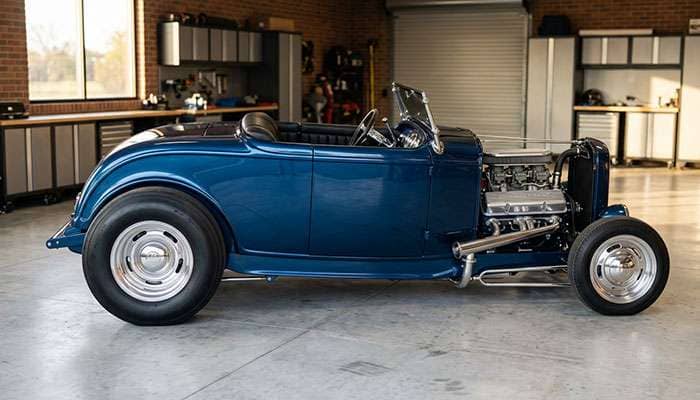
Yes, and classics are one of the best cases for built-to-spec wheels. Older cars often run bolt patterns and backspacing combinations that the mainstream wheel market stopped making years ago. On top of that, a modified classic usually has new variables: a narrowed rear end, a front disc brake conversion, mini-tubs, or a coilover suspension. Every one of those changes the backspacing that fits.
Built-to-order 2-piece lines cover this well. Our in-house Boyd Coddington 2-Piece line, for example, is built undrilled in 15 to 28 inch diameters and drilled to your bolt pattern, with backspacing selected from a range that spans several inches per size. That lets you tuck a wide rear wheel inside a stock quarter panel or set a front wheel exactly where the steering geometry wants it.
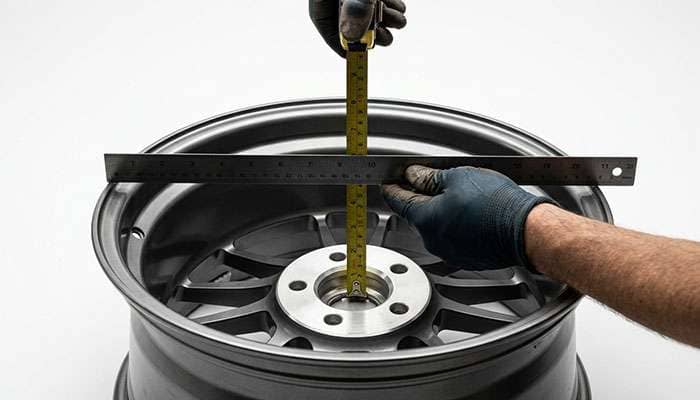
The key for classics is measuring, not guessing. Original factory specs are often irrelevant after decades of modifications. Measure the actual car with the suspension at ride height. Our step-by-step on how to measure backspacing on classic car rims shows how.
A wrong off-the-shelf wheel goes back in the box. A wrong custom wheel usually doesn't. Once it's drilled and finished to your order, it's yours. Here's how a bad spec plays out, from mild to expensive.
Too little backspacing and the tire hits the fender lip over bumps. Too much and it rubs the inner fender liner or the strut. It's annoying, it chews the tire sidewall, and it usually gets "fixed" with spacers that change load on the hub.
A spoke profile that wasn't checked against your caliper can scrape or contact it. On a car with a big brake kit, this is the most common custom-order mistake, and the fix is a different wheel.
Pushing the wheel far outboard of stock increases leverage on the wheel bearings and changes how the steering feels over bumps and under braking. Bearings and ball joints wear faster.
A wheel rated below your per-wheel load works fine until it doesn't. Repeated overload accelerates fatigue cracking, especially at the spokes and barrel joint. You won't see it until it's serious.
At the end of every one of these stages is a second set of wheels. Spending ten minutes on the spec sheet costs a lot less than reordering. When you've got your numbers, browse custom wheels to compare designs that offer the sizes and backspacing range you need.
You can get custom rims made, and it's more accessible than most people think. For most drivers, "custom" means an existing forged design built to their diameter, width, backspacing, and bolt pattern, and drilled to order. Fully bespoke wheels exist for one-off builds, and off-the-shelf wheels cover more offsets than most people expect.
The part to take seriously is the number that usually isn't on the order form: load rating. It's set by the design, not by your choices, and plenty of built-to-order wheels are rated well below what a heavy SUV, pickup, or EV puts on each corner. Do the door-label math, measure at ride height, get every number in writing, and the wheel that shows up will be the one you meant to order.
Built-to-spec forged wheels typically run from about $1,470 per wheel for 2-piece construction to about $2,150 per wheel for 3-piece, based on median market prices. One-piece forged wheels run roughly $800 to $1,160 per wheel. Fully bespoke designs are quoted per project and usually cost more.
Built-to-spec wheels from an established line usually take several weeks. Fully bespoke designs take longer because design approval comes first, and two months or more is not unusual. A complete spec sheet with every measurement filled in is the best way to avoid delays.
Yes, through a bespoke forged wheel maker, which typically works from your concept through 3D renders to an approved design before machining. Most buyers get what they want faster and for less by choosing an existing design and customizing its size, backspacing, bolt pattern, and finish.
The safest way is to order a built-to-order wheel that starts undrilled and is drilled to your pattern from the start. Redrilling an existing wheel is generally not recommended, because the new holes can overlap or weaken the old ones. Wheel adapters are another option but add width and leverage on the hub.
They are worth it when you need a fitment that off-the-shelf wheels can't hit, such as an in-between offset, an uncommon bolt pattern, or big brake clearance, or when weight savings matter. If an off-the-shelf wheel already matches your size and offset, custom is mainly a style choice.
Usually not once they have been drilled and finished to your order. That is why every number on the spec sheet, including load rating, backspacing, bolt pattern, and hub bore, should be confirmed in writing before production begins.