
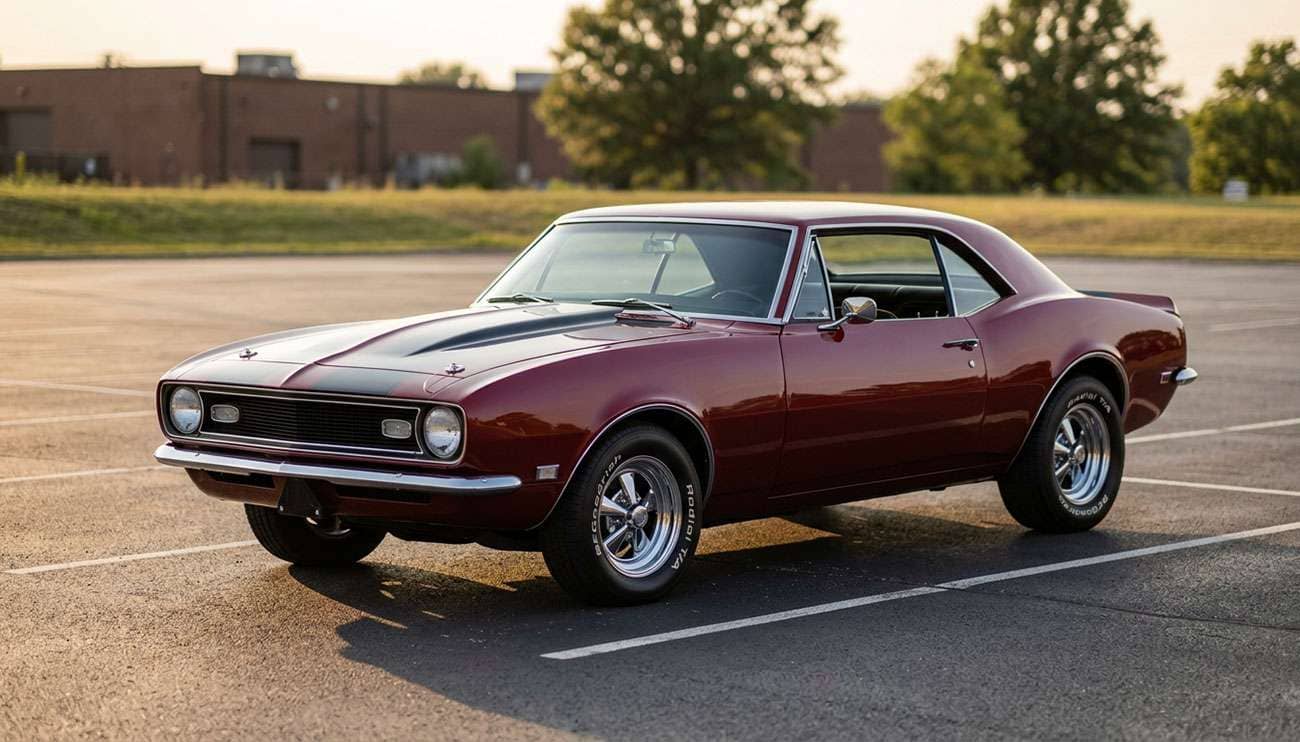
Looking for last year's rankings? See our 2025 muscle car rim picks.
I've been around classic muscle cars long enough to remember when these wheels weren't classics — they were just what was on the car. The Cragar S/S Super Sports rolled out of the box in 1964 and they were the wheel a guy bought when he wanted his Camaro or his Chevelle to look like he meant business. The Torq Thrusts came on the Shelby Mustangs and the GT-350s straight from the factory. The Magnum 500s were a checkbox option on the Mopar order sheet, and most guys checked it. These wheels weren't styling exercises — they were the answer to "what's gonna make this car go faster and look right doing it."
What I'm picking for 2026 is what's actually worth bolting onto a real muscle car build right now. Not the wheel that was technically on a 1968 Charger SE — the wheel that looks correct, holds up, fits modern tires, and doesn't look like a reproduction trying too hard. There's a difference between a wheel that gets the spirit right and one that just nails the part numbers, and after a lot of years of seeing both go by, I've got opinions on which is which.
The seven rims below are what I'd put on my own build in 2026. They're all in stock at Performance Plus Tire — every one — so you can click straight through and see the sizes, finishes, and what they cost. No vaporware, no "discontinued but maybe we can find one." Real wheels, real prices, real American muscle.
Three things matter for muscle car wheel selection, and they matter in this order.
The wheel has to look correct for the era. A 1969 Camaro Z/28 looks right on Torq Thrust D's or Cragar S/S Super Sports because that's what came on it. Put a modern billet wheel on it and the proportions go wrong — the wheel reads modern even if it's "kind of period." The wheels on this list all carry shapes and finishes that pull right out of the 1965 to 1972 muscle car era. Some are dead-stock reproductions of factory options. Some are aftermarket wheels that were popular at the time and still look right today. None of them read like 2024 wheel design.
The wheel has to fit a real classic muscle car. That means 5-on-4.5, 5-on-4.75, or 5-on-5 bolt patterns covering Ford, Chevy, and Mopar. It means offsets that work with stock fender wells without rubbing. It means sizes from 14-inch up through 18-inch for buyers running Pro Touring or larger-diameter resto-mod builds. Wheels that only come in modern truck patterns or modern car offsets don't make this list, no matter how good they look.
The wheel has to be available right now from a manufacturer who's still making them. A wheel that was great in 1972 but stopped production in 1985 doesn't help anybody building a car today. Every wheel below is in current production from Cragar, American Racing, Wheel Vintiques, or Halibrand, with full size ranges and finish options.
I left off the modern-billet 6-spoke and 8-spoke aftermarket wheels that some folks lump in with "classic muscle car wheels." Those are nice wheels and they have their place, but they're not classics — they're modern interpretations. This list is the actual classics: the wheels that defined what muscle cars look like.
Before getting to my seven picks, here's the era-by-era reality of what came on muscle cars from the factory or showed up in dealer accessory catalogs. Knowing this matters because period-correctness on muscle cars is mostly about matching the original options sheet, not just about looking vintage.
Vehicle |
Common Factory Wheel |
Popular Aftermarket Choice |
|---|---|---|
1965-1969 Mustang/Shelby |
Magnum 500, Styled Steel |
Cragar S/S, Torq Thrust D |
1967-1969 Camaro Z/28 |
Rally Wheel (Chevy 14x6) |
Cragar S/S, Torq Thrust D |
1968-1972 Chevelle SS |
Chevy Rally Wheel, SS Wheel Cover |
Cragar S/S, American Racing Smoothie |
1968-1971 Pontiac GTO |
Pontiac Rally II |
Cragar S/S |
1968-1971 Plymouth GTX/Cuda |
Magnum 500, Rallye Wheel |
Cragar S/S, Torq Thrust D |
1968-1971 Dodge Charger/Challenger |
Magnum 500, Rallye Wheel |
Cragar S/S, Torq Thrust |
1969-1973 Trans Am/Firebird |
Pontiac Rally II, Honeycomb |
Cragar S/S |
The pattern's obvious. Factory wheels were Magnum 500s on Ford and Mopar muscle, Rally II's on Pontiac performance cars, and Chevy Rally Wheels on Bowtie products. Aftermarket meant Cragar S/S Super Sports first and Torq Thrusts second, with Smoothies showing up on hot rod and gasser builds. That's the muscle car wheel landscape from 1965 through 1972, and that's why these specific wheel families dominate this 2026 list.
If you're trying to lock down what wheels actually fit your specific car, our muscle car wheel size guide covers the bolt patterns and offsets in detail. For staggered front-narrow/rear-wide setups that were popular on certain builds, see the muscle car staggered setup guide.
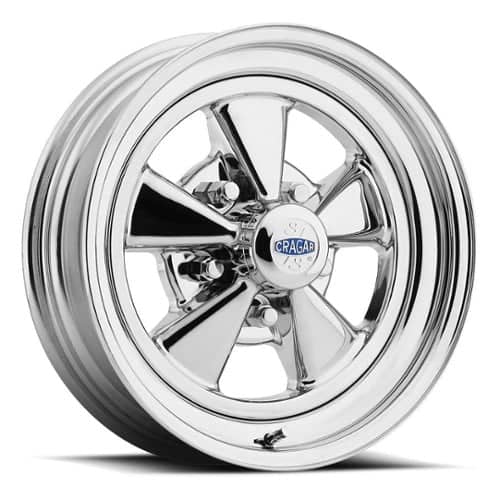
Brand: Cragar • Construction: Two-piece chrome steel rim with chrome aluminum center • Best For: Any 1964-1972 American muscle car or street rod • Price: Approximately $295 to $510 per wheel depending on size
Nobody's putting any wheel ahead of the Cragar S/S Super Sport. Cragar started building this exact wheel in 1964, called it "The King of the Road" in their advertising, and turned out to be right. Sixty-plus years later it's still their top-selling wheel, and there's a reason — when somebody says "muscle car wheel" without specifying anything else, this is the wheel they mean. Five-spoke chrome over aluminum, hub showing, slotted center, the look that defined a decade.
What makes the S/S work is the construction. Cragar's two-piece design uses a chrome-plated steel rim welded to a chrome-plated aluminum center. Five steel lugs are cast right into the aluminum centers, then welded directly to the rim — when Cragar introduced this in 1964 it was twice the strength of regular wheels of the era and held up to drag strip launches that would crack other aftermarket wheels. The construction is essentially unchanged today because it didn't need fixing. They got it right the first time.
The S/S fits 5-on-4.5 (Mustang, most Mopar), 5-on-4.75 (Chevy), and 5-on-5 patterns covering virtually every American muscle car. Sizes run from 14x6 through 17x8 with offsets that work in stock fender wells, and Cragar offers the wheel in chrome-on-chrome or chrome with gray-finished centers for buyers who want the contrast option. Center caps are Cragar's classic chrome S/S logo cap, lug nuts use the standard 7/16 or 1/2 inch acorn pattern.
This wheel works on a 1968 Camaro RS, a 1965 Mustang fastback, a 1970 Chevelle SS, a 1969 Charger R/T, a 1970 Cuda, a 1972 Trans Am — basically anything muscle from the era. It also pairs with traditional hot rod builds, gassers, and street rods. Hard to find a build it doesn't work on, honestly.
Browse Cragar S/S Super Sport sizes and pricing, see the full Cragar Wheels lineup, or read the deeper history in can you still buy Cragar S/S wheels from 1964 to today.
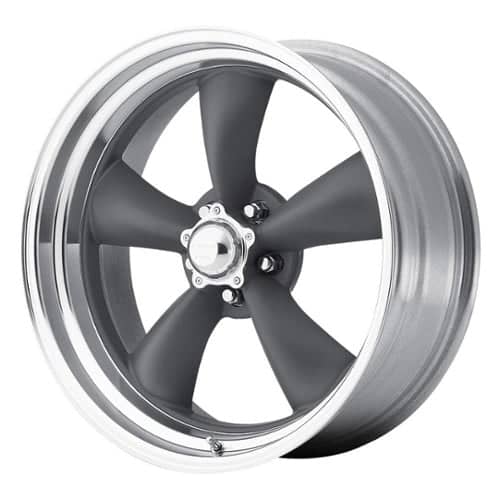
Brand: American Racing • Construction: One-piece cast aluminum • Best For: Shelby Mustangs, Cobras, Trans-Ams, performance-focused muscle car builds • Price: Approximately $140 to $440 per wheel depending on size
If the Cragar S/S is the muscle car wheel for the street, the Torq Thrust is the muscle car wheel for performance. Romeo Palamides designed the original Torq Thrust in 1963 — the five-spoke design was an aerodynamic answer to road racing's need for lighter wheels with better brake cooling. By 1965 the Torq Thrust was on Shelby's GT-350s and GT-500s, every Cobra worth a damn, the Trans-Am race cars, and a thousand club racers across the country. The wheel earned its place by being on race cars that won races.
The VN215 Classic Torq Thrust II in Mag Gray with Machined Lip is the right modern reproduction. American Racing kept the original five-spoke geometry — the proportions of the spoke width to the hub diameter to the rim lip are exactly what they were in 1965, which matters more than buyers usually realize. Most knockoff "Torq Thrust style" wheels miss the spoke proportions and end up looking off. The VN215 nails it because American Racing has the original tooling and design data.
The Mag Gray finish with the polished lip is the signature look — gray cast spokes contrasting against a polished outer rim, evoking the magnesium wheels these were inspired by. American Racing also produces the wheel in chrome (VN615), polished (VN505), and a black-with-polished-lip variant for darker builds. Sizes cover 14-inch through 20-inch with bolt patterns for every American muscle application, and pricing starts well below most premium wheels — around $140 per wheel for smaller diameters, scaling up to about $440 for the larger sizes.
For a 1967 Shelby GT-500 build, a 1968 Mustang Fastback, a 1969 Boss 302 or Boss 429, a 1970 Trans Am, a 1968-69 Z/28 Camaro, or any performance-leaning muscle car build, the Torq Thrust is the right answer. The wheel reads racing, it reads classic, and the proportions look right on a wide variety of body styles. American Racing's history is documented in our deep dive on the company's role in muscle car culture.
Browse VN215 Torq Thrust II sizes, or see the full American Racing Wheels lineup.
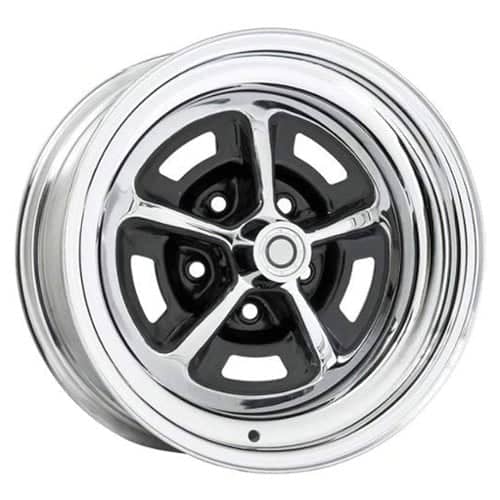
Brand: Wheel Vintiques • Construction: Two-piece steel rim with painted slot accents • Best For: Mustang, Charger, Cuda, GTX, Mach 1 — Ford and Mopar factory-correct restoration • Price: Approximately $267 to $440 per wheel
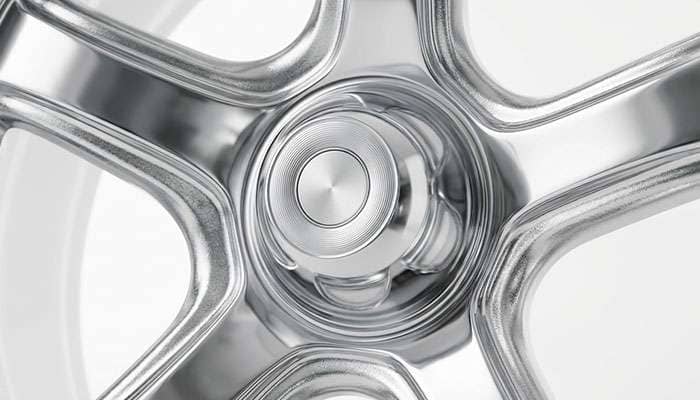
The Magnum 500 is the most recognizable factory muscle car wheel ever made. If you've seen a 1969 Mach 1 Mustang, a 1970 Boss 429, a 1971 Cuda, a 1969 Charger R/T, or a 1970 Plymouth GTX in the wild or in a magazine, you've seen Magnum 500s. The pattern of chrome slots on a black painted background, with the unmistakable Magnum cap in the center — that wheel rolled off Ford and Chrysler dealer lots on more muscle cars than just about any other style. It was a checkbox option on order sheets across both manufacturers from 1968 through 1973.
Wheel Vintiques builds the right reproduction. The 54 Series in Chrome with Semi-Gloss Black is a faithful build of the original — chrome plating on the rim and outer slot edges, semi-gloss black paint in the slot windows, two-piece steel construction matching the way the originals were built. What makes the Wheel Vintiques version stand out from cheaper reproductions is the small details: factory-correct Ford-style and Mopar-style center caps fit the wheel directly, and original acorn-style lug nuts thread without needing modification. Most reproduction Magnum 500s require new center caps and modified lugs, which means they don't quite fit the original parts that restoration buyers want to use.
Available in 15x7, 15x8, 16x7, 16x8, and 17x8 — covering everything from concours-correct restoration sizes through resto-mod tire upsize fitments. The 5-on-4.5 bolt pattern handles Ford Mustang/Cougar and most Chrysler products, and Wheel Vintiques produces a parallel 84 Series Magnum 500 in 5-on-4.75 for Chevrolet applications that have been retrofit to use Magnum 500s. The center cap fits Ford-correct or Mopar-correct depending on which application you're after.
For factory-correct restoration of any 1968-1973 Ford or Mopar muscle car, the Wheel Vintiques 54 Series is the wheel. Concours judges look for these specific wheels with the correct cap and the correct lug nuts, and Wheel Vintiques delivers exactly what they're looking for. Browse 54 Series Magnum 500 sizes.
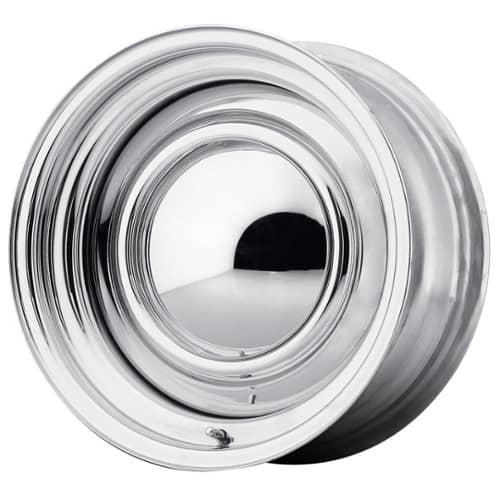
Brand: American Racing • Construction: Steel reverse-rim • Best For: Hot rods, gassers, drag strip cars, period-correct 1960s street machines • Price: Approximately $330 to $390 per wheel
The Smoothie is the wheel for the guys who don't want all the chrome. No spokes, no slots, no fancy machined faces — just a smooth chrome reverse rim that lets the tire and the brake do the talking. American Racing's been building Smoothies since the early 1960s, and they're the wheel of choice for hot rods, gassers, drag race cars, and any build where the owner wants the wheel to disappear and the rest of the car to do the work.
What makes the Smoothie different from anything else on this list is the construction. It's a steel wheel with a chrome reverse-rim setup — the rim depth puts the brake caliper in negative offset territory, which means the tire pokes out from the fender slightly and creates the dragstrip stance that defined hot rod culture from the 1950s through the 1970s. That stance is the look of a Bonneville salt flat car, a 1957 Chevy gasser, a 1966 Nova drag car. Buyers who put Smoothies on a build are signaling that they care about period-correct hot rod aesthetics, and Smoothies are the only wheel that delivers exactly that look.
The VN31 is available in chrome with sizes from 14x6 through 17x8. Bolt patterns cover the standard 5-on-4.5, 5-on-4.75, and 5-on-5 American configurations. American Racing also produces a one-piece aluminum Smoothie variant (VN470 Salt Flat Special) for buyers who want the look in a lighter, more modern wheel — but the original steel chrome reverse rim is what gives the Smoothie its true period-correctness.
For a 1955-1957 Chevy build, a 1932 Ford coupe with a small block stuffed in, a 1965 Chevy II Nova drag car, a 1969 Camaro built in pro-street style, or any vehicle where the build aesthetic prioritizes period-correct hot rod culture over showroom-correct restoration, the Smoothie is the right wheel. It's not for everybody — but for the guys it's right for, nothing else looks correct.
Browse American Racing VN31 Smoothie sizes.
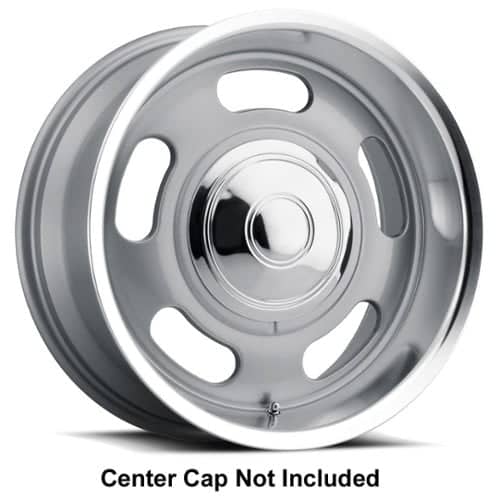
Brand: Cragar • Construction: Cast aluminum • Best For: Pontiac GTO, Trans Am, Firebird Formula, Grand Prix • Price: Approximately $222 to $250 per wheel
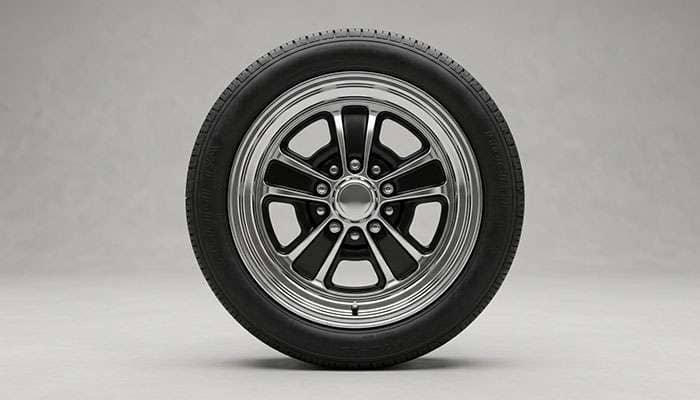
The Pontiac Rally II was Pontiac's signature performance wheel from 1968 through the early 1970s. It came on GTOs, Trans Ams, Firebird Formulas, and Grand Prixs as factory equipment, and it carries a specific aesthetic that no other wheel on this list quite matches — the silver painted spokes with the contrasting machined lip, the integrated PMD (Pontiac Motor Division) logo center cap, the directional flute pattern that gave the wheel its name. If you've ever seen a Judge GTO or a 1973 Trans Am Super Duty, you've seen Pontiac Rally II's.
Cragar's 380S Rally II is the right reproduction. They got the spoke geometry correct — and that matters because the Rally II's distinctive look comes from the way the five flutes cup outward from the hub at a specific angle. Get the angle wrong and the wheel looks like a generic styled wheel; get it right (which Cragar does) and it looks like Pontiac's factory wheel. The Silver finish with the Mirror Machined Lip pulls right out of the original Pontiac specification, and the wheel accepts standard PMD-style center caps for full period-correct presentation.
The Rally II is available in 15x7, 15x8, 17x7, and 17x8 — covering both stock-correct restoration sizes and the slightly larger diameters that work for resto-mod GTO and Trans Am builds. The 5-on-4.75 bolt pattern matches Pontiac applications, and the offset is engineered to fit factory-stock fender wells without rubbing on stock or modestly upsized tires.
For any Pontiac muscle car restoration where the goal is period-correct aesthetics — and most Pontiac builds prioritize this because the Rally II is so identified with the brand — Cragar's 380S Rally II is the right answer. The wheel is also a good choice for the rare Pontiac performance build that deviates from the OE pattern but still wants Pontiac-correct visual identity. It doesn't make as much sense on Ford, Chevy, or Mopar builds (different brand identity), but for Pontiac it's the wheel.
Browse Cragar 380S Rally II sizes.
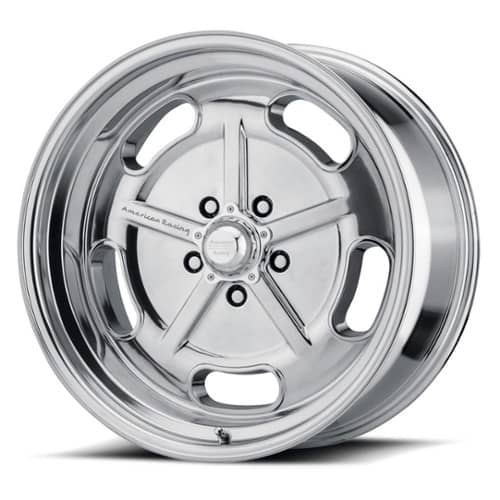
Brand: American Racing • Construction: One-piece cast aluminum • Best For: Resto-mod muscle, hot rods, Bonneville-inspired land speed builds • Price: Approximately $222 to $400 per wheel depending on size and finish
The Salt Flat is the wheel for builders who want classic muscle car DNA without going dead-stock factory. The design pulls from American Racing's land-speed-record heritage at Bonneville — the wheel's deep dish polished face evokes the magnesium wheels Mickey Thompson and Craig Breedlove ran in the 1960s, but the modern aluminum construction makes it lighter and stronger than anything from that era. It's a nostalgic shape with modern engineering underneath.
What makes the Salt Flat work for muscle car builds is the deep-dish profile. The wheel has a meaningful step from the spoke face to the outer lip, which gives the build presence and lets the tire fill the wheel well in a way that flat-face wheels can't quite match. The Polished finish keeps it clean and shiny without going full chrome, and American Racing also offers Mag Gray with Diamond Cut Lip and Gloss Black with Diamond Cut Lip variants for builders who want darker finishes.
Sizes range from 15x7 through 22x10 — that broad range is part of what makes the Salt Flat versatile. The smaller diameters work for stock-correct restoration applications, while the 18-inch through 22-inch diameters fit big-brake Pro Touring and modern resto-mod builds. Bolt patterns cover all standard American muscle configurations, and the offsets work in both stock and modified fender wells.
The Salt Flat is the right wheel for buyers who like the classic muscle aesthetic but want their build to feel a little more modern, a little more aggressive, a little less time-capsule. A 1969 Camaro RS with VN511 Salt Flats reads as a thoughtfully-built modern resto-mod rather than a museum piece. A 1970 Cuda with the same wheels reads similarly. For builders who want to honor the era without being slaves to it, the Salt Flat hits the right balance.
Browse American Racing VN511 Salt Flat sizes.
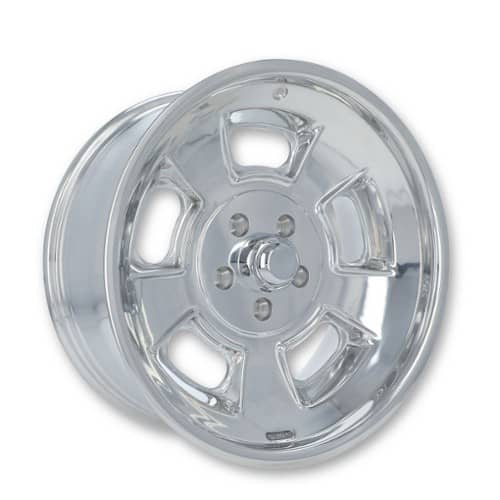
Brand: Halibrand • Construction: Cast aluminum (modern reproduction of original magnesium) • Best For: Shelby Cobras, gassers, vintage road race builds • Price: Approximately $500 per wheel
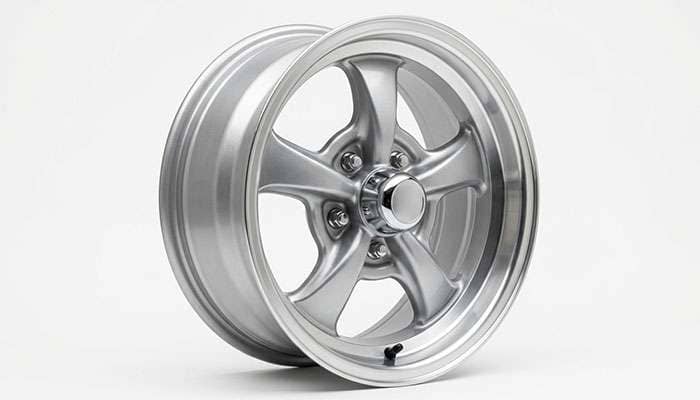
Halibrand is the racer's wheel. The original Halibrand magnesium wheels showed up on Carroll Shelby's Cobras, on the GT-40s that won Le Mans, on Indy roadsters, on the gassers that ruled NHRA stock-eliminator racing. The five-spoke pattern with the iconic bullet-shaped center cap is one of the most distinctive wheel designs ever produced, and it carries genuine race heritage that nothing else on this list can match. When somebody saw a Halibrand at the track in 1965, they knew they were looking at a serious car.
The modern Sprint with Bullet Cap is the proper reproduction. Halibrand kept the wheel in production with updated cast aluminum construction (the original magnesium was beautiful but expensive and prone to corrosion), and the modern wheel preserves the original spoke geometry and the signature bullet cap. The Polished finish is the cleanest presentation, with the cap providing the visual focal point. Halibrand also produces the wheel in Anthracite and MAG7 finishes for builders who want a different aesthetic, and a Polished finish without clearcoat for buyers who want the truly raw aluminum look that period correctness sometimes demands.
What makes the Halibrand worth the price premium — and at around $500 per wheel, it's the most expensive option on this list — is the heritage and the rarity. There are a lot of wheels on the market that try to do the five-spoke racing wheel look. Most of them are cheaper. None of them are actual Halibrands. For a buyer building a Cobra continuation, a vintage road race tribute, a gasser, or any vehicle where the build's authenticity depends on having the actual right wheel rather than something close, Halibrand earns its position.
The Sprint with Bullet Cap is available in sizes from 15x4 through 17x10, with bolt patterns covering Cobra-correct 5-on-5 (Halibrand-pattern), 5-on-4.5, and 5-on-4.75 applications. The narrower sizes (15x4, 15x5) suit the front of vintage race builds where steering effort and turn-in matter more than tire footprint. The wider sizes (15x10, 17x10) handle rear applications and larger-diameter modern builds.
For Cobra builders, gasser owners, and anybody who needs the wheel that actually ran on race-winning cars in the 1960s, Halibrand is the answer. Browse Halibrand Sprint with Bullet Cap sizes, or see the full Halibrand Wheels lineup.
Seven wheels is a list, not a decision. Here's how to narrow it down to the one that fits your specific muscle car build.
Restoring a numbers-matching factory car? Use the wheel the factory bolted on. For Ford and Mopar that's almost always the Magnum 500 (Wheel Vintiques 54 Series). For Pontiac performance cars it's the Rally II (Cragar 380S). For Chevy applications you've got more flexibility — Chevy Rally Wheels are the factory-correct option (not on this list because they're typically sourced as restoration parts rather than as new aftermarket production), but Cragar S/S Super Sports were sold as a Chevrolet dealer accessory and read as period-correct on virtually any 1965-1972 Chevy muscle build.
If you're cross-shopping the smaller-diameter restoration wheels, our comparison of 17-inch vs 18-inch wheels for muscle cars covers the fitment trade-offs.
Building a resto-mod that mixes classic looks with modern performance? Cragar S/S Super Sport, American Racing Torq Thrust II, or American Racing Salt Flat are the three to look at. The S/S reads most period-correct, the Torq Thrust reads performance-focused, the Salt Flat reads modern-but-respectful-of-the-era. Pick based on which aesthetic story you want the build to tell.
Building a hot rod, gasser, or pro-street car? American Racing Smoothie or Halibrand. Smoothie reads more 1950s-1960s street culture, Halibrand reads more race-car-built-for-the-strip. Both work on the same kind of builds, just different attitude.
Building a Cobra, GT-40 tribute, or vintage road race car? Halibrand. There's not really a substitute. The bullet cap and the five-spoke pattern carry race history that no other wheel can replicate, and concours judges and serious enthusiasts notice when a build uses something else.
For broader muscle car wheel guidance covering aesthetics, build philosophies, and the factory-vs-aftermarket-vs-resto-mod decision tree, see our classic car wheel styles guide and the 12 best rim brands for 2026 companion ranking.
Rank |
Wheel |
Brand |
Best For |
|---|---|---|---|
1 |
08/61 S/S Super Sport Chrome |
Cragar |
Universal muscle car/street rod |
2 |
VN215 Classic Torq Thrust II 1PC |
American Racing |
Shelby/Cobra/Trans-Am/performance muscle |
3 |
54 Series Magnum 500 |
Wheel Vintiques |
Factory-correct Ford/Mopar restoration |
4 |
VN31 Smoothie Chrome |
American Racing |
Hot rods, gassers, drag race builds |
5 |
380S Rally II Silver |
Cragar |
Pontiac GTO/Trans Am/Firebird |
6 |
VN511 Salt Flat Polished |
American Racing |
Resto-mod muscle, modern interpretation |
7 |
Sprint w/Bullet Cap Polished |
Halibrand |
Cobra, gasser, vintage road race builds |
The Cragar 08/61 S/S Super Sport leads the 2026 ranking for the same reason it's led since 1964 — it's the universal muscle car wheel. Two-piece chrome construction with chrome aluminum centers, broad bolt pattern coverage including 5-on-4.5, 5-on-4.75, and 5-on-5, and sizes from 14-inch through 17-inch. The wheel works on virtually any American muscle car from 1964 through 1972, plus hot rod and street rod applications. Approximately $295 to $510 per wheel depending on size, putting it firmly in the mid-tier of the muscle car wheel market.
Factory wheels varied by manufacturer. Ford and Mopar muscle cars from 1968 through 1973 commonly came with Magnum 500 wheels (chrome rim with semi-gloss black slot inserts) — Mustang Mach 1, Cuda, Charger R/T, GTX, Boss Mustang, and similar applications all checked the Magnum 500 option. Pontiac performance cars (GTO, Trans Am, Firebird Formula) wore Pontiac Rally II wheels. Chevrolet muscle cars (Camaro, Chevelle SS) typically wore Chevy Rally Wheels or steel wheels with SS-style hubcaps. Aftermarket choices like Cragar S/S Super Sports and American Racing Torq Thrusts were dealer accessory options that customers added at purchase or shortly thereafter.
Classic muscle car rim pricing in 2026 ranges from approximately $140 per wheel for entry-level American Racing Torq Thrust II in smaller diameters up to approximately $500 per wheel for premium Halibrand Sprint with Bullet Cap. Mid-tier options like Cragar S/S Super Sport, Wheel Vintiques 54 Series Magnum 500, and Cragar 380S Rally II run roughly $220 to $440 per wheel depending on size and finish. Larger-diameter wheels (17-inch and 18-inch) cost more than smaller diameters (14-inch and 15-inch). Total set-of-four investment ranges from approximately $560 (entry-level Torq Thrust II) up to $2,000+ for premium Halibrand applications.
Yes. Cragar S/S Super Sport wheels have been in continuous production since 1964 and remain Cragar's top-selling wheel. The current 08/61 S/S Super Sport uses essentially the same two-piece construction as the original — chrome-plated steel rim welded to a chrome-plated aluminum center, with five steel lugs cast into the aluminum centers. Sizes range from 14x6 through 17x8 with bolt patterns covering all standard American muscle car configurations. The wheel's longevity is a testament to the original engineering — it was twice as strong as competing wheels of the era and earned its "King of the Road" advertising claim through actual durability rather than marketing.
The Torq Thrust D is American Racing's two-piece reproduction of the original 1960s wheel — chrome-finished steel rim with a satin black or polished aluminum center. The Torq Thrust II (VN215 Classic Torq Thrust II 1PC) is the one-piece cast aluminum modern interpretation in Mag Gray with Machined Lip — the gray-finished spokes with a polished outer rim that mimics the original magnesium aesthetic without the magnesium fragility. The D is more period-correct for true-restoration applications; the II is more practical for daily-driven resto-mods because the one-piece aluminum construction is lighter and less expensive than the two-piece D.
No. The original Halibrand wheels from the 1950s and 1960s were cast magnesium, which delivered exceptional weight savings but suffered from corrosion problems and high manufacturing costs. Modern Halibrand wheels use cast aluminum construction, which preserves the original spoke geometry and bullet-cap aesthetic while delivering improved durability and lower production costs. The aluminum reproductions are slightly heavier than the original magnesium but eliminate the corrosion concerns that plagued the original race wheels. For concours-level vintage race car restoration where original magnesium is required, dedicated magnesium reproduction services exist outside the mainstream aftermarket.
Most 1960s muscle cars came from the factory with 14-inch or 15-inch wheels in 6-inch to 7-inch widths. Performance applications often used 15x7 fitments — Mustangs, Camaros, Chevelles, GTOs, Cudas, Chargers all commonly ran 15-inch wheels. Some factory performance setups (Trans Am Z/28, Boss Mustang, certain Mopar applications) used 15x8 wheels with appropriate offset. Aftermarket performance often went to 15x10 wheels for drag strip use, though stock fender wells require fender modification to clear those widths. For deeper guidance on muscle car wheel sizing, see our muscle car wheel size guide.
Chrome and polished aluminum deliver different aesthetic and maintenance trade-offs. Chrome plating produces a brighter, more reflective finish that reads more period-correct for 1960s-1970s muscle car aesthetics — the chrome look defined the era. Chrome wheels also resist road grime better than polished aluminum and require less frequent cleaning to maintain showroom appearance. Polished aluminum produces a slightly warmer, less reflective finish that some buyers prefer for resto-mod and pro-touring builds where the goal is classic-but-modernized aesthetics. Polished aluminum requires more frequent cleaning to prevent oxidation, particularly in coastal or humid environments, but it can be re-polished if it does dull. For most muscle car restoration, chrome is the period-correct choice; for resto-mod and pro-touring, either works depending on the build's overall direction.



