
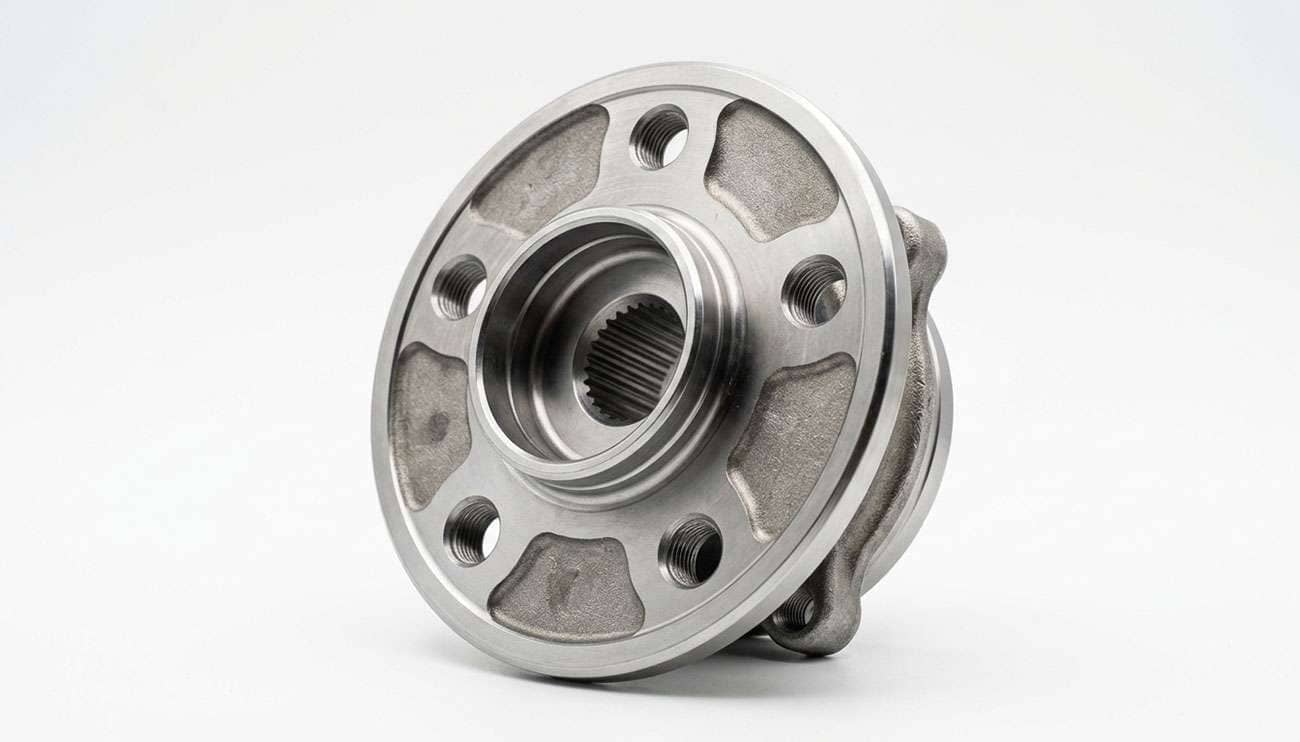
The 5x110 bolt pattern means five lug holes arranged on a 110 millimeter bolt circle, and it belongs to two distinct vehicle families. The first is mid-2000s GM: Chevrolet Cobalt SS, HHR, Malibu, Pontiac G6 and Solstice, the Saturn lineup, and Saab 9-3 and 9-5. The second is the modern Stellantis group: Jeep Cherokee KL, Compass, and Renegade, Chrysler 200, Alfa Romeo Giulia and Stelvio, and Fiat 500X. Same pattern, two very different eras - and the details in between decide whether a wheel actually fits.
I'm Dennis Feldman, and fitment details are my job. Below you'll find the exact specifications, the full vehicle list, and straight answers to the interchange questions we field every week.
Here are the numbers that matter, pulled together in one place. The hardware specs below reflect the GM-era applications; Stellantis-era vehicles use different lug hardware and torque values, so always confirm against your owner's manual before installation.
Specification |
Value |
|---|---|
Bolt pattern |
5x110 mm |
Inch equivalent |
5x4.33 |
Lug count |
5 |
Bolt circle diameter |
110 mm, measured through the hub center |
Common hub bore |
65.1 mm (GM applications) |
Typical GM stud size |
M12 x 1.5 |
Typical GM torque spec |
75 to 85 lb-ft, star pattern |
A quick note on history before the table. Classic GM muscle ran the old 5x4.75 bolt pattern for decades; 5x110 arrived when GM moved its midsize and compact cars onto the Epsilon and Delta platforms in the early 2000s, and Saab inherited it through GM ownership. A decade later, Fiat Chrysler adopted the same 110 mm circle for its small-wide platform, which is why a Jeep Renegade and a Pontiac G6 share a bolt pattern despite having nothing else in common.
Vehicle |
Model Years |
Era |
|---|---|---|
Chevrolet Cobalt SS (5-lug) |
2005-2010 |
GM |
Chevrolet HHR |
2006-2011 |
GM |
Chevrolet Malibu / Malibu Maxx |
2004-2012 |
GM |
Pontiac G5 GT |
2007-2009 |
GM |
Pontiac G6 |
2005-2010 |
GM |
Pontiac Solstice |
2006-2009 |
GM |
Saturn Ion Redline |
2005-2007 |
GM |
Saturn Aura |
2007-2009 |
GM |
Saturn Sky |
2007-2009 |
GM |
Saturn Astra |
2008-2009 |
GM |
Cadillac Catera |
1997-2001 |
GM |
Saab 9-3 |
1999-2011 |
GM / Saab |
Saab 9-5 |
1999-2009 |
GM / Saab |
Jeep Cherokee KL |
2014-2023 |
Stellantis |
Jeep Compass |
2017 and newer |
Stellantis |
Jeep Renegade |
2015-2023 |
Stellantis |
Chrysler 200 |
2015-2017 |
Stellantis |
Alfa Romeo Giulia |
2017 and newer |
Stellantis |
Alfa Romeo Stelvio |
2018 and newer |
Stellantis |
Fiat 500X |
2016-2023 |
Stellantis |
European market vehicles like the Opel and Vauxhall Astra and several Peugeot models also run 5x110, which is why the pattern has broader wheel support than its North American vehicle count would suggest.
Five-lug patterns are the tricky ones because no two holes sit directly across from each other. The method: measure from the center of one lug hole to the outer edge of the hole two positions away - skipping the adjacent hole. On a 5x110 wheel that measurement lands at 110 mm, or almost exactly 4.33 inches. If you get roughly 4.53 inches you're looking at 5x115, and roughly 4.41 inches means 5x112. Those three patterns sit close enough that a tape measure held casually will mislead you, so measure twice. Our guide on how to measure a lug bolt pattern covers the full procedure with a bolt pattern gauge, which removes the guesswork entirely.
This is the question behind most of the 5x110 confusion, so let's take the near-miss patterns one at a time.
No. The 5 mm difference means each lug hole sits 2.5 mm off center from the stud. Forcing the fit side-loads the studs and the wheel will never seat true. The 5x115 bolt pattern belongs to a different GM family - Impala, Camaro of certain years, and most modern Dodge muscle. The saving grace: many aftermarket wheels are dual-drilled with both patterns, which is a proper engineered solution rather than a forced one.
Also no, and this one bites the Euro crowd. The 5x112 bolt pattern is the Audi, Mercedes, and modern VW standard. Two millimeters sounds trivial; it is not. A 5x112 wheel on a 5x110 hub leaves every lug hole 1 mm off center, and no lug taper can safely absorb that. If a wheel you love only comes in 5x112, the correct answer is a different wheel, not a hammer.
Yes - this is the one true match. 110 mm converts to 4.33 inches, so 5x110 and 5x4.33 describe the identical pattern in metric and imperial. Same wheel, two labels.
Bolt pattern is only half the fitment equation. The GM-era 5x110 vehicles carry a 65.1 mm hub bore, and most aftermarket 5x110 wheels are machined with a larger center bore to cover multiple applications - the wheels featured below range from 65.1 to 74.1 mm. Anything larger than your hub flange needs hub-centric rings so the wheel centers on the hub rather than hanging on the studs. It's a two-dollar part that prevents highway vibration, and we include the correct rings with every package we build.
You'll also notice many 5x110 wheels are dual-drilled 5x110/5x115 or 5x110/5x114.3. That's deliberate: manufacturers pair the low-volume 5x110 pattern with a high-volume sibling to widen coverage. Dual-drilling is factory-engineered and completely safe - just confirm you're threading the correct set of holes, and remember that offset still has to match your application. If offset and backspacing are fuzzy concepts, our primer on wheel offset, backspacing, and bolt patterns ties the whole fitment picture together.
We stock more than 1,100 wheels in 5x110. These five cover the spread from budget to bold, and every one ships as a mounted and balanced package if you pair it with tires.
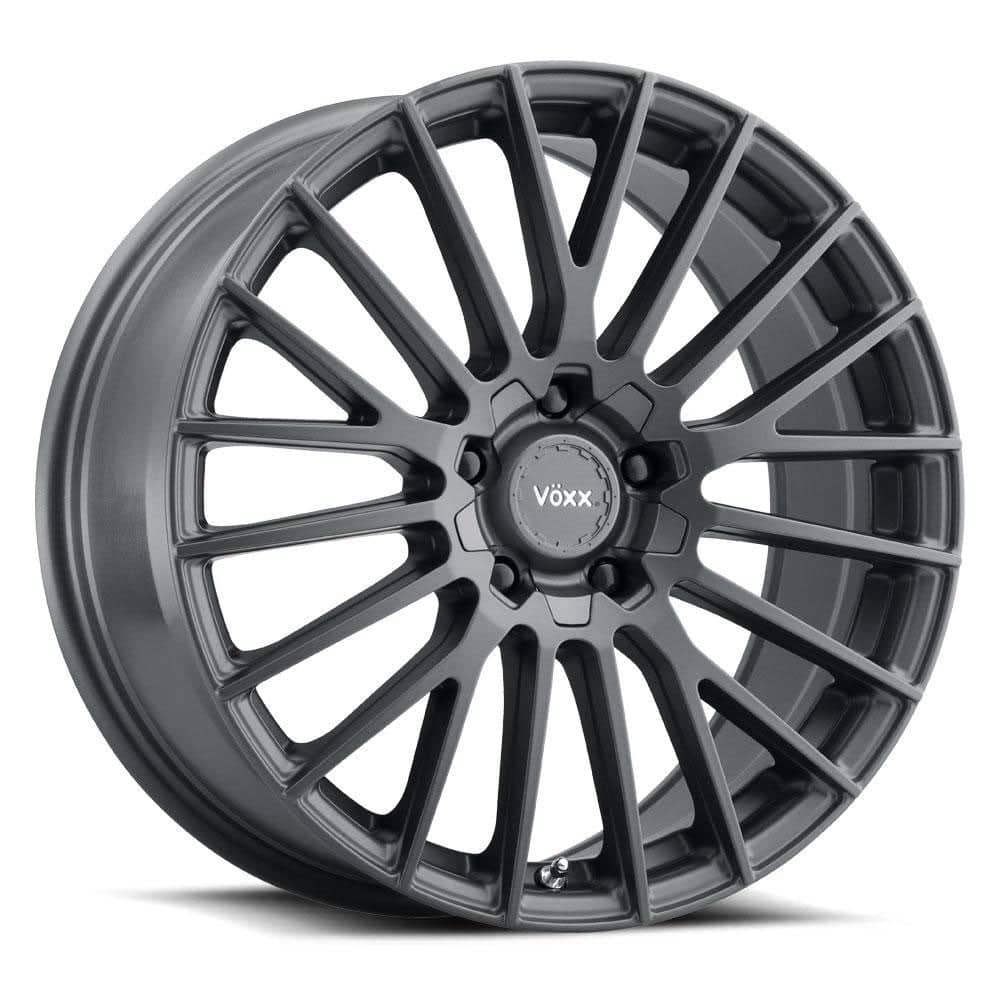
Voxx Capo - from $165.63. A clean twin-spoke in carbon gray, 17x7.5, dual-drilled 5x110/5x115 with a 38 mm offset that sits right on a Malibu or G6. See it here.
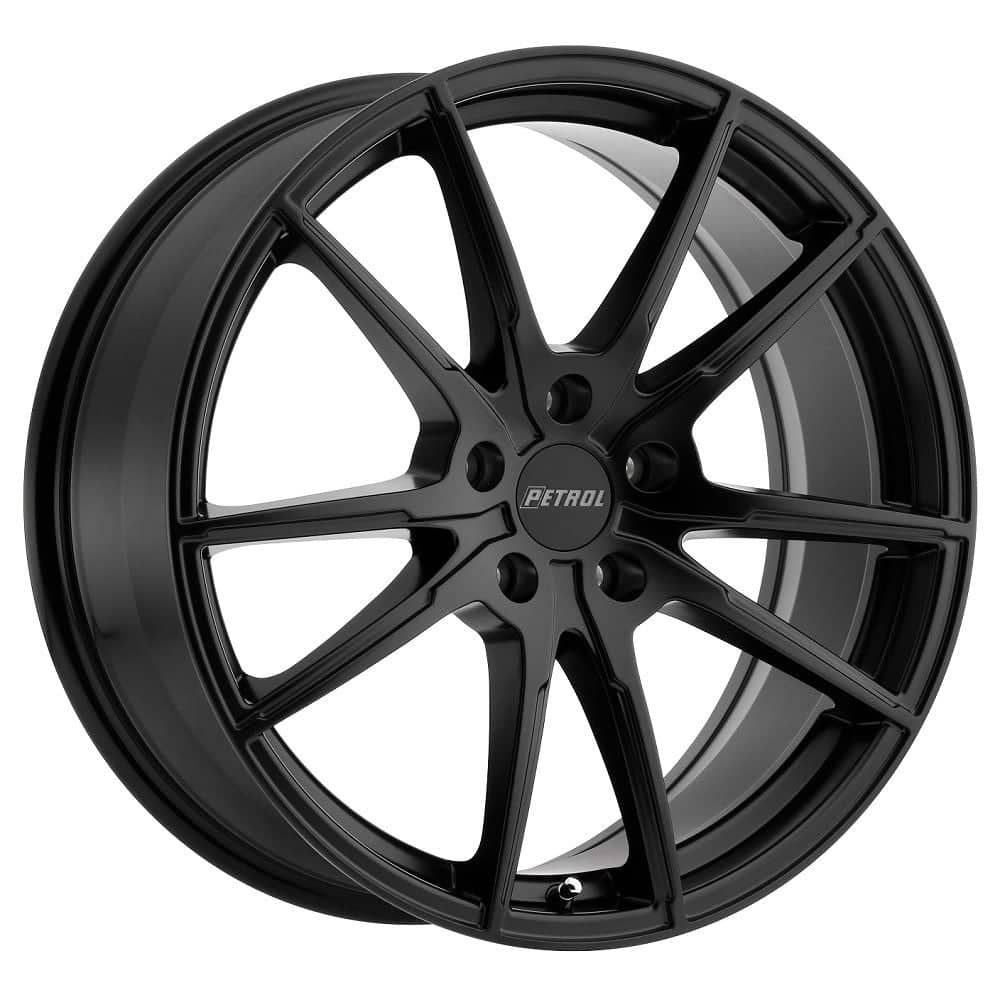
Petrol P0A - from $177.71. Petrol builds specifically for Euro and near-Euro fitments, and the P0A's 17x8 with a 40 mm offset is tailor-made for Saab 9-3s and Jeep Renegades alike. Check it out here.
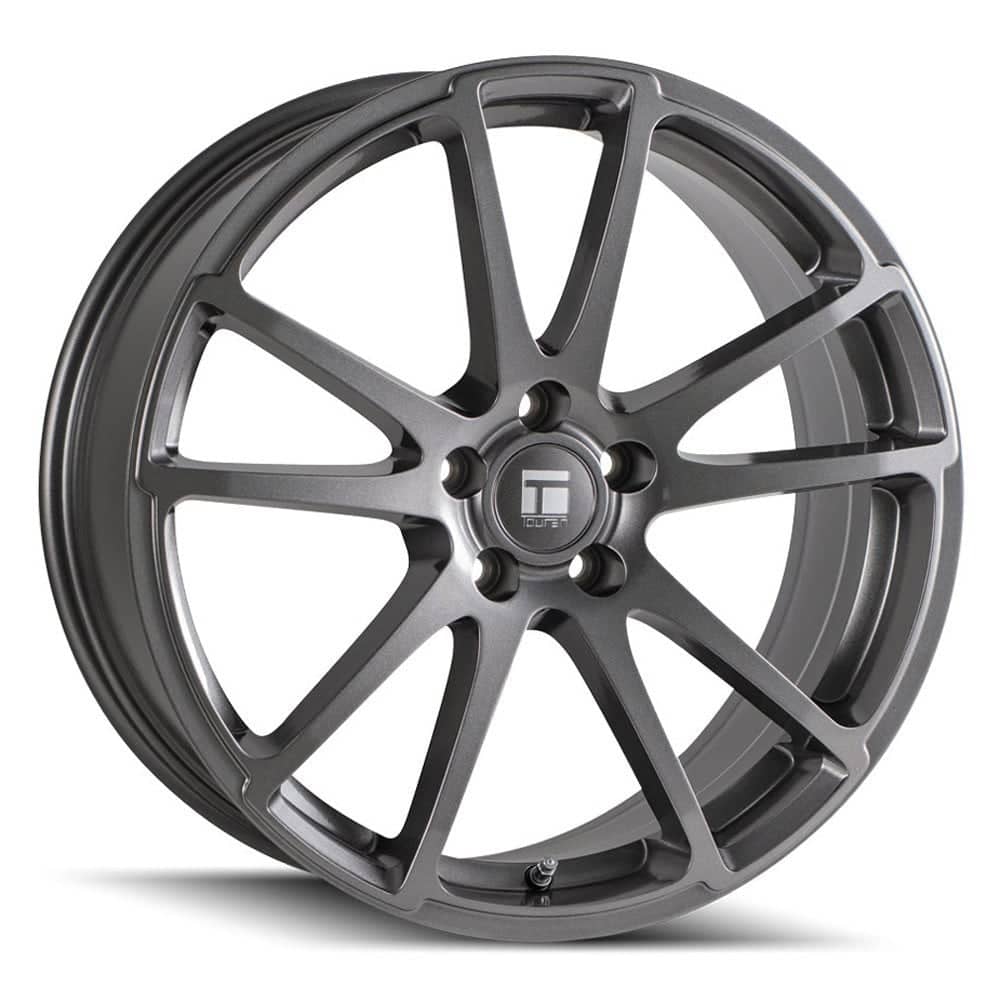
Touren TF03 - from $189.94. The detail I appreciate: its 65.1 mm center bore is machined hub-centric for GM 5x110 applications, so no rings required. Graphite finish, 17x7.5. See the TF03 here.
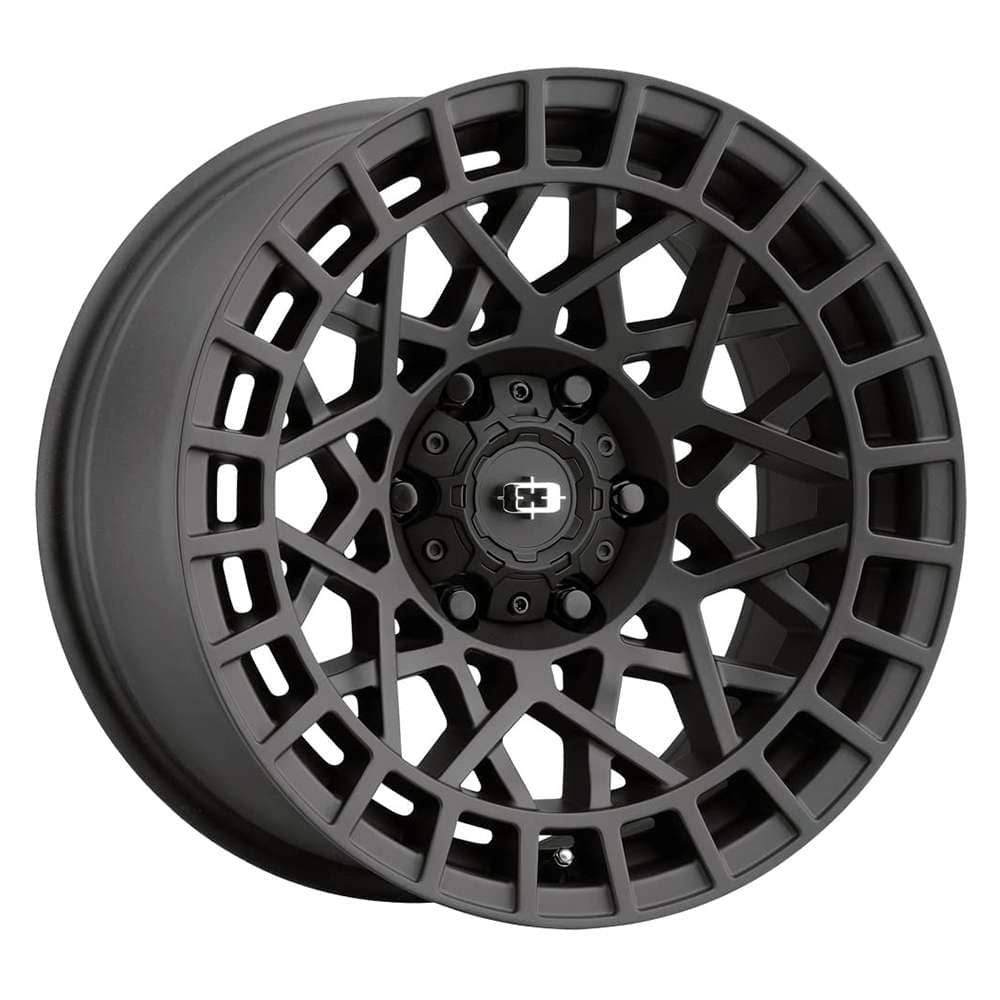
Vision 349 Savage - from $205.09. A gloss black five-spoke with a machined lip that reads far more expensive than it is. 17x8, straight 5x110 drill. Take a look here.
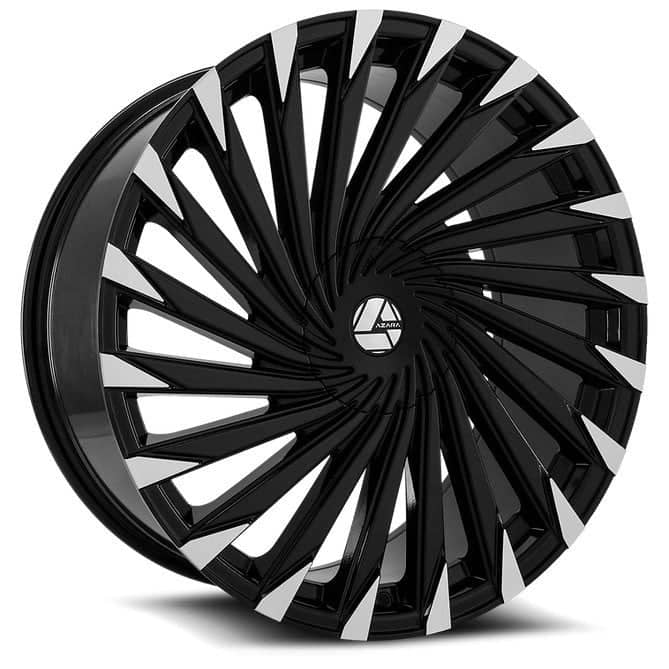
Azara AZA 501 - from $209.07. An 18x8 mesh design in gloss black machined, dual-drilled 5x110/5x114.3 - a strong look on a Cherokee KL or Chrysler 200. See it here.
The 5x110 bolt pattern connects two unlikely families - mid-2000s GM and Saab on one side, modern Jeep, Chrysler, Alfa Romeo, and Fiat on the other. Confirm the pattern with a proper measurement, respect the hub bore, and never force a near-miss pattern like 5x115 or 5x112. We've covered the neighboring patterns in our 5x100 bolt pattern and 5x10⁸ bolt pattern guides if your measurement lands elsewhere. When you're ready to shop by fitment, browse our full inventory of 5x110 bolt pattern wheels - every one confirmed to fit before it ships.
The Jeep Cherokee KL (2014-2023), Jeep Compass (2017 and newer), and Jeep Renegade (2015-2023) all use the 5x110 bolt pattern. Wrangler, Gladiator, and Grand Cherokee use the larger 5x127 pattern instead.
It's less common than 5x114.3 or 5x115, but well supported. Because many aftermarket wheels are dual-drilled 5x110/5x115, the practical selection is much larger than the pattern's vehicle count suggests - we stock more than 1,100 wheels that fit it.
Quality hub-centric adapters can convert between patterns, but they add width that changes your effective offset, and they must be torqued and re-checked properly. For daily drivers, a wheel drilled in the correct pattern is always the cleaner solution.
GM-era 5x110 applications use M12 x 1.5 studs with a factory torque spec of 75 to 85 lb-ft, tightened in a star pattern. Aftermarket wheels may require a different lug seat type than factory wheels, so always match the seat to the wheel.
They share the 5x110 bolt pattern, but sharing a pattern is not the same as sharing a fitment. Offset, hub bore, brake clearance, and lug hardware differ between the platforms, so each wheel still has to be verified against the specific vehicle.



