
The 5x100 bolt pattern lives in two very different worlds. The first is the Subaru and Toyota sport-compact crowd: the WRX and Impreza through 2004, the Forester, Legacy, and Outback, and the modern BRZ, 86, and GR86 twins. The second is a long list of older domestic and Volkswagen-Audi front-drivers: the Dodge Neon and PT Cruiser, the Chevy Cavalier, the Mk4 Golf, GTI, and Jetta, and the Audi TT and A3. In plain numbers, 5x100 means five lugs spaced evenly on a circle 100 millimeters across, which works out to about 3.94 inches.
I run fitment for a living, and 5x100 is a pattern where the biggest mistakes happen at the edges. It sits close to 5x114.3, and here is the trap that catches people every week: the Subaru WRX used 5x100 through 2004, then switched to 5x114.3 for 2005 and later. Grab the wrong set and nothing lines up. So let me lay out exactly which cars use 5x100, what the specs are, and what 5x100 is not.
Think of 5x100 in the two groups I mentioned, because the hardware behind the pattern is not the same between them. The Subaru and Toyota sport-compact group is the one most enthusiasts are shopping for. That means older Subaru performance and wagon platforms plus the shared Subaru-Toyota rear-drive coupe, the BRZ and 86. Because those two share the pattern and the Subaru-family center bore, guys cross-shop wheels between them constantly.
The domestic and VW-Audi front-drive group is broader but mostly older. It covers the Chrysler-Dodge compacts, a big slice of front-wheel-drive General Motors cars, and the Volkswagen Group vehicles built roughly from the late 1990s into the 2000s. These are economy and sport-compact cars, not muscle cars, so the wheels tend to be lighter-duty. The pattern is the same 100 millimeters, but the bore and offset shift between groups, which is exactly where fitment goes wrong if you are not paying attention.
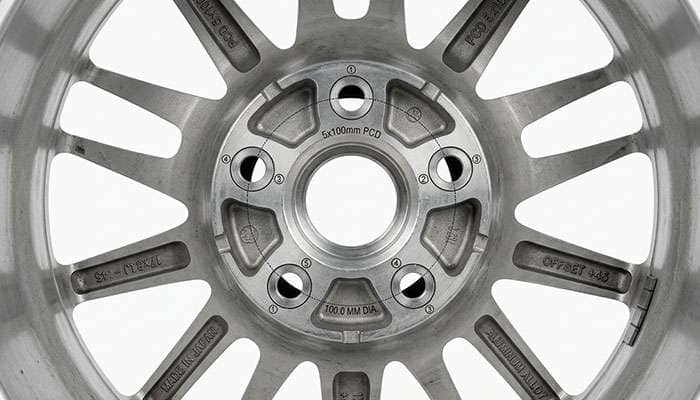
Let me break the number down, because it is simpler than it looks. The first digit is the lug count: five bolt holes. The second number is the Pitch Circle Diameter, or PCD, which is the diameter of the imaginary circle drawn through the center of those five studs. At 100 millimeters, that circle is about 3.94 inches across. That is the whole definition.
Because five is an odd number of lugs, you cannot measure straight across from one hole to the one opposite, since there is no hole directly opposite. Instead you measure from the center of one lug hole to the outer edge of the hole two positions away. If you want the full method with a tape measure or a gauge, we walk through it in our guide on how to measure a lug bolt pattern. And if bolt patterns in general are still fuzzy, our lug pattern explainer covers the fundamentals.
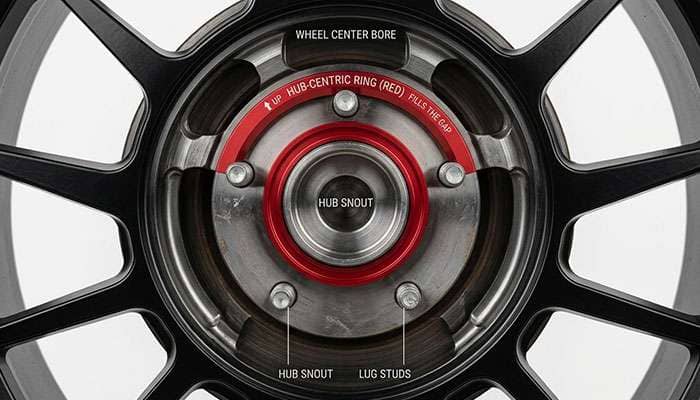
Here is the part that separates a clean install from a vibrating mess. The 100-millimeter PCD is constant across every 5x100 car. What changes is the center bore and the offset, and those two decide whether a wheel actually centers and sits right. Aftermarket 5x100 wheels are almost always built with a large open bore around 72.6 millimeters so they can cover several vehicles, which means you will usually need a hub-centric ring to center the wheel on your specific hub.
Vehicle Group |
Common Models |
Hub Bore |
Typical Offset |
|---|---|---|---|
Subaru |
WRX and Impreza (through 2004), Forester, Legacy, Outback, BRZ |
56.1 mm |
ET48 to ET55 |
Toyota / Scion |
86, GR86, FR-S, Celica, Matrix, tC, xD |
54.1 mm |
ET40 to ET50 |
VW / Audi |
Golf, GTI, Jetta (Mk4), Beetle, Corrado, Audi TT and A3 |
57.1 mm |
ET35 to ET45 |
Chrysler / Dodge |
Neon, PT Cruiser, Sebring, Stratus, Cirrus |
57.1 mm |
Around ET40 |
GM / Pontiac |
Cavalier, Cobalt, Sunfire, Grand Am, Beretta, Vibe |
57.1 mm |
ET38 to ET42 |
Notice the bore differences. A Subaru sits on a 56.1-millimeter hub and the BRZ shares that Subaru bore, while a Mk4 VW uses 57.1 and a Toyota 86 uses a smaller 54.1. A wheel built to center on one will not center on another without the correct ring, even though all of them share the 5x100 pattern. That is why I never let a customer walk out with wheels and no hub rings. On the offset side, a Subaru wants a higher offset in the upper 40s to mid 50s, while a Mk4 VW likes something in the 30s to low 40s, so a wheel that looks perfect on an Impreza can poke or tuck wrong on a Golf. If offset is still a mystery, our breakdown of offset and backspacing makes it click. For torque, most of these compacts land near 80 to 100 lb-ft, but always confirm the figure in your owner's manual.
Here is the breakdown by brand, covering the North American vehicles most owners are shopping wheels for. As always, verify by year and trim, because manufacturers change patterns mid-platform.
Subaru is the marquee group. The Impreza and WRX ran 5x100 through the 2004 model year, and the Forester, Legacy, and Outback used it for several generations. The modern BRZ shares 5x100 with its Toyota twin. Remember the hard cutoff: 2005 and newer WRX moved to 5x114.3.
Toyota and Scion cover the 86, GR86, and the earlier Scion FR-S, plus the final two generations of the Celica, the Matrix and its Pontiac Vibe sibling, certain Corolla years, and the Scion tC and xD.
Volkswagen and Audi center on the Mk4 platform from roughly 1999 to 2005, meaning the Golf, GTI, and Jetta of that era, plus the New Beetle and the earlier Corrado. On the Audi side you will find it on the TT 8N and the A3 8L.
Chrysler and Dodge used 5x100 across the Neon, PT Cruiser, Sebring, Stratus, and Cirrus. General Motors and Pontiac ran it on a long list of compacts including the Cavalier, Cobalt, Sunfire, Beretta, Corsica, Buick Skylark, Oldsmobile Achieva, and the Grand Am, plus the Pontiac Vibe.
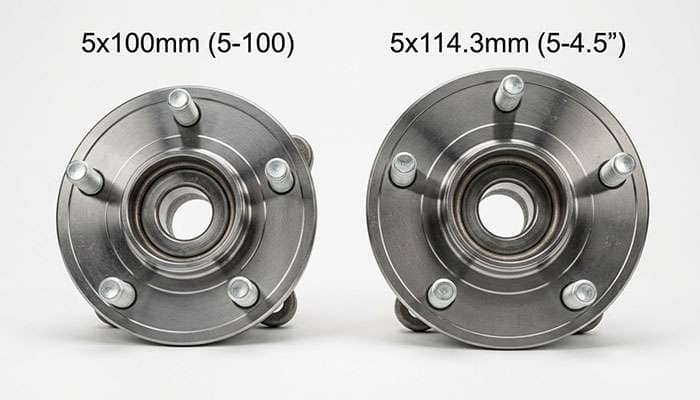
This is where people get burned, so let me be blunt about the neighbors.
5x114.3 is the big one. At 114.3 millimeters it is over 14 millimeters larger than 5x100, so the studs do not line up at all. This matters because so many cars that once ran 5x100 later switched to 5x114.3, the 2005-and-up Subaru WRX being the classic example. It is also the pattern on Hondas, most Nissans, and modern Toyotas. Our guide on what cars are 5x114.3 bolt pattern lists that huge group. 5x112 is the modern German standard on current Volkswagen, Audi, and Mercedes-Benz, just 12 millimeters larger than 5x100 and not interchangeable; our 5x112 guide covers those. And 5x10⁵, a GM compact pattern on cars like the Chevy Cruze and Sonic, is only 5 millimeters larger but still will not fit. If you want to see how close some of these live, our 5x115 bolt pattern guide shows another pattern people confuse with its neighbor.
Yes, with the right hardware. Bolt-pattern adapters bolt to your hub at 5x100 and present a different pattern, most commonly 5x114.3, on the outer face. That opens up the enormous 5x114.3 wheel selection to a 5x100 car, and it also adds track width, which some builders want for stance. Quality adapters from a reputable maker, hub-centric and properly torqued, are a legitimate solution used on plenty of clean builds.
That said, an adapter is a spacer with studs, so it must be the correct thickness, hub-centric to both the vehicle and the wheel, and torqued to spec at every install. I would never force a mismatched wheel onto the factory studs or re-drill a hub to fake a fit. If your center bore is the only mismatch and the pattern already matches, a simple hub-centric ring is all you need, and our guide on hub-centric versus lug-centric wheels explains when a ring is enough.
We stock thousands of 5x100 wheels, and for these sport-compact platforms Enkei is my go-to for the blend of light weight, correct fitment, and clean design. Here are a few I reach for.
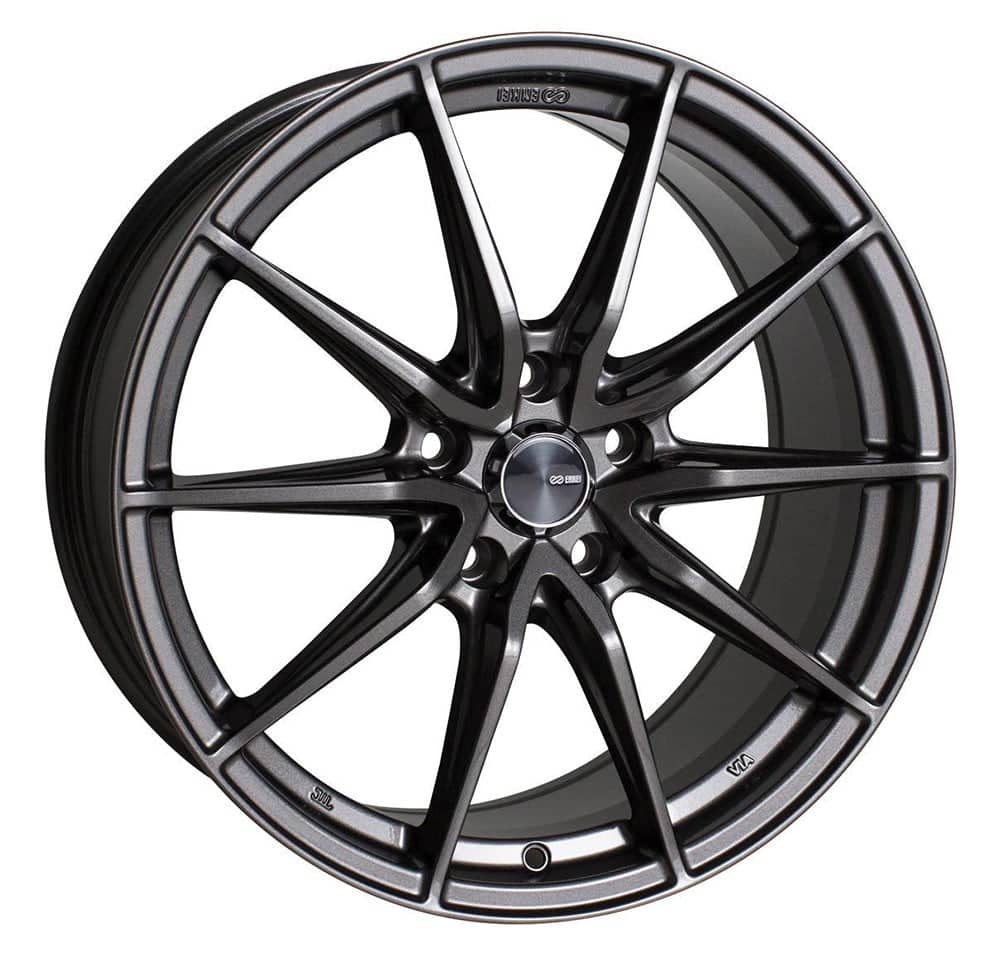
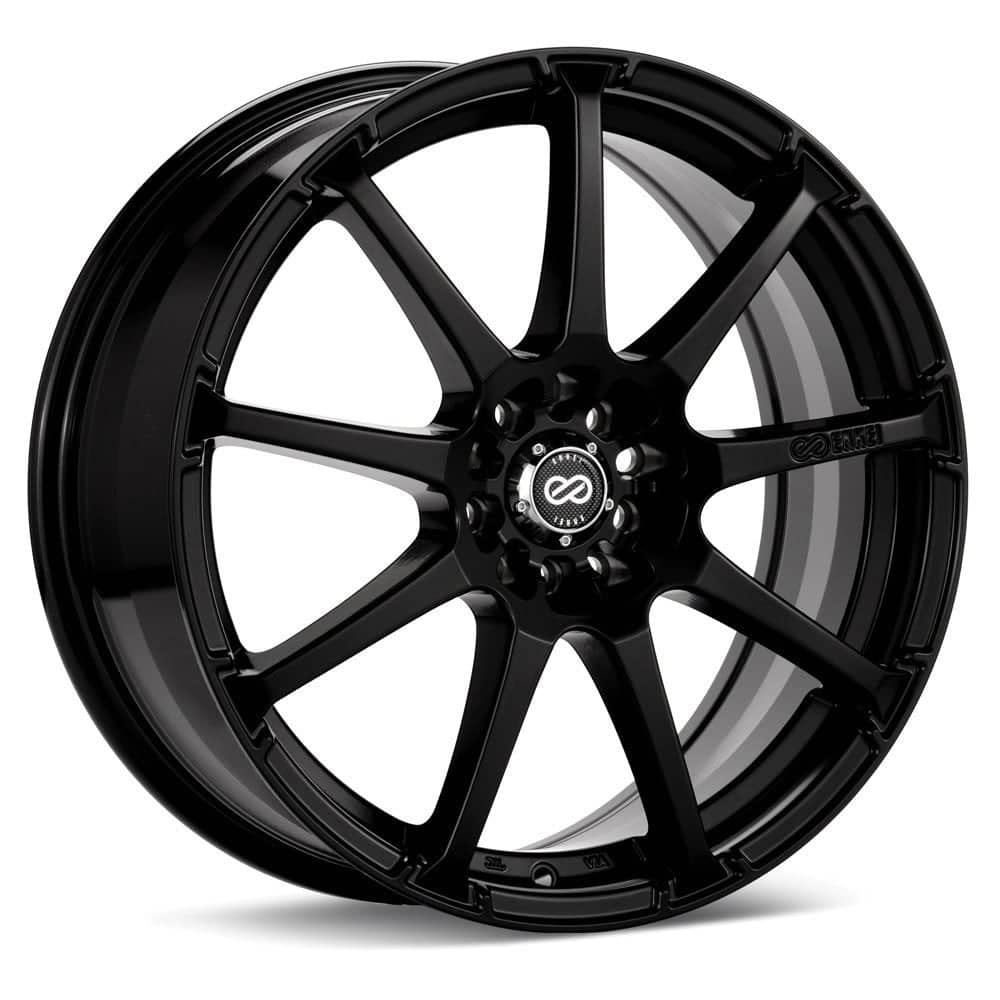
The Enkei Draco in 17x7.5 around 199 dollars is a clean multi-spoke that suits a WRX, BRZ, or Mk4 GTI beautifully, with an ET45 offset that plays well with the higher-offset crowd. If you want a wheel that hedges the pattern question, the Enkei EDR9 in 17x7 around 173 dollars is drilled for both 5x100 and 5x114.3, so it fits the older and newer Subaru worlds alike.
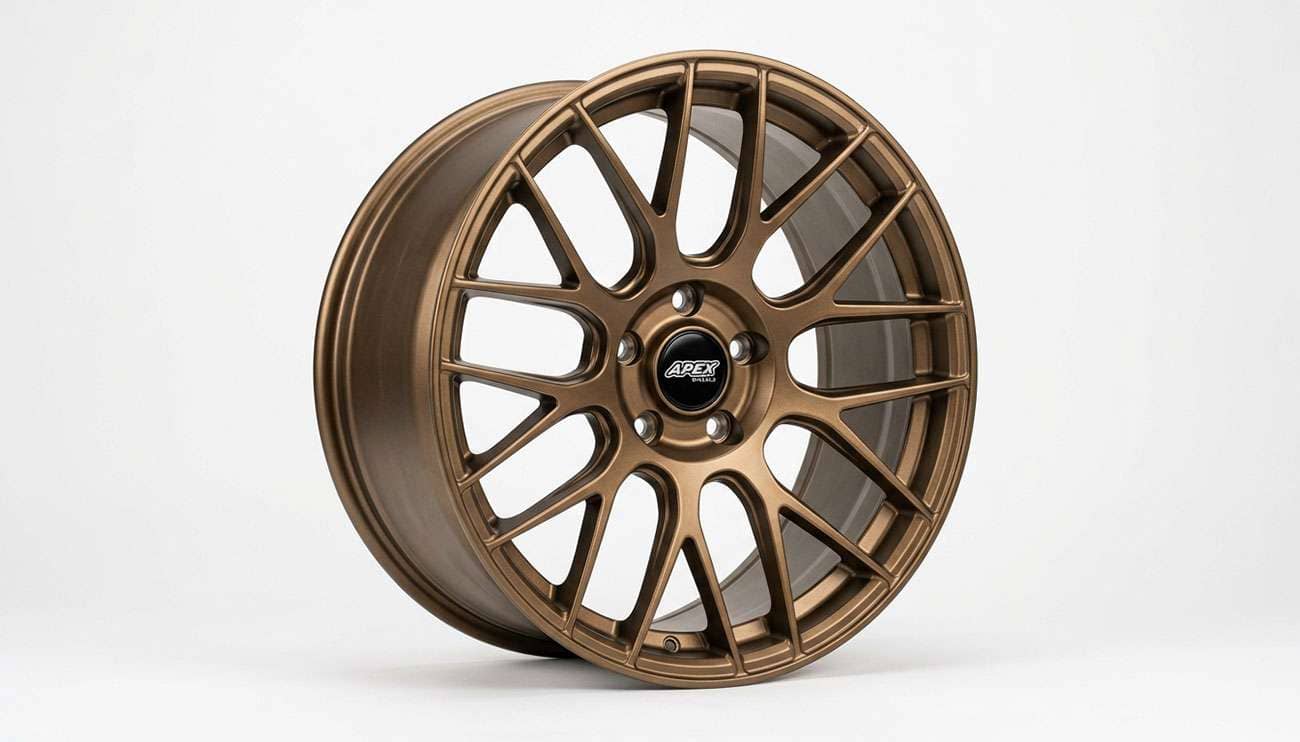
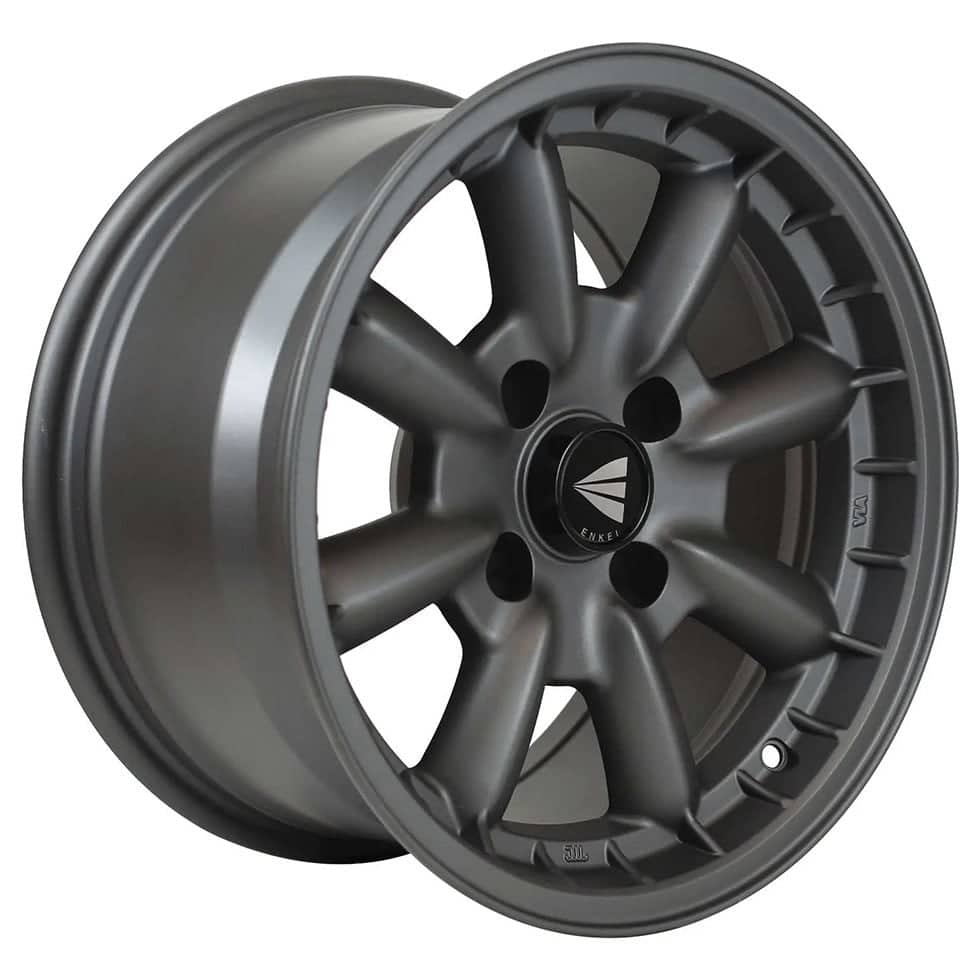
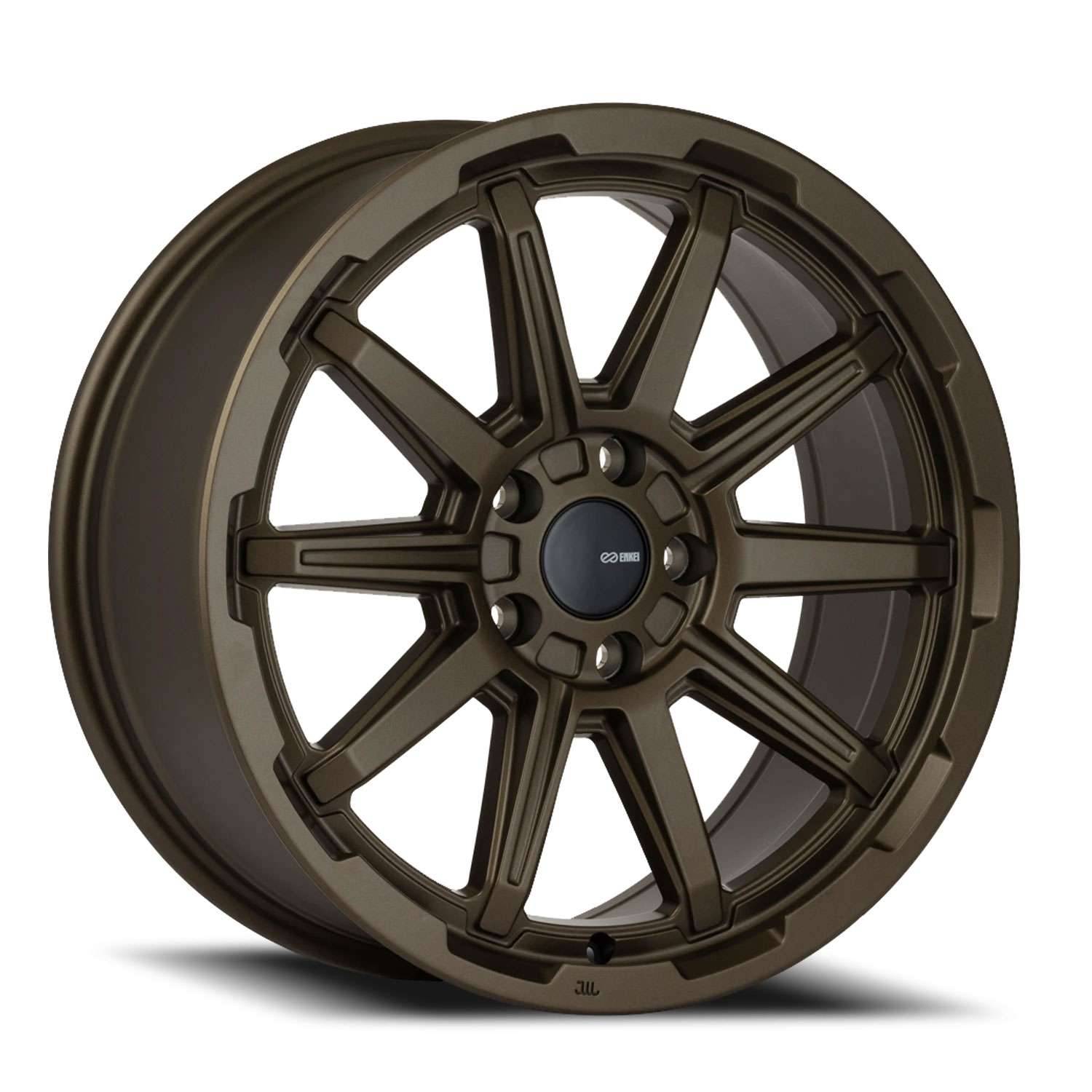
For a squarer, more aggressive look, the Enkei Compe in 16x8 around 204 dollars runs a lower ET25 offset for a wider stance, and the Enkei Adventurer in 17x7.5 matte bronze around 210 dollars nails the bronze trend on a light, capable wheel.
Browse the full selection and let our team confirm bore and offset for your exact car over at our 5x100 wheel collection.
5x100 means five lugs on a 100 mm circle. That is about 3.94 inches, and the PCD is identical across every 5x100 vehicle.
It splits into two worlds. The Subaru and Toyota sport-compact group (WRX and Impreza through 2004, Forester, Legacy, BRZ, 86) and the older domestic plus VW-Audi front-drive group (Neon, Cavalier, Mk4 Golf, Audi TT).
Watch the 2005 WRX cutoff. Subaru switched the WRX from 5x100 to 5x114.3 for 2005, which is the single most common 5x100 fitment mistake.
Bore and offset change by group. Subaru and BRZ use a 56.1 mm bore, Toyota 54.1, VW and GM 57.1, so a hub-centric ring is almost always required, and offset targets differ between Subaru and VW.
Neighbors do not cross over. 5x114.3, 5x112, and 5x10⁵ will not fit without proper adapters, never by forcing the lugs.
The 5x100 bolt pattern appears on Subaru models like the WRX and Impreza through 2004, the Forester, Legacy, Outback, and the BRZ, plus the Toyota 86 and GR86, Scion FR-S, tC, and xD. It also covers older Volkswagen and Audi front-drivers such as the Mk4 Golf, GTI, Jetta, New Beetle, Audi TT and A3, and domestic compacts like the Dodge Neon, PT Cruiser, and Chevy Cavalier.
No. The 5x114.3 pattern is more than 14 millimeters larger than 5x100, so the studs will not line up and the wheels are not interchangeable. This matters because some cars changed between the two: the Subaru WRX used 5x100 through 2004 and switched to 5x114.3 in 2005. You can bridge the two only with proper bolt-pattern adapters.
Yes. The Subaru BRZ and the Toyota 86 and GR86 all use the 5x100 bolt pattern, which is one reason enthusiasts cross-shop wheels between them. The BRZ carries the Subaru-family 56.1 mm center bore, so confirm the bore and use the correct hub-centric ring when fitting aftermarket wheels built with a larger universal bore.
Usually yes. Aftermarket 5x100 wheels are typically built with a large universal bore around 72.6 mm to cover several vehicles, while your hub is smaller, commonly 54.1, 56.1, or 57.1 mm depending on the make. A hub-centric ring fills that gap so the wheel centers on the hub rather than hanging on the lug nuts, which prevents vibration.
Offset depends on the vehicle group, not just the pattern. Subaru platforms typically want a higher offset in the upper 40s to mid 50s, while Mk4 Volkswagens prefer the mid 30s to low 40s, and most domestic compacts land around ET38 to ET42. Because the same 5x100 wheel can poke or tuck differently between cars, always match offset to your specific model.
Yes, with quality bolt-pattern adapters. They bolt to your 5x100 hub and present a new pattern, most often 5x114.3, on the outer face, which opens up a far larger wheel selection and adds some track width. Adapters must be hub-centric, the correct thickness, and torqued to spec at every install. Never force a mismatched wheel onto the factory studs.



