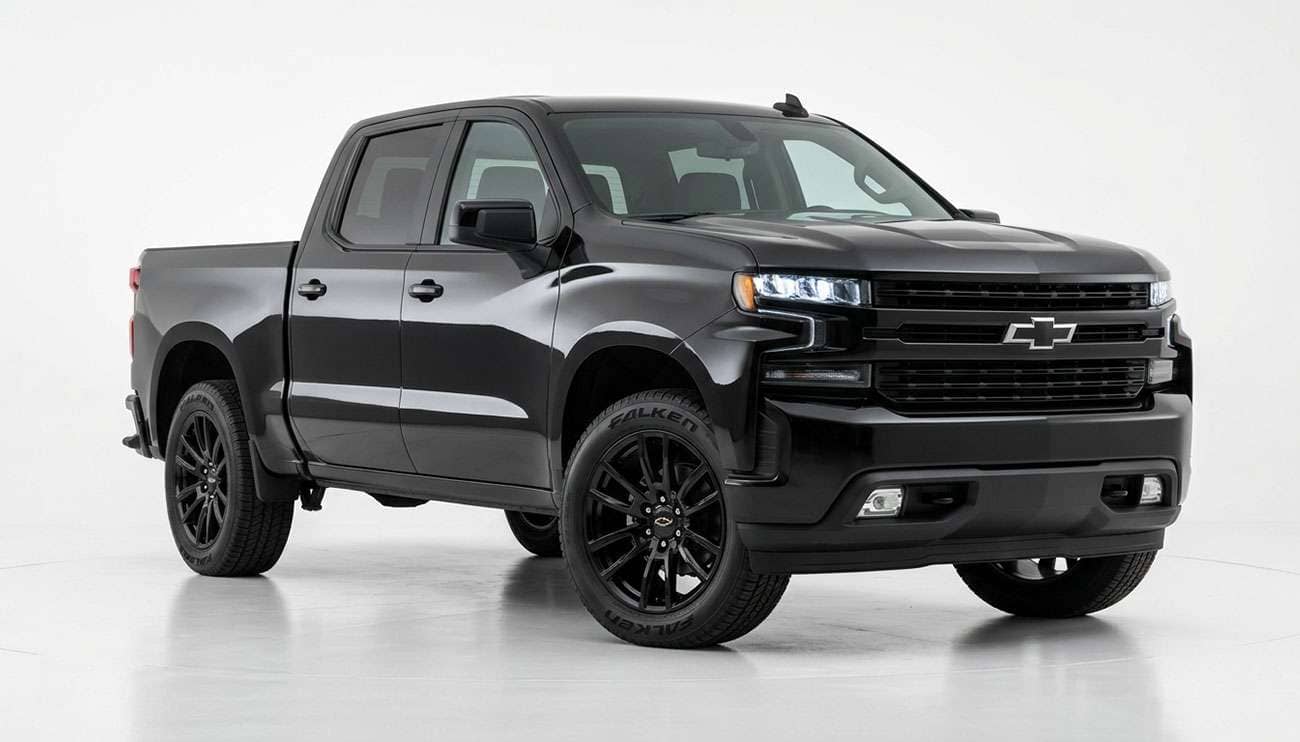
Most 20-inch vs. 22-inch comparisons end with "it depends on your priorities." Fair enough. But depends on what? Here's the answer: the load index on your door placard. On a 2019-or-newer Silverado 1500 or a 2021-or-newer Tahoe, the factory 20-inch tire is a 275/60R20 rated 115, good for 2,679 lb. The factory 22-inch tire is a 275/50R22 rated 111, good for 2,403 lb. Same overall height. 276 fewer pounds per tire. A 22-inch package is the right call when you buy the version that closes that gap.
I'm Dennis Feldman, and fitment is my lane at Performance Plus Tire. Below you'll find the load numbers by truck, the wheel ratings most package listings never put in front of you, four 22-inch packages built around those numbers, and a straight 20-vs-22 comparison if you're still deciding.
Factory 20s vs. factory 22s: what happens to tire load capacity
Truck |
Factory 20-Inch Tire |
Factory 22-Inch Tire |
Change Per Tire |
22-Inch Tire That Matches or Beats the 20 |
|---|---|---|---|---|
2019+ Chevy Silverado 1500 / GMC Sierra 1500 |
275/60R20 115 (2,679 lb) |
275/50R22 111 (2,403 lb) |
-276 lb |
275/50R22 115 XL |
2021+ Chevy Tahoe and Suburban / GMC Yukon |
275/60R20 115 (2,679 lb) |
275/50R22 111 (2,403 lb) |
-276 lb |
275/50R22 115 XL |
2021 Ford F-150 (Limited on 22s) |
275/60R20 115 (2,679 lb) |
275/50R22 111 (2,403 lb) |
-276 lb |
275/50R22 115 XL |
2014-2018 Silverado 1500 / 2015-2020 Tahoe |
P275/55R20 111 (2,403 lb) |
P285/45R22 110 (2,337 lb) |
-66 lb |
285/45R22 114 XL |
2021 Ram 1500 (Laramie, Limited) |
275/55R20 113 (2,535 lb) |
285/45R22 114 XL (2,601 lb) |
+66 lb |
285/45R22 114 XL |
Notice the Ram row. Ram specified an Extra Load 22-inch tire from the factory, so its 22s actually carry more than its 20s. GM and Ford took the standard-load route. That one difference is why a single answer to "20 or 22?" can't fit every truck.
Neither size wins in the abstract. What decides it is what the extra 2 inches of wheel take away from the tire. Wheel and tire packages are sized to keep the overall diameter close to stock, so your speedometer, gearing, and fender clearance stay where the factory set them. When the wheel grows by 2 inches, each sidewall has to shrink by about an inch to hold that height.
Tire Size |
Sidewall Height |
Overall Diameter |
Load Index |
Approved Rim Width |
|---|---|---|---|---|
275/60R20 |
6.50 in |
32.99 in |
115 SL (2,679 lb) |
7.5 to 9.5 in |
275/50R22 |
5.41 in |
32.83 in |
111 SL / 115 XL |
7.5 to 9.5 in |
285/45R22 |
5.05 in |
32.10 in |
110 SL / 114 XL |
9 to 10.5 in |
305/45R22 |
5.40 in |
32.81 in |
118 XL (2,910 lb) |
9.5 to 11.5 in |
LT285/50R22 |
5.61 in |
33.22 in |
121 Load Range E (3,197 lb) |
8.5 to 10 in |
Look at the first two rows. The 275/50R22 gives up 1.08 inches of sidewall, about 17 percent, to stand just 0.16 inch shorter than the 275/60R20. That inch of rubber and air is your truck's first stage of suspension. It's also air volume, and air volume is where load capacity comes from.
Price follows the size. In the same tire line, the Falken Wildpeak H/T02, the 275/60R20 lists at $233 and the 275/50R22 at $264, a $31-per-tire premium. Across the market, a 275/50R22 typically runs about $55 to $60 more per tire than a 275/60R20.
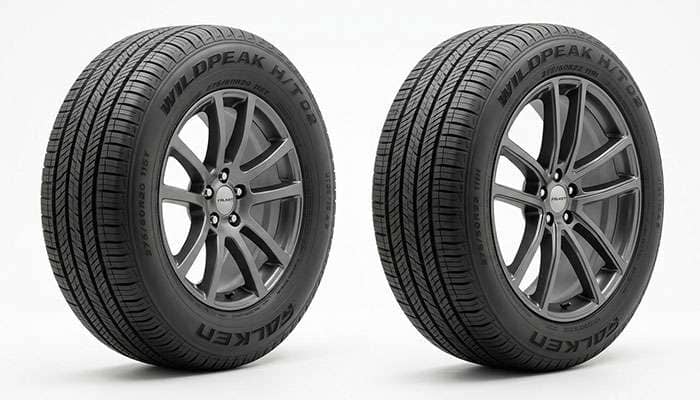
So the real question isn't "20 or 22?" It's "can I buy a 22 that carries what my 20 carried, on a wheel rated for my axle?" For most trucks the answer is yes. The next four sections show how.
A tire holds your truck up with compressed air, not rubber. The casing just keeps that air in shape. Load capacity scales with two things: how much air is inside and how hard it's pressed. Cut the sidewall height and you shrink the air chamber, so at the same pressure the tire carries less.
The Tire and Rim Association publishes the load-and-inflation tables U.S. tire makers rate against, and ETRTO does the same for Euro-metric sizes. Both cap a standard load (SL) tire's rating at 35 psi for P-metric and 36 psi for Euro-metric sizes. At that ceiling, the air chamber in a 275/60R20 supports load index 115 (2,679 lb). The smaller chamber in a 275/50R22 supports 111 (2,403 lb). Nothing about the 22-inch tire is weaker. It just holds less air.
Then federal rules stack on top. NHTSA's FMVSS No. 110 requires the combined load ratings of the tires on each axle to meet or exceed that axle's gross axle weight rating (GAWR), printed on the certification label in your door jamb. For trucks and SUVs riding on passenger tires, there's a catch: each P-metric or Euro-metric passenger tire's rating is divided by 1.10 before you add them up. LT tires skip that derate.
Tire |
Rated Load |
After FMVSS 110 Derate |
Per Axle (2 Tires) |
|---|---|---|---|
275/60R20 115 SL (factory 20) |
2,679 lb |
2,435 lb |
4,871 lb |
275/50R22 111 SL (factory 22) |
2,403 lb |
2,185 lb |
4,369 lb |
275/50R22 115 XL |
2,679 lb |
2,435 lb |
4,871 lb |
LT285/50R22 121 Load Range E |
3,197 lb |
No derate (LT tire) |
6,394 lb |
That's roughly 500 lb of rated axle capacity gone when a standard-load 22 replaces the factory 20. FMVSS 110 even anticipates trucks sold on more than one tire size: when a certification label lists more than one GAWR, the tires must meet the GAWR that matches the size actually installed.
Does that make a 111 tire unsafe? No. Run empty around town and it has headroom to spare. Fill the third row, load the cargo area, hang a trailer on the hitch, and the rear axle climbs toward its GAWR. That's where 276 lb per tire stops being a spec-sheet number. The standard rule in tire service holds here: a replacement tire should match or exceed the load capacity of the tire your truck was built with.
It closes the gap, with one condition. The 275/50R22 comes in two load versions: 111 standard load and 115 Extra Load (XL). A 115 XL matches the factory 275/60R20 pound for pound. In 275/50R22, XL versions are about as easy to find as standard load, and they often cost the same. The Falken Wildpeak H/T02 lists at $264 in both the 111H SL and the 115H XL.
Here's the condition most XL explanations skip: an XL tire carries the same load as an SL tire at the same pressure. The reinforced casing doesn't add capacity by itself. It lets the tire safely hold more air, and the extra air carries the extra weight. The load tables extend XL ratings up to 41 psi for P-metric and 42 psi for Euro-metric sizes. Run a 115 XL at 35 psi and you've bought a stronger tire that's carrying about what a 111 carries.
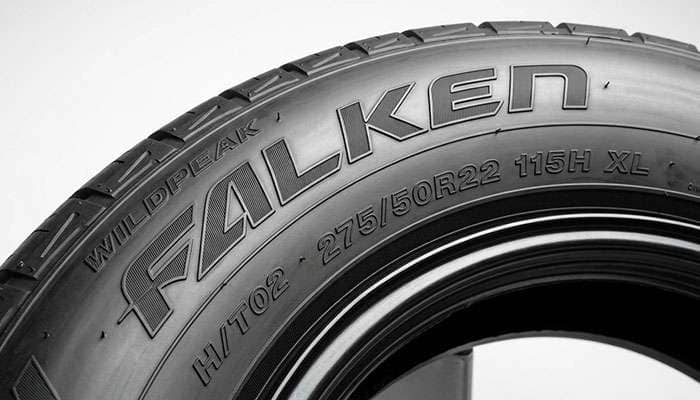
So the fix has two parts. Buy the XL. Then set pressure from the load-and-inflation table for the weight you actually carry, and never run below the placard number. If a loaded corner needs the full 115 rating, that means running the XL toward its 41 or 42 psi ceiling, with a slightly firmer ride as the trade. Our breakdown of SL vs. XL tires walks through how the tables work.
If you tow or haul near your ratings every week, look at LT construction instead. An LT285/50R22 in Load Range E carries 3,197 lb per tire at its 80 psi maximum, and FMVSS 110's passenger-tire derate doesn't apply to it. The trade-offs are real: a stiffer ride, a heavier tire, and inflation that has to come from the LT load table, because your placard was written for a passenger tire. Here's the full comparison of P-metric vs. LT tires.
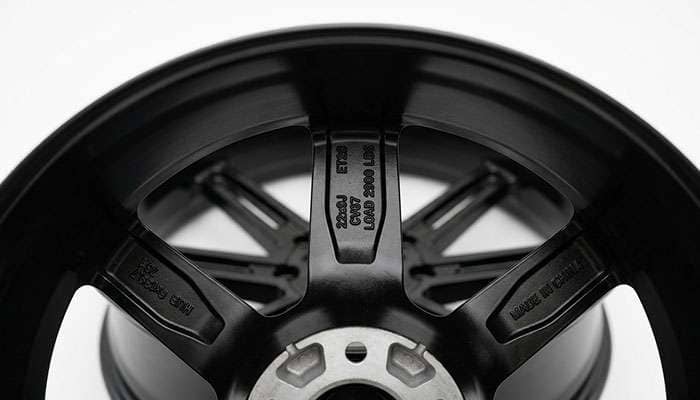
Whatever the tire carries, the wheel carries too. Every aftermarket wheel has a load rating, and aftermarket wheels are validated against SAE J2530, the SAE standard that runs fatigue and impact tests at loads derived from the wheel's rated capacity. The sizing rule is simple: each wheel's rating has to meet or beat half of your heaviest GAWR. If your door-jamb label shows a 4,400-lb rear GAWR, every wheel needs at least 2,200 lb.
Here's where 22s surprise people. Among GM-fit 22x9 replicas (78.1 mm hub bore), most are rated around 2,200 lb, the stronger designs reach 2,500 lb, and a few hit 2,900 lb. GM-fit 20x9 wheels more commonly land at 2,500 lb. Go up in diameter and the typical rating goes down.
Wheel |
Size and Offset |
Load Rating |
Price Each |
|---|---|---|---|
22x9, +24 mm |
2,200 lb |
$310.00 |
|
Factory Reproductions FR 49 Yukon Denali, Black Machined Face |
22x9, +31 mm |
2,250 lb |
$340.00 |
Factory Reproductions FR92 Silverado Split, Gloss Black Milled |
22x9, +28 mm |
2,500 lb |
$350.00 |
22x9, +28 mm |
2,900 lb |
$342.00 |
Price doesn't track strength. The CV67 costs $8 less than the FR92 and carries 400 lb more per corner. That gap matters on a Suburban with a full third row and a trailer behind it. It barely matters on a regular-cab Silverado that never carries more than groceries. Know your GAWR first, then shop. Our wheel load rating guide shows where to find the rating and what the testing covers.
Every tire size has an approved rim width range, set through the Tire and Rim Association and printed on the tire maker's spec sheet. Mount a tire on a rim narrower than its range and the sidewalls get pinched into a balloon shape: the bead seats at the wrong angle, the casing loses lateral stiffness, and steering response goes soft. Mount it on a rim wider than its range and the sidewall stretches flat, leaving the rim lip exposed to curbs and potholes.
Tire Size |
Approved Rim Width |
On a 22x9 |
On a 22x9.5 |
On a 22x10 |
|---|---|---|---|---|
275/50R22 |
7.5 to 9.5 in |
Approved |
Approved |
Outside range |
285/45R22 |
9 to 10.5 in |
Approved |
Approved |
Approved |
305/45R22 |
9.5 to 11.5 in |
Outside range |
Approved |
Approved |
LT285/50R22 |
8.5 to 10 in |
Approved |
Approved |
Approved |
The 305/45R22 row is the one to watch. You'll find 22x9 wheels paired with 305/45R22 tires in package listings because the combination looks aggressive. The tire's approved range starts at 9.5 inches, so a 22x9 sits half an inch under the published spec. Put the 305 on a 22x10 wheel and it lands on its 10-inch measuring rim, right where it was designed to run. The reverse catches people too: the popular 275/50R22 tops out at 9.5 inches, so it doesn't belong on a 22x10. For the width-by-width breakdown on the most common size, see what size tires fit 22x9 rims.
Bolt pattern gets the wheel onto the hub. Hub bore, lug thread, and offset decide whether it runs true and sits where the factory intended. Use this table to find your truck, then jump to the matching package below.
Truck |
Bolt Pattern |
Hub Bore |
Lug Thread |
OE-Style 22-Inch Offset |
Package Match |
|---|---|---|---|---|---|
2019+ Silverado and Sierra 1500; 2021+ Tahoe, Suburban, and Yukon |
6x139.7 |
78.1 mm |
M14x1.5 |
+24 to +28 mm |
Packages 1, 2, and 4 |
2014-2018 Silverado and Sierra 1500; 2015-2020 Tahoe, Suburban, and Yukon |
6x139.7 |
78.1 mm |
M14x1.5 |
+24 to +31 mm |
Package 3 |
2019+ Ram 1500 |
6x139.7 |
77.8 mm |
M14x1.5 |
Ram-specific |
Choose a Ram-bored wheel |
2015+ Ford F-150 |
6x135 |
87.1 mm |
M14x2.0 |
Ford-specific |
Choose a 6x135 wheel |
Hub bore first. GM's full-size trucks and SUVs center the wheel on a 78.1 mm hub. Most aftermarket 6x139.7 wheels are bored to roughly 106 mm so one casting can fit several brands, which means they need hub-centric rings on a GM. The GM-direct replicas in this article are machined to 78.1 mm and center on the hub with no rings. If you want the why, read hub-centric vs. lug-centric wheels.
Offset next. GM-fit 22x9 replicas cluster between +24 and +31 mm, which keeps the wheel face close to where the factory wheel sat. Most 20x9 six-lug wheels built for lifted and off-road trucks run 0 to +18 mm and push the tire out past the fender. Every 7 mm of offset moves the wheel about 0.28 inch. A +24 wheel on a truck that came with +31 sits 0.28 inch further out; a +28 on that same truck sits 0.12 inch out.
Watch the trucks that look like they share a pattern. A 2019-or-newer Ram 1500 uses the same 6x139.7 bolt circle as GM, but its 77.8 mm hub means a wheel bored to GM's 78.1 mm doesn't truly center on it. Ford's F-150 runs 6x135 with M14x2.0 lugs, so none of the GM packages below will bolt on. Not sure what your truck uses? Our 6x139.7 bolt pattern page lists the vehicles that share it.
Every package below passes the same three checks: a tire that matches or beats the factory 20-inch load index, a wheel load rating you can verify against your GAWR, and a tire width inside the wheel's approved range. Prices are per item at publication. Product pages may show lower set-of-four pricing.
Package |
Wheel |
Tire |
Tire Load |
Wheel Rating |
4 Wheels + 4 Tires |
|---|---|---|---|---|---|
1. Factory-Flush Daily Driver |
OE Replica Wheels CV67 22x9 +28 |
Falken Wildpeak H/T02 275/50R22 115H XL |
2,679 lb |
2,900 lb |
$2,424.00 |
2. Tow-Ready All-Terrain |
Factory Reproductions FR92 22x9 +28 |
Nitto Recon Grappler A/T LT285/50R22 121S |
3,197 lb |
2,500 lb |
$3,556.00 |
3. Previous-Generation GM |
Factory Reproductions FR 49 22x9 +31 |
Continental CrossContact LX25 285/45R22 114H XL |
2,601 lb |
2,250 lb |
$2,651.96 |
4. Wide-Stance Street |
Factory Reproductions FR 33 22x10 +30 |
Michelin Defender LTX M/S 2 305/45R22 118H XL |
2,910 lb |
2,200 lb |
$2,935.96 |
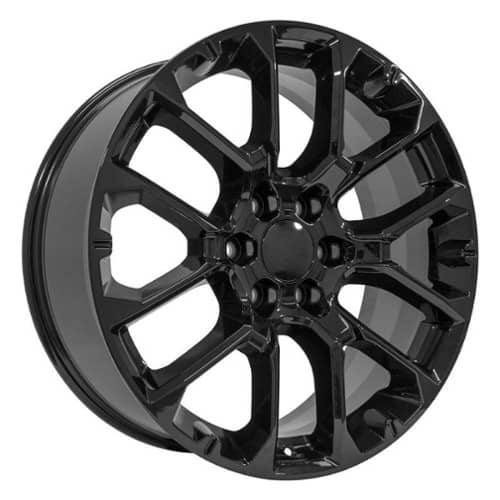
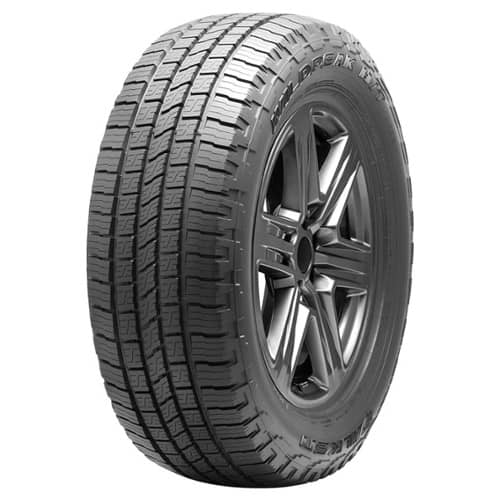
Fits: 2019-or-newer Silverado and Sierra 1500; 2021-or-newer Tahoe, Suburban, and Yukon.
This is the package I'd put on most late-model GM half-tons and full-size SUVs. The OE Replica Wheels CV67 is a 22x9 at +28 mm, machined to the 78.1 mm GM hub, and rated 2,900 lb per wheel, the top of the GM-fit 22-inch range. The Falken Wildpeak H/T02 275/50R22 115H XL restores the exact 2,679-lb rating of the factory 20-inch tire at a 32.8-inch overall height, so your speedometer reads within half a percent of stock. Wheels list at $342.00 each and tires at $264.00 each. More options in this size are on our 275/50R22 tires page.
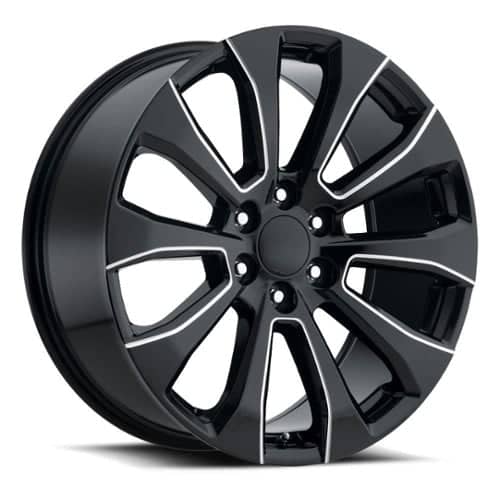
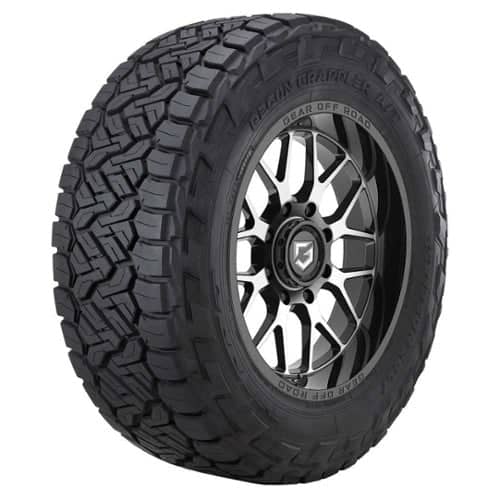
Fits: 2019-or-newer Silverado and Sierra 1500; 2021-or-newer GM full-size SUVs. Built for: towing, hauling, and gravel.
If your truck works for a living, start here. The Nitto Recon Grappler A/T LT285/50R22 is a Load Range E tire rated 3,197 lb per tire with no passenger-tire derate, the most capacity in this lineup. It stands 33.2 inches tall, about 0.2 inch over the factory 20-inch tire, and it's approved for 8.5- to 10-inch rims, so the 22x9 Factory Reproductions FR92 Silverado Split sits squarely in range. The wheel is rated 2,500 lb at +28 mm in gloss black milled. Two notes before you order: set pressure from the LT load table, not the placard, and check full-lock clearance at stock height, since the tire runs 10 mm wider than the factory 275. Wheels list at $350.00 each; tires at $539.00 each.
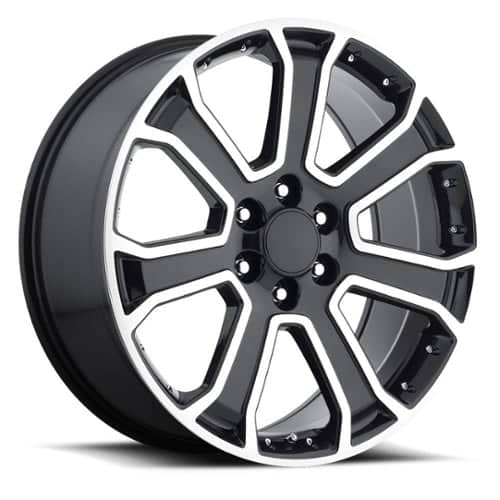
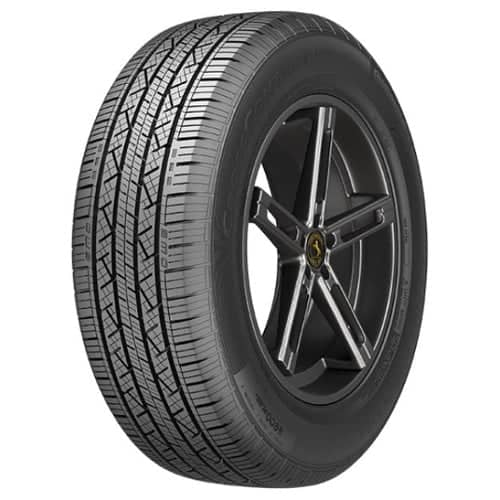
Fits: 2014-2018 Silverado and Sierra 1500; 2015-2020 Tahoe, Suburban, and Yukon.
These trucks left the factory on P275/55R20 111 or P285/45R22 110 tires. The Continental CrossContact LX25 285/45R22 114H XL beats both: 198 lb per tire over the factory 20 and 264 lb over the factory 22. The Factory Reproductions FR 49 Yukon Denali brings a +31 mm offset, a 78.1 mm hub bore, a black machined face, and a 2,250-lb rating. At 32.1 inches tall, the 285/45R22 runs about 0.2 inch over the 31.9-inch P275/55R20, so the speedometer stays within 1 percent. Wheels list at $340.00 each; tires at $322.99 each. Compare more 285/45R22 tires here.
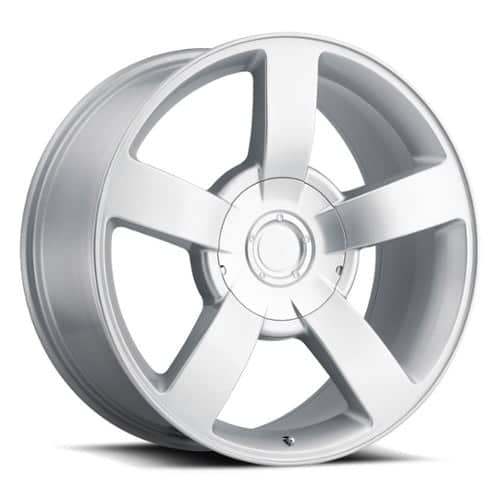
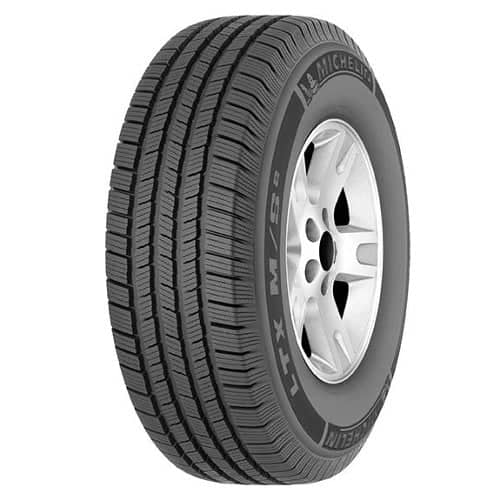
Fits: GM 6x139.7 trucks and SUVs with a 78.1 mm hub; confirm clearance on your generation.
This is the street build for anyone who wants the 305 look done to spec. The Factory Reproductions FR 33 Chevy 1500SS is a 22x10, the 305/45R22's measuring rim width, at +30 mm in silver. The Michelin Defender LTX M/S 2 305/45R22 118H XL carries 2,910 lb per tire, so in this package the wheel's 2,200-lb rating is the limit, not the tire. Check it against your GAWR. Also note backspacing: a 22x10 at +30 mm sits at about 6.68 inches versus 6.10 inches for a 22x9 at +28 mm, so the inner edge of the wheel moves about 0.6 inch closer to the suspension. Test-fit at full lock before mounting. Wheels list at $345.00 each; tires at $388.99 each. See more 305/45R22 tires.
Want a different style? Browse all 22x9 wheels, the full Factory Reproductions and OE Replica Wheels lineups, or every 22-inch wheel we carry. Run the same three checks on whatever you pick.
If you're still deciding between sizes, here's the side-by-side for a 2019-or-newer GM half-ton, the most common truck shopping this upgrade.
Factor |
20-Inch Package |
22-Inch Package |
|---|---|---|
Sidewall height (275-width tire) |
6.50 in |
5.41 in |
Factory load index |
115 (2,679 lb) |
111 (2,403 lb); 115 available in XL |
Tire price, Falken Wildpeak H/T02 |
$233 (275/60R20 115H) |
$264 (275/50R22 115H XL) |
Typical GM-fit wheel rating |
About 2,500 lb |
About 2,200 lb |
Pothole and curb tolerance |
More sidewall to absorb hits |
Less cushion; rim lip closer to impacts |
Steering feel |
Softer, more sidewall flex |
Sharper, quicker turn-in |
Look |
Factory-standard wheel well fill |
Fills the wheel well with a lower-profile tire |
Choose 20s if you drive broken pavement or gravel every day, tow heavy on a passenger tire budget, or want the softest ride your truck can give you. The extra inch of sidewall soaks up impacts the wheel would otherwise take, and you'll spend less on every set of tires for as long as you own the truck.
Choose 22s if your truck lives on decent pavement, you want sharper steering and a fuller stance, and you're willing to buy the XL tire and a properly rated wheel. Done that way, a 22-inch package gives up comfort, not capacity.
The problems with a mismatched 22-inch package rarely show up the day it's installed. They build over months, roughly in this order:
Every rung on that ladder costs more than doing it right the first time. The XL version of the tire often costs nothing extra, and as the wheel table shows, the stronger wheel can even cost less.
For the install itself, including torque, alignment, and clearance checks, our step-by-step guide to upgrading from 20-inch to 22-inch rims walks through every stage. When you're ready, build your set on our wheel and tire packages page.
The 20-vs-22 debate usually gets argued on looks and ride. Those matter, but they're preferences. The load index isn't. On most late-model GM trucks and SUVs, and on the 2021 F-150, the factory 22-inch tire carries 276 lb less than the factory 20, and a wheel upgrade can quietly lower your wheel rating too.
The good news is that both gaps close for little or no money. A 275/50R22 115 XL matches the factory 20 pound for pound, often at the same price as the standard-load version. A GM-fit wheel rated 2,500 to 2,900 lb costs about what a 2,200-lb wheel does. Add the right rim width and the right offset for your generation, and a 22-inch package gives you the stance you want without giving up the capacity your truck was built with.
Yes, somewhat. On a 2019-or-newer GM half-ton, the factory 22-inch tire has 1.08 inches less sidewall than the 20-inch tire, so more of each impact reaches the cabin. If you run an XL tire at higher pressure to restore load capacity, the ride firms up a little more. Most owners on smooth pavement call the difference noticeable but livable.
Not if the package matches the factory overall diameter. A 275/50R22 measures 32.83 inches against 32.99 inches for a 275/60R20, a 0.5 percent difference. At an indicated 70 mph, you'd actually be traveling about 69.7 mph.
Yes, on most full-size trucks and SUVs. Choose a tire that matches or beats the load index on your door placard, which usually means a 275/50R22 115 XL on late-model GM trucks. Then confirm the wheel's load rating covers half your heaviest GAWR, the tire's approved rim width includes your wheel width, and the offset suits your generation.
Not always. You can move your factory sensors to the new wheels if the valve style fits, or install a second set so you can swap packages seasonally. Either way, the system needs a relearn so it knows which sensor sits at which corner.
Yes. In the same tire line, the Falken Wildpeak H/T02 lists at $233 in 275/60R20 and $264 in 275/50R22, a $31 difference per tire. Across the market, a 275/50R22 typically costs about $55 to $60 more per tire than a 275/60R20, and you pay that premium every time you replace the set.
Your truck's published trailering rating is set by the manufacturer for its build, so check the owner's manual for your configuration. What a 22-inch package can change is how much load your tires and wheels actually carry. Tongue weight lands on the rear axle, so make sure the derated tire capacity and the wheel ratings on that axle cover your rear GAWR. If you tow heavy, an LT285/50R22 Load Range E tire gives you the most margin.