
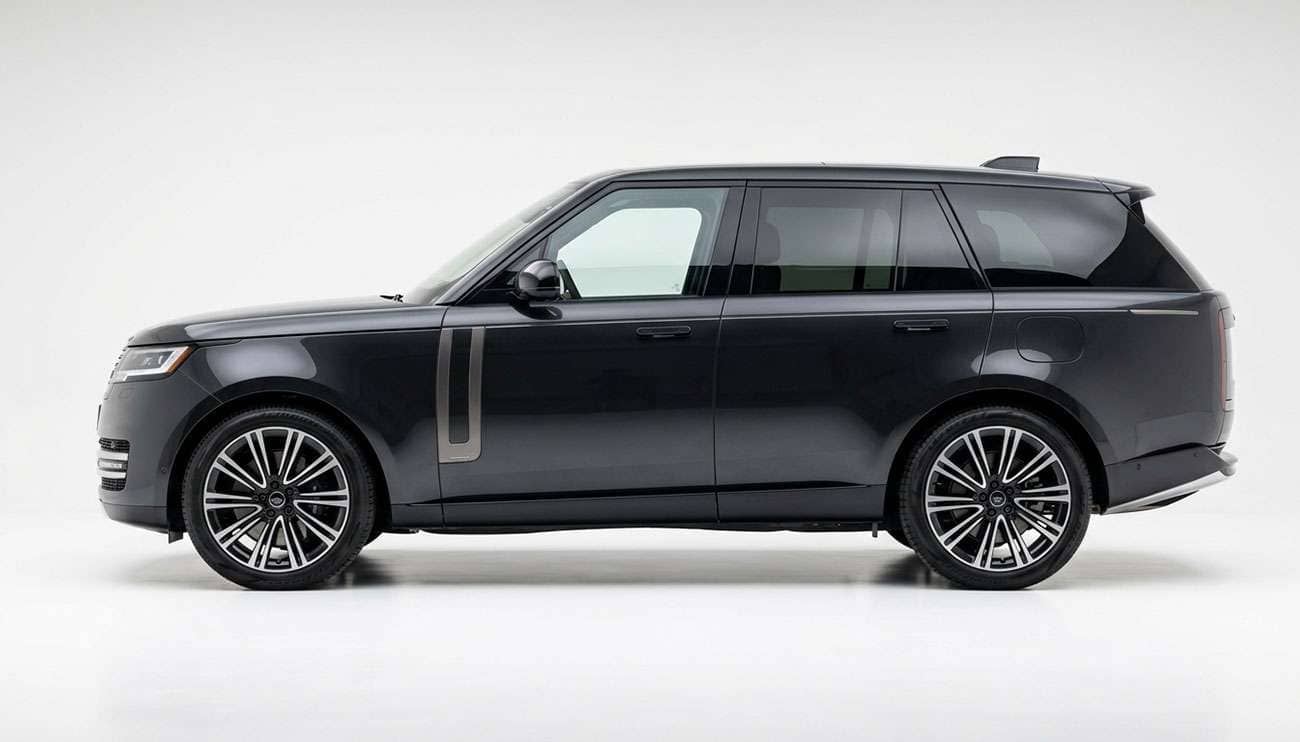
A 22x9 rim takes tires with section widths in the 245 to 285 millimeter range, which on a 22-inch wheel means sizes like 275/50R22, 275/45R22, 285/45R22, 265/40R22, and 275/35R22. That is the answer most guides stop at, and it is incomplete in a way that costs people money.
Here is what gets left out. The approved rim width range is published per tire size, not per section width, and the aspect ratio moves the window. A 285/45R22 is approved for 9.0 to 10.5 inch rims, so your 22x9 works. A 285/40R22 is approved for 9.5 to 11.0 inch rims, so your 22x9 does not. Same 285 section width, same 22-inch wheel, and one of them is outside its approved range on your rim. Drop the aspect ratio and the whole window shifts wider.
So the real question is not which section widths fit a 9-inch rim. It is which specific tire sizes list 9.0 inches inside their approved range, and then where in that range 9.0 actually sits. A 9-inch rim is the widest approved wheel for a 275/50R22 and the narrowest approved wheel for a 285/45R22, and those two tires will behave completely differently on the same wheel as a result. Let me lay it all out.
Every tire size published by the Tire and Rim Association carries an approved rim width range. Mount inside the range and the bead seats correctly and the tread runs the profile the engineers designed. Mount outside it and you are on your own.
Here is where a 9.0-inch rim lands on the sizes people actually shop in 22 inch.
Tire Size |
Approved Rim Width |
Where 9.0 in Sits |
Overall Diameter |
|---|---|---|---|
275/50R22 |
7.5 to 9.5 in |
Near the wide end. Sidewall pulled taut, flatter tread, firmest of this group. |
32.8 in |
275/45R22 |
8.5 to 10.5 in |
Just below center. The most balanced pairing on this list. |
31.7 in |
285/45R22 |
9.0 to 10.5 in |
Narrowest approved. Rounder sidewall, more rim protection, more roll in hard cornering. |
32.1 in |
265/40R22 |
9.0 to 10.5 in |
Narrowest approved. Legal, with a slight sidewall bulge past the rim lip. |
30.3 in |
275/35R22 |
9.0 to 11.0 in |
Narrowest approved. This tire is designed to run wider; expect a rounded crown. |
29.6 in |
285/40R22 |
9.5 to 11.0 in |
Outside the range. Do not mount this size on a 22x9. |
31.0 in |
Read the last two rows together and you have the whole lesson. A 275/35R22 clears a 9-inch rim. A 285/40R22 does not, even though it is only 10 millimeters wider and has a taller sidewall. The approved range is set per size, and the tire engineers moved it. Section width alone will not tell you.
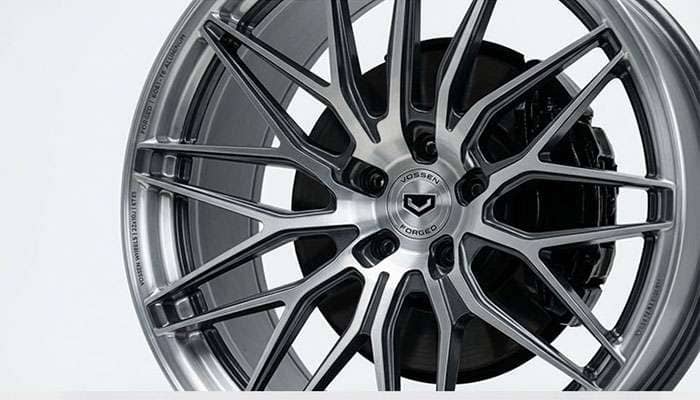
One caution on the table above: those ranges are the general size standard. Individual tire models sometimes publish a tighter range than the size standard allows, particularly on light-truck construction and on flotation sizes like 33x12.50R22. Before you commit, pull the specific model's spec sheet and confirm 9.0 inches is listed. Takes two minutes and it is the difference between a correct fit and a warranty conversation.
If you are cross-shopping wheel widths, the same analysis on adjacent sizes is worth reading. We have run it for 20x9 wheels and for 18x9 wheels, and the pattern holds at every diameter.
Strip away the 22 and the question gets simpler. A 9.0-inch rim generally serves section widths from about 245 to 285 millimeters, which is 9.6 to 11.2 inches. That holds whether the wheel is 17, 18, 20, or 22 inches in diameter, because rim width and rim diameter are independent specifications.
The mechanism behind that range is worth understanding, because it explains everything else in this article. A tire's approved rim width range exists to keep the bead seated with correct clamp load and to keep the tread crown in the shape it was engineered to hold. Go too narrow and the sidewalls bow inward, pinching the tread into a rounded crown that wears the center and rolls excessively under load. Go too wide and the sidewalls get stretched straight, pulling the tread flat, stiffening the ride and putting the rim lip out where curbs live.
Within the approved range, the working rule is that section width changes about 5 millimeters, roughly 0.2 inches, for every half inch of rim width. A 275 mounted on a 9-inch rim measures narrower than the same 275 on a 10.5-inch rim, by roughly six tenths of an inch across that span. The size marking never changes. We take that apart in more detail in our piece on what putting the same size tire on different rim widths does.
Where people get burned is treating the 245-to-285 band as a guarantee. It is a starting point. The aspect ratio pushes the actual approved window up or down inside that band, which is exactly why the 285/40R22 fell out of the table above. Use the band to narrow your shopping list, then verify the specific size.
Two numbers describe a wheel's dimensions and only one of them is in the name. The 22 is diameter, the 9 is width, and neither one tells you where the wheel sits in the fender. That is offset, and on 22x9 it varies more than almost any other spec.
Across the 22x9 market, offsets run from deeply negative on lifted-truck and wide-body wheels to roughly +56 millimeters on European SUV fitments, with the largest concentration between +20 and +35. That range means two wheels both stamped 22x9 can place the tire several inches apart in the wheel well. Buying on width alone and hoping the stance works is how people end up with rubbing at full lock or a tire buried inside the fender.
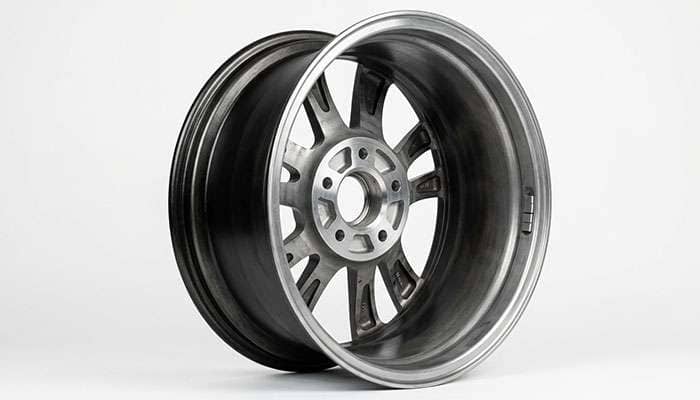
Backspacing is the same information in a more useful form for clearance checks, because it measures from the mounting pad to the inboard rim edge. For a 22x9 the math is fixed: the centerline sits at 5.0 inches, so backspacing equals 5.0 inches plus the offset converted to inches.
Offset |
Backspacing on a 22x9 |
Where the Tire Sits |
Typical Platform |
|---|---|---|---|
+35 to +45 mm |
6.4 to 6.8 in |
Tucked inboard, flush with or inside the fender line |
European SUVs and crossovers on 5x112 and 5x120 patterns |
+18 to +32 mm |
5.7 to 6.3 in |
Near flush, close to factory placement |
The broadest band; OE-replacement look on trucks and full-size SUVs |
0 to +15 mm |
5.0 to 5.6 in |
Slight poke past the fender lip |
Aftermarket truck stance on 6x139.7 and 6x135 |
-12 to -44 mm |
3.3 to 4.5 in |
Aggressive poke, tire well outside the fender |
Lifted trucks with flares; check local fender coverage rules |
Two more specs decide whether the wheel bolts on at all. Bolt pattern must match the hub exactly, and 22x9 is stocked across 6x139.7, 5x112, 5x120, 5x115, 5x114.3, 5x127, and 6x135 among others. Hub bore must equal or exceed the vehicle's hub diameter, with a centering ring making up any difference. A wheel that centers on the lug seats instead of the hub is a vibration you will chase forever. Our guide to wheel offset, backspacing, and bolt patterns covers all three specs together.
Depends which direction you mean by biggest, and the answer changes completely depending on rim width. This is a question that cannot be answered without knowing the wheel.
Biggest in diameter on a 22x9: roughly 34 inches. A 285/55R22 stands about 34.3 inches tall and its approved range reaches down far enough to include a 9-inch rim on most models. That is the practical ceiling for height on this width.
Biggest in width on a 22x9: 285 millimeters, and only on the sizes whose approved range starts at 9.0. Anything wider, 295 and up, wants a 10.5-inch rim minimum in the common aspect ratios.
Biggest on a 22-inch rim, period: that is a different question, and it requires a wider wheel. Flotation sizes on 22s run to 37x13.50R22 and 40x15.50R22, which need rims in the 10 to 12-inch range and beyond. On a 9-inch rim those are not options.
The constraint people forget is that fitting a tire to the rim is only the first gate. The second is fitting the assembly to the vehicle: fender clearance at full compression, clearance at full steering lock, brake caliper clearance behind the spokes, and whether the diameter change throws off your speedometer. A tire can be perfectly legal on a 22x9 and still rub your inner liner at lock on a stock truck. Measure before you buy, and if you are stepping up in overall diameter, keep the change inside the plus-or-minus 3 percent window against your original size.
In absolute terms, yes. In proportion, it depends entirely on the vehicle, and proportion is what actually determines whether the setup looks right and works right.
On a full-size truck or a large SUV, a 22-inch wheel reads as a normal upgrade rather than an extreme one. Those vehicles have wheel wells sized for tires in the 32 to 34-inch range from the factory, so a 22 with a 285/45 on it fills the arch without any of the geometry looking stretched. Plenty of them come with 22s from the factory now.
On a mid-size crossover, the same 22 is a genuinely large wheel. The wheel well was designed around a 29 or 30-inch tire, so getting a 22 under it means a sidewall in the 3.6 to 4.2-inch range. It fills the arch, but the proportion of rubber to metal changes noticeably and so does the ride.
The number that actually matters is not wheel diameter, it is sidewall height relative to overall diameter. A 22-inch wheel wearing a 285/55R22 has 6.17 inches of sidewall, which is more cushion than plenty of 18-inch setups. That same wheel wearing a 265/35R22 has 3.65 inches. Both are 22s. They are not remotely the same experience. If you are weighing the move up, our walkthrough of upgrading from 20-inch to 22-inch rims covers what changes and what does not.
They can, and the wheel diameter is not the reason. Sidewall height is.
The sidewall is your suspension's first stage. It deflects and absorbs before the spring or damper ever moves. Cut the sidewall height and you remove that stage, which means more of every expansion joint and pothole reaches the chassis and your seat. This is a mechanical relationship, not a matter of taste.
Run the numbers on the sizes that fit a 22x9:
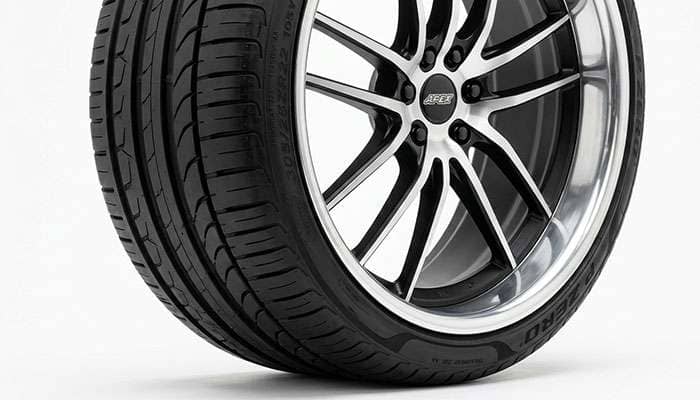
Three things you can do about it if you want the 22 and the ride:
The other consequence of a short sidewall is wheel damage. Less rubber between the rim and the road means less protection when you hit a pothole, and a 22-inch wheel is expensive to replace. That is a real running cost of the setup, not a scare story.
Not from the wheel diameter. There is a real mechanism behind this concern, but it is attached to the wrong number.
The transmission does not know how big your wheels are. It knows how far the vehicle travels per revolution of the output shaft, which is set by overall tire diameter, not rim diameter. Increase overall diameter and you have effectively raised the final drive ratio: the engine turns fewer times per mile, torque multiplication at the wheels drops, and the torque converter spends more time slipping before lockup. On a truck that tows, that shows up as higher transmission fluid temperature, and sustained heat is what shortens a transmission's life.
Here is why that usually does not apply to a 22-inch wheel swap. Proper plus-sizing holds overall diameter constant. You add wheel diameter and subtract sidewall, and the tire ends up the same height it started. A truck moving from 20x9 with 275/60R20 at 33.0 inches to 22x9 with 285/45R22 at 32.1 inches has actually gone slightly shorter. Nothing about the gearing changed in a way the transmission would notice.
The setups that do create the problem:
Straight answer: a properly diameter-matched 22-inch setup does not damage a transmission. An oversized-diameter setup on a vehicle that tows can shorten its life. The wheel is not the variable. The tire height is.
This one gets skipped constantly and it is the fastest way to buy a wheel you should not put on your vehicle.
Every wheel carries a per-wheel load rating, and across the 22x9 market those ratings commonly run from about 1,580 pounds to 2,500 pounds. That spread is not decoration. A 22x9 rated at 1,580 pounds is a passenger-car and crossover wheel. A half-ton truck with a gross axle weight rating in the 3,900-pound range needs at least 1,950 pounds per wheel just to meet its own certification, before you put anything in the bed.
The check takes thirty seconds. Find the gross axle weight rating on the door placard, divide by two, and require every wheel to meet or exceed that number. Do it for the rear axle, since it is almost always the higher of the two on a truck or SUV.
Two related traps worth naming:
Anything used for towing, hauling, or off-road work should be checked against the axle rating before anything else, including how the wheel looks. It is the one spec that turns a legal setup into an illegal one on paper.
You can browse the full range of 22x9 wheels and filter by bolt pattern, offset, and finish to compare fitments side by side.
Mismatched wheel and tire combinations rarely fail on day one. They bill you in stages, which is what makes them easy to ignore.
Weeks one through eight: wear in the wrong places. A tire mounted at the narrow edge of its approved range crowns in the middle and wears the center strip first. Mounted at the wide edge it flattens and wears the shoulders. Either way you are losing tread depth on a portion of the contact patch while the rest looks new. On a set of 22-inch tires that is real money burning off in a pattern you will not notice until a rotation.
Months two through six: heat in the casing. Every rotation the sidewall flexes through the contact patch and springs back. That flex generates heat inside the rubber, and heat degrades the bond between the rubber and the steel belts under the tread. A tire running outside its designed profile flexes in a shape it was not built for, so it makes more heat per mile. None of that damage reverses. The Tire Industry Association treats improper mounting, sustained overload, and chronic underinflation as variations on the same failure, and this is the reason why.
Months six through eighteen: bearings and belts. Aggressive negative offset moves the tire's centerline outboard of where the hub was engineered to carry it, increasing the moment arm on the wheel bearing. Bearings loaded outside their design envelope get noisy before they get dangerous. Meanwhile the tire's belt edges begin to separate, which usually announces itself as a vibration that comes and goes with speed.
Whenever the load peaks: the failure itself. A casing that has been accumulating heat damage does not let go in a parking lot. It lets go loaded, at speed, in summer heat. Sidewall damage in particular is one where waiting to see whether it gets worse is the wrong call, and our guide to tire sidewall damage and whether it is safe to drive covers how to read what you are looking at.
None of this requires abuse. It requires one spec outside its range and enough miles.
A 22x9 rim takes tires with section widths from roughly 245 to 285 millimeters, which in practice means 275/50R22, 275/45R22, 285/45R22, 265/40R22, and 275/35R22 among the common choices. It does not take a 285/40R22, because that size's approved range starts at 9.5 inches. The aspect ratio moves the window, so section width alone will not answer the question.
Beyond the tire, offset is the spec that decides whether the setup works on your vehicle, and on 22x9 it varies widely enough to place the same nominal wheel inches apart in the fender. Add load rating, bolt pattern, and hub bore, and you have the full checklist. Get those right and a 22x9 is a setup that fills the arch and drives properly. Skip one and the vehicle will tell you about it eventually.
Common sizes whose approved rim width range includes 9.0 inches are 275/50R22, 275/45R22, 285/45R22, 265/40R22, and 275/35R22. Section widths from roughly 245 to 285 millimeters work on a 9-inch rim, but the approved range is published per tire size and shifts with aspect ratio, so verify the specific size rather than relying on width alone.
Generally section widths of 245 to 285 millimeters, or 9.6 to 11.2 inches. Rim width and rim diameter are independent, so that band applies whether the wheel is 17, 18, 20, or 22 inches. Within the approved range, a tire measures about 0.2 inches wider for every half inch of additional rim width, so the same size reads narrower on a 9-inch rim than on a 10.5.
No. The 285/40R22 approved rim width range is 9.5 to 11.0 inches, so a 9-inch wheel falls below the minimum. The 285/45R22 in the same section width is approved from 9.0 inches and does fit. The difference is the aspect ratio, which shifts the approved window even when the section width is identical.
It depends on rim width. On a 22x9, roughly 34 inches of diameter is the practical ceiling, which a 285/55R22 reaches at about 34.3 inches, and 285 millimeters is the width limit. On wider 22-inch wheels, flotation sizes run to 37x13.50R22 and beyond, but those need rims in the 10 to 12-inch range. Vehicle clearance at full compression and full steering lock is a separate limit from what the rim accepts.
Ride quality tracks sidewall height, not wheel diameter. On a 22x9 the sidewall ranges from 3.79 inches on a 275/35R22 to 6.17 inches on a 285/55R22, and that difference is far larger than anything the wheel itself contributes. Choose the tallest sidewall your clearance allows, pick a touring rather than performance construction, and run the placard pressure rather than adding psi.
Not from the rim diameter. The transmission responds to overall tire diameter, which sets the effective final drive ratio. Proper plus-sizing holds overall diameter constant by trading sidewall for wheel, so nothing changes. Risk appears when overall diameter grows past the plus-or-minus 3 percent window, particularly on a vehicle that tows, where the torque converter slips longer and fluid temperature climbs.
Backspacing depends on offset, not on width alone. For a 22x9 the centerline sits at 5.0 inches, so backspacing equals 5.0 plus the offset converted to inches. A +35 mm offset gives about 6.4 inches of backspacing; a zero offset gives exactly 5.0; a -24 mm offset gives about 4.1. Always read the offset stamped on the wheel rather than assuming from the size.



