
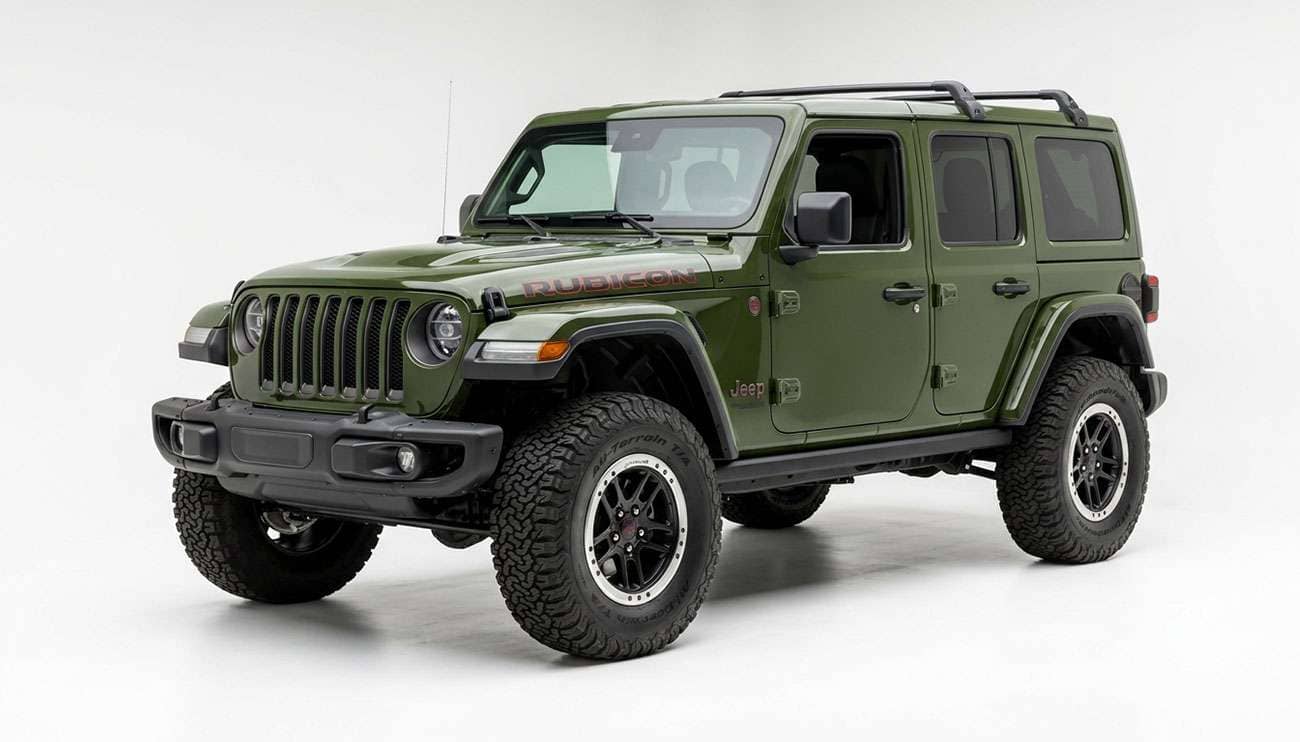
Yes on a Rubicon. No on a Sport or Sahara, not without help. But the variable that decides it is not ride height, and that is where most guides leave you hanging. A lift raises where your Jeep sits at rest. It does not change how far the tire travels up into the fender, because a bumpstop sets that, not a spring. The real question is up-travel. Answer that and you will know whether you need a lift, a bumpstop extension, a different wheel, or nothing at all.
I have been fitting oversize tires on Jeeps since before the JL had a part number, and this is the most misunderstood question at my counter. Guys come in convinced they need a 2.5-inch lift to run 35s. Half of them do not. The other half buy the lift and still hear scrubbing the first time they drop a wheel into a rut. Both groups bought the wrong part, because they were solving a vertical problem when the JL has a travel problem.
Most guides stop at "it depends on your Jeep." Here is exactly what it depends on, trim by trim, with the numbers from Jeep's own specification sheets.
Park your JL on level ground with 35s bolted on and walk around it. On most trims it looks fine, and you would swear you got away with something. That is the trap. Static clearance at ride height is not what fails.
What fails is the front inner fender liner, under compression. When the suspension cycles up, whether you are turning into a driveway apron or stuffing a wheel into a rut, the tire travels up and slightly inboard. The contact point is the outboard face of the plastic liner and the bracketry behind it, at the leading edge of the wheel well. Turn to full lock at the same time and you have stacked two motions together. That is where the scrub happens, on a Jeep that looked clear in the parking lot.
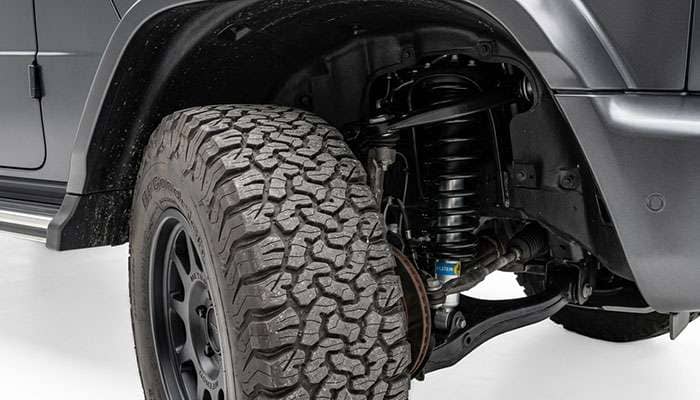
Here is the mechanism nobody puts in front of you. Your tire's maximum height inside that wheel well is set by the bumpstop, the cone the axle contacts at the top of its travel. The spring controls where the axle rests. The bumpstop controls where it stops. Install a lift and you move the resting position down relative to the body, which gains static clearance and looks great. You have not moved the bumpstop. The axle still travels up to the same point, and the tire still arrives at the same place inside that fender.
That is why every quality lift kit ships with bumpstop extensions, and why plenty of lifted JLs still rub: people install the springs, skip the spacers because the Jeep sits higher and looks done, then wonder what is chewing the liner. It is also why you can go the other direction and fit 35s on a stock-height JL with bumpstop extensions alone, which is what the testers at DrivingLine did on a Rubicon JL running 35x12.50R17 tires with no fender trimming. They gave up about two inches of up-travel to do it.
That trade is the whole conversation. You are not choosing between lift and no lift. You are choosing how much travel you will surrender to make room for the tire.
Yes, and the Rubicon is why this question has a confusing answer at all. Underneath, it is a different vehicle than a Sport or Sahara.
A four-door Rubicon leaves the factory on LT285/70R17C tires measuring 32.7 inches, on 17x7.5 aluminum wheels, and Jeep lists running clearance at 12.9 inches. A Sport on P245/75R17 tires sits at 9.7. That is more than three inches between two Jeeps that look nearly identical in a photograph.
Run the math on what a 35 asks for. The tire grows from 32.7 inches to roughly 34.7, so the top moves up about one inch. It grows from 11.2 inches wide to 12.5, so each sidewall moves out about six tenths. One inch up and six tenths out is a modest ask, and a stock Rubicon has most of that room already.
Here is what a 35 asks of each JL, using Jeep's published figures.
Your JL |
OE Tire and Diameter |
Running Clearance |
Extra Radius a 35 Adds |
Extra Width Per Side |
Stock Verdict |
|---|---|---|---|---|---|
Sport 4-door |
P245/75R17, 31.5 in |
9.7 in |
1.6 in |
1.4 in |
Rubs. Needs bumpstops and a wheel change |
Sahara 4-door |
P255/70R18, 32.1 in |
10.0 in |
1.3 in |
1.2 in |
Rubs. Needs bumpstops and a wheel change |
Sahara 4xe |
255/55R20, 31.0 in |
10.1 in |
1.9 in |
1.2 in |
Biggest jump of any JL. Plan on a lift |
Rubicon 4-door |
LT285/70R17C, 32.7 in |
12.9 in |
1.0 in |
0.6 in |
Clears at ride height. Bumpstops for travel |
Rubicon 4xe |
LT285/70R17C, 32.7 in |
10.8 in |
1.0 in |
0.6 in |
Same tire, 2.1 in less clearance. Bumpstops required |
Rubicon 392 |
LT315/70R17C, 34.4 in |
11.6 in |
0.15 in |
0.05 in |
Already there from the factory |
On a gas Rubicon, a 35 on the stock wheel clears at ride height and through most street driving. It contacts the inner liner under hard compression and at full lock. Add bumpstop extensions and the problem goes away, at the cost of up-travel. That is why some Rubicon owners run 35s on stock suspension and report no problems while others report constant scrubbing. They are both telling the truth. They are driving differently.
Not cleanly. The Sport and Sahara give up ground on every variable at once.
A Sport asks for 1.6 inches of extra radius instead of the Rubicon's 1.0, with 3.2 fewer inches of running clearance to give. The width penalty is worse: the Sport's P245/75R17 is 9.65 inches at the section, a 35x12.50 is 12.5, so that is 1.4 inches of extra tire on each side going into a wheel well never packaged for it. The Sahara on 18s is marginally better, same story.
You can make it work, and people do. It takes bumpstops front and rear, a wheel with meaningfully less backspacing, and on many builds a leveling kit or 2-inch lift to restore the travel you gave up. At that point you have bought most of a lift kit anyway. My advice is to stop fighting it: either run a 33, which fits both trims beautifully with nothing more than a wheel change, or budget for a 2 to 2.5-inch lift and do the 35 properly. The middle path, where you bolt on 35s and start shaving plastic, ends with a cut sidewall.
For how far you can push tire size on a stock vehicle, our guide to the biggest tire without a lift works through the same logic across other platforms.
These two trims break the pattern in opposite directions, and if you own either one, this is the section that matters.
The 392 already has them. Jeep ships the Rubicon 392 on LT315/70R17C tires, which measure 34.4 inches on a 17x8 beadlock-capable wheel. That is a 35 in everything but the name. A true 35x12.50R17 adds fifteen hundredths of an inch of radius and five hundredths of width per side. The factory validated the clearance, the flares cover it, and the front GAWR was raised to 3,400 pounds to carry it. If you own a 392 and you are asking whether 35s fit, they are on your Jeep right now.
The 4xe is the trap. Read this one twice. A Rubicon 4xe has the same suspension as a gas Rubicon, the same LT285/70R17C tires, the same 17x7.5 wheels. On paper it is a Rubicon. In the specification sheet it is not. Jeep lists the gas Rubicon at 12.9 inches of running clearance and the Rubicon 4xe at 10.8. That is 2.1 inches gone, on identical hardware.
The reason is weight. A four-door gas Rubicon with the V-6 has a curb weight around 4,604 pounds. A Rubicon 4xe is 5,226. That is 622 pounds of battery and hybrid hardware on the same springs, compressing them. The Jeep sits lower and starts its up-travel two inches further into the stroke. Less room before the bumpstop, less before the liner. A 4xe owner who reads "the Rubicon runs 35s fine on stock suspension" is working from a number that does not apply to his Jeep, so bumpstop extensions are not optional here.
The Sahara 4xe is a different problem again. It rolls on 255/55R20 tires measuring just 31.0 inches, the smallest OE diameter in the JL lineup. Going to a 35 there is a 1.9-inch radius jump, the largest of any Wrangler, on a 20-inch wheel with very little sidewall to start with. Plan on a lift.
No, and the gap between them is wide enough to decide whether your Jeep rubs.
Flotation sizes like 35x12.50R17 are nominal. The industry builds to a target with tolerance, and manufacturers land in different places within it. When your clearance margin is measured in fractions of an inch, which is exactly where a stock JL lives, that variation is the deciding factor.
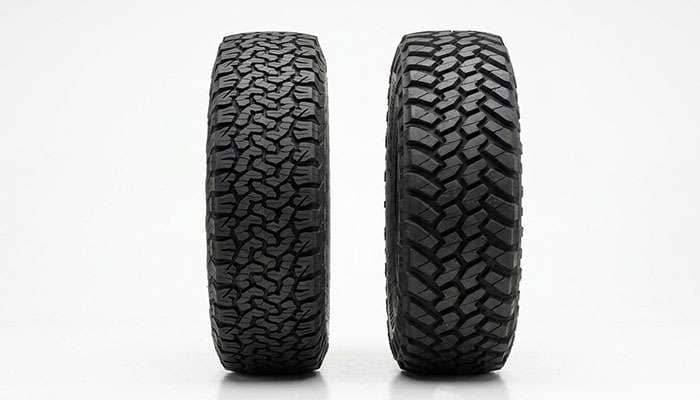
Here are three current 35x12.50R17 tires, grouped by how they are built. Every one of them carries load index 121 and Load Range E. Every one of them is stamped the same size on the sidewall.
Build Type |
Measured Diameter |
Measured Section Width |
Weight Per Tire |
|---|---|---|---|
All-terrain |
34.50 in |
12.50 in |
66.5 lb |
Hybrid or rugged-terrain |
34.76 in |
12.52 in |
75.4 lb |
Mud-terrain |
34.84 in |
13.19 in |
79.9 lb |
Spread across the three |
0.34 in |
0.69 in |
13.4 lb |
Read that section width column again. Two tires, same stamped size, 0.69 inches apart in actual width, or roughly a third of an inch per side. On a stock Rubicon working with about six tenths of an inch of width headroom, that is most of your margin, spent before you have turned the wheel. It is why the mud-terrain guys report rubbing where the all-terrain guys do not. It is not the tread pattern: the aggressive mud-terrain carries a taller, squarer shoulder and simply measures wider at the same nominal size.
The weight column matters too. That 13.4-pound spread per tire is 53.6 pounds across four corners, all unsprung. Unsprung weight is what the spring has to control, and more of it means the suspension compresses further and settles slower over the same bump. Heavier tire, deeper compression, more contact with the liner. The widest tire is usually the heaviest, so the penalties compound.
On load range: a Rubicon's front GAWR is 3,100 pounds, or 1,550 per tire, and every 35 in that table carries 3,195. Capacity is not your constraint on a JL, so there is no reason to buy the heaviest Load Range E tire on the shelf believing you need it. You are buying harshness and unsprung mass you will feel on every road in America.
Before you buy, pull the specification sheet for the exact model and check measured section width and overall diameter. Those two numbers tell you more than the size on the sidewall does.
This is where the wheel does work that a lift cannot do, because the JL's clearance problem has a horizontal component and lift kits only solve vertical ones.
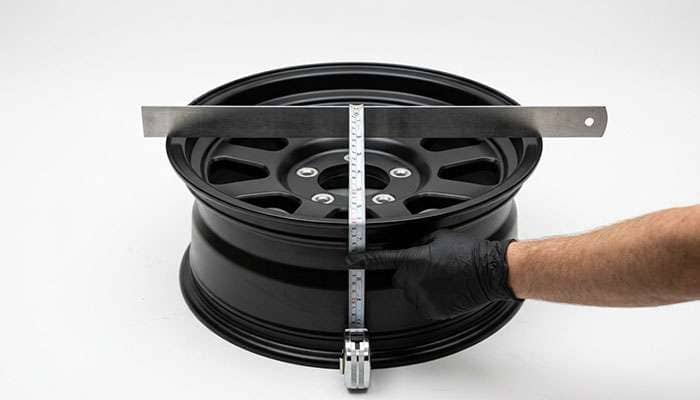
Backspacing is the distance from the wheel's mounting face to the inner rim flange. Less backspacing pulls the tire outboard, away from the frame rail, the control arm, and the inner fender liner. Offset describes the same thing in millimeters from the wheel centerline.
Your stock JL wheels sit deep. A Rubicon's 17x7.5 runs about +37mm offset, roughly 5.7 inches of backspacing. A Sport or Sahara 7.5-inch wheel runs about +44mm, roughly 6.0 inches. Those are tucked-in numbers, chosen for steering geometry and to keep the tire inside the flare.
The common aftermarket answer for 35s is a 17x9 at -12mm offset, about 4.5 inches of backspacing. Going from a Rubicon's stock wheel to that moves the inner shoulder outboard roughly 1.3 inches, real clearance bought exactly where the JL runs out of it. In the 5x127 bolt pattern the JL uses, most 17x9 wheels run negative offset, and minus 12 is by a wide margin the most common single number.
There is a bill for it. Moving the tire outboard adds poke, and on that same swap the outer sidewall moves out about 2.6 inches. Your flares cover less tread, which matters because many states require the tread to be covered. Your scrub radius changes, felt as heavier steering and kickback over broken pavement. And your wheel bearings carry a longer lever arm, which shortens their life.
So do not chase the most aggressive offset you can find. Buy the least offset change that solves your clearance problem, which on most JL builds means minus 12 rather than minus 25 or minus 38. A 1.5-inch spacer gets you roughly the same place for less money, but it stacks another joint between hub and wheel and has to be torqued and re-torqued. If you are buying wheels anyway, buy the backspacing you need and skip the adapter. For the full theory before you shop, wheel offset explained covers how to calculate this for any vehicle.
On a Rubicon, no. On a Sport or Sahara at stock height, usually yes, and that is a reason to reconsider the whole plan.
The word covers two very different jobs. The first is relieving the plastic inner fender liner at the leading edge of the front wheel well. That is reversible, costs nothing but time, and is what most people mean when they say they trimmed for 35s. The DrivingLine Rubicon test cleared 35s with no trimming at all, keeping stock flares, by extending the bumpstops instead.
The second is cutting the metal pinch seam or flare mounting area. That is not reversible, it exposes bare steel to salt, and on a Jeep that sees winter it starts a rust problem you will face in three years. My rule after thirty-odd years: relieving plastic is maintenance, cutting metal is surgery. If you are reaching for a cutoff wheel to fit a tire on a daily driver, put it down and buy the right backspacing instead.
The contact that surprises people most is not at the fender at all. It is the inner shoulder catching the front lower control arm or the frame at full lock under load, the classic parking-lot-turn scrub. If you hear a noise and cannot place it, our guide to why are my tires rubbing walks through finding the contact point before you buy parts.
If you are already on 35s and living with an occasional scrub, here is what that noise is buying you, in the order it shows up.
It starts with the shoulder. Contact with the liner abrades the outer shoulder blocks, showing up as a scuffed, polished band on the outboard edge of the tread. Cosmetic at first, easy to ignore.
Then it reaches the sidewall. The bracketry behind the liner and the pinch seam are not smooth. A tire contacting them repeatedly under load abrades into the sidewall, where there is the least rubber over the casing plies. Once you have worn into that area you have a structural problem, and it does not heal. The Tire Industry Association's position on this is unambiguous, and so is mine. If you are not sure what you are looking at, tire sidewall damage and whether it is safe to drive tells a cosmetic scuff from a tire that needs to come off today.
Then the steering. Contact at full lock loads the steering against a hard stop it was not designed to hit, which you feel as binding and a clunk on turn-in, and eventually as wear in tie rod ends and the damper.
Then your speedometer lies to you. Going from 32.7 inches to 34.7 is a 6 percent increase, so your JL reads 6 percent slow and an indicated 70 is an actual 74. Your odometer undercounts by the same margin, stretching oil change intervals and misreporting mileage at trade-in. Our piece on bigger tires and your speedometer covers the correction.
Then the drivetrain. A taller tire raises your effective final drive ratio. On a JL with 3.45 gears, 35s leave the automatic hunting on grades and holding the torque converter unlocked, putting heat into the transmission. Rubicons with 4.10 gears tolerate them far better, and re-gearing after bigger tires works through where that line sits.
And underneath all of it, your brakes. Federal Motor Vehicle Safety Standard No. 135 certifies light vehicle stopping distance on the original equipment tire size. A taller, heavier tire increases rotational inertia and your JL's brakes did not get bigger. NHTSA's rollover resistance rating is measured on the original configuration too, worth knowing before you add lift on top.
Here is the order I do it in, and the order I tell customers to do it in.
1. Identify your trim and drivetrain precisely. Sport, Sahara, Rubicon, 392, and whether it is a 4xe. Find your running clearance in the table above. A Rubicon 4xe and a gas Rubicon are 2.1 inches apart.
2. Read the door jamb placard. Note your original tire size and front and rear GAWR. Federal Motor Vehicle Safety Standard No. 110 requires your tire and rim combination to carry those ratings.
3. Pick the tire by measured width, not nominal size. Pull the specification sheet and read section width and overall diameter. Every tenth of an inch of width is margin you are spending.
4. Choose backspacing to match. On a Rubicon, 4.5 to 5.0 inches, roughly minus 12 to 0 offset on a 17x9. On a Sport or Sahara you will want the tire out further, compensating for a suspension 3 inches lower.
5. Test clearance before you commit. Mount one front tire, put the Jeep on ramps, and cycle the suspension through full compression at full lock both directions. Look for witness marks. Fifteen minutes, and it tells you what no forum thread can.
6. Extend the bumpstops, front and rear. This is the step that actually makes 35s fit a stock JL, and the one that gets skipped. Start with the smallest spacer that clears and work up.
7. Recalibrate, re-torque, then re-check. Program the tire size in and re-torque lug nuts at 50 to 100 miles. After the first real drive, cycle the suspension somewhere rutted and look for fresh contact marks on the liner and tire shoulder.
For the tread and construction side of the decision, our guide on how to choose Jeep Wrangler aftermarket tires covers it in more depth.
The question is not really whether 35s fit a Wrangler JL without a lift. It is how much suspension travel you are willing to give up, and whether your JL has travel to give. A gas Rubicon does. A 392 already spent it at the factory. A Rubicon 4xe looks like it does and does not, because 622 pounds of battery took 2.1 inches before you touched anything. A Sport or Sahara sits more than three inches lower and needs a real lift to do this properly.
A lift raises your Jeep. Bumpstops and backspacing are what make the tire fit. Work out which of those three problems you actually have and you will buy the right part the first time.
When you are ready to shop the size, we stock 35x12.50R17 tires across all-terrain, rugged-terrain, and mud-terrain builds, and the specifications on each listing give you measured width and diameter before you buy.
On a gas Rubicon, yes. It clears at ride height and contacts the inner fender liner only under hard compression and at full lock, which bumpstop extensions resolve. On a Sport or Sahara, which Jeep lists at 9.7 to 10.0 inches of running clearance versus the Rubicon's 12.9, 35s rub without bumpstops, a lower-backspacing wheel, and usually a small lift.
No, but you do need bumpstop extensions if you use the suspension travel. A lift changes ride height, not up-travel, and contact with the inner fender liner happens at full compression. Extending the bumpstops limits how far the tire travels into the well. The trade is roughly two inches of up-travel, noticeable off-road and irrelevant on pavement.
Roughly 4.5 to 5.0 inches, about minus 12 to 0 offset on a 17x9. Stock JL wheels run about 5.7 inches of backspacing on a Rubicon and 6.0 on a Sport or Sahara. Dropping to 4.5 moves the inner shoulder outboard about 1.3 inches, away from the control arm and liner, at the cost of about 2.6 inches of additional poke.
No. Three current 35x12.50R17 tires measure 34.50, 34.76 and 34.84 inches in overall diameter, and 12.50, 12.52 and 13.19 inches in section width. Flotation sizes are nominal and manufacturers land in different places within the tolerance. On a stock JL, that 0.69-inch width spread is a third of an inch per side, most of your clearance margin.
It depends on your axle ratio. A Rubicon with 4.10 gears handles 35s well. A Sport or Sahara with 3.45 gears hunts on grades and holds the torque converter unlocked longer, putting heat into the transmission. If you tow, carry weight, or live somewhere with real elevation change, re-gearing to 4.56 or 4.88 is worth it.
Yes, until you recalibrate. Going from a Rubicon's 32.7-inch tire to 34.7 inches is about a 6 percent increase, so your speedometer reads 6 percent slow and an indicated 70 is an actual 74. Your odometer undercounts by the same margin. A dealer or handheld tuner recalibration corrects it.



