
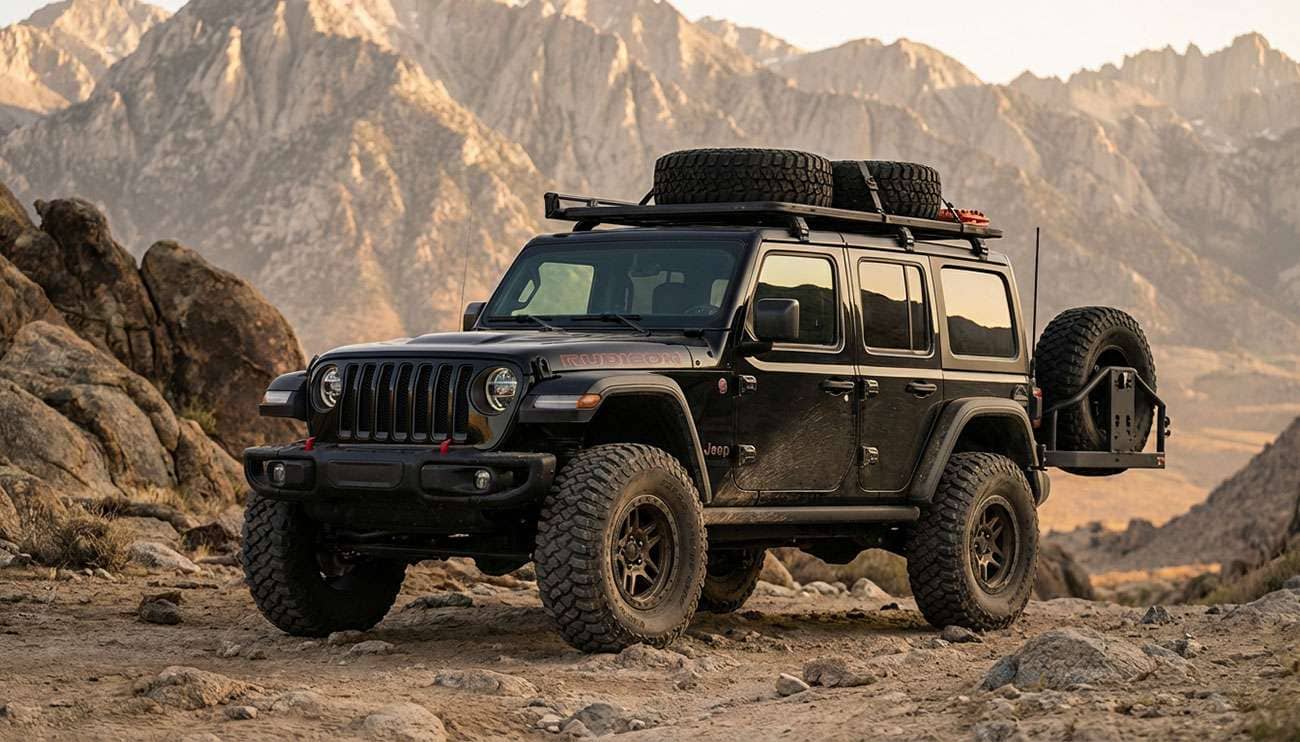
Most Jeep Wranglers roll off the lot with 32-inch or 33-inch tires as their factory setup. These stock tires work fine for daily driving, but selecting the right Jeep Wrangler aftermarket tires can dramatically improve your vehicle's performance, appearance, and capability both on and off the trail.
Choosing tires for your Jeep Wrangler goes far beyond simply installing bigger rubber. Factory tire sizes vary significantly across trim levels — from P245/75R17 on the Sport to LT285/70R17C on the Rubicon and Willys. Jeep engineers selected these specific sizes for important reasons, as your tires directly impact traction, steering response, braking performance, and fuel economy.
Off-road enthusiasts face even more critical decisions. All-terrain tires deliver excellent versatility for both daily commuting and weekend trail adventures. Mud-terrain tires feature aggressive tread patterns with deep lugs for maximum grip in extreme conditions. Winter tires become essential for drivers who regularly face snow and ice conditions.
At Performance Plus Tire, we understand that selecting the best tires for your Jeep Wrangler requires matching your specific driving style and terrain preferences. Our expert team will guide you through everything from understanding your current factory setup to choosing the perfect aftermarket upgrade that balances performance, practicality, and style.
We'll walk you through the essential factors that matter most when upgrading your Jeep's tires, helping you make a decision that enhances your vehicle's capabilities while fitting your budget and driving needs.
Understanding your Jeep Wrangler's factory tire setup provides the foundation for making smart upgrades. Each generation and trim level comes with specifically engineered tire sizes designed to balance performance, comfort, and off-road capability.
Factory tire sizes vary significantly across Jeep Wrangler models and trim levels. The current JL generation (2018-present) offers several configurations:
Sport and Sport S: 245/75R17 (approximately 31.5 inches)
Willys: 255/75R17 (approximately 32.7 inches) with mud-terrain tires
Sahara: 255/70R18 (approximately 32.1 inches)
Rubicon: 285/70R17 (approximately 32.7 inches)
Rubicon 392: 315/70R17 (impressive 35-inch tires)
Earlier generations feature different sizing patterns. The JK Wrangler (2006-2018) typically came with 225/75R16 to 255/75R17 tires depending on trim. TJ models (1996-2006) featured smaller options ranging from 205/75R15 to 245/75R16, with Rubicon models receiving the largest factory tires.
Tire size directly affects your Jeep's capabilities and handling characteristics. Larger tires increase ground clearance, providing better breakover angles and obstacle clearance on trails. However, bigger isn't always better.
Increasing tire size creates several changes:
Fuel economy: Larger, heavier tires require more energy to rotate, reducing efficiency
Acceleration: Bigger tires can make your Jeep feel sluggish due to changed gear ratios
Speedometer accuracy: Your readings will be incorrect without recalibration
Suspension stress: Oversized tires without proper modifications strain components
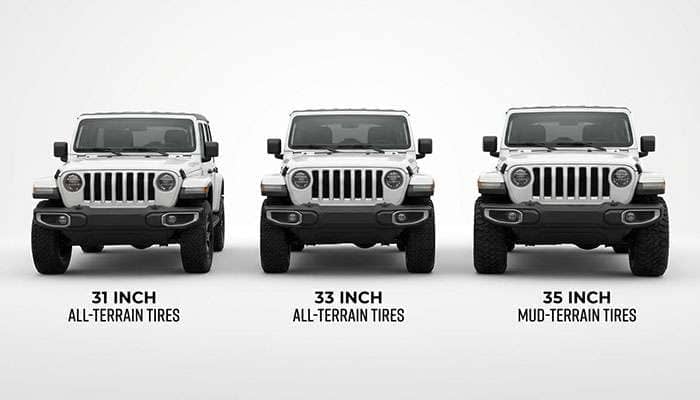
Tire size and clearance work together closely. While 33-inch tires often fit with minimal adjustments, 35-inch tires typically require a suspension lift and geometry corrections. Moving to 37-inch tires demands advanced suspension modifications, steering upgrades, and proper gearing changes.
Not every Jeep owner needs massive off-road tires. For daily drivers who rarely venture off pavement, factory tires offer significant advantages:
Longevity: Stock tires typically last 50,000-60,000 miles for commuting
Cost efficiency: Factory-sized replacements are generally less expensive
Balanced performance: Engineer-selected for your specific model's weight and handling
Maintenance simplicity: No need for lift kits or recalibration
Consider your actual driving habits rather than just appearance preferences. If you're primarily commuting with occasional camping trips, the stock all-terrain tires provide excellent versatility without the drawbacks of specialized off-road options.
Selecting aftermarket tires for your Jeep Wrangler starts with understanding which type matches your driving patterns. Each tire category serves specific purposes, and choosing the wrong type can lead to poor performance or premature wear.
All-season tires work best for drivers who stick primarily to paved roads. These tires focus on highway stability, fuel efficiency, and quiet operation. As veteran trail guide Ron Harrington explains, "All-season tires are for different types of precipitation on-road". They're the most affordable option but offer limited off-road capability.
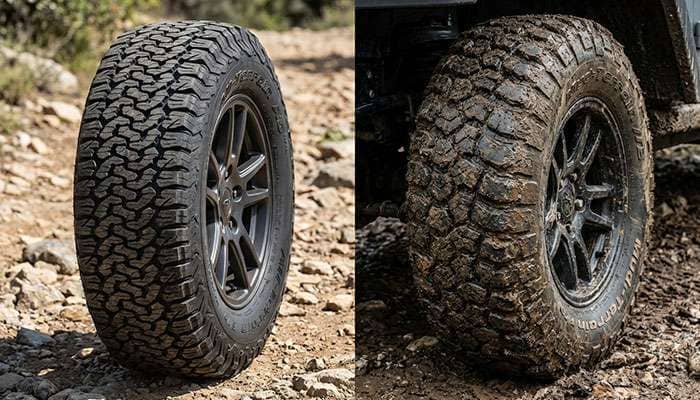
All-terrain tires provide the best balance for mixed driving conditions. Their moderate tread blocks and deeper grooves deliver solid traction on various surfaces while maintaining comfort on pavement. These tires typically last 40,000-70,000 miles, making them ideal for daily drivers who enjoy weekend adventures.
Mud-terrain tires excel in extreme off-road conditions. Their large, widely-spaced tread blocks and reinforced sidewalls handle mud, rocks, and challenging terrain effectively. However, they create significantly more road noise and wear faster on pavement. For serious off-roaders who frequently face challenging terrain, the trade-off makes sense.
Winter tires become essential for drivers in cold climates. These tires use specialized rubber compounds that remain flexible in freezing temperatures, with unique tread patterns designed for snow and ice traction. While you could run winter tires year-round, they wear rapidly on warm, dry pavement and sacrifice handling performance.
Rock-crawling tires feature extremely aggressive tread patterns with deep lugs and extra-thick sidewalls. These specialized tires prioritize maximum traction at slow speeds over highway performance. They're designed specifically for technical terrain where precise tire placement and grip matter most.
Matching tire type to your actual driving creates the best results:
Daily commuting with occasional trails: All-terrain tires (BFGoodrich KO2, Falken Wildpeak AT3W)
Serious weekend off-roading: Mud-terrain tires (Nitto Trail Grappler, Toyo Open Country M/T)
Rock crawling competitions: Specialized rock-crawling tires (BFGoodrich Krawler, Goodyear MTR Kevlar)
Winter climates: Dedicated winter tires (Bridgestone Blizzak DM-V2, Nokian Hakkapeliitta LT3)
Mixed highway and moderate trails: Aggressive all-terrain tires (Goodyear Wrangler DuraTrac, Cooper Discoverer AT3)
Your tire choice should reflect the terrain you actually drive, not just what looks impressive. Remember that more aggressive tread patterns sacrifice on-road comfort, fuel economy, and tire longevity for off-road capability.
Selecting the right tire size for your Jeep Wrangler involves balancing aesthetics, performance requirements, and practical considerations. Understanding how tire dimensions affect your vehicle helps you make an informed upgrade decision.
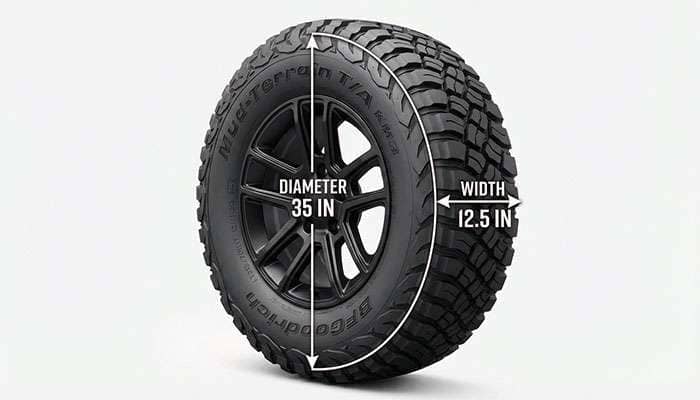
Tire sizes use a standardized format that reveals critical information. A typical size like 285/70R17 breaks down as follows:
285: Section width in millimeters (tire's widest point)
70: Aspect ratio (sidewall height as a percentage of width)
R: Radial construction
17: Wheel diameter in inches
Load index and speed rating appear at the end of the size designation. For example, "285/70R17 121Q" indicates a load capacity of 3,197 pounds per tire and a speed rating of 99 mph. Jeep Wranglers require tires that can handle both vehicle weight and off-road stresses.
Converting tire specifications to actual diameter helps you understand clearance requirements. The formula is: (Section Width × Aspect Ratio × 2) ÷ 25.4 + Wheel Diameter.
For example, a 285/70R17 tire calculates as: (285mm × 0.70 × 2) ÷ 25.4 + 17" = 32.7 inches
This calculation becomes essential when comparing different tire sizes or determining if a particular size will fit your Jeep without modifications.
Most Jeep Wrangler owners follow predictable upgrade paths based on their starting point:
From 31.5" stock to 33": Minimal modifications needed, slight visual improvement
From stock to 35": Requires 2.5-3" lift kit, popular "sweet spot" for capability and daily drivability
From stock to 37": Demands 3.5-4" lift, steering modifications, and regearing considerations
From 35" to 37": Common second upgrade for serious off-roaders after initial modifications
Each size jump increases capability but also brings additional costs and compromises in fuel economy and on-road handling.
Tire width affects both appearance and performance differently than diameter. Wider tires provide increased stability and a more aggressive stance but can cause steering issues and reduced fuel economy. Narrower tires with taller sidewalls often perform better in mud and snow by digging down to firmer surfaces.
Consider these width trade-offs:
Wider tires (285mm+): Better on-road stability, aggressive appearance, increased rubbing risk
Narrower tires (255mm-275mm): Better deep-snow performance, reduced fuel economy impact, easier steering
The diameter primarily affects ground clearance and gearing, while width influences handling characteristics and fitment challenges.
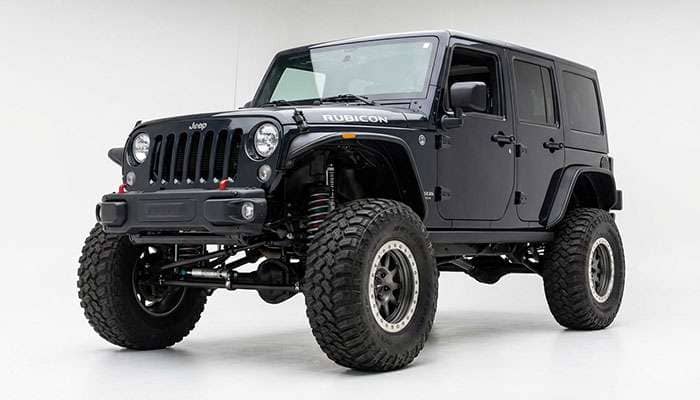
Installing larger tires on your Jeep Wrangler often requires clearance modifications to prevent rubbing. Understanding lift options and their implications helps you build a capable vehicle without unexpected problems.
Different tire sizes require specific lift heights for proper clearance:
Tire Size |
JK Wrangler (2007-2018) |
JL Wrangler (2018+) |
Additional Modifications |
|---|---|---|---|
33" |
1.5-2" lift or leveling kit |
Stock to 1.5" lift |
Minimal, possible fender trimming |
35" |
2.5-3.5" lift |
2-2.5" lift |
Possible wheel spacers, geometry corrections |
37" |
3.5-4" lift |
3-3.5" lift |
Steering stabilizer, track bar, regearing recommended |
40" |
5"+ lift |
4-5" lift |
Extensive modifications, axle upgrades, regearing required |
These are general guidelines. Individual fitment varies based on wheel offset, backspacing, and driving style. Aggressive off-road use with maximum articulation may require additional clearance.
Spacer lifts (also called leveling kits) provide 1.5-2.5 inches of height by adding spacers above the factory springs. They're affordable ($200-$500) and relatively simple to install. However, they don't improve suspension travel or ride quality and can create geometry issues with larger lifts.
Suspension lifts replace factory springs, shocks, and sometimes control arms with longer components. These systems cost $1,000-$3,000+ but deliver better ride quality, increased articulation, and proper suspension geometry. Quality suspension lifts from manufacturers like Metalcloak, TeraFlex, or Rock Krawler maintain factory-like handling while accommodating larger tires.
For 33-inch tires, a spacer lift often works fine. For 35-inch and larger tires, invest in a proper suspension lift to avoid handling problems and premature wear.
Static clearance when parked doesn't guarantee problem-free operation. Full articulation during off-road use can cause tires to contact:
Control arms: Front suspension components at full turn
Fender liners: Inner wheel wells during compression
Body panels: Fenders and rocker panels at extreme articulation
Steering components: Tie rods and drag links at full lock
Test your clearance by turning the steering wheel to full lock and having someone push down on each corner of the vehicle. Listen for rubbing sounds and check for contact points. Minor trimming of plastic fender liners often solves clearance issues without visible modifications.
Wheel specifications significantly affect tire fitment. Backspacing measures the distance from the mounting surface to the wheel's inner edge. Less backspacing pushes tires outward, improving clearance but potentially causing handling issues and increased stress on wheel bearings.
Offset indicates how far the mounting surface sits from the wheel's centerline. Negative offset pushes the tire outward, while positive offset tucks it inward. Most aftermarket Jeep wheels feature -6mm to -44mm offset for the aggressive stance many owners prefer.
For 35-inch tires on a JL Wrangler, wheels with 4.5-5" backspacing typically provide the best balance between clearance and suspension geometry. Going too far outside factory specifications can lead to accelerated bearing wear and poor handling.
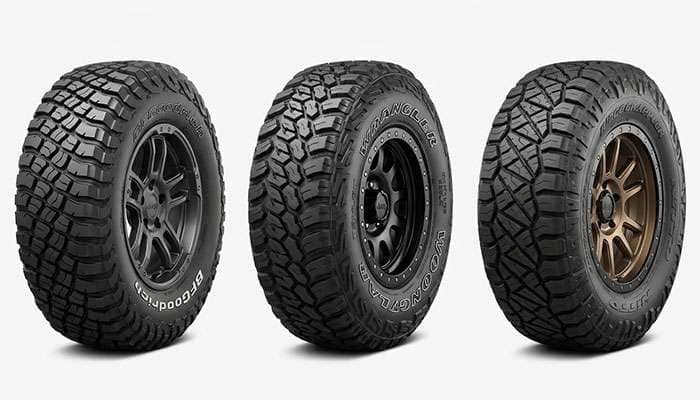
Choosing between tire brands involves evaluating performance, durability, and value. These manufacturers have proven track records with Jeep Wrangler owners and offer models specifically designed for off-road capability.
The BFGoodrich KO2 remains the gold standard for all-terrain tires on Jeep Wranglers. This tire delivers exceptional versatility across surfaces from highway to moderate trails. Its CoreGard technology protects sidewalls from punctures and splits, while the interlocking tread design provides excellent traction in mud and snow.
KO2 tires typically last 50,000-60,000 miles with proper rotation and maintenance. They maintain relatively quiet operation on highways while still gripping well on dirt, gravel, and light rock crawling. The Three-Peak Mountain Snowflake rating makes them suitable for winter driving in most conditions.
Jeep owners appreciate the KO2's balanced performance without major compromises. They're more expensive than budget all-terrain options but deliver reliability and capability that justify the premium.
Goodyear offers multiple Wrangler tire models designed specifically for off-road vehicles:
Wrangler DuraTrac RT: Rugged-terrain tire bridging all-terrain and mud-terrain categories. Features aggressive sidewalls and excellent winter performance with the Three-Peak rating.
Wrangler TrailRunner AT: All-terrain option focused on on-road comfort while maintaining trail capability. Quieter than traditional all-terrain tires with good treadwear warranties.
Wrangler MT/R with Kevlar: Serious mud-terrain tire with Kevlar-reinforced sidewalls for extreme durability. Ideal for rock crawling and severe off-road conditions.
Each Goodyear Wrangler tire targets different priorities, allowing you to match the specific model to your needs rather than settling for a one-size-fits-all solution.
Nitto Trail Grappler combines mud-terrain aggression with reasonable on-road manners. The dual sidewall design lets you choose between two different appearances. Its three-ply sidewall construction provides excellent puncture resistance for serious off-roading.
Nitto Ridge Grappler represents a hybrid approach, blending all-terrain comfort with mud-terrain capability. The variable pitch tread blocks reduce road noise significantly compared to traditional mud-terrain tires. This tire works well for Jeep owners who want an aggressive appearance without sacrificing daily drivability.
Both models use Nitto's advanced silica compound for improved wet traction. The Ridge Grappler typically delivers 5,000-10,000 more miles of treadwear than the Trail Grappler while maintaining similar off-road performance.
Premium tires deliver top performance, but quality budget options exist for cost-conscious Jeep owners:
Falken Wildpeak AT3W: Excellent value all-terrain tire with Three-Peak rating and impressive treadwear. Performs remarkably well for its price point.
Cooper Discoverer AT3 4S: Strong all-season capability with severe snow rating. Offers long tread life and good warranty coverage.
General Grabber X3: Budget mud-terrain option with red lettering available. Not as refined as premium choices but capable for weekend warriors.
Hankook Dynapro AT2: Solid all-terrain performance at competitive pricing. Good balance of on-road comfort and trail capability.
These alternatives typically cost 20-40% less than premium brands while still providing reliable performance for recreational off-roading and daily driving.
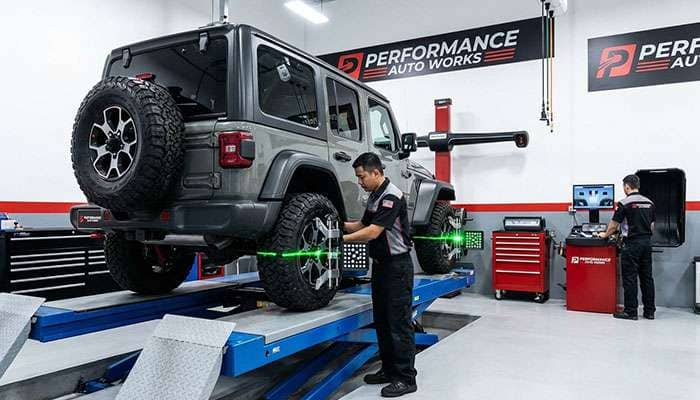
Image Source: CMA's CDJR of Martinsburg
Upgrading to larger Jeep Wrangler aftermarket tires affects much more than appearance. Understanding these performance impacts helps you maintain optimal safety and capability over time.
Larger tires create additional rolling resistance, forcing your engine to work harder and consume more fuel. This weight increase typically reduces fuel efficiency by several miles per gallon. Your speedometer and tachometer readings become inaccurate because larger tires cover more ground with each rotation. Without proper recalibration, you risk driving faster than intended, potentially leading to speeding violations.
Recalibration tools like SUPERCHIPS Flashpaq and JSCAN connect directly to your Jeep's OBD-II port, allowing you to input exact tire measurements for accurate readings.
Regearing becomes necessary when you notice reduced acceleration, power loss, or poor fuel economy after installing larger tires. Jeep Wrangler JL owners typically spend between $220-$270 for regearing both axles. This modification is essential because factory gear ratios are calibrated specifically for stock tire dimensions.
New gears require a break-in period. Avoid aggressive driving, racing, off-roading, or sustained highway speeds during this initial phase. Proper regearing restores your Jeep's optimal power band and helps recover lost fuel efficiency.
Replace your Jeep's tires when you notice:
Tread depth measuring below 2/32" (wear bars become visible between tread blocks)
Sidewall cracks, bulges, or visible damage
Cupping patterns or uneven wear across the tire surface
Age exceeding 6-10 years, regardless of remaining tread
Regular tire rotation prevents uneven wear patterns and extends overall tire life.
Professional installation ensures proper mounting, balancing, and alignment for your new tires. Technicians use specialized laser alignment systems and computerized balancing equipment for precise results. Even minor installation errors can cause air leaks, vibrations, or dangerous blowouts during operation.
Professional services typically include warranties covering both tire defects and installation problems, providing valuable protection for your tire investment and ensuring safe operation on all terrains.
Selecting aftermarket tires for your Jeep Wrangler comes down to matching your actual driving needs with the right product. Your driving habits, terrain requirements, and modification budget determine the best choice for your situation. Bigger tires deliver that aggressive appearance many Jeep owners want, but they require trade-offs in fuel economy, performance, and potentially expensive regearing.
Stock tires serve many drivers perfectly, particularly those who stay on pavement with occasional camping trips. All-terrain tires provide the best balance for mixed driving, while mud-terrain options excel in extreme conditions but sacrifice road comfort and tire life.
Tire size and lift height work together as a system. Larger tires without proper clearance modifications cause rubbing problems and potential vehicle damage. Professional installation protects your investment and ensures safe operation.
The perfect tires for your Wrangler depend entirely on how you actually use your vehicle. At Performance Plus Tire, we carry the best selection of Jeep Wrangler tires at competitive prices. Our expert team provides guidance tailored to your specific model and driving requirements at Performance Plus Tire's Jeep Wrangler selection.
Ready to upgrade your Jeep's performance and appearance? The right tire choice affects not just how your Wrangler looks, but how it performs on every road and trail you tackle.
Selecting the right aftermarket tires for your Jeep Wrangler involves balancing performance needs, driving habits, and modification requirements for optimal results.
• Match tire type to driving style: All-terrain tires offer versatility for mixed use, while mud-terrain excels off-road but sacrifices fuel economy and road comfort.
• Coordinate tire size with lift height: 33" tires fit most JL models without modification, 35" requires 2.5" lift, and 37" demands substantial suspension changes.
• Consider total ownership costs: Larger tires reduce fuel economy, require speedometer recalibration, and may need regearing to restore proper performance.
• Professional installation prevents problems: Expert mounting ensures proper fitment, prevents rubbing issues, and includes warranties for both tires and installation work.
• Stock tires work for many drivers: Factory configurations provide excellent longevity and balanced performance for primarily on-road use with occasional light off-roading.
Remember that bigger isn't always better – the ideal tire choice depends on your actual driving needs rather than just esthetic preferences. Professional guidance helps ensure your tire upgrade enhances rather than compromises your Jeep's capabilities.
For Jeep Wranglers used mainly on paved roads with occasional light off-roading, all-terrain tires like BFGoodrich KO2s or Falken Wildpeak AT3W/AT4W offer a good balance of on-road comfort and off-road capability. These tires provide improved traction over stock tires without excessive road noise.
Larger tires can impact several aspects of a Jeep's performance. They may reduce fuel economy and acceleration due to increased rolling resistance and weight. Larger tires also affect speedometer accuracy and can strain the vehicle's suspension and drivetrain components if not properly accounted for with additional modifications.
The need for a lift kit depends on the tire size and your Jeep model. Generally, 33-inch tires can fit on most recent Wrangler models without a lift. For 35-inch tires, a 2-2.5 inch lift is typically recommended. Larger sizes like 37-inch tires usually require more substantial lifts and additional modifications.
Tire replacement frequency depends on various factors, but generally, you should consider replacing your Jeep's tires when the tread depth falls below 2/32 inch, if there's visible damage to the sidewalls, or if the tires are more than 6-10 years old, regardless of tread wear. Regular rotations can help extend tire life.
All-terrain tires offer a balance between on-road comfort and off-road capability, making them suitable for daily driving with occasional off-road use. Mud-terrain tires have more aggressive tread patterns for excellent off-road traction, especially in mud, but tend to be noisier on pavement and wear faster. The choice depends on your primary driving conditions and off-road needs.



