
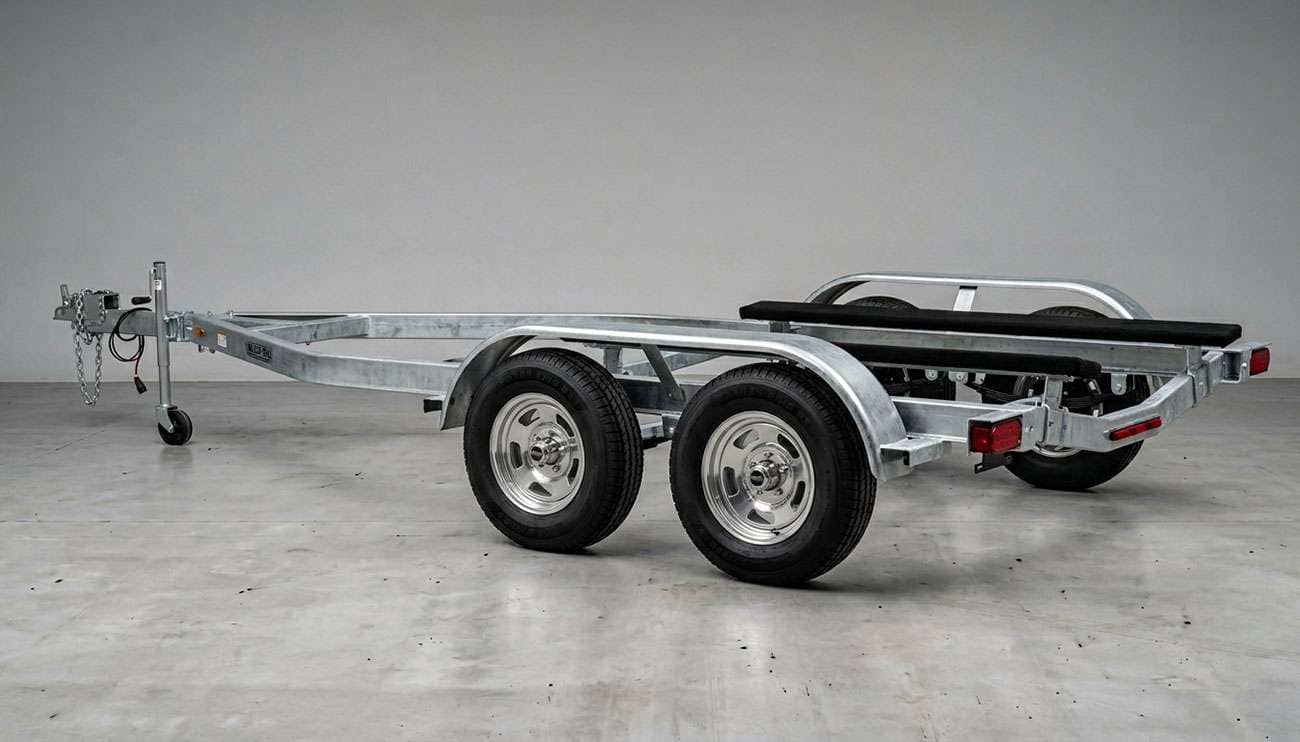
Fellow pulled into the shop last Thursday towing a tandem-axle aluminum bass boat, told me his buddy had been on him for two years to swap the steel wheels out for aluminum. Lighter, prettier, resists corrosion — all the usual arguments. He wanted to know if it was worth the money. Before I answered, I asked him two questions. How often does he launch the boat in salt water? And what's his average tow distance per trip? He said fresh water only, maybe eighty miles round trip about twice a month during the season. I told him to keep his steel wheels and spend the money on a good wash rack at his storage spot instead.
His buddy was wrong for his situation. But the buddy wasn't wrong in general. Aluminum trailer wheels are genuinely better than steel for specific applications, and there are plenty of trailer owners who'd be foolish not to spend the extra money on them. The problem is that the advice gets applied universally, without considering what the trailer actually does for a living. Steel versus aluminum isn't a simple winner-takes-all argument. It's a set of trade-offs that point different ways depending on your load, your environment, and your wallet.
Let me walk you through the whole decision.
Before we get into steel versus aluminum, let's be clear about what a trailer wheel is up against. It's a different job than what the wheels on your car or truck do, and that difference drives every material choice.
Dead-weight load, not drive load. Trailer wheels don't see drive torque from an engine. No acceleration forces, no braking forces in the transmission-to-wheel path. They only see vertical load (the weight of the trailer plus cargo) and lateral load (cornering forces, crosswinds, bumps). This simplifies the engineering story but intensifies the load duty cycle — the wheel is under full rated load whenever the trailer is loaded, for every mile the trailer rolls.
Long highway miles at sustained speed. Unlike passenger car wheels that see a lot of stop-and-go urban use, trailer wheels spend most of their life at 55 to 70 mph on the interstate. That sustained speed produces sustained thermal load on the wheel, the bearing, and the tire. Any wheel material has to hold up to that duty cycle without fatigue cracking or metallurgical changes.
Hot bearings right next to the wheel. The trailer's wheel bearing sits in the hub, pressed up against the back of the wheel. A properly maintained bearing runs warm — a neglected bearing can run hot enough to glow dull red at the hub. That heat conducts into the back of the wheel. Wheel materials have to tolerate those thermal excursions without losing strength.
Environmental exposure unlike any car wheel. Boat trailers get submerged in fresh or salt water every launch. Agricultural trailers sit in fields exposed to fertilizer residues. Construction trailers see road salt, concrete dust, and brake-dust-laden water from commercial tow vehicles. Corrosion exposure on a trailer wheel is on another level from what a garage-kept daily driver sees.
Long storage periods. Many trailers sit unused for months at a time. The wheels take the full load of the trailer sitting on concrete, dirt, or grass, sometimes outdoors. Storage conditions affect long-term wheel integrity in ways that don't matter on a daily driver.
Both steel and aluminum handle these conditions, but they handle them differently.
Steel trailer wheels are made from stamped and welded steel sheet, typically with a painted or galvanized protective finish. The construction has been mostly unchanged for sixty years. Simple, cheap, and proven in every trailer application on the road.
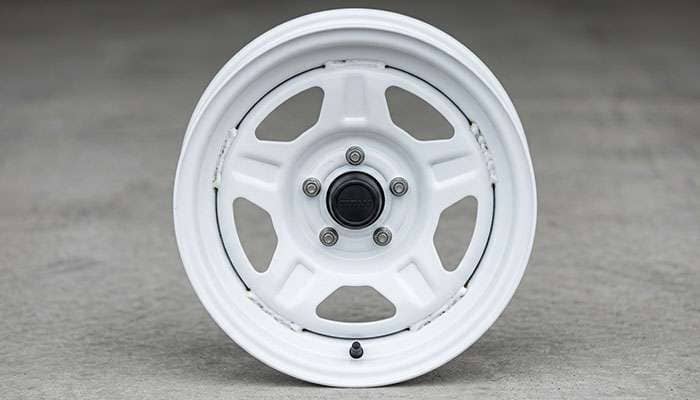
Strengths. Steel is tough. A steel wheel that takes a serious curb hit typically bends rather than cracks. A bent steel wheel can often be straightened on a rim press and put back into service. Steel handles impact loads, heavy static loads, and rough shoulder emergencies better than aluminum in most cases. Galvanized finishes can push service life well past 15 years in normal conditions, and the initial cost runs roughly 40 to 50 percent less than comparable aluminum wheels. For owners doing a full set of replacements, that cost difference on a tandem axle trailer can be $200 to $400 in real savings.
Weaknesses. Steel rusts. Painted steel wheels rust from any chip in the paint. Galvanized steel wheels resist rust better but aren't immune, particularly around the bead seat area where tire mounting and demounting can damage the galvanized layer. Salt water exposure — boats in the ocean, trailers on salted winter roads — accelerates corrosion dramatically. Neglected steel wheels eventually develop pitting in the bead seat area that causes slow air leaks and complicates tire mounting.
Steel also weighs more. A typical 15-inch steel trailer wheel runs 18 to 24 pounds compared to 12 to 15 pounds for a comparable aluminum wheel. That weight penalty multiplied across four or six wheels on a tandem or triple-axle trailer adds up to real towing-efficiency difference on long hauls.
What steel actually looks like on a trailer. Honest. Utilitarian. Nobody is going to mistake a steel trailer wheel for a styling element. Most ship in white, silver, or black painted finishes. The galvanized versions have a distinctive mottled gray appearance that some owners like for the "working trailer" look and others find ugly.
Aluminum trailer wheels are typically cast or flow-formed aluminum alloy, machined to final shape, and finished with a protective clearcoat or powder coat. The construction is more involved than steel wheel production, and it shows in the price.
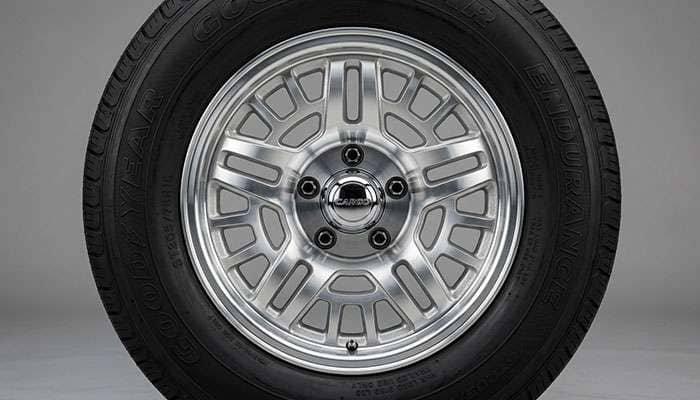
Strengths. Aluminum doesn't rust. It can oxidize — form a dull grayish surface layer — but it doesn't lose structural material the way steel does when exposed to corrosion. For saltwater boat trailers, this is transformative. A set of aluminum wheels on a saltwater-launched boat trailer can service 15 to 20 years of hard use; steel wheels in the same application typically need replacement every 4 to 6 years due to bead seat corrosion and structural pitting.
Weight matters for some towing applications. Every pound of unsprung weight affects trailer handling and towing efficiency marginally. On a lightweight single-axle utility trailer with a modest load, the weight savings from aluminum wheels is barely noticeable. On a triple-axle enclosed car hauler running coast-to-coast, lighter wheels produce measurable fuel economy improvement and more compliant trailer handling over rough pavement.
Appearance is the reason most trailer owners actually buy aluminum. A polished or powder-coated aluminum wheel photographs well, holds up to cleaning, and signals care. For owners who take their trailer to events, use it for business marketing, or resell trailers regularly, the appearance value is real.
Weaknesses. Aluminum cracks rather than bends when it fails. A severe impact that would leave a steel wheel bent but usable will often crack an aluminum wheel beyond repair. Most cast aluminum wheels cannot be straightened or repaired structurally — they must be replaced. That replacement cost runs $150 to $300 per wheel typically, compared to a steel wheel straightening job that might run $40 to $80 per wheel at a rim repair shop.
Aluminum is softer than steel. Over-torquing lug nuts on an aluminum wheel can deform the lug seat permanently. Incorrect lug nut type (conical versus ball seat) can damage the wheel the first time it's installed. Road debris, curb strikes, and rough backing-into-position maneuvers that wouldn't mark a steel wheel can leave permanent dents or scratches in an aluminum wheel.
Cost is the obvious downside. Aluminum trailer wheels typically run 60 to 100 percent more than equivalent steel wheels at the same size and load rating. For a tandem-axle trailer, that's an additional $300 to $600 investment over steel.
Here are the six things I walk every customer through. Work them in order, and the answer usually makes itself clear.
1. Corrosion exposure. Salt water? Aluminum, no question. Road salt exposure in winter-belt climates? Aluminum unless budget is extremely tight. Fresh water only, occasional rain, no coastal use? Steel is fine with reasonable maintenance. Agricultural or industrial chemical exposure? Case-by-case; some chemistries attack aluminum more than steel.
2. Load capacity per wheel. Both materials are available in the load ratings needed for typical trailer applications. Verify the wheel's load rating matches your trailer's gross axle weight divided by number of wheels per axle, plus safety margin. Don't assume aluminum always equals steel in this category — some decorative aluminum wheels have lower load ratings than appropriate steel wheels.
3. Weight savings math. Calculate actual weight savings for your specific trailer. Light utility trailer with two wheels? Maybe 12 pounds total savings, negligible. Triple-axle enclosed car hauler with six wheels? Possibly 50 pounds total savings, meaningful on long hauls. The weight argument only matters when the numbers are significant relative to your trailer's tongue weight and towing dynamic.
4. Cost and breakeven analysis. How long will you own this trailer? If you're buying a $30,000 enclosed hauler and planning to keep it 15 years, the aluminum wheel premium amortizes into negligible per-year cost. If you picked up a $4,000 used utility trailer you expect to sell in three years, the aluminum premium is a bigger proportional hit.
5. Replacement and repair availability. Steel wheels are stocked everywhere. If you damage a wheel in rural Nebraska on a Saturday, a farm supply store probably has a replacement. Aluminum wheels in specific bolt patterns and sizes can be harder to source in emergencies. This matters for commercial operations where downtime is expensive.
6. Appearance and resale value. Honest assessment: does the trailer's appearance matter to you, your customers, or future buyers? A contractor's flatbed or a working utility trailer? Probably not — nobody cares what the wheels look like. A show car hauler, wedding-event flower trailer, or a mobile business trailer? Yes, appearance is part of the asset value.
For additional guidance on the wheel specs that matter for trailer fitment, see our article on how to know what wheels fit your trailer.
Boat trailers are the one application where I'll push customers toward aluminum almost every time, and saltwater boat trailers are the one application where I'll strongly discourage steel.
The reason is simple physics. Every time you launch a boat from a steel-wheeled trailer into saltwater, the hot wheels hit the cold salt water, contract, and draw moisture and salt into every crevice. The galvanized or painted finish is under constant attack. Bead seat corrosion develops within three to five seasons of regular saltwater use. Tire mounting becomes difficult, air loss becomes chronic, and structural corrosion ultimately forces replacement.
Aluminum boat trailer wheels live in that same environment and don't progressively deteriorate. They'll develop some surface oxidation, which cleans off with a rinse and occasional polish. The wheel itself maintains structural integrity for the full life of the trailer.
For fresh water boat trailers — lakes, rivers, reservoirs — the corrosion argument is weaker but still points at aluminum for long-term owners. A fresh water boat trailer with steel wheels will outlive a saltwater steel setup, but it still corrodes faster than any other kind of trailer use.
Specific product recommendations for boat trailer applications: the Allied Wheel 881MC Aluminum Mod Trailer and the Raceline 881 Mod Trailer are both proven cast aluminum designs that handle saltwater conditions well. Both are available in common 5-on-4.5 and 6-on-5.5 bolt patterns for most boat trailer axles.
Open utility trailers, dump trailers, landscaping trailers, and basic cargo trailers are the one application where I default to steel unless the customer has a specific reason to pay the aluminum premium.
These trailers work hard. They carry lawn equipment, building materials, scrap metal, furniture, and everything else people haul behind a pickup. They get scraped, loaded rough, backed into things, and generally abused. Steel's ability to take a hit and keep working without needing replacement is exactly what this duty cycle demands.
Corrosion exposure on a basic utility trailer is typically moderate. No water submersion, some rain exposure, occasional winter road salt. Painted or galvanized steel wheels service this duty cycle for 10+ years with basic maintenance. The cost premium for aluminum doesn't pay back in any measurable way, and the impact tolerance advantage goes to steel.
The exception is the utility trailer used in commercial landscaping or agricultural work where appearance matters to the business — lawn service trailers with company branding, for instance. In those cases, aluminum wheels may be part of the marketing value.
Enclosed trailers for horses, livestock, and cars split the decision based on how much they travel.
Low-mileage local haulers. A ranch owner who uses his stock trailer twice a week for local trips to the pasture and the vet is running a low-mileage application. Steel wheels are entirely appropriate, the weight savings of aluminum is irrelevant, and the cost savings are real. No reason to pay the premium.
High-mileage long-haul commercial use. A professional horse trainer who shuttles animals to shows across several states, a commercial car hauler that runs coast-to-coast, a livestock transport trailer in regular use — these applications accumulate enough highway miles that the weight savings, maintenance savings, and appearance value of aluminum wheels produce real economic return. The breakeven typically lands around 15,000 to 20,000 miles per year of use.
Between those two extremes, the decision comes down to the trailer owner's personal preferences and cash flow.
Our article on trailer wheels — what most buyers get wrong covers specific wheel selection criteria that matter across all these trailer categories.
RVs and travel trailers are the one category where I push customers toward aluminum more often than not, even for low-mileage use.
RV weight matters constantly. Every pound of trailer weight affects tow vehicle capacity, fuel economy, and handling. Aluminum wheels save 6 to 9 pounds per wheel on a typical RV application, which adds up to 24 to 36 pounds total on a dual-axle travel trailer. That weight reduction isn't huge, but when RV owners are already making other weight-saving decisions (water tank capacity, stored provisions, equipment packed aboard), aluminum wheels fit the overall approach.
RV appearance also matters more than utility trailer appearance. Most RV owners park their rigs in visible spaces — campgrounds, driveways, storage lots where the appearance of the equipment matters to the overall presentation. Aluminum wheels hold up to cleaning, look intentional, and contribute to the rig's perceived quality.
Finally, RV tires typically run at higher sustained speeds on longer trips than utility trailer tires do. The bearing and thermal story I covered earlier matters more here. Aluminum's consistent heat dissipation across the wheel structure is marginally better than steel's in sustained high-temperature operation.
Four mistakes come through the shop doors regularly. Save yourself the trouble.
Using passenger car wheels on trailers. Load ratings on car wheels assume drive loads in one direction. Trailer wheels see different loading profiles, typically higher load ratings for their size, and must be specifically rated for trailer duty. A borrowed set of car wheels will work for about ten miles before the bearing gets hot, the wheel deforms, and you're on the shoulder. Our article on the difference between trailer tires and car tires covers the broader category distinction.
Mixing materials on tandem axles. I occasionally see tandem-axle trailers running two steel wheels on one axle and two aluminum wheels on the other. The weight difference puts uneven load distribution into the suspension and can cause the lighter axle to take more dynamic load than intended. Run matched sets — all steel or all aluminum — on each trailer.
Wrong lug nut style on aluminum wheels. Aluminum trailer wheels typically use conical seat lug nuts. Some steel trailer wheels use mag-style (round) seats. Using the wrong lug nut permanently damages the wheel the first time it's torqued to spec. Verify lug nut compatibility before installation.
Over-torqueing on aluminum. Aluminum is softer than steel. Factory torque specs (typically 90 to 120 foot-pounds for most trailer wheel sizes) are hard limits. Over-torqueing deforms the lug seat and damages the wheel. Use a calibrated torque wrench, not a breaker bar.
Here are the wheels we move most at Performance Plus, grouped by application type.
Application |
Recommended Wheel |
Why It Works |
|---|---|---|
Saltwater boat trailer |
Cast aluminum with proven saltwater longevity. Common bolt patterns cover most boat trailer axles. Clean silver finish that polishes well and holds up to repeated water exposure. |
|
Freshwater boat or lightweight RV |
Aluminum construction with machined finish for appearance value. Good weight savings for RV applications. Multiple size options for common trailer axle configurations. |
|
Utility and cargo trailers |
Steel painted or galvanized (available in multiple sizes) |
Impact-tolerant steel construction for hard-working duty cycles. Significant cost savings vs aluminum. Simple replacement and repair if damage occurs. |
Car haulers and enclosed trailers (styling priority) |
Aggressive black-and-machined appearance for owners prioritizing appearance. Solid load capacity for enclosed cargo applications. Proven cast aluminum construction. |
|
Heavy-duty commercial haulers |
16-inch 8-lug aluminum wheel rated for high load applications. Machined finish. Suitable for heavy equipment trailers, commercial haulers, and larger RV applications. |
|
Small utility and ATV haulers |
12-inch aluminum wheel for small trailer applications. Common 4-lug and 5-lug bolt patterns for utility and ATV hauler axles. |
Steel trailer wheels and aluminum trailer wheels are both good products. Neither is the universal right answer and neither is the universal wrong answer. The decision comes down to six specific factors — corrosion exposure, load capacity, weight savings math, cost breakeven, replacement availability, and appearance value — weighed against the specific job your trailer does.
Saltwater boats, high-mileage commercial haulers, and RVs tend to justify aluminum. Utility trailers, low-mileage local haulers, and tight-budget applications tend to favor steel. Everything in between comes down to how you personally weigh the trade-offs for your own trailer use.
The mistake is assuming there's a universally right answer. Your buddy who swapped his steel wheels for aluminum because he likes how they look? He may have been right for his trailer. Doesn't mean he's right for yours.
For the full range of trailer wheels in steel and aluminum, across every common bolt pattern and load rating, see our selection at Performance Plus Tire. Our fitment team can match the right wheel material and specification to your specific trailer application.
Depends on the application. For saltwater boat trailers, high-mileage commercial haulers, and RVs, yes — the corrosion resistance, weight savings, and appearance value justify the 60-100 percent cost premium over steel. For utility trailers, low-mileage local haulers, and tight-budget applications, steel typically delivers better value. Calculate the breakeven based on how long you'll own the trailer and how hard the wheels will work.
Both materials are available in the load ratings needed for typical trailer applications. Always verify the specific wheel's load rating matches your trailer's gross axle weight requirements. Some decorative aluminum wheels have lower load ratings than equivalent steel wheels, so don't assume equivalence — check the rating stamped on each wheel and confirm it meets your axle capacity needs.
Painted or galvanized steel trailer wheels typically service 10 to 15 years in moderate-exposure applications with basic maintenance. Saltwater boat trailer use reduces that to 4 to 6 years due to bead seat corrosion. Road salt and heavy agricultural chemical exposure shorten lifespan similarly. Fresh water boats, utility trailers, and dry-climate applications see the longest steel wheel service life.
Usually not structurally. Most cast aluminum trailer wheels cannot be straightened the way steel wheels can. A cracked or severely bent aluminum wheel typically needs replacement rather than repair. Steel wheels, in contrast, can often be straightened on a rim press and returned to service for $40 to $80 per wheel. This repair-ability advantage is one of steel's strongest arguments in heavy-duty trailer applications.
Not recommended. Mixing materials produces uneven weight distribution between axles (aluminum wheels weigh 6 to 9 pounds less than comparable steel wheels), which affects suspension dynamics and can put uneven load on bearings and tires. Run matched wheel sets — all steel or all aluminum — on each trailer for consistent performance and load distribution.
Yes. Aluminum trailer wheels typically require conical seat lug nuts specifically. Using mag-style (round/shank) lug nuts in a wheel designed for conical seats, or vice versa, permanently damages the wheel the first time it's torqued to spec. Verify the wheel's lug seat style before installation and use matching lug nuts torqued to the manufacturer's specification with a calibrated torque wrench.



