
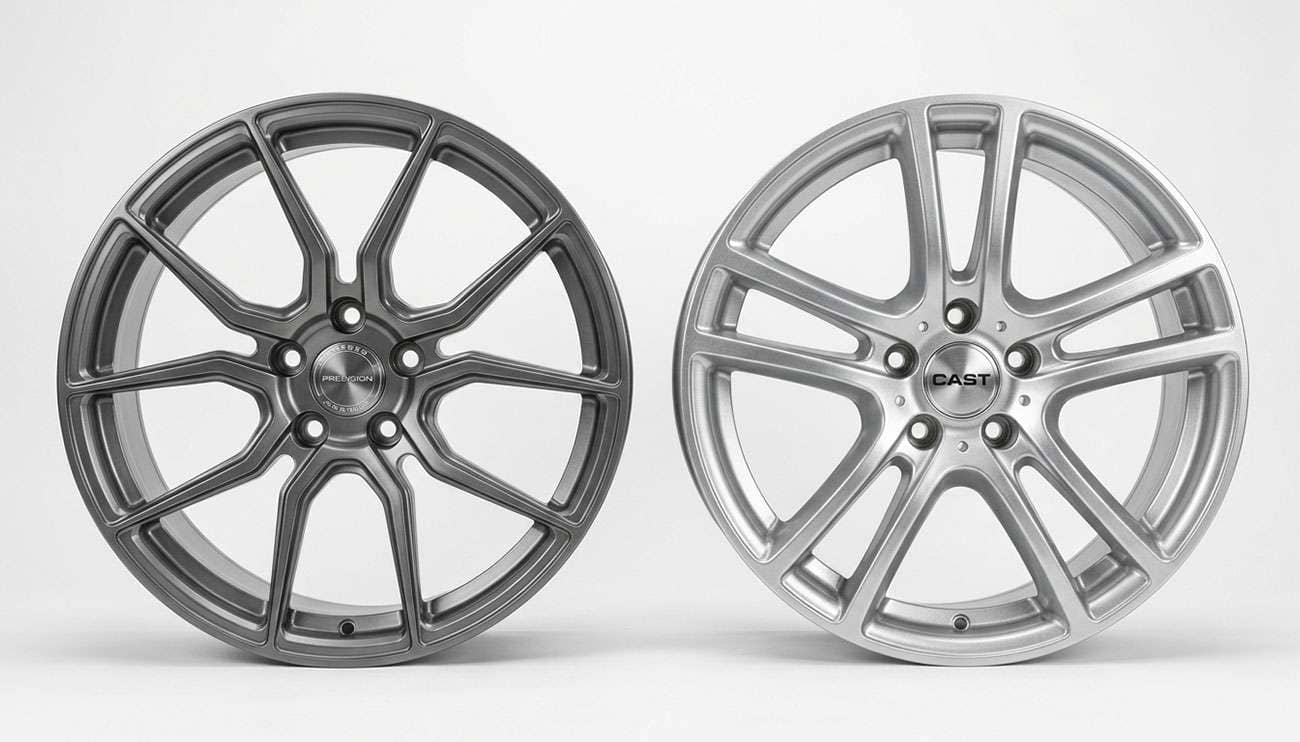
People shop wheels by diameter, offset, bolt pattern, and finish. Almost nobody asks what the metal under the finish actually is — and that one spec quietly decides how strong the wheel is, how much it weighs, how it behaves in a pothole strike, and a large chunk of what you pay. Pick up two 18x9 wheels of the same size and one can be nearly twice as strong as the other. The difference isn't the brand or the look. It's the alloy and how it was treated.
Strip away the marketing and you find the same two aluminum alloys behind the overwhelming majority of car and truck wheels on the road: A356 and 6061. They are close cousins chemically, but they're built for opposite manufacturing routes, and that split is the single most useful thing to understand before you spend money on wheels. Here's how each one works, what the "T6" stamped alongside them means, and how to read all of it when you're standing in front of a wheel deciding whether it's worth the price.
Both alloys are aluminum-silicon-magnesium families, and both can be heat-treated to gain strength. The practical divide is how they're shaped. A356 is a casting alloy — it's designed to be melted and poured into a mold as a liquid. 6061 is a wrought alloy — it's worked in the solid state by forging, extruding, or rolling. That distinction drives everything downstream: the strength you get, the shapes that are possible, and the cost.
A cast wheel is poured. A forged wheel is pounded into shape from a solid slug of metal under enormous pressure. Same base material, completely different internal structure when it's done. If you want the longer story on the manufacturing side, our breakdown of cast vs forged vs flow-formed wheels walks through each process step by step. This article focuses on the metal itself — what A356 and 6061 actually are, and why the choice matters.
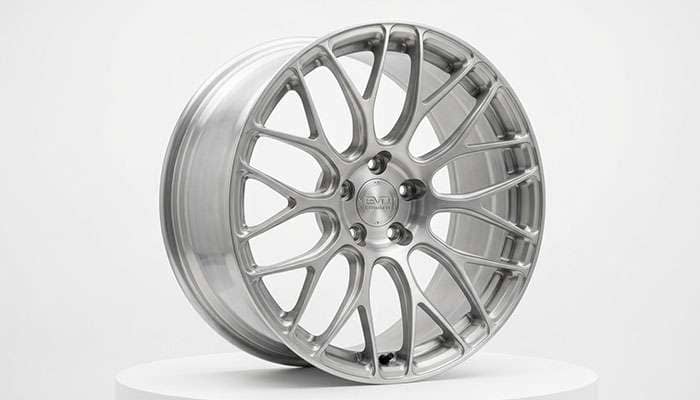
A356 is an aluminum-silicon-magnesium alloy carrying roughly 6.5 to 7.5 percent silicon. That silicon is the whole point. In a molten state, it gives the metal exceptional fluidity, letting it flow into thin sections and intricate mold cavities without leaving voids. That's why nearly every elaborate, deep-spoke, sculpted wheel design you see started life as A356 — the alloy can fill a complex mold that no forging die could ever reproduce economically.
The "A" prefix matters too. It signals a refined version of the base 356 alloy with tighter limits on impurities like iron, which improves ductility and consistency. Aluminum content runs around 92 percent. After casting, the part gets heat-treated to develop its strength (more on that below).
The trade-off is that silicon, while it makes the metal pour beautifully, also makes the finished casting more brittle and slightly lower in outright strength than a wrought alloy. Castings can also carry a small amount of internal porosity — tiny pockets from the solidification process — which is why casting quality varies so much between manufacturers. A well-made cast wheel from a serious brand is a perfectly good wheel for the vast majority of street driving. A cheaply poured one is where you run into cracking and weight problems. Most of the one-piece custom wheels in our catalog — names like 2Crave, Vision, and Raceline — are quality A356 castings, and they cover daily-driver and show duty without complaint. If you want the broader picture on cast construction, see our guide on what alloy wheels are and how they're made.
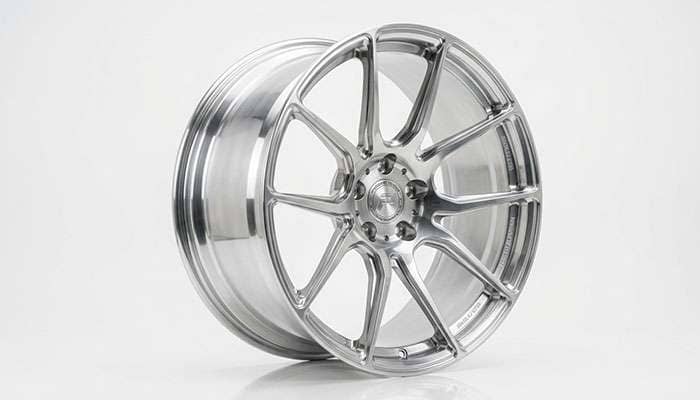
6061 is the wrought alloy of the pair. It's aluminum with magnesium and silicon plus a small addition of copper and a trace of chromium — the copper and chromium are what push its strength and hardness above A356. Because it's worked in the solid state rather than poured, it doesn't need high silicon for fluidity, so it skips the brittleness that silicon brings.
The real advantage comes from forging. When a solid billet of 6061 is pressed and hammered into a wheel under thousands of tons of force, the metal's internal grain structure gets compressed and aligned with the shape of the part. That tight, directional grain flow is what gives a forged wheel its fatigue resistance and impact toughness. There's no internal porosity because nothing was ever liquid — the wheel is solid metal all the way through. The result is a wheel that's both stronger and, for a given strength target, lighter.
This is the structure behind the premium end of the catalog. Forged billet lines like the Billet Specialties Win Lite and Turbo series, Fuel's Forged FF-series, and dedicated forged race wheels are all 6061 territory. For a deeper look at how forged wheels are built and why enthusiasts seek them out, our articles on whether forged wheels are worth it and the different types of forged wheels from monoblock to multi-piece go further than we can here.
You'll almost always see these alloys written as A356-T6 or 6061-T6. The number tells you the chemistry; the temper code tells you the strength. T6 is the most common heat treatment in the wheel world, and it's a three-step process that turns a relatively soft metal into a structural one.
First comes solution heat treatment: the wheel is heated to roughly 1,000°F (about 540°C) and held there long enough for the magnesium and silicon to fully dissolve into the aluminum. Next is quenching, a rapid cooldown that locks those elements in place before they can settle out. Finally, artificial aging reheats the part at a lower temperature so microscopic magnesium-silicide particles precipitate throughout the metal. Those particles are what block the internal slip planes and dramatically raise strength and hardness. Metallurgists call it precipitation hardening; in plain terms, it's controlled heating and cooling that builds strength from the inside.
Two things worth knowing. First, T6 is why heat treatment consistency matters as much as the alloy choice — a sloppy heat-treat cycle can leave a good alloy underperforming its spec. Second, this is also why curb damage and welding repairs on wheels are risky: reheating a localized area can undo the temper in that zone, leaving a soft spot. It's one of the reasons we steer people toward replacement over repair on structural cracks, a theme we cover in our guide to making alloy wheels last.
Spec sheets vary with exact composition and process quality, but typical published values for the two alloys in the T6 temper line up like this. The pattern is consistent across sources: in every mechanical category that matters for a wheel, 6061-T6 comes out ahead.
Property |
6061-T6 (Forged) |
A356-T6 (Cast) |
|---|---|---|
Ultimate tensile strength |
~45,000 psi |
~33,000 psi |
Yield strength |
~40,000 psi |
~24,000 psi |
Brinell hardness |
~95 |
~70 |
Fatigue strength |
~13,900 psi |
~10,900 psi |
Ductility (resistance to cracking) |
Higher — bends before it breaks |
Lower — more brittle |
Typical wheel use |
Forged street, track, heavy-duty |
Cast custom, OE, show |
The yield strength gap is the one to focus on. Yield strength is the point at which metal stops springing back and stays bent. A forged 6061-T6 wheel can take a much harder hit — a deep pothole, a hard curb, a track curbing strike — and return to shape rather than crack or take a permanent set. That's the practical payoff of the higher numbers, and it's why forged wheels dominate motorsport and serious towing applications where loads spike hard and fast.
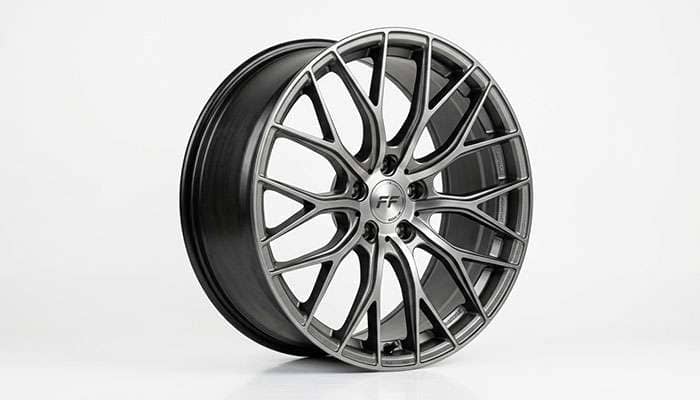
There's a middle path that's grown enormously in popularity, and it muddies the simple cast-versus-forged picture in a good way. Flow-forming starts with a cast A356 barrel, then uses spinning rollers under heat and pressure to stretch and compress the outer rim into its final shape. That stretching work hardens the barrel and aligns the grain in the most stressed part of the wheel — the area that takes lateral cornering loads — without the full cost of forging.
The payoff is a wheel that's noticeably lighter and stronger than a plain casting while staying far cheaper than a true forging. It's why flow-formed wheels have become the default for affordable performance. Lines like the Forgestar F14, Black Rhino Rapid, and Konig Hypergram are flow-formed, and they hit a genuine sweet spot for street-and-occasional-track cars. Think of it as taking A356 and giving its hardest-working surface some of the grain benefit that forging gives 6061 everywhere.
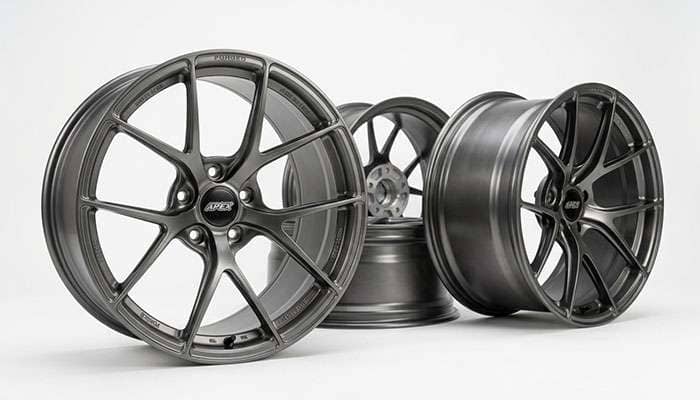
Match the metal to the mission rather than chasing the highest number on principle. For a daily driver, a commuter, or a show car that lives on smooth roads, a quality cast A356 wheel is the right call. It delivers the design freedom for the look you want at a sensible price, and it's plenty strong for normal street loads. Most buyers are well served here.
Step up to flow-formed when you want lower weight for better acceleration, braking, and steering response, or when you do occasional track days and want a stronger barrel without forged pricing. Go to full forged 6061 when the loads get serious: dedicated track use, drag launches, heavy towing, big-power builds, or any time unsprung weight reduction is worth real money to you. Forged is also the answer when you simply want the strongest, lightest wheel available and the budget allows it.
One note for truck and tow-rig owners: with heavier vehicles, the wheel's structural margin matters more, not less. The combination of high static load and sudden impact loads is exactly where the forged strength advantage earns its keep. If you're choosing between materials for a classic build specifically, our piece on steel vs aluminum wheels for classic cars adds the steel angle to the comparison.
The price spread between cast and forged isn't markup for a name — it's manufacturing reality. Casting is a near-net-shape process: pour the metal, and the wheel comes out close to final form with minimal machining. That keeps cost down, which is why cast A356 wheels anchor the value end of the market.
Forging is the opposite. It starts with an expensive solid billet, requires massive presses, and then demands extensive CNC machining to cut the final shape out of the forged blank — a lot of premium metal ends up as chips on the shop floor. Flow-forming lands in between because it adds one work-hardening step to a casting rather than rebuilding the whole process. So the rough hierarchy you'll see in pricing — cast, then flow-formed, then forged — tracks directly with how much work and material went into the wheel. When you understand that, the price tag stops looking arbitrary. You can shop the full forged range on our forged wheels page, and if you're weighing specific names, our list of the most popular forged wheel brands is a good starting point.
Two alloys do almost all the work in the wheel world. A356 is the casting alloy — high silicon for fluid molds, ideal for intricate designs and value-priced custom wheels. 6061 is the forging alloy — copper and chromium for higher strength, worked solid for a tight grain that resists impact and fatigue. The T6 temper is what unlocks the strength in either one. Flow-forming bridges the two by work-hardening a cast barrel. None of these is "the best" in a vacuum; the right one depends on how hard you load the wheel and what you're willing to spend. Know which metal you're buying, and every other wheel decision gets easier.
No. The overwhelming majority of aluminum wheels use one of two alloys: A356, an aluminum-silicon-magnesium casting alloy, or 6061, an aluminum-magnesium-silicon wrought alloy used for forging. They share a family but are formulated for opposite manufacturing methods, which gives them different strength and weight characteristics.
Yes. In the T6 temper, 6061 shows higher tensile strength, yield strength, hardness, and fatigue resistance than A356, and forging eliminates the internal porosity that castings can carry. The most important practical difference is yield strength — a forged wheel is more likely to flex and return to shape under a hard impact rather than crack.
T6 is a temper designation describing a heat treatment with three stages: solution heat treatment at around 1,000°F, a rapid quench, and artificial aging at a lower temperature. The process precipitates magnesium-silicide particles through the metal, which sharply increases strength and hardness compared to the untreated alloy.
Casting is a near-net-shape process: molten A356 is poured into a mold and comes out close to final form with little machining, keeping costs low. Forging starts with an expensive solid billet, requires very high-tonnage presses, and needs extensive CNC machining that turns a lot of premium metal into scrap, all of which raises the price.
Flow-formed wheels begin as cast A356 barrels, then spinning rollers stretch and compress the outer rim under heat and pressure. This work-hardens the most stressed part of the wheel and aligns its grain, producing a wheel that is lighter and stronger than a plain casting but more affordable than a full forging.
For a daily driver or show car on normal roads, a quality cast A356 wheel offers the design choices you want at a fair price and ample strength. For lightweight street performance or occasional track use, flow-formed is the value pick. For dedicated track, drag, heavy towing, or big-power builds, forged 6061 delivers the strength and low weight those loads demand.



