
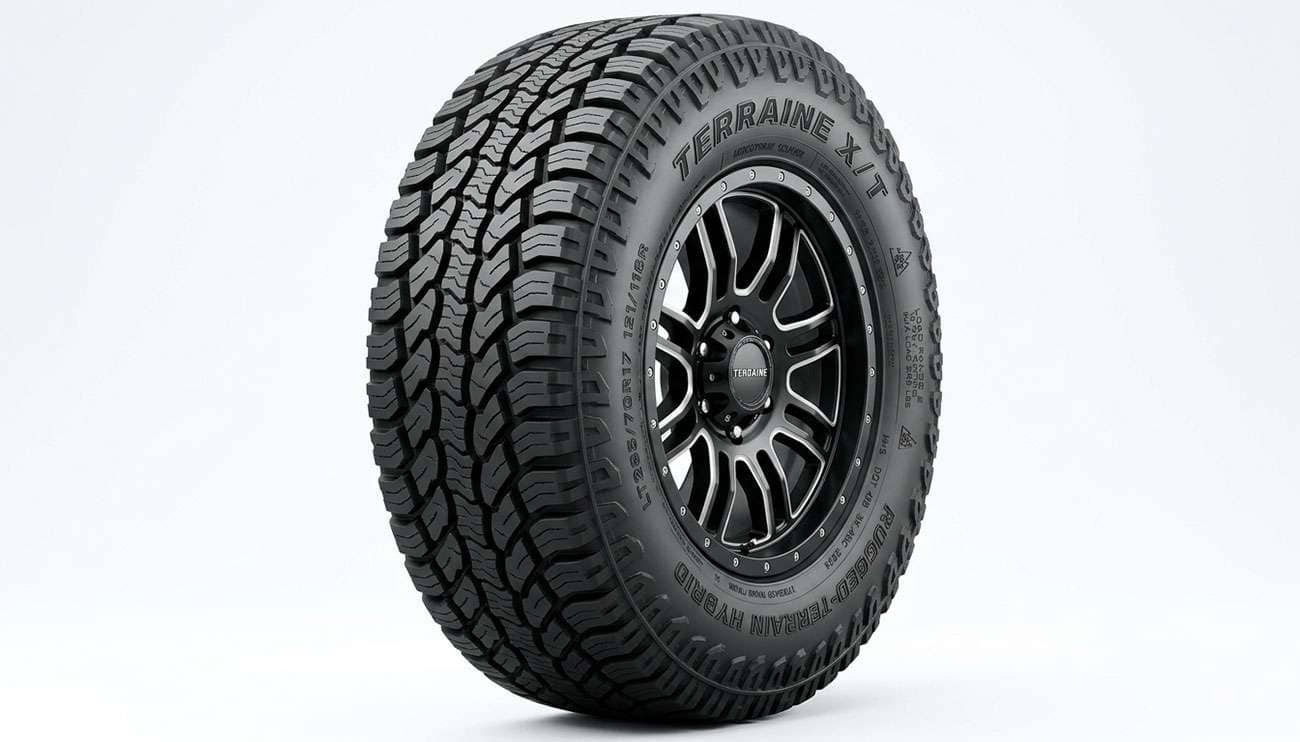
I've had this conversation across the counter more times than I can count. A fella walks in, says he's after a "hybrid tire," and I have to do a little detective work — because that one phrase means about three different things depending on who's saying it. So before you go shopping, let me save you the confusion I see every week and tell you straight what a hybrid tire actually is.
The short answer: nine times out of ten, "hybrid tire" means a rugged-terrain tire — what the industry stamps as R/T. It's the tweener that splits the difference between a tame all-terrain and a gnarly mud-terrain. But folks also use "hybrid tire" to mean tires built for hybrid and electric cars, and once in a while to mean an all-weather tire that blends summer and winter. Same two words, three completely different products. Let's sort them out.
Here's the honest part nobody likes to admit: there's no official rulebook for the word "hybrid" on a tire. The tire manufacturers' association doesn't have a hard definition for it, so the term gets stretched to fit whatever a marketing department wants. When you strip away the noise, it lands in one of three buckets.
Rugged-terrain (R/T) tires. This is the big one — the meaning behind that "People Also Ask" box and most of the search traffic. An R/T is a light-truck and SUV tire that borrows the aggressive shoulder lugs of a mud-terrain and marries them to the tighter, quieter center tread of an all-terrain. It's a genuine hybrid of two off-road categories. The rest of this article is mostly about these.
Tires for hybrid and electric vehicles. When a Prius or an EV owner says "hybrid tire," they usually mean a tire engineered for the demands of an electrified car — low rolling resistance for range, extra load capacity for heavy battery packs, and special foam to quiet the cabin. Totally different animal, and I'll point you the right way on that further down.
All-weather "hybrid" tires. A few brands call an all-weather tire a "hybrid" because it blends summer grip with light winter capability in one tire. It's the least common use of the term, but you'll bump into it.
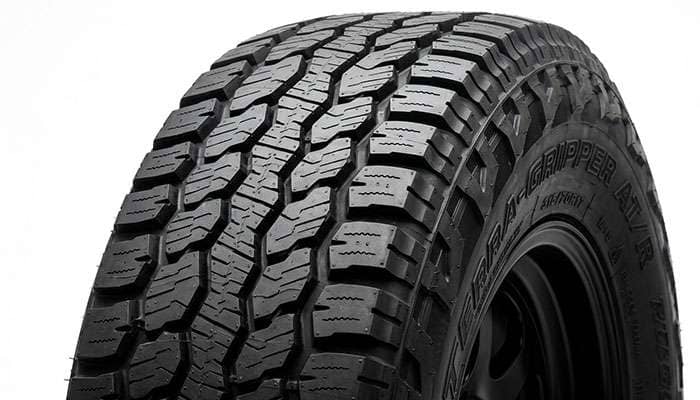
Back when I started, light-truck tires came in three flavors and that was that: highway, all-terrain, and mud-terrain. Simple. Then sometime in the mid-2010s the rugged-terrain category showed up and blew the doors off those neat little boxes. Some of the old-timers grumbled about it. I get the appeal, though — the R/T fills a real gap.
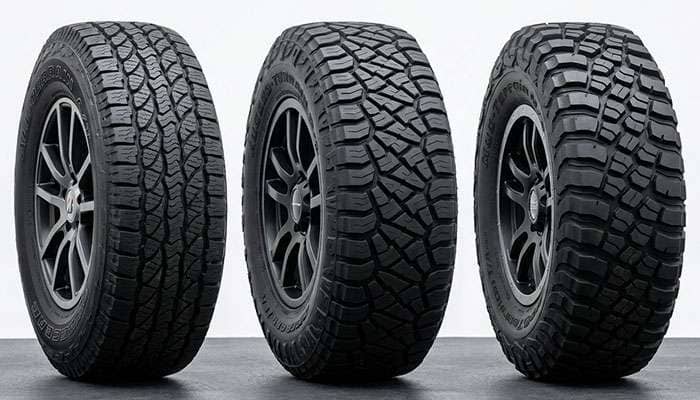
Picture it this way. A mud-terrain tire is a beast off the pavement, but it'll drone like a propeller plane on the highway and wear out your patience on a long drive. An all-terrain is smooth and quiet, but it can run out of bite when the trail gets nasty. The rugged-terrain sits dead center: open, self-cleaning shoulder lugs that dig like a mud tire, paired with a denser center section that keeps things civil on the road. Most R/Ts also run a beefier sidewall — often a 3-ply carcass — for fending off rocks and trail debris. Some enthusiasts call them "tweener" tires, and that's exactly right.
If you want the full rundown — the model-by-model breakdown, treadwear warranties, and snow ratings — my deep dive on what R/T tires are covers it. This piece is the front door; that one's the workshop.
The easiest way to understand a hybrid tire is to put it next to its two parents. Here's how the three stack up on the things that actually matter day to day. If you want to go deeper on any one of them, my breakdown of H/T vs. A/T vs. M/T tires lays out the whole family.
Feature |
All-Terrain (A/T) |
Hybrid / Rugged-Terrain (R/T) |
Mud-Terrain (M/T) |
|---|---|---|---|
On-road noise & comfort |
Quietest, smoothest |
Some hum, still livable daily |
Loud, rough on pavement |
Off-road traction |
Good for most trails |
Strong — near mud-tire bite |
Best in deep mud and rocks |
Tread life |
Longest, 50k–60k common |
Middle, roughly 35k–50k |
Shortest, softer compound |
Severe-snow (3PMSF) |
Many models rated |
Select models rated |
Rarely rated |
Best for |
Mostly pavement, occasional trail |
Even split of road and trail |
Serious off-road, minimal highway |
That treadwear number in the middle column matters more than people expect — a hybrid's softer, grippier compound trades some longevity for traction. If squeezing miles out of a set is your priority, my notes on off-road tire tread life are worth a look. And if you're torn between the two extremes, all-terrain vs. mud tires spells out the trade you'd be making by skipping the hybrid altogether. Want the deepest dig on the mud side? See everything about mud-terrain tires.
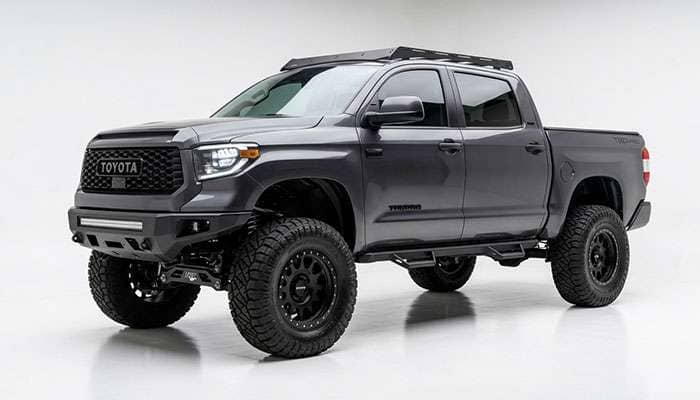
Here's my rule of thumb after 45-plus years of fitting tires: a hybrid earns its keep when your week is split between pavement and dirt. If you're running roughly 15% to 50% of your miles off-road — commuting Monday through Friday, then hitting the trail, the boat ramp, or the job site on the weekend — the R/T is the sweet spot. Overlanders love them for exactly this reason.
Who shouldn't bother? If 90% of your driving is the school run and the grocery store, you're paying for traction and noise you'll never use — get a good all-terrain instead. And if you're a hardcore rock crawler living in the mud, step up to a true mud-terrain; the hybrid will give up ground where it counts. For the daily-driver-that-occasionally-wheels crowd, I walk through the trade-offs in daily driving on off-road tires. And if you're still mapping out your whole setup, how to choose off-roading tires starts from square one.
Now, if you drive a Prius, a RAV4 Hybrid, or an EV and you typed "hybrid tire" into a search bar, you're after something completely different — and I don't want you bolting rugged-terrain truck tires onto a hybrid sedan. Tires built for electrified cars chase low rolling resistance to protect your range, carry the extra load of a heavy battery pack, and often include sound-deadening foam because an electric drivetrain is so quiet you'd hear every bit of tire roar otherwise.
That's a separate shopping trip entirely. If that's you, hop over to my guide on the best tires for hybrid vehicles — it covers the efficiency-and-performance balance these cars actually need. Don't let the shared word send you down the wrong aisle.
Assuming you're after the rugged-terrain kind, here are the names that come up at my counter over and over. The Nitto Ridge Grappler is the one that really put hybrids on the map — it's widely considered the pioneer of the segment and still a benchmark for that aggressive look with manageable road manners. The Falken Wildpeak R/T01 is built for heavier rigs and inherits the Wildpeak family's reputation for snow. The Toyo Open Country R/T is a proven, balanced choice, and the newer R/T Trail steps up the sidewall for overlanders. The Fury Country Hunter R/T brings thick, impact-resistant tread, and the Cooper Discoverer Rugged Trek is one of the better-balanced, quieter entries with severe-snow ratings on select sizes.
Want a no-nonsense, real-mileage opinion on a budget pick? My write-up on whether Kenda Klever R/T tires are good after 10,000 miles pulls no punches. When you're ready to shop, browse our rugged-terrain tires by size and brand, or widen the net across our full off-road tires lineup. Give us a size and a vehicle and we'll point you at the right set.
So — what is a hybrid tire? Strip away the marketing and it's almost always a rugged-terrain (R/T) tire: a true cross between an all-terrain and a mud-terrain that gives you serious off-road bite without turning your daily commute into a misery. It's the right call when your driving is honestly split between road and dirt. Just don't confuse it with tires made for hybrid cars — that's a different product for a different machine. Know which "hybrid" you actually mean, match the tire to how you really drive, and you'll get exactly what you paid for. Come see us and we'll sort the rest.
In the off-road world, yes. "Hybrid tire" and "rugged-terrain (R/T) tire" are used interchangeably to describe a tire that blends all-terrain and mud-terrain features. You'll also see them called rough-terrain, extreme-terrain, or "tweener" tires.
Yes, within reason. A rugged-terrain hybrid is far quieter and more comfortable on pavement than a mud-terrain, so it works fine as a daily driver. Expect a little more road hum and somewhat shorter tread life than a pure all-terrain — that's the trade for the extra off-road bite.
Many handle light snow well thanks to open, biting tread, and select models carry the 3PMSF severe-snow rating. If you face real winter conditions, look specifically for a hybrid that's 3PMSF-rated rather than assuming every R/T qualifies.
No, and this is the most common mix-up. A rugged-terrain hybrid is an off-road truck and SUV tire. A tire for a hybrid or electric car is a road tire built for low rolling resistance, heavy battery loads, and quiet operation. They share a word, not a purpose.
Most rugged-terrain hybrids fall in the 35,000 to 50,000-mile range, depending on the model, compound, and how hard you drive them. That's shorter than a typical all-terrain because the grippier compound and aggressive tread give up some longevity for traction.



