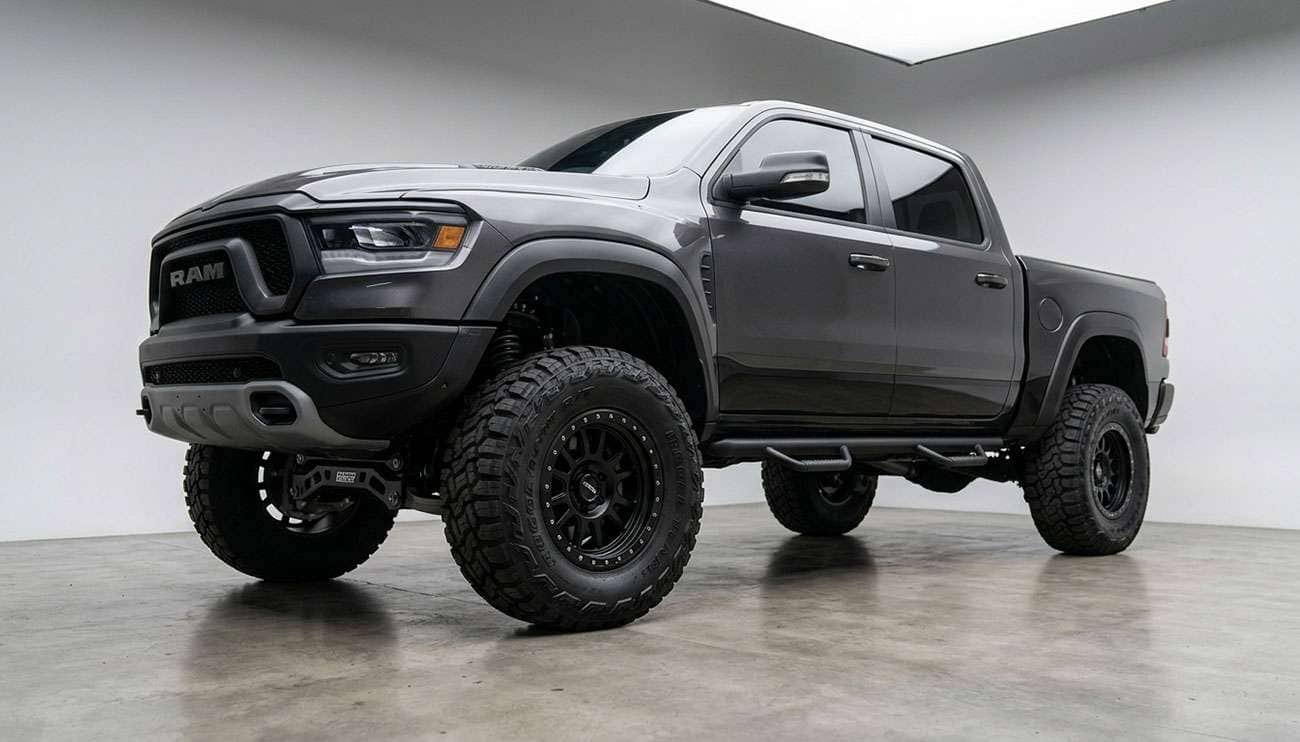
I've been in this business long enough to remember when truck tires came in two flavors: highway tires for the daily commute, and mud tires for the guys who wanted the aggressive look and didn't mind the noise. Then all-terrains showed up and split the difference. For thirty years, that was the menu — H/T, A/T, M/T, pick one and live with the trade-offs.
Then about a decade ago, manufacturers started building something new. Same aggressive shoulder lugs as a mud tire. Same sidewall biters. Same tough multi-ply construction. But the center tread? Tighter, quieter, designed to keep your daily commute from sounding like a propeller plane. They called it the rugged terrain tire — R/T for short.
Customers walk into the shop every week asking what the difference is. So let me walk you through it.
R/T stands for rugged terrain. You'll also hear it called rough terrain, hybrid terrain, or extreme terrain depending on the brand. A few manufacturers — Milestar and Mickey Thompson among them — use the X/T (extreme terrain) badge instead. The performance and design are essentially the same. Different marketing department, same tire category.
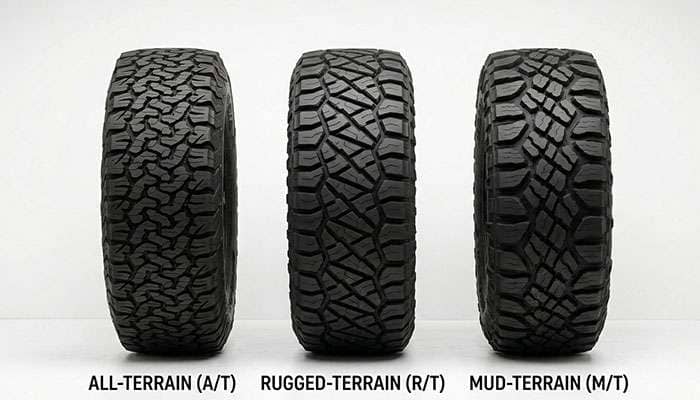
Where does it fit? Truck and SUV tires exist on a spectrum from quietest-and-mildest to loudest-and-most-aggressive. The full lineup looks like this:
Highway Terrain (H/T) → All-Terrain (A/T) → Rugged Terrain (R/T) → Mud Terrain (M/T)
An H/T is what came on your truck from the factory if you bought it stock. Quiet, comfortable, long-lasting, and useless past a wet gravel road. An M/T is what you put on a Wrangler that lives at the trailhead — built to chew through mud and rock, but loud and thirsty everywhere else. The A/T splits the difference, and that's what most truck owners drive.
R/T was invented for the guys in the middle. Specifically, the guys who want their truck to look like it belongs at Moab on Saturday and still want to drive it to the office on Monday without their ears bleeding. If your A/T isn't aggressive enough but you don't want to commit to a full M/T, R/T is the answer. Want the longer view of the lineup? Here's our full breakdown of H/T vs. A/T vs. M/T tires.
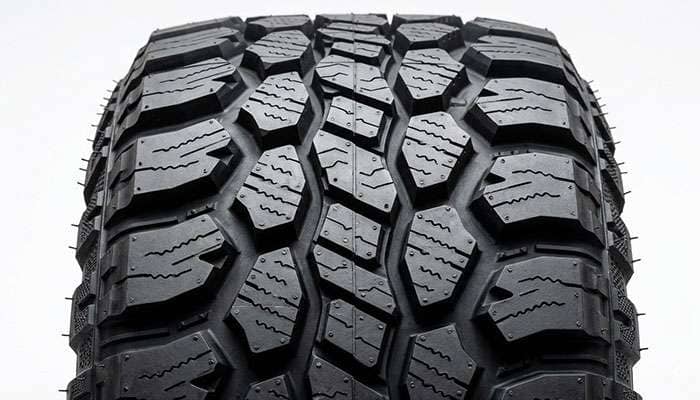
The trick to an R/T tire is what engineers call a hybrid tread pattern. The center of the tread — the part that actually rides on the highway 90% of the time — is built more like an all-terrain. Tighter spacing between tread blocks. Plenty of siping. Variable pitch design that breaks up the tread block sizes so you don't get the steady drone you'd hear from a mud tire at 70 mph.
Then you get to the shoulders, and everything changes. The outer tread blocks are big, blocky, and widely spaced — straight out of the M/T playbook. They wrap down onto the sidewall as bolt-on biters that grab into rocks, ruts, and packed sand. The voids between those shoulder blocks are wide enough to eject mud and small stones instead of holding them.
The casing matters too. Most R/T tires use 2-ply or 3-ply sidewall construction with damage-resistant compounds — closer to an M/T than an A/T. That's why they don't fold up when you're aired down on a rocky trail.
A few specifics worth knowing:
The result is a tire that looks aggressive enough to belong on a built rig and behaves civilized enough to live on your daily driver. That's the whole pitch.
Here's how the three off-road categories actually stack up on the things buyers care about:
Feature |
All-Terrain (A/T) |
Rugged Terrain (R/T) |
Mud Terrain (M/T) |
|---|---|---|---|
Best Use Mix |
80% road / 20% dirt |
50% road / 50% off-road |
20% road / 80% off-road |
Tread Life |
50,000–65,000 mi |
40,000–55,000 mi |
30,000–40,000 mi |
Highway Noise |
Low |
Moderate |
High |
Mud and Rock Capability |
Light to moderate |
Strong |
Best in class |
3PMSF Snow Rating |
Often available |
Often available |
Sometimes available |
Fuel Economy |
Best of the three |
Middle |
Worst of the three |
Sidewall Plies |
2-ply typical |
2-3 ply |
3-ply or more |
Aggressive Look |
Moderate |
High |
Maximum |
The pattern is pretty clear. R/T sits in the middle on every trade-off — better off-road than an A/T, quieter and longer-lasting than an M/T. Whether that compromise is the right one depends entirely on how you actually use your truck.
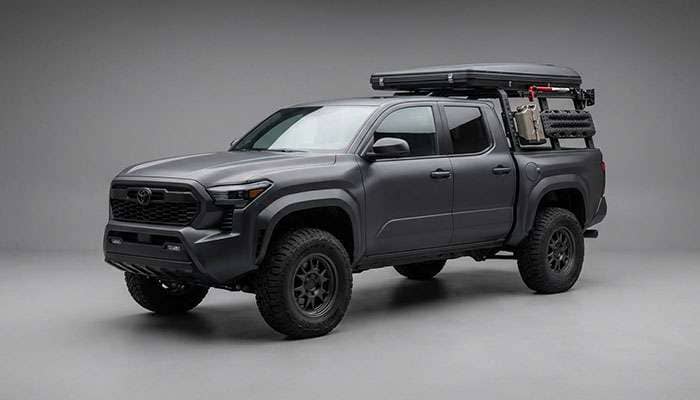
I'm going to be straight with you. R/T tires are not the right tire for most truck owners. They're the right tire for a specific kind of truck owner. Let me describe that person.
You drive a half-ton or three-quarter-ton truck, an SUV, or a Jeep. It sees pavement most days but you actually use it off-road on weekends — overlanding trips, fire roads, gravel forest service routes, the occasional moderate trail. You want a tire that looks the part next to a guy on 35-inch mud tires at the trailhead, but you don't want to drive home with your teeth rattling and a fuel bill that looks like a car payment.
You're somewhere in the 50/50 to 70/30 on-road/off-road split. You want 3PMSF for winter mountain trips. And you'd rather pay 5-10% more upfront for a better-looking, more-capable tire than save the money on a vanilla A/T that nobody at the campsite will look twice at.
Sound like you? An R/T is built for you.
Who shouldn't buy one? Three groups:
Plenty of brands have jumped into this category. These are the five I'd put my own money on, and they all have a long enough track record on the road to know what they actually do.
The original modern hybrid R/T and still the most popular. Variable pitch tread keeps highway noise lower than you'd expect for the look, and the shoulder lugs are some of the best in the category for rocks and packed dirt. Available in 100+ sizes from 17-inch to 24-inch fitments. Most sizes don't carry 3PMSF, so if winter snow performance matters to you, double-check the spec on your size. Browse Nitto Ridge Grappler sizes here, and if you want to see how it stacks up against a top-tier A/T, we put it head-to-head with the BFGoodrich KO3.
The practical pick. Toyo borrowed the off-road bones from their Open Country M/T and the quiet road manners from their Open Country A/T. The result is one of the more livable R/Ts on the market for daily driving. 3-ply construction in most LT-metric sizes for serious sidewall protection. Over 100 sizes available. Find your Toyo Open Country R/T size here.
Toyo's newer entry, designed specifically for the overlanding crowd. More aggressive than the standard R/T with extra-thick shoulder and sidewall lugs for impact resistance. Carries a 45,000-mile treadwear warranty, which is solid for a tire this aggressive. If your weekends actually involve sand, mud, and deep snow, this is the better Toyo of the two. Toyo Open Country R/T Trail sizes are here.
Falken's hybrid is built for guys running heavier rigs — half-tons, three-quarter-tons, and lifted diesels. 50,000-mile limited tread life warranty (longest in this group). Heavy 10-ply construction in LT sizes. The Wildpeak family is well-known for snow performance, and the R/T01 inherits that DNA. Check Falken Wildpeak R/T01 fitments.
Cooper's R/T is one of the newer entries and one of the better balanced. 3PMSF-rated for severe snow service, available in passenger metric and LT-metric sizes, and quieter on the highway than most of the field. If you've been a Cooper buyer for years and want to step up from your old A/T without going full M/T, this is the natural move.
Want the unfiltered take on a budget R/T option? Here's what we found after 10,000 miles on Kenda Klever R/T tires — useful if you're price-shopping the category.
Every tire is a compromise. R/T just compromises in different places than A/T or M/T. Here's the honest list of what you give up:
Fuel economy. Plan on 3-7% worse mileage than a comparable A/T. The deeper tread, heavier construction, and higher rolling resistance all add up. On a half-ton truck doing 18 mpg on A/Ts, that's roughly a 0.5-1.3 mpg drop. Real money over a tank.
Highway noise. Quieter than an M/T, louder than an A/T. Most R/Ts add 2-4 decibels of cabin noise compared to a good A/T at highway speeds. Not enough to ruin a road trip, but you'll notice it the first week. After a month most people forget about it.
Tread life. Expect 10-20% less tread life than the A/T equivalent. That's the cost of softer compounds and deeper tread. Our deep dive on off-road tread life goes into the math if you want it.
Price. R/Ts typically run $50-100 more per tire than the A/T equivalent. Times four, that's $200-400 over an A/T set.
They're not the best at any one thing. If you need maximum mud capability, an M/T beats them. If you need maximum highway comfort and fuel economy, an A/T beats them. R/T is the compromise tire by design — that's the whole point of the category, but it's worth saying out loud.
Want a deeper comparison of where the trade-offs really matter? Our all-terrain vs. mud tires breakdown covers the same ground from a different angle.
R/T tires aren't a marketing gimmick. They're a real category designed for a real customer — the truck owner who wants the aggressive look and the off-road capability without committing to the noise, fuel hit, and tread wear of a full mud tire. If your truck genuinely splits its life between pavement and trail, an R/T is going to make you happier than either an A/T or an M/T.
If you want help matching your truck and your driving style to the right R/T, give us a call at 888-926-2689 or browse our full off-road tire selection. We'll spend ten minutes on the phone with you and get it right the first time.
R/T stands for rugged terrain. Some manufacturers also use the labels rough terrain, hybrid terrain, or X/T (extreme terrain). All of them describe the same category — a tire designed to sit between an all-terrain (A/T) and a mud-terrain (M/T) in both aggression and on-road manners.
Yes, but not by much. Most R/T tires add roughly 2-4 decibels of cabin noise at highway speeds compared to a good A/T. That's noticeable in the first week of ownership and usually fades into the background after a month. R/Ts are significantly quieter than mud terrain tires, which can add 5-10 decibels over an A/T.
Generally, no. R/T tires use softer compounds and deeper tread for better off-road grip, and that costs tread life. Expect 40,000-55,000 miles from a quality R/T, compared to 50,000-65,000 from a comparable A/T. The exact number depends heavily on driving style, alignment, rotation discipline, and how much off-road time you actually log.
Yes, and most R/T buyers do. Many R/T tires carry the Three-Peak Mountain Snowflake (3PMSF) rating, meaning they've passed standardized severe-snow testing. They won't outperform a dedicated winter tire on glare ice, but for moderate winter conditions and snowy trails, a 3PMSF-rated R/T eliminates the need for seasonal tire swaps.
In practice, very little. X/T (extreme terrain) and R/T (rugged terrain) are different brand labels for the same category. Some manufacturers claim X/T tires are slightly more aggressive than R/Ts, but the real-world performance and noise levels are essentially identical. Don't shop the badge — shop the spec sheet.
If you actually use your truck off-road on a regular basis, yes. The aggressive shoulder lugs, tougher sidewalls, and deeper tread give you meaningful capability that an A/T can't match. If your truck never sees anything tougher than a wet gravel road, you're buying capability you won't use — stick with a quality A/T and save the money.