
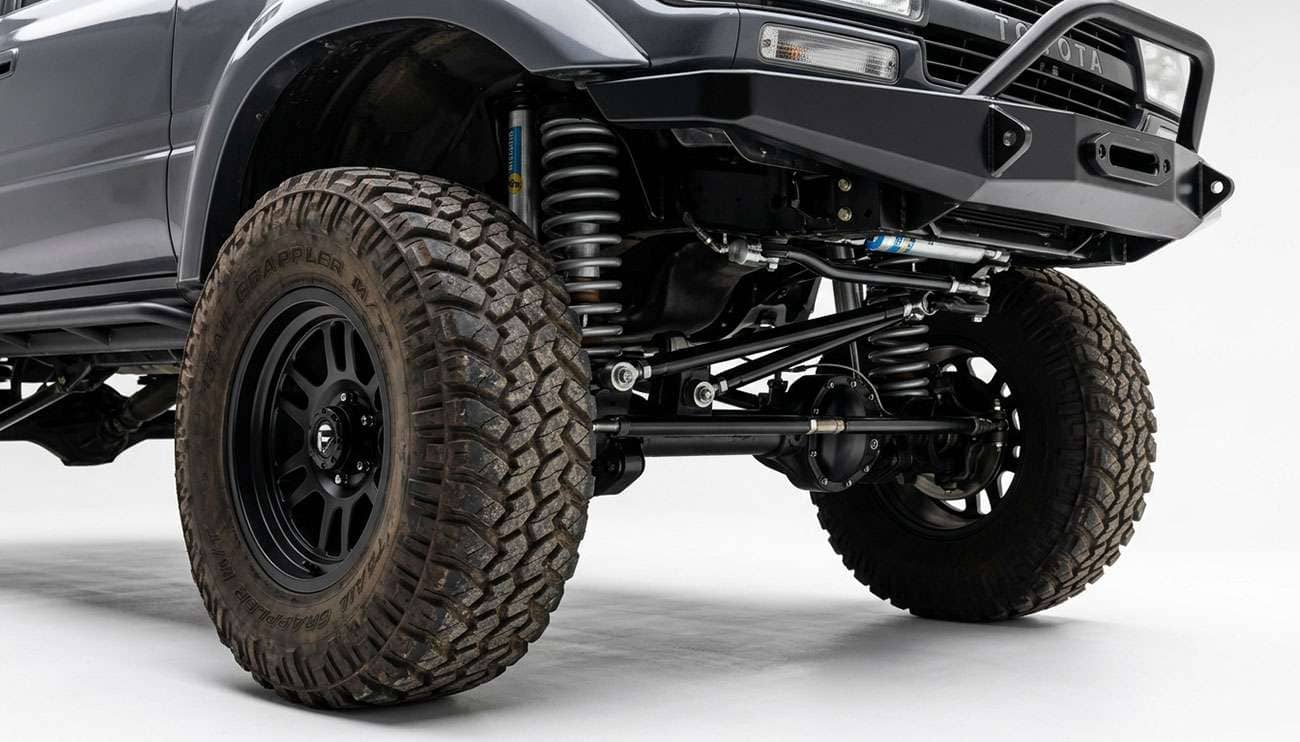
Death wobble is caused by worn or loose front-end components, most often track bar bushings, ball joints, tie rod ends, or control arm bushings, combined with a trigger such as an out-of-balance tire, a bent wheel, uneven tire pressure, or a bump at highway speed. It almost exclusively affects vehicles with a solid front axle, such as Jeep Wranglers and heavy-duty Ram and Ford trucks. The fix is finding the worn component, replacing it, and eliminating the wheel and tire triggers with proper balancing and alignment.
I have had customers roll into our shop white-knuckled after their first death wobble episode, convinced the truck was totaled. It is not. It is a diagnosable, fixable mechanical condition, and in this guide I will walk you through exactly how the system fails, why your wheels and tires are usually the trigger, and the order I would inspect things in.
Death wobble is a violent, self-reinforcing oscillation of the front axle and steering system. The front wheels shake side to side at roughly 4 to 10 cycles per second, the steering wheel jerks hard in your hands, and the shaking does not settle down on its own the way a normal vibration does. Engineers call the phenomenon a speed wobble or shimmy; the underlying physics is a resonance in the steering system that feeds on itself once started.
That resonance point matters for diagnosis. A single worn part rarely creates death wobble by itself. Instead, accumulated play across several joints lowers the system's ability to damp out a disturbance, and then one trigger, a pothole, an expansion joint, or an out-of-balance tire hitting its resonant speed, sets the whole front end oscillating.
Drivers describe it as the entire front end shaking itself apart, usually between 40 and 65 mph. The steering wheel whips left and right faster than you can react, the dash and mirrors blur, and the vehicle wanders in the lane. It is dramatically more violent than the smooth, speed-dependent hum of an unbalanced tire. If you have to ask whether what you felt was death wobble, it probably was not; nobody mistakes the real thing.
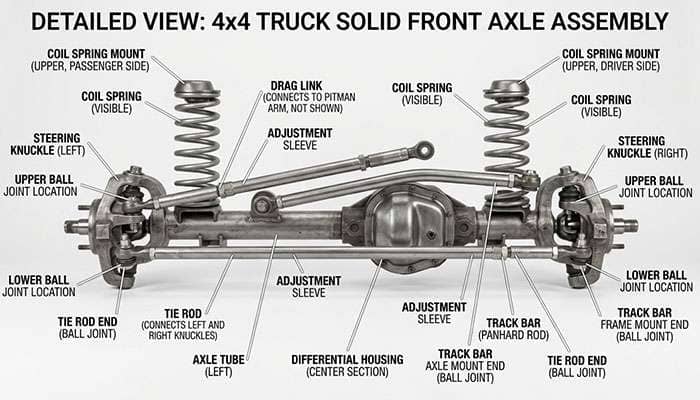
Death wobble is a solid front axle condition. When both front wheels are tied together by a one-piece axle housing, a disturbance at one wheel transmits directly to the other, which is exactly what the resonance needs. The usual suspects:
Independent front suspension vehicles, which include most half-ton trucks and virtually all crossovers and cars, can develop steering shimmy from bad parts or tires, but true death wobble is rare because each front wheel moves independently. If your F-150 shakes, start with our guide to steering wheel vibration instead.
Think of the causes in two groups: the worn components that make the front end vulnerable, and the wheel and tire triggers that start the oscillation. Most real-world cases involve at least one item from each column.
| Worn Components (the vulnerability) | Wheel and Tire Issues (the trigger) |
|---|---|
Track bar bushings or loose track bar bolts | Out-of-balance front tires |
Ball joints with vertical or lateral play | Bent or out-of-round wheels |
Tie rod ends and drag link joints | Uneven or incorrect tire pressure |
Control arm bushings | Cupped, flat-spotted, or separated tread |
Failed steering stabilizer | Oversized tires on a lifted rig without re-balancing or caster correction |
Insufficient positive caster after a lift | Impact damage from potholes or rocks |
The track bar is the number one culprit on Jeeps and solid-axle trucks. It locates the axle side to side, so any play in its bushings or mounting bolts lets the entire axle shuffle underneath the vehicle, and that motion feeds straight into the drag link and steering box. Ball joints, tie rod ends, and control arm bushings are next in line. A worn steering stabilizer does not cause death wobble, but a healthy one masks early symptoms, which is why a new stabilizer that "fixes" the problem is really just hiding it.
Caster is the alignment angle that gives the steering its self-centering stability. Lifting a solid-axle vehicle rotates the axle and reduces positive caster, and most of these trucks want roughly 4 to 5 degrees of it. A lifted rig with 2 degrees of caster is a death wobble waiting for a trigger.
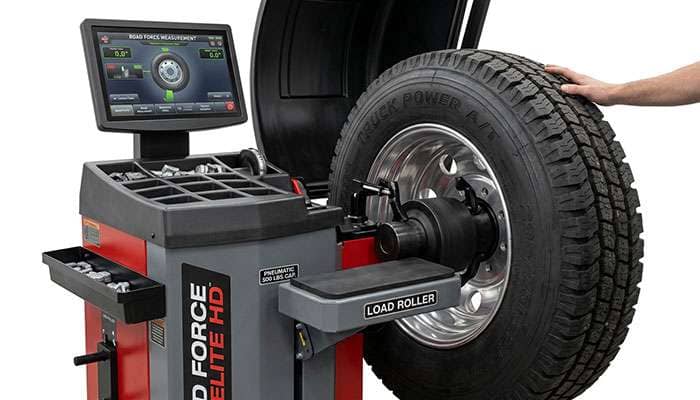
Yes, and in my experience at the counter, tires and wheels are the most common trigger. An out-of-balance front tire creates a rhythmic disturbance at exactly the frequency range the front end is vulnerable to. A bent wheel or an out-of-round tire does the same thing even when the assembly balances out on a standard spinner, which is why road force balancing is the single best diagnostic tool for wobble-prone vehicles; it measures how round the assembly actually is under load, not just its weight distribution.
Big, heavy off-road tires raise the stakes. A 37-inch mud terrain carries far more rotating mass than a stock tire, so the same ounce of imbalance hits the steering system much harder. If you are choosing between sizes for a lifted build, our 31s vs 33s vs 35s comparison covers the weight and fitment tradeoffs, and our H/T vs A/T vs M/T guide explains why aggressive tread blocks are harder to keep balanced as they wear.
Quality hub-centric spacers, properly torqued, do not cause death wobble by themselves. What they can do is amplify an existing problem: pushing the wheel outboard increases the scrub radius and the leverage every road impact applies to worn joints. Cheap lug-centric spacers or loose spacer hardware are a different story and absolutely belong on your inspection list. We cover the full risk picture in our wheel spacer safety guide. The same logic applies to aggressive offsets; see our wheel offset and backspacing explainer for how offset changes steering leverage.
Before you throw money at suspension parts, spend an hour ruling out the triggers. This is the sequence I give customers:
If death wobble starts while you are driving, do not fight the wheel and do not slam the brakes. Keep a firm but relaxed grip, lift off the throttle, and let the vehicle slow gradually, braking gently if needed. The oscillation almost always dies out below roughly 30 to 40 mph. Pull over when it is safe, take a breath, and drive home slowly at reduced speed. Then fix it; a front end that has wobbled once will do it again, and every episode hammers the very joints that are already worn.
Here is the order of operations that finds the problem with the least wasted money:
Alignment alone fixes death wobble only when insufficient caster is the root problem, which is common on freshly lifted vehicles that skipped the alignment afterward. If the joints are worn, an alignment is a band-aid; the axle will keep moving underneath the new settings. Do the alignment last, after the worn parts are replaced, and it becomes the step that locks in the fix.
If the front end hardware is tight and the trigger was an unbalanced or out-of-round tire and wheel assembly, then yes, balancing genuinely fixes it, and road force balancing is the version worth paying for. If the hardware is worn, balancing raises the speed at which the wobble starts but does not cure it. That is actually useful diagnostic information: a wobble that improves after balancing but does not disappear is telling you to go joint hunting.
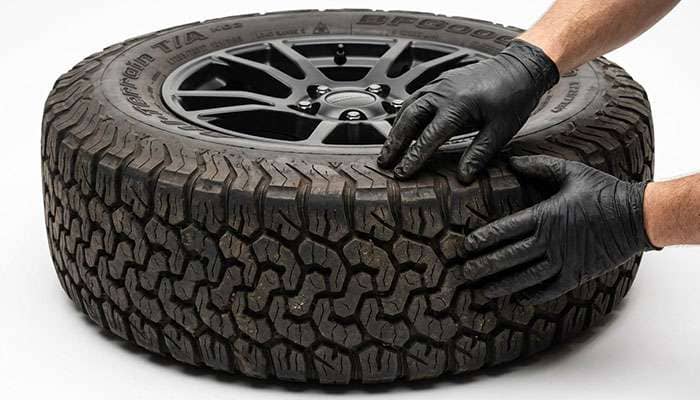
Worn tires with cupped tread or separated belts are not worth gambling on once a truck has wobbled. If your set is due, browse our lineup of the best truck tires at Performance Plus Tire, and every wheel and tire package we sell is professionally mounted and balanced before it ships.
Yes. While the vehicle usually remains controllable if you slow down calmly, the violent oscillation hammers steering joints, wears tires, and can escalate. Treat the first episode as a mandatory inspection, not a quirk to live with.
You can limp home at reduced speed, but you should not commute on it. Each episode accelerates wear on the exact components that caused it, and the speed threshold at which it triggers tends to drop over time.
If the fix is a road force balance and pressure correction, expect roughly 100 to 200 dollars. A track bar or tie rod replacement plus alignment typically lands between 300 and 800 dollars. Worst case, a full front-end refresh on a heavily worn rig can exceed 1,500 dollars.
No. A stabilizer is a damper, not a cure. A fresh one can hide early symptoms, which delays the real repair. If a shop's only proposed fix is a heavier stabilizer, get a second opinion.
Usually one of three things: the new assemblies were spin balanced but not road force balanced, the larger tires exposed marginal joints that the lighter stock tires never stressed, or lug hardware was not torqued and re-checked. Start with a road force balance and a torque check.



