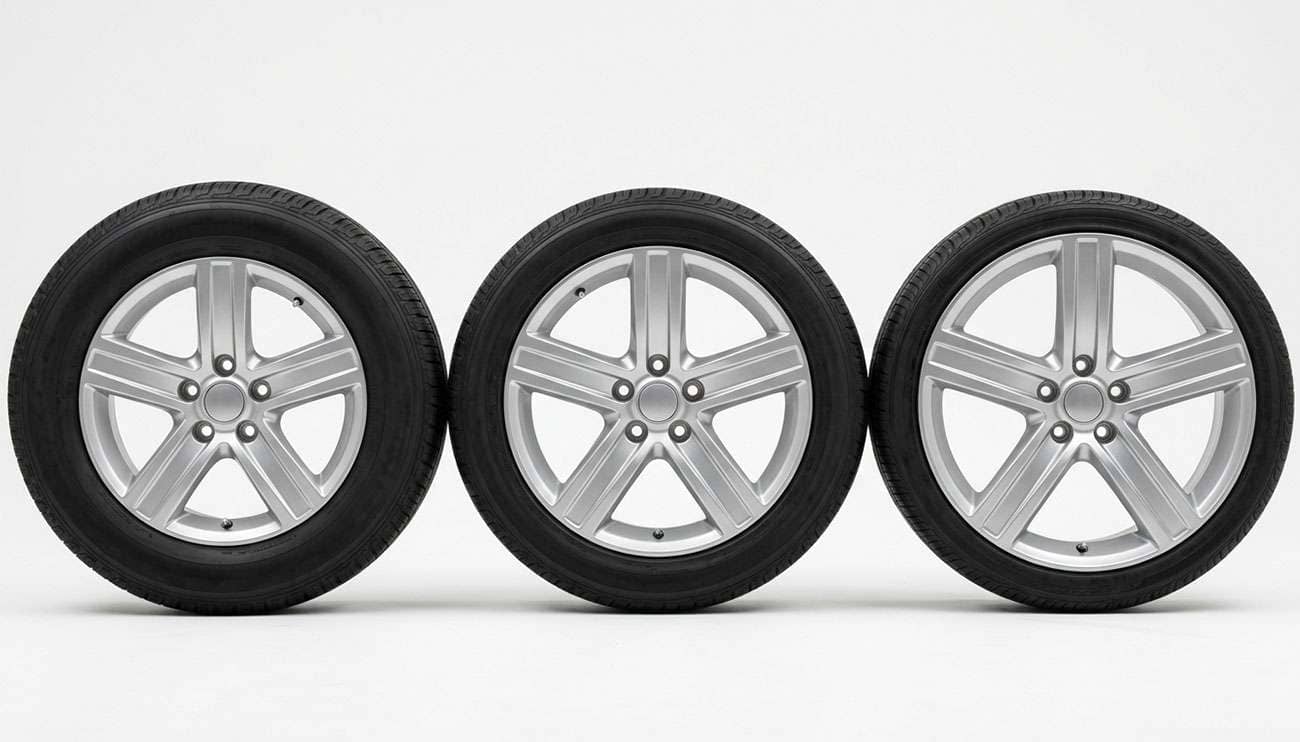
Short answer: inside the same tire line, at the same overall tire height, one rim size up adds roughly 12 to 19 percent per tire. Two sizes up adds 20 to 34 percent. Three sizes up adds 27 to 45 percent. Where you land in each range comes down to one variable almost nobody puts in front of you: whether the bigger size keeps a 50-series or taller sidewall, or drops into a low-profile size that the same tire line builds as V-rated, often XL, and sometimes warranties for fewer miles.
Most best-value tire lists quote one price per model. That number is for one size. The same tire in the size on your car can cost 80 percent more. For the brand-by-brand rundown, see our guide to the best quality tire for the money. This article covers the part that sets the number on your invoice.
What a bigger rim adds per tire (same tire line, same overall height):
Rim Size Change |
Bigger Size Keeps a 50-Series or Taller Sidewall |
Bigger Size Drops to 45-Series or Lower |
What Else Usually Changes |
|---|---|---|---|
Up 1 inch (example: 17 to 18) |
About 12% more |
About 19% more |
Speed rating may step up from H to V |
Up 2 inches (example: 17 to 19) |
About 20% more |
About 34% more |
XL load and V rating become the norm; warranties often shrink |
Up 3 inches (example: 17 to 20) |
About 27% more |
About 45% more |
Fewer budget lines build the size at all |
I built those percentages by pricing the same all-season passenger tire lines across every rim diameter they're made in, pairing sizes within about half an inch of the same overall height. The sections below show the real sizes and prices behind them.
At the same overall height, a tire on a bigger rim doesn't use much more rubber. The sidewall gets shorter and the tread gets a little wider. The premium comes from four other things that change at the same time.
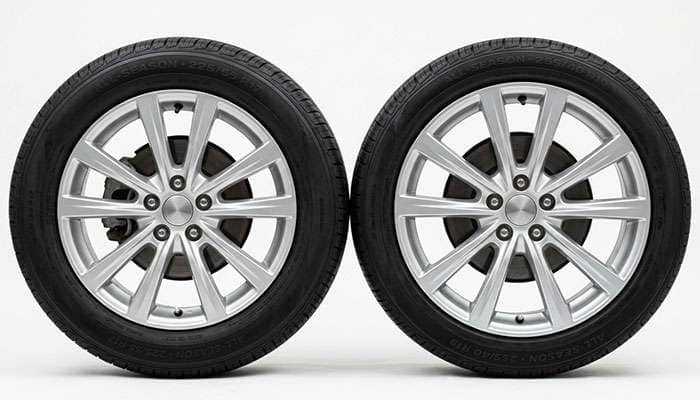
Each tire size needs its own mold, and each size a manufacturer sells has to be certified to FMVSS No. 139, the federal performance standard for new radial tires on light vehicles. A 17-inch commuter size sells in enormous volume, so those fixed costs get spread thin. A 20- or 22-inch size sells a fraction of that, so every tire carries more of the tooling. Fewer manufacturers bother, which means less price competition. For every four all-season passenger lines built in 17-inch sizes, about three reach 20 inches, about one reaches 22, and fewer than one in five reach 21.
A shorter sidewall holds less air. Air carries the load, so to support the same vehicle at the same height, larger-rim sizes are commonly built as Extra Load (XL) tires, rated by the Tire and Rim Association load tables to carry more weight at higher inflation. About 3 in 10 all-season 17-inch sizes are XL. At 19 and 20 inches, it's closer to 2 in 3. At 21 and 22 inches, nearly 9 in 10. Here's the counterintuitive part: when a line offers the same size in both standard load and XL, the prices usually match. XL isn't the upcharge. It's a marker that you've crossed into a size class where everything costs more. If the SL versus XL choice on your placard confuses you, our breakdown of SL vs. XL tires sorts it out.
Half of all-season 17-inch sizes carry a V rating (149 mph) or higher. At 19 inches, it's about 3 in 4. Most V-rated and higher constructions add a nylon cap ply over the steel belts to control growth at speed, and they lean toward grippier compounds. That's more material, more build time, and often a shorter tread life. You can't simply drop back to an H rating to save money either; the replacement speed rating should match or exceed what the vehicle came with. Our comparison of H vs. V rated tires explains when that rule bends.
Of the lower-priced all-season lines, only about half build a 20-inch size, and fewer than one in five build a 22. So as rim diameter climbs, the cheapest options don't just get pricier. They disappear. That's why the typical all-season passenger tire runs about $153 at 17 inches, about $189 at 18, and about $231 to $234 at 19 and 20.
Yes, typically by about 16 percent within the same tire line. But the step from 17 to 18 is where you see the sidewall variable most clearly, because two common 17-to-18 swaps behave completely differently.
On a compact crossover, the classic trio is 225/65R17, 225/60R18, and 235/55R19, all standing roughly 28.5 to 29.2 inches tall. The 18-inch size keeps a 60-series sidewall and an H rating. In the General Altimax RT45, the 17 is $165.99 and the 18 is $170.99. That's 3 percent. Nothing about the construction changed, so the price barely moved.
On a midsize sedan, the trio is 215/55R17, 235/45R18, and 235/40R19, all about 26.3 inches tall. Now the 18 drops to a 45-series sidewall and a V rating. Watch what happens in three popular lines:
Tire Line |
215/55R17 |
235/45R18 |
235/40R19 |
17 to 19 Jump |
Cost Per 1,000 Warranted Miles (17 / 19) |
|---|---|---|---|---|---|
Hankook Kinergy PT H737 |
$156.15 (94H) |
$243.99 (94V) |
$284.99 (96V XL) |
+83% |
$1.74 / $3.17 |
General Altimax RT45 |
$160.99 (94H) |
$183.99 (98V XL) |
$205.99 (96V XL) |
+28% |
$2.15 / $3.17 |
Michelin CrossClimate2 |
$193.29 (94H) |
$249.99 (98V XL) |
$288.99 (96V XL) |
+50% |
$3.22 / $4.82 |
Prices are per tire at time of writing. Same car, same tire height, same brand. The Kinergy PT jumps 56 percent from 17 to 18 alone. The Altimax RT45 jumps 14 percent. At 17 inches, the Kinergy is the cheaper tire. At 19 inches, it costs $79 more per tire than the Altimax. If you shopped by a single headline price, you'd pick the wrong one for at least one of those cars.
On cost alone, it depends on which vehicle the 20s are bolted to. A 20-inch wheel on a three-row SUV or a half-ton pickup usually keeps a 55-series sidewall. A 20-inch wheel on a sedan or compact crossover forces a 40-series or lower sidewall. Those are two different price worlds.
On a three-row SUV running 235/65R18 or 235/55R20 (both about 30 inches tall), the 20 keeps an H rating and standard load. The General Altimax RT45 goes from $194.99 to $210.99, an 8 percent step. The Michelin CrossClimate2 CUV goes from $289.04 to $304.65, about 5 percent. On a half-ton pickup, the Cooper Discoverer AT3 4S runs $251.35 in 265/70R17, $254.78 in 275/65R18, and $262.95 in 275/55R20. That's under 5 percent from 17 to 20 at roughly 32 inches tall.
Put 20s on a car that came with 17s, and you're shopping 35- and 40-series sizes where the low-profile column in the first table applies: around 45 percent more per tire before shorter warranties, and many lines you'd consider at 17 inches aren't built in those sizes at all. Whether 20s are worth it for looks or steering feel is your call. On cost, the 20s worth buying are the ones that keep a 55-series sidewall.
These two diameters behave differently, and the difference tells you a lot about how tire pricing works.
The 21-inch all-season passenger tire typically runs about $364, more than a typical 22. Fewer than one in five all-season lines build a 21 at all, and nearly 9 in 10 of those sizes are XL. These are largely original-equipment fitments for luxury SUVs and performance EVs, which means low volume, high speed ratings, and very little budget competition. If your vehicle wears 21s, assume every tire choice starts near the top of the market.
Twenty-twos live mostly on trucks and full-size SUVs, where volume is higher, so the typical price sits closer to $242. But the cost jump from 20 to 22 still bites, and it can quietly cost you capacity. In the Cooper Discoverer AT3 4S, 275/55R20 is load index 117 (2,833 pounds per tire) at $262.95. Step to 285/45R22 and you get load index 114 (2,601 pounds) at $314.32. That's 20 percent more money for 232 pounds less capacity per tire, or 928 pounds less across four. Before you buy any 22, compare its load index to the original size on your vehicle's Tire and Loading Information placard, which FMVSS No. 110 requires on the driver's door jamb. If the 22 can't meet the placard load, it's the wrong tire at any price.
Often, yes, and this is where the size tax compounds. Across all-season passenger lines, the typical treadwear warranty is 60,000 miles through 18 inches and 50,000 miles from 19 inches up. So you pay more per tire and get fewer warranted miles out of each one.
The General Altimax RT45 carries a 75,000-mile warranty on T- and H-rated sizes, but 65,000 miles on V-rated sizes. In the sedan trio above, the 17-inch size is H-rated and the 18 and 19 are V-rated. So the 19 costs 28 percent more at the register, but 48 percent more per warranted mile: $2.15 per 1,000 miles at 17 inches versus $3.17 at 19.
The Hankook Kinergy PT holds its 90,000-mile warranty across sizes, but its treadwear grade drops from 860 in the H-rated sizes to 800 in the V-rated ones. Treadwear grades are assigned by each manufacturer under NHTSA's Uniform Tire Quality Grading rules, so compare them within a brand, not across brands. The Michelin CrossClimate2 holds 60,000 miles in every size, so its cost-per-mile penalty simply tracks the sticker: 50 percent.
Dividing price by warranted miles turns a confusing shelf into one number. In the sedan sizes above, the Kinergy PT wins at 17 inches at $1.74 per 1,000 miles. At 19 inches, it ties the Altimax at $3.17. The ranking flipped because of rim diameter, not brand. For the full method, including how annual mileage and warranty time limits change the math, see our guide to tire cost per mile.
The best value tire changes as rim diameter changes, because each line carries a different size tax. Here's how I'd shop each range, using the sizes and prices above.
Pick |
Best Fit |
Example Size |
Price Per Tire |
Warranty |
Cost Per 1,000 Warranted Miles |
|---|---|---|---|---|---|
Hankook Kinergy PT H737 |
15- to 17-inch, H-rated sizes |
215/55R17 94H |
90,000 miles |
$1.74 |
|
General Altimax RT45 |
18- and 19-inch sizes |
225/60R18 100H |
75,000 miles (T/H); 65,000 (V) |
$2.28 |
|
Cooper Discoverer AT3 4S |
20-inch SUVs and half-ton pickups |
275/55R20 117T XL |
65,000 miles |
$4.05 |
|
Michelin CrossClimate2 |
Any rim size where it snows |
215/55R17 94H |
60,000 miles |
$3.22 |
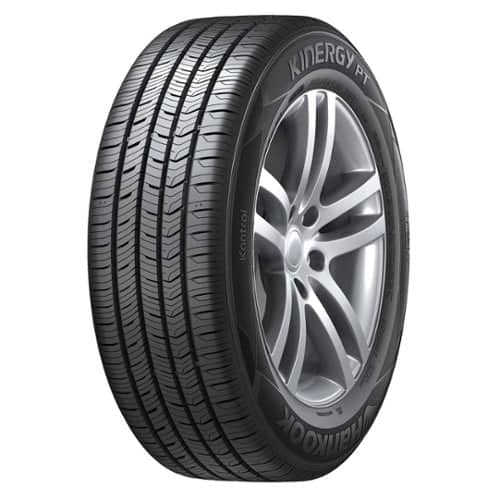
In H-rated commuter sizes, the Hankook Kinergy PT H737 in 215/55R17 is hard to beat: $156.15 per tire against a 90,000-mile warranty works out to $1.74 per 1,000 warranted miles. The catch is the cliff. Once your size crosses into a 45-series or V-rated fitment, this line climbs faster than any other in the sedan comparison. Use it where your placard calls for an H or T rating.
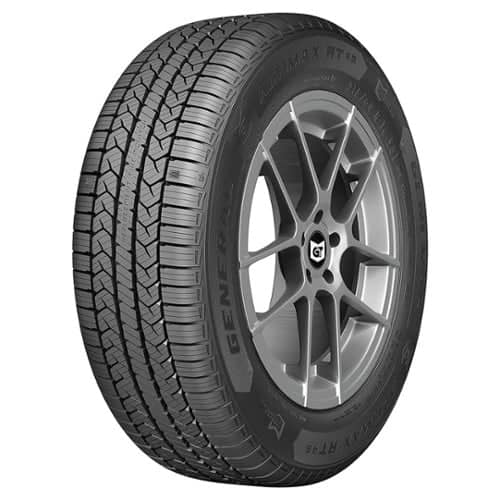
The Altimax RT45 carries the smallest size tax of the three touring lines I compared: 3 percent from 225/65R17 to 225/60R18 at $170.99, and 29 percent all the way to 235/55R19 at $213.99. On a crossover that wears an H-rated 18 or 19, it keeps the 75,000-mile warranty. On a V-rated size, budget for 65,000.

The Cooper Discoverer AT3 4S in 275/55R20 is the clearest example of a 20 that doesn't punish you. It's within 5 percent of the 17- and 18-inch sizes at the same height, it carries a 65,000-mile warranty and the three-peak mountain snowflake (3PMSF) severe-snow symbol, and it keeps load index 117. Stay at 20 if you can; the 22-inch version costs 20 percent more and carries less.
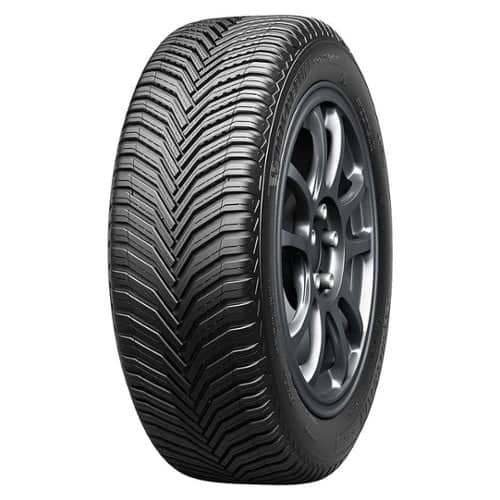
The Michelin CrossClimate2 in 215/55R17 starts at $193.29, and the CUV version runs $289.04 in 235/65R18 and $304.65 in 235/55R20. It's never the cheapest tire per mile, but it holds 60,000 miles in every size and carries the 3PMSF symbol, which can replace a separate winter set. If it saves you buying and storing a second set of tires, the math changes in its favor.
Often, yes, and on the right car it's the biggest tire saving available. It just has to follow the rules, because the smaller tire still has to match what the vehicle was engineered around.
1. Stay at the same overall tire height. Your speedometer, ABS, and stability control are calibrated to the original rolling diameter. The sedan trio above (215/55R17, 235/45R18, 235/40R19) all stand about 26.3 inches tall, which is why swapping between them works. Our plus-sizing guide and calculator runs the same math in reverse, and the tire size comparison calculator checks any two sizes side by side.
2. Meet the placard load and speed rating. The Tire Industry Association's technician training and tire makers' replacement bulletins say the same thing: the replacement must carry at least the load the original size carried at placard inflation, using the Tire and Rim Association tables, and the speed rating should match or exceed the original unless you're fitting dedicated winter tires.
3. Clear the brakes. Performance trims often get larger brake calipers that physically won't fit inside a smaller wheel. The safe floor is the smallest wheel diameter your vehicle's manufacturer fitted on that model with your brake package. Move your TPMS sensors over or budget for new ones.
Downsizing a sedan from 19s to 17s saves $515.36 per set of four Kinergy PTs, $382.80 per set of CrossClimate2s, and $180.00 per set of Altimax RT45s. A typical one-piece cast 17-inch alloy in a common five-lug pattern runs about $200 to $235, so a set of four lands around $800 to $940 before sensors and mounting. With the Kinergy, the wheels pay for themselves during your second set of tires. With the Altimax, tire savings alone will never get you there, so you'd do it for ride quality, pothole protection, or a winter setup.
If you already run winter tires, downsizing is close to free money. You're buying a second set of wheels anyway, so buy them one size smaller and pay the lower tire price every season. Our guide to winter wheel and tire package downsizing walks through the fitment checks. When you're ready to price it, our wheel and tire packages arrive mounted and balanced in the smaller size.
The sticker price is the first bill, not the last one. A short sidewall changes what happens every time the road fights back, and the costs escalate in a predictable order.
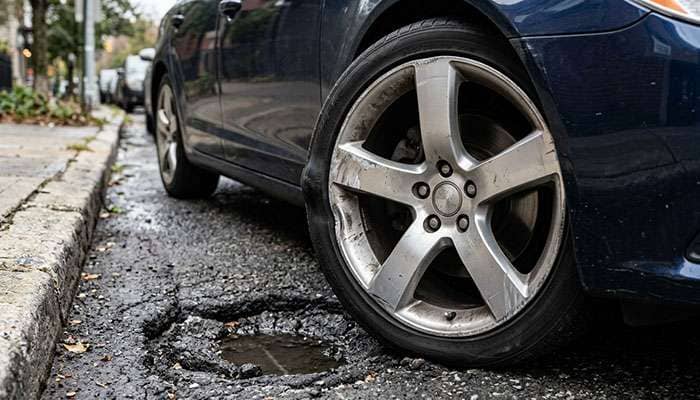
Fewer warranted miles means more frequent sets. Going from a 75,000-mile H-rated size to a 65,000-mile V-rated size shrinks your warranted replacement interval by about 13 percent, and every one of those earlier sets costs more per tire than the smaller size would have.
A tall sidewall flexes and absorbs a pothole. A 35- or 40-series sidewall has very little room, so the impact pinches the tire between the rim flange and the road. That can tear the internal cords and leave a bulge on the sidewall, which is a replace-now condition. Our guide to tire sidewall damage and whether it's safe to drive covers how to spot it. In the low-profile sizes above, one replacement tire runs $205 to $315.
Less rubber between the road and the wheel means more of the impact reaches the alloy. A bent lip can cause a slow leak, vibration that balancing can't fully fix, or both. A typical one-piece cast 19-inch alloy runs about $280 to $340, compared with about $200 to $235 for a 17.
The worst case is a cracked wheel and a damaged tire from the same pothole: a new wheel, a new tire, often a new TPMS sensor, plus mounting and balancing. Do that once or twice and a smaller-diameter wheel and tire package starts to look less like an upgrade expense and more like insurance.
This takes about ten minutes and keeps you from buying the right tire in the wrong size, or the wrong tire because of one headline price.
Bigger rims cost more to put tires on, but not by a fixed amount. The jump from one rim size to the next ranges from almost nothing to more than 80 percent in the same tire line, and the variable that decides it is the sidewall. Sizes that keep a 50-series or taller sidewall and an H rating barely move. Sizes that drop into low-profile, V-rated, XL territory pay a premium at the register, often again in a shorter warranty, and sometimes again in lost load capacity.
So before you trust any best-value list, price your size. Compare one line across your height family, divide by warranted miles, and check the load index against your placard. When you're ready, shop the exact-size links above or price a mounted wheel and tire package in the size that makes the math work.
The size on your placard matters more than the brand on your shortlist.
• Rim steps are not equal: At the same overall tire height, one size up costs about 12% more if the sidewall stays 50-series or taller, and about 19% more if it drops to 45-series or lower.
• Sidewall and speed rating drive the cliff: The Hankook Kinergy PT jumps 83% from 215/55R17 to 235/40R19, while the General Altimax RT45 jumps 28% across the same sizes.
• Warranties often shrink with diameter: The typical all-season warranty falls from 60,000 to 50,000 miles at 19 inches, and the Altimax RT45 drops from 75,000 to 65,000 miles in V-rated sizes.
• Bigger can carry less: The Cooper AT3 4S in 285/45R22 costs 20% more than the 275/55R20 and carries 232 fewer pounds per tire. Always check the placard load.
• Downsizing can pay: Dropping a sedan from 19s to 17s saves up to $515 per set of tires, enough to pay for a set of cast wheels in about two tire cycles.
Yes. Within the same tire line and the same overall height, each rim size up typically adds 12 to 19 percent per tire. The increase is smallest when the larger size keeps a 50-series or taller sidewall and the same speed rating, and largest when it drops into a low-profile, V-rated, XL size.
Usually, but by how much depends on the vehicle. On a three-row SUV, going from 235/65R18 to 235/55R20 adds only about 5 to 8 percent in the same line. On a sedan that came with 18s, a 20 forces a much lower-profile size and can cost 30 percent or more extra.
Low-profile sizes sell in lower volume, so tooling and certification costs are spread over fewer tires. They are also more often built as XL and V-rated or higher, with a nylon cap ply and grippier compounds, and fewer budget manufacturers build them, which reduces price competition.
No. A tire's rim diameter must match the wheel exactly, so a 17-inch tire only mounts on a 17-inch wheel. To use cheaper 17-inch tires, you need a set of 17-inch wheels that clear your brakes and a tire size that keeps the original overall height and placard load capacity.
It is when the tire price gap is large and you will keep the vehicle through at least two more sets. On a sedan, dropping from 19s to 17s saves $180 to $515 per set depending on the tire line, while four 17-inch cast alloys typically cost about $800 to $940.
They often come with shorter-lived tires. Larger sizes are more likely to be V-rated with grippier compounds, the typical all-season warranty drops from 60,000 to 50,000 miles at 19 inches and up, and some lines lower their treadwear grade or warranty in those sizes.