
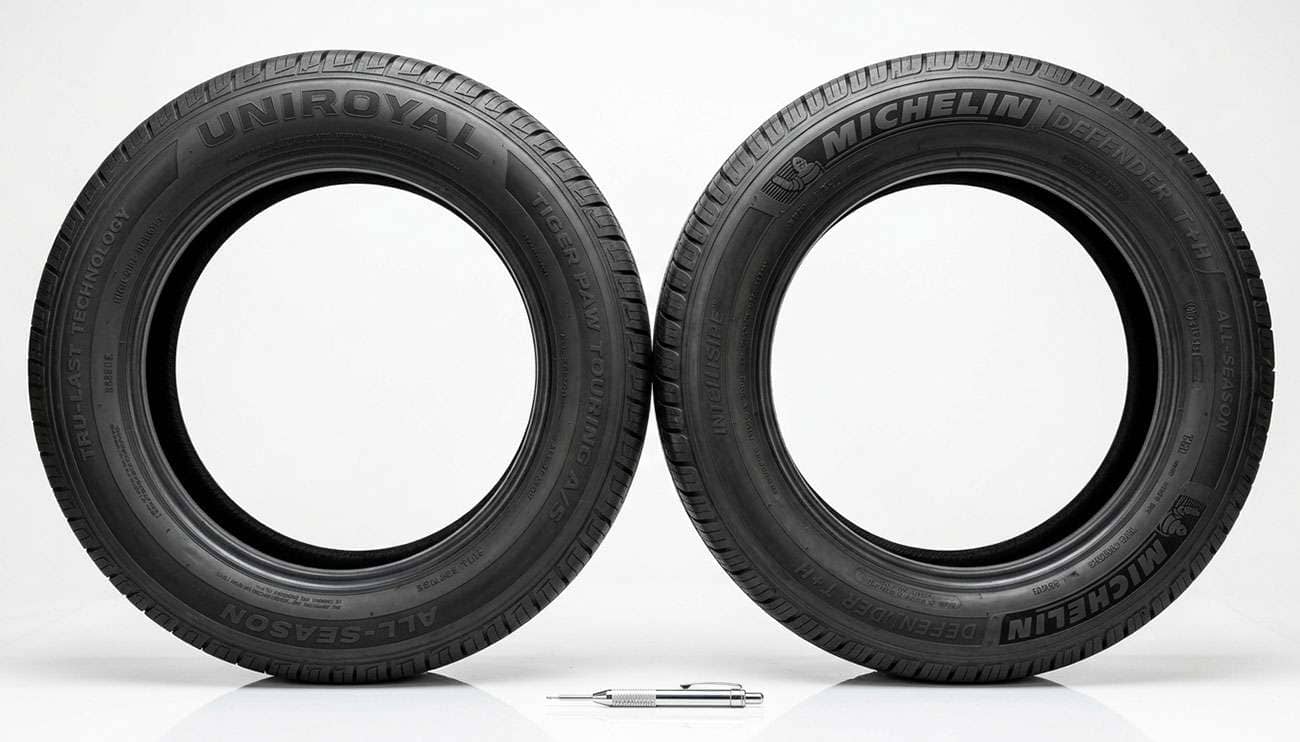
The better tire is the one that costs you the least per mile you will actually drive, among tires that meet your vehicle's load and speed spec. Most answers stop at "it depends on your driving conditions and vehicle." What it really depends on is a number almost nobody puts in front of you: how many miles you drive a year, measured against the time limit on the tire's mileage warranty. Every treadwear warranty expires after 5 or 6 years, no matter how much tread is left. Drive 8,000 miles a year on an 85,000-mile tire with a 5-year limit, and the most that warranty can ever pay out on is 40,000 miles. You paid for the other 45,000.
I ran the numbers on current all-season tires in 225/65R17, one of the most common crossover sizes on the road. Cost per 1,000 warranted miles runs from roughly $1.20 to nearly $6.00 per tire across the market in that one size. The ranking changes depending on which driver you are.
Feature |
Miles in 5 Years |
Miles in 6 Years |
What 'Better' Means for You |
|---|---|---|---|
6,000 miles a year |
30,000 |
36,000 |
No 60,000-mile-plus warranty can pay off. Buy on price, grip, and ride. |
8,000 miles a year |
40,000 |
48,000 |
Lowest price per tire usually wins. A 5-year warranty is worth about half its miles. |
10,000 miles a year |
50,000 |
60,000 |
Anything above 60,000 warranted miles is unused. Compare price against 60,000. |
About 13,700 miles a year (national average) |
68,500 |
82,200 |
6-year warranties pay in full. 5-year warranties cap near 68,500 miles. |
20,000 miles a year |
100,000 |
120,000 |
Every warranty pays in full. Most warranted miles per dollar wins. |
The national average comes from Federal Highway Administration 2024 highway statistics: total vehicle miles divided by licensed drivers works out to about 13,700 miles per driver per year. Your odometer is a better source. Divide its current reading by the years you have owned the car.
"Better" has two layers, and the order matters.
Layer 1 is the floor. A tire is only a candidate if it meets your vehicle's door-placard load index and speed rating, fits your climate, and suits how you drive. Snow country means looking for the three-peak mountain snowflake symbol. A towing crossover means paying attention to load. A tire that fails the floor is not a cheaper tire. It is the wrong tire.
Layer 2 is cost. Among tires that clear the floor, the better buy is the one with the lowest cost per mile you will actually use. Price alone does not tell you that. Neither does the warranty number printed in large type on the product page.
Independent ranking lists are useful for Layer 1: they tell you which tires brake, handle, and ride well. If you want those rankings, ours are in The 12 Best All-Season Tires for 2026. This article is about Layer 2, which rankings rarely show you because it depends on your size and your mileage.
The formula is one line:
Cost per 1,000 miles = price per tire / usable warranted miles x 1,000
"Usable warranted miles" is the smaller of two numbers: the mileage on the warranty, or your annual miles multiplied by the warranty's time limit in years. That second number is the one most shoppers never calculate.
Take an H-rated tire at $172.99 with an 85,000-mile warranty and a 5-year limit.
Same tire, same price, more than double the real cost per mile for the low-mileage driver. Multiply by four for the set.
A treadwear warranty is not a promise the tire will last that long. It is a prorated credit if it does not. But it is the only mileage figure a manufacturer backs with money, and every major brand states one. Advertised "expected life" figures are not standardized. Warranted miles are the closest thing to an apples-to-apples number the market gives you. How the credit is actually calculated when you claim it is covered in Tire Mileage Warranty Proration.
Only if you can use it. Three details decide that, and none of them is the headline number.
Here is what the major brands' current warranty documents state for the treadwear time limit:
Feature |
Treadwear Warranty Time Limit |
Rotation Requirement |
|---|---|---|
Michelin, Uniroyal, BFGoodrich |
6 years from purchase |
Every 6,000 to 8,000 miles, with records |
Goodyear |
6 years from purchase |
No more than 6,000 miles between rotations |
Continental, General |
72 months from purchase |
Every 6,000 to 8,000 miles, with a rotation record |
Bridgestone, Firestone |
5 years from purchase |
Proof of rotation per the maintenance schedule |
Yokohama |
60 months from purchase |
Every 5,000 miles, with proof |
Sumitomo |
Varies by model and speed rating (48 to 72 months) |
At least every 6,000 miles |
Kumho |
72 months |
Every 5,000 to 7,500 miles |
Falken |
6 years from the DOT production date |
At least every 5,000 miles, with proof |
Terms change, so confirm the current warranty document for the exact tire before you buy. The pattern is the point: a one-year difference in the time limit is worth thousands of usable miles to an average driver, and it never appears in the headline.
Every treadwear warranty requires regular rotation with proof. Skip it, or lose the receipts, and the warranted miles drop to zero. If you rotate at home, keep a dated log with odometer readings. Intervals by drivetrain are in How Often to Rotate Tires.
Claims require the tire to wear evenly to the 2/32 inch wear bars. Uneven wear from bad alignment or low pressure can disqualify a claim even inside the time limit.
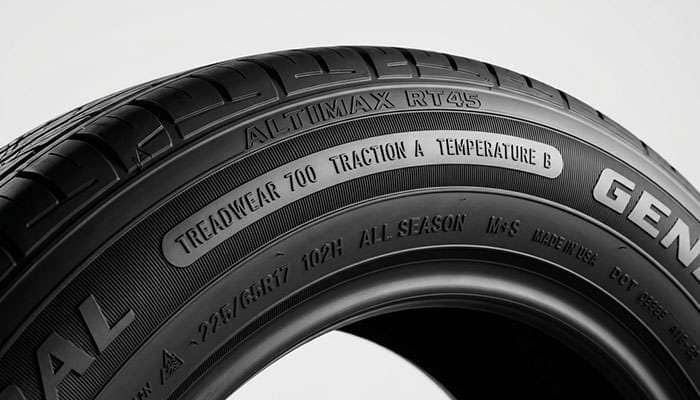
Within one brand, it is a reasonable guide. Between brands, it is not, and the reason is in how the grade is made.
The Uniform Tire Quality Grading treadwear test, defined by NHTSA in 49 CFR 575.104, runs tires for 7,200 miles on a public-road loop of about 400 miles near San Angelo, Texas. Wear is measured against a course monitoring tire, and the result is projected to a grade. The manufacturer assigns the grade on the sidewall, not NHTSA. The rule requires that a tire be able to perform at the level its grade represents, which means a maker cannot overstate a grade but can grade conservatively. Some do.
That shows up when you line grades up against warranties. Across current all-season tires in 225/65R17, warranted miles per treadwear point range from under 100 to more than 200. A 700 from one maker and an 840 from another do not tell you which tire will last longer on your car. For a full breakdown of the grade, see How to Read Tire Treadwear Ratings.
Use treadwear to compare two tires from the same manufacturer. Use warranted miles, adjusted for your time limit, to compare across brands.
Often, and in both directions. This is the variable that catches people who compare model pages instead of exact sizes.
The Sumitomo HTR Enhance LX2 in 225/65R17 comes in two speed ratings. Per Sumitomo's 2026 warranty brochure, the T-rated version carries 90,000 miles over 72 months. The H-rated version carries 75,000 miles over 60 months. Prices as of October 2026:
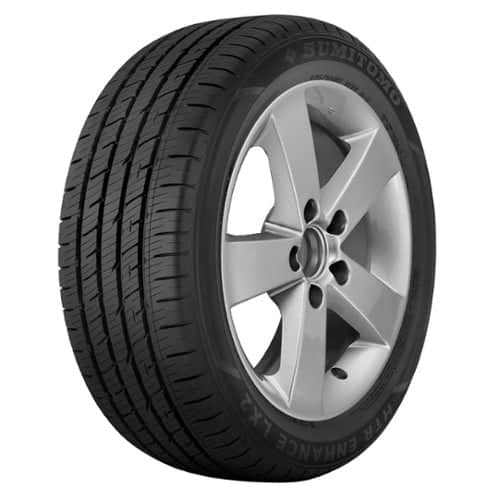
The H-rated tire costs 25% more per warranted mile, and its shorter time limit cuts usable miles further for an average driver.
The Nexen Aria AH7 carries 80,000 miles in both speed ratings in this size. The 102T version lists at $98.49, or $1.23 per 1,000 warranted miles, the lowest of any current tire in our comparison. The 102H version lists at $159.00, or $1.99.
Never buy below the speed rating on your door placard to save money. If your placard calls for H, the T-rated tire is a downgrade, whatever it costs per mile. Compare H to H. If your placard calls for T, the T-rated versions above are legitimate bargains. The full trade-off is in H vs T Tires: Which Speed Rating Is Right for Your Car?
Here are current H-rated, standard-load all-season tires in 225/65R17 102H, priced as of October 2026. Cost is per tire, per 1,000 usable warranted miles, at three annual mileages. Nexen states no time limit on its treadwear coverage, so we capped it at 6 years, the replacement age many automakers recommend.
Feature |
Price |
Warranty |
8,000 mi/yr |
13,700 mi/yr |
20,000 mi/yr |
|---|---|---|---|---|---|
$120.34 |
75,000 mi / 6 yr |
$2.51 |
$1.60 |
$1.60 |
|
$139.14 |
70,000 mi / 6 yr |
$2.90 |
$1.99 |
$1.99 |
|
$159.00 |
80,000 mi |
$3.31 |
$1.99 |
$1.99 |
|
$172.99 |
85,000 mi / 5 yr |
$4.32 |
$2.53 |
$2.04 |
|
$165.99 |
75,000 mi / 6 yr |
$3.46 |
$2.21 |
$2.21 |
|
$198.72 |
80,000 mi / 6 yr |
$4.14 |
$2.48 |
$2.48 |
|
$204.99 |
80,000 mi / 6 yr |
$4.27 |
$2.56 |
$2.56 |
|
$227.86 |
80,000 mi / 5 yr |
$5.70 |
$3.33 |
$2.85 |
|
$256.00 |
85,000 mi / 6 yr |
$5.33 |
$3.11 |
$3.01 |
Three things jump out. The cheapest tire per mile is not the cheapest tire on the shelf for every driver. A 5-year time limit costs an average driver a real share of the warranty. And at 8,000 miles a year, the gap between the top and bottom of the table nearly doubles compared with the 20,000-mile driver. Cost per mile is not the whole decision, though. Ride comfort, noise, wet braking, and snow traction all differ across this list, and they are worth paying for when they matter to you.
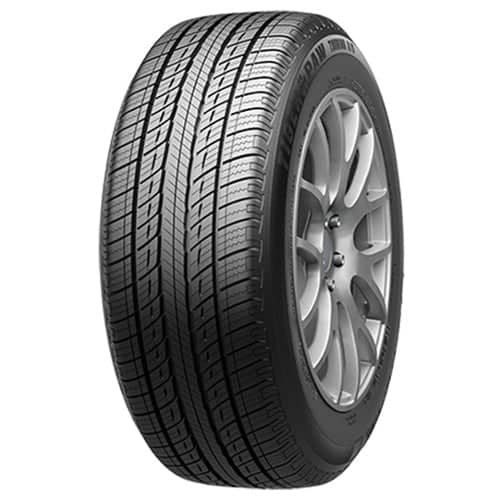
The lowest cost per mile among the H-rated tires for any driver at or above average mileage. A 75,000-mile, 6-year warranty on a tire that lists at $120.34 is hard to beat, and Uniroyal shares Michelin's warranty structure. UTQG 700 A A. Best fit: commuters and family crossovers that rack up miles.
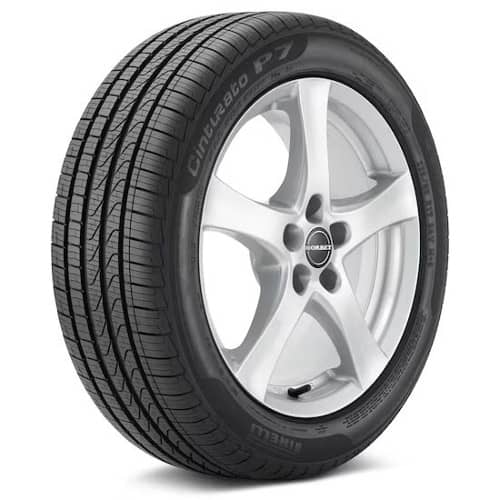
A 70,000-mile, 6-year warranty at $139.14 puts it at $1.99 per 1,000 miles for average and high-mileage drivers. UTQG 700 A A. Best fit: drivers who want a European-tuned touring feel without paying flagship money per mile.
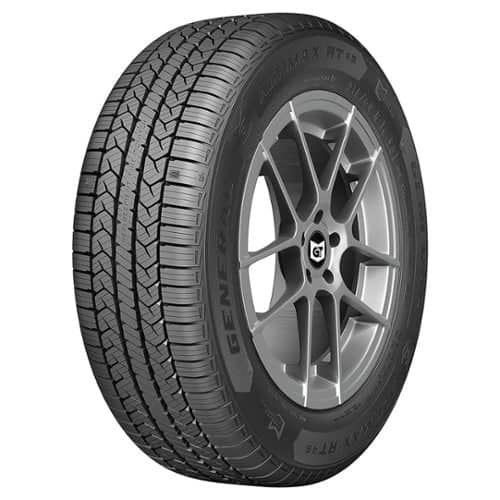
General prices the T- and H-rated versions identically in this size at $165.99, with 75,000 miles on both, so there is no reason to step down a speed rating here. Continental-family warranty with a 72-month limit. UTQG 700 A A in the H version. Best fit: drivers who want the H rating without paying extra for it.
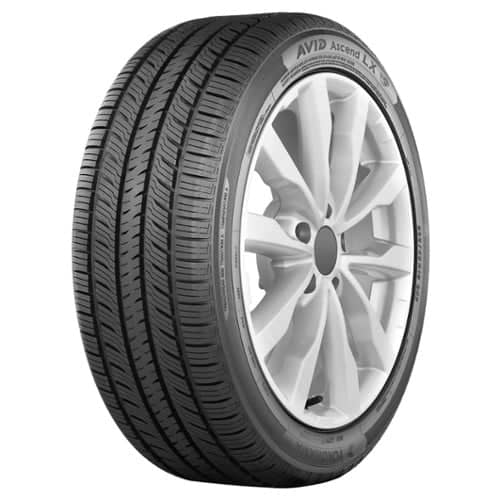
An 85,000-mile warranty across all sizes and speed ratings, one of the longest in the category. Its 60-month limit means the full 85,000 is reachable only above 17,000 miles a year, where it delivers $2.04 per 1,000 miles. UTQG 800 A A. Best fit: high-mileage drivers who will use every warranted mile inside five years.
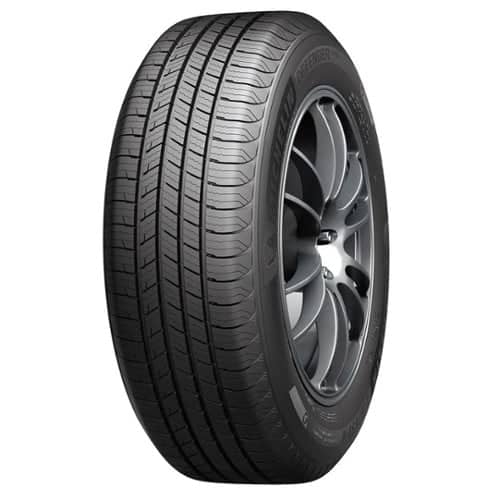
The more affordable route into Michelin's Defender line: the same 80,000-mile, 6-year warranty as the Defender2 at a slightly lower price, which works out to $2.48 per 1,000 miles for average drivers. UTQG 820 A B. Best fit: drivers who want Michelin's ride and longevity and will rotate on schedule to keep the warranty intact.
Yes, and it belongs in the cost-per-mile math even though it never shows up on the price tag. The National Research Council's 2006 study for the Transportation Research Board, Tires and Passenger Vehicle Fuel Economy, found that a 10% reduction in rolling resistance improves fuel economy by about 1 to 2%.
For an average driver at 13,700 miles a year in a crossover getting 28 mpg, that is roughly 5 to 10 gallons a year. At $4 a gallon, $20 to $40 a year, or $100 to $200 over a five-year tire life. That is enough to move a tire up or down a few places in the table above. Manufacturers that market a model as fuel-efficient usually say so in the name or description. Ask, and weigh it against the price difference.
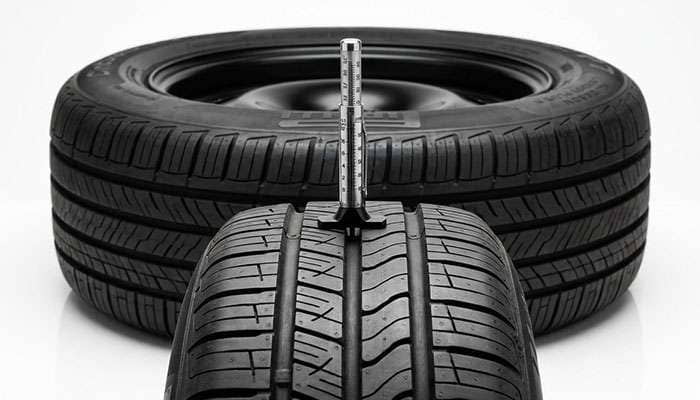
A tire that looked like the better deal at the counter can cost you in five ways over the next five years.
1. Paying for miles you cannot use. A low-mileage driver who buys the longest warranty on the shelf pays for tread life the time limit will never let them claim. At 8,000 miles a year, an 85,000-mile, 5-year warranty is worth 40,000 miles.
2. Losing the warranty you did pay for. No rotation records, no claim. A tire that wears out at 50,000 miles on an 80,000-mile warranty should earn back a prorated credit worth more than a third of its price. Without the paperwork, it earns nothing.
3. Buying twice. A high-mileage driver who buys the cheapest 40,000-mile tire replaces it about twice as often as a 75,000-mile tire. Every replacement brings mounting, balancing, valve stems, and disposal fees again, and those are not in the per-tire price.
4. Downgrading to save a few dollars. A T-rated tire on a vehicle that calls for H saves money per mile and gives up the speed capability the vehicle was engineered around.
5. Aging out. Many automakers recommend replacing tires at 6 years regardless of tread. A low-mileage driver will hit that before wearing out almost any modern all-season tire, which is one more reason price and grip matter more than warranty for that driver. Check yours with How to Tell How Old Your Car Tires Are.
Every one of these ends the same way: a set that fits your vehicle's spec, priced against the miles you will actually drive. If tread life is your top priority, our list of Which Tires Have the Longest Life is the next stop.
Step 1: Read your door placard. Write down the size, load index, and speed rating. Every candidate must meet or exceed them.
Step 2: Find your annual mileage. Divide your odometer by the years you have owned the car, or use last year's service records.
Step 3: Calculate usable warranted miles for each tire. Take the smaller of the warranty mileage or your annual miles times the warranty time limit in years.
Step 4: Divide price by usable miles. Multiply by 1,000 for cost per 1,000 miles. Compare the exact size and speed rating, not the model page.
Step 5: Break ties on what you feel. When two tires land within a few cents per 1,000 miles, pick on ride, noise, wet grip, snow rating, or fuel efficiency. Then keep every rotation receipt.
There is no universal better tire. There is a better tire for your size, your speed rating, and the miles you drive in a year. For a high-mileage driver, the longest warranty per dollar usually wins. For a low-mileage driver, the warranty time limit erases most of that advantage, and price, grip, and ride decide it. Run the one-line formula with your own numbers, compare exact sizes rather than model pages, and the better tire stops being a matter of opinion.
No single brand wins for every driver. The best tire for you is the one that meets your vehicle's load and speed spec and costs the least per mile you will actually drive. That depends on your exact size, your speed rating, and your annual mileage.
Divide the price per tire by usable warranted miles, then multiply by 1,000. Usable warranted miles is the smaller of the warranty mileage or your annual miles multiplied by the warranty's time limit in years.
Within one manufacturer's lineup, a higher treadwear grade generally means longer tread life. Across brands, grades are not reliably comparable because each manufacturer assigns its own. Use warranted miles, adjusted for the time limit, to compare brands.
They can be, when you value their ride, noise, wet grip, or snow performance, or when their warranty delivers more usable miles per dollar. A higher price does not automatically mean a lower cost per mile, especially for drivers who log fewer than 10,000 miles a year.
Most major brands limit treadwear warranties to 6 years from purchase. Bridgestone and Yokohama use 5 years, and some Sumitomo models vary by speed rating. The warranty ends at the time limit or the warranted mileage, whichever comes first.
Not necessarily. In 225/65R17, current tires priced under $125 carry 75,000- and 80,000-mile warranties. Price and tread life are separate questions. Compare warranted miles and the time limit, not the price tag.



