
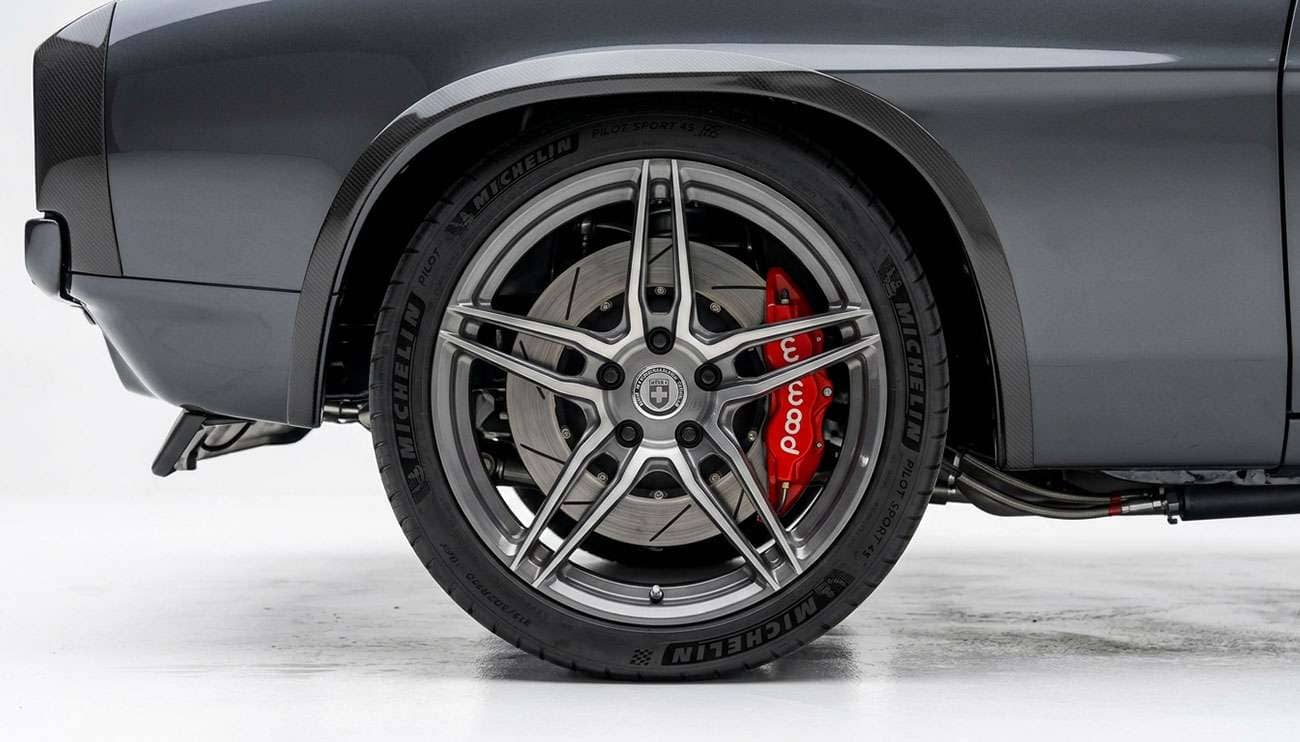
There's a moment in every restomod build when the owner walks into the shop with a picture on his phone and says, "I want my car to look like that." And in most cases, the wheels and tires in that picture are doing more of the work than the bodywork, the paint, or the engine. Get the wheel and tire setup right and the car looks like a finished build. Get it wrong and a six-figure project looks like a kit car. That's not opinion — that's three decades of watching builds roll in and out of this shop.
This is the guide I wish more customers read before they ordered wheels. Restomod isn't the same as a resto, and it isn't the same as a custom or a hot rod. It's its own discipline, with its own rules, and the wheel and tire selection has more to do with how a finished restomod feels and drives than anything else short of the chassis itself.
Let's clear the terminology up first, because guys throw these words around like they mean the same thing and they don't.
That last definition is where the wheel and tire question gets interesting. A restomod is fundamentally a modern car wearing classic clothing. The chassis is doing modern work — modern weight distribution from the powertrain swap, modern cornering forces from the suspension upgrade, modern braking loads from the brake kit. The wheels and tires have to keep up. If they don't, you've built a car that looks great parked and feels disappointing on the road.
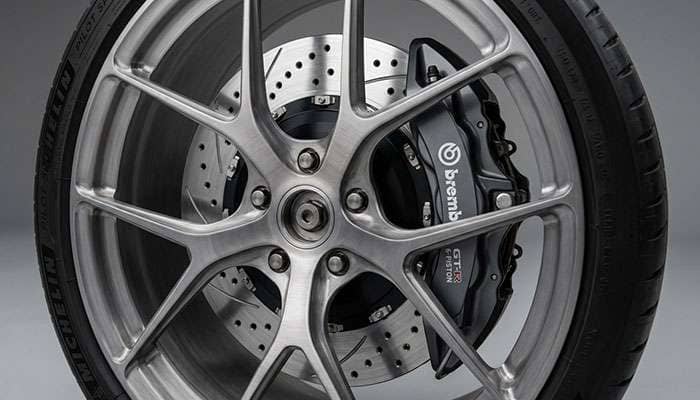
This is the conversation I have at least once a week. A customer wants to keep his original 14-inch steelies under his '67 Camaro because they're period-correct. The Camaro has a fresh LS3, a Heidts subframe with coilovers, and a Wilwood big brake kit. Three reasons that doesn't work:
So the original wheels go on a shelf in the garage. Fine — that's the deal you sign up for when you build a restomod. The good news is that the modern wheel market has more genuinely classic-looking options than at any point in history.
Most restomods land in the 17- to 19-inch wheel diameter range, and there's good engineering reason for that range. Here's the working math:
The right way to plus-size on a restomod is to maintain overall tire diameter close to what your chassis was designed for. A '69 Camaro on a modern subframe usually wants a 27- to 28-inch overall tire diameter to look correct. Plus-size up to 18-inch wheels with a 245/40R18 (26.7 inches) or 255/40R18 (27.0 inches) front, and a 285/35R18 or 295/35R18 rear — and you're in the right proportional zone. Our plus-sizing calculator guide walks through the math in detail.
If you're not sure about offset and backspacing for your specific build — and on a chassis-swapped restomod, you really shouldn't guess — our offset and backspacing guide covers the geometry that matters.
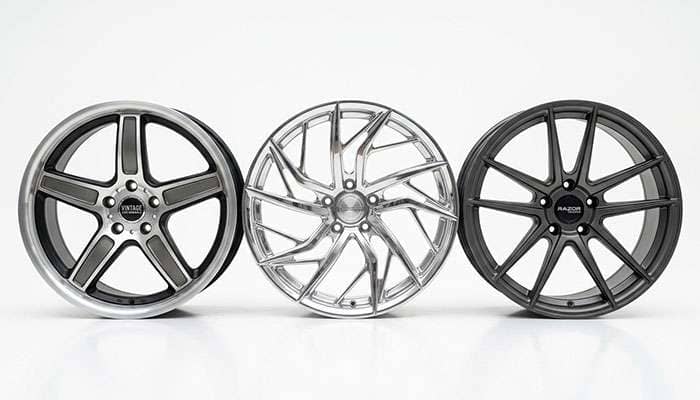
Restomod wheels split into three honest style directions, and the biggest mistake I see is guys mixing signals across the categories. Pick a direction and commit to it.
This is the most popular direction and the easiest to get right. The wheel reads as a classic five-spoke or six-spoke from across the parking lot — Torq Thrust DNA, Cragar DNA, period-correct silhouette — but the construction is modern (often forged), the diameter is modern (17-19 inches), and the proportions support a modern brake kit underneath.
The Boze Alloys B1 is the king of this direction. Forged construction, classic five-spoke silhouette, available in finishes from satin black to polished. The Boze B3 takes the same DNA in a more aggressive direction. The Foose Legend F104 is a Torq Thrust-inspired modern interpretation that anchors a lot of clean restomod builds. The US Mags Indy U101 and US Mags Bullet U131 bring period-correct '60s racing and smoothie looks at a friendlier price point.
This direction is the right call for restomods built around classic muscle bodywork — Camaro, Mustang, Chevelle, Cuda — where you want the car to read as a modernized classic, not as a modern car wearing a classic costume.
One step more modern. Billet aluminum construction, exposed-hardware aesthetic, often with multi-piece deep-dish profiles. The look is "high-end builder shop" — Boyd Coddington, Foose Designs at the absolute pro tier, Chip Foose's own builds. These wheels say "this car was built, not bought."
The Billet Specialties BLVD 42 is a clean five-spoke billet that hits the right note on slammed restomod builds. The Billet Specialties Accelerator Concave Deep is the same direction with more visual depth. The Schott Accelerator series and the Schott Americana series go further into pro-builder territory. Intro Custom wheels — the Intro Custom 5-Star Endless in particular — anchor true high-end builds.
This direction fits restomods where the build philosophy is "modernize and let the world know it." Pro-touring builds in particular wear billet well. Budget warning: these wheels run real money. A set of polished Schott Americanas in 18-inch will land north of $5,500. Worth it on the right build, painful on the wrong one.
The third direction — and one I push back on for most muscle car restomods, though it works on some builds. Concave-spoke modern wheels, sometimes with directional patterns, with proportions that read as pure modern performance car. No classic DNA visible.
The Forgestar CF5 and Forgestar CF10 are the right tools when the restomod is built around the modern engineering rather than the classic body — full coilover suspension, aggressive alignment specs, real track use. The Rotiform BLQ series fits the same direction with a more European-influenced look.
This direction works on a '93 Mustang Fox-body that's been built into a track car. It works on a Datsun 240Z restomod with a JDM tuning aesthetic. On a '69 Chevelle, it tends to clash with the classic body lines. Match the wheel direction to the build philosophy.
The tire question on a restomod is simpler than the wheel question. You're not running vintage bias-ply rubber on a chassis with modern suspension and four-piston brakes. You're running modern performance tires that match how the car actually drives.
For year-round driving and unpredictable weather: Ultra-high-performance all-season tires. The Continental ExtremeContact DWS06 Plus is the smart-money pick — premium grip, real wet capability, reasonable life. The Michelin Pilot Sport All Season 4 is the upgrade pick if budget allows. The BFGoodrich g-Force COMP-2 A/S+ is the value pick that delivers period-flavored looks (raised lettering available) with modern grip. I covered the full picks in our 9 best all-season performance tires roundup.
For fair-weather and weekend duty: Maximum-performance summer tires. The Michelin Pilot Sport 4S is the benchmark. The Pirelli P Zero PZ4 is the alternative. Both deliver grip levels that match what a properly built restomod chassis can ask of a tire.
For raised white letter or red line aesthetics with modern grip: The BFGoodrich Radial T/A in the right sizes. Pure muscle car aesthetic with construction that works on a modern chassis.
Match the tire to how the car gets driven. A trailered show restomod can run summer-only tires without issue. A daily-driven restomod needs all-season capability. Get this match right and the car drives the way the chassis was built to drive.
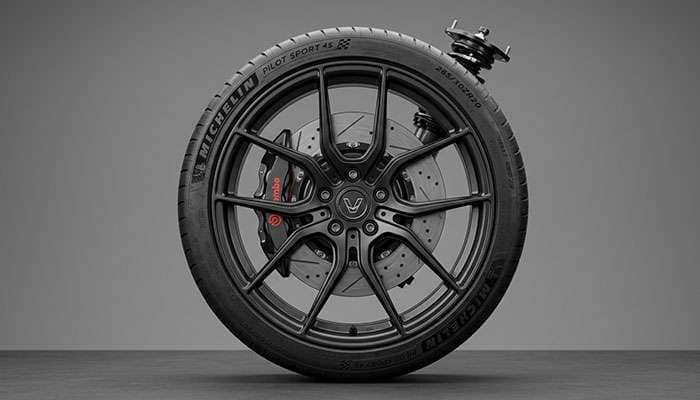
This is where guys end up returning wheels. The wheel needs to clear three things: the brake caliper itself, the master cylinder reservoir of the caliper (on bigger kits), and the brake rotor edge. Common minimum wheel diameters for popular brake kits:
Brake Kit |
Minimum Wheel Diameter |
Notes |
|---|---|---|
Wilwood Forged Dynalite 12" rotor |
17 inch |
Most popular street-restomod kit |
Wilwood Aerolite 14" rotor |
18 inch |
Six-piston, heavy-duty pro-touring |
Baer 6P 14" rotor |
18 inch |
Premium street-strip and pro-touring |
Brembo GT 15" rotor |
19 inch |
High-end OEM-style upgrade |
Stock disc brake conversion (10–11" rotor) |
15 inch |
Period-correct disc upgrade |
Two notes on this table. First, these are minimums — the wheel design also matters. A multi-spoke wheel with narrow spokes can clear a caliper that a five-spoke wheel of the same diameter won't. Always confirm with the wheel manufacturer that the specific design clears your specific brake kit. Second, the inside of the spoke profile matters as much as the diameter. Some wheels with aggressive concave designs have less spoke depth than they appear to — check the actual measured clearance, not the marketed diameter.
For more on the construction differences that matter on a restomod build, our cast vs forged vs flow-formed wheels guide covers the engineering side. The summary: serious restomod builds want forged or flow-formed, period. Cast wheels are fine for a cruiser; they're not the right call when the chassis is making real horsepower and the brakes can stop the car in a hurry.
A restomod is a modern car in classic clothing, and the wheel and tire setup has to honor both halves of that equation. Get the diameter right (17 to 19 inches in most cases), pick a style direction and commit to it, run a tire that matches how the car actually drives, and confirm brake clearance before you commit to four wheels. Match the build philosophy to the parts and the finished car drives the way it deserves to drive. Cut corners on this part of the build and the rest of the work — the chassis, the engine, the bodywork — never quite delivers what it should. Come into the shop with a clear picture of what you're building and we'll point you at the right setup.
For most classic muscle car restomods, 18-inch wheels are the sweet spot. Big enough to clear modern brake kits, big enough to look intentional rather than period-correct, small enough to keep ride quality acceptable on a chassis that wasn't designed for huge wheels. 17-inch works on more conservative builds; 19-inch fits larger cars and more aggressive builds. 20-inch and larger tends to look cartoonish on most muscle car bodywork.
For a daily-driven cruiser restomod with stock-power swaps and moderate brakes, cast wheels are fine. For pro-touring builds, big-horsepower swaps, autocross or track use, or anywhere modern performance loads come into play, forged or flow-formed construction is the right call. Forged wheels are stronger, lighter, and better suited to the cornering and braking loads modern restomod chassis generate. They cost more, but the engineering matches the rest of the build.
It depends on what "original-style" means. Modern reproduction wheels that look classic but are built to current standards (Torq Thrust II, Cragar Modern Muscle, Foose Legend) handle modern radials without issue. True period wheels — actual 1960s and 1970s steel or aluminum rims — were not engineered for the loads modern performance tires generate, and the safety margin is questionable on a restomod chassis that can generate more lateral force than the original ever could. Replace the wheels.
A Wilwood Forged Dynalite kit with 12-inch rotors typically requires a 17-inch minimum wheel diameter. The Wilwood Aerolite kit with 14-inch rotors requires an 18-inch minimum. The wheel design also matters — a multi-spoke wheel may clear a caliper that a five-spoke of the same diameter won't. Always confirm with the wheel manufacturer that your specific wheel design clears your specific brake kit before ordering a full set.
For most pro-touring and performance-focused restomods, yes — a wider rear tire helps put the power down and gives the car a more aggressive stance. Common staggered setups on restomod muscle cars: 245/40R18 front with 285/35R18 rear, or 255/40R19 front with 295/35R19 rear. For cruiser-style builds without aggressive power, square (matching front and rear) setups are easier on tire rotation patterns and give a cleaner classic look.
Honest ranges: a set of cast aluminum classic-style wheels (US Mags, Foose Legend, American Racing) runs $1,600 to $2,400 for four. A set of forged classic-style wheels (Boze, Boyd Coddington) runs $3,500 to $5,500. Premium billet wheels (Billet Specialties, Schott, Intro Custom) run $5,000 to $9,000-plus. Add $1,200 to $2,000 for a quality set of UHP tires. For a complete restomod wheel and tire package, budget $3,000 minimum for cast-style and $6,000-plus for forged or billet builds.



