
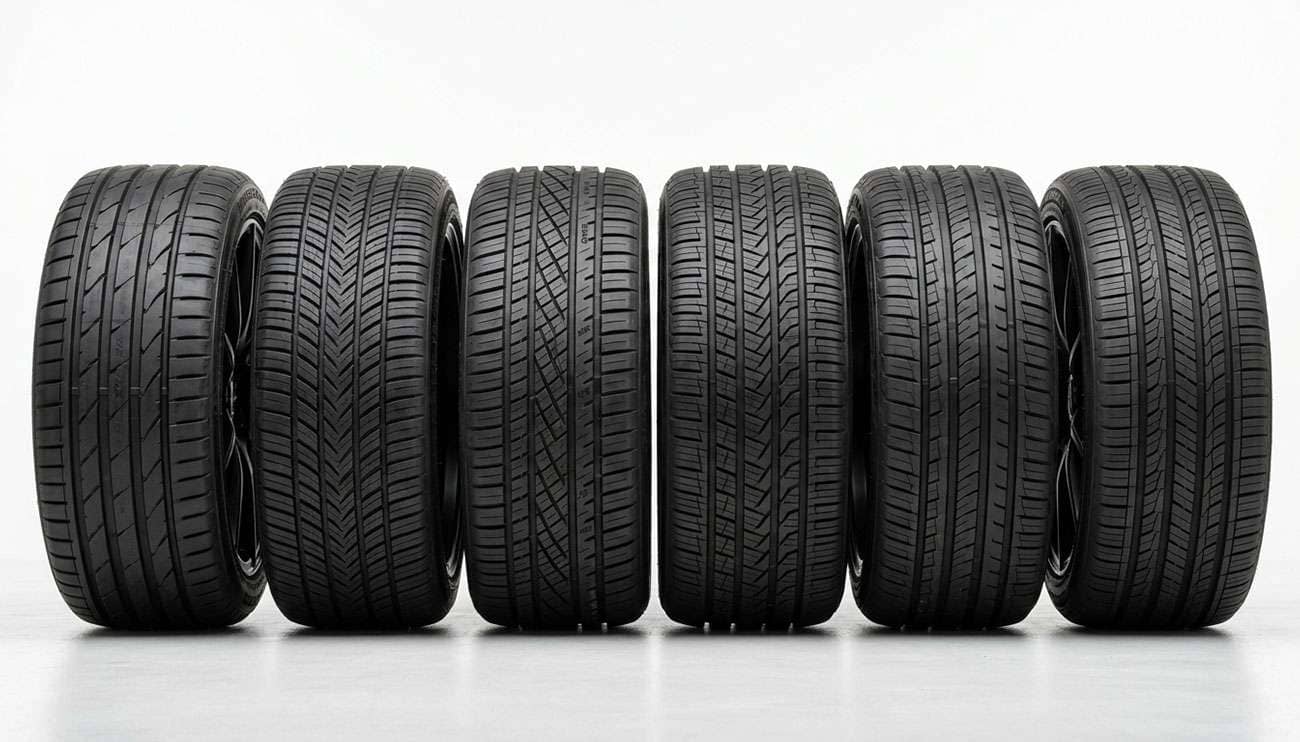
Ultra-high-performance all-season tires are the most heavily contested category in modern tire engineering. The brief is brutal: deliver near-summer-tire dry grip, hold up to interstate speeds, brake hard in the rain, and still keep moving in light snow — all on the same compound, the same carcass, the same tread pattern. Most tires fail at one of those four things. A few do all four well. This list is about that second group.
I've spent a lot of time with these tires — installing them on customer vehicles, reading the independent test data out of Tire Reviews and Tire Rack, and comparing UTQG numbers against real-world treadwear that comes back through our shop. The ranking that follows is mine, but it's calibrated against measurable performance, not marketing copy. Here are the nine I'd put on my own car, broken down by what each one does best.
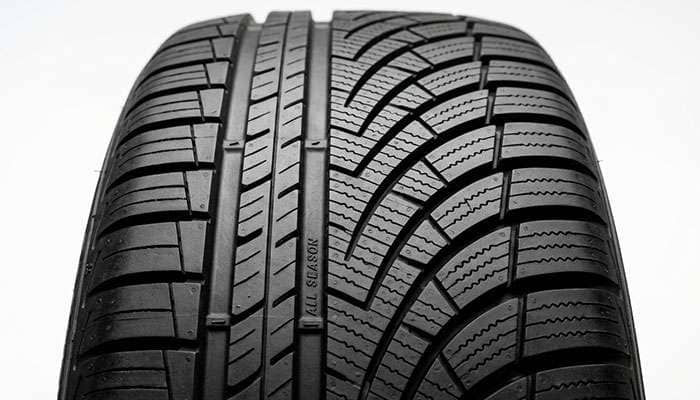
"All-season performance" is a specific segment, not a marketing label. To qualify, a tire has to hit several technical benchmarks at once:
If you want a deeper read on what speed ratings actually mean — and what happens when you mismatch them — our tire speed rating guide covers the technical side.
The picks below aren't ranked by overall score. Instead, each tire is positioned by its strongest use case — what it does better than the others. That matters because the "best" UHP all-season tire for a 1,600-lb dry-track-day Miata isn't the same one I'd put on a 4,400-lb Charger Hellcat that sees rain three days a week and a snowstorm in February.
For every pick, I weighed seven criteria:
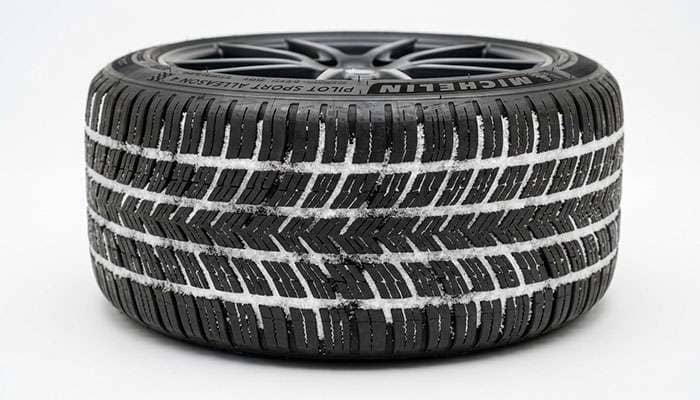
The benchmark, full stop. The Michelin Pilot Sport All Season 4 wins or near-wins almost every independent test in the segment, and it's the one I put on my own car. Y-speed rating up to 186 mph, UTQG 500 AA A, 45,000-mile warranty.
Why it wins: Class-leading dry grip, the shortest wet-braking distance I've measured in a third-party-published test of this category, and genuinely usable light-snow performance. The compound stays compliant in cold weather better than anything else premium.
Trade-offs: You pay for it. The Pilot Sport AS 4 typically runs $25–$60 more per tire than a comparable Continental or Pirelli, and the ride is slightly firmer than touring-leaning competitors.
Who it's for: Owners of M-cars, AMG, RS, GT-spec performance cars who drive year-round and don't want to swap to dedicated tires. If you have one set of wheels on a performance car and you'll keep them on all year, this is the answer.
The smart-money pick. The Continental ExtremeContact DWS06 Plus has been the segment's reference tire for years because it nails the balance. UTQG 560 AA A, Y-rated, 50,000-mile warranty.
Why it earns its spot: The DWS treadwear indicators are unique in the category — three letters molded into the tread that wear off in sequence (the S goes first when snow capability ends, then the W when wet capability degrades, then the D when the tire is finished). It's a real engineering feature, not a gimmick. Wet grip is genuinely excellent and dry handling sits right behind the Michelin.
Trade-offs: Won't out-grip the Pilot Sport AS 4 at the absolute limit. Snow capability falls off at the lower end of size availability.
Who it's for: The default smart pick. If you want premium UHP performance without paying Michelin's premium, and you want a tire that tells you when it's done — this is it. I sell more DWS06 Plus to performance-sedan owners than anything else in this list.
The Pirelli P Zero All Season Plus 3 is what you put on a car when ride quality matters as much as cornering. Y-rated, UTQG 560 AA A, 50,000-mile warranty.
Why it makes the list: Lowest noise levels in the segment per independent testing. Premium ride compliance — closer to a touring tire than a UHP tire in cabin feel. OE-approved on the BMW 5 Series, Audi A6/A7, and a long list of Mercedes-AMG models, which means the construction is genuinely engineered for heavier luxury performance cars.
Trade-offs: Dry limit grip is slightly behind Michelin and Continental. Premium pricing tier.
Who it's for: Audi, BMW, Mercedes, Genesis, and Lexus performance trim owners who want a tire that delivers grip without ruining the cabin experience the car was engineered for.
If your build has more attitude than budget, this is the answer. The BFGoodrich g-Force COMP-2 A/S+ punches well above its price tier. Y-rated, UTQG 540 AA A, 45,000-mile warranty.
Why it earns its spot: Dry grip approaches summer-tire territory — aggressive shoulder design, stiff outer compound. Looks meaner than the European competition. Typically runs $40–$80 less per tire than premium picks.
Trade-offs: Light-snow performance is the weakest in this list. If you see real winter weather, look elsewhere or buy a second set for the cold months.
Who it's for: Mustang, Camaro, Charger, Challenger, and restomod owners. Any V8 buyer who wants the visual aggression and the grip without paying European premium tier money.
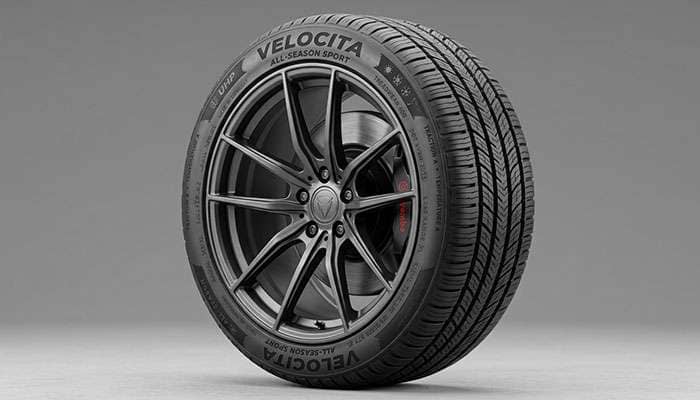
The Bridgestone Potenza Sport AS is built around steering precision. Y-rated, asymmetric tread, stiffer sidewall construction than most of its competition.
Why it earns its spot: Sharpest turn-in in the segment. The Potenza Sport summer tire is OE on several Ferrari and Maserati applications — the AS variant inherits that engineering DNA. If you autocross occasionally or just love the feel of a tire that responds the instant you turn the wheel, this is your tire.
Trade-offs: Stiffer sidewall means a slightly firmer ride over expansion joints and broken pavement. Slightly less wet-weather refinement than the DWS06 Plus.
Who it's for: Drivers who care more about response than ride. M2, M3, Cayman, Type R, Civic Si owners who notice (and care about) the first few degrees of steering input.
The Goodyear Eagle Exhilarate is the quiet specialist of this list. W- and Y-rated sizes, UTQG 500 AA A, 45,000-mile warranty.
Why it earns its spot: Excellent balance between performance and refinement. Low cabin noise. Handles weight well — runs especially well on heavier sport sedans where the tire has to manage 4,000+ pounds of car without giving up cornering response.
Trade-offs: Mid-pack dry grip at the actual limit. Not the tire for someone chasing lap times.
Who it's for: Daily-driven sport sedans — BMW 3 Series, Audi A4, Lexus IS, Genesis G70, Kia Stinger. Buyers who'd rather have a tire that disappears in daily driving and delivers performance when they ask for it.
The Falken Azenis FK460 A/S is the newest tire on this list and the one most aggressively pricing into the premium segment. Y-rated, asymmetric tread, OE-grade construction.
Why it earns its spot: Released in 2024, the FK460 A/S has already shown up in independent tests trading punches with tires that cost $50–$80 more. Aggressive Azenis tread family aesthetics — looks like a track tire, performs like a daily UHP. Strong wet braking out of the gate.
Trade-offs: Less long-term real-world wear data than competitors that have been on the market five-plus years. Mileage warranty shorter than premium tier.
Who it's for: Budget-conscious enthusiasts. WRX, BRZ, GR86, GTI, Civic Type R drivers who want top-tier performance grip without paying top-tier money.
The Yokohama Advan Sport A/S Plus sits at the intersection of Japanese performance heritage and modern all-season engineering. Y-rated, UTQG 500 AA A, 50,000-mile warranty.
Why it earns its spot: The Advan name carries real weight in tuner culture — these tires are OE on several Japanese performance applications. Balanced dry grip, strong wet performance, and a tread design that looks correct on JDM-inspired wheels.
Trade-offs: Available in fewer extreme sizes than European brands. Premium pricing tier without quite matching Michelin or Continental at the absolute limit.
Who it's for: Civic Type R, GR Corolla, Supra, 370Z/400Z, NSX, GT-R owners. JDM-leaning builds where the Yokohama branding is part of the aesthetic and the engineering pedigree is part of the choice.
The Toyo Proxes Sport A/S is the longevity pick. Y- and W-rated, UTQG 500 AA A, 45,000-mile warranty.
Why it earns its spot: Real-world treadwear in this segment is often the deciding factor and the Proxes Sport A/S regularly outlasts its UTQG suggests. Strong wet performance — Toyo's compound work has caught up to the European brands. Priced competitively.
Trade-offs: Light-snow capability is limited to genuinely light snow. Not the tire for serious winter weather.
Who it's for: High-mileage commuters with sport sedans and coupes. Anyone who wants UHP grip without burning through a set every two years.
If you live somewhere temperatures genuinely drop below 45°F for stretches at a time, a UHP all-season tire is the right call for a single-set, year-round setup. Summer tires use compounds that go glassy in the cold — the rubber stiffens, the contact patch shrinks, and grip falls off a cliff. That's a measurable, repeatable phenomenon, not a manufacturer scare tactic.
But if your daily temperature range never gets below 50°F and you want maximum performance, a dedicated summer tire (Michelin Pilot Sport 4S, Pirelli P Zero PZ4, Bridgestone Potenza Sport) will out-grip every tire on this list by a noticeable margin in the dry. I covered the head-to-head numbers in our Pilot Sport 4S vs P Zero PZ4 comparison. Our summer vs all-season explainer goes deeper on which one is right for your climate.
For real winter — sub-30°F, ice, packed snow — neither all-season performance nor summer tires are enough. You want dedicated winter tires on a second set of wheels, and our winter vs all-season comparison walks through that decision.
Three rules I'll repeat to anyone shopping in this category:
If you want the broader category to browse, our UHP tire collection covers every size in every brand on this list, and the premium sport tire category goes one tier higher for dedicated summer-only setups. We also keep prices honest across the whole performance tire catalog.
The UHP all-season segment is more competitive now than at any point I've been in this business. A tire from 2018 wouldn't make this list — the standards have moved that fast. The Michelin Pilot Sport AS 4 is the benchmark, the Continental DWS06 Plus is the smart-money pick, and the BFG g-Force COMP-2 A/S+ is the value play. Everything else on the list has a specific job, and matching the tire to how you actually drive matters more than picking the one with the most decorated test results. Tell me what your car is and how you use it, and I'll point you at the right pick.
Speed rating, compound, and tread design. A standard all-season tire is typically T- or H-rated (118 or 130 mph max), with a touring-focused compound and a symmetric tread pattern optimized for ride comfort and mileage. A UHP all-season tire is W- or Y-rated (168 or 186 mph max), uses a softer compound for grip, and runs an asymmetric tread pattern for cornering response. The trade-off is faster wear and slightly less ride comfort, in exchange for substantially better dry grip and wet performance.
They handle cold temperatures well — the silica-rich compounds stay pliable down to around 25°F, where summer tires go glassy at about 45°F. Light snow capability is real on the better picks on this list, particularly the Michelin Pilot Sport AS 4 and Continental DWS06 Plus. But for serious winter — packed snow, ice, sustained sub-20°F temperatures — you want dedicated winter tires on a second set of wheels.
Tires with 45,000–50,000-mile mileage warranties typically deliver 30,000–40,000 miles under moderate driving with proper rotation and inflation. Aggressive driving, hard cornering, and heavy vehicle weight will all reduce that. Heavier performance sedans (400-plus horsepower, 4,000-plus pounds) typically wear UHP all-season tires faster than lighter cars even with identical driving styles.
If you drive a performance car the way it was engineered to be driven, yes. The grip difference, braking distance improvement, and steering response are all measurable and significant. If you drive a performance car the way you'd drive a Camry, a standard touring all-season tire will save you money and last longer. The tire should match the use case.
Maximum sustained speed. W-rated tires are certified to 168 mph (270 km/h), Y-rated tires are certified to 186 mph (300 km/h). Beyond the speed numbers themselves, Y-rated tires generally use stiffer construction and more heat-resistant compounds, which means they hold up better under sustained high-speed driving and aggressive cornering even at legal speeds. If your vehicle came from the factory with Y-rated tires, replace them with Y-rated tires.
Check the door placard. If your vehicle was originally fitted with XL-rated tires, every replacement set should also be XL. Heavier performance sedans, SUVs, and most modern sport coupes call for XL because the higher load index (and stiffer sidewall construction) handles vehicle mass and cornering loads more predictably. Running standard-load tires on a vehicle specified for XL will compromise handling precision and run the tires hotter than they should.



