
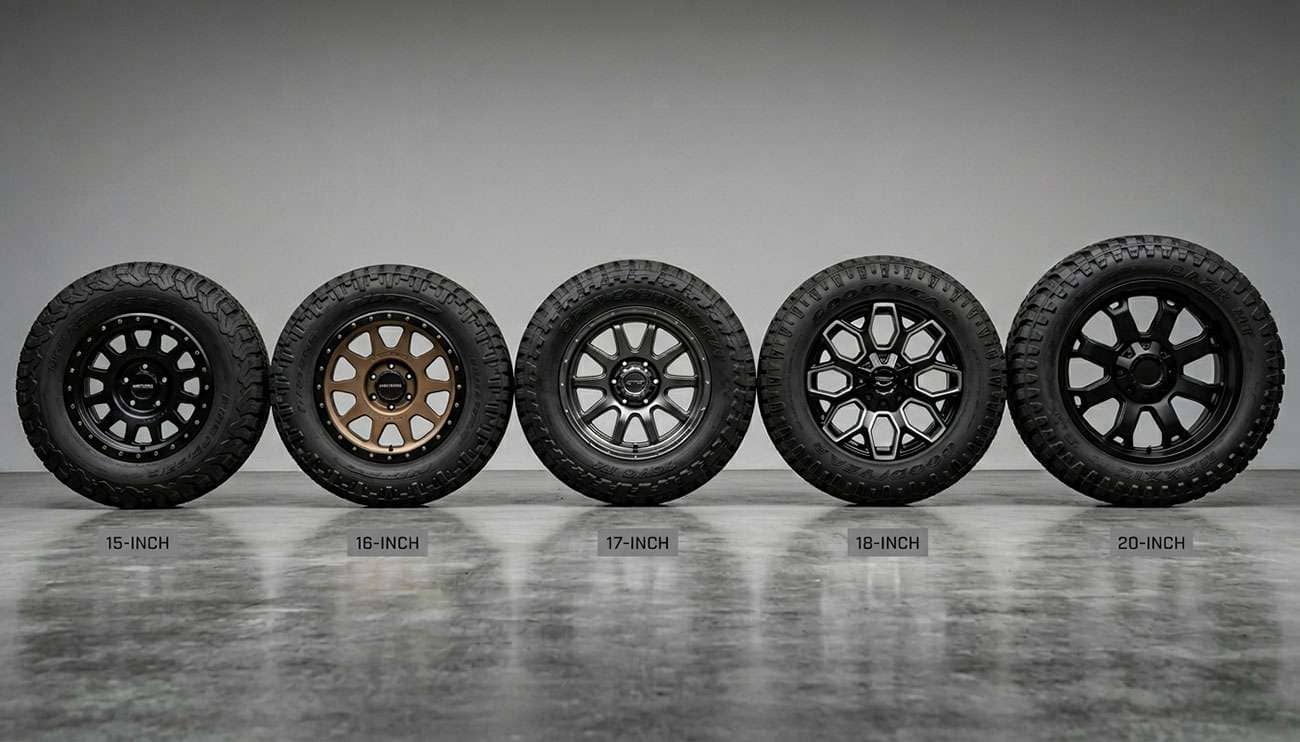
Wheel diameter is the most visible specification on a wheel and, not coincidentally, the one most off-road buyers over-index on when making purchase decisions. A 20-inch wheel looks more aggressive than a 17-inch wheel on the showroom floor. An 18-inch wheel looks more modern than a 15-inch wheel in marketing photography. The problem is that the right off-road wheel diameter is determined by the build's intended use, target tire size, and vehicle platform — not by how the wheel looks when you're standing ten feet away from the truck.
This guide treats off-road wheel sizing as the engineering matrix it actually is. Each common diameter corresponds to specific build types, tire size ranges, and performance trade-offs. A dedicated rock crawler and a desert prerunner will often run on the same truck platform with completely different wheel sizes because the two applications demand different things from the wheel-and-tire package. Understanding which size maps to which application prevents the common mistake of buying impressive-looking wheels that perform poorly at the work the truck actually does.
Let's walk through the full matrix.
A wheel's size specification has four numbers that all matter.
Diameter. The height of the wheel in inches — 15, 16, 17, 18, 20, 22, and up. This is the number most people talk about and the primary driver of how the wheel looks and fits.
Width. How wide the wheel is across the bead seats, measured in inches. Common off-road widths run 7, 8, 8.5, 9, 10, and 12 inches. Width determines how wide a tire the wheel can properly mount and how that tire will sit on the rim. A tire mounted on a wheel too narrow or too wide for its rated range distorts in ways that affect sidewall flex, contact patch shape, and sometimes safety.
Offset. The distance between the wheel's mounting face (where it bolts to the hub) and the centerline of the wheel's width, measured in millimeters. Expressed as ET (from German "Einpresstiefe"). Positive offset pulls the wheel inward toward the vehicle; negative offset pushes the wheel outward. Off-road wheels commonly run offsets from +40 (mild) all the way to -24 or lower (aggressive push-out).
Backspacing. The distance from the wheel's mounting face to the back edge of the wheel, measured in inches. Closely related to offset but more directly useful for fitment planning because it tells you how much wheel sits inside the fender well versus how much sits outside.
For deeper coverage of these four specs and how they interact, see our article on how to choose the right off-road wheels.
Everything about off-road wheel diameter traces back to one engineering trade-off: a larger wheel displaces tire sidewall, and tire sidewall is what does most of the work in off-road conditions.
Consider the math. A 37-inch tire on a 17-inch wheel has roughly 10 inches of sidewall height on each side of the wheel. That same 37-inch tire on a 20-inch wheel has about 8.5 inches of sidewall height. On a 22-inch wheel, it drops to about 7.5 inches. The 1.5 to 2.5 inches of sidewall that disappears going from a 17-inch to a 22-inch wheel represents real functional capability lost.
That sidewall does three things off-road:
Absorbs impact. Rocks, roots, washout ruts, and drops all get absorbed partly by the tire's sidewall flexing. Less sidewall equals less impact absorption, which transmits more energy into the wheel and suspension components. Aluminum wheels crack, suspension components wear prematurely, and occupant comfort suffers.
Allows airing down. The sidewall is what bulges out when you drop tire pressure from 30 psi for the highway to 12 psi for rock crawling. That bulge dramatically increases contact patch area and tire conformability on uneven terrain. A tire with limited sidewall can't air down effectively because there's nothing to flex.
Protects the wheel. When a tire with tall sidewalls hits a rock, the tire flexes and absorbs the hit. When a tire with short sidewalls hits the same rock, the rock often reaches past the tire to strike the wheel lip, bending or cracking the wheel.
This is why serious rock crawlers run 15-inch or 17-inch wheels with 35-inch or 37-inch tires. It's also why high-dollar 22-inch wheels paired with low-profile tires don't survive actual off-road use.
Fifteen-inch wheels sit at the traditional end of the off-road spectrum. They're the standard for hardcore rock crawlers, classic Jeep applications, and dedicated trail rigs where maximum tire sidewall is the primary objective.
Best for:
Typical tire sizes: 31x10.50R15, 33x12.50R15, 35x12.50R15. Above 35 inches, larger wheel diameters typically fit better.
Advantages. Maximum sidewall height for any given tire outside diameter. Best impact absorption, best airing-down capability, best wheel protection. Wheels themselves tend to be less expensive than larger diameters, and tire options at 15 inches remain broad in off-road designations. Classic visual match for older Jeeps and trucks where larger wheels look period-incorrect.
Disadvantages. Limited availability on modern trucks — most newer half-ton trucks require 17-inch minimum to clear larger brake calipers, and 15-inch wheels physically will not fit over factory brakes. Fewer premium aftermarket 15-inch wheel options exist compared to 17 and 20. Modern ABS and electronic stability systems on newer vehicles may be tuned around larger wheels and can be affected by dropping to 15.
Typical buyers. Serious Jeep owners, classic 4x4 restorers, dedicated rock crawling competitors, and budget-conscious trail builders.
Sixteen-inch wheels occupy a narrow but useful niche. Less common than 15 or 17 in the aftermarket, but purpose-built for specific applications.
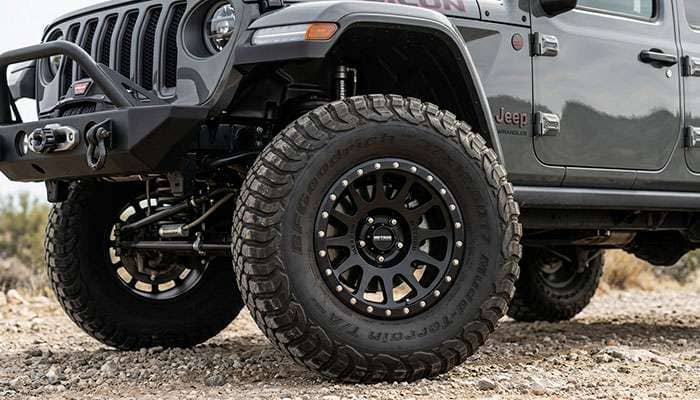
Best for:
Typical tire sizes: 265/75R16, 285/75R16, 295/75R16, 33x12.50R16.
Advantages. Good balance of sidewall preservation and brake clearance for trucks designed around 16-inch factory specs. LT-rated truck tires remain widely available in 16-inch sizes. Cost typically falls between 15 and 17 inch equivalents.
Disadvantages. Smaller aftermarket wheel selection than 17 or 20 inch. Some modern trucks have moved past 16-inch brake clearance, which limits platforms. Not the sweet spot for most new builds — 17-inch usually makes more sense unless the vehicle originally specified 16.
Typical buyers. Heavy-duty truck owners staying close to factory spec, Land Cruiser and Tacoma owners on specific platforms, and buyers replacing original 16-inch wheels where fitment is already validated.
Seventeen-inch wheels are the dominant off-road size for modern builds. More aftermarket wheel options at this diameter than any other, a massive selection of 17-inch off-road tires, and compatibility with nearly every modern truck, Jeep, and SUV platform.
Best for:
Typical tire sizes: 33x12.50R17, 35x12.50R17, 37x12.50R17, 285/70R17, 295/70R17, 315/70R17. The 17-inch tire catalog is the deepest in off-road rubber.
Advantages. Clears modern brake packages on nearly every off-road-capable vehicle. Sidewall height at common tire sizes still delivers good off-road performance. Aftermarket wheel selection is enormous — hundreds of 17-inch off-road wheels from major brands. Tire availability is unmatched. Pricing is competitive due to volume production.
Disadvantages. Slightly less sidewall than 15 or 16 inch at equivalent tire outside diameter. No meaningful disadvantages for most users.
Typical buyers. The majority of modern off-road and overlanding builds. If uncertain about which size to choose, 17-inch is almost always the right answer unless a specific application argues otherwise.
Eighteen-inch wheels occupy a middle ground between serious off-road capability and street-oriented styling. Popular on premium truck platforms, modern luxury SUVs, and daily-driven vehicles that see occasional off-road use.
Best for:
Typical tire sizes: 33x12.50R18, 285/65R18, 275/70R18, 35x12.50R18. Good selection of off-road rubber at this size, though not as deep as 17-inch.
Advantages. Modern appearance that matches newer vehicle styling. Comfortable on pavement, adequate off-road for moderate use. Usually matches factory-equipped 18-inch wheels if upgrading trim-level aftermarket wheels.
Disadvantages. Less sidewall than 17-inch at equivalent tire outside diameter. Higher wheel cost typically than 17-inch. Not ideal for aggressive rock crawling or long-distance overlanding where sidewall capability matters most.
Typical buyers. Daily driver owners who want an off-road look with minimal compromise to on-road manners, premium trim level buyers staying close to factory specs, and luxury SUV owners adding off-road styling.
Twenty-inch wheels are the second-most-popular off-road diameter after 17-inch, driven by aggressive styling trends, modern truck factory fitment, and desert/prerunner applications where high-speed stability matters more than rock-crawling capability.
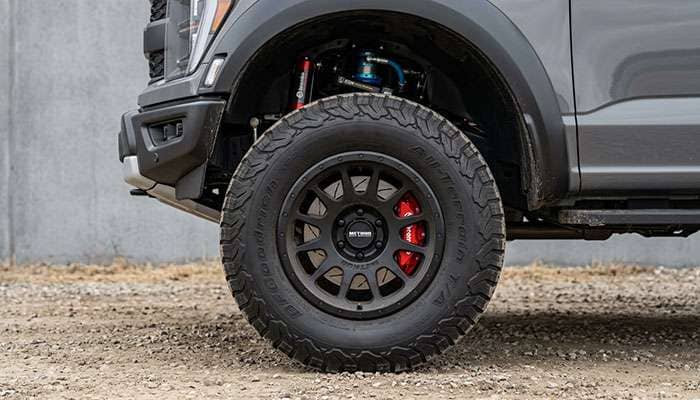
Best for:
Typical tire sizes: 33x12.50R20, 35x12.50R20, 305/55R20, 285/55R20. Off-road tire selection at 20-inch is solid but narrower than 17 inch.
Advantages. Strong visual impact and modern truck aesthetic. Excellent high-speed stability due to reduced sidewall flex — ideal for desert running. Large aftermarket selection from premium off-road brands (Fuel, KMC, Method, Black Rhino). Matches factory 20-inch equipment on many newer trucks.
Disadvantages. Meaningfully less sidewall than 17-inch at equivalent tire outside diameter. Reduced impact absorption and airing-down capability. More susceptible to wheel damage on rocky trails. Higher wheel cost and often higher tire cost at this size. Not ideal for rock crawling or extreme trails.
Typical buyers. Modern performance truck owners (Raptor, TRX), desert runners and sand enthusiasts, lifted truck builders where appearance and on-road manners outweigh rock-crawling priorities, and factory 20-inch owners upgrading styling.
For a more focused comparison between 18 and 20 inch for off-road use, see our article on are 18 or 20 inch wheels better for off-road.
Twenty-two-inch and larger wheels in off-road styling exist primarily for appearance. Legitimate off-road performance at these sizes is very limited because sidewall is largely gone at any reasonable tire outside diameter.
Best for:
Typical tire sizes: 33x12.50R22, 305/45R22, 35x12.50R22. Low-profile off-road styling with limited actual off-road capability.
Advantages. Maximum visual impact. Modern styling. Matches current luxury truck trim level factory fitment on several platforms. Aftermarket selection is solid for street-biased off-road styling brands.
Disadvantages. Sidewall at common tire sizes is inadequate for meaningful off-road use. Wheels are vulnerable to damage on any surface beyond maintained dirt roads. Tire options in aggressive off-road designations are limited. Wheel and tire costs are significantly higher than smaller diameters. Ride quality on rough surfaces suffers due to reduced sidewall flex.
Typical buyers. Owners prioritizing appearance over trail capability, dually truck owners, show truck builders, and factory 22-inch trim level owners.
24-inch and above. Purely appearance-focused at this point. Essentially no legitimate off-road capability. Excellent for car shows and social media photography. Not functional off-road equipment.
Wheel width needs to match the tire width range the tire manufacturer specifies. Running a tire on too narrow a wheel causes excessive sidewall bulge, changed steering feel, and accelerated wear; running on too wide a wheel flattens sidewall curve, reduces protection, and creates potential bead unseat risk under low-pressure conditions.
General off-road guidelines:
Tire Size |
Recommended Wheel Width |
Typical Wheel Width Range |
|---|---|---|
31x10.50 / 255/75 |
7.5" to 8" |
7" to 9" |
33x12.50 / 285/75 |
8.5" to 9" |
8" to 10" |
35x12.50 / 315/70 |
8.5" to 10" |
8" to 11" |
37x12.50 / 37x13.50 |
9" to 10" |
8.5" to 12" |
40x13.50 and larger |
10" to 12" |
10" to 14" |
The narrower end of each width range produces more pronounced sidewall bulge and better protection of the wheel lip. The wider end of each range produces flatter tire contact patch and more aggressive stance. Tire manufacturers publish specific recommended wheel widths on their spec sheets — always verify against the specific tire model before finalizing wheel width choice.
For off-road fitment, backspacing and offset often matter more than diameter choice. They determine whether the wheel-and-tire package physically fits the vehicle, whether it rubs on suspension or body components, and how wide the vehicle's overall track becomes.
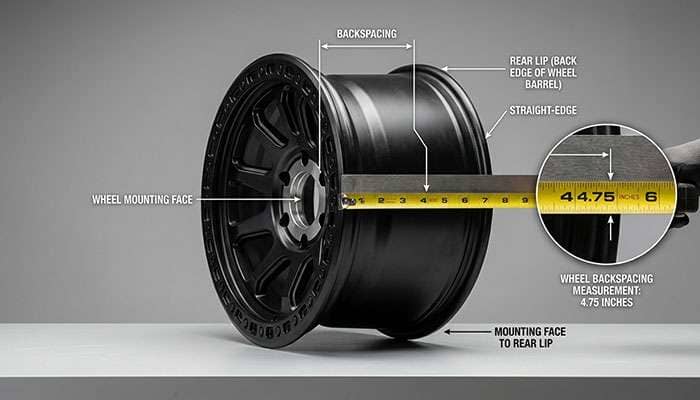
Standard off-road offset ranges:
Backspacing guidance: Most off-road applications use backspacing in the 3.75-inch to 5-inch range. Lower backspacing pushes the wheel outward (more aggressive stance, better articulation clearance). Higher backspacing pulls the wheel inward (closer to factory appearance, better handling, less tire rub).
For specific vehicle platform guidance, see our article on how to choose Jeep Wrangler aftermarket wheels, which covers the backspacing and offset math in detail for the most common off-road platform.
Here are wheels we move regularly at each diameter tier, matched to typical applications.
Size |
Example Wheel |
Typical Application |
|---|---|---|
15-inch |
Black Rhino Arches, Pro Comp Series 89 Steel |
Classic Jeep CJ/YJ/early TJ applications, budget rock crawler builds, 31"–33" tire setups |
16-inch |
Black Rhino Aliso, Method 701 Trail Series, Pro Comp 7069 |
Heavy-duty trucks staying at factory 16-inch, Land Cruiser and older Tacoma applications, 285/75R16 or 33x12.50R16 builds |
17-inch |
Black Rhino Abrams, Method 305 NV, Fuel Assault D546, KMC XD798 Addict |
Modern Wrangler JL/JK, half-ton trucks, mid-size trucks, 33"–37" tire builds, most new off-road applications |
18-inch |
Black Rhino Kruger, Fuel Rebel D680, Method 701 Bead Grip |
Premium trim trucks, luxury SUV off-road styling, daily driver with trail capability |
20-inch |
Fuel Darkstar FC853, KMC XD820 Grenade, Black Rhino Calico, American Off-Road A106 |
Modern performance trucks (Raptor, TRX), desert runners, street-biased lifted builds, 35" tire with aggressive styling |
22-inch |
Fuel Darkstar, Cali Off-Road Crusher 9118, Fuel Triton D582 |
Dually trucks, street-only lifted builds, show trucks, factory 22-inch trim upgrades |
The specific wheel available in the right bolt pattern, offset, and load rating for your vehicle varies significantly by platform. Our fitment team can match the right wheel specification to your exact vehicle application. For additional background on different wheel categories, see our articles on different types of off-road wheels and the purpose of beadlock wheels.
Off-road wheel diameter is a secondary decision relative to use case. Once the use case is defined — rock crawling, overlanding, daily driver, desert runner, show truck — the right diameter typically follows automatically. Seventeen-inch is the default answer for most modern builds because it offers the best combination of tire selection, brake clearance, sidewall preservation, and wheel availability. Fifteen and sixteen-inch make sense for specific purpose-built applications. Eighteen and twenty-inch serve daily-driven and street-biased builds. Twenty-two and larger are primarily appearance-focused with limited off-road capability.
The mistake is choosing diameter by how the wheel looks in the showroom rather than how it performs on the build's intended terrain. A 22-inch wheel on a serious trail rig will fail quickly, no matter how expensive the wheel is. A 15-inch wheel on a premium performance truck looks wrong and may not clear the brake package. Matching diameter to application is the starting point of good off-road wheel purchasing.
For the full off-road wheel selection across every diameter and platform, see our inventory at Performance Plus Tire. Our fitment team verifies every wheel package against the specific vehicle's brake clearance, suspension geometry, and tire size requirements before shipping.
Seventeen-inch is the most common off-road wheel size by a significant margin. It offers the deepest tire selection, broadest aftermarket wheel availability, and best all-around balance of sidewall preservation and modern vehicle brake clearance. Most modern Jeep Wrangler, half-ton truck, and mid-size truck applications use 17-inch wheels as the default off-road choice.
Generally yes, up to the point where brake clearance limits how small the wheel can go. Smaller wheels preserve more tire sidewall at any given overall tire diameter, which improves impact absorption, airing-down capability, and protection against wheel damage from rocks. The practical limit for most modern vehicles is 17-inch due to factory brake caliper sizes; 15-inch and 16-inch still work on older platforms with smaller brakes.
You can physically run them on maintained dirt roads and mild trails, but the reduced tire sidewall at 22-inch substantially limits legitimate off-road capability. Rock crawling, aggressive trail use, and desert running all benefit from more sidewall than 22-inch wheels typically allow. Twenty-two-inch and larger wheels are primarily appearance-focused for street-biased builds.
Dedicated rock crawlers typically run 15-inch or 17-inch wheels to maximize tire sidewall. Fifteen-inch is traditional for classic Jeep applications and budget builds targeting 33-inch and 35-inch tires. Seventeen-inch has become more common on modern rigs that need to clear larger brake packages while still preserving meaningful sidewall on 37-inch and 40-inch tire sizes.
Yes, significantly. Wheel diameter directly determines how much tire sidewall the build has at any given overall tire diameter. Sidewall does the real work off-road — absorbing impacts, flexing during airing-down, and protecting the wheel from rock strikes. A 17-inch wheel with 10 inches of tire sidewall performs substantially better off-road than a 22-inch wheel with 7 inches of sidewall on the same tire diameter.
For serious off-road use, 20-inch is the practical maximum. Above 20-inch, tire sidewall drops below the point where legitimate off-road performance can be maintained. Twenty-inch works well for desert runners, modern performance trucks, and street-biased lifted builds. For rock crawling and extreme trails, 17-inch or smaller provides much better performance and wheel protection.



