
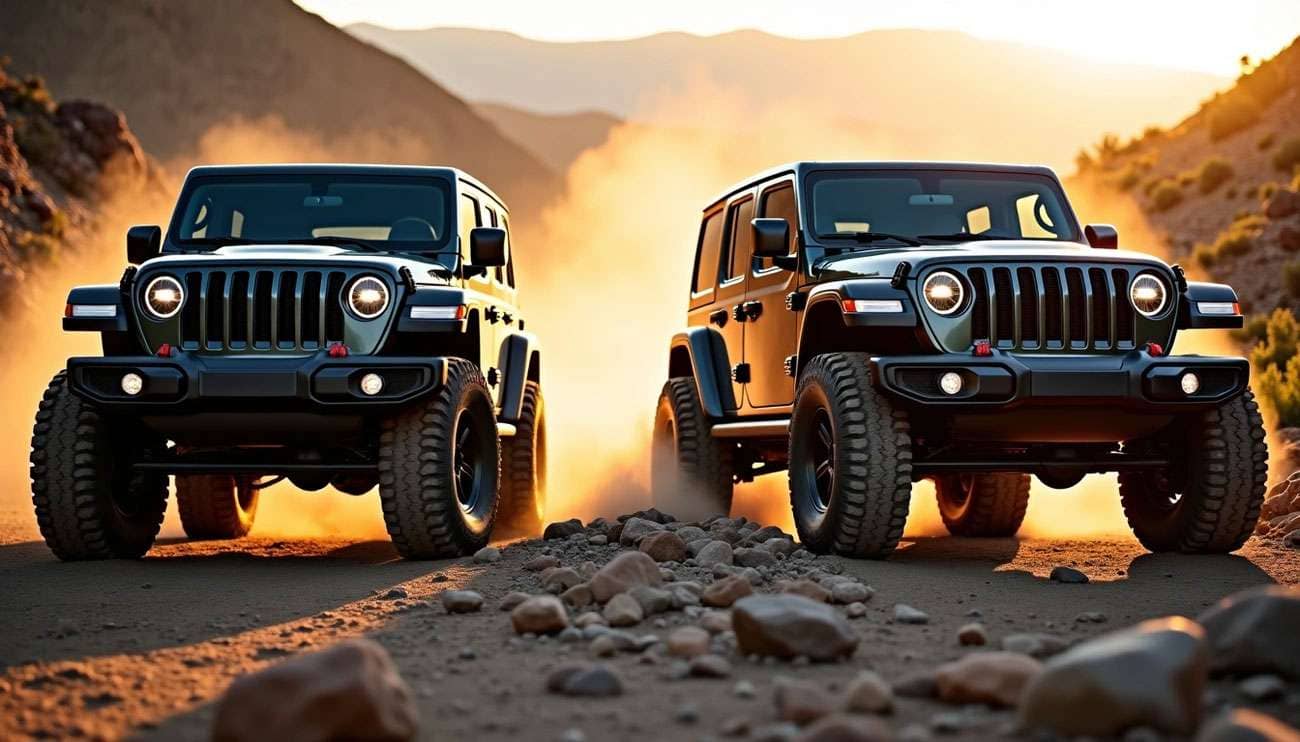
The choice between 18 vs 20 inch wheels for off-road adventures represents one of the most crucial decisions facing serious off-road enthusiasts. This isn't simply about looks – it's about fundamental performance when you leave civilization behind.
18-inch wheels deliver superior off-road capability through their taller tire sidewalls. These larger sidewalls provide essential cushioning over rough terrain and significantly reduce tire damage risk. The increased sidewall flex offers better impact absorption when you're climbing rugged terrain or navigating deep ruts. Most experienced off-roaders prefer this setup for serious trail work.
20-inch wheels tell a different story entirely. These larger wheels typically pair with lower profile tires that reduce sidewall flex, creating more precise steering response and improved cornering stability. While these characteristics enhance on-road handling, especially at higher speeds, they can actually work against you on challenging terrain. When you hit potholes, speed bumps, or gravel roads, that reduced sidewall cushioning translates to a harsher ride. For serious off-road adventures, 20-inch wheels present real limitations due to their reduced impact absorption capability.
We'll break down the practical differences between these wheel sizes to help you select the right option for your specific off-road needs. Whether you prioritize maximum comfort on challenging terrain or prefer sharper handling with an aggressive appearance, our expert guidance will point you toward the best choice for your adventures.
Proper wheel fitment determines everything from ground clearance to traction performance on challenging terrain. Understanding wheel sizing basics becomes essential before selecting between 18 vs 20 inch wheels for your off-road setup.
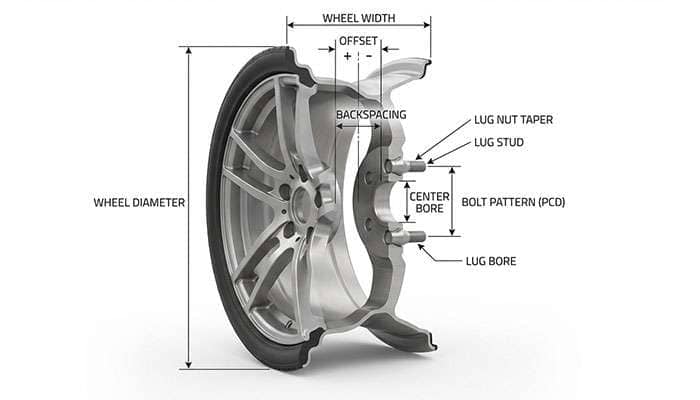
Wheel diameter measures the distance across the center from one side to the other, while width represents the distance between bead seats. These measurements directly control your off-road capabilities.
The relationship between tire size and wheel diameter creates your sidewall height – your primary defense against rough terrain. A 35" tire mounted on a 17" wheel provides 9 inches of sidewall cushioning, while that same tire on a 20" wheel delivers only 7.5 inches. This difference matters when you're navigating rock gardens or deep ruts.
Offset controls how wheels position relative to your suspension. Measured as the distance from the mounting surface to the wheel's centerline, positive offset moves the mounting surface toward the street side, while negative offset pushes wheels outward. Most off-road builds work best with +1mm, 0mm, or -12mm offset for optimal performance and appearance.
Bolt patterns use two numbers – the first indicates lug count, the second shows the diameter of the circle passing through lug centers. The 5x120 pattern common on BMWs features five bolts arranged in a 120mm circle. The 5x114.3 pattern popular on Japanese vehicles uses five bolts in a 114.3mm circle. These patterns require adapters for compatibility.
Larger wheels improve handling and stability at higher speeds, but increase unsprung weight that can negatively affect suspension performance. Smaller wheels reduce unsprung weight, allowing your suspension to work more effectively. Larger wheels also accommodate bigger brake systems for improved stopping power.
For off-road applications, wheels between 15-20 inches provide the best balance of performance and durability. Smaller wheels offer more sidewall flex to absorb impacts from rocks, roots, and other trail obstacles.
Performance differences become immediately apparent once you hit the trails. These wheel size variations create distinct handling characteristics that can make or break your off-road experience.
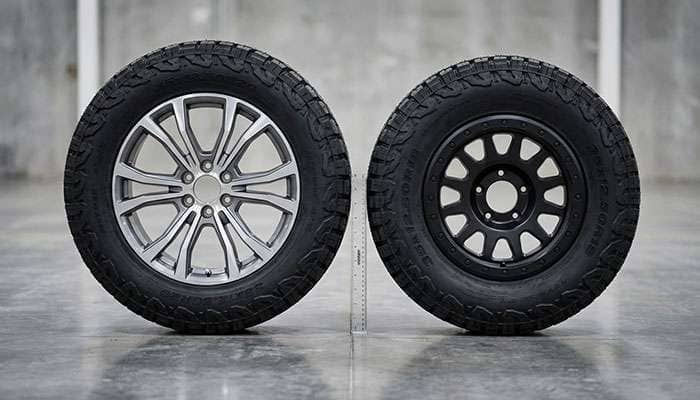
Sidewall height determines how your vehicle responds to terrain challenges. 18-inch wheels provide taller tire sidewalls that deliver superior cushioning over rough terrain while reducing damage risk. This extra rubber between wheel and road acts as natural shock absorption. 20-inch wheels feature lower-profile tires that minimize sidewall flex, creating more precise steering response and enhanced cornering stability.
The trade-off is clear: more sidewall equals better trail comfort, less sidewall means sharper handling response.
Sidewall flexibility on 18-inch setups offers better deflection and traction across uneven surfaces like rocks, mud, and sand. The tire can conform around obstacles, maximizing contact patches for improved grip. Experienced off-roaders consistently choose smaller wheels for this sidewall advantage.
Wider wheels distribute vehicle weight across larger surface areas, reducing ground pressure and preventing your rig from sinking into soft terrain. This becomes crucial when crossing sandy washes or muddy creek beds.
20-inch wheels excel in specific applications. They provide enhanced ground clearance when matched with appropriately sized tires, delivering 2-3 inches of additional clearance compared to smaller wheel configurations. High-speed desert running benefits from the stability that 20-inch wheels deliver.
Technical rock crawling and tight trail navigation favor 15-17 inch wheels for maximum sidewall flex and impact absorption. However, 18-inch wheels strike an excellent balance for versatile applications, accommodating various off-road tire options while maintaining adequate sidewall height.
At Performance Plus Tire, we stock quality options for both sizes. Browse our 18-inch off-road wheel options or 20-inch off-road wheel selections to find the perfect match for your specific vehicle requirements.
Financial factors play a significant role when selecting wheel sizes for off-road applications. The practical implications extend well beyond initial purchase price.
The cost difference between these sizes is substantial. Using the BFGoodrich All-Terrain T/A KO2 as an example:
18-inch version: approximately $238 per tire
20-inch version: approximately $309 per tire
A complete set of 20-inch tires costs nearly $300 more than their 18-inch counterparts. 18-inch tires are also more widely available with better value per mile.
Low-profile tires on 20-inch wheels provide minimal cushioning between wheel and road surface. Hitting potholes or curbs frequently results in rim bends, sidewall bubbles, or complete blowouts. The taller sidewalls on 18-inch wheels act as natural protection against road hazards—a pothole that might bend a 20-inch wheel typically causes only a brief impact on an 18-inch setup.
Larger wheels directly impact fuel economy. Test data shows 20-inch wheels decrease efficiency by 1-2 MPG compared to 18-inch equivalents. Over a typical driving year (15,000 miles), this translates to an extra $200-$300 annually in fuel costs. Vehicles with 18-inch wheels also place less strain on braking components, extending service life for suspension parts.
Wheel size dramatically transforms your vehicle's entire personality. The aesthetic differences between 18 and 20-inch wheels can completely change how your off-road build presents itself to the world.
18-inch wheels give your vehicle a more rugged, utilitarian appearance that emphasizes serious off-road capability. The greater tire sidewall creates a purposeful, workmanlike look that screams functionality, especially when paired with aggressive all-terrain tires.
20-inch wheels tell a completely different story. They fill wheel arches more completely, creating a commanding road presence with a bold, aggressive stance. Many truck owners choose 20-inch wheels specifically for that confident, street-dominating appearance. These larger wheels make a statement about style and attitude, while 18-inch options maintain a cleaner, more OEM-style aesthetic that balances form with function.
Matte black dominates the off-road scene for good reason - it offers practical advantages by naturally hiding trail dust and road grime. Machined accents on black wheels prevent that flat, featureless look while adding visual depth through strategic contrast.
Other popular finish options include:
Brushed and bronze finishes for that custom, hand-crafted appearance
Chrome for mirror-like shine that demands attention
Anodized colors (blue, red) for bold, personalized statements
Deep concave designs currently rule the custom wheel scene, creating an instant visual upgrade that makes wheels appear larger and more aggressive. The trend has moved away from cartoonish, bulky designs toward clean, purposeful craftsmanship. Today's off-road enthusiasts want wheels that look intentional rather than merely decorative.
Ready to transform your build? Explore our extensive 18-inch off-road wheel collections or 20-inch off-road wheel options to find the perfect match for your vehicle's personality.
Characteristic |
18-Inch Wheels |
20-Inch Wheels |
|---|---|---|
Off-Road Performance |
||
Sidewall Height |
Taller sidewalls deliver superior cushioning and protection |
Lower profile design reduces sidewall protection |
Impact Absorption |
Excellent impact absorption for rough terrain |
Limited cushioning increases damage risk |
Terrain Handling |
Perfect for technical trails and challenging terrain |
Better suited for high-speed desert applications |
Cost & Maintenance |
||
Tire Cost Example (BFG KO2) |
Approximately $238 per tire |
Approximately $309 per tire |
Tire Availability |
Widely available with better selection |
More limited options and higher costs |
Fuel Efficiency |
Better fuel economy saves money at the pump |
1-2 MPG decrease compared to 18-inch setups |
Durability |
||
Damage Risk |
Superior protection against trail hazards |
Higher risk of rim damage and tire failure |
Suspension Impact |
Reduced strain extends component life |
Increased unsprung weight stresses suspension |
Handling Characteristics |
||
Steering Response |
More forgiving on rough terrain |
Sharper steering response on smooth surfaces |
Cornering Stability |
Adequate stability for most applications |
Enhanced cornering performance at speed |
Visual Appeal |
||
Overall Style |
Rugged, purposeful off-road appearance |
Aggressive stance with commanding presence |
Wheel Well Fill |
Balanced proportions with functional look |
Fills wheel wells completely for bold appearance |
The choice between 18 and 20-inch wheels for off-road adventures comes down to your specific priorities and driving style. 20-inch wheels certainly deliver an aggressive stance and improved handling on smoother surfaces, but 18-inch wheels provide superior performance when the trail gets tough. Those taller sidewalls on 18-inch setups offer crucial protection for both wheels and vehicle components during demanding trail excursions.
The financial advantages clearly favor 18-inch wheels. You'll save significantly on initial purchase, replacement tires, and fuel costs over time. This makes 18-inch wheels the smart choice for serious trail riders, especially those tackling technical obstacles or rock crawling adventures. However, 20-inch wheels have their place for drivers who split time between highway cruising and moderate off-road use.
Your driving style should determine your final decision. Rock crawlers and mud runners benefit most from the superior sidewall flex and impact absorption that 18-inch wheels provide. Desert runners might prefer the stability and bold appearance of 20-inch options. Both 18-inch off-road wheels and 20-inch off-road wheels offer diverse designs to match your vehicle's appearance while handling off-pavement demands.
Tire selection matters just as much as wheel size. The right tire compound, tread pattern, and construction can significantly boost your vehicle's capabilities when matched with properly sized wheels. Balance your practical requirements with appearance preferences when making your choice. Larger wheels might look impressive in parking lots, but the real test happens when the pavement ends and your adventure begins.
When choosing between 18 and 20-inch wheels for off-road adventures, several critical factors determine which size will best serve your needs:
• 18-inch wheels excel in technical off-road conditions due to taller tire sidewalls that provide superior cushioning, impact absorption, and flexibility over rocks, mud, and rough terrain.
• 20-inch wheels cost significantly more to maintain - replacement tires average $309 vs $238 for 18-inch options, plus reduced fuel economy by 1-2 MPG annually.
• Damage risk increases with larger wheels as lower-profile tires on 20-inch rims offer minimal protection against potholes and trail hazards that could bend wheels or cause blowouts.
• 18-inch wheels deliver better value for serious off-roaders with wider tire availability, lower replacement costs, and proven performance on challenging trails and technical obstacles.
• Choose 20-inch wheels only for mixed-use vehicles that prioritize aggressive styling and high-speed desert running over technical trail capability and cost efficiency.
For most off-road enthusiasts, 18-inch wheels provide the optimal balance of performance, durability, and affordability when the pavement ends and real adventure begins.
18-inch wheels allow for taller tire sidewalls, providing better cushioning and impact absorption on rough terrain. They offer superior traction on uneven surfaces like rocks, mud, and sand, and are generally more durable and cost-effective for off-road use.
While 20-inch wheels can be used off-road, they're less ideal for technical terrain. They offer better stability at high speeds and can enhance ground clearance with appropriate tires. However, their lower profile tires provide less cushioning and are more susceptible to damage on rough trails.
Larger wheels, like 20-inch options, typically reduce fuel efficiency by 1-2 MPG compared to 18-inch wheels. They also tend to have higher tire replacement costs and can put more strain on suspension components, potentially leading to increased maintenance expenses over time.
For snow and technical trails, 18-inch wheels are generally preferred. Their taller sidewalls provide better traction and impact absorption, which is crucial for navigating difficult terrain. Many experienced off-roaders consider 18-inch wheels to be an ideal compromise between performance and practicality.
18-inch wheels typically give vehicles a more rugged, utilitarian look that emphasizes off-road capabilities. In contrast, 20-inch wheels create a more aggressive stance, filling wheel arches more completely for a commanding presence. The choice often depends on whether you prefer a more functional or stylized appearance for your off-road vehicle.



