
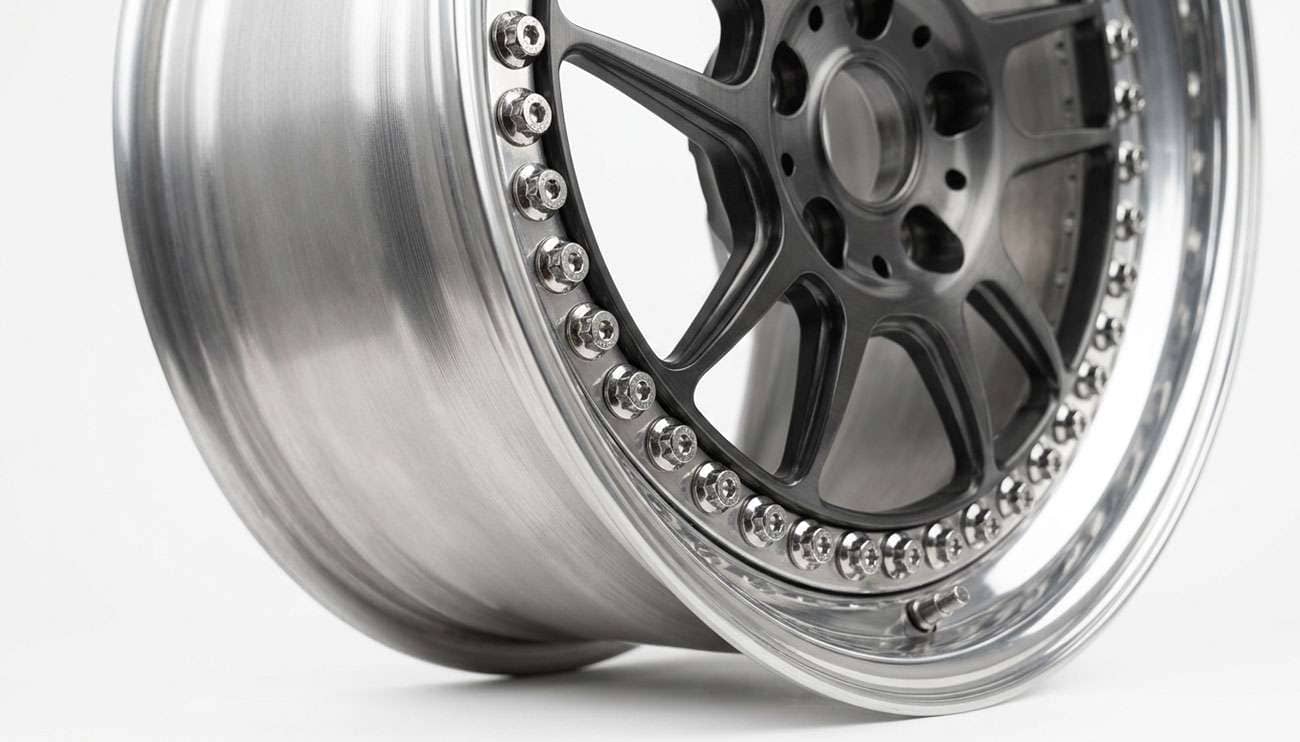
Most wheel maintenance advice treats every wheel the same: clean the finish, check the air, get them balanced. That's fine for a one-piece wheel, where the whole thing is a single chunk of aluminum. But a 3-piece wheel isn't one chunk. It's a center disc and two barrel halves bolted together around a sealed seam, and that construction comes with a short list of maintenance items a monoblock simply doesn't have.
This isn't about more work, it's about the right work. Get the bolts, the seal, and the hardware right, and a 3-piece wheel will outlast plenty of one-piece wheels precisely because you can service it. Ignore those things, and you invite the two problems that actually take multi-piece wheels out of service: slow leaks and loose hardware. Let's go through what matters, in order.
The difference comes down to the bolt ring and the seam. On a 3-piece wheel, a ring of perimeter fasteners holds the barrel halves and center disc together, and the joint between the inner and outer barrels is sealed so the assembly holds air. A one-piece wheel has neither, there's nothing to loosen and no seam to leak, because it was never assembled in the first place.
That's the trade you accept for the customization and serviceability that make multi-piece wheels worth it. If you want the full picture of why these wheels are built this way, our guide on the different types of forged wheels from mono-block to multi-piece lays out the construction families, and why 3-piece wheels are so expensive explains where that cost comes from. The maintenance below is the flip side of that engineering: a little attention to keep the assembly tight and sealed.
First, a critical distinction that trips people up. The assembly bolts, the perimeter ring that holds the wheel together, are not the same as your lug nuts. Lug nuts attach the wheel to the car, and you torque those the way you would on any wheel, which our guide on how to torque lug nuts perfectly covers. The assembly bolts are an entirely separate set that hold the barrels and disc together, and they have their own torque spec set by the wheel manufacturer.
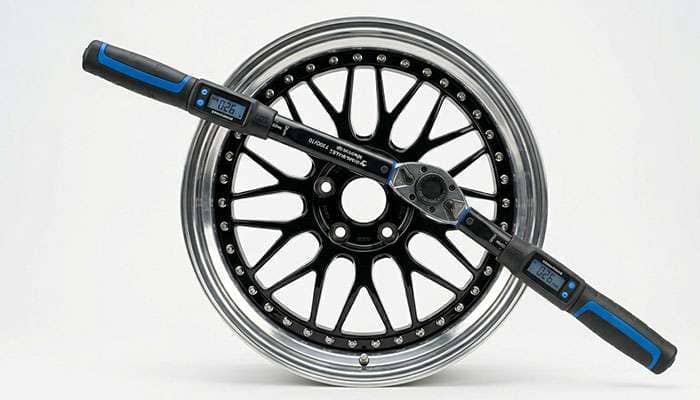
Here's the rule I give every multi-piece owner: follow the wheel maker's torque value, not a generic number, and re-check it on their schedule, especially after the first few hundred miles on a fresh build or after any service that disturbed the wheel. I'm deliberately not going to publish a torque figure here, because it varies by brand, bolt size, and design, and using the wrong number is worse than not checking at all. Get the spec from your wheel's manufacturer or the shop that assembled them. A quick periodic check with a proper torque wrench is the single most important thing you can do for a 3-piece wheel, because a bolt ring that's drifted out of spec is how seams start to weep and hardware starts to fatigue.
The seam where the inner and outer barrels meet is sealed, usually with a sealant bead, so the wheel holds air like any other. That seal is doing a real job, and it's the part most likely to need attention over the life of the wheel. The telltale sign of a seal problem is a slow leak, a tire that's fine for a few days then needs air, with no nail and no obvious damage.
If you've got a wheel that loses a few pounds of pressure a week and the tire checks out, suspect the seam before you blame the valve. A weeping seal isn't a failure of the wheel, it's maintenance, and it's exactly the kind of thing a multi-piece wheel is built to allow: the assembly can be opened, cleaned, resealed, and bolted back together to spec. That's not a job for the driveway on most wheels, it's a job for a shop that does multi-piece assembly, but the point is the wheel is fixable rather than scrap. Catch a slow leak early and a reseal is routine.
The assembly hardware lives in a tough neighborhood, out at the edge of the wheel where it catches road spray, brake dust, and in a lot of the country, winter salt. Over time, fasteners can corrode, and corroded hardware doesn't hold torque the way clean hardware does. On a wheel that depends on that bolt ring staying tight, that matters more than it would on a cosmetic fastener.
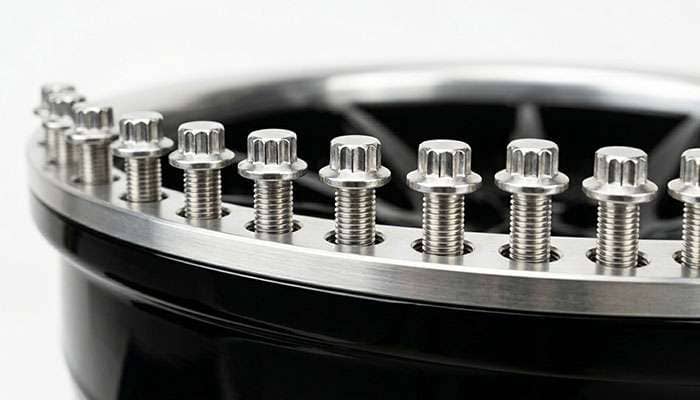
So when you're cleaning, pay attention to the bolt ring, not just the face. Rinse the salt and brake dust off it, keep an eye out for rust streaking or weeping around the fasteners, and address corrosion before it gets into the threads. If you understand what those fasteners are doing, you'll respect them, and our primer on what are lug bolts used for, a complete guide to wheel fasteners is good background on how wheel hardware works in general. Damaged or heavily corroded assembly hardware should be replaced with the correct parts from the wheel maker, never improvised, because the integrity of the whole wheel rides on it.
The finish on a 3-piece wheel, polished lip, painted disc, chrome, whatever you've got, is cleaned the same way as any other wheel of that finish. There's no special trick to the surfaces themselves, so I won't reinvent the wheel here. Use a pH-balanced cleaner, soft tools, and dry to avoid water spots, and match your method to your specific finish.
For the full finish-by-finish breakdown, our guide on how to clean aftermarket wheels by finish has you covered, and the broader habits in what's the best way to care for custom wheels apply to multi-piece wheels too. The only 3-piece-specific add is the one I already mentioned: while you're cleaning, give the bolt ring and seam the same attention you give the face. That's where the construction lives.
Here's the reward for all this attention. Because a 3-piece wheel comes apart, you can maintain and restore it in ways a one-piece simply can't match. Curb-rash a polished lip? On many multi-piece wheels the outer barrel can be refinished or replaced on its own, without scrapping the center disc or the inner barrel. The same logic that lets you polish and restore aluminum, as in our guide on how to polish and restore vintage aluminum wheels, applies component by component on a 3-piece.
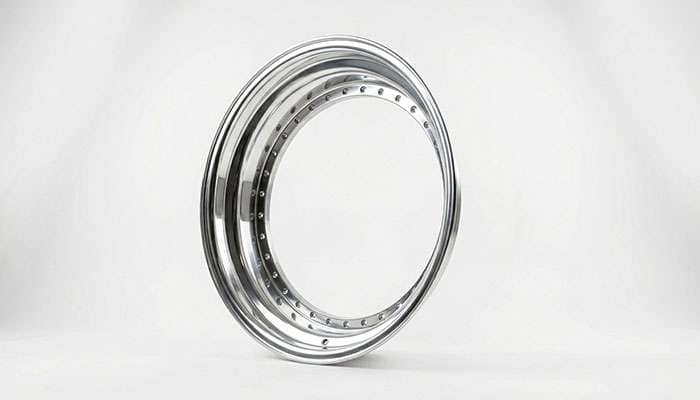
That's a genuine long-term advantage. A monoblock with a bent or badly damaged section is often a write-off, while a multi-piece wheel can frequently be brought back by servicing one part. It's the same modularity that makes these wheels so flexible to build in the first place, and it's a big reason owners who value keeping a set for the long haul, including a lot of 2-piece vs 3-piece shoppers, lean toward multi-piece. Maintenance and repairability are two sides of the same coin. Knowing the general warning signs in how many years do rims last, warning signs you can't miss helps you decide when to service versus replace.
You don't need a complicated schedule. Here's the rhythm I'd hold a multi-piece wheel to, on top of normal tire care and balancing. Treat the torque items as following the wheel maker's spec, not a fixed calendar, since manufacturers differ.
When |
What to Do |
|---|---|
Every wash |
Rinse salt and brake dust off the bolt ring and seam; look for weeping or rust streaks. |
First few hundred miles on a new build |
Have assembly-bolt torque checked against the maker's spec. |
Periodically per manufacturer |
Re-check assembly-bolt torque to the wheel maker's value. |
If a tire develops a slow leak |
Suspect the barrel seam; have it inspected and resealed before blaming the valve. |
After curb damage |
Ask about refinishing or replacing the affected barrel half rather than the whole wheel. |
A 3-piece wheel asks for a little more than a one-piece, but it's a short, specific list: keep the assembly bolts torqued to the maker's spec, mind the seal between the barrels, protect the hardware from corrosion, and clean it like any other wheel of its finish. Do that and you get the payoff the construction was designed for, a wheel you can service, refinish, and rebuild instead of replace. That's how a multi-piece set lasts. When you're ready to add a set you can keep for the long haul, browse our 3 Piece Wheels and the wider Forged Wheels lineup, and our team can point you to the maintenance specs for whatever you choose.
A little, and it's specific rather than burdensome. On top of normal tire care, a 3-piece wheel has an assembly-bolt ring that needs periodic torque checks and a sealed barrel seam to keep an eye on. Cleaning the finish is the same as any other wheel.
Follow the wheel manufacturer's schedule and torque value, not a generic number. As a general practice, have them checked after the first few hundred miles on a new build and periodically thereafter, since the correct interval and spec vary by brand and design.
If the tire has no visible damage and the valve checks out, a slow leak often comes from the seal at the seam between the barrel halves. This is a maintenance item, not a failure: the wheel can typically be opened, cleaned, resealed, and reassembled to spec by a shop that handles multi-piece wheels.
Often yes, and more easily than on a one-piece wheel. Because the wheel comes apart, the damaged outer barrel or lip can frequently be refinished or replaced on its own without scrapping the center disc and inner barrel, which is a major serviceability advantage of multi-piece construction.
No. Lug nuts attach the wheel to the vehicle hub. Assembly bolts are a separate perimeter ring of fasteners that hold the barrel halves and center disc together. They have their own torque spec set by the wheel manufacturer and should never be treated like lug nuts.



