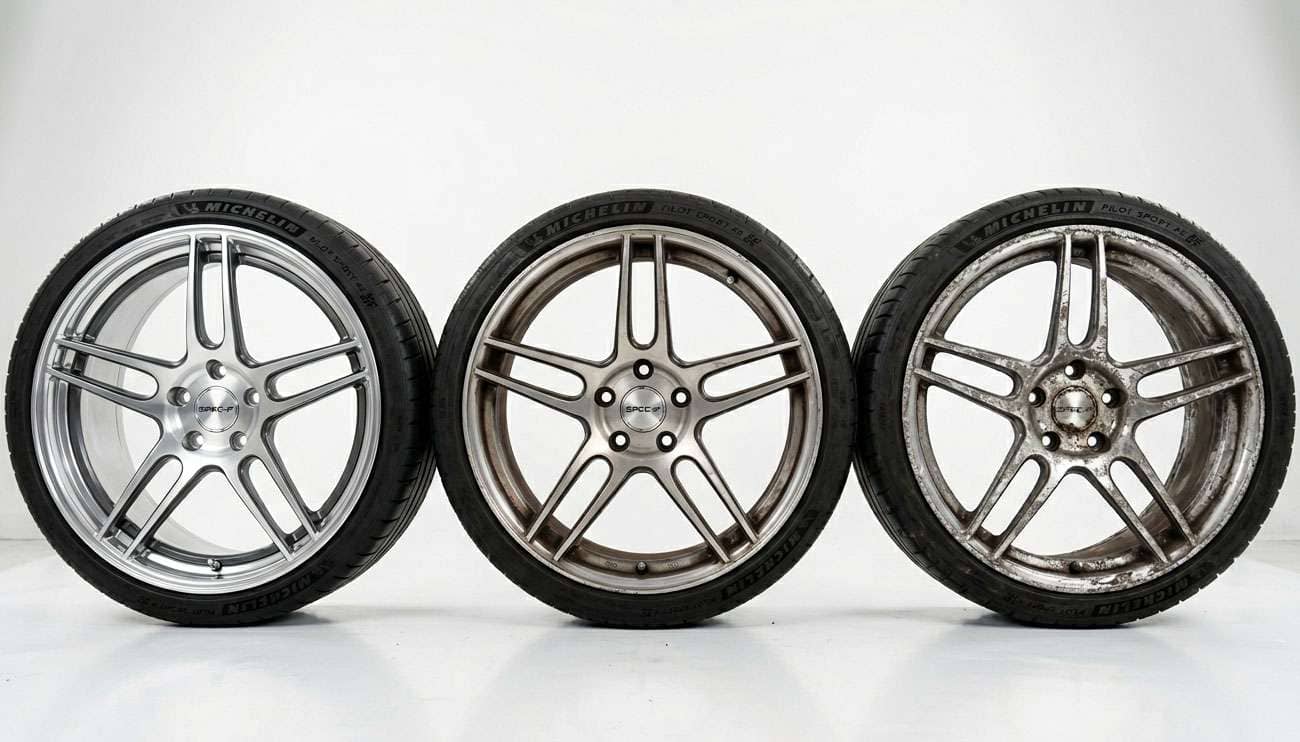
Custom wheels don't have a single lifespan number, despite what most search results want to tell you. They have a range — and where you land in that range depends on three independent variables: how the wheel was manufactured, what it's exposed to, and how the owner cares for it. A forged wheel on a garage-kept weekend car can outlast the chassis. A cast aluminum wheel on a daily-driven SUV in a salt-belt winter climate might be done in five years.
There's a useful piece of engineering wisdom from Steve Schardt at Forgeline that frames this well: a wheel can be strong and heavy and last forever, or light and strong but only last three years. Every wheel design is a triangle of weight, strength, and longevity, and you only get to optimize for two of the three. That's why a track-spec forged wheel doesn't necessarily last longer than a cast wheel on a daily driver — they're optimizing different priorities.
I'm going to walk through the actual lifespan numbers for each construction type, the failure modes that take wheels out of service, and how to know when refurbishing makes sense versus replacing. By the end you'll know exactly where on the lifespan range your wheels should land — and what it takes to push them toward the long end.
Wheels don't degrade the way tires do. There's no tread to wear off, no compound to harden. Instead, wheels fail in two completely separate ways, and it's worth understanding the distinction before we get to the lifespan numbers.
The finish — paint, clear coat, powder coat, or machined face — degrades on its own timeline regardless of whether the underlying metal is healthy. Clear coat cracks, paint fades, machined faces oxidize, polished aluminum dulls. A wheel can look terrible while remaining structurally perfect, which is why refurbishing is a real option (more on that below).
Cosmetic lifespan numbers from real-world data: full paint with clear coat lasts roughly 5-8 years in salty climates and 8-12 years in mild climates. Quality powder coat extends both ranges by 30-50% because the coating is thicker, tougher, and bonds chemically rather than just sitting on top of the metal. Polished aluminum without a sealant can dull within 12-24 months in coastal or salt-belt areas. We've covered the finish side of this in detail in our piece on powder coating wheels, which holds up significantly better than standard paint over the long haul.
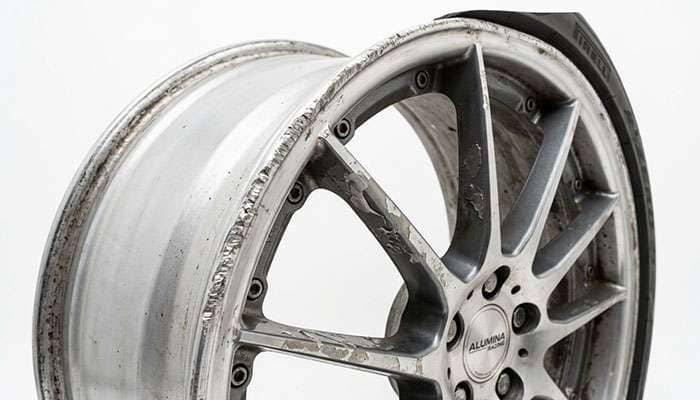
The metal itself fails — cracks, bends, severe corrosion that compromises the wheel's ability to safely hold a tire and support vehicle loads. This is the dangerous category. A structurally compromised wheel can fail catastrophically at highway speed, lose air pressure suddenly, or separate from the hub.
Structural lifespan is largely binary: a wheel is either structurally sound or it isn't, and the trigger is usually a single impact event rather than gradual wear. A pothole at 45 mph that bends a cast wheel doesn't slowly bend it over years — it bends it on impact. The slow-burn structural failures (metal fatigue, severe corrosion eating through the barrel) typically take 15-25+ years to manifest on a wheel that hasn't been impact-damaged.
You can have ugly wheels that are still safe to drive, or gorgeous wheels that are one pothole away from a crack. The distinction matters for every decision that follows.
Now to the actual numbers. The single biggest variable in custom wheel lifespan is how the wheel was manufactured. Here's what each construction type delivers in real-world durability terms. For the full mechanical comparison of how these are made, see our breakdown of cast vs forged vs flow-formed wheels.
Steel is the longevity champion if structural life is the only metric. Steel wheels bend before they crack — they absorb impact through deformation rather than fracture, which means a hard pothole hit usually leaves you with a bent rim that can be straightened, not a cracked one that has to be scrapped. Steel construction adds significant weight (typically 30-50% heavier than equivalent aluminum), but if all you want is a wheel that survives, steel is hard to beat.
The vulnerability is corrosion. Steel oxidizes — rust forms wherever moisture reaches bare metal. Coastal and salt-belt climates can pit a steel wheel within a few years if the protective coating is compromised. Properly painted and maintained, steel wheels routinely last 20+ years. Classic styled options like the Wheel Vintiques 55 Series are popular on classic cars precisely because they hold up across decades. We've covered the steel-versus-aluminum trade-off specifically for classic applications in our steel vs aluminum guide for classic cars.
Cast aluminum is what most factory and budget aftermarket wheels are made from. The casting process — pouring molten aluminum into a mold — is cheap and works well for mass production, but it creates two structural compromises: porosity (small voids in the metal) and a random grain structure that can't carry impact loads as efficiently as forged or flow-formed alternatives.
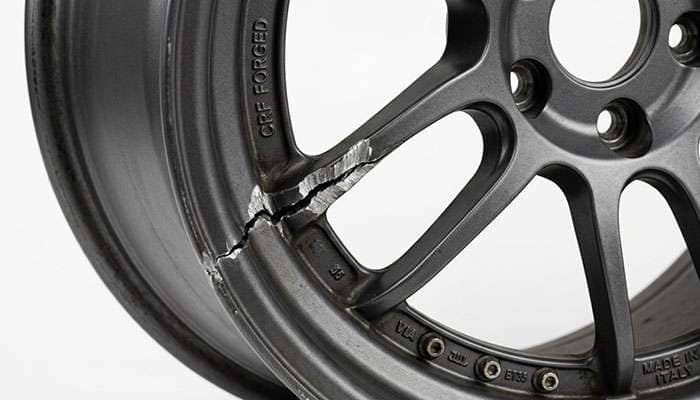
The result: cast wheels are more likely to crack than bend on hard impact. A Honda or Toyota OEM wheel hit by a serious pothole often cracks at the spoke-to-barrel junction or along the inner lip rather than deforming the way steel would. Once cracked, cast wheels can't safely be welded back to structural integrity — they have to be replaced.
Lifespan in normal daily-driver service runs 5-10 years before cosmetic degradation forces refurbishment, and structural life can match the vehicle (15-20+ years) if the wheel never takes a serious impact. Quality cast wheels from established manufacturers — examples like the Fuel D117 Warp for trucks and SUVs — hold up notably better than budget unbranded castings, which can develop cracks within 2-3 years on rough roads.
Flow-formed wheels (also marketed as "rotary forged" or "flow-forged" — the latter is a misleading marketing term, but the process is real) start as a cast wheel and then have the barrel spun under heat and pressure to align the grain structure. The result: significantly stronger barrels than pure cast wheels at a fraction of the cost of true forged wheels.
Flow-formed wheels resist impact damage better than cast equivalents and tolerate the high cornering and braking loads of performance driving without the cost penalty of forged. Lifespan typically runs 8-12 years for the wheel itself, with cosmetic refurbishment extending visible life as long as you want to keep them. The popular Enkei RPF1 is a textbook flow-formed example — widely used in track and street performance applications, and known for outlasting cast wheels under spirited driving. The Konig Hypergram and similar flow-formed options sit in the same durability tier.
Forged wheels start with a solid aluminum billet (usually aerospace-grade 6061-T6) and use thousands of tons of pressure to form the wheel shape. The process aligns the metal grain along the contours of the wheel and eliminates the porosity that cast wheels carry. The result is the strongest aluminum wheel construction available — typically 20-25% lighter than equivalent cast wheels at higher tensile and yield strength.
Real-world lifespan for forged wheels routinely hits 15+ years, and quality manufacturers offer lifetime structural warranties because the failure modes that take cast wheels out of service (cracking under impact, fatigue at the spoke-to-barrel junction) just don't happen on properly designed forged wheels at the same rate. They take impact differently — a forged wheel hit hard enough to bend a cast wheel typically deforms slightly without cracking, often remaining drivable.
The trade-off is cost. Forged wheels run 2-3x the price of comparable cast wheels, sometimes more for premium options. For high-performance applications, daily-driven vehicles in pothole-heavy regions, or any owner who plans to keep the car long-term, the math usually works. We've covered the forged construction landscape in detail in our piece on the different types of forged wheels, and the long-term value calculation in our custom wheels value guide.
The lifespan ranges above assume normal use and reasonable care. Here are the four failure mechanisms that pull wheels toward the short end of the range — sometimes dramatically.
Impact damage. The single most common cause of premature wheel replacement. Potholes hit at speed, severe curb impacts, debris strikes — any of these can take a wheel out of service in a single event regardless of its remaining cosmetic life. Lower-profile tires (40-series and below) reduce sidewall cushion and put more impact energy into the wheel itself. We've documented the most common damage patterns in our guide to 9 most common wheel damage issues.
Corrosion. Salt-belt winters and coastal humidity attack wheels from two directions: surface corrosion that pits the finish, and creep corrosion that gets under the clear coat and starts lifting it from beneath. Aluminum wheels self-passivate (form a protective oxide layer), but that protection breaks down where road salt, brake dust, and acidic wheel cleaners chip away at it. Steel wheels rust outright once the paint is breached.
Metal fatigue. The slow-burn killer. Every load cycle a wheel takes — every bump, every cornering load, every braking event — adds an infinitesimal increment of fatigue damage to the metal. Cast wheels with internal porosity reach fatigue failure threshold sooner than forged wheels with aligned grain structure. This is why forged wheels hold up under track use that destroys cast wheels in a season — the same impact that cracks a cast wheel barely registers as a fatigue cycle on a forged equivalent.
Finish degradation. UV exposure, harsh wheel cleaners (especially acidic ones), and abrasive brushing accelerate clear coat breakdown. Once clear coat fails, the underlying metal is exposed to everything else on this list. Aggressive automatic car washes with stiff brushes will visibly degrade a wheel finish within 18-24 months on a daily-driven vehicle.
Here's the decision framework I give customers when their wheels start showing wear.
Refurbish if: the damage is purely cosmetic — clear coat failure, paint chips, light curb rash, dull machined faces. A quality refinishing service can strip and powder coat a wheel for $100-200 per wheel and reset the cosmetic lifespan clock. For premium forged wheels with original finishes, OEM-spec refinishing through the manufacturer can preserve the structural warranty.
Replace if: the wheel is cracked, severely bent (more than light tire-bead-area deflection), structurally corroded (visible pitting that's gone through the barrel wall), or has been welded as a structural repair. Cast aluminum wheels with structural cracks should never be welded back into service — most automakers and engineering bodies advise against it because the weld zone becomes a guaranteed failure point under the next impact load. This is a non-negotiable safety call.
Repair-but-monitor: Light bends in steel wheels or aluminum wheels rated for repair can sometimes be straightened by a specialty shop. Get it checked for runout after the repair, and treat the repair as a temporary fix unless the shop certifies it for continued service.
If you've spent real money on custom wheels, the difference between hitting the short end of the lifespan range and the long end is mostly about a few simple maintenance habits.
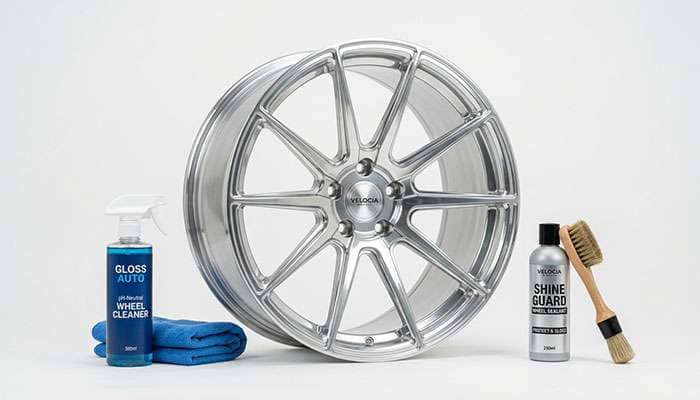
Wash monthly, more often in winter. Brake dust is mildly corrosive and gets more aggressive the longer it sits on the finish. Salt residue accelerates corrosion under any compromised finish. A simple weekly rinse in winter and a full wash monthly is the single most impactful maintenance habit you can adopt.
Use the right cleaner. pH-neutral wheel cleaners only. Acidic cleaners ("wheel brighteners," strong solvents, anything that fizzes on aluminum) chemically attack the finish and shorten cosmetic lifespan dramatically. The bottle saying "safe for clear coat" usually means pH-neutral.
Seal the surface. A quality wheel sealant or ceramic coating applied 1-2 times per year creates a barrier between the finish and everything that wants to attack it. Ceramic coatings (the higher-end option) typically last 6-18 months per application; quality wheel waxes last 2-3 months. Either is dramatically better than nothing.
Inspect after every hard impact. Pothole, severe curb hit, anything that made a noise — pull the wheel and look for cracks, runout, and bent flanges. A 5-minute inspection catches most damage before it becomes catastrophic. The full maintenance regimen is laid out in our complete alloy wheel maintenance guide.
Match the wheel to the use case. The most common cause of premature wheel failure is buying the wrong wheel for the job. A budget cast wheel on a heavy SUV that sees rough roads is going to live a short, hard life. A forged wheel on a garage-kept weekend car is overkill that won't pay off. Match the construction tier to the actual workload.
Here's how the four construction types stack up across the metrics that drive purchase decisions.
Construction Type |
Typical Lifespan |
Failure Mode |
Weight |
Cost |
|---|---|---|---|---|
Steel |
15-25+ years |
Bends; rusts if paint breached |
Heaviest |
Lowest |
Cast Aluminum |
5-10 years finish, 15-20 years structural |
Cracks under impact; finish wear |
Moderate |
Low-moderate |
Flow-Formed |
8-12 years |
Better impact resistance than cast; finish wear |
Light |
Moderate |
Forged Aluminum |
12-20+ years |
Bends rather than cracks; minimal fatigue |
Lightest |
Highest |
Custom wheel lifespan isn't a single number — it's a range that depends on construction type, environment, and care. Steel wheels last 15-25+ years and survive impacts that destroy aluminum equivalents. Cast aluminum delivers 5-10 years of cosmetic life and can match the vehicle structurally if it never takes a serious hit. Flow-formed wheels add 30-50% to that durability for a moderate price increase. Forged wheels routinely cross the 15-year mark and often outlast the vehicle they're mounted on.
The most important decision happens at purchase. Match the construction tier to your actual driving conditions, plan for monthly washing and seasonal sealing, and inspect after every hard impact. Do that, and you'll push your wheels toward the long end of their lifespan range instead of the short one. Browse our full selection of custom wheels across every construction tier to find the right fit for your vehicle and budget.
Custom wheel lifespan ranges from 5 years to 25+ years depending on construction type. Steel wheels last 15-25+ years, cast aluminum 5-10 years for the finish and 15-20 years structurally if not impact-damaged, flow-formed 8-12 years, and forged aluminum 12-20+ years. Driving conditions, climate, and maintenance habits move you within those ranges.
Aluminum alloy wheels typically last 5-12 years for the finish and 15-20+ years structurally, depending on construction type. Cast alloy sits at the shorter end (5-10 years finish life), flow-formed delivers 8-12 years, and forged alloy can match or exceed the vehicle's lifespan at 15-20+ years. The biggest variable is impact damage from potholes and curbs, which can take any alloy wheel out of service in a single event.
Yes, significantly. Forged wheels routinely last 12-20+ years versus 5-10 years for cast wheels in typical service. The forging process aligns the metal grain structure and eliminates the porosity that makes cast wheels prone to cracking under impact. Many forged wheel manufacturers offer lifetime structural warranties, while cast wheels rarely come with structural warranties beyond 1-3 years.
Replace immediately if there's a structural crack of any size, a severe bend that affects tire-bead seating, visible pitting through the wheel barrel, or any prior structural weld repair. Refurbish (don't replace) for cosmetic damage like clear coat failure, light curb rash, or dull machined finishes — a quality refinish costs $100-200 per wheel and resets the cosmetic lifespan.
Cracked cast aluminum wheels should not be welded back into structural service — the weld zone becomes a guaranteed future failure point under impact loads. Most automakers and engineering bodies advise against welding structural cracks on cast wheels for safety reasons. Some shops will weld cosmetic cracks (non-load-bearing), but a structurally cracked wheel should be replaced.
Four factors dominate premature wheel failure: impact damage from potholes and curbs (the single biggest cause), corrosion from road salt and coastal humidity, metal fatigue from accumulated load cycles (faster on cast wheels with internal porosity), and finish degradation from acidic wheel cleaners and aggressive automatic car wash brushes. Lower-profile tires accelerate impact damage by reducing sidewall cushion.
Five habits move wheels toward the long end of their lifespan: wash monthly (weekly in winter), use only pH-neutral wheel cleaners, apply a wheel sealant or ceramic coating 1-2 times per year, inspect after every hard impact, and match the construction type to your actual driving conditions. The wrong wheel for the job is the most common reason owners see early failures.