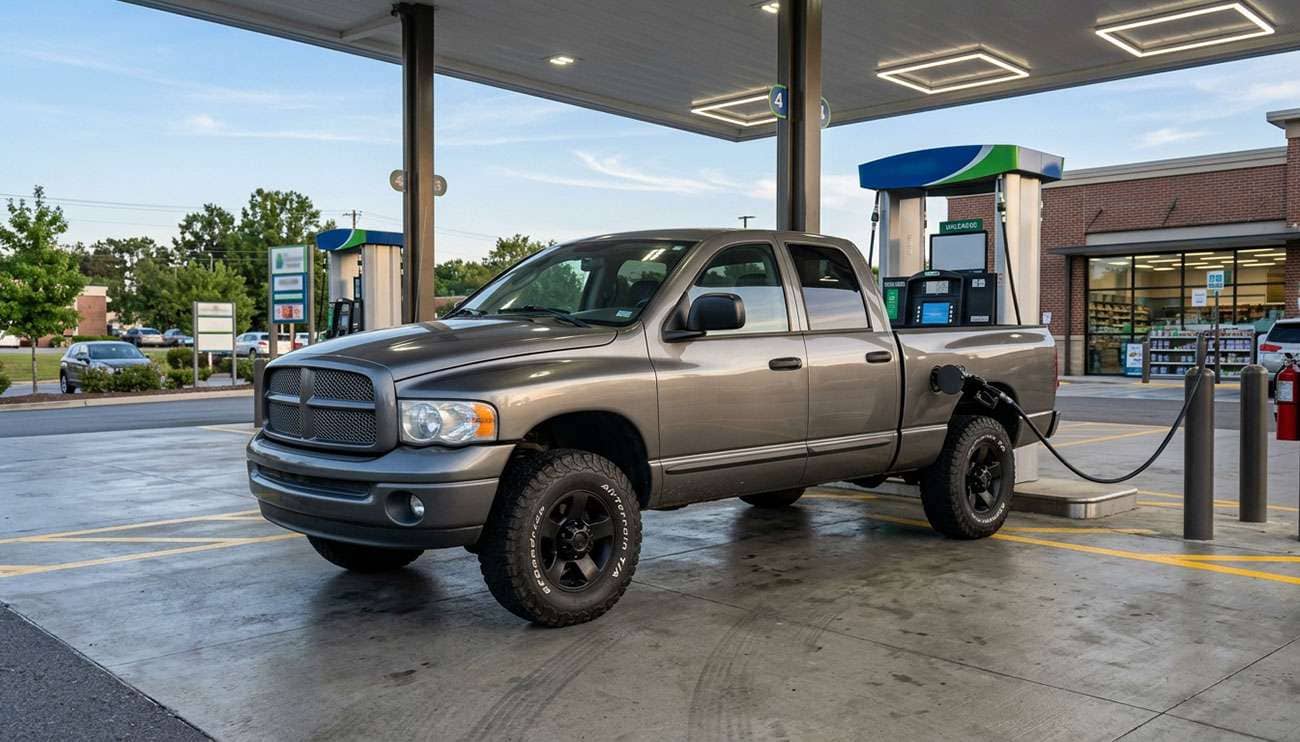
Short answer: yes, but the drivetrain is usually the smaller part of the loss. On EPA ratings for the 2026 F-150, going from 2WD to 4WD costs 0 to 1 mpg combined, depending on the engine. The bigger loss on most 4WD trucks comes from the tires on them. The EPA number was earned on low-rolling-resistance factory tires. Swap to all-terrains, LT construction or a bigger size, and that's where the rest of your mileage goes. If you went bigger, your odometer is also under-counting miles.
I'm Hank Feldman. I opened Performance Plus Tire in Long Beach in 1971, and this is one of the questions truck owners ask me most. Usually they've already decided the 4WD is to blame. Sometimes it is. More often, the four things touching the road are costing them more than the transfer case ever will. Most answers stop at "1 to 3 mpg." Let's find out which part of that number is yours.
Here's every place a 4WD truck loses fuel economy, what it costs and whether you can get it back. The numbers come from EPA ratings, published tire tests and the Department of Energy.
Source of the Loss |
What It Costs |
Why It Happens |
Can You Get It Back? |
|---|---|---|---|
4WD hardware, driving in 2WD |
0 to 1 mpg combined on the F-150; 2 mpg on the Tacoma |
Extra weight and a front driveline |
No, it comes with the truck |
Front hubs stuck engaged, or 4WD left on |
A noticeable loss, every mile |
Front axle, differential and driveshaft spin all day |
Yes, fix the hubs and drive in 2WD |
All-terrain tires, same size |
3.2% in a Tire Rack test |
Deeper, blockier tread flexes more |
Partly, with a lower-resistance tire |
Highest vs lowest rolling resistance tire |
2.4 mpg highway in a Consumer Reports test |
Tread and casing design |
Yes, at your next tire purchase |
33-inch tires plus off-road package |
2 more mpg highway on the F-150 Tremor |
Weight, taller gearing, more frontal area |
Partly; regearing fixes the gearing part |
Tires 5 psi low |
About 1% |
A soft tire flexes more as it rolls |
Yes, check pressure monthly |
Bigger tires, odometer not corrected |
Measured mpg reads 3% to 7% low |
The odometer under-counts miles |
Yes, recalibrate it |
Look at the right-hand column. The first row is the only one you're stuck with. Everything below it is a tire, a pressure gauge or a calibration, and every one of those is your call.
Less than most people think, and it depends on the truck. The fair comparison is the same truck with the same engine, rated by the EPA in 2WD and 4WD form. Here's what the 2026 F-150 shows:
Toyota's 2026 Tacoma numbers show a bigger gap. The SR5 with the 2.4L turbo and the automatic is rated 21 city, 26 highway and 23 combined as a 4x2, and 19, 24 and 21 as a 4x4. That's 2 mpg combined.
Part of that is plain weight. Toyota lists the 4x4 Double Cab at 4,485 to 4,720 pounds, against 4,265 to 4,365 for the 4x2 Double Cab. That's roughly 200 to 350 pounds more. The Department of Energy figures every extra 100 pounds costs about 1% in gas mileage. So weight alone covers a few percent, and the extra front driveline covers the rest.
Here's the part nobody puts in front of you. Every one of those EPA ratings was earned on the tires the truck left the factory with. The National Research Council's study of tires and fuel economy found that original-equipment tires are usually designed for lower rolling resistance than replacement tires, because the automaker needs them to meet federal fuel economy standards. Your first set of replacement tires is usually where the bigger loss starts.
Mostly on the highway, going by the EPA's numbers. Split the F-150 ratings into city and highway and the pattern is hard to miss:
The Tacoma SR5 splits it evenly, 2 mpg in town and 2 on the highway. The EPA doesn't break its numbers down by cause, so nobody can hand you an exact split. But the physics is no secret. At a steady 70, most of the engine's work goes into pushing air and keeping everything rolling, so anything that adds drag shows up there: a taller stance, more rubber flexing, more parts turning. In stop-and-go driving, more of the fuel goes into getting the truck's weight moving.
If you commute on the freeway, watch the highway number. It's the one most sensitive to the tire you pick, because rolling resistance runs every mile at full speed.
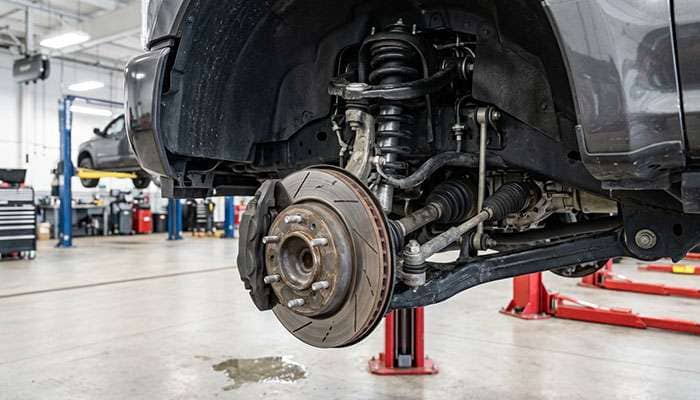
Yes, as long as the truck actually disconnects the front end. On a part-time 4WD truck, 2WD means the transfer case stops sending power forward. Many trucks go a step further and unhook the front wheels from the axle so nothing up front has to spin.
Ford's version is called Integrated Wheel Ends. On 2006 to 2020 F-150 4x4s other than the Raptor, engine vacuum pulls the front hubs apart in 2WD. With the hubs disengaged, the half shafts, the front differential parts and the front driveshaft stop turning. That cuts wear and saves fuel.
When that system fails, the truck pays for it every mile. Vacuum leaks let the hubs drag or stay engaged, and owners usually hear it before they notice it at the pump: a clicking, ratcheting or grinding from the front wheels in 2WD. Some aftermarket fixes lock the hubs in permanently, and trade magazines warn that can cost noticeable fuel mileage. If your 4WD truck's mileage fell off a cliff and the front end started making noise, check the hubs before you blame the engine.
Leaving the truck in 4WD costs you too. In 4-High, the whole front driveline turns, and on a part-time system you shouldn't be in 4-High on dry pavement anyway, because the driveline binds in turns. Automatic 4WD modes are built for mixed surfaces, but they still keep the front end ready to work. Use 2WD on dry pavement and save 4WD for when you need it.
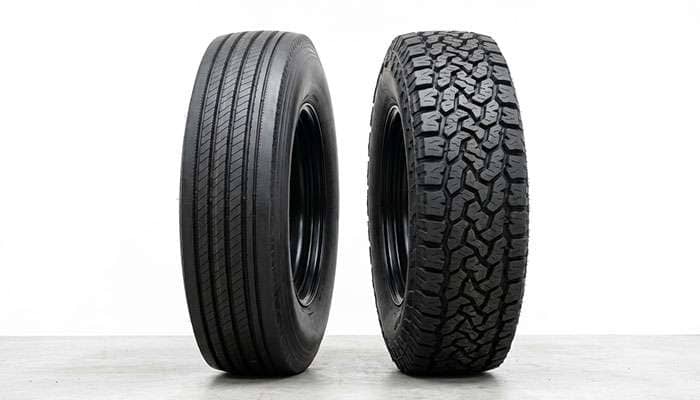
Yes, and on a lot of trucks the tires cost more than the 4WD system does. Two tests show how much.
In a 2015 test, Tire Rack ran the same SUV on two tires from the same brand: General's Grabber HTS60 highway tire and its Grabber AT2 all-terrain, both in 255/55R18. The truck got 22.7 mpg on the highway tires and 22.0 on the all-terrains. That's 0.7 mpg, or 3.2%, with nothing else changed.
In its 2008 truck tire tests, Consumer Reports rated 34 all-season and all-terrain tires in P265/70R17 and ran a Silverado on the best and worst for rolling resistance. The truck got 2.4 mpg better highway mileage on the Goodyear Wrangler SR-A all-season, the most efficient tire in the test, than on the General Grabber AT2 all-terrain, the least efficient. That's a bigger gap than the F-150's whole 4WD penalty.
Here's why. Most of the energy a tire wastes on pavement goes into flexing as it rolls. Big, open tread blocks squirm more than the ribs on a highway tire, and deeper tread gives them more rubber to flex. The National Research Council's report ties about 2/32 of an inch of new-tire tread depth to roughly 10% of rolling resistance, and a 10% change in rolling resistance to about 1% to 2% in fuel economy. All-terrains usually start out deeper than highway tires. Mud-terrains go further on both counts, with bigger voids, taller blocks and deeper tread, so expect them to cost more than an all-terrain.
That doesn't mean you shouldn't run them. If you need the traction, run them. Just don't put mud-terrains on a truck that sees dirt twice a year and then blame the transfer case. My all-terrain vs mud-terrain comparison helps you pick the least tire that does the job, and my guide to daily driving on off-road tires covers what you give up on pavement.
They usually make it harder to hold onto your mileage. An LT tire is built with a heavier casing to carry more load at higher pressure. That's exactly what you want for towing, hauling or rocky trails. You're also rolling more rubber down the highway than the passenger-construction tire the truck came with.
Size pushes you into LT whether you planned on it or not. I pulled the current market in the F-150's sizes. In 275/65R18, a common factory size, about half the tires on the market are LT construction, so you can still pick a passenger or XL highway tire. Step up to 275/70R18, the 33-inch size the F-150 Tremor runs, and nearly every tire on the market is LT. Going bigger usually means going heavier-duty too.
The other trap is pressure. An LT tire set to the passenger placard number is often under-inflated for the load it's carrying, and under-inflation means more rolling resistance. Set LT tires from a load and inflation table, not the door sticker. My P-metric vs LT tire guide walks through it.
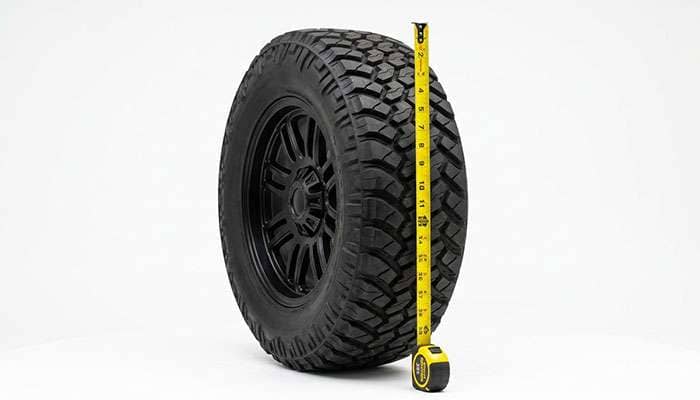
On the EPA's own numbers, yes. The F-150 Tremor is a 4WD F-150 with 33-inch 275/70R18 all-terrain tires and Ford's off-road package. With the 3.5L EcoBoost it's rated 16 city, 21 highway and 18 combined. Line it up against the same engine:
The 4WD system cost 2 mpg on the highway. The Tremor package cost another 2. To be fair to Ford, the Tremor adds more than tires, including suspension, skid plates and a locking rear differential. But the tires and the extra height are the parts working against you at 70 mph.
Three things happen when you go bigger:
Because part of the loss you're seeing isn't real. Your odometer counts wheel revolutions and multiplies by the factory tire's circumference. A taller tire covers more ground per turn, so the odometer under-counts the miles. If you figure mileage the old way, miles on the trip meter divided by gallons at the pump, you're dividing a short number by a true one.
Here's the math on a common swap. Going from 265/70R17, about 31.6 inches tall, to 285/70R17, about 32.7 inches, is roughly 3.5% taller. Drive 100 real miles and the odometer shows about 96.6. Go to 285/75R17, about 33.8 inches, and it's 7% taller. Now 100 real miles reads about 93.4.
Say the truck on those 33.8-inch tires is really getting 18.0 mpg. Your fill-up math says 16.8. That's 1.2 mpg of loss that's only on paper. The dash computer has the same problem, because it uses the same wheel-speed signal. My guide to bigger tires and your speedometer covers how to recalibrate. Once you do, your mileage figures come out right and your speedometer stops reading slow.
It matters on every vehicle, but 4WD trucks are where I see it ignored the most. The Department of Energy puts the loss at about 0.2% of gas mileage for every 1 psi drop in the average pressure of all four tires. The National Research Council's report found that for typical passenger tires, each 1 psi drop raises rolling resistance by about 1.4%.
Trucks get hit three ways. First, owners air down for the trail and forget to air back up. Second, big tires hold a lot of air and lose pressure slowly, so nobody notices. Third, people put LT tires on and run them at the passenger number on the door. Five psi low across the board costs you about 1%. That's small in one tank and adds up over a year. My guide on tire pressure and gas mileage has the details.
This is harder than it should be, because nobody prints the number you want on the tire. The UTQG grades molded into a passenger tire's sidewall cover treadwear, traction and temperature. There's no rolling resistance grade. Back in 2006, the National Research Council's committee observed that consumers had little practical way to judge how a tire would affect their fuel economy, and on the sidewall, that's still true.
It's worth the effort, though. The same report found rolling resistance uses about a third of the energy that actually reaches the wheels, with air drag and braking taking the rest. Here's how I'd shop for a 4WD truck that mostly lives on pavement:
Let's put dollars on it. This table uses the 3.5L F-150's EPA combined ratings, 15,000 miles a year and gas at $4.50 a gallon. The last two rows take the 4WD truck and apply Tire Rack's 3.2% all-terrain loss, then the Department of Energy's 1% for running 5 psi low.
Setup |
MPG |
Gallons a Year |
Fuel Cost a Year |
Extra vs 2WD |
|---|---|---|---|---|
2WD, factory tires |
20 |
750 |
$3,375 |
- |
4WD, factory tires |
19 |
789 |
$3,553 |
$178 |
4WD on all-terrains, same size |
18.4 |
816 |
$3,670 |
$295 |
4WD on all-terrains, 5 psi low |
18.2 |
824 |
$3,707 |
$332 |
Tremor, 33-inch all-terrains (EPA) |
18 |
833 |
$3,750 |
$375 |
Read it from the top. The 4WD system costs about $178 a year on this truck. Tires and pressure can nearly double that before you've touched the size. If you pay $4.50 a gallon and drive 15,000 miles, every 1 mpg in this range is worth roughly $180 to $200 a year. That makes it worth comparing rolling resistance when you buy tires, not just tread looks.
Lost mileage on a 4WD truck usually builds one step at a time:
The first three steps are tire decisions. The cheapest place to stop the slide is your next set of tires, bought for the miles you actually drive.
When it's time for tires, start with our truck tires and compare tread type and load range in your exact size.
Yes, 4WD gets worse gas mileage than 2WD, but on a modern truck the hardware usually costs 0 to 2 mpg, and sometimes nothing at all on the EPA sticker. The bigger losses ride on what you bolt on after: all-terrain or mud-terrain tread, LT construction, a taller size and pressure nobody checks. If you went bigger without recalibrating, some of the loss you're measuring isn't real. Keep the front end disconnecting in 2WD, set your pressures right, and buy the least tire your driving needs. That gets back most of the mileage people blame on four-wheel drive.
Usually a little. On 2026 EPA ratings, the F-150 loses 0 to 1 mpg combined going from 2WD to 4WD depending on the engine, and the Tacoma SR5 loses 2. The 4WD version is heavier and carries a front driveline. Tires, pressure and size changes often cost more than the 4WD hardware does.
Yes. In 4-High, the front axle, differential and driveshaft are all turning and doing work. On a part-time system you also shouldn't use 4-High on dry pavement, because the driveline binds in turns. Drive in 2WD on dry roads and use 4-High for loose or slippery surfaces.
It depends on the tire. Tire Rack measured 3.2%, or 0.7 mpg, going from a highway tire to an all-terrain from the same brand in the same size. Consumer Reports measured 2.4 mpg on the highway between the most and least efficient truck tires it tested. Mud-terrains generally cost more than all-terrains.
Yes. The F-150 Tremor, a 4WD F-150 on 33-inch all-terrains, is rated 21 mpg highway with the 3.5L EcoBoost, against 23 for a regular 4WD F-150 with the same engine. Weight, taller effective gearing and a taller stance all play a part. If you don't recalibrate, your odometer will also make the loss look bigger than it is.
On a part-time system, yes. Without a center differential, 4WD binds the driveline on dry pavement and wears parts. Full-time 4WD and automatic 4WD modes are built for any surface, but keeping the front driveline working still costs some fuel. Use the mode your owner's manual calls for on the surface you're on.
Usually slightly, for the same reasons as 4WD: extra weight and a second driven axle. Many newer AWD systems can disconnect the rear driveline when it isn't needed, which narrows the gap. As with trucks, tires and pressure often matter as much as the drivetrain.