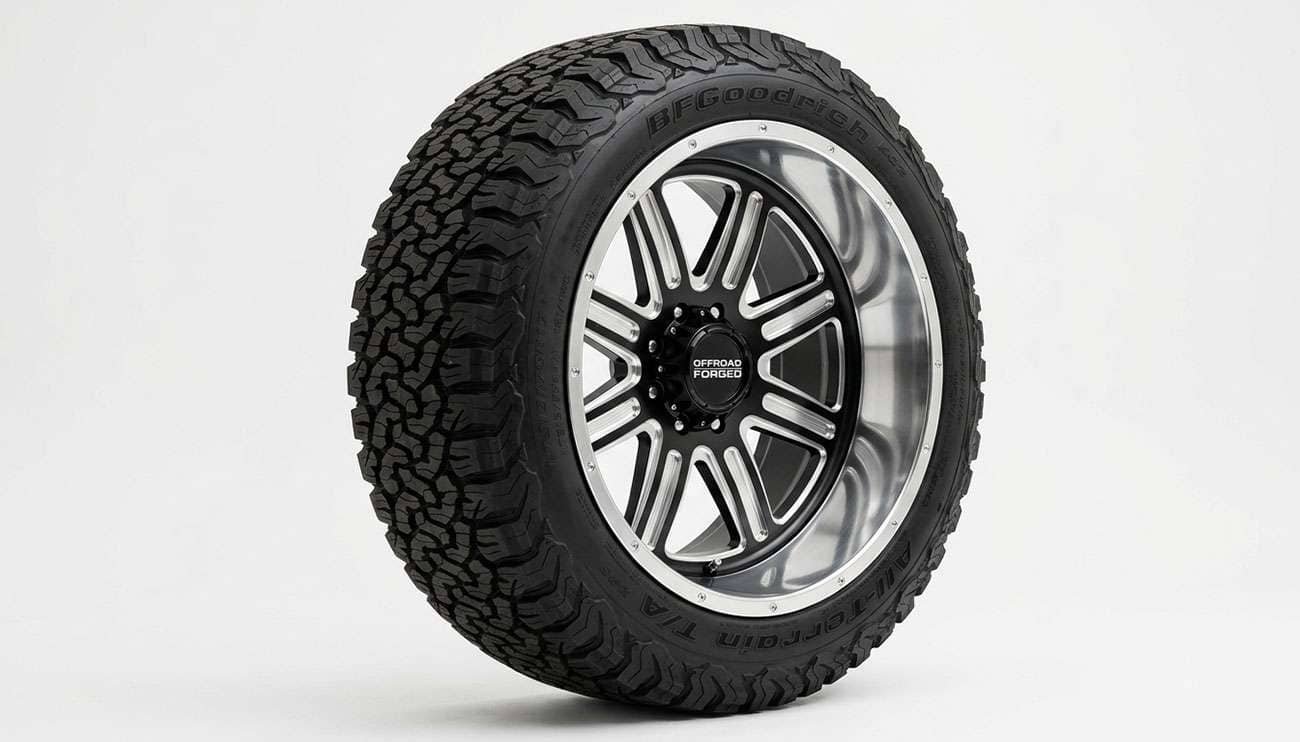
Yes. 22x10 is one of the most heavily produced sizes in the aftermarket, and just about every major wheel house builds it. That is the easy half of the answer and it is where most articles stop.
Here is the part that actually costs people money. In this size the offset runs from roughly negative 146 all the way to positive 60. That is over eight inches of difference in where the same nominal 22x10 sits relative to your hub. Two wheels can both say 22x10 on the box and end up three inches apart at the fender lip. When somebody calls the shop and says "do they make 22x10," what they usually mean is "do they make 22x10 that fits my truck," and those are very different questions.
Offset Range |
Backspacing on a 22x10 |
Where the Wheel Sits |
Typical Application |
|---|---|---|---|
-76 to -44 |
2.5 to 3.75 inch |
Pushed way out, heavy poke past the fender |
Lifted trucks with flares, show builds, wide-body |
-30 to -12 |
4.3 to 5.0 inch |
Flush to slightly proud of the fender |
Half-ton and heavy-duty trucks, the volume look |
-10 to +12 |
5.1 to 6.0 inch |
Roughly centered on the hub |
SUVs, full-size trucks staying near stock width |
+18 to +50 |
6.2 to 7.5 inch |
Tucked in toward the suspension |
OE replicas, luxury SUVs, European platforms |
Three quarters of the 22x10 wheels on the market run negative offset, and well over half of those land somewhere between negative 30 and negative 10. That tells you what most of this size is built for: trucks, and specifically the flush-to-slightly-aggressive look. If you are shopping for a European SUV that wants a positive offset in the twenties or thirties, that shelf exists but it is a lot narrower.
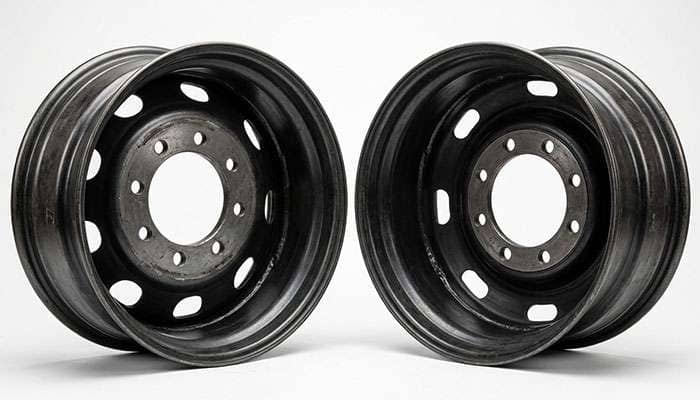
The math is simple enough to do on a napkin, and I have done it on a napkin more than once. Backspacing in inches equals the rim width plus one, divided by two, plus the offset divided by 25.4. On a 22x10 that first part is always 5.5. So a negative 18 offset gives you 4.79 inches of backspacing. A positive 30 gives you 6.68. Same wheel width, nearly two inches of difference in how much room you have between the wheel and your upper control arm.
Bolt pattern is the third leg. This size gets drilled in something like two dozen different patterns, from 5x114.3 on the light end through 8x180 for heavy-duty trucks, and a good chunk of the market ships as blank five-lug for custom drilling. If you want the full picture on how these three specs interact, our guide to wheel offset, backspacing and bolt patterns lays it out properly.
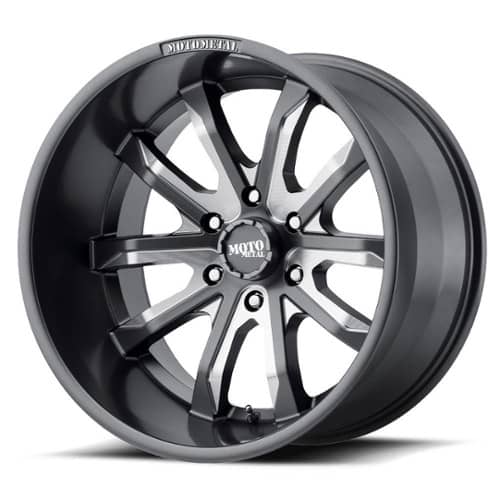
The Moto Metal MO983 Dagger at 22x10 with a negative 18 offset in 6x135 is about as representative as this size gets. Fits an F-150, sits flush to just proud of the fender, 2,500 lb load rating, 4.79 inches of backspacing, and it starts around $158.67 a wheel. If somebody walks in and says "22x10 for my truck" without any other detail, this is the shape of what they are describing.
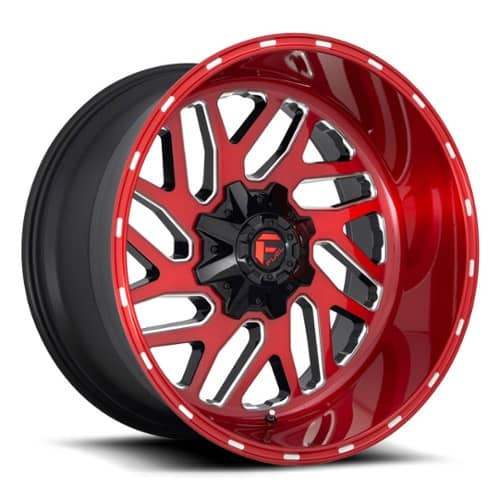
Step up to a heavy-duty truck and you are looking at something like the Fuel Triton D691 in 8x170 at negative 18, around $190.58. Same width, same offset, but a 3,700 lb load rating and a 125.1 mm hub bore because it is built to hang off a Super Duty. That load number is the difference, and we will come back to it.
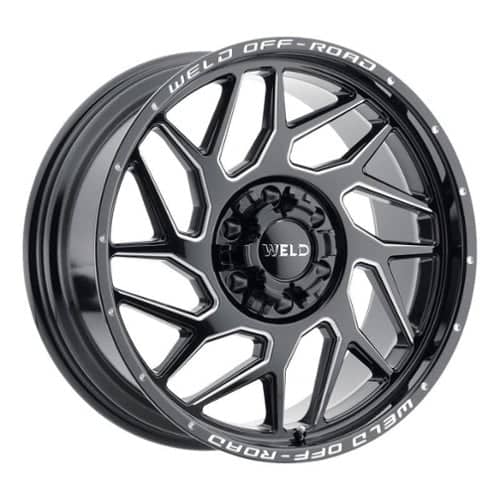
On the other side, the Weld Off-Road Fulcrum W117 runs a positive 13 offset in 5x127 and 5x139.7 for around $122.50. Six inches of backspacing, tucked in closer to the suspension, and a much tamer stance. Same three numbers on the box. Completely different truck when it is bolted on.
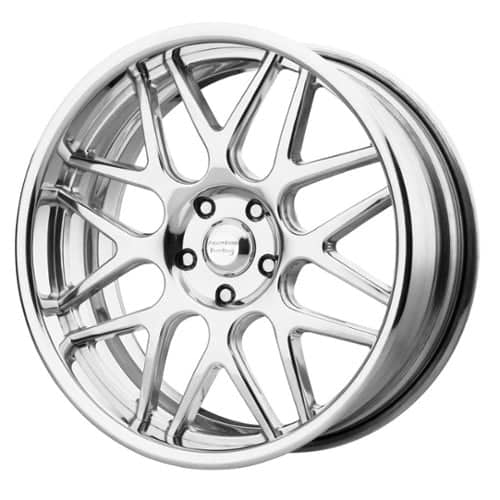
And then there is the deep end. The American Racing VN430 is a two-piece built to order with an offset that can be set as deep as negative 52, which puts backspacing down around 3.45 inches. That is a purpose-built stance wheel. It runs about $944 apiece and carries a 1,580 lb load rating, which is plenty for what it is meant to go on and nowhere near enough for a three-quarter-ton truck. Right wheel, wrong vehicle, and you have an expensive problem.
Rule of thumb the tire engineers use: the rim width should land somewhere around 80 to 90 percent of the tire's section width once you convert that section width to inches. Run the math backward for a 10-inch rim and you get a sweet spot roughly between 285 and 315 mm. The approved range stretches about an inch either side of that, so the practical window is 265 on the narrow end to 325 on the wide end.
Tire Size |
Overall Diameter |
Fit on a 10 Inch Rim |
What It Looks Like |
|---|---|---|---|
265/40R22 |
30.3 inch |
At the narrow limit |
Slightly stretched, sidewall pulled taut |
275/40R22 |
30.7 inch |
Acceptable |
Clean, mild stretch, common street setup |
285/45R22 |
32.1 inch |
Sweet spot |
The volume choice, biggest selection by far |
295/40R22 |
31.3 inch |
Sweet spot |
Squarer shoulder, thinner selection |
305/45R22 |
32.8 inch |
Wide end of the window |
Slight sidewall bulge, meaty stance |
33x12.50R22 |
33.0 inch |
Mid-range of approved |
True flotation look, off-road tread |
35x12.50R22 |
35.0 inch |
Mid-range of approved |
Aggressive, needs a lift on most trucks |
325/50R22 |
34.8 inch |
At or just past the wide limit |
Noticeable bulge, check the data sheet first |
If I had to pick one and walk away, it is 285/45R22. It sits square in the middle of the approved range for a 10-inch rim, and it has more tire models available than anything else in the 22-inch class by a wide margin. That matters more than people think. Being able to choose between a quiet highway tread and an aggressive all-terrain in the same size is worth a lot.
One thing worth knowing: every half inch of rim width you add pushes the tire's measured section width out about 5 mm, or two tenths of an inch. So a 285 mounted on a 10-inch rim measures wider than the same 285 on a 9-inch. Tire Rack publishes this as an industry rule of thumb and it holds up in the shop. That is why a tire can look completely different on two trucks running the same size. Our breakdown of choosing tire size for your wheel width gets into the specifics.
In 22-inch, the biggest commonly stocked tires are 37x13.50R22 and 375/45R22, both landing right around 37 inches tall. There are 40-inch and larger tires built on 22-inch rims, but you are into specialty territory where selection collapses to a handful of models.
Here is the catch, and it is the reason this question belongs in a 22x10 article. A 37x13.50R22 wants a rim between roughly 11 and 12 inches wide. Bolt a 13.50-wide flotation tire onto a 10-inch rim and you are below the tire's minimum approved width. The sidewalls pinch inward, the tread crowns in the middle, the shoulders stop carrying their share of the load, and you wear out the center of the tire while the edges stay fresh.
If You Want This Tire |
You Need This Rim Width |
Does a 22x10 Work? |
|---|---|---|
33x12.50R22 |
8.5 to 11 inch |
Yes, sits mid-range |
35x12.50R22 |
8.5 to 11 inch |
Yes, sits mid-range |
37x12.50R22 |
8.5 to 11 inch |
Yes, but clearance becomes the limit |
37x13.50R22 |
11 to 12 inch |
No, below minimum width |
325/50R22 |
10 to 11.5 inch |
At the minimum, verify the data sheet |
So the honest answer is that the biggest tire your 22x10 can carry is around a 37x12.50R22, and even then the limiting factor stops being the wheel and becomes your fender, your lift and your turning radius. If you are set on a 13.50-wide tire, buy a 22x12 and be done with it. Our piece on what 22x12 actually means covers that jump.
Practically speaking, 255 mm is about as narrow as you should go on a 10-inch rim, and 265 is the sensible floor. Below that you are stretching the tire, which means the sidewall gets pulled outward toward the rim lip instead of curving naturally.
People do go narrower. There is a whole stance scene built on it. But you should know what you are trading:
I have no interest in telling anybody how to build their truck. But I will tell you what I tell people at the counter: if the tire spec sheet says the approved rim range tops out at 9.5 inches and you are putting it on a 10, you are past the line the engineers drew. Sometimes that is fine. On a daily driver hauling your family, I would not.
I have been putting wheels on trucks for a long time and 22x10 is a size I have a lot of respect for. It is wide enough to look like something and narrow enough to still behave. That said, nothing is free, and a lot of what applies here applies to the whole diameter class, which we covered in our piece on the benefits of 22 inch wheels.
That last one is the one people underestimate. Every millimeter of negative offset moves the tire's centerline further from the bearing, and the bearing feels that as increased load on every corner and every pothole. Our rundown of the problems that come with incorrect wheel offset goes through the failure modes.
Same 10-inch width, different diameter, and the tire width rules do not change at all. A 20x10 takes the same 265 to 325 mm window a 22x10 does. What changes is the sidewall height and the tire selection.
Tire Size on a 20x10 |
Overall Diameter |
Best For |
|---|---|---|
275/55R20 |
31.9 inch |
Stock-height half-ton, comfortable highway ride |
285/55R20 |
32.3 inch |
The most popular 20-inch truck size |
305/55R20 |
33.2 inch |
Mild lift, wide stance, good tread choice |
33x12.50R20 |
33.0 inch |
Off-road builds, leveling kit territory |
35x12.50R20 |
35.0 inch |
Lifted trucks, aggressive all-terrain and mud |
The real advantage of a 20x10 over a 22x10 is sidewall. On a 33-inch tire, a 20-inch rim leaves you 6.5 inches of sidewall versus 5.5 on a 22. That extra inch is the difference between feeling a pothole and bending a wheel on one. If your truck actually works for a living or sees dirt roads, I would take the 20 every time and let the 22 go to the pavement queens. We covered the 20x10 in detail in our piece on how big 20x10 wheels actually are.
Here is what nearly gets skipped in every 22x10 conversation I have ever had. Wheels have a load rating, and in this size that rating runs from under 700 lbs on the light end to 4,000 lbs on the heavy end. Same 22x10. Nearly a six-to-one spread.
That means you can buy a beautiful, expensive, correctly-drilled 22x10 that is not rated to carry your truck. The bolt pattern will match. It will torque down. It will look right in the driveway. And it is structurally the wrong part.
Wheel Load Rating |
Capacity Per Set of Four |
What It Is Built For |
|---|---|---|
1,500 to 1,900 lbs |
6,000 to 7,600 lbs |
Cars, light SUVs, show and cruise builds |
2,000 to 2,500 lbs |
8,000 to 10,000 lbs |
Half-ton trucks and full-size SUVs, the volume band |
3,600 to 4,000 lbs |
14,400 to 16,000 lbs |
Three-quarter ton and one-ton, towing and hauling |
The rule is the same one that governs tires. Find your gross axle weight rating on the driver's door placard, divide by two, and every wheel you buy needs to meet or beat that number. You can go above it all day. You cannot go below it. SAE publishes the test standards these ratings come from, and the Tire Industry Association teaches the same floor to every technician who goes through their certification.
Look back at those two wheels earlier in this article. The Fuel Triton in 8x170 carries 3,700 lbs. The American Racing two-piece carries 1,580. Both are 22x10. One belongs under a Super Duty and the other absolutely does not, and nothing on the outside of the wheel tells you which is which. You have to read the spec.
Seven steps. Do them in this order and you will not be the guy sending wheels back.
Step 1: Get your bolt pattern exact. Not "six lug." The actual pattern, like 6x135 or 6x139.7 or 8x180. Those first two look nearly identical on the bench and will not interchange.
Step 2: Read the gross axle weight rating off your door placard. Divide by two. That is your minimum wheel load rating per corner, and it is not negotiable.
Step 3: Measure what you have now. Backspacing on your current wheels, and how much space sits between your tire sidewall and the fender lip, and between the tire and your suspension components at full lock. Write both down.
Step 4: Pick your offset from those measurements, not from a photo. A truck that looks right in somebody's post might be lifted, might have flares, might have trimmed fenders. Every inch you move the wheel outward is an inch of fender clearance you spend. Our full explanation of wheel offset walks through how to translate your measurements into a target number.
Step 5: Check the hub bore. In this size hub bores range from around 54 mm up past 125 mm. If the wheel bore is larger than your hub, you need hub-centric rings. Skipping them is the most common cause of a vibration that no amount of balancing will fix.
Step 6: Pick your tire from the approved rim width range, not from what looks good. On a 10-inch rim that is roughly 265 to 325 mm, with 285 to 305 the safe middle. Pull the actual spec sheet for the model you want. Two tires with the same size marking can have different approved ranges.
Step 7: Confirm you have the right lug hardware. Aftermarket wheels frequently need a different seat type than factory. Conical, ball or mag seat, and the wrong one will not clamp properly no matter how hard you torque it.
If you want to browse what is actually available, our 22x10 wheel selection is filterable by bolt pattern, offset and finish.
Yes, they make 22x10 wheels, and they make a lot of them. But 22x10 by itself is not a part number, it is a starting point. The offset is what decides whether the wheel tucks under your fender or hangs three inches past it, and in this size that number swings across more than eight inches of range. The load rating is what decides whether it belongs under your truck at all, and it varies by nearly six to one within the same size.
Get those two right and the rest is taste. Get either one wrong and you will find out the hard way, usually at highway speed or in a fender well full of shredded rubber. Read the placard, do the backspacing math, check the load rating, and then go pick the finish you like. That is the whole job.
Yes. 22x10 is one of the highest-volume sizes in the aftermarket and nearly every major wheel manufacturer builds it, across roughly two dozen bolt patterns. The harder question is which 22x10 fits your vehicle, because offset in this size ranges from about negative 146 to positive 60. That is over eight inches of difference in where the same nominal wheel sits relative to your hub.
The practical window is roughly 265 mm to 325 mm, with 285 to 305 sitting in the safe middle. The rule of thumb is that rim width should be about 80 to 90 percent of the tire section width converted to inches. 285/45R22 is the most popular choice and has the deepest selection of tread patterns. Flotation sizes like 33x12.50R22 and 35x12.50R22 also fit a 10-inch rim comfortably.
The largest commonly available 22-inch tires are 37x13.50R22 and 375/45R22, both around 37 inches tall. On a 22x10 specifically, the practical maximum is about 37x12.50R22, because a 13.50-wide flotation tire requires an 11 to 12 inch rim. Past that point your fender, lift height and turning radius become the real limits rather than the wheel.
About 255 mm is the practical floor, with 265 mm being the sensible minimum for a daily driver. Going narrower stretches the tire, which pulls the sidewall taut toward the rim lip, puts the bead under constant tension, exposes your rim lip to curb damage and narrows the contact patch. It also puts you outside the tire manufacturer's approved fitment range.
The gains are stance that fills the wheel well without constant rubbing, a deep tire selection in the 285 and 305 sizes, room for large brake calipers, and sharper steering from the shorter sidewall. The costs are a firmer ride, significant unsprung weight, higher pothole and bent-rim risk from the short sidewall, higher tire prices than 20-inch, and added stress on wheel bearings if you run aggressive negative offset.
The same 265 to 325 mm width window applies, since the rim width is identical. Common choices are 275/55R20, 285/55R20 and 305/55R20 for street trucks, and 33x12.50R20 or 35x12.50R20 for off-road builds. The advantage over a 22x10 is roughly an extra inch of sidewall at the same overall tire diameter, which means better impact absorption and less bent-rim risk.
It depends entirely on your vehicle and how much fender clearance you have. Most half-ton and heavy-duty trucks land between negative 30 and negative 12, which gives a flush to slightly aggressive stance. Negative 44 and deeper pushes well past the fender and generally requires flares or a lift. Positive 18 to positive 50 tucks the wheel in and suits OE replicas and European SUVs. Measure your current backspacing and fender gap before choosing.