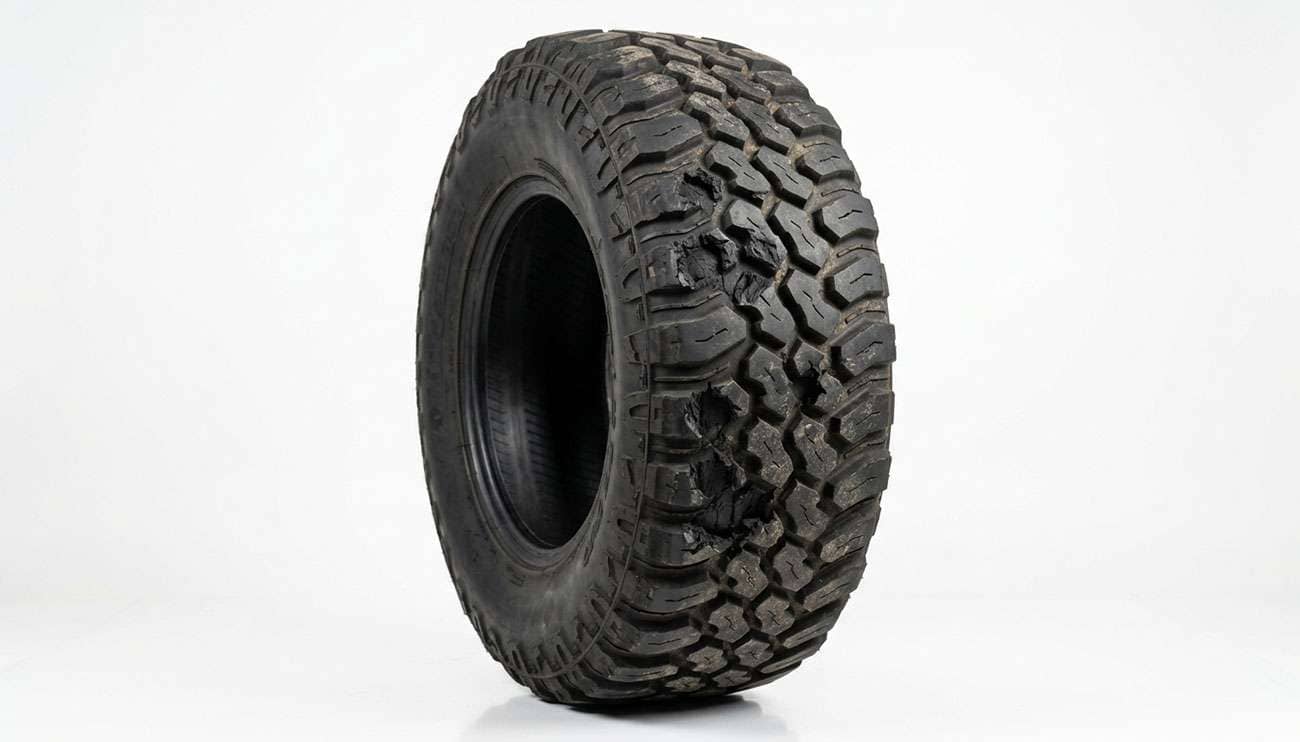
Yes, if the chunk stops above the floor of the tread groove. No, if it goes past it. The groove floor is the last line of tread rubber above the cushion that protects your steel belts, and it is the one line almost nobody tells you to look for. Most answers to this question stop at "it depends" and never say what it depends on. It depends on three things: how deep the chunk goes relative to that floor, what compound you are running, and what surface keeps taking bites out of it.
I have been pulling chunked tires off trucks, Jeeps and garage-kept collector cars at our shop in Long Beach since 1971, and the customer always asks the same thing: is it going to blow? Sometimes it is ugly and fine. Sometimes the tire should not have made the drive in. The difference is not how many chunks there are. It is how deep the worst one goes, and a cheap tread depth gauge tells you in two minutes.
Find the deepest chunk on the tire and look at the bottom of the hole. Then find your row.
What You See |
Where the Chunk Stops |
Safe to Drive? |
What to Do |
|---|---|---|---|
Chips and nicks on the faces of the lugs, groove floors untouched |
Wear rubber only |
Yes |
Keep driving, recheck monthly, find the cause |
Lug edges or whole lugs torn off, groove floor still intact |
Above the groove floor |
Yes, at normal speeds |
Recheck weekly, watch for vibration, plan replacement if chunks keep coming |
Groove floor torn out, smoother rubber showing at the bottom |
At the groove floor, into the undertread |
Short term only |
Replace this week; no towing, no heavy loads, no sustained highway speed |
Woven fabric texture or cords visible in the crater |
Below the floor, at the cap ply or belt |
No |
Spare on, or a slow, direct drive to a shop |
Bright or rusty steel wire showing |
Steel belt |
No |
Spare on; the tire is finished |
Chunk with a bulge, an edge you can lift, or damage in the sidewall |
Separation or structural damage |
No |
Spare on, replace the tire |
Two notes. A chunk in the top rows can work its way into the bottom rows if the road that took the first bite keeps working on it. And the table covers the tread face only. Shoulder and sidewall chunks follow different rules, covered below.
Cut a radial tire in half and you see layers. On top are the tread blocks, the wear rubber, designed to be used up mile by mile. The groove floor is where that wear rubber stops. Below it sits a layer of base rubber called the undertread, and below that the structure: on many passenger and performance tires a nylon cap ply, then two steel belts, then the body ply. The undertread cushions and protects the belt package. It was never meant to touch the road, and on most tires there is not much of it.
That is why the wear bars work the way they do. FMVSS 139 requires treadwear indicators that show when tread has worn to 1/16 of an inch, which is 2/32, and those bars rise from the groove floor. The industry already treats the floor as the finish line and stops you 2/32 short of it.
The trucking world says it more plainly. Under FMCSA regulation 49 CFR 393.75, a commercial vehicle cannot run on a tire with belt or ply material exposed through the tread. Fleet tire-condition charts use the base of the tread groove as the return-to-service line for cut and torn tread, and the Technology and Maintenance Council's Radial Tire Conditions Analysis Guide gives chunking tread its own entry. Your pickup is not a commercial truck, but the steel under its tread does not know the difference.
The mechanism is simple. Above the floor, a chunk is a traction and balance problem. Once it breaks through, water and grit reach the belt package, the steel rusts along its wires under the rubber where you cannot see it, and the crater edge becomes a stress riser that tears a little further with every revolution. That is how a chunk turns into a separation.
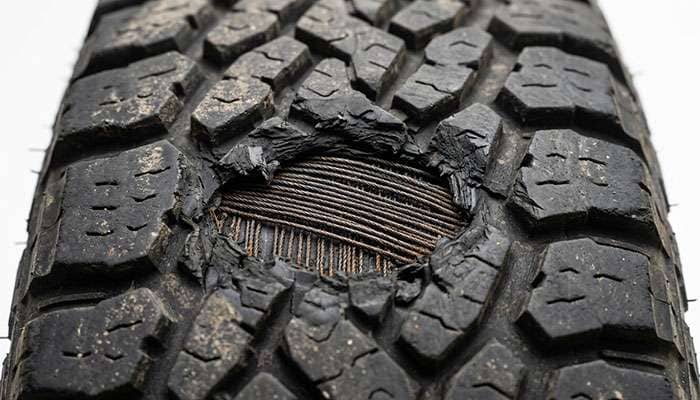
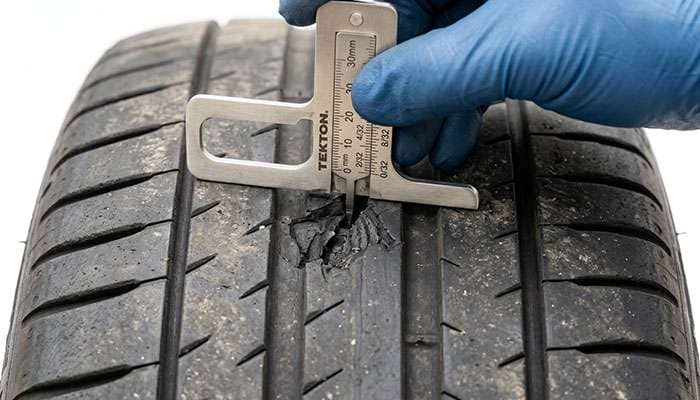
You need a tread depth gauge from any parts store. The penny trick tells you nothing about a crater. Take two readings:
If B is less than A, the chunk stopped above the floor. If B equals A, it reached the floor. If B is greater than A, it went past the floor and into the undertread, and what you are really measuring now is how close you are to the belts.
Then look at what the pin is touching. A shallow chunk bottoms out in the same rough black rubber as the rest of the lug. Undertread often looks smoother, because it was never meant to be exposed. A woven, crosshatched pattern is cap ply fabric. Bright or rusty wire is steel belt. No gauge handy? Those textures are your fallback.
While the gauge is out, check overall tread in a few grooves. If the tire is already near the wear bars, every chunk is closer to the floor than it looks. Our guide on what tread depth means it is time to replace tires walks through those numbers.
This is the part nobody puts in front of you. Whether a 6/32-deep chunk is cosmetic or structural depends on how deep the tread was to begin with, and new tread depth varies far more than most drivers realize. Here is where most tires in each category start, and what a 6/32 chunk leaves above the floor on a new tire:
Tire Type |
Typical New Tread Depth |
Usable Tread Before the Wear Bars |
Tread Left Under a 6/32 Chunk (New Tire) |
|---|---|---|---|
Max performance summer |
8/32 to 10/32 |
6/32 to 8/32 |
2/32 to 4/32 |
Passenger touring and high performance all-season |
10/32 to 11/32 |
8/32 to 9/32 |
4/32 to 5/32 |
P-metric highway terrain (SUV and crossover) |
10/32 to 12/32 |
8/32 to 10/32 |
4/32 to 6/32 |
P-metric all-terrain |
12/32 to 13/32 |
10/32 to 11/32 |
6/32 to 7/32 |
LT all-terrain |
16/32 to 18/32 |
14/32 to 16/32 |
10/32 to 12/32 |
LT mud-terrain |
18/32 to 21/32 |
16/32 to 19/32 |
12/32 to 15/32 |
The same chunk leaves 12/32 or more on a new LT mud-terrain and 2/32 to 4/32 on a new max performance summer tire. As the tire wears, those margins shrink, and a half-worn summer tire with a 6/32 chunk is sitting right at the floor.
That is the LT versus P-metric difference in practical terms. Light truck construction brings deeper tread and more plies, and that margin lets an off-road tire shrug off chunks that would retire a passenger tire. It is also why the gravel road that barely marks an LT all-terrain chews up the tires on the family crossover.
Every chunk needs a compound that can tear and a surface, load or temperature that tears it. Start with the rubber.
Mud-terrains use tall, widely spaced lugs so the voids can clean out. Those lugs get less support from their neighbors, so they flex more. On rock, a tall lug catches an edge and tears off at the base. On pavement, the flexing builds heat, and hot rubber tears more easily, which is why mud-terrains that live on the highway often chunk at the base of the shoulder lugs. If that is your truck, read our piece on daily driving off-road tires before you buy the next set.
All-terrains use tighter blocks that brace each other, much deeper tread than a passenger tire, and in many lines a compound blended to resist chips and cuts. Spin them on sharp rock or run them low under a heavy load and they will still chunk, but for mixed pavement and dirt they are usually the hardest tire to chunk.
Passenger compounds are tuned for wet grip, low rolling resistance and long life on pavement, not fresh-crushed rock. On a daily gravel road they chip at the block edges, and starting from 10/32 or 11/32, the chips do not have far to go.
Soft, sticky summer compounds chunk two ways. On a track or autocross course, a tire run hard before it is heat cycled, or at the wrong pressure, overheats at the surface and tears away in pieces. In the cold, the compound turns stiff. Michelin and GM both draw the line at 20 degrees F: below that, flexing a summer performance tire by driving, rolling or mounting it can crack the tread permanently. A cracked tread block is a chunk waiting to happen.
This one rolls into our shop constantly on collector cars and weekend trucks. The antioxidants and antiozonants that keep rubber flexible get used up over the years, faster in sun and heat, and the compound hardens. Hard rubber does not stretch over a rock. It cracks and lets go. I have watched beautiful cars with barely worn tread leave pieces of their tires in the lot on the first drive in years. That is a tire dry rot problem, not a road problem. Many vehicle manufacturers recommend replacing tires six years after the DOT build date, and most tire makers cap it at ten. A chunk on a tire past either number answers its own question.
The surface is the other half, and the worst ones are not always the ones that look rough.
Crushed rock keeps sharp, fractured edges until traffic rounds them off, so a freshly graveled road is a cutting surface. Packed roads and rounded river gravel are much kinder. If your chunking started right after the county laid new rock, you have found your cause.
Chip seal is loose stone rolled into liquid asphalt. Until it is swept and cured, it throws and catches stone, and it is a classic source of chipped passenger tread.
Shot rock, rebar, broken concrete and heavy loads, all at once. Fleet tire-condition charts trace multiple cuts and chunking to rough surfaces and call it a misapplication of the tread compound. The same charts flag stones that lodge in the grooves and drill toward the steel, which is why pulling stones is part of the inspection below.
Here the culprit is usually throttle and pressure. At full street pressure, the one lug that catches a ledge takes the whole load, and wheel spin tears it off. Aired down, the tread wraps over the rock instead of prying against it.
Smooth pavement chunks tires through heat, not cuts. Tall lugs, speed, heavy loads and low pressure all build heat, and this is where most mud-terrain owners pick up chunks they cannot explain. The same heat logic applies to performance tires on a track, where rough concrete autocross lots add a cutting surface on top.
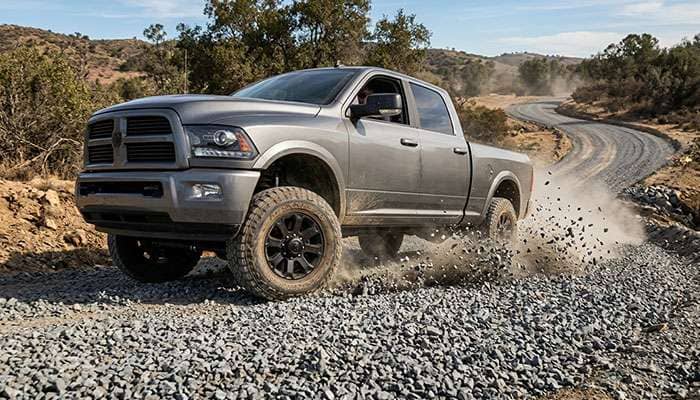
Put your compound and your surface together and the fix usually becomes obvious.
Your Tire |
Your Surface |
What Is Doing It |
What to Change |
|---|---|---|---|
Mud-terrain |
Mostly highway |
Heat building in tall, unsupported lugs |
Move to an LT all-terrain if you rarely see mud; set pressure for your actual load |
Mud-terrain or all-terrain |
Rock trails and ledges |
Lugs prying against edges, wheel spin |
Air down on the trail and ease off the throttle on ledges; the tire is not the problem |
Passenger all-season |
Daily gravel or chip seal |
Thin, pavement-tuned tread on a cutting surface |
An all-terrain with deeper tread and a chip-resistant compound |
Any LT tire |
Job sites, quarries, lease roads |
Compound mismatch with sharp rock under heavy load |
An LT all-terrain or commercial tread built for cut resistance, in a load range that covers what you haul |
Summer performance |
Track or autocross |
Surface overheating |
Heat cycle new tires, check pressures hot, consider a dedicated track set |
Summer performance |
Any road below 20 degrees F |
Cold compound cracking |
A winter or all-season set for the cold months |
Any tire six or more years old |
Any surface |
Hardened, aged compound |
Replace by date, not by tread |
I explain that pattern at the counter every week. Most chunking is not a bad tire. It is a good tire doing a job it was not compounded for. If your regular miles include gravel, chip seal or work sites, the usual fix is a set of all-terrain tires in LT construction, with the deeper tread margin from the earlier table and, in many lines, a chip-resistant compound. If you haul or tow on those roads, look at load range E for the added plies and casing strength.
If every chunk stops above the groove floor and the tire rolls smooth, yes. But highway speed is where a chunk below the floor is most dangerous. Tread temperature climbs with speed, putting the hottest part of the tire next to exposed structure. The tread pulls outward hard on every revolution, and a crater edge is where separation starts. And the consequences scale: shedding tread at 25 mph on a dirt road means changing a tire, while shedding it at 70 mph can take a fender liner, a brake line or your control of the vehicle with it.
So the rule is simple. Above the floor: drive normally and keep an eye on it. At the floor: surface streets and short trips only, no towing, no heavy loads, and the replacement goes on this week's list. Below the floor: the spare goes on, or you drive slowly and directly to a shop.
No. Repair standards from the U.S. Tire Manufacturers Association and the Tire Industry Association cover punctures, not missing rubber: tread area only, no larger than 1/4 inch in diameter, with a patch and plug unit installed from inside after the tire is demounted. There is no approved procedure for putting missing tread back on a passenger or light truck tire. For the full list of what a shop can and cannot fix, here is why a shop will refuse to patch your tire.
A shop can trim a torn flap so it stops catching and pull lodged stones out of the grooves. That is maintenance, not repair, and it does not change which row of the quick answer table you are in.
Everything above is about the tread face, where the belts sit under a cushion of rubber. The sidewall has no belts, just body ply cords under a thin skin that flexes with every revolution. A chunk torn from the shoulder lugs of an off-road tire is usually still tread rubber, so measure it the same way. A chunk or gouge in the sidewall itself is a different injury, and the groove floor rule does not apply. Our guide to tire sidewall damage covers how to tell a scuff from a structural injury. The short version: if you can see cords, the tire is done.
Chunks rarely stay the size they started. Here is the ladder.
The tire gets replaced either way. The only question is what else gets replaced with it.
Ten minutes in the driveway covers every tire on the vehicle.
A chunked tire runs from cosmetic to finished, and the line between them is the groove floor. Above it, you have a traction and balance problem you can drive on while you plan. At it, you have days. Below it, with fabric or steel showing, the tire should not be on the road.
Where that line sits depends on the tire, since a new LT mud-terrain carries several times the tread margin of a max performance summer tire. Whether the chunking keeps coming depends on compound and surface. Measure the worst chunk, check the date, and fix the mismatch that caused it, so you do not buy the same problem twice.
Yes, if every chunk stops above the floor of the tread grooves and the tire rolls without vibration. If a chunk reaches the groove floor, keep trips short and replace the tire soon. If fabric, cords or steel wire show at the bottom of a chunk, or there is a bulge, put the spare on.
A tread compound meeting a surface, load or temperature it was not built for. Common causes are passenger tires on fresh gravel or chip seal, mud-terrains running hot on the highway, wheel spin on sharp rock, low pressure under heavy loads, summer tires flexed below 20 degrees F, and aged, hardened rubber.
Only if the chunks stop above the groove floor and the tire is not vibrating. Highway speed adds heat and outward force, which is what turns a deep chunk into a tread separation. A chunk at or below the groove floor keeps the tire off the highway.
No. U.S. Tire Manufacturers Association and Tire Industry Association standards cover only tread-area punctures up to 1/4 inch in diameter. There is no approved repair for missing tread rubber, and a chunk that reaches the belts means the tire must be replaced.
Compare the chunk to the groove beside it with a tread depth gauge. Shallower than the groove, the tire can stay in service. As deep as the groove, replace it within days. Deeper than the groove, or showing fabric or wire, replace it now.
Usually, on pavement and gravel. All-terrain blocks are tighter and brace each other, and many lines use chip-resistant compounds. Mud-terrain lugs are taller and flex and heat up more at highway speed. On rock, either tire can chunk if it is spun against sharp edges at full street pressure.