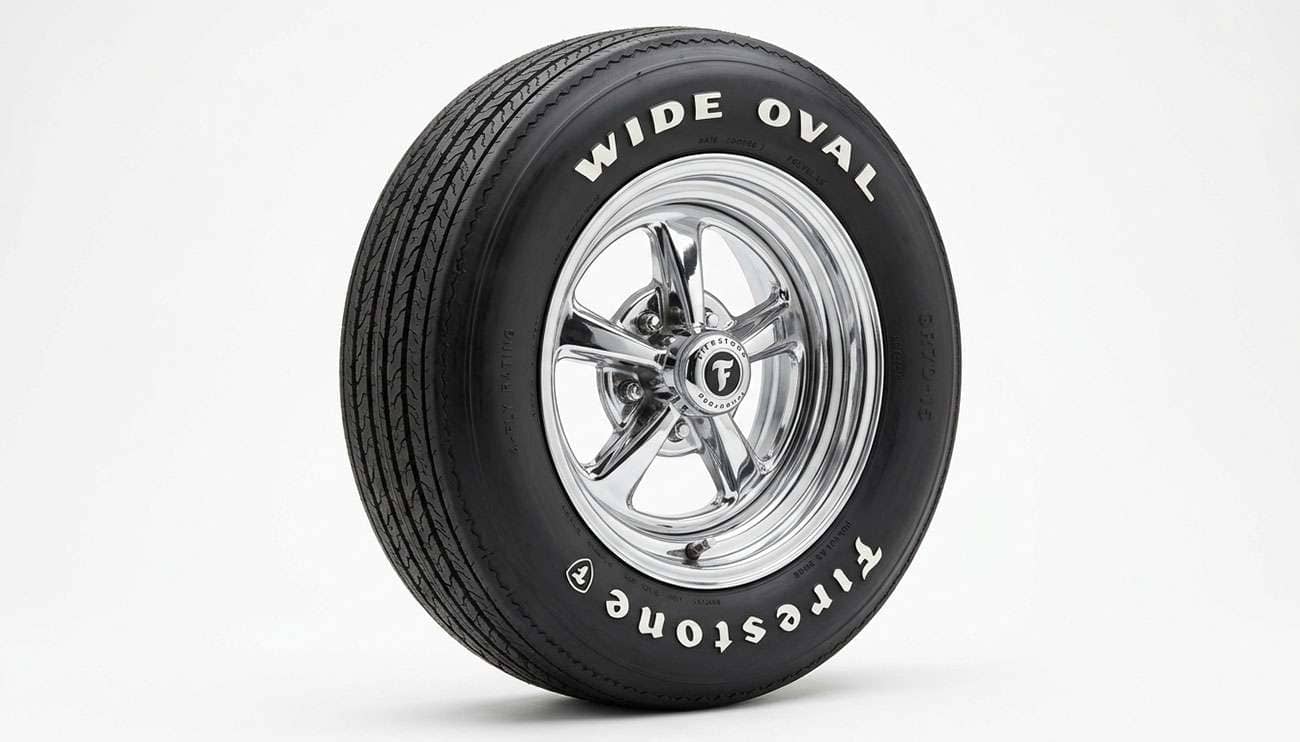
Wide Oval tires are the low-profile, wider-than-tall performance tires Firestone introduced for the 1967 model year, and they are the tire that put the muscle in muscle car. The name says it plain: the tread was wider and the sidewall was shorter than anything the average driver had seen, giving the tire a fat, oval cross-section instead of the tall, skinny doughnuts everybody rolled on in the early sixties. That extra rubber on the road meant more grip off the line, and the bold sidewall lettering meant everybody at the drive-in knew you meant business.
I have been fitting tires to hot rods and muscle cars since before some of you were born, and I can tell you the Wide Oval was a genuine turning point. Before it showed up, a GTO or a Chevelle came off the showroom floor on tires that would embarrass a grocery-getter. The Wide Oval gave those cars the stance and the traction the engines had been begging for. Today you can still buy them, made in the original molds, and they are one of the fastest ways to make a restored classic look exactly like it did the day it left the dealership.
Firestone started advertising the Super Sports Wide Oval in the summer of 1966, aimed squarely at the 1967 muscle cars and pony cars rolling into showrooms. The whole pitch was the shape. Firestone bragged about a revolutionary wide tread and an oval-shaped cross-section that worked out to roughly a 70 percent aspect ratio, meaning the sidewall stood about 70 percent as tall as the tread was wide. Compared to the 78-series and taller tires most family cars wore, that was low and mean.
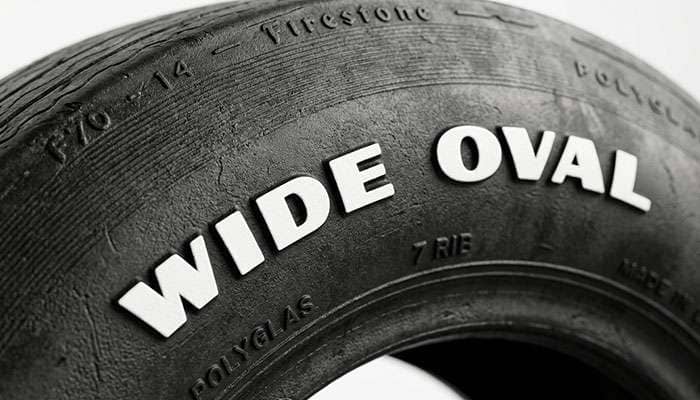
It was not just a marketing gimmick, either. Putting a wider contact patch on the ground gave those big-inch V8s something to bite. The Wide Oval also helped kick off a whole new way of calling out tire sizes, the alphanumeric system, which we will decode in a minute. Within a couple of years the Wide Oval look was everywhere, and every tire company was chasing Firestone with their own fat performance tire. When you see a period photo of a Woodward Avenue stoplight racer, odds are good there is a set of Wide Ovals hooked up under the back of it.
Here is where folks get tripped up. A Wide Oval is not sized like a modern tire. Instead of something like 225/70R15, you get a code like F70-14 or G70-15, and it throws people every time. The good news is it is dead simple once somebody shows you the trick.
The letter tells you the general size and load rating. Firestone ran them from A at the small end up to N at the big end, so an F is bigger and stronger than an E, a G is bigger than an F, and so on. The number is the aspect ratio, same idea as today: 70 means a 70-series profile, 60 means an even lower and wider 60-series. The last number is the wheel diameter in inches. So F70-14 is a mid-size, 70-series tire for a 14-inch wheel. If you want the full history on how these old codes came to be, we broke it all down in our guide to decoding antique tire sizes.
The part everybody actually wants is the modern equivalent, so you know what you are really buying. Here is a cross-reference for the popular muscle-car Wide Oval sizes:
Wide Oval Size |
Modern Metric Equivalent |
Typical Muscle-Car Fitment |
|---|---|---|
E70-14 |
205/70R14 |
Base V8 pony cars and intermediates |
F70-14 |
215/70R14 |
GTO, Chevelle SS, Mustang |
G70-14 |
225/70R14 |
Big-block intermediates and full-size |
F70-15 |
215/70R15 |
Corvette, high-performance 15-inch cars |
G70-15 |
225/70R15 |
Full-size Chevy, Monte Carlo SS 454 |
F60-15 |
235/60R15 |
Camaro Z28, Boss 302, Hemi cars |
L60-15 |
275/60R15 |
Day Two builds and wide rear setups |
That L60-15 is a good example of how these translate. It crosses right over to a modern 275/60R15, a fat rear tire that still looks period-correct but bolts on like anything else. If you are staring at that size wondering exactly what you are dealing with, we spelled it out in our piece on what a 275/60R15 is equivalent to. When the letter carries an R in front of the aspect ratio, like FR70-14, that R means it is a radial version, which brings us to the big question every restorer has to answer.
Back in the day, every Wide Oval was a bias-ply tire, built with cord plies that crisscross at about a 45-degree angle. That is the honest-to-goodness original construction, and it is what a concours judge wants to see under a numbers-matching car. The trade-off is that bias-ply tires ride a little firmer, they can follow ruts and grooves in the pavement, and they wear out faster than modern rubber.
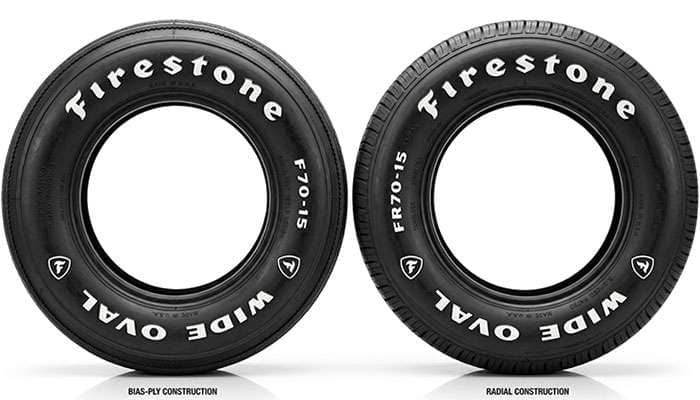
Then Coker Tire, the outfit that produces these under license from Firestone, did something clever. They started building a Wide Oval radial that keeps the exact vintage look, right down to the shoulder shape and the sidewall engraving and the red stripe, but underneath it is a modern steel-belted radial. As one of the Coker folks put it, it has yesterday's looks and tomorrow's ride. You get a smoother highway cruise, better handling, longer tread life, and a tire that tracks straight instead of wandering. Here is how the two stack up:
Feature |
Bias-Ply Wide Oval |
Radial Wide Oval |
|---|---|---|
Construction |
Crisscross plies at ~45 degrees |
Steel-belted radial plies |
Ride Quality |
Firmer, can wander on ruts |
Smoother, tracks straight |
Handling |
Vintage feel, more sidewall flex |
Modern grip and stability |
Tread Life |
Shorter |
Longer |
Concours Correctness |
100 percent period-correct |
Correct look, modern build |
Best For |
Bone-stock show cars |
Drivers and Day Two builds |
My rule of thumb after all these years is simple. If you are chasing trophies with an original-spec car, run the bias-ply and keep it honest. If you actually want to drive the thing on the highway and enjoy it, the radial is a no-brainer. For a deeper look at the whole argument, we laid out the full radial versus bias-ply pros and cons for classic cars.
Half the fun of a Wide Oval is the sidewall, because this is where your car gets its personality. Firestone and Coker offer them in a handful of classic styles, and the right one depends on what your car wore from the factory and what look you are after.
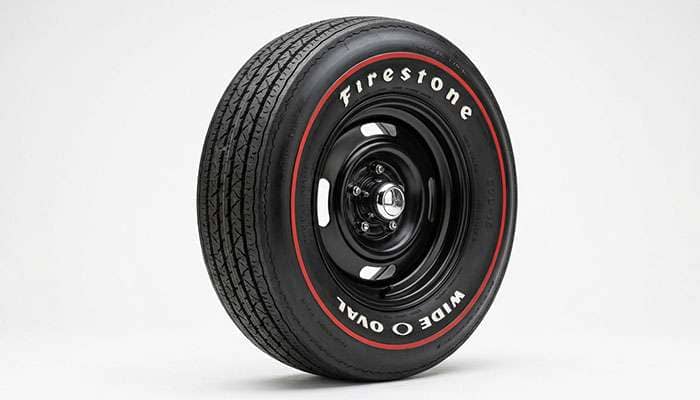
The redline is that thin 3/8-inch red stripe near the bead, and it was the hot upgrade when the muscle car era kicked off. It has serious wow factor and reads instantly as a late-sixties performance car. If you want to see how that stripe became a status symbol, we covered it in our rundown on what redline tires are. The raised white letter, or RWL, puts a bold Wide Oval logo in white right on the sidewall, and it became the signature look on Z28 Camaros, Trans Ams, and Boss Mustangs. Folks always ask which way those letters are supposed to face, and we settled that debate in our guide on which way raised white letters should face.
Plenty of muscle cars actually left the factory on whitewalls, and a pinstripe whitewall Wide Oval is a sharp, understated look for a stock restoration. If you are not sure how wide a stripe your car should wear, our whitewall width guide walks you through it. There is even a goldline option for the folks who want something a little different, matching the gold-stripe tires that showed up on a handful of premium cars. Any of these will transform a set of bare steel wheels into a proper period statement.
Wide Ovals were original equipment on a who's who of 1967 through 1974 muscle and pony cars. Pontiac GTOs, Chevelle SS models, Camaros including the Z28, Ford Mustangs and Boss variants, Corvettes, and Hemi-powered Mopars all wore them. Most of those cars ran F70-14 or G70-14 tires on tiny 14x6-inch wheels, with 15-inch fitments reserved for the special high-performance packages. If you want to nail down exactly what came on your car from the factory, our overview of factory muscle car tires is the place to start.
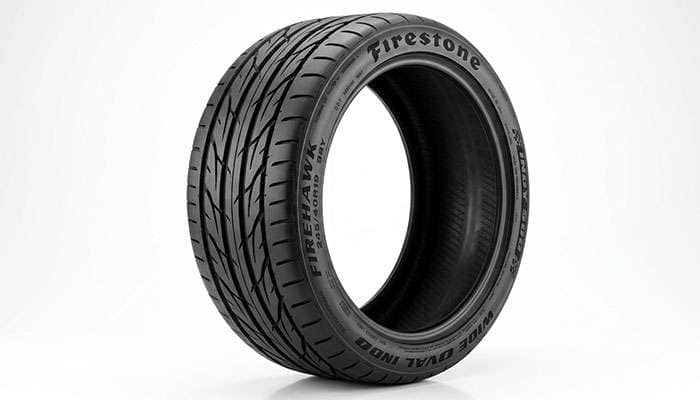
Here is a fun twist that most people miss. The Wide Oval name never really died. Firestone still sells a modern ultra-high-performance tire called the Firehawk Wide Oval Indy 500, available in current sizes from 16 through 20 inches, that carries the heritage name into the age of the sport compact and the modern muscle car. So whether you are restoring a numbers-matching GTO or building something newer, there is a Wide Oval with your name on it. Different tire, same idea Firestone had almost sixty years ago: put more rubber on the road and give the driver something to grin about.
Wide Oval tires are more than a nostalgia piece. They are the tire that defined the muscle car look, and thanks to the original molds still running today, you can put that exact look and stance back under your classic. Decide whether you want the honest bias-ply for the show field or the radial for the open road, pick your sidewall style, cross-reference the old size to a modern equivalent, and you are set. When you are ready to shop the real thing, browse our full lineup of Firestone tires, and if you get stuck on sizing or fitment, that is exactly what my crew is here for. Give us a call and we will get you rolling right.
Wide Oval tires are Firestone's low-profile, wider-than-tall performance tires introduced for the 1967 model year. Their fat tread and short sidewall gave muscle cars more grip and a lower, meaner stance than the tall, skinny tires common before them, which is why they became the signature tire of the muscle car era.
Yes. Coker Tire produces Firestone Wide Oval tires under license, using the original molds in both an authentic bias-ply version and a modern radial version. Firestone also sells a current performance tire called the Firehawk Wide Oval Indy 500 for late-model cars.
The letter indicates the general size and load rating, running from A at the small end to N at the large end. The number is the aspect ratio, so 70 is a 70-series profile. The final number is the wheel diameter in inches. F70-14 is therefore a mid-size, 70-series tire for a 14-inch wheel.
A G70-15 crosses over to roughly a modern 225/70R15. Cross-referencing the old alphanumeric size to a metric size helps you compare overall diameter and section width so the tire fits your wheel and fills the wheel well correctly.
Choose bias-ply if you want a fully period-correct tire for a concours or numbers-matching restoration. Choose the radial version if you plan to drive the car regularly, since it keeps the vintage appearance while delivering a smoother ride, better handling, and longer tread life.
Wide Ovals were original equipment on many 1967 through 1974 muscle and pony cars, including the Pontiac GTO, Chevelle SS, Camaro Z28, Ford Mustang and Boss models, Corvette, and Hemi Mopars. Most ran F70-14 or G70-14 sizes, with 15-inch fitments reserved for special high-performance packages.