
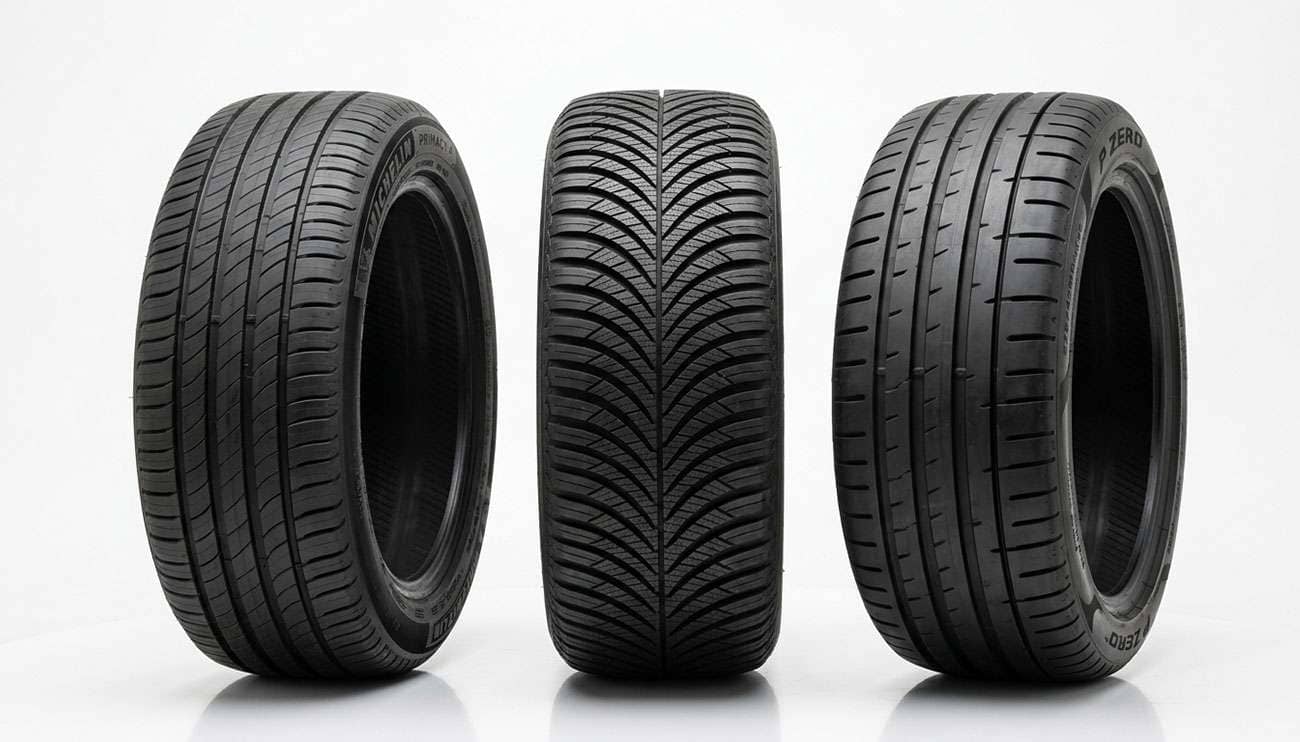
The best tire for a 235-45R18 is the Michelin CrossClimate2 at $249.99 if you want one answer, but the honest answer depends on a variable no other roundup names: whether you are replacing what your trim badge promised or what the factory actually installed. This size is the sport trim on the Camry SE, Accord Sport, and Sonata sport models, yet nearly every one of those cars shipped on quiet, long-wearing touring rubber, not sport rubber. So most owners have two legitimate targets, the tire the badge advertised and the tire the car actually came with, and they lead to different purchases at different prices.
Every other page answering this question hands you a list sorted by rating and calls it done. It depends, they say, and never tell you what it depends on. It depends on which of six drivers you are, and each case below has one clear winner from the 259 currently priced models we stock in this size.
Feature |
Best Pick |
Price Per Tire |
|---|---|---|
One set, year round, no compromises |
Michelin CrossClimate2 |
$249.99 |
You drive it like the badge says |
Continental ExtremeContact DWS06 Plus |
$202.99 |
Maximum warm-weather grip |
Continental ExtremeContact Sport 02 |
$247.99 |
Quietest commuter |
Bridgestone Turanza Quiettrack |
$251.94 |
Best value under $180 |
Falken Ziex ZE960 A/S |
$173.00 |
Snow belt, no wheel swap |
Toyo Celsius II |
$196.93 |
Here is the thing about 235/45R18 that shapes every recommendation in this article. This size exists almost entirely as the sporty upper trim on mainstream family sedans. Camry SE. Accord Sport. Sonata and Optima sport trims. Fusion Titanium. The badge on the trunk says sport, and the wheel size backs it up.
The rubber does not. Automakers spec original equipment tires for the numbers they get graded on, which are cabin noise, fuel economy, and ride comfort in a five-minute test drive. So the tire bolted to your sport trim from the factory was almost always a grand touring all-season with a hard, efficient compound. The chassis got the sport treatment. The contact patch did not.
That gap is your real decision. Replace like with like and you get back exactly the car you have been driving, which is a perfectly good choice. Or spend the same money on an ultra high performance all-season and meet the version of your car the badge was advertising, at the cost of a few thousand miles of tread life and a little more road noise. Neither answer is wrong. But you should pick one on purpose, and no tire rating list will make that call for you.
Six cases, six winners. Every price is a live per-tire figure from our catalog at the time of writing.
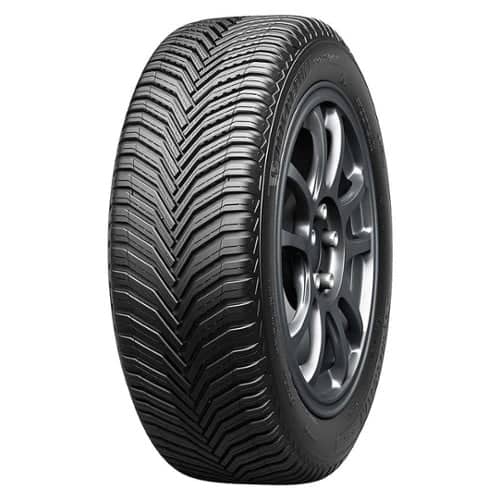
At $249.99, the CrossClimate2 is the tire I default to when a Camry SE or Accord owner says they just want the best and does not want a follow-up conversation. It carries the three-peak mountain snowflake certification, so it is legitimate in real snow, and unlike most tires that earn that symbol it does not feel dead in the dry. Wear is excellent. The honest tradeoff is steering feel, which is good rather than sharp, and a price that sits $50 above the value tier.
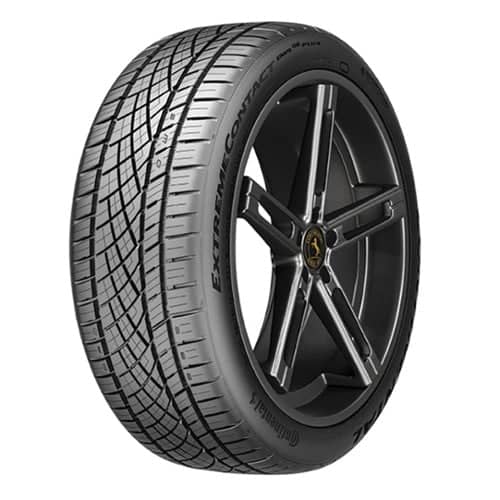
The ExtremeContact DWS06 Plus at $202.99 is the answer to the badge gap. This is an ultra high performance all-season with a 98Y extra load rating, and it transforms how a sport-trim sedan turns in and stops compared to the touring rubber it left the factory on. Wet braking is its party trick. It gives up roughly 10,000 miles of expected wear against the touring picks on this page, and that is the whole cost of the upgrade. At this price it undercuts the touring tires while outperforming them everywhere except longevity.
If the car never sees a cold season, the ExtremeContact Sport 02 at $247.99 is the maximum-grip choice in this size, with the Michelin Pilot Sport 4 S as the other name worth cross-shopping if you want the last word in steering precision. Understand what a summer tire is before you buy one: below roughly 45 degrees the compound stiffens and grip falls off a cliff, so this is a Sun Belt or second-set purchase, not a Michigan daily. Our comparison of summer tires vs all-season tires draws the line in detail.
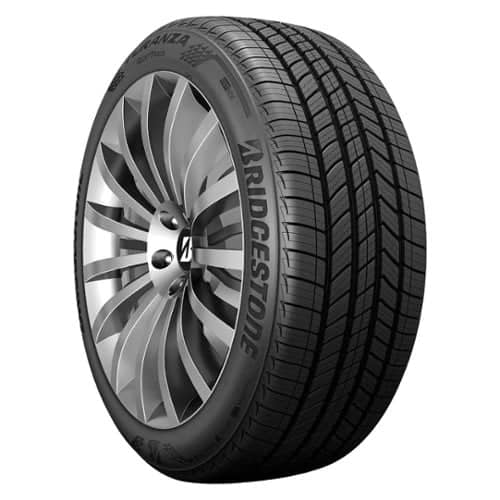
The Turanza Quiettrack at $251.94 is replace-like-with-like done at the highest level. If you read the badge section above and thought that the factory actually got it right, that quiet and smooth is what you want from a family sedan, this is that philosophy perfected. It is measurably quieter than the original equipment tires on most of the cars in this size and it will outlast everything else on this page. Note it is a standard load 94V, which matches the placard on most applications here exactly.
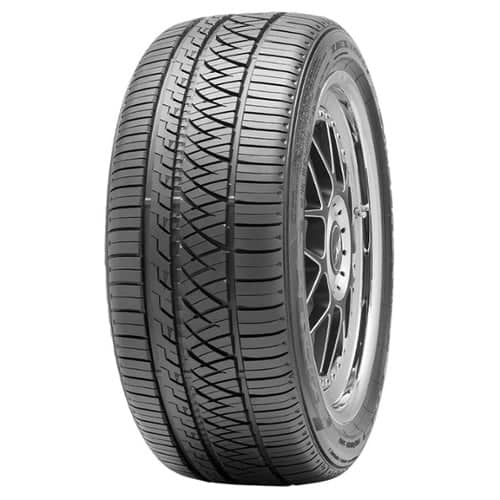
At $173.00, the Ziex ZE960 A/S is the strongest dollars-per-mile buy in the size, and the Kumho Ecsta Sport A/S PA71 at $175.76 is right beside it with a sportier bent. Neither will embarrass itself next to tires costing $75 more. What you give up against the premium tier is wet-braking margin and noise refinement, not safety. For a commuter on a lease or a first car for a kid, this is where I point people without hesitation.
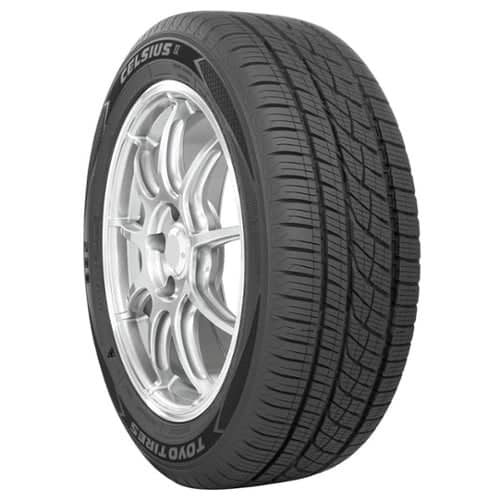
The Celsius II at $196.93 carries the same severe-snow certification as the CrossClimate2 for $53 less per tire, and the Bridgestone WeatherPeak at $244.35 splits the difference with a quieter ride. If your winters are genuinely severe rather than occasional, a dedicated winter set on spare wheels still beats any all-weather tire, and the Bridgestone Blizzak WS90 at $285.62 is the one to build that set around.
Yes, and a thoroughly mainstream one. The three numbers read as 235 millimeters of section width, a sidewall standing 45 percent as tall as that width, and an 18-inch wheel. Written properly it is 235/45R18, with the R denoting radial construction, which is the standard mandated for passenger tires under NHTSA's FMVSS No. 139.
The full dimensions:
Feature |
Measurement |
|---|---|
Overall diameter |
26.3 in (669mm) |
Section width |
9.3 in (235mm) |
Sidewall height |
4.2 in (105.75mm) |
Circumference |
82.6 in |
Revolutions per mile |
767 |
Common load ratings |
94 standard load, 98 extra load |
How mainstream is it? We currently stock 259 priced models in this size from 61 brands, running from $74 to $492 per tire. A rare size shows a few dozen models from a dozen brands. This one is deep enough that every category, from grand touring to maximum summer to studless winter, has multiple credible entries.
This is the midsize sedan sport trim size, with roughly 38 models listing it as original equipment. The headliners are the Toyota Camry SE across multiple generations, the Honda Accord Sport of the 2013 to 2017 era, the Hyundai Sonata and Kia Optima sport trims, the Volkswagen Passat, the Ford Fusion, the Subaru Legacy, the Acura TSX of 2010 to 2014, and the Buick Regal. The newest addition to the family is the 2024-onward Audi A5 and S5.
The pattern to notice is what these cars have in common: they are front-drive or all-wheel-drive family sedans in their most ambitious trim. That is exactly why the badge-versus-rubber question from the top of this article applies to nearly every owner in this size, and it is why the aftermarket for 235/45R18 skews harder toward performance than the cars' original equipment did. The 45-series sidewall gives you 105.75mm of rubber to work with, which is enough cushion that this size avoids most of the pothole fragility that plagues its 40-series neighbors.
At 9.3 inches of section width, a 235 is moderately wide and squarely mainstream. The band from 225 to 245 is where the majority of sedans and crossovers live. Narrow starts below 215, genuinely wide starts around 255, and specialty territory begins past 285.
Two practical notes. Section width is measured sidewall to sidewall at the widest point, so the actual contact patch is narrower than 9.3 inches. And a 235 on a family sedan behaves differently than the same width on a heavier vehicle, because width interacts with load to determine contact pressure. On the roughly 3,300 to 3,600 pound sedans that wear this size, 235 is a sweet spot: wide enough for confident wet braking, narrow enough to resist hydroplaning and tramlining. If you are weighing a move up in width, we ran the real numbers in our comparison of 235 vs 245 tires.
Michelin, with Continental beside it, and Bridgestone and Goodyear a half step behind. That ranking holds across warranty performance, manufacturing consistency, and how well the compound ages, and it has been stable in independent owner-survey data for years.
Two caveats make that answer useful rather than just true. First, brand reliability is an average across a catalog, and a brand's budget line is not built to its flagship standard. Second, in this specific size the value brands punch high: Falken, Kumho, and Hankook all field tires here that outperform their price by a comfortable margin. A flagship tire from a value brand routinely beats a mid-tier tire from a premium brand at the same money, which is exactly the comparison most shoppers face. For the full brand-by-brand rundown, see our most reliable tire brand comparison guide.
Usually not, and this one surprises people because it looks like such a small change.
Both tires share the same width and the same wheel diameter, and both mount on the same rims. But the aspect ratio change moves the overall diameter from 25.4 inches on the 235/40R18 to 26.3 inches on the 235/45R18. That is a 0.9-inch difference, or about 3.7 percent, and it sits outside the 3 percent tolerance the industry uses as the safe-swap boundary. Your speedometer would read roughly 3.5 percent slow, an indicated 70 mph becoming an actual 72.5, and on some cars that extra half inch of radius contacts the strut or fender liner at full lock or full compression.
Going the other direction, from a 45 to a 40, has the same 3.7 percent problem in reverse plus a harsher ride from the shorter sidewall. If your placard says 235/40R18, the honest answer is to stay there, and if you want to understand why five aspect points move the diameter nearly an inch, our explainer on tire aspect ratio decoded walks the math. Owners of cars in the neighboring 225/45R18 fitment face a similar set of choices, which we covered in which 225/45R18 tires are good.
The failure mode in this size is rarely dramatic. It is a slow leak of money and satisfaction, and it compounds in a specific order.
At purchase. Buying by rating instead of by case means paying for capability you will not use. A summer tire on a commuter car wastes $100 per set of grip you never access, and a touring tire on a car you drive hard wastes the chassis you paid the sport-trim premium for.
The first winter. The most expensive version of the wrong pick is a summer tire still on the car when the temperature drops. Below about 45 degrees the compound loses compliance, and stopping distances stretch by car lengths on cold pavement, snow or no snow. This is the one mistake in this size with a safety cost rather than a money cost.
Year two. A speed rating downgrade shows up here. Several budget listings in this size carry H ratings against the V or W on most placards. The rating reflects the tire's heat tolerance, not your driving speed, and a downgraded casing running hot ages faster than its tread wears. The difference is invisible until it is not, and our comparison of H vs V rated tires explains what that letter is actually buying you.
Year three and beyond. Mismatched replacement, two new tires on one axle and two worn on the other, or a load rating below placard, shows up as uneven wear, then as a casing running hotter than designed. Heat is the enemy of the bond between belt and body ply, and by the time that damage is visible on the sidewall it is not repairable. If you are inspecting something on a sidewall right now, our guide to tire sidewall damage and whether it is safe to drive covers what can be saved and what cannot.
Step one. Read your door placard and write down three things: the size, the load index, and the speed rating. On this size the load index will read 94 or 98 and the speed rating will usually be V or W. Match or exceed all three.
Step two. Answer the badge question honestly. Do you want the car you have been driving, or the car the trim badge advertised? That single answer sorts you into either the touring column or the performance column and eliminates half the catalog.
Step three. Answer the winter question. Real snow every year means the three-peak mountain snowflake symbol or a dedicated winter set. Occasional cold rain means any quality all-season. No winter at all opens the summer tire door.
Step four. Buy in fours, or at minimum in matched pairs per axle with the newer pair in the rear. Then set the pressure to the placard number, not the sidewall maximum, and check it monthly.
The best tire for a 235-45R18 is the Michelin CrossClimate2 if you want one name, the Continental ExtremeContact DWS06 Plus if you bought the sport trim to drive it that way, the Turanza Quiettrack if the factory's quiet-and-smooth philosophy was right all along, and the Falken Ziex ZE960 A/S if value is the priority. Every one of those is the correct answer to a different question.
The question underneath them all is the badge question. This size lives on the sportiest trims of sensible cars, wearing sensible rubber. Decide which half of that contradiction you are buying for, and the rest of the choice makes itself.
Ready to compare all 259 options? Shop our full 235/45R18 tire selection.
The Michelin CrossClimate2 at $249.99 is the best single answer, with severe-snow certification and excellent wear. If you drive your sport trim the way the badge suggests, the Continental ExtremeContact DWS06 Plus at $202.99 is the better buy. For maximum quiet, the Bridgestone Turanza Quiettrack; for value, the Falken Ziex ZE960 A/S at $173.00.
Yes. Written as 235/45R18, it means 235 millimeters of width, a sidewall 45 percent as tall as that width, and an 18-inch wheel. It stands 26.3 inches tall overall, and it is common enough that we stock 259 currently priced models in it from 61 brands.
Roughly 38 models list it as original equipment, led by the Toyota Camry SE, Honda Accord Sport, Hyundai Sonata and Kia Optima sport trims, Volkswagen Passat, Ford Fusion, Subaru Legacy, Acura TSX, Buick Regal, and the 2024-onward Audi A5 and S5. It is the signature size of the midsize sedan sport trim.
A 235 is 9.3 inches of section width, which is moderately wide rather than wide. It sits in the middle of the mainstream 225 to 245 band that most sedans and crossovers use. Genuinely wide fitments start around 255, and the contact patch is narrower than the 9.3-inch section width because width is measured at the sidewall bulge.
Michelin leads on reliability, with Continental beside it and Bridgestone and Goodyear close behind, based on warranty performance, manufacturing consistency, and compound aging. In the 235/45R18 size specifically, Falken, Kumho, and Hankook overdeliver for their price, and a flagship from a value brand often beats a mid-tier tire from a premium brand at the same money.
Generally no. The two sizes share width and wheel diameter, but the 45-series stands 26.3 inches tall against 25.4 for the 40-series. That 3.7 percent difference exceeds the 3 percent industry tolerance, makes the speedometer read about 3.5 percent slow, and can cost fender or strut clearance on some cars. Stay with the size on your door placard.
Only if you like how the car has been driving. Factory tires in this size are chosen for noise, fuel economy, and ride comfort, so sport trims like the Camry SE and Accord Sport ship on touring rubber despite the badge. Replacing like with like keeps the car you know. Moving to an ultra high performance all-season delivers the handling the trim advertised, at the cost of some tread life and a little noise.



