
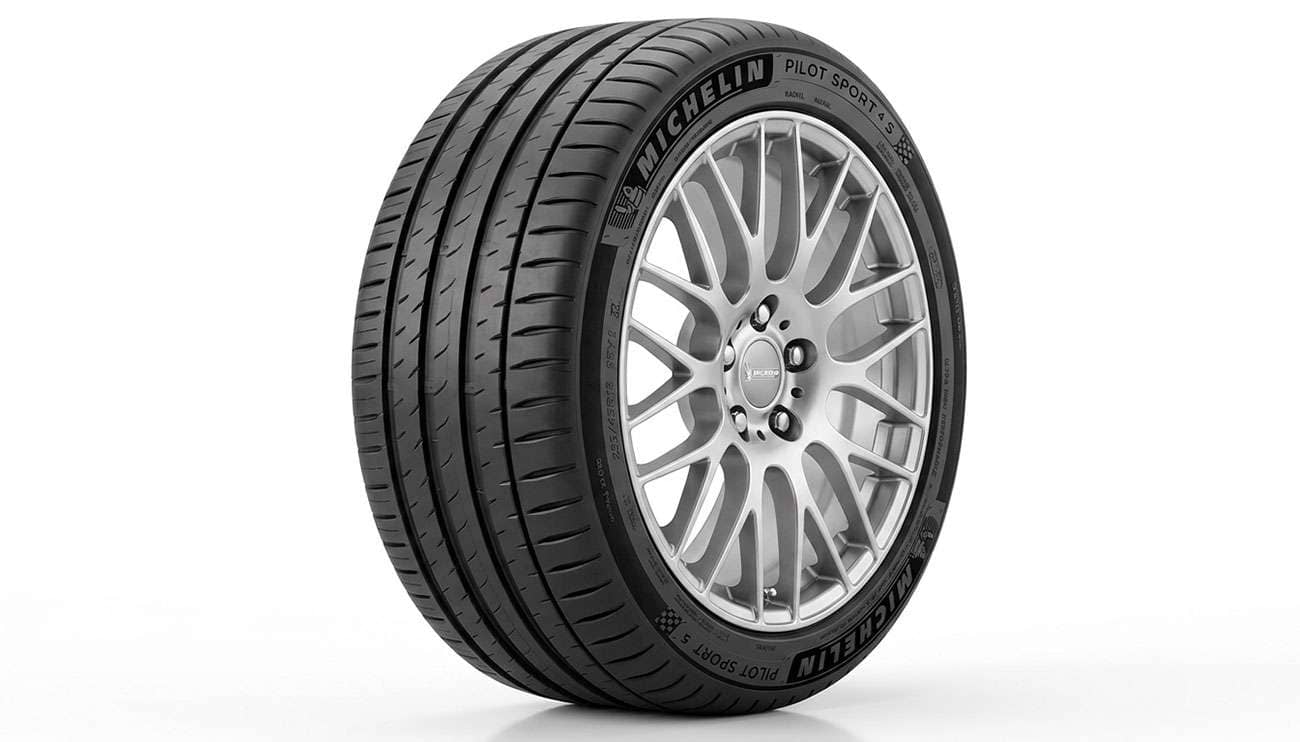
The good 225/45R18 tires run from about 106 dollars for a General Exclaim HPX A/S up to about 250 dollars for a Michelin CrossClimate2, and which one is right for you comes down to one number most folks never look at: the load index. This size ships in both 91 and 95, and they are not interchangeable. A 91 carries 1,356 pounds per corner. A 95 carries 1,521. Buy the wrong one to save forty bucks and you have taken 660 pounds of capacity off your car.
I have been writing up tires at Performance Plus for more decades than my knees care to remember, and this size crosses the counter constantly. Here is the thing that bugs me about what is out there online. Search this question and the first thing Google shows you is a list of winter tires. We stock 434 different tires in 225/45R18 right now. Three of them are winter tires. Three. Out of four hundred and thirty-four.
So somebody is answering a question almost nobody is asking. Let me answer the one you actually asked, the way I would across the counter.
Here are eight I put my name behind, running cheapest to dearest. Every one of these is on the shelf and priced as of this writing. I have noted the load index on each, because that is the part that matters and nobody tells you.
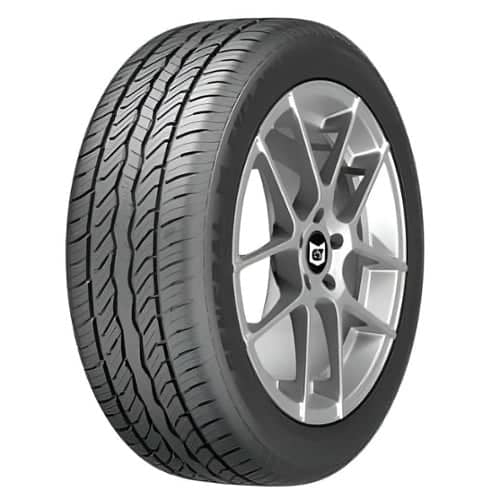
General Exclaim HPX A/S, about 106 dollars, XL 95W. The honest budget pick. General is Continental's second line, so you are getting real engineering at a price that does not sting. It will not out-corner the Michelin and it is a touch noisier, but for a commuter that sees rain and never sees a track, this is a lot of tire for the money. Full load index too, which you cannot say for some tires costing twice as much.
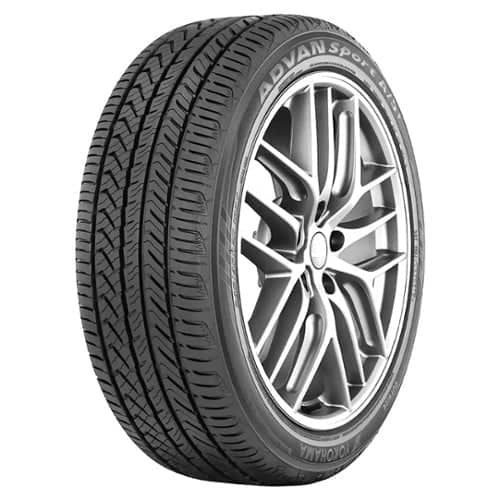
Yokohama Advan Sport A/S Plus, about 179 dollars, XL 95W. This is the value sweet spot in the size and it is what I hand most people who drive a GTI or a 3 Series and do not want to think about it again for four years. Sharp steering, genuinely good in the wet, and the Advan name is not marketing fluff. Rides a little firm.
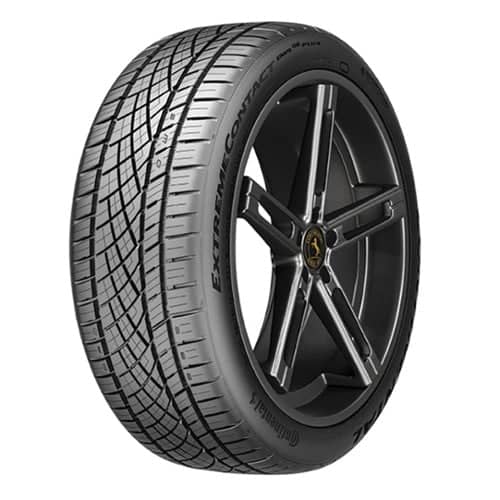
Continental ExtremeContact DWS06 Plus, about 197 dollars, SL 91Y. If I could only stock one performance all-season this would be it. Grip in the dry, grip in the wet, and it will actually get you through a light snow, which almost nothing else on this list will do. Read the load index carefully though. This one is a 91, not a 95. On most cars that wear this size that is exactly what the placard calls for, but check yours before you order.
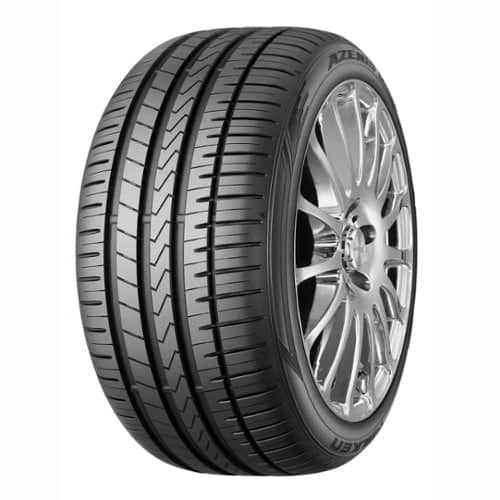
Falken Azenis FK510, about 214 dollars, XL 95(Y). A proper summer tire at a fair price. Falken has been quietly building excellent rubber for years and this one punches well above its price against tires from the big three. Summer only, so if your winters get cold you are buying a second set.
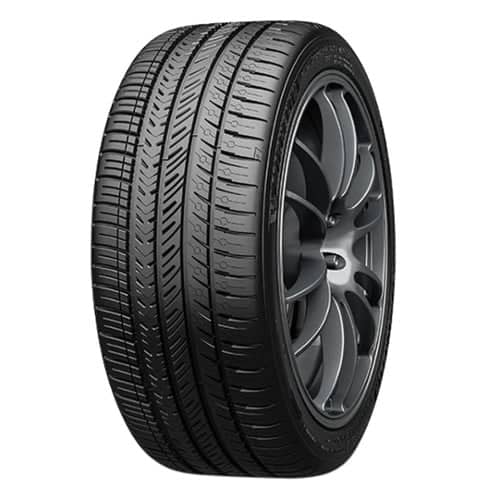
Michelin Pilot Sport A/S 4, about 223 dollars, XL 95Y. The one I recommend more than any other in this size. It is the benchmark ultra-high-performance all-season and it earns it: dry braking, wet braking, and it wears far better than a tire this grippy has any business wearing. If you want one answer and you want to stop reading, this is the answer.
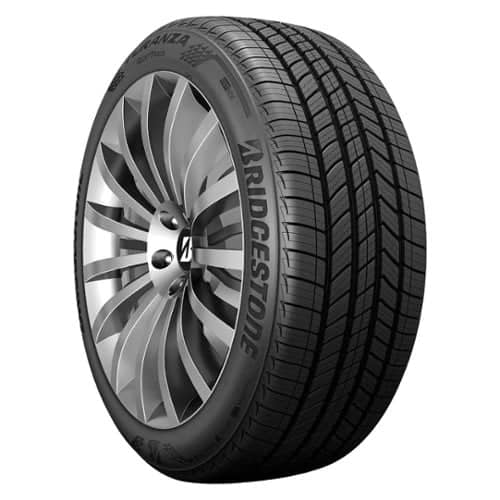
Bridgestone Turanza QuietTrack, about 229 dollars, SL 91V. For the fellow who does not care about lap times and does care that the cabin is quiet on a four-hour drive. This is the comfort play, and Bridgestone did the noise work properly rather than just claiming it. Another 91, so check that placard.
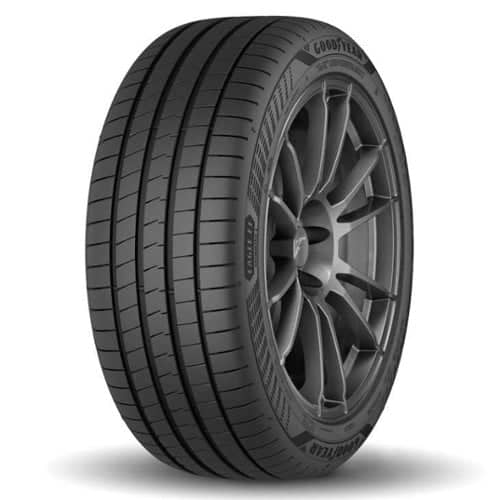
Goodyear Eagle F1 Asymmetric 6, about 245 dollars, XL 95Y. Max summer grip without going to a track tire. If your car has real sporting intent and you live somewhere the thermometer stays civil, this is a superb piece of rubber. Note the 6 in the name. The older Asymmetric All Season is still floating around out there cheap and it is a superseded generation, so make sure you are getting this one.
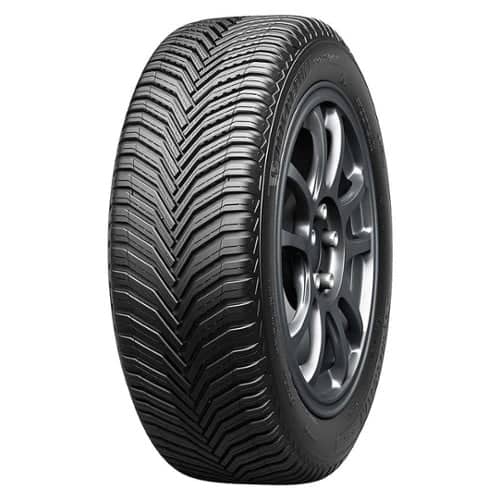
Michelin CrossClimate2, about 250 dollars, XL 95V. The only tire on this list carrying the three-peak mountain snowflake, which means it is certified for severe snow service. If you deal with real winter and you refuse to own two sets of tires, this is your tire. You give up a little dry steering sharpness against the Pilot Sport A/S 4. You gain the ability to not think about January.
Tire |
Price |
Load Index |
Type |
Best For |
|---|---|---|---|---|
General Exclaim HPX A/S |
USD 106 |
XL 95W |
All-Season Touring |
Budget commuting |
Yokohama Advan Sport A/S Plus |
USD 179 |
XL 95W |
UHP All-Season |
Best all-round value |
Continental ExtremeContact DWS06 Plus |
USD 197 |
SL 91Y |
UHP All-Season |
Wet grip and light snow |
Falken Azenis FK510 |
USD 214 |
XL 95(Y) |
Summer UHP |
Summer grip on a budget |
Michelin Pilot Sport A/S 4 |
USD 223 |
XL 95Y |
UHP All-Season |
Best overall |
Bridgestone Turanza QuietTrack |
USD 229 |
SL 91V |
Grand Touring |
Quiet ride and comfort |
Goodyear Eagle F1 Asymmetric 6 |
USD 245 |
XL 95Y |
Summer UHP |
Maximum dry grip |
Michelin CrossClimate2 |
USD 250 |
XL 95V |
All-Weather, 3PMSF |
Year-round in real winter |
If you want one name, it is the Michelin Pilot Sport A/S 4. It wins on the measurements that matter, it lasts, and it is the tire I would put on my own daughter's car. That is the short answer.
But "best" moves depending on what you are actually doing with the car, so here is how I sort it at the counter.
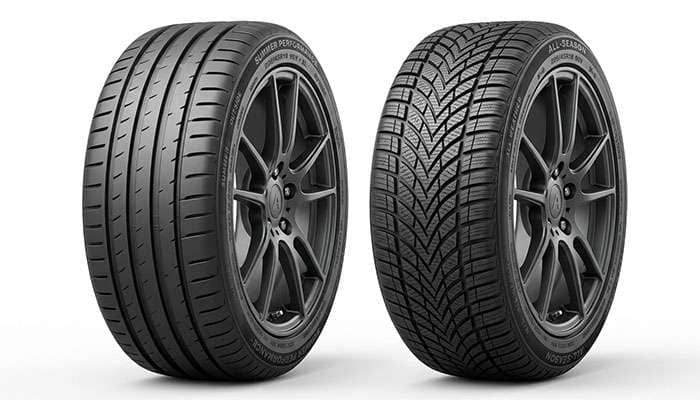
If you never see snow and you enjoy driving, buy a summer tire. The Goodyear Eagle F1 Asymmetric 6 or the Falken Azenis FK510. A dedicated summer compound will beat any all-season on grip because it is not compromising for cold weather it never sees. Down here in Southern California most folks in this size should be on summer rubber and are not.
If you see occasional cold and rare snow, the Michelin Pilot Sport A/S 4 or the Continental ExtremeContact DWS06 Plus. Both will handle a surprise dusting without drama.
If you see real winter and refuse to swap tires twice a year, the Michelin CrossClimate2. It is the only tire here rated for severe snow service.
If the car is transportation and nothing more, the General Exclaim HPX A/S. There is no shame in it. A tire you can afford to replace on schedule is safer than a premium tire you run down to the cords because a new set hurts too much.
If quiet matters more than cornering, the Bridgestone Turanza QuietTrack. Nothing else here is close on noise.
A 225/45R18 stands about 26.0 inches tall, measures 8.9 inches across the tread, and rides on a sidewall right around 4.0 inches. It wraps an 18-inch wheel and turns 777 times per mile. Here is the whole thing in both systems.
Measurement |
Inches |
Millimeters |
|---|---|---|
Overall diameter (height) |
25.97 in (about 26.0 in) |
660 mm |
Section width (tread) |
8.86 in (about 8.9 in) |
225 mm |
Sidewall height |
3.99 in (about 4.0 in) |
101 mm |
Circumference |
81.6 in |
2073 mm |
Wheel (rim) diameter |
18 in |
457 mm |
Approved rim width |
7.0 to 8.5 in |
178 to 216 mm |
Revolutions per mile |
777 |
483 per km |
Reading the code left to right: 225 is the section width in millimeters, sidewall to sidewall. 45 is the aspect ratio, meaning the sidewall stands 45 percent as tall as the tire is wide. R is radial construction. 18 is the wheel diameter in inches and it has to match your wheel exactly. If you want the deeper dive on that middle number we broke down tire aspect ratio separately.
You will also see this size written 225/45ZR18. Same physical tire. The Z is an older high-performance flag that signals a W or Y speed rating. We sorted that out in full in our piece on whether ZR or R tires are better.
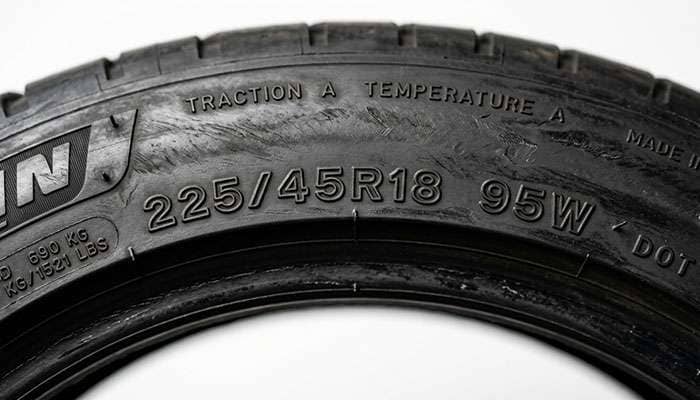
A 225/45R18 is approved for rim widths from 7.0 to 8.5 inches, with 7.5 inches being the measuring rim and the sweet spot. The wheel diameter is not negotiable. An 18-inch tire goes on an 18-inch wheel, period. It is only the width that has a range.
Here is what actually happens at the edges of that range, because this is the part people guess at. Mount a 225 on a rim narrower than 7.0 and the tread crowns, meaning the center of the tread bulges out and carries more load than the shoulders. You get a narrower contact patch than you paid for and the middle wears out first. Go wider than 8.5 and you stretch the sidewall, the shoulders roll under in a corner, and you have made the tire more vulnerable to a pothole taking a chunk out of the bead area.
Every half inch of rim width moves the tire's actual section width about 5 to 8 millimeters, which is why the same tire measures differently on two different cars. If you are working out a wheel change, run the numbers first with our guide on tire size for wheel width.
Most cars wearing this size call for somewhere between 32 and 36 PSI cold, but do not take that as your number. Take it from the placard on your driver's door jamb. The tire does not set the pressure. The car does. Two different cars can wear the identical 225/45R18 and call for different pressures because they weigh different amounts and carry that weight differently front to rear.
The number molded into the sidewall, usually 44 or 50 PSI in this size, is the maximum the tire is built to hold. It is not a recommendation and running to it will crown your tread and beat your kidneys up. Our guide on how to find your recommended tire pressure walks through where to look on any car.
Now here is the part that ties back to the load index, and it is the thing I wish more shops explained.
An XL tire, marked 95 in this size, is built to carry 1,521 pounds per corner. An SL or standard load tire, marked 91, carries 1,356 pounds. That is a difference of 165 pounds per tire, or 660 pounds across the car. XL tires reach that higher capacity by running at a higher reference pressure, which is why they carry a higher max PSI on the sidewall.
What that means in practice: if your placard specifies a 95 XL and you fit a 91 SL, you cannot simply pump the SL up to make up the difference. It is not rated for it. You have quietly reduced your car's load capacity, and the first time you load four adults and a weekend's luggage you are outside the tire's design envelope. Going the other way, from an SL to an XL, is fine. You just run the placard pressure and carry the extra capacity as margin.
Three of the eight tires above are 91 SL. Five are 95 XL. Read your placard before you click buy. It takes ten seconds and it is the single most common mistake I see in this size.
Technically it will mount and it will clear on most cars. But it is not a swap I would sign off on, and here is why in numbers rather than hand-waving.
A 225/40R18 stands 25.09 inches tall. A 225/45R18 stands 25.97. That is a difference of 0.88 inch, which works out to 3.4 percent. The industry rule of thumb is to stay inside 3 percent of your original overall diameter, so this swap lands just outside the window.
What 3.4 percent buys you: your speedometer under-reads. When the needle says 70 you are actually doing about 72.4. Your odometer under-counts by the same margin, so every 1,000 miles you drive records as about 966. On a modern car the ABS and stability control are reading wheel speed against a programmed rolling circumference, and while 3.4 percent will not usually throw a light, it does shift the thresholds those systems work from.
You will also gain about a half inch of ride height at the axle and lose a little steering sharpness, since you have added sidewall. Some folks want exactly that. If your 225/40R18 rides like a plank and you are willing to accept a speedometer that lies to you by two and a half miles an hour, it is a defensible choice. Just make it knowingly.
Here is the full picture of what fits around this size.
Size |
Overall Diameter |
Difference vs 225/45R18 |
Verdict |
|---|---|---|---|
225/45R18 |
26.0 in |
Baseline |
Your size |
245/40R18 |
25.7 in |
About -1.0% |
Safe. Wider tread, shorter sidewall |
215/45R18 |
25.6 in |
About -1.4% |
Safe. Narrower, usually cheaper |
235/45R18 |
26.3 in |
About +1.4% |
Safe. 10 mm wider, check rim width |
235/40R18 |
25.4 in |
About -2.2% |
Safe, at the wide end of the window |
225/40R18 |
25.1 in |
About -3.4% |
Outside the 3 percent window |
225/50R18 |
26.9 in |
About +3.4% |
Outside the window, check clearance |
If you are contemplating a bigger change than these, work it out properly first with our plus-sizing guide rather than eyeballing it in the parking lot. And if you are cross-shopping against the wider sport-sedan fitment, we did the same breakdown for the 245/45R18 in inches.
This is a compact and sport-compact size, and a busy one. Industry fitment data has it on roughly 275 models across 74 manufacturers. If your car is a sporty compact or an entry luxury sedan on 18s, there is a fair chance this is your size. Common fitments include:
Check the placard on your door jamb before ordering. Manufacturers change fitments between trim levels and model years, and the sticker on your specific car beats any list, including mine.
Good news here. This size is enormously competitive because so many cars wear it, so you are not paying a rarity premium the way you would on a 285/45R22.
Budget tires start right around 106 dollars each. Solid mid-range all-seasons land in the 150 to 200 dollar band. Premium performance and all-weather tires run 200 to 270 dollars. Above that you are into flagship summer rubber and specialty run-flats, which can climb past 300 and in a few cases well past 450.
For a set of four, budget roughly 425 dollars at the low end, about 800 dollars for something genuinely good like the Pilot Sport A/S 4, and around 1,000 dollars for the top of the range. Add mounting, balancing, and new valve stems on top.
One piece of counter advice after all these years: the gap between a 106 dollar tire and a 200 dollar tire is real and you will feel it in the wet. The gap between a 250 dollar tire and a 450 dollar tire is real too, but most drivers will never access it on a public road. If your budget is tight, the middle of this range is where the value lives. And if you want to understand what those numbers molded into the sidewall are telling you about wear and grip, our breakdown of UTQG tire ratings is worth ten minutes.
Want to see the whole shelf and check what fits your car? Shop every 225/45R18 tire we carry here.
The 225/45R18 is one of the most competitive sizes on the wall, which is good news for you. There is a genuinely good tire here at every price point, and unlike some sizes you are not forced to overpay for the privilege of a fitment.
Just do the one thing almost nobody does. Walk out to the car, open the driver's door, and read the placard. Note the size, note the load index, note the pressure. Then buy the best tire in your budget that matches all three. Get that right and any of the eight above will serve you well for years.
Get the load index wrong and it does not matter how good the tire is. Any questions, that is what we are here for. Come see us at Performance Plus.
Eight worth buying, cheapest first: General Exclaim HPX A/S (about 106 dollars), Yokohama Advan Sport A/S Plus (179), Continental ExtremeContact DWS06 Plus (197), Falken Azenis FK510 (214), Michelin Pilot Sport A/S 4 (223), Bridgestone Turanza QuietTrack (229), Goodyear Eagle F1 Asymmetric 6 (245), and Michelin CrossClimate2 (250). Match the load index on your door placard, since this size comes in both 91 and 95.
The Michelin Pilot Sport A/S 4 is the best all-round choice in this size, winning on dry braking, wet braking, and tread life for an ultra-high-performance all-season. If you never see snow, a dedicated summer tire like the Goodyear Eagle F1 Asymmetric 6 will beat it on grip. If you see real winter and want one set year-round, the Michelin CrossClimate2 is the only tire here certified for severe snow service.
A 225/45R18 stands about 26.0 inches tall (25.97 in, or 660 mm), measures 8.9 inches across the tread, and has a sidewall about 4.0 inches tall. Its circumference is 81.6 inches and it turns 777 times per mile. The 225 is section width in millimeters, 45 is the aspect ratio, R means radial, and 18 is the wheel diameter in inches.
A 225/45R18 fits rims 7.0 to 8.5 inches wide, with 7.5 inches being the measuring rim and the ideal width. The wheel diameter must be exactly 18 inches. Narrower than 7.0 and the tread crowns, wearing out the center first. Wider than 8.5 and you stretch the sidewall, letting the shoulders roll under in corners and exposing the bead area to pothole damage.
Most applications call for 32 to 36 PSI cold, but always use the figure on your driver's door jamb placard rather than a general number. The pressure molded into the sidewall is the tire's maximum, not a recommendation. Note that XL tires in this size (load index 95) reach their higher 1,521-pound capacity through a higher reference pressure than SL tires (load index 91, 1,356 pounds), so the two are not interchangeable.
It will mount and usually clear, but it is a 3.4 percent increase in overall diameter, which falls just outside the 3 percent window the industry works to. Your speedometer will under-read by about 2.4 mph at an indicated 70, and your odometer will under-count by the same margin. You gain roughly a half inch of ride height and a slightly softer ride. Safer alternatives inside the window are 245/40R18, 235/40R18, 215/45R18, and 235/45R18.



