

Those numbers stamped on your tire sidewall tell an important story about your vehicle's performance. When it comes to 235 vs 245 tires, you're examining tire width specifications that directly impact how your car handles, accelerates, and consumes fuel. A 235 tire measures exactly 235mm (approximately 9.3 inches) across, while a 245 tire spans 245mm (about 9.65 inches). This 10mm difference creates significant changes in driving dynamics that go far beyond simple measurements.
Understanding tire width becomes crucial when selecting replacement tires for your vehicle. The 10mm (0.39 inches) width difference between these sizes affects handling characteristics, fuel economy, and overall driving experience. We see these differences play out in real driving conditions every day, making proper tire selection essential for optimal vehicle performance.
Width comparison between 235 and 245 tires reveals distinct performance characteristics. Narrower 235 tires typically deliver better fuel efficiency and provide a smoother, quieter ride quality. Wider 245 tires offer enhanced grip and superior handling capabilities, especially during aggressive driving scenarios. The weight difference between these tire sizes also impacts acceleration and braking performance, with 235 tires generally being lighter.
Choosing between these popular tire sizes depends on your specific driving priorities and vehicle requirements. Whether you value fuel economy for daily commuting, comfort for long-distance travel, or enhanced performance for spirited driving, understanding these key differences helps you select the right tire width for your needs.
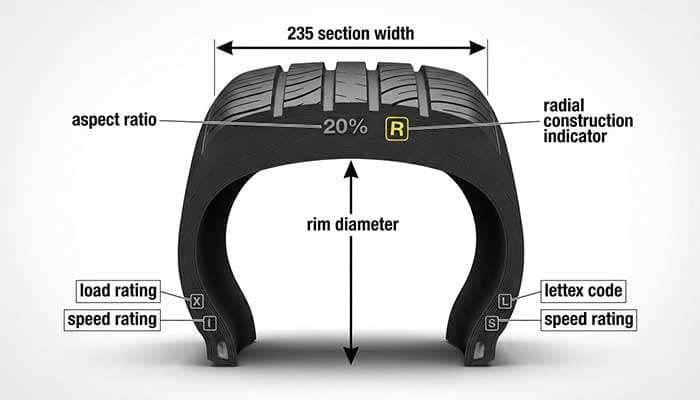
Your tire size code provides essential specifications for proper fitment and performance. The first three-digit number indicates tire width in millimeters, measured from sidewall to sidewall at the widest point. This measurement serves as the primary identifier when comparing 235 and 245 tire options.
Tire width in millimeters follows industry-standard marking conventions. A tire marked "235/45R18" breaks down into specific dimensions: 235mm width, 45% aspect ratio (sidewall height relative to width), R indicating radial construction, and 18-inch rim diameter. These specifications ensure proper fitment and optimal performance characteristics.
The standardized format allows easy identification across different tire brands and models. Each number serves a specific purpose in determining how the tire performs on your vehicle.
This seemingly small width variance creates measurable differences in driving characteristics. Drivers frequently notice that 235 tires provide sharper steering response with slightly firmer ride quality compared to 245 options. The additional width in 245 tires offers better rim protection, as more rubber extends beyond the wheel edge.
Wider contact patches typically improve dry traction through increased road surface engagement. However, tire compound quality and tread design often influence performance more significantly than width alone.
Proper rim-to-tire matching ensures optimal performance and safety. We recommend 235 tires for rim widths between 7.0 and 8.5 inches, while 245 tires require rims spanning 7.5 to 9.0 inches. Incorrect rim-tire combinations can compromise handling precision and reduce tire lifespan.
Industry fitment charts specify 235mm as the maximum recommended width for 8.0-inch rims and minimum width for 9.0-inch applications. This technical relationship explains why manufacturers often offer different tire sizes across various wheel packages for the same vehicle model.
Real-world driving reveals where these tire width differences truly matter. Performance characteristics between 235 vs 245 tires become apparent the moment you hit the road.
235 tires deliver sharper responsiveness with crisper turn-in response during daily commutes. The narrower profile creates more direct steering feedback, making lane changes feel precise and controlled. 245 tires create noticeably more mushy steering feedback but compensate with increased stability. Drivers often report that 235 tires feel more nimble in tighter maneuvers, making them ideal for urban environments.
Aggressive cornering scenarios showcase where 245 tires excel. The larger contact patch provides unrivaled traction when pushing through turns. This wider footprint notably enhances grip during aggressive driving scenarios, especially at higher speeds. The extra 10mm width translates to improved cornering stability—a benefit particularly apparent in spirited driving conditions.
Comfort differences become noticeable on longer drives. 235 tires typically deliver a smoother, quieter ride quality. The reduced road contact creates less cabin noise and absorbs minor road imperfections more effectively. 245 tires produce a firmer ride with more pronounced road noise due to increased surface contact. Many drivers note 245s bridge road imperfections better yet transmit more vibration through the chassis.
Fuel economy advantages favor the narrower option. 235 tires offer superior fuel economy primarily due to reduced rolling resistance. Some drivers report 5-7 MPG decreases when switching from narrower to wider tires. This efficiency advantage makes 235 tires economically beneficial for high-mileage drivers who prioritize fuel savings over maximum performance.
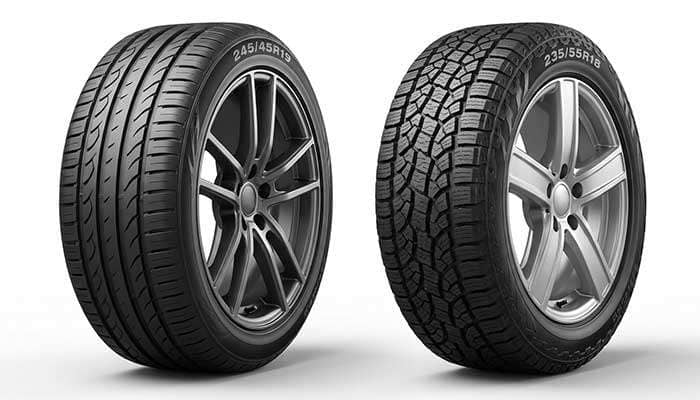
Selecting between 235 vs 245 tires requires weighing specific advantages against potential drawbacks. Each size delivers distinct benefits that match different driving priorities and vehicle applications.
235 tires excel primarily through reduced rolling resistance, delivering exceptional fuel economy for daily commuters. The lighter construction provides quicker acceleration response compared to wider alternatives. These narrower options operate significantly quieter, making them ideal for drivers who prioritize a peaceful cabin environment. Budget-conscious buyers appreciate the lower upfront costs that 235 tires typically offer.
However, 235 tires deliver reduced traction during aggressive cornering maneuvers. These narrower profiles become more susceptible to hydroplaning at high speeds or when encountering standing water. Drivers seeking a bold, performance-oriented appearance may find the narrower profile less visually appealing.
245 tires provide superior traction during hard acceleration, braking, and cornering scenarios. The wider footprint creates superior stability, particularly valuable for high-speed driving applications. Enthusiasts frequently choose 245 tires for their aggressive, performance-oriented appearance that enhances vehicle stance.
The added width brings increased weight that can slightly impact acceleration performance. These wider options typically reduce fuel efficiency due to higher rolling resistance. Additionally, 245 tires often produce a firmer ride with increased road noise, which can affect comfort during extended drives.
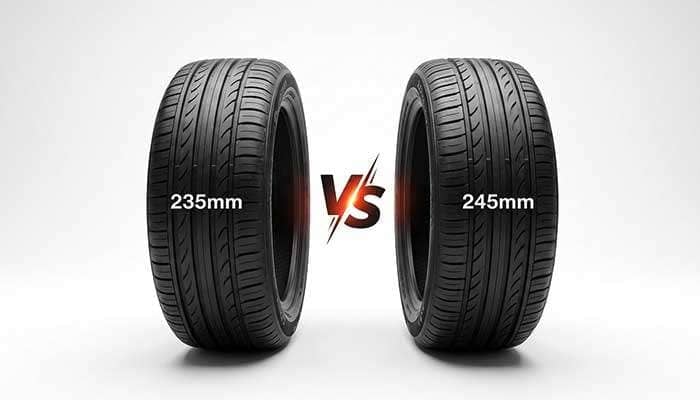
Selecting the right tire model makes a significant difference when choosing between 235 vs 245 tire sizes. Specific tire designs optimize the performance characteristics of each width for different vehicle applications.
The Goodyear Assurance A/S delivers reliable all-season performance with multiple biting edges and wide tread grooves, starting at $106.99 per tire. This tire excels at reducing road noise through its optimized tread pattern while maintaining dependable traction. For SUV applications, the Toyo Open Country H/T II offers steady handling characteristics with its wear-resistant tread compound and multi-wave sipes, priced from $128.33.
Performance enthusiasts will appreciate the Kumho Ecsta PS91, which provides stable performance at speeds exceeding 300km/h thanks to its motorsport-derived design, priced at $183.00 per tire. The Bridgestone Alenza AS Ultra features QuietTrack™ technology and comes with an impressive 80,000-mile warranty at $191.99 per tire, making it an excellent choice for luxury SUVs that demand enhanced braking performance.
Sedans and small SUVs benefit most from 235 tires due to their balanced performance characteristics. These vehicles leverage the lighter construction for improved fuel economy while maintaining adequate traction for daily driving needs.
Sports cars and performance SUVs require the wider footprint that 245 tires provide. Vehicles from manufacturers like Porsche and Audi utilize the increased contact patch for superior cornering stability and enhanced braking performance. Check out Performance Plus Tire for more tire options suited to your specific vehicle needs.
Understanding the key differences between 235 and 245 tires helps you make the right selection for your vehicle and driving needs. This detailed comparison breaks down the essential characteristics, performance differences, and practical considerations for each tire width.
Characteristic |
235 Tires |
245 Tires |
|---|---|---|
Width |
235mm (9.3 inches) |
245mm (9.65 inches) |
Compatible Rim Width |
7.0-8.5 inches |
7.5-9.0 inches |
Performance Characteristics |
||
Handling |
Sharper responsiveness, crisper turn-in |
More mushy steering feedback |
Stability |
Less stable at high speeds |
Enhanced stability, better cornering |
Ride Quality |
Smoother, quieter ride |
Firmer ride, more road noise |
Fuel Efficiency |
Better fuel economy |
Lower fuel efficiency |
Benefits |
||
Primary Advantages |
- Better fuel economy |
- Superior traction |
Drawbacks |
||
Main Disadvantages |
- Less traction |
- Heavier weight |
Best Suited For |
||
Vehicle Types |
Sedans and small SUVs |
Sports cars and performance SUVs |
Sample Models & Pricing |
||
Example Models |
- Goodyear Assurance A/S ($106.99) |
- Kumho Ecsta PS91 ($183.00) |
This comparison shows how tire width affects every aspect of your driving experience. Whether you prioritize fuel savings and comfort with 235 tires or enhanced performance and grip with 245 tires, selecting the right width makes a significant difference in your vehicle's capabilities.
The choice between 235 and 245 tires depends on matching tire characteristics to your driving priorities. Our analysis shows that 10mm width difference creates distinct performance profiles for different vehicle applications.
For daily drivers prioritizing fuel economy and comfort, 235 tires deliver superior efficiency with quieter operation. These narrower tires work best on sedans and compact SUVs where fuel savings and smooth ride quality matter most. The lighter construction provides responsive handling for urban environments while keeping operating costs low.
Performance-focused drivers benefit from 245 tires' enhanced traction and stability advantages. The wider contact patch delivers confidence-inspiring grip during aggressive cornering and high-speed driving conditions. Sports cars and performance SUVs maximize these benefits through improved road contact and cornering capabilities.
Your driving environment plays a crucial role in tire selection. City drivers navigating tight spaces appreciate 235 tires' nimble characteristics and lower fuel costs. Enthusiasts tackling mountain roads or track days find 245 tires' enhanced grip worth the efficiency trade-off.
Tire compound and construction quality remain equally important factors beyond width specifications. Quality tires in either size outperform inferior options regardless of width. When ready to upgrade, Performance Plus Tire offers expert fitment guidance with extensive selection in both 235 and 245 sizes to match your specific vehicle requirements.
The right tire selection balances performance needs with practical considerations like fuel economy and ride comfort. Whether choosing efficiency-focused 235s or performance-oriented 245s, proper sizing transforms your driving experience while meeting your specific vehicle demands.
Understanding the 10mm difference between 235 and 245 tires helps you make an informed decision based on your driving priorities and vehicle type.
• 235 tires deliver better fuel economy and quieter rides, making them ideal for daily commuters and sedan drivers who prioritize efficiency over performance.
• 245 tires provide superior grip and stability, offering enhanced cornering performance and traction that benefits sports cars and performance SUVs.
• The width difference affects rim compatibility: 235 tires fit 7.0-8.5 inch rims while 245 tires require 7.5-9.0 inch rims for optimal performance.
• Consider your driving environment: Urban drivers benefit from 235's nimble handling, while enthusiasts tackling winding roads prefer 245's enhanced road contact.
• Price and efficiency trade-offs exist: 235 tires typically cost less upfront and deliver 5-7 MPG better fuel economy compared to wider 245 alternatives.
The choice between these tire sizes ultimately depends on whether you prioritize fuel savings and comfort (235) or maximum grip and performance (245). Both sizes offer quality options from reputable manufacturers, so focus on matching the tire characteristics to your specific driving needs and vehicle requirements.
The main difference is the width. 235 tires are 235mm (about 9.3 inches) wide, while 245 tires are 245mm (about 9.65 inches) wide. This 10mm difference affects various performance aspects of the vehicle.
Tire width significantly influences handling, grip, fuel efficiency, and ride comfort. Wider tires generally provide better traction and stability, especially during cornering, while narrower tires often offer improved fuel economy and a smoother ride.
In most cases, you can replace 235 tires with 245 tires without issues. However, it's important to ensure the new tires are compatible with your vehicle's rim width and that there's adequate clearance in the wheel wells.
Generally, 235 tires offer better fuel economy due to their narrower width and reduced rolling resistance. However, the actual impact on fuel efficiency can vary depending on factors like driving style, vehicle type, and tire design.
Yes, 245 tires typically provide better grip and stability, especially during cornering and high-speed driving. They also offer improved traction in wet conditions and can enhance the overall handling characteristics of the vehicle.



