
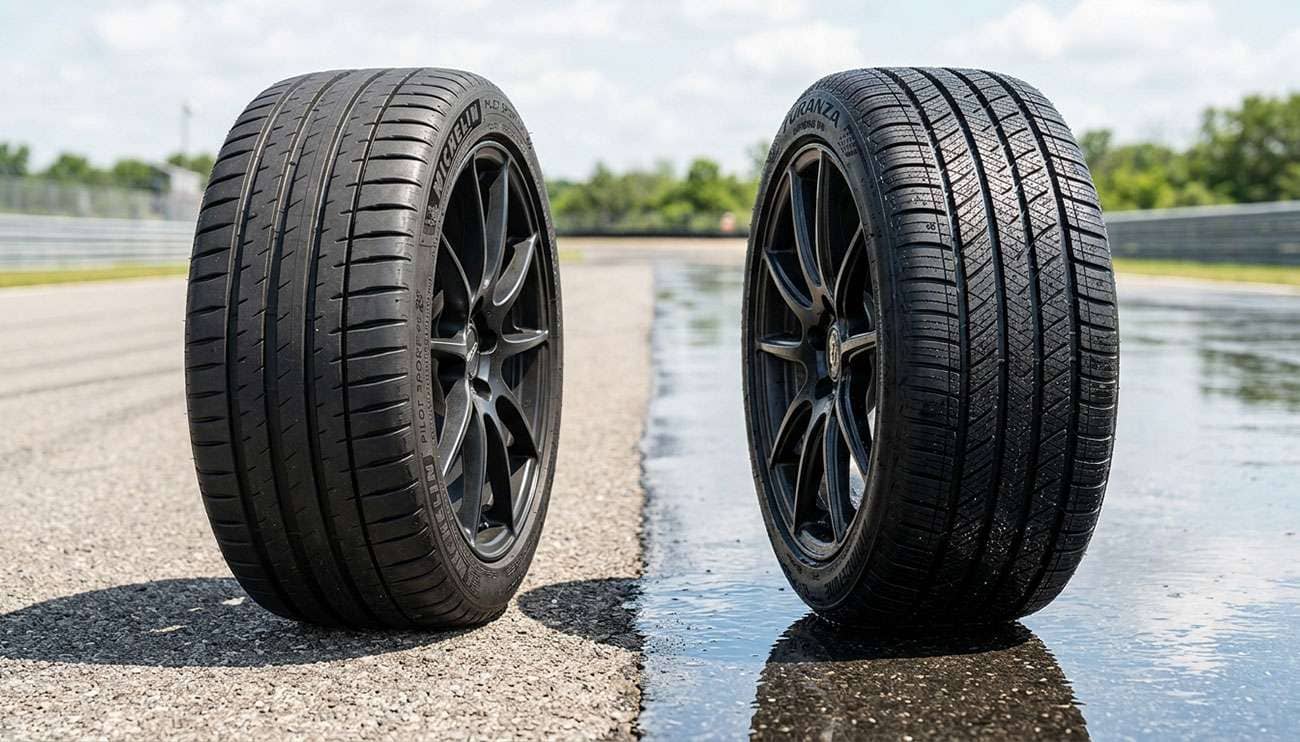
The choice between summer tires and all-season tires is one of the most important decisions you'll make for your vehicle — and most drivers get it wrong. Get it right, and your car handles exactly the way it was engineered to. Get it wrong, and you're either leaving real performance on the table or, worse, creating a genuine safety risk when your tire's limitations meet the wrong road conditions.
Here's where the confusion starts: the tire industry uses "summer" and "all-season" in ways that don't match what you'd naturally expect. A summer tire isn't just a tire for warm months — it's a tire engineered specifically for temperatures above 45°F, built to maximize dry and wet grip when the asphalt is warm. An all-season tire isn't great in every condition; it's a deliberate compromise, designed to handle a broader range of situations without dominating any single one. That distinction changes everything when you're deciding what goes on your car.
In this guide, we'll break down exactly what separates these two categories, give you a clear framework for matching the right tire to your actual driving conditions, and deliver specific model recommendations you can act on today. Whether you're pushing a sports car through Sun Belt corners or commuting daily through a climate that throws occasional cold snaps at you, there's a clear right answer — and we'll help you find it.
Summer and all-season tires differ at the molecular level — and those differences translate directly into real-world performance you feel every time you brake, corner, or push through a wet curve. Summer tires use a specialized silica-infused compound that stays pliable and grippy above roughly 45°F (7°C), but stiffens and loses traction as temperatures fall. All-season tires use a different compound blend — one that remains functional across a wider temperature range, typically from about 20°F (-7°C) through hot summer days, but never fully optimized for either extreme.
On dry pavement at 75°F, a summer tire outbrakes and out-corners an all-season tire of the same size — every time. Independent testing data from sources like Tire Rack consistently shows summer tires delivering braking distances 10–20% shorter than comparable all-season tires in warm, dry conditions. In warm wet conditions, that advantage narrows slightly but remains real and measurable. Drop the thermometer below 45°F, though, and the equation reverses hard. A summer tire's compound stiffens, loses road conformity, and stops delivering the grip you're counting on — exactly when you need traction most.
A tire's spec sheet tells you everything you need to know — if you know how to read it. The most reliable seasonal classification indicators are the M+S symbol (Mud and Snow) and the 3-Peak Mountain Snowflake (3PMSF). All-season tires carry the M+S designation; those rated for genuine winter capability also earn the 3PMSF. Summer tires carry neither — they're built purely for warm-weather performance and carry zero cold-weather rating.
Temperature grades (A, B, C) measure how well a tire manages heat buildup at speed. Most summer tires earn an A rating — the highest available — because their compounds and construction are purpose-built for high-speed heat dissipation. Treadwear ratings differ meaningfully between categories too: summer performance tires typically run 200–300, signaling shorter but higher-grip tread life, while all-season tires commonly reach 500–800+, reflecting longer wear at the cost of outright grip. Speed ratings like Y (186+ mph) and W (168 mph) appear frequently on summer tires built for performance vehicles, while all-season tires typically carry H (130 mph) or V (149 mph) ratings suited to everyday use. Know these numbers, and you cross-shop tires on your terms — not the installer's.
The most dangerous mistake you can make with summer tires is running them year-round in a climate that sees real winters. Even on a dry road, a summer tire at 35°F is a liability. The compound is too stiff to conform to the road surface, and braking distances extend in ways that matter enormously in an emergency. This isn't a small safety margin you're trimming — it's a substantial one. If your area regularly dips below 45°F for extended stretches, you need either all-season tires or a dedicated seasonal swap between summer and winter sets.
All-season owners make their own version of this mistake: overestimating what their tires can do in heavy rain or at the performance limit. An all-season tire is not a wet-weather performance tire. Its compound doesn't achieve the same road conformity as a purpose-built summer performance tire, and at the limit — emergency braking, maximum-effort cornering — that gap shows up in real outcomes. Knowing exactly what your tires can and cannot do is the foundation of driving safely.
Reading a tire's size marking is a skill that pays off immediately. Take a tire marked 245/40ZR18 97Y: the 245 is the section width in millimeters, 40 is the aspect ratio (sidewall height as a percentage of width), ZR indicates radial construction optimized for high-speed use, 18 is the wheel diameter in inches, 97 is the load index (approximately 1,609 lbs per tire), and Y is the speed rating. Summer performance tires typically run lower aspect ratios — 35 to 45 — for sharper, more responsive handling. All-season tires are more commonly found in the 50–65 aspect ratio range, offering a more compliant ride for daily commuting. Understand these numbers and you shop with confidence, not guesswork.
Characteristic |
Summer Tires |
All-Season Tires |
|---|---|---|
Optimal Temperature Range |
Above 45°F (7°C) |
20°F–100°F (-7°C–38°C) |
Dry Braking Performance |
Excellent — 10–20% shorter stopping distances vs. all-season |
Good — adequate for everyday driving |
Wet Grip (warm temps) |
Excellent |
Good |
Snow / Ice Performance |
Poor — not safe below 45°F |
Moderate — handles light snow and cold temps |
Treadwear Rating (typical) |
200–400 |
400–800+ |
Seasonal Flexibility |
Warm seasons only |
Year-round use in most climates |
3-Peak Mountain Snowflake |
No |
Some models, yes |
Best For |
Sports cars, performance vehicles, warm climates |
Sedans, SUVs, mixed-climate commuters |
Choosing between summer and all-season tires isn't about personal preference — it's a decision driven by where you live, what you drive, and how hard you drive it. A driver in Phoenix pushing a sports car on weekends has completely different requirements from a driver in Charlotte commuting daily through occasional cold snaps. Start with climate. Layer in vehicle type and driving style. Then stack budget against your performance expectations. Work through that framework honestly and the right answer becomes obvious.
Your vehicle points you toward the right category fast. Sports cars, coupes, and performance sedans — the BMW M3, Porsche 911, Chevrolet Corvette, Ford Mustang GT500 — were engineered with summer tires as the baseline. The suspension geometry, steering response, and power delivery on these vehicles all assume a high-grip, low-profile performance tire underneath them. Fitting an all-season to a Corvette is like running regular fuel in an engine that calls for premium: it'll move, but you've stripped out everything the machine was built to deliver.
SUVs, crossovers, minivans, and family sedans are generally better served by all-season tires unless you're specifically in a warm climate and prioritize performance above all else. These vehicles encounter more varied conditions by design, haul families and cargo, and their owners typically want comfort, longevity, and all-weather reliability over lap times. They also tend to run heavier, and all-season tires in practical sizes frequently carry higher load indexes — a natural match. Use our Tire Size Calculator to confirm the right size for your specific vehicle before you buy.
Your driving style carries as much weight as your vehicle type. If you regularly push hard — carrying speed through corners, braking late, running track days — a summer tire isn't just a preference, it's a safety requirement. The contact patch behavior, lateral stiffness, and compound response of a summer tire give you the feedback and grip ceiling you need at that level. An all-season tire compresses and deforms under those loads in ways that reduce predictability and dull the limit, exactly when you need clarity most.
If your driving is predominantly highway commuting with occasional spirited weekend runs, a quality all-season tire in the V or W speed rating range delivers a genuinely satisfying balance. You get a longer-lasting tire, you skip the logistics of seasonal swaps, and modern all-season compounds — especially from top-tier manufacturers — are dramatically better than they were a decade ago. The performance gap between a premium all-season and a premium summer tire has narrowed in everyday conditions, even though it remains meaningful at the limit.
Here's the honest math: summer tires cost more upfront and wear faster in daily driving — especially stop-and-go traffic — which drives up your annual cost of ownership. A quality summer performance tire typically lasts 20,000–30,000 miles in real-world use on a performance car. A premium all-season touring tire can reach 60,000–80,000 miles. On a pure cost-per-mile basis, all-season wins decisively for high-mileage commuters.
But if you're in a warm climate running 10,000–12,000 miles per year, the math shifts. You'll get multiple years out of a summer tire, and the performance dividend you collect daily — sharper braking, more connected handling — is real and immediate. There's also a hidden cost in the all-season equation for performance drivers: the consistent frustration of a car that doesn't respond the way it should, and in edge cases, the very real cost of an avoidable accident because your tire couldn't deliver the braking distance you needed. Factor that into your decision before defaulting to the cheaper option.
With the framework clear, here are specific recommendations across the categories most buyers fall into. These picks are based on consistent real-world performance data, independent testing results, customer feedback across thousands of fitments, and the breadth of vehicle sizes each model covers. These aren't paid placements — they're the tires we'd put on our own cars in each situation.
Daily drivers who want dependable all-weather performance without the hassle of seasonal swaps belong in the all-season category — full stop. The Continental TrueContact Tour is one of the strongest all-around commuter tires available today. It delivers a smooth, quiet ride, strong wet traction for a non-performance tire, and real-world treadwear that regularly hits 80,000 miles. Continental engineered this tire specifically for high-mileage drivers who demand longevity without trading away wet-road safety, and it consistently delivers on both.
Another standout in this category is the Michelin Defender T+H, which has earned its reputation as one of the most trusted commuter all-season tires on the market. Michelin's IntelliSipe technology enhances wet and dry traction meaningfully, and its treadwear performance sits among the best in the industry. If your priority is maximum value over the full life of the tire, the Defender T+H is hard to beat.
If you're behind the wheel of a performance car in a warm climate — or you're willing to swap to winter tires when temperatures fall — there's simply no substitute for a proper summer performance tire. The Michelin Pilot Sport 4S leads the ultra-high performance summer category for good reason. It's the OEM tire on the Porsche 911 GT3, BMW M4, and Mercedes-AMG GT, and it earns that placement with best-in-class dry grip, exceptional wet performance for a summer compound, and ride quality that punches far above what you'd expect from a maximum-performance tire. If you want your performance car to feel sharper, faster, and more connected, the Pilot Sport 4S is the benchmark everything else gets measured against.
For drivers who want serious performance at a more accessible price point, the Continental ExtremeContact Sport 02 deserves a hard look. It delivers strong dry and wet lap times with an engaged, communicative feel — and it comes in at a price that makes it genuinely accessible to performance enthusiasts who aren't driving a six-figure car. The ExtremeContact Sport 02 is a real upgrade over any all-season tire for drivers who push. Browse the full range of summer tires at Performance Plus Tire to find the right fitment for your vehicle.
Budget-conscious buyers don't have to sacrifice safety to save money — but you do need to choose carefully. In the all-season category, the Goodyear Assurance WeatherReady 2 delivers exceptional value, earning the 3-Peak Mountain Snowflake rating for genuine winter capability alongside strong all-season performance. It's one of the best-value all-season tires available for drivers in climates that see real winter weather, and its price point is accessible relative to what it actually delivers. Goodyear has consistently improved this line, and the second-generation WeatherReady is a meaningful step up from its predecessor.
For drivers on a tighter budget who prioritize commuter reliability and longevity over peak performance, the Hankook Ventus V2 concept2 is worth your attention. It's an H-speed-rated all-season tire with solid wet and dry traction for everyday driving at a price point well below the premium tier. Hankook has built a strong reputation for quality-per-dollar in this segment, and this model specifically draws consistent positive feedback from daily drivers who want reliable performance without the premium price tag.
The summer tires vs. all-season tires debate doesn't have a universal winner — it has the right answer for your specific situation. If you're in a warm climate, driving a performance-oriented vehicle, and want the best handling and braking your car is capable of delivering, summer tires are the correct choice. Don't compromise that by defaulting to an all-season just to avoid a seasonal swap. If you're in a mixed climate, driving a family vehicle, putting high annual mileage on your car, or simply want a tire you can leave on year-round without worry, a quality all-season tire is the smarter, more practical solution. Be honest about your actual driving conditions rather than buying aspirationally or defaulting to convenience.
Choose deliberately. Your tires are the single component of your car that determines how well it stops, turns, and behaves in every situation — and yet most drivers think about them last. Whatever category fits your needs, invest in quality within that category. A budget summer tire and a budget all-season tire both cut corners on compound quality and construction — and those are exactly the things that determine real-world grip and braking distance when it counts. The price gap between a budget tire and a top-tier option in the same category often represents hundreds of dollars of real, measurable risk reduction in an emergency stop.
At Performance Plus Tire, we carry the full range of all-season tires and summer performance tires across every major brand and size. Our team knows tires the way a mechanic knows engines — not just the specs on the label, but how these tires actually perform in real driving conditions. Browse our inventory, use our fitment tools, and reach out with questions. Getting the right tire on your car is exactly what we're here for.
Here's what you need to remember when deciding between summer and all-season tires.
• Temperature is the dividing line: Summer tires should not be used below 45°F — the compound hardens and grip degrades significantly, making them unsafe in cold weather regardless of whether there's snow on the ground.
• Summer tires outperform in warm conditions: In dry and wet conditions above 45°F, summer tires consistently deliver 10–20% shorter braking distances and superior cornering grip compared to equivalent all-season tires.
• All-season tires are the versatility choice: For drivers in mixed climates, high-mileage commuters, and owners of SUVs and family vehicles, all-season tires provide the best balance of year-round safety, longevity, and practicality.
• Vehicle type matters: Performance cars are engineered for summer tires — swapping to all-season reduces the handling precision, braking capability, and overall feel the car was designed to deliver.
• Budget smartly, not cheaply: Treadwear ratings and compound quality have direct real-world safety implications. The cost difference between a budget and premium tire in the same category is small compared to the performance and safety margin you gain.
Only if you live in a climate where temperatures consistently stay above 45°F (7°C) year-round. In regions like Southern California, Arizona, Florida, or Texas, summer tires can realistically run all year without meaningful cold-weather risk. Anywhere that experiences real winters — even mild ones with occasional freezing temperatures — summer tires become unsafe below 45°F because the compound stiffens and loses grip. In those climates, you need to either switch to all-season tires or run a dedicated set of winter tires through the cold months. Don't gamble on a warm stretch — the compound doesn't know your forecast.
Yes — without question, if your climate cooperates. Performance cars are designed and suspension-tuned around high-grip summer tires, and the difference in handling precision, steering feedback, and braking distance is significant and immediately noticeable from the first corner. Summer tires aren't an upgrade for a sports car — they're the baseline the car was engineered around. The one caveat is climate: if your winters require cold-weather tires, plan on a seasonal swap rather than running summer rubber through temperatures that will cost you grip and safety.
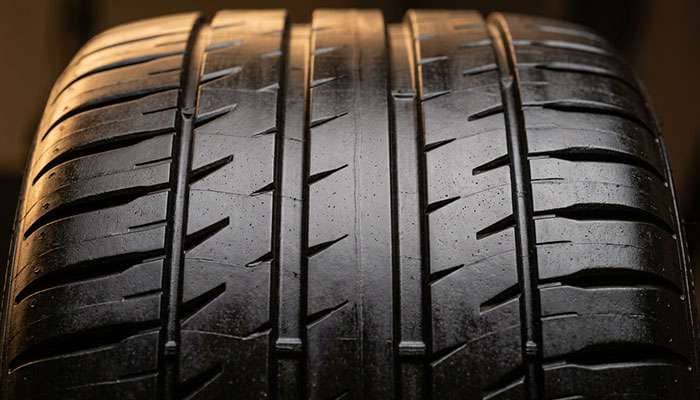
The core difference is rubber compound chemistry and the temperature range each tire performs in. Summer tires use a specialized compound that maximizes grip above 45°F but stiffens and loses traction in the cold. All-season tires use a compound blended for a wider temperature range — they remain functional in cold weather and light snow, but don't reach the same peak grip as a summer tire in warm conditions. Tread design differs too: summer tires feature fewer, larger tread blocks and shallower grooves optimized for dry and warm-wet grip, while all-season tires use more complex siping and deeper grooves designed to evacuate cold water and slush more effectively.
Generally, yes — particularly high-performance summer tires used in daily driving. A summer performance tire with a treadwear rating of 200–300 typically lasts 20,000–35,000 miles in everyday use on a powerful car. A quality all-season touring tire rated 600–700 can realistically reach 60,000–80,000 miles. That said, if your summer tires are on a performance car with limited annual mileage and you're not daily-driving them through stop-and-go traffic, the wear difference shrinks considerably. Track use accelerates summer tire wear substantially due to the sustained high-heat, high-load conditions involved.
Use this simple rule: if your area regularly sees temperatures below 45°F (7°C) from November through March, summer tires aren't a viable year-round solution. In that case, choose between all-season tires — the right call for most mixed-climate drivers — or a two-set approach using summer tires from spring through fall and winter tires through the cold months. If you're in a warm climate where sub-45°F temperatures are rare or brief, summer tires work year-round. Drivers in mild transition climates like the Pacific Northwest or mid-Atlantic should evaluate carefully — even brief cold spells create a real safety concern on summer-only rubber, and it's not a risk worth taking.



