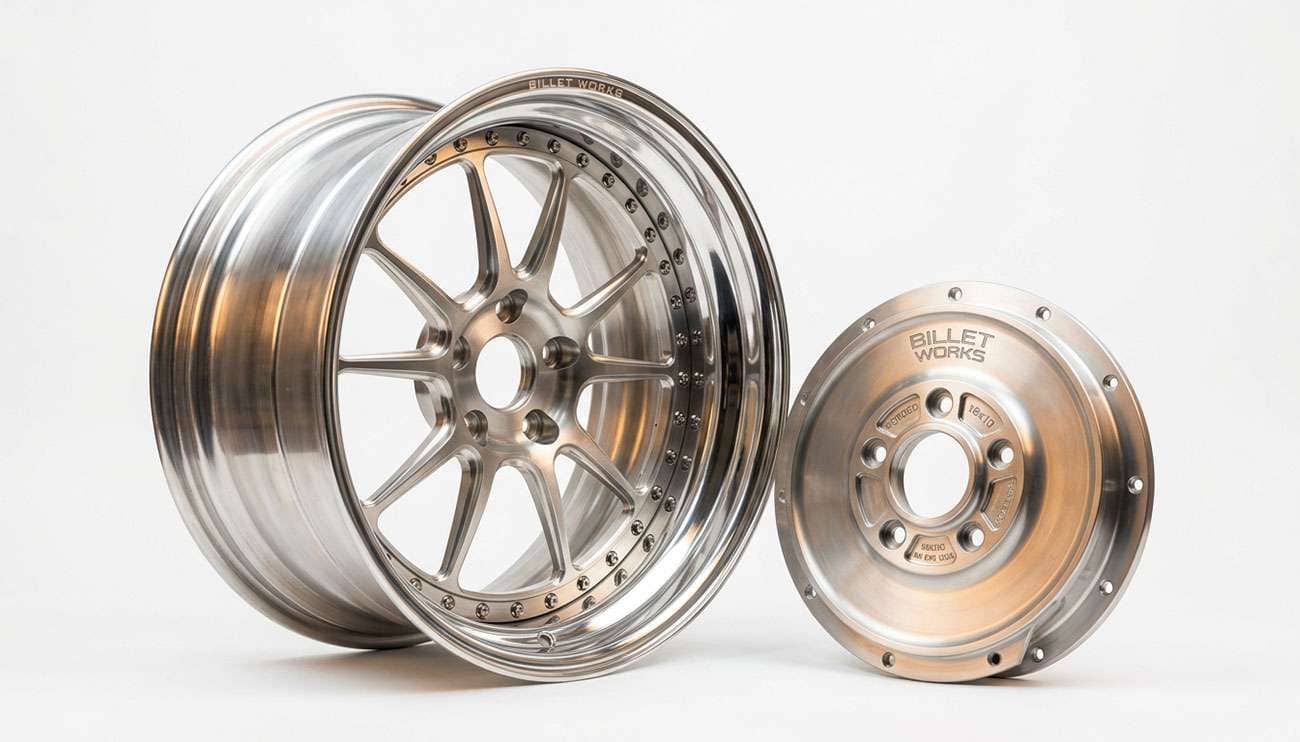
I have been selling wheels since before most of the brands people ask me about existed, and I can tell you the number one reason folks never buy forged is that somebody told them a forged set costs ten grand. That number is wrong, and it has been wrong for years. Sitting in our catalog right now are genuinely forged wheels starting at $153.23 each. That is a forged set of four for about $620. The real question was never whether you can afford forged. It is whether your situation is one of the five where forged actually earns the money.
Here is the table I wish somebody had handed me thirty years ago. Find your row, then keep reading the section that matches it.
Your Situation |
Worth It? |
The Reason |
What to Buy |
|---|---|---|---|
Truck that tows or hauls near its axle rating |
Yes, and it is not optional |
Load ratings a cast wheel cannot reach in the same size |
One-piece forged rated above your per-wheel requirement |
Track, autocross, or drag car |
Yes |
Strength under repeated impact plus lower unsprung mass |
Monoblock forged or one-piece forged |
Fitment that does not exist in cast |
Yes, by necessity |
Big brake clearance, odd bolt pattern, unusual width or offset |
Two-piece or blank-drilled forged |
Show car or hot rod you are keeping |
Yes, long term |
Refinishable, repairable, and holds value with the build |
Two-piece forged or billet in a polished finish |
Daily driver, stock sizes, city parking |
Usually no |
You will never load the wheel hard enough to use the margin |
Flow-formed at cast money, or a quality cast wheel |
You mostly want the look |
No |
Nobody at the show can tell how the aluminum was shaped |
Cast with a first-rate finish, and spend the rest on tires |
Most articles on this subject hedge with "it depends on your needs" and then never say what it depends on. It depends on load, impact, fitment, and how long you are keeping the car. Everything else is noise.
Let me put real numbers on the table, because the internet will not.
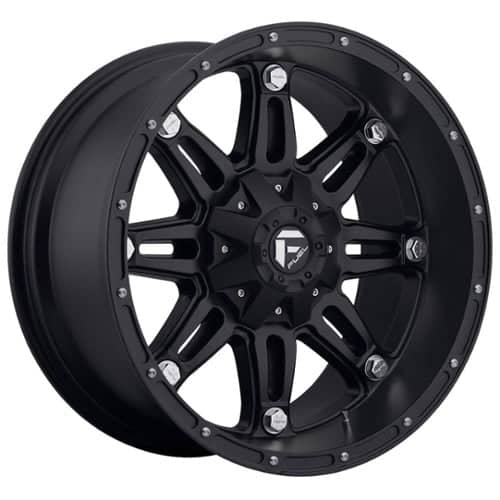
Across our catalog, one-piece forged wheels start at $155.71 for a Method 316 Street in 17x8.5, and that wheel carries a 2,650 pound load rating. Niche's Kanan in monoblock forged starts at $153.23. Fuel has close to 700 forged SKUs under $600 a wheel, including the Beast D564 at $255 and the Hostage D531 at $319.42 with a 3,500 pound rating. Rotiform's TUF R902 is monoblock forged and starts at $293.25.
Now the other end. One-piece forged runs through a middle band of roughly $922 to $1,646 per wheel and tops out at $5,170 on the big drag sizes. Two-piece forged sits around $1,126 to $1,914. Three-piece forged has a hard floor of $1,099 with nothing underneath it anywhere in our catalog.
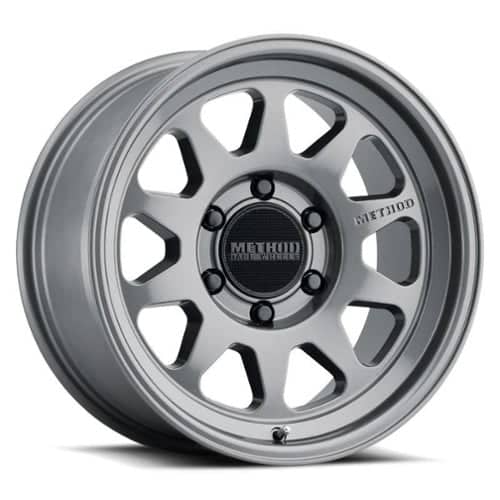
So both things are true. There is forged at $155 and there is forged at $5,170, and they are both forged. What separates them is size, load rating, whether the wheel is built to order, and whether the barrel is a separate piece. If somebody quotes you one price for "forged," they are selling you a story. Our deeper look at cast versus forged versus flow-formed construction lays out where each process actually sits.
Here is the part that stings. A lot of people buy a $500 cast wheel because they were told forged starts at three grand. They could have had a forged wheel with a higher load rating for less money. That is a self-inflicted wound, and it happens on my sales floor every week.
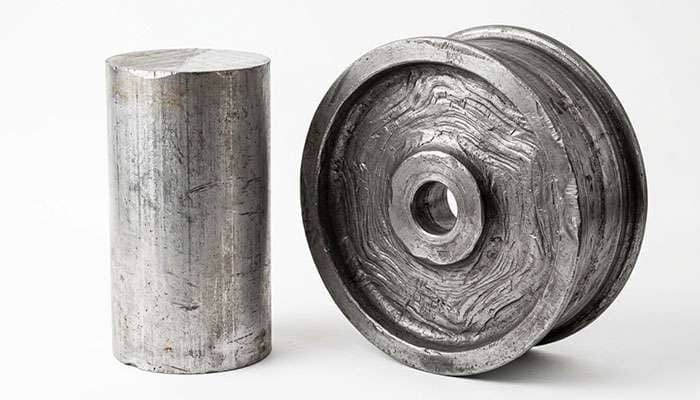
Forging squeezes a solid aluminum billet under enormous pressure while it is hot. That compresses the grain structure and lines the metal up with the shape of the part instead of leaving it in the random branching pattern you get when aluminum cools in a mold. Aligned grain resists cracking along its length. That is the whole story, and it means the engineer can take material out and still pass the load test.
Four situations turn that into real money back in your pocket.
You are loading the wheel near its limit. Trucks that tow, haul, or run at gross axle weight rating need per-wheel capacity that cast construction struggles to deliver in a good-looking size. Our one-piece forged wheels carry a median load rating of 3,640 pounds against 2,500 for cast. That is not bragging, that is arithmetic.
You are hitting things. Track curbing, autocross cones taken flat, drag strip launches, washboard fire roads. Repeated impact is exactly what forged construction handles better, because the failure mode of a cast wheel under impact is a crack and the failure mode of a forged wheel is usually a bend you can straighten.
The fitment does not exist any other way. Six-piston brakes behind an 18 inch wheel, an odd bolt circle on a swapped axle, a width nobody produces. Two-piece and blank-drilled forged wheels get built to your spec. Our rundown of the different types of forged wheels from monoblock to multi-piece covers how far you can push that.
You are keeping the car. This is the one nobody talks about, and it is the next section.
I will lose a sale telling you this, and I have made peace with that.
If you drive a normal car in stock sizes, park on city streets, and plan to trade it in a few years, forged is money you will not get back. A good cast wheel with a published load rating that passes SAE J2530 carries every load that car will ever put through it, with margin left over. You will not feel the difference on the school run. You will not see it at the coffee shop. You will feel it when the bill comes.
There is a better answer for that driver, and almost nobody mentions it. Flow-formed wheels run a median of $330 each in our catalog and cast runs $329. Same money. Flow forming spins the barrel under heat and work-hardens it, so you get much of the strength benefit in the part of the wheel that takes the abuse, without paying for a full forging press. If you want lighter and stronger for the price of ordinary, that is where it lives.
The second waste case is curb country. If you parallel park downtown five days a week, a forged wheel meets concrete on the same schedule a cast wheel does. The difference is what it costs you afterward, which brings us to the math.
Everybody compares the sticker price of two wheels. Almost nobody compares what happens after the pothole.
Bend a cast wheel badly and it is usually finished. Cast aluminum has a porous grain structure, and heating and pushing it back into shape risks cracking it. Most reputable shops will refuse to straighten a badly bent cast wheel, and they are right to refuse. You are buying a new wheel.
Bend a forged wheel and the odds flip. Forged aluminum has the ductility to be straightened, and a competent wheel shop can bring most bent forged rims back into spec and refinish the face. On a two-piece or three-piece wheel you can often replace only the damaged barrel half and keep the expensive forged center. I have customers running the same set of two-piece wheels they bought from me in the nineties, on their third barrel and fourth finish.
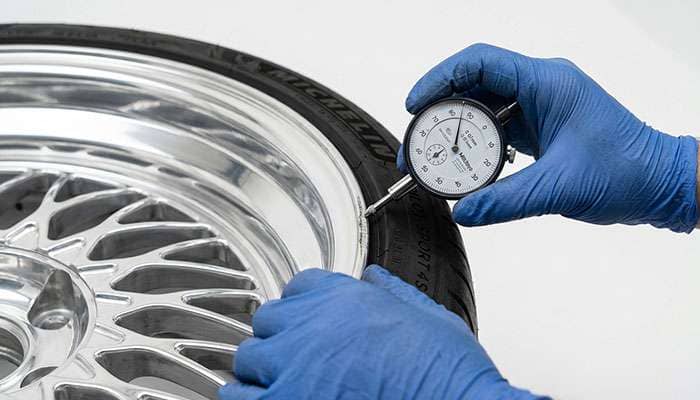
Run that over ten years. A cast wheel that gets replaced twice costs you three sets. A forged wheel that gets straightened and refinished twice costs you one set plus two repairs. Depending on how rough your roads are, the forged wheel can be the cheaper wheel by the time you are done with it. If you want the real numbers on refinishing, we broke them down in our guide to fixing curb rash, DIY versus professional repair costs.
The catch is that this only pays off if you keep the car. Trade it in three years and the next owner gets the benefit. Keep it fifteen years like most of my hot rod customers do, and forged wins on cost, not just on pride.
Truck buyers get the clearest answer of anybody, and it starts on the door jamb.
Open the driver's door and read the tire and loading placard. Find the gross axle weight rating for the heavier axle and divide it by two. On a lot of three-quarter ton and one-ton trucks that number lands north of 3,000 pounds per wheel. Now go look at what cast wheels are rated for in the size you want. You will run out of cast options in a hurry.
That is why the forged truck market exists, and it is why a wheel like the Fuel Hostage D531 in 20x10 with a 3,500 pound rating sells at $319.42 while a prettier cast wheel at the same price might be rated for 2,500. The pretty one is not a lie. It is just not rated for your truck loaded.
Dually applications are their own animal. Inner and outer wheel positions carry different loads and need different offsets, and forged dually wheels exist because cast ones in those sizes get too heavy to be practical. If you run a dually and you tow for a living, this is not a styling decision.
One warning from thirty years of writing tickets. Do not let anyone talk you into judging a truck wheel by diameter and finish alone. Get the load rating in writing, confirm it exceeds your per-wheel requirement, and confirm the manufacturer tests to SAE J2530. Everything else is decoration.
Now we are on my home turf.
Hot rods and street machines have been running forged and billet wheels since long before it was a marketing word, and the reason has always been the same: you can get shapes and finishes out of forged and machined aluminum that a casting mold simply cannot produce. Deep polished lips. Thin, clean spokes that still carry load. A finish you can cut and polish back to new twenty years later.
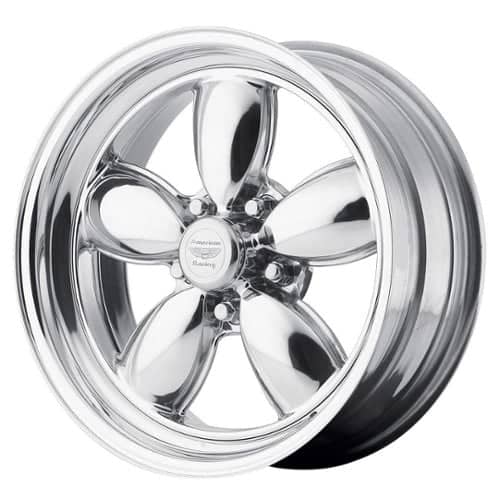
The American Racing VN420 Classic 200S in 15x7 polished is two-piece forged and starts at $456 a wheel. That is a genuinely classic profile in genuinely forged construction, and it is not exotic money. Billet Specialties builds the Fineline in 15x10 polished, also two-piece forged, from $472. Both of those come as blank five-lug so they get drilled to whatever your car actually uses, which matters a great deal when you are working with a vintage bolt circle.
Step up and the range keeps going. Boyd Coddington two-piece runs $720 to $3,707. Billet Specialties two-piece reaches $4,060 on the Crossover Extreme. Those numbers are real, but notice you can get into the same construction family for under five hundred a corner.
The other hot rod argument is resale. A finished car with a period-correct set of polished forged wheels sells better than the same car on cast lookalikes, and the wheels themselves hold value on their own. I have bought back sets I sold two decades earlier. Nobody is buying back a set of cast wheels with a peeling clear coat. If billet is where your head is at, our take on whether billet rims are good gets into the trade-offs.
Forged wheels are lighter than cast wheels in the same design and size. That part is true, and the reason it matters is that wheel weight is both unsprung and rotating. A pound saved at the wheel does more for acceleration, braking, and how quickly the suspension answers a bump than a pound saved anywhere else on the car.
Now here is the part I have to warn you about, because it costs people money every day.
The weight number on a lot of online wheel listings is not the weight of the wheel. It is the shipping weight of the box, which includes packaging, the center cap, sometimes hardware, and on some listings a pallet division. I have watched customers talk themselves out of a good wheel because a listing said fifty pounds when the wheel itself was closer to twenty-six. Ours are not the only catalog where that column means shipping.
So do this instead. Get the published bare wheel weight from the manufacturer's own spec sheet for your exact diameter, width, and offset. Weight changes with all three, so a number quoted for an 18x8 tells you very little about a 20x10. If a manufacturer will not publish bare weights, that tells you something too.
And keep the gain in perspective. On a daily driver in stock sizes the difference between a good cast wheel and a forged one might be two or three pounds a corner. Real, measurable, and honestly not something you will notice on the way to work. On a track car running twelve inch wide rears, or a truck running 22 inch wheels, the difference gets big enough to feel.
The word forged has been stretched so far it barely holds shape. Here is how I sort it out on the counter.
Rotary forged, flow forged, hybrid forged, and spun rim all mean flow-formed. That is a cast center with a barrel spun and work-hardened under heat. It is a genuinely good process and I recommend it constantly. It is not forging. If the price looks like cast money, it is because it is basically cast money, and that is fine as long as nobody told you otherwise.
Forged-like, forged-inspired, and forged technology mean nothing at all. Those are copywriting.
Real forged shows up in the construction spec, not the model name. On our product pages the construction line reads one-piece forged, monoblock forged, two-piece forged, or three-piece forged. If a listing anywhere will not tell you the construction in plain words, assume cast and price it accordingly.
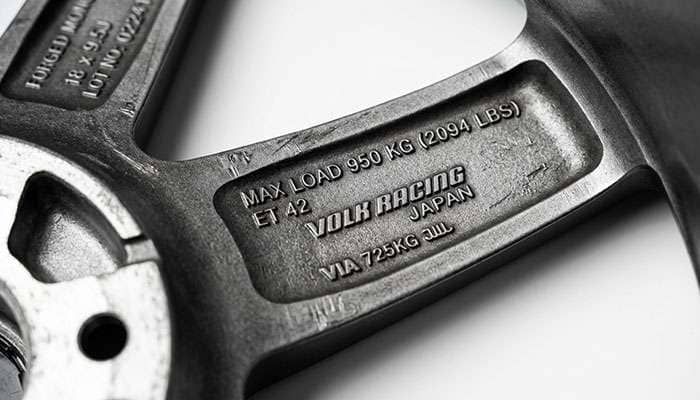
Look for the certification marks. SAE J2530 is the aftermarket wheel performance standard covering radial fatigue, cornering fatigue, and impact. JWL and VIA marks are the Japanese equivalents and show up cast or stamped into the wheel itself. A DOT stamp confirms the wheel meets Department of Transportation requirements. A manufacturer that tests and marks its wheels is telling you something a marketing adjective cannot.
One more. Ask what the warranty covers. Serious forged manufacturers offer structural warranties because they have tested to a standard and know what the part will do. Vague warranty language on an expensive wheel is a bad sign every single time. We went further into the sorting process in our honest assessment of whether forged wheels are any good.
Both mistakes have a bill attached, and the bill grows the longer you ignore it.
Buy under your load requirement and the sequence is ugly and predictable. The wheel flexes past what it was designed for under cornering and impact. That flex concentrates at the spoke-to-barrel junction. You get a hairline crack that weeps air, so the tire runs low without you noticing. A chronically underinflated tire builds heat in the sidewall, and heat is what kills tires. Loaded, at highway speed, in July, that ends on the shoulder if you are lucky. The four hundred dollars you saved on wheels just bought you a set of tires and a tow.
Buy far over your needs and the loss is quieter. A set of three-piece forged wheels on a car that lives on city streets is going to meet a curb, and fixing a multi-piece barrel means disassembly, a replacement half, resealing, and a pressure test. One bad parking job across a set can run into four figures. There is a reason the people I know with serious wheels have a beater set for winter.
The third mistake is the one that bothers me most. Paying forged money for a flow-formed wheel because the model name said forged. Nothing about that wheel is worse than it was, but you paid a premium for a word. Read the construction spec before you check out, every time. Our piece on whether custom wheels are worth the money walks through the same trap from the value side.
Four steps, in this order, and you will not get this wrong.
Get your per-wheel load number. Driver's door jamb, tire and loading placard, gross axle weight rating for the heavier axle, divide by two. Write it down. Nothing you buy may be rated below that number, and if that number is above about 2,500 pounds you are shopping forged whether you planned to or not.
Decide how long you are keeping the vehicle. Under five years, the repair and refinish advantage of forged never gets a chance to pay you back, and flow-formed is the smarter buy. Over ten years, especially on a build you care about, forged starts winning on cost and not just on feel.
Check whether the fitment exists in cast. If a production wheel comes in your bolt pattern, diameter, width, and an offset within a few millimeters of what you need, you do not need multi-piece construction. If it does not exist, forged is the answer and the price floor comes with it.
Then shop construction, not names. Filter for forged, compare load ratings, confirm SAE J2530, and buy the one you like best among the wheels that pass. If you want a starting point on who builds what, we ranked them in the most popular forged wheel brands.
Ready to see what forged actually costs for your vehicle? Browse our full selection of forged rims, or call the shop and give us your year, make, model, and what you do with the thing. We will pull the load ratings and the offsets before you spend a dime.
Are forged wheels worth the price? For a truck that works, a car that gets driven hard, a fitment that does not exist otherwise, or a build you are keeping for the rest of your life, yes, and it is not particularly close. For a daily driver in stock sizes that you will trade in three years, no, and flow-formed will give you most of the benefit at cast money.
What I want you to take away is that the price objection was mostly imaginary. Forged starts at $153 a wheel in our catalog, not $3,000 a set. Once you stop treating forged as a luxury category and start treating it as a construction spec with a load rating attached, the decision gets simple. Get your number off the door jamb, decide how long you are keeping the car, and buy the wheel that clears both. That is the whole trick, and it has not changed in forty years.
Far less than most people think at the entry point. Genuinely forged wheels in our catalog start at $153.23 each, with Method's 316 Street forged from $155.71 and hundreds of Fuel forged options under $600 a wheel. The middle of the one-piece forged market runs roughly $922 to $1,646 per wheel, two-piece forged runs about $1,126 to $1,914, and three-piece forged has a hard floor of $1,099 with nothing available below it.
Yes, for the same amount of material. Forging compresses the aluminum grain structure and aligns it with the shape of the part, so the metal resists cracking along its length rather than splitting at random grain boundaries. That shows up in load ratings, where our one-piece forged wheels carry a median of 3,640 pounds per wheel against 2,500 for cast. It also shows up in the failure mode: forged wheels tend to bend where cast wheels tend to crack.
Usually, yes, and that is one of the strongest arguments for buying them. Forged aluminum has the ductility to be straightened back into spec by a competent wheel shop, and the face can be refinished afterward. On two-piece and three-piece wheels you can often replace just the damaged barrel half and keep the forged center. A badly bent cast wheel is normally replaced rather than repaired, since heating and reshaping porous cast aluminum risks cracking it.
No. Flow forming starts with a cast center, then spins the barrel against rollers under heat, which work-hardens and aligns the grain in the barrel only. Rotary forged, flow forged, hybrid forged, and spun rim are all marketing names for that same process. It is an excellent value and typically prices in line with cast, but it is not forging and should not be priced like it. Check the construction spec on the product page rather than the model name.
Check the placard before you decide. Take the gross axle weight rating for your heavier axle, divide by two, and that is your minimum per-wheel load rating. On many three-quarter ton and one-ton trucks that number exceeds what cast wheels are rated for in popular sizes, which pushes you into forged by requirement rather than preference. If your number sits comfortably under 2,500 pounds, a quality cast wheel with a published rating will do the job.
It depends heavily on diameter, width, and design, so treat any single figure with suspicion. On a daily driver in stock sizes the difference between a good cast wheel and a forged one is often only a couple of pounds per corner. On wide track sizes or large truck diameters it grows enough to feel. Get the manufacturer's published bare wheel weight for your exact size, and be aware that the weight figure shown on many online listings is shipping weight, not the weight of the wheel.
On a build you intend to keep, yes. Forged and billet construction allows deep polished lips and thin load-bearing spokes that casting cannot produce, the finish can be cut and polished back decades later, and blank-drilled centers let you match a vintage bolt circle exactly. They also hold value with the car in a way cast lookalikes do not. Two-piece forged options like the American Racing VN420 Classic 200S start at $456 per wheel, so the entry point is more reasonable than the reputation suggests.