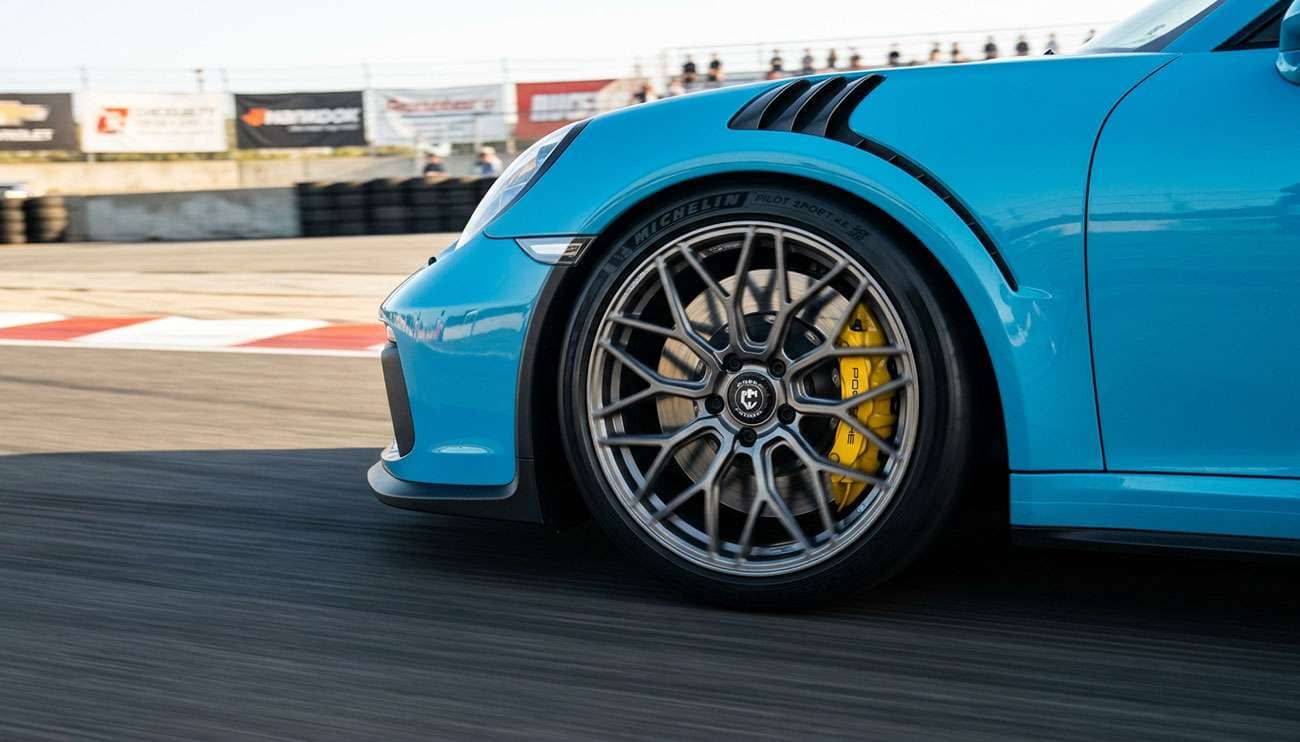
I get this question on the phone a couple times a week: someone has a Curva wheel in their cart, the price looks almost too reasonable for the way it photographs, and they want to know what the catch is. Fair instinct. When a wheel looks like a $1,200-a-corner forged piece and rings up at a fraction of that, you should ask what you're actually buying. So let's go through it the way I'd walk a customer through it at the counter — construction first, fitment second, and the honest caveats last.
Curva Concepts is a Los Angeles-based aftermarket wheel company that's been designing and engineering wheels for about two decades. They run two distinct families: a classic cast "main line" with a wide spread of styles and fitments, and a newer performance-oriented flow-forged line they call the CFF Series. That split matters more than the marketing makes it sound, and I'll get into why.
The brand sits in the same competitive tier as names like Rotiform and Motegi — California-designed, fitment-flexible, aimed at enthusiasts who want a clean Euro or muscle-car stance without stepping up to true forged money. Curva's catalog runs from 18 inches all the way up to 24, with widths up to 10.5 and both staggered and square fitments. In plain terms: they cover sedans, coupes, performance cars, and SUVs, which is exactly why we stock such a deep range of them.
This is the part worth slowing down on, because "flow-forged" gets thrown around loosely. Flow forming starts with a cast wheel center, then spins the barrel under heat and pressure to stretch and compress the aluminum in the rim section. The result is a barrel with a tighter grain structure than a plain cast wheel — closer to forged behavior in the part of the wheel that takes the most load — without the cost of a fully forged blank. If you want the full breakdown of how these three construction methods stack up, we covered it in detail in our guide on cast vs. forged vs. flow-formed wheels.
What that buys you in practice is weight. Curva quotes their 20-inch CFF46 at roughly 24 pounds versus about 36 pounds for a comparable OE cast wheel — that's around a dozen pounds per corner of unsprung, rotating mass gone. That's not a small number. Lighter rotating weight sharpens steering response, helps your brakes and suspension do their jobs, and on an EV it can even claw back a little range. If you've never understood why enthusiasts obsess over wheel weight, our breakdown of why lightweight wheels matter lays out the real-world gains.
Here's my fitment-specialist caveat, though: flow forming improves the cast line, it doesn't turn it into a forged wheel. Curva's CFF series is genuinely lighter and stronger than their cast main line, and it's a legitimately good value at its price. But if you're building a dedicated track car that sees curbs and big lateral loads every weekend, a true forged wheel still has a structural ceiling that flow forming doesn't reach. For street, spirited canyon driving, and the occasional track day, the CFF line is plenty. Match the wheel to the use case and you won't be disappointed.
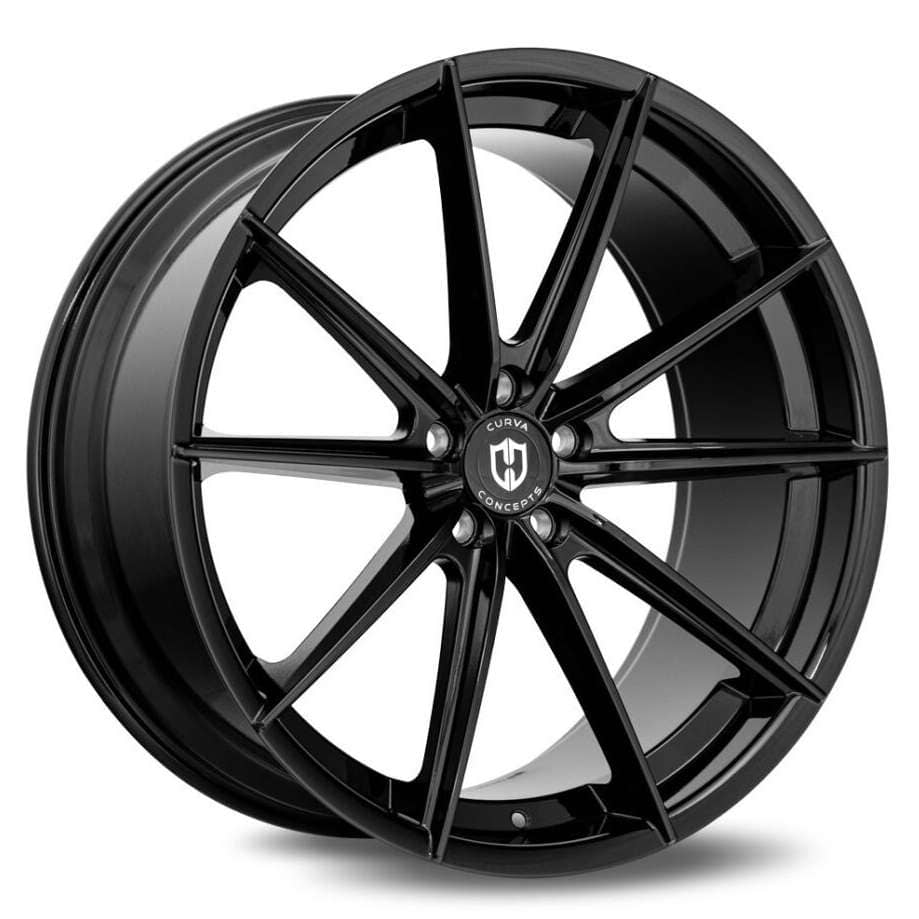
Curva's catalog is deep, but a handful of designs carry the brand. These are the ones I steer people toward because the fitment coverage is good and the looks hold up.
The C300 is the brand's signature — a clean split five-spoke that works on everything from a luxury sedan to a coupe. It's offered in cast form across a broad fitment range and shows up in the most finishes, so it's the easy default if you want a safe, sharp look. The CFF46 is the flow-forged split-spoke that most people picture when they think modern concave Curva: aggressive face, real weight savings, staggered availability. The CFF70 runs a split 10-spoke design that flows into the lip for an upscale, almost forged-looking face, and Curva lists it as one of their most popular. The CFF75 leans into a fuller mesh-style face for buyers who want more visual density.
One important note from someone who sells these: SKU presence in a feed doesn't mean a design is current. Curva rotates styles, and some older patterns (the CFF50, for instance) are flagged discontinued with limited fitments left. Before you fall in love with a specific model, confirm it's still in production in your bolt pattern and size — or just call us and we'll tell you what's actually shipping.
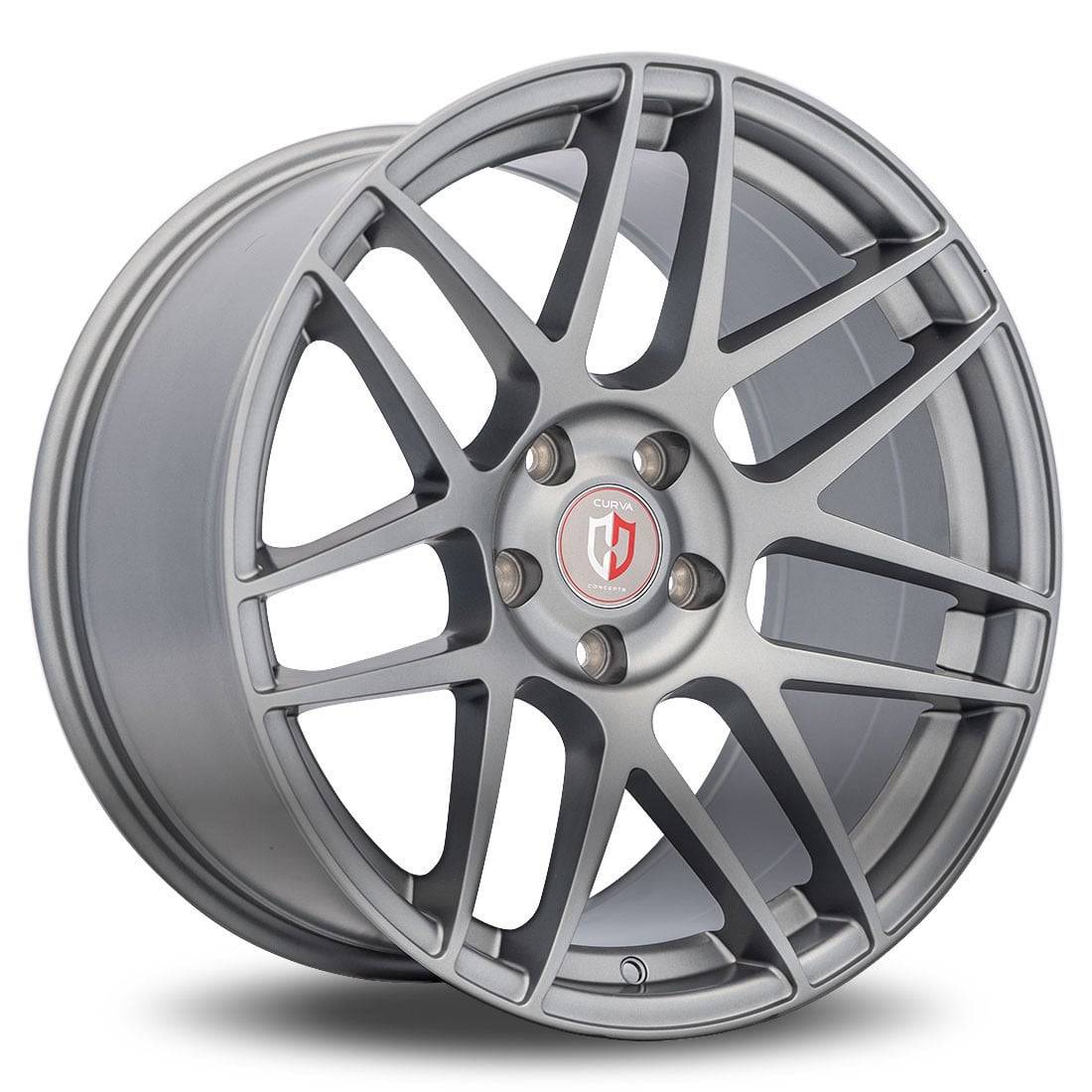
This is where I think Curva quietly outperforms its price. A good-looking wheel that doesn't fit your car is a paperweight, and the brands that cut corners do it on fitment depth — they offer a style in two or three sizes and call it a day. Curva offers real spread: multiple diameters, multiple widths, and the offsets to make a staggered setup sit right.
If you're going staggered — wider in the rear than the front, which is the move on a lot of rear-drive Euro and muscle builds — the offset math is what separates a flush, properly tucked stance from rubbing fenders and rolled liners. I always point first-timers to our staggered wheels guide before they order, and to our explainer on wheel offset so the numbers actually mean something. Get those two right and Curva's range gives you room to dial in the look you want.
The concave CFF faces add one more variable worth checking: brake and caliper clearance. A deep-dish concave face is gorgeous, but on cars with big brake packages the back of the spokes can crowd the caliper. It's an easy thing to verify before you buy and a miserable thing to discover after — our piece on concave wheel clearance covers exactly what to measure. None of this is a knock on Curva; it's true of any aggressive concave wheel. It just rewards measuring twice.
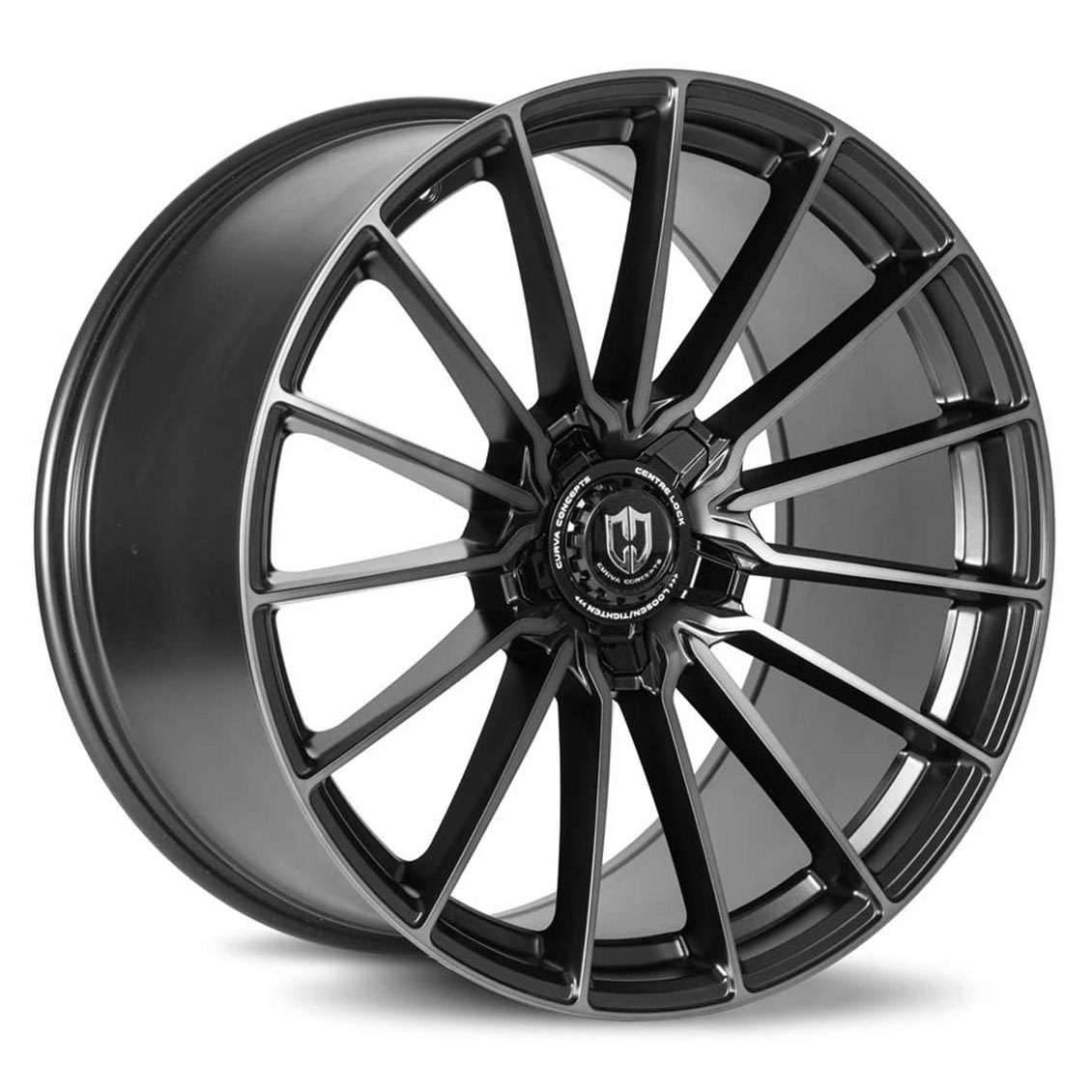
Curva's finish catalog leans heavily on gloss black, with matte black, machined-face, and gunmetal options filling out the popular styles. Gloss black is the volume seller for a reason — it photographs beautifully and suits almost any color car. My only real-world caution is the same one I'd give for any gloss black wheel: it shows brake dust and water spots more than a satin or machined finish, so it asks for a little more upkeep to stay looking showroom-fresh.
The machined-face and tinted finishes (like the CFF75's black machined tint) are the sweet spot if you want some sparkle without the maintenance of full chrome or polish. They hide minor curb contact better than a high-shine lip and don't pit the way bright polish can. If finish longevity is your priority, that's the direction I'd nudge you. It's a small decision that pays off two years down the road.
To put Curva in context, here's how the flow-forged line stacks up against two brands buyers cross-shop in the same price neighborhood. We've tested both — see our takes on whether Rotiform is a good wheel brand and how Motegi wheels hold up street vs. track.
Feature |
Curva (CFF Series) |
Rotiform |
Motegi |
|---|---|---|---|
Construction |
Flow-forged + cast main line |
Cast, flow-formed, and forged |
Primarily cast/flow-formed |
Style Direction |
Euro/luxury and modern concave |
Euro, motorsport, retro-mesh |
Sport/tuner and street |
Fitment Range |
18"–24", staggered & square |
Broad, fitment-focused |
Broad, value-oriented |
Best For |
Clean stance on a value budget |
Statement Euro builds |
Budget sport upgrades |
The honest verdict: Curva's CFF line punches above its price on construction and absolutely competes on fitment depth and looks. Rotiform reaches higher at the top of its range with true forged options, and Motegi plays slightly more in the entry-budget lane. For the buyer who wants a genuinely lightweight, flow-forged wheel with a refined Euro-leaning face and the fitment flexibility to nail a staggered stance — without paying forged prices — Curva is one of the smartest values in the category.
So, are Curva wheels any good? Yes — with the context a fitment guy would insist on. The flow-forged CFF series gives you real weight savings and improved strength over plain cast wheels, the designs hold up next to brands that cost more, and the fitment coverage is deep enough to do a proper staggered setup. Just match the line to your use case (CFF for performance, main line for budget-conscious style), confirm your chosen model is still in production in your size, and measure for caliper clearance on the concave faces. Do that, and Curva delivers a lot of wheel for the money.
Both. Curva makes a classic cast main line and a separate flow-forged performance line called the CFF Series. The CFF wheels are lighter and stronger than the cast line, so if weight savings matter to you, look for a CFF model.
Yes. The CFF flow-forged line offers strength and weight savings well suited to street and spirited driving, and the cast main line is a solid value for daily styling. For dedicated, high-load track use, a fully forged wheel still has a higher structural ceiling.
Yes. Curva offers staggered and square fitments across diameters from 18 to 24 inches and widths up to 10.5 inches. Check your offset numbers carefully to get a flush, properly tucked stance.
It varies by size, but Curva quotes the 20-inch CFF46 at roughly 24 pounds versus about 36 pounds for a comparable OE cast wheel — around a dozen pounds per corner of unsprung, rotating weight saved.
Performance Plus Tire stocks a deep range of Curva wheels across both the cast and flow-forged lines. You can browse current models, finishes, and fitments on our Curva Wheels page, and our team can confirm what's in production for your specific vehicle.
Ready to dial in your stance? Browse the full selection of Curva Wheels at Performance Plus Tire and let our fitment team help you get the offset and sizing right the first time.