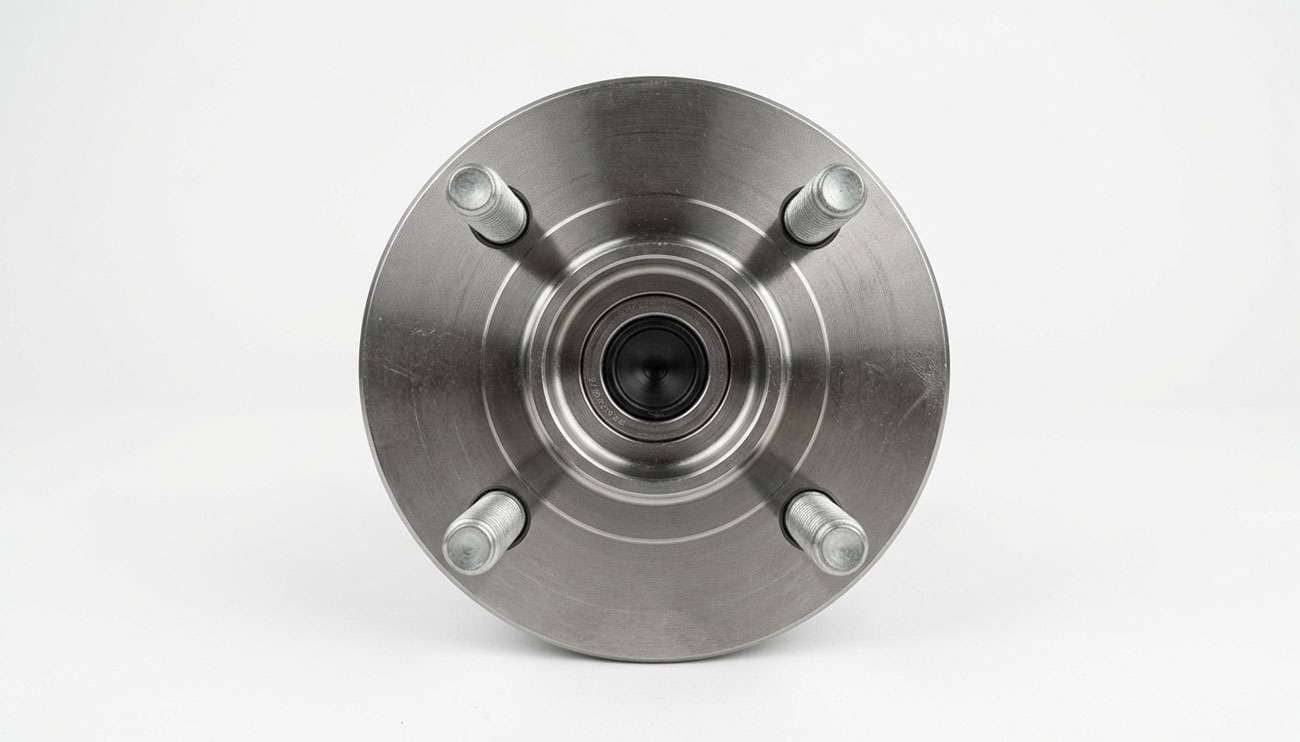
4x10⁸ means four lug holes spaced evenly around a circle 108 millimeters in diameter. The pattern is used by Ford, Mercury, Peugeot, Citroen, Audi, Saab, Volvo, Alfa Romeo and early Porsche 924. But 4x10⁸ spans two vehicle families that share a pitch circle diameter and share almost nothing else. American 4x10⁸ cars run studs and a 63.4 mm hub bore. European 4x10⁸ cars run bolts and hub bores as small as 57.1 mm. A wheel that fits one will not necessarily mount on the other, even though both are correctly labeled 4x10⁸.
I am Dennis Feldman, and confirming fitment is the part of this job I do most. The 4x10⁸ pattern generates more phone calls than its share of the market would suggest, and the reason is always the same. Somebody found a wheel listed as 4x10⁸, confirmed their car is 4x10⁸, ordered it, and then discovered the wheel will not seat on the hub or the fasteners are the wrong species entirely.
A vehicle list answers a question nobody actually has. The real question is whether a specific wheel will mount on a specific car, and that takes four numbers, not one.
Specification |
What It Controls |
What Happens If It Is Wrong |
|---|---|---|
Pitch circle diameter |
Whether the fasteners line up with the holes at all |
On a four-lug pattern, the wheel simply will not go on |
Hub bore |
Whether the wheel centers on the hub or hangs on the fasteners |
Too small and it will not seat; too large without rings and it vibrates |
Fastener type |
Studs with nuts, or bolts threaded into the hub |
Wrong hardware entirely; nothing to thread onto or into |
Thread size and seat type |
Clamp load at the joint |
Fasteners loosen in service even when torqued correctly |
Bolt pattern gets all the attention because it is the number in the product title. The other three decide whether the wheel actually works. Our broader guide to wheel bolt patterns covers how the whole system fits together.
4x10⁸ in inches is 4x4.25. Divide 108 by 25.4 and you get 4.2519 inches, which the industry rounds to 4.25. Run it the other way and 4.25 inches is 107.95 millimeters, which rounds to 108.
They are the same pattern written in two unit systems. If a listing says 4x4.25 and your car is 4x10⁸, that is a match, not a near miss. American manufacturers and vintage wheel makers tend to write it in inches. European manufacturers and most modern aftermarket brands write it in millimeters.
The half-millimeter of rounding is not a fitment concern. Lug holes carry more clearance than that by design, and both figures describe the same tooling.
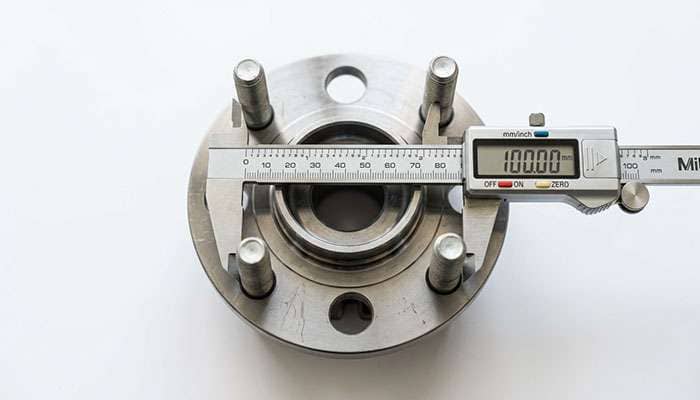
Here is the list, organized the way it actually matters, which is by which family of car you are dealing with rather than alphabetically by make.
Vehicle |
Years |
Notes |
|---|---|---|
Ford Mustang, Fox body |
1979 to 1993 |
Four-cylinder and V6 cars. The 5.0 five-lug cars are a different pattern |
Ford Thunderbird |
1980 to 1988 |
Fox chassis variants |
Ford Pinto |
1971 to 1980 |
Original four-lug fitment |
Ford Escort ZX2 |
1998 to 2003 |
ZX2 coupe specifically |
Ford Contour and Contour SVT |
1995 to 2000 |
Shares the Mondeo platform |
Ford Focus |
1998 to 2011 |
Verify by generation and market; later Focus moved to five lug |
Ford Fiesta and Fiesta ST |
2011 to 2019 |
The modern enthusiast entry point to this pattern |
Mercury Cougar |
Fox era |
Shares Fox chassis hardware with the Mustang |
Mercury Tracer and Mystique |
Late 1990s |
Mystique is the Contour twin |
Make |
Models |
Notes |
|---|---|---|
Peugeot |
205, 206, 207, 208, 2008, 306, 307 |
The largest single block of 4x10⁸ vehicles worldwide |
Citroen |
C3, C4, Saxo, BX, ZX |
Shares hardware with Peugeot |
Audi |
80 and 90 (1987 to 1996), 100, Coupe |
Earlier 80 and 90 cars used 4x100; check the year carefully |
Saab |
Classic 900, 9000 |
Classic 900 only, not the GM-era cars |
Volvo |
440, 460, 480 |
The Dutch-built front-drive cars |
Alfa Romeo |
Spider (1986 to 1991), Giulia and GT Junior |
Vintage models only |
Porsche |
924, early non-turbo |
The four-lug 924 only; Turbo and later cars differ |
Two cautions on any list of this kind, including this one. First, manufacturers change bolt patterns mid-generation and by market, and the Audi 80 is the textbook case, having run 4x100 before switching to 4x10⁸. Second, a model appearing on the list does not mean every trim of that model qualifies. The Fox body Mustang is the clearest example: the four-cylinder and V6 cars are 4x10⁸, and the 5.0 cars are not.
Measure your own hub before you buy. Every time.
This is the part almost nobody puts in front of you, and it is the reason those phone calls happen.
The pitch circle diameter is identical across every car above. What is not identical is everything else at the wheel joint.
Specification |
Ford and Mercury |
Audi |
Peugeot, Citroen, Saab |
|---|---|---|---|
Hub bore |
63.4 mm typical |
57.1 mm |
65.1 mm typical |
Fastener type |
Studs pressed into the hub, nuts thread on |
Bolts thread into the hub |
Bolts thread into the hub |
Thread |
12x1.5 or 1/2 inch right hand |
14x1.5 |
12x1.25 or 12x1.5 depending on model |
Practical consequence |
Wheel hangs on studs during install |
Bolt length must match wheel thickness exactly |
Bolt length must match wheel thickness exactly |
Three different hub bores and two different fastener systems, all under one bolt pattern label. A Fox body Mustang wheel with a 63.4 mm bore physically cannot seat on an Audi 80 hub if that hub is larger than the bore, and you cannot ring your way out of a bore that is too small. Rings only work in one direction, taking a large bore down to a small hub, never the reverse.
The bolt versus stud difference is the one that surprises people the most. On a stud car you can hang the wheel on the studs and thread nuts on with both hands free. On a bolt car you are holding the wheel up with one hand and starting a bolt with the other, and if that bolt is the wrong length you either bottom it out in the hub before it clamps or you run out of thread engagement. Bolt length is a function of wheel mounting pad thickness, so changing wheels on a European 4x10⁸ car often means changing bolts too.
Seat type matters just as much. Conical, ball and flat seats are not interchangeable, and a mismatch loosens in service even when you torque it correctly on day one. Our guide to lug nut seat types covers how to identify what you have.
On hub bore, the aftermarket almost always ships a wheel with an oversized bore, commonly around 73.1 mm, and expects you to fit hub-centric rings to bring it down to your hub. That is standard practice and it is correct, not a compromise. Skipping the rings is the most common cause of a vibration that no amount of rebalancing will resolve. We covered the mechanism in hub-centric vs lug-centric wheels.
Not directly. The two patterns differ by 8 millimeters of pitch circle diameter, which puts every stud 4 millimeters off center from its hole. A lug hole carries roughly a millimeter of working clearance around the fastener. Four millimeters is not close.
What that means practically: the wheel will not go on. This is not a case where it bolts up loose and you find out later. With a four-lug pattern the mismatch is geometric and immediate. You will get one or two fasteners started and the other two will be sitting on metal.
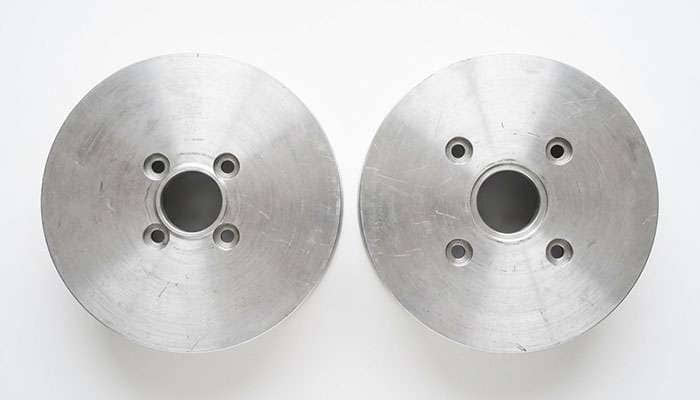
People ask about two workarounds and they deserve honest answers.
Bolt-on adapters. These are real, they work, and they convert 4x100 hubs to 4x10⁸ wheels or the reverse. The catch is that an adapter is a structural component carrying your entire corner load through a second bolted joint, and it adds its own thickness to your effective offset, typically 20 millimeters or more. On a four-lug car you have fewer fasteners sharing that load than on a five-lug, and four-lug cars tend to be light vehicles with small hubs that were not designed with margin for this. If you go this route, use hub-centric adapters from a known manufacturer, torque to spec, and re-torque after the first 50 to 100 miles. Our guide to wheel spacers and adapters lays out the tradeoffs in full.
Eccentric or wobble bolts. These use an offset collar to let a bolt pull a wheel onto a slightly different pitch circle. They are common in parts of Europe for exactly the 4x100 to 4x10⁸ conversion. They also concentrate load in a way a standard bolt does not, and they are not something I would put on a car I intended to drive hard. If you use them, understand you are outside what the wheel and hub manufacturers designed for.
If you want to run 4x10⁸ wheels and you have a 4x100 car, the clean answer is redrilled hubs or a different set of wheels. If you are shopping the other pattern, our guide to 4x100 wheels covers what fits there.
No, and the gap is smaller here, which is exactly what makes it dangerous.
4x114.3 and 4x10⁸ differ by 6.3 millimeters of pitch circle diameter, or about 3.15 millimeters at each stud. That is still well beyond the clearance in a lug hole, so the wheel will not mount properly. But 6.3 millimeters is close enough that the two patterns look similar when you eyeball them, and close enough that someone with a set of wheels and some optimism will try to force it.
Here is the mechanism that matters, and it applies to every near-miss bolt pattern. A lug nut does not hold a wheel on by gripping the stud. It holds the wheel on by generating clamp load, pressing the wheel's mounting pad flat against the hub face with enough force that friction carries the driving and braking torque. That clamp load depends on the tapered seat of the nut making full, concentric contact with the tapered seat in the wheel.
Force a wheel onto the wrong pitch circle and the nut contacts its seat on one side only. Clamp load collapses. The joint starts to work back and forth under load, the seats gall, and the fasteners walk loose. On a four-lug car this is worse than on a five-lug, because you have twenty-five percent fewer fasteners carrying the same load and no redundancy when one starts to go.
4x114.3 is a legitimate and widely supported pattern in its own right. If that is what your car actually has, our 4x114.3 bolt pattern guide is the right place to look.
No. These are two different patterns and the confusion is understandable, because both involve the number 108 somewhere in the conversation.
Written As |
In Millimeters |
In Inches |
Same Pattern? |
|---|---|---|---|
5x4.5 |
114.3 mm |
4.5 in |
Same as 5x114.3 |
5x10⁸ |
108 mm |
4.25 in |
Same as 5x4.25 |
So 5x4.5 equals 5x114.3, and 5x10⁸ equals 5x4.25. They are 6.3 millimeters apart and they do not interchange. The inch figure to watch for is 4.25, not 4.5.
Where this trips people is that 5x10⁸ and 4x10⁸ share a pitch circle diameter but not a lug count, so a 4x10⁸ wheel and a 5x10⁸ wheel have nothing to do with each other. And 5x114.3 sits close enough to 5x10⁸ that people who successfully forced something once will tell you it works. It does not. If you are working with five-lug patterns, our guide to the 5x10⁸ bolt pattern covers what interchanges there and what does not.
This is the practical constraint on a 4x10⁸ build, and it is worth knowing before you fall in love with a wheel design.
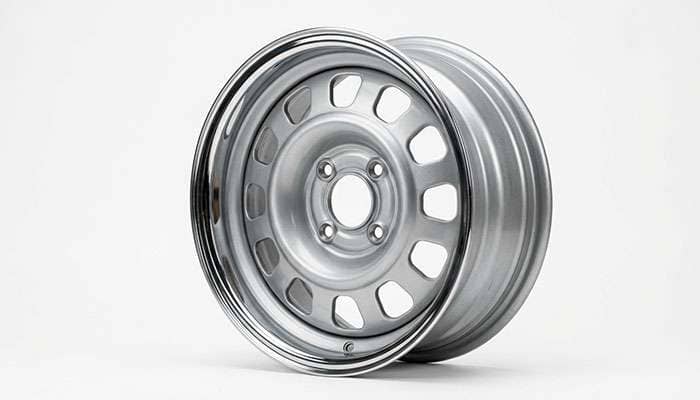
The available sizes cluster tightly. Fifteen and seventeen inch diameters dominate, with 15x7 and 17x8 the two most common combinations, followed by 17x7.5 and 15x8. Fourteen and sixteen inch wheels exist in smaller numbers. Beyond eighteen inches the pattern essentially disappears, which makes sense given the vehicles that use it. Offsets run from roughly negative 32 up to positive 48, with most sitting around positive 35.
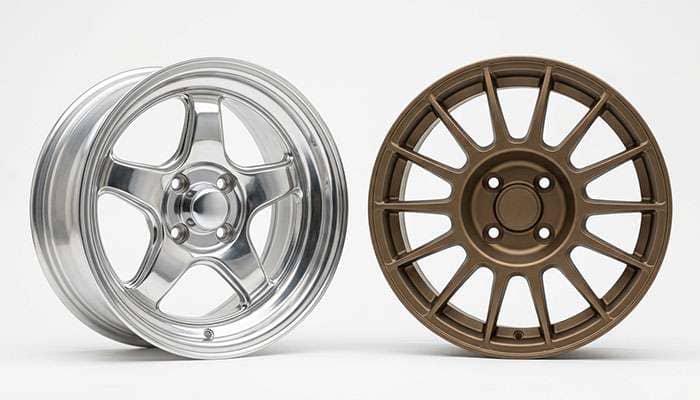
The brand mix mirrors the vehicle split almost perfectly. On one side you have vintage steel and classic reproduction wheels aimed at Fox body and older American cars. On the other you have European and rally-influenced designs aimed at the Peugeot, Fiesta and Focus crowd. There is not much overlap in the middle, so decide which aesthetic you are chasing before you start browsing.
One constraint deserves special attention. Across the five-lug world, dual-drilled wheels are common, giving you two patterns in one wheel and a fallback if your first choice is unavailable. In 4x10⁸, that fallback effectively does not exist. Four-lug wheels are drilled for one pattern and one pattern only, because there is no room to place two sets of four holes without compromising the mounting pad. So when you find a 4x10⁸ wheel in the size and offset you want, that is the wheel. There is no adjacent pattern to shop as a substitute.
Offset deserves a hard look on these cars too. The vehicles running 4x10⁸ are mostly small and mostly front-drive, which means limited room between the strut and the fender, and a wheel that clears on one 4x10⁸ car may foul on another.
A four-lug pattern is the easiest of all to measure, because opposite holes sit directly across from each other.
If the numbers are borderline or the wheel is unmarked, take it to a shop with a proper bolt pattern gauge. Guessing on a four-lug car has less margin than guessing on a five-lug.
4x10⁸ is a real and well-supported bolt pattern with a long list of vehicles behind it, from Fox body Mustangs to Peugeot 205s to the Fiesta ST. The list itself is the easy part, and you can find it anywhere.
The part worth carrying away is that 4x10⁸ describes one measurement out of four that have to be right. Hub bore varies from 57.1 to 65.1 millimeters across the vehicles that use this pattern. Fastener type splits cleanly along the Atlantic, with American cars on studs and European cars on bolts. Neither of those appears in the wheel listing, and neither will be caught by matching the bolt pattern alone.
And unlike the five-lug world, there is no dual-drilled fallback here. Get the four numbers right the first time and 4x10⁸ is straightforward. Get one wrong and there is no adjacent pattern to fall back on.
When you are ready to see what is available, browse the full 4x10⁸ bolt pattern wheel selection.
The Fox body Ford Mustang in four-cylinder and V6 form, Ford Thunderbird, Pinto, Escort ZX2, Contour, Focus and Fiesta including the Fiesta ST, plus Mercury Cougar, Tracer and Mystique. On the European side, Peugeot 205 through 208 and 2008, Citroen C3, C4, Saxo, BX and ZX, Audi 80, 90 and 100 from the late 1980s, classic Saab 900 and 9000, Volvo 440, 460 and 480, vintage Alfa Romeo Spider and Giulia, and the early four-lug Porsche 924. Always verify by year and trim, since manufacturers changed patterns mid-generation.
The most common ones you will actually encounter are the Fox body Mustang from 1979 to 1993 in four-cylinder and V6 form, the Ford Fiesta and Fiesta ST from 2011 to 2019, the Ford Focus from 1998 to 2011, and the Peugeot 205 through 208 range. Between them those account for the bulk of 4x10⁸ vehicles on the road. Note that the Fox body 5.0 cars are five lug and not part of this pattern.
4x10⁸ in inches is 4x4.25. Dividing 108 millimeters by 25.4 gives 4.2519 inches, which the industry rounds to 4.25. Going the other direction, 4.25 inches equals 107.95 millimeters, which rounds to 108. They are the same pattern written in two unit systems, and a listing showing either figure is a match for the other.
Not directly. The 8 millimeter difference in pitch circle diameter puts each stud about 4 millimeters off center from its hole, which is far beyond the clearance a lug hole provides. The wheel will not mount. Bolt-on adapters can bridge the gap, but they add a second structural joint and roughly 20 millimeters or more of effective offset, which matters on the small light cars that typically run these patterns. Eccentric or wobble bolts exist and are used in Europe for this conversion, but they concentrate load in ways standard fasteners do not.
No. 4x114.3 and 4x10⁸ are 6.3 millimeters apart in pitch circle diameter, which puts each stud roughly 3.15 millimeters off center. The wheel will not seat properly. The gap is small enough that the two patterns look similar by eye, which is what makes it a common attempt. Forcing it means the lug nut seat contacts on one side only, clamp load collapses, and the fasteners work loose in service even if they felt tight at installation.
No. 5x4.5 is the inch equivalent of 5x114.3, while 5x10⁸ converts to 5x4.25 inches. The two patterns are 6.3 millimeters apart and do not interchange. The number to watch for is 4.25, not 4.5. Separately, 4x10⁸ and 5x10⁸ share a pitch circle diameter but have different lug counts, so wheels for one will not fit the other.