
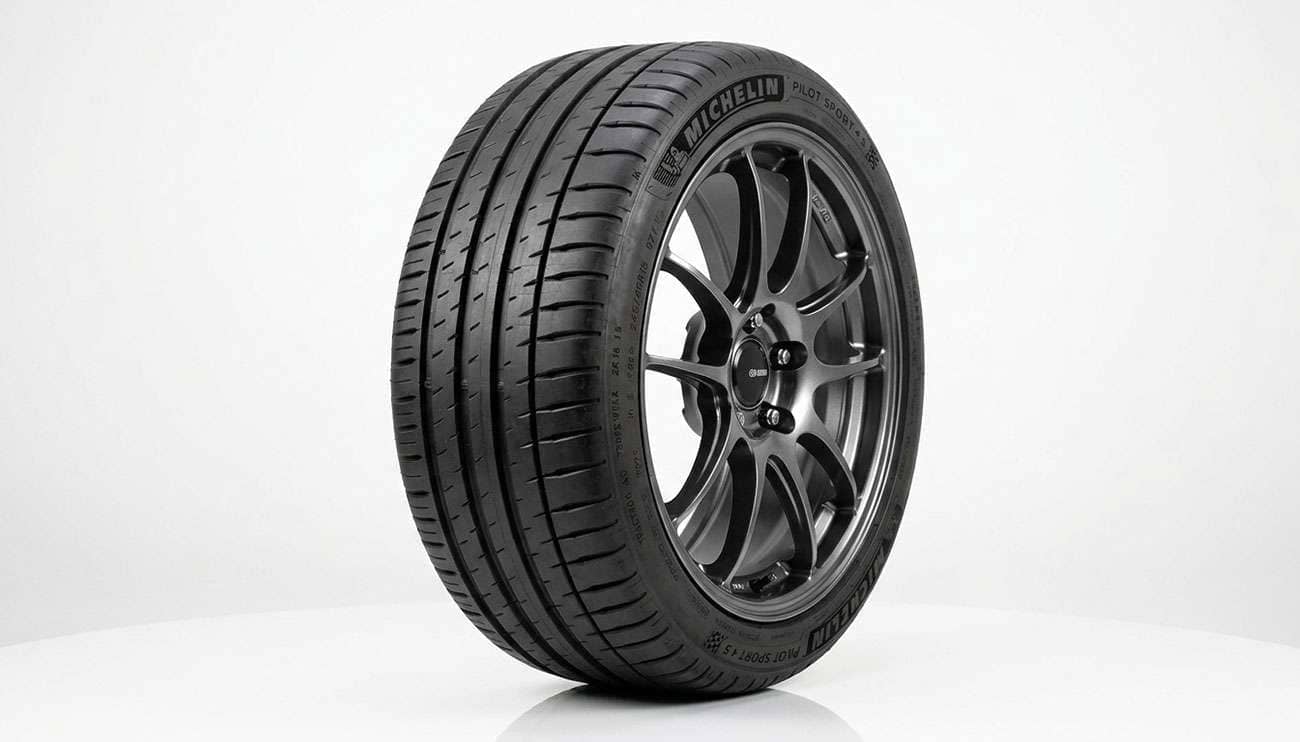
Yes. A 245/40R18 is a low profile tire. The 40 is the aspect ratio, and anything at 50 or below wears that label. But every page that answers this question stops right there, and the label is the least useful part of the answer. What you actually want is sidewall height in millimeters, because the aspect ratio is a percentage, not a measurement. A 245/40R18 gives you 98mm of sidewall. A 225/40R18, wearing the exact same 40-series badge, gives you 90mm. Same category on paper. Nine percent less cushion in your hands.
I have been fitting these things since before anybody called them low profile, and the confusion never changes. Somebody reads the middle number, decides they know what they are getting, and then wonders why the car that came on 225/40R18s rides differently than his buddy's on 245/40R18s. Same aspect ratio. Different tire entirely.
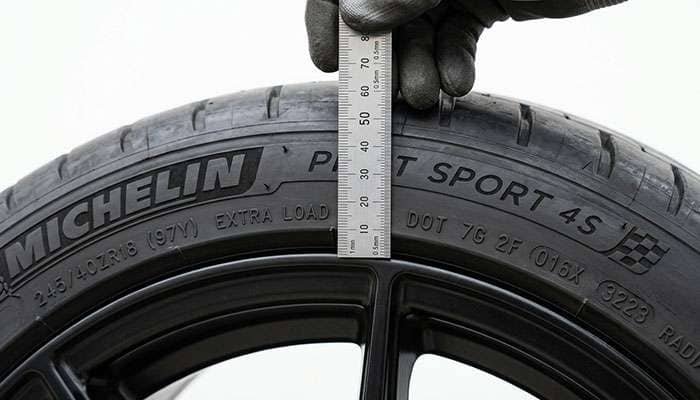
The aspect ratio is the sidewall height expressed as a percentage of the section width. That is all it is. In a 245/40R18, the 40 means the sidewall stands 40 percent as tall as the tire is wide. Do the arithmetic and you get 245 multiplied by 0.40, which is 98mm, or 3.86 inches.
Here is why that matters more than the badge. Because the ratio is anchored to the width, two tires can share an aspect ratio and not share a sidewall. Widen the tire and the sidewall grows right along with it, even though the number in the middle never moves.
Feature |
225/40R18 |
245/40R18 |
275/40R18 |
|---|---|---|---|
Aspect ratio |
40 |
40 |
40 |
Sidewall height |
90.0mm (3.54 in) |
98.0mm (3.86 in) |
110.0mm (4.33 in) |
Overall diameter |
25.1 in |
25.7 in |
26.7 in |
Cushion vs the 225 |
Baseline |
9 percent more |
22 percent more |
Now the one that really lands. A 195/50R16 has a sidewall of 97.5mm. A 245/40R18 has 98mm. Half a millimeter apart. Nobody on earth would call a 195/50R16 a low profile tire, and yet it stands the same height off the rim as the 40-series you are asking about.
So is the label meaningless? No, and I want to be careful here. The ratio still tells you something real about how the sidewall behaves, because a short wide sidewall deflects differently under load than a tall narrow one carrying the same millimeters. The casing is stiffer in torsion and it resists rolling over in a corner. That is exactly why performance cars want it. The label is a decent shorthand for behavior. It is a lousy proxy for cushion, and people use it as both. Our breakdown of tire aspect ratio decoded works through the geometry if you want the long version.
Overall diameter is 25.7 inches, or 653mm. You get there by taking the 18-inch wheel and adding a sidewall to the top and the bottom: 18 plus 3.86 plus 3.86 equals 25.72 inches.
The full set of numbers, since you are going to want them:
Feature |
Measurement |
|---|---|
Overall diameter |
25.7 in (653mm) |
Section width |
9.6 in (245mm) |
Sidewall height |
3.86 in (98mm) |
Circumference |
80.8 in (2052mm) |
Revolutions per mile |
784 |
Approved rim width |
8.0 to 9.5 in |
That rim width range comes from the Tire and Rim Association, and it is not a suggestion. Hang a 245/40R18 on a 7.5-inch rim and the sidewalls pinch inward, the contact patch crowns, and you wear the center out early. Hang it on a 10-inch rim and you stretch it, which puts the bead under load it was never designed to carry.
One more thing about that 25.7 inches. It is a free-standing measurement, taken with the tire inflated and off the car. Put weight on it and the loaded radius drops by roughly a third of an inch under normal load. That is why your speedometer and a tire calculator can disagree slightly, and it is also why the effective cushion you feel over a pothole is less than 3.86 inches of rubber. It is 3.86 inches minus however much the sidewall has already compressed just holding the car up.
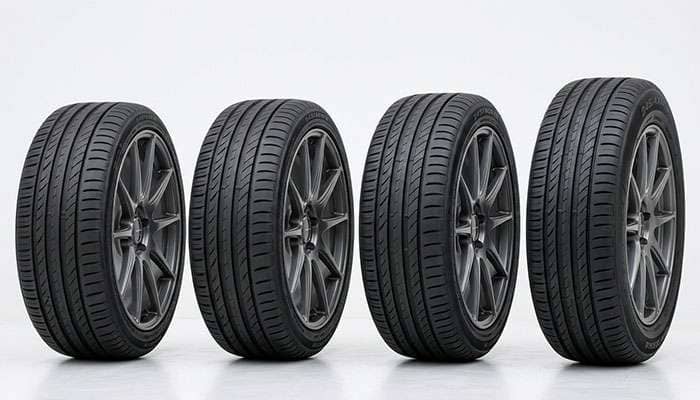
Low profile is a spectrum, not a switch. Here is the honest map of where things sit.
Feature |
Aspect Ratio |
Sidewall on a 245 |
What It Is For |
|---|---|---|---|
Ultra low profile |
25 to 35 |
61 to 86mm |
Show cars, big-wheel builds, track |
True low profile |
40 to 45 |
98 to 110mm |
Sport sedans, coupes, performance OE |
Entry low profile |
50 to 55 |
123 to 135mm |
Sporty daily drivers |
Standard profile |
60 to 70 |
147 to 172mm |
Sedans, crossovers, trucks |
Tall sidewall |
75 and up |
184mm and up |
Light truck, off-road, vintage |
So 245/40R18 sits at the top of the true low profile band. It is one step above the ultra-low territory where you start trading away real durability, and one step below the 50-series where most people stop noticing the road surface. That placement is why it has stuck around as an original equipment size for two decades while fashions came and went above and below it. If you want the general case for and against, we laid it out in our piece on low profile tire pros and cons.
Roughly 67 vehicle models list 245/40R18 as an original equipment size, and the pattern is heavily German and heavily rear-drive or all-wheel-drive sport sedan.
The core list runs Audi A4 and A5 across most of the last two decades, the earlier A6, Mercedes-Benz C-Class and E-Class, Cadillac CTS, Jaguar XE, and the Acura TSX. It shows up as a staggered rear on plenty of BMW and Mustang setups, and as a very common aftermarket square fitment on Infiniti Q50 and Q60. Anything that wanted to look planted on an 18-inch wheel without going to a 19 landed here.
That heritage matters for what you buy next. This size grew up serving cars that were sold on handling, so the tire industry built for handling. Of the 254 currently priced models we stock in 245/40R18, the overwhelming majority are ultra high performance, maximum performance, or sport summer compounds. Touring options exist and there are 21 genuine winter and studded models in the size, but you are shopping in a performance aisle whether you meant to or not.
245mm is 9.6 inches of section width. That is moderately wide. It is not wide.
The way I have always broken it down for customers standing at the counter: 195 to 215 is narrow, 225 to 245 is the mainstream band where most sedans and crossovers live, 255 to 275 is genuinely wide, and past 285 you are into specialty and staggered rear territory. A 245 sits at the top of mainstream. Wide enough that you feel the grip. Not wide enough to tramline down every rain groove on the freeway.
Watch out for one thing, though. Section width is measured at the fattest point of the sidewall, not across the tread. Your actual contact patch on a 245/40R18 is meaningfully narrower than 9.6 inches, usually by an inch or more depending on how the shoulder is shaped. That is why a 245 and a 255 can feel closer than the ten-millimeter gap implies, and why swapping widths without swapping wheels rarely delivers what people expect.
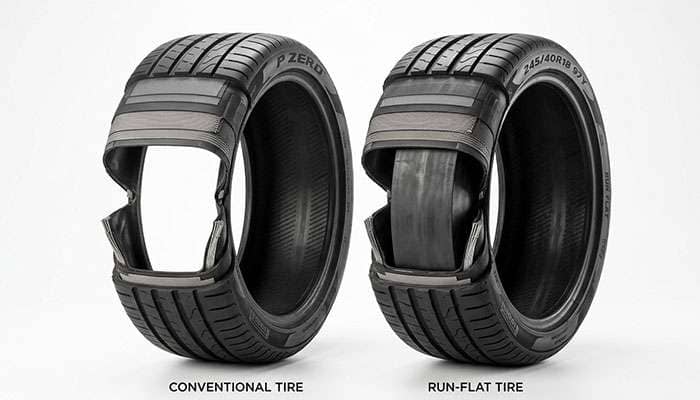
This is the part that catches people, and it is specific to sizes like this one.
A big share of the Mercedes and Cadillac applications for 245/40R18 came from the factory on run-flats, and those cars were sold without a spare. No spare, no jack, sometimes not even a jack well under the trunk mat. If that is your car and you replace run-flats with conventional tires because the conventional ones were cheaper and rode better, you have quietly removed your ability to get home from a flat.
The numbers are tight. Of the 254 models we currently stock in 245/40R18, 18 are run-flats. That is 7 percent. So if your car needs one, roughly nine out of every ten tires you see listed in your size are not legitimate replacements for you.
Here is the piece that connects back to the low profile question. A run-flat 245/40R18 has the same 98mm sidewall as a conventional one, but that sidewall carries a reinforced insert designed to hold the car up with zero air in it. It is dramatically stiffer. So two tires with identical numbers on the sidewall, both correctly called low profile, will ride nothing alike. If your 245/40R18 feels harsher than a friend's identical size, this is usually why, not the aspect ratio. Our honest look at run-flat tire pros and cons covers what you give up and what you get.
There is no single best tire in this size, and anybody who hands you one name without asking a question first is selling, not advising. What there is, is four clear cases. Find yours.
Your car came with run-flats and has no spare. Your decision is made before you start. Stay on run-flats or budget for a compact spare and a jack before you switch. This is the only case in the size where the construction type outranks every other consideration.
You drive it hard and you live somewhere warm. A dedicated summer ultra high performance tire is the whole point of this size, and it is where the 40-series sidewall earns its keep. You will get turn-in and braking that an all-season in the same size cannot approach. You will also get a tire that turns to plastic below about 45 degrees, so know your climate.
You want one set for the whole year. Ultra high performance all-season is the mature choice for most people on this size, and the category has improved enormously in the last decade. You give up a small amount of dry limit and gain the ability to drive in November without planning around it.
You are mostly commuting and you want the ride back. Grand touring in this size exists and it is underrated. You will lose some steering crispness. You will gain tread life and quiet. Honestly, on a car that spends its life on the freeway, this is the choice I recommend most often and the one customers argue with most.
Whichever case you land in, match or exceed the speed rating on your door placard. Speed ratings on a low profile tire are tied to heat tolerance in a short stiff sidewall, not to how fast you intend to drive, and dropping one to save forty dollars is a bad trade.
Nothing about a 245/40R18 is dangerous. It is a mainstream original equipment size and it has been for twenty years. But 98mm is 98mm, and there is a ladder of consequences that comes with it. I have seen every rung of this walk through the shop.
Right away. You feel the road. Expansion joints, tar snakes, chip seal. That is not a defect, that is the tire doing its job, and it is the trade you accepted when you bought a car on 18s.
The first real pothole. With 3.86 inches of sidewall and maybe three of it left once the car's weight is on it, a sharp-edged hole can pinch the sidewall against the rim flange hard enough to cut the casing from the inside. Sometimes it holds air and you never know. If you have taken a hard hit, our checklist on what to check after you hit a pothole is worth ten minutes.
Weeks later. A bulge appears in the sidewall. That is the internal casing ply having failed at the impact point, with only the outer rubber holding air. It will not heal, it cannot be repaired, and it is on a timer. A sidewall bulge is the one piece of tire damage I tell people to stop driving on rather than schedule around, and our guide to tire sidewall damage and whether it is safe to drive explains why the sidewall gets no second chances the way tread does.
The other half of the bill. Short sidewalls transmit impact energy straight into the wheel instead of absorbing it. Bent rims, cracked rims, and slow leaks at the bead are all more common on 40-series than on 55-series, and an 18-inch alloy is not a cheap thing to replace. The Tire Industry Association points at underinflation as a multiplier on all of this, and on a low profile tire you cannot eyeball low pressure the way you can on a tall sidewall. It just looks normal until it is not.
One. Read your driver's door placard, not your current tire. People buy the wrong size for years because somebody before them fitted the wrong thing and they matched it.
Two. Check whether your car has a spare. Open the trunk floor and look. If there is no spare and no jack, you are a run-flat car and that decides most of your shopping for you.
Three. Measure your rim width if you are on aftermarket wheels. You want 8.0 to 9.5 inches for a 245/40R18. Outside that range, fix the wheel or change the size.
Four. Buy a real pressure gauge and use it monthly. On 98mm of sidewall you get almost no visual warning of a low tire, and low pressure is what turns an ordinary pothole into a bent wheel.
Five. If the ride is genuinely wearing you down and your wheels are not sacred, consider whether a taller sidewall on a smaller wheel would suit you better. Going to a 245/45R18 adds 12mm of sidewall and roughly an inch of overall diameter, which is outside the 3 percent tolerance and will throw your speedometer, so it needs planning rather than impulse. We ran the exact numbers in our breakdown of 245/45R18 in inches.
Yes, a 245/40R18 is a low profile tire. It sits at the top of the true low profile band, one notch above the ultra-low stuff, and it has been a mainstream original equipment size on sport sedans for twenty years for good reason.
But do not let the 40 do your thinking. That number is a ratio, and ratios tell you about proportion, not about cushion. Your actual sidewall is 98mm, which happens to be the same as a 195/50R16 that nobody calls low profile, and which is 9 percent more than the 225/40R18 that wears the identical badge. If you want the direct comparison, we ran it in our look at the 225/40R18 low profile size.
Know your millimeters, know whether you are on run-flats, and keep air in them. Do those three things and this size will treat you well.
Ready to see what fits? Browse our full 245/40R18 tire selection.
Yes. The 40 is the aspect ratio, and tires at 50 or below are considered low profile. A 245/40R18 sits at the top of the true low profile band with 98mm of sidewall. Keep in mind the aspect ratio is a percentage of the width rather than a fixed measurement, so a 225/40R18 with the same badge has only 90mm.
The overall diameter is 25.7 inches, or 653mm. The sidewall alone stands 3.86 inches, or 98mm, and there is one of those at the top and one at the bottom of the 18-inch wheel. Circumference is 80.8 inches and the tire turns 784 revolutions per mile.
Around 67 models list it as original equipment, concentrated in German and luxury sport sedans. The Audi A4 and A5, earlier A6, Mercedes-Benz C-Class and E-Class, Cadillac CTS, Jaguar XE, and Acura TSX all use it. It is also a common staggered rear on BMW and Mustang setups and a popular aftermarket square fitment on the Infiniti Q50 and Q60.
It depends on four cases. If your car came without a spare you need a run-flat and that decides it. If you drive hard in a warm climate, a summer ultra high performance tire is what this size was built for. If you want one set year round, ultra high performance all-season is the mature choice. If you mostly commute and want ride quality back, grand touring in this size is underrated. Match or exceed your placard speed rating in every case.
A 245 is 9.6 inches of section width, which is moderately wide rather than wide. It sits at the top of the mainstream 225 to 245 band. Genuinely wide starts around 255 to 275, and specialty fitments begin past 285. Remember that section width is measured at the widest point of the sidewall, so the contact patch is narrower than 9.6 inches.
The Tire and Rim Association approves 245/40R18 for rims between 8.0 and 9.5 inches wide. Narrower than 8.0 and the sidewalls pinch inward, crowning the contact patch and wearing out the center early. Wider than 9.5 and you stretch the tire, loading the bead in a way it was not designed for.
Yes, and it is a real cost rather than a myth. With 98mm of sidewall, and less than that once the vehicle's weight compresses it, more impact energy reaches the rim instead of being absorbed by rubber. Bent rims, cracked rims, and bead leaks are all more common on 40-series than on 55-series. Underinflation multiplies the risk, and on a short sidewall you get almost no visual warning that pressure is low.



