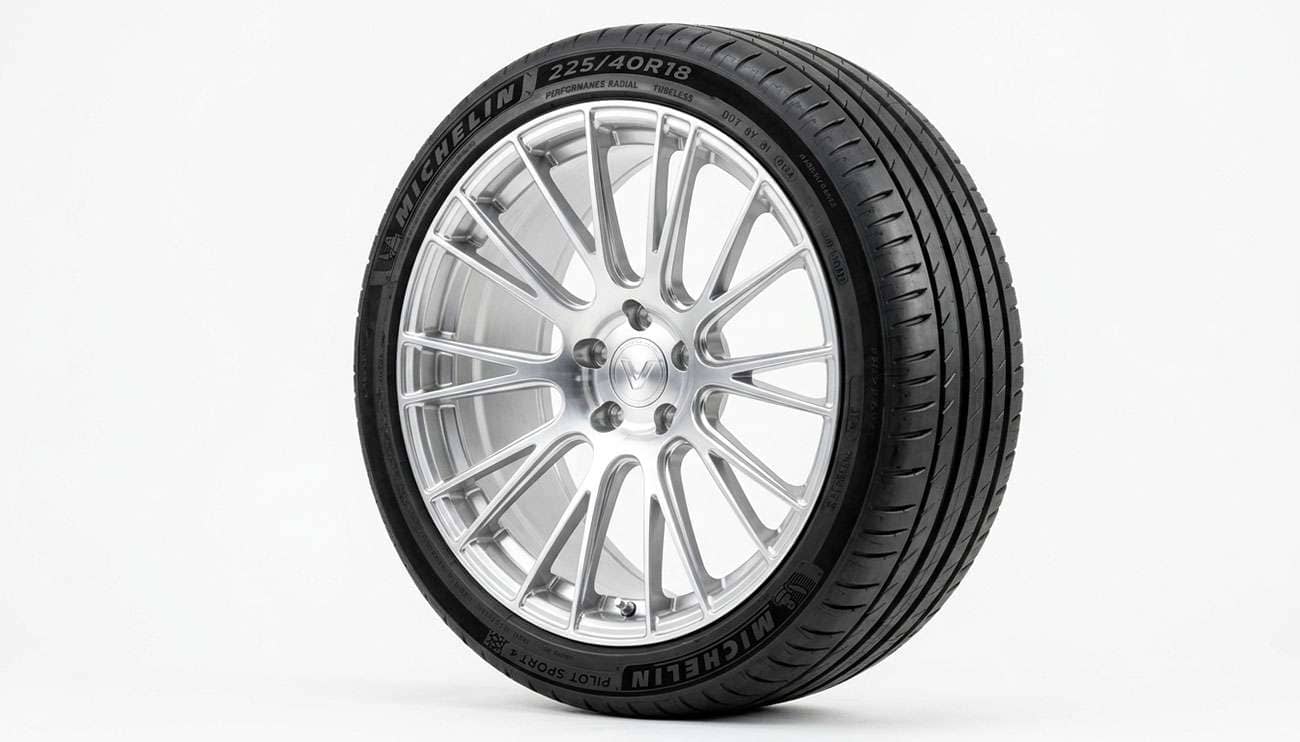
Yes. A 225/40R18 is a low profile tire by every definition anybody uses, and it is not a borderline case. The sidewall stands 90 millimeters, or 3.5 inches, on a tire that is 8.9 inches wide. But here is what nobody tells you when they answer this question: there is no official definition of low profile. No federal standard, no industry body, nothing. It is a marketing term, and the aspect ratio everyone points at is the wrong number to be looking at anyway.
I have been fitting these things since before 18-inch wheels showed up on anything you could buy at a dealership. Let me tell you what actually matters, because the number that predicts whether you will be buying a new wheel after hitting a pothole on the 405 is not the middle number in your tire size.
Yes, and comfortably so. Now here is the part that surprises people: ask three sources where low profile starts and you will get three different answers.
Some put the line at an aspect ratio of 55 or below. Others draw it at 50 or below, reasoning that the sidewall is then less than half the tread width. And among performance-minded drivers the threshold often drops closer to 45 or even 40.
There is no governing body that settles this. The Department of Transportation does not define it. FMVSS does not mention it. The Tire and Rim Association publishes dimensional standards for every size made and says nothing about what to call them. Low profile is a description that grew out of marketing departments in the 1970s and stuck.
So the honest answer to your question is: a 225/40R18 clears every threshold in circulation, including the strictest one. At 40, it sits well inside what most people would call ultra-low profile. If somebody tells you it is not a low profile tire, they are wrong under any definition being used.
Here is the full spec, since you are probably after it.
Measurement |
Inches |
Millimeters |
|---|---|---|
Sidewall height |
3.54 in |
90 mm |
Overall diameter |
25.1 in |
637 mm |
Section width |
8.9 in |
225 mm |
Circumference |
78.8 in |
2002 mm |
Approved rim width |
7.5 to 9.0 in |
191 to 229 mm |
Revolutions per mile |
804 |
500 per km |
This is the thing I wish more people understood, and it takes about thirty seconds to explain at the counter.
The aspect ratio is a percentage, not a measurement. Forty means the sidewall is 40 percent of the section width. Change the width and you change what that 40 percent is 40 percent of. Two tires can both be 40 series and have wildly different amounts of rubber between the rim and the road.
Size |
Aspect Ratio |
Sidewall Height |
Difference vs 225/40R18 |
|---|---|---|---|
195/40R17 |
40 |
3.07 in (78 mm) |
13 percent less sidewall |
225/40R18 |
40 |
3.54 in (90 mm) |
Baseline |
245/40R19 |
40 |
3.86 in (98 mm) |
9 percent more sidewall |
285/40R22 |
40 |
4.49 in (114 mm) |
27 percent more sidewall |
Every one of those is a 40 series tire. The sidewall ranges from just over three inches to nearly four and a half. That is a 46 percent spread across tires that share the exact same middle number, which tells you the middle number by itself is not answering the question you are actually asking.
It runs the other direction too. A 205/55R16, the sort of thing that comes on a Corolla or a Civic, has a 4.44-inch sidewall. That is a full 25 percent more rubber than your 225/40R18 despite being what everybody would call a normal tire. Meanwhile a 195/50R15 works out to 3.84 inches, which is more sidewall than your 40 series, even though 50 sits on the other side of most people's low profile line.
The rule to carry with you: if you want to know how much sidewall you have, multiply the width by the aspect ratio and divide by 25.4. Comparing middle numbers across different widths tells you nothing. We went further into this in our breakdown of tire aspect ratio, and if you are weighing the broader trade-offs, our guide to low profile tire pros and cons covers the category as a whole.
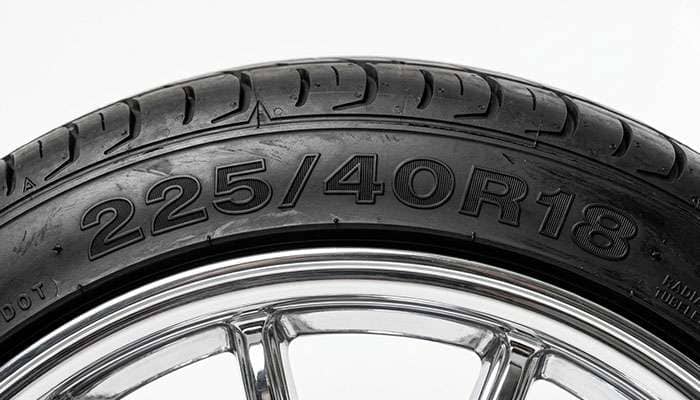
Forget the label. Here is what three and a half inches buys you and costs you in the real world.
What you gain. A short sidewall flexes less under cornering load, so steering response is immediate and the car goes where you point it without the vague roll-over-then-bite feeling of a tall tire. The contact patch stays flatter through a corner instead of the tread rolling onto its shoulder. You also get a bigger wheel showing, which is why a lot of people are here in the first place, and I am not going to pretend that does not matter.
What it costs you. Ride quality, obviously. There is less rubber between you and the pothole, so more of that impact reaches the suspension and your spine. But the expensive part is not comfort.
The expensive part is your wheels. This is what I want people to understand before they buy. With 3.5 inches of sidewall there is not enough rubber to fully absorb a sharp-edged hit. When the tire bottoms out against the rim, the rim takes the blow. A bent or cracked 18-inch alloy is a several hundred dollar problem, sometimes more on a European car, and it happens on impacts that a 55 series tire would have shrugged off.
The same physics makes sidewall damage more likely and more consequential. There is less material there and it is working harder. If you catch a curb or take a bad hit, inspect the sidewall properly rather than assuming it is fine because the tire holds air. Our guide on tire sidewall damage and whether it is safe to drive walks through what is repairable and what is not, and on a low profile tire the answer is more often "not" than most people expect.
Two things that help. First, keep your pressure right. An underinflated low profile tire has even less effective cushion and dramatically raises your odds of a bent rim. Check them cold against the door placard, not the sidewall maximum. Second, know your approved rim width. A 225/40R18 is rated for 7.5 to 9.0 inches. Mounting it on a 9.5 or wider stretches the sidewall, pulls the shoulders inward, and leaves the bead area badly exposed to exactly the impacts that already threaten it. If you are picking wheels, run the numbers with our guide on tire size for wheel width first.
This is a sport compact and entry luxury size, and it shows up two different ways.
As a factory fitment, you will find it on:
As an aftermarket upgrade, which is honestly how a lot of people end up here. A 225/40R18 is one of the most common plus-size targets going, because a car that left the factory on 205/55R16 or 225/45R17 lands almost exactly on this size when you step up to 18-inch wheels. The overall diameter stays close, the speedometer stays honest, and the wheel gets bigger.
That is a legitimate and popular move, but do the arithmetic before you buy rather than after. Our plus-sizing guide covers how to keep the diameter inside the safe window, and if you are also thinking about going wider at the same time, the trade-offs are laid out in our piece on the disadvantages of wider tires.
As always, the placard on your driver's door jamb beats any list, mine included.
We carry 363 tires in this size from 62 brands, and it skews hard toward performance: 162 of them are ultra high performance. That tells you what these cars are and what people want from them.
If you want one name, it is the Michelin Pilot Sport A/S 4. Best all-round tire in the size, and the one I fit most often. Here are six honest picks across the range.
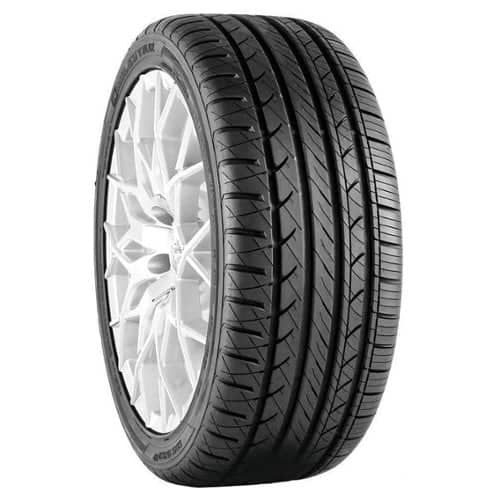
Milestar MS932 XP+, about 107 dollars. The sensible budget pick. There is cheaper rubber in this size, quite a lot of it, but this is where I would stop going down. Decent wet manners and a real warranty behind it.
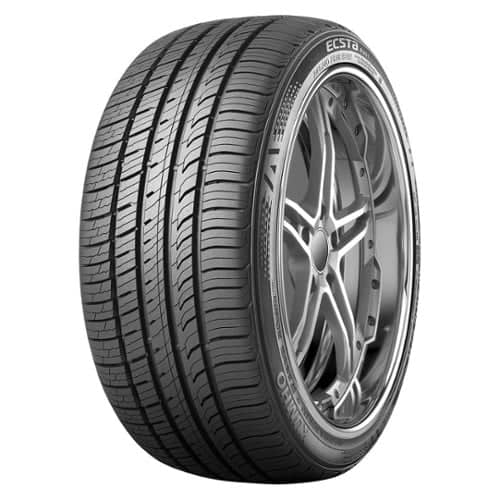
Kumho Ecsta PA51, about 125 dollars. Punches above its price. A genuine UHP all-season for the money most people spend on a touring tire, and Kumho has gotten seriously good over the last decade.
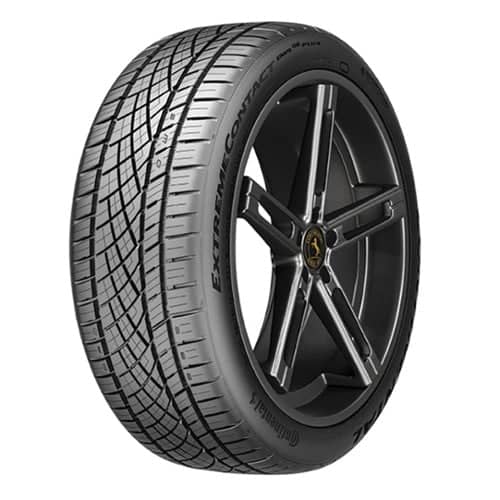
Continental ExtremeContact DWS06 Plus, about 169 dollars. The value benchmark. Grip in the dry, grip in the wet, and it will handle a light snow, which almost nothing else here will do. If the Michelin is out of budget, buy this and do not look back.
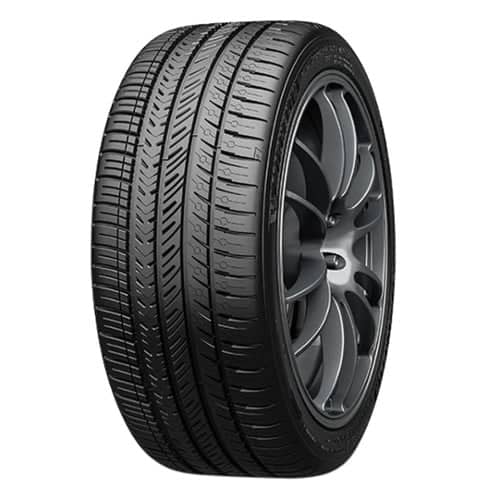
Michelin Pilot Sport A/S 4, about 190 dollars. The one to buy. It wins on dry braking and wet braking and then has the nerve to wear well too, which is not a combination you usually get. This is the answer if you want to stop reading.
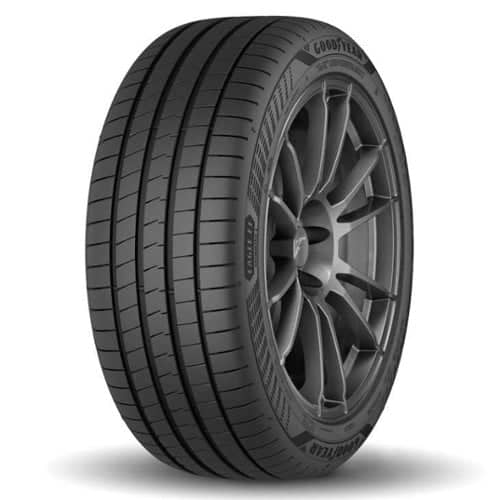
Goodyear Eagle F1 Asymmetric 6, about 216 dollars. Summer tire, and a superb one. If you live somewhere the thermometer behaves and you enjoy driving, a dedicated summer compound will beat any all-season here on grip. Make sure you are getting the 6 and not an older generation.
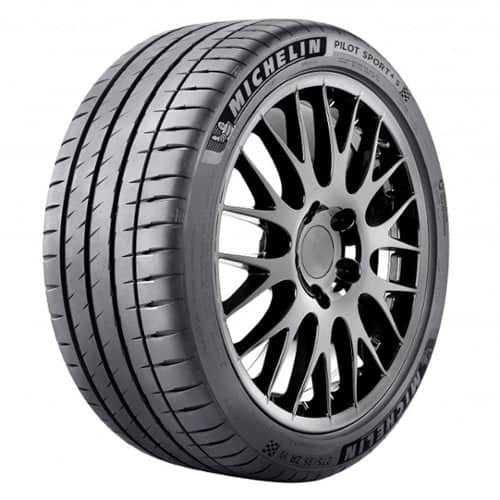
Michelin Pilot Sport 4 S, about 238 dollars. The track-capable choice. If your car sees an autocross or a canyon on the weekend, this is the ceiling. Summer only, and it needs heat in it before it does its best work, so it is the wrong tire for a short cold commute.
Want more options at the sharp end? Our track-tested roundup of the best high performance tires for sports cars gets into specific models and where each one lands.
Good news. This size is one of the most competitive on the wall, so you are not paying a rarity premium.
The median price across everything we stock in 225/40R18 is right around 185 dollars. Here is how the bands break down:
Tier |
Price Per Tire |
Set of Four |
What You Get |
|---|---|---|---|
Budget |
USD 65 to 110 |
USD 260 to 440 |
Import brands, basic wet grip, shorter tread life |
Mid-range |
USD 125 to 200 |
USD 500 to 800 |
Name-brand UHP all-seasons, the value sweet spot |
Premium |
USD 200 to 290 |
USD 800 to 1,160 |
Flagship summer and all-season performance tires |
Run-flat and specialty |
USD 250 to 550 |
USD 1,000 to 2,200 |
Run-flats, track compounds, OE-matched fitments |
A word on the two ends. At the bottom you can find tires in this size under 70 dollars, and I will not tell you they are unsafe, because they are DOT approved and legal. I will tell you that the gap between a 70 dollar tire and a 170 dollar tire is real and you will feel it the first time you have to stop hard on a wet road. On a car with 3.5 inches of sidewall and quick steering, that is not where I would economize.
At the top, if your car came with run-flats from the factory, check before you switch away from them. Many of those cars have no spare and no jack. That is a decision worth making deliberately rather than discovering in a parking lot at night.
Ready to look? See every 225/40R18 tire we carry here.
So yes, your 225/40R18 is a low profile tire, and there was never much doubt about it. The more useful realization is that the label was never doing the work you thought it was. Low profile is a category with no fixed boundary, and the aspect ratio that supposedly defines it changes meaning every time the width changes.
Three and a half inches of sidewall is the number to remember. It is what gives you the sharp steering you paid for, and it is why you need to care about your tire pressure and your pothole route more than the fellow in the Corolla does. Neither of those is a reason to avoid the size. They are just the terms of the deal.
Keep them inflated properly, stay inside the approved rim width, and buy the best tire your budget allows, because on a short sidewall the tire is doing more of the work. Any questions, come see us at Performance Plus.
Yes, and not marginally. Its sidewall stands 90 millimeters, or 3.54 inches, on a tire 8.9 inches wide. Low profile has no official definition, and thresholds in common use range from an aspect ratio of 55 down to 40 depending on who you ask, but a 40 series clears all of them. Many would classify it as ultra-low profile. Note that the aspect ratio alone does not tell you sidewall height, since it is a percentage of the section width.
The Michelin Pilot Sport A/S 4 at about 190 dollars is the best all-round choice, winning on dry braking, wet braking, and tread life. The Continental ExtremeContact DWS06 Plus at about 169 dollars is the value benchmark and handles light snow. For summer-only driving, the Goodyear Eagle F1 Asymmetric 6 at about 216 dollars or the Michelin Pilot Sport 4 S at about 238 dollars deliver more grip. On a budget, the Milestar MS932 XP+ at about 107 dollars is where to stop going down.
The median price is around 185 dollars per tire. Budget options run 65 to 110 dollars, mid-range name-brand ultra high performance tires run 125 to 200, premium summer and all-season performance tires run 200 to 290, and run-flats or track compounds reach 250 to 550. This is a highly competitive size with over 360 tires available from more than 60 brands, so there is no rarity premium.
For a full set of four, budget roughly 260 to 440 dollars at the low end, 500 to 800 dollars for a good mid-range set, and 800 to 1,160 dollars for premium performance tires. Run-flat sets can exceed 2,000 dollars. Add mounting, balancing, and valve stems on top. Given the short sidewall and quick steering these cars have, the mid-range band is where most drivers get the best value for the money.
As factory equipment it appears on the Volkswagen Golf GTI, Golf R and Jetta GLI, Audi A3, S3 and TT, BMW 1, 2 and 3 Series, MINI Cooper S and JCW, Mercedes-Benz A-Class, CLA and C-Class, Honda Civic Si and Type R, Subaru WRX, Hyundai Elantra N and Veloster N, Mazda3, Kia Forte GT and Lexus IS. It is also one of the most common aftermarket plus-size targets, since cars originally on 205/55R16 or 225/45R17 land close to this diameter when stepping up to 18-inch wheels. Confirm against your door placard.
Yes. With only 3.5 inches of sidewall there is not enough rubber to fully absorb a sharp-edged impact, so when the tire bottoms out against the rim the wheel takes the blow. Bent or cracked alloys are a common outcome on impacts a 55 series tire would absorb. Underinflation makes this substantially worse by reducing the effective cushion, so checking pressure cold against the door placard matters more on this size than on a taller tire.