
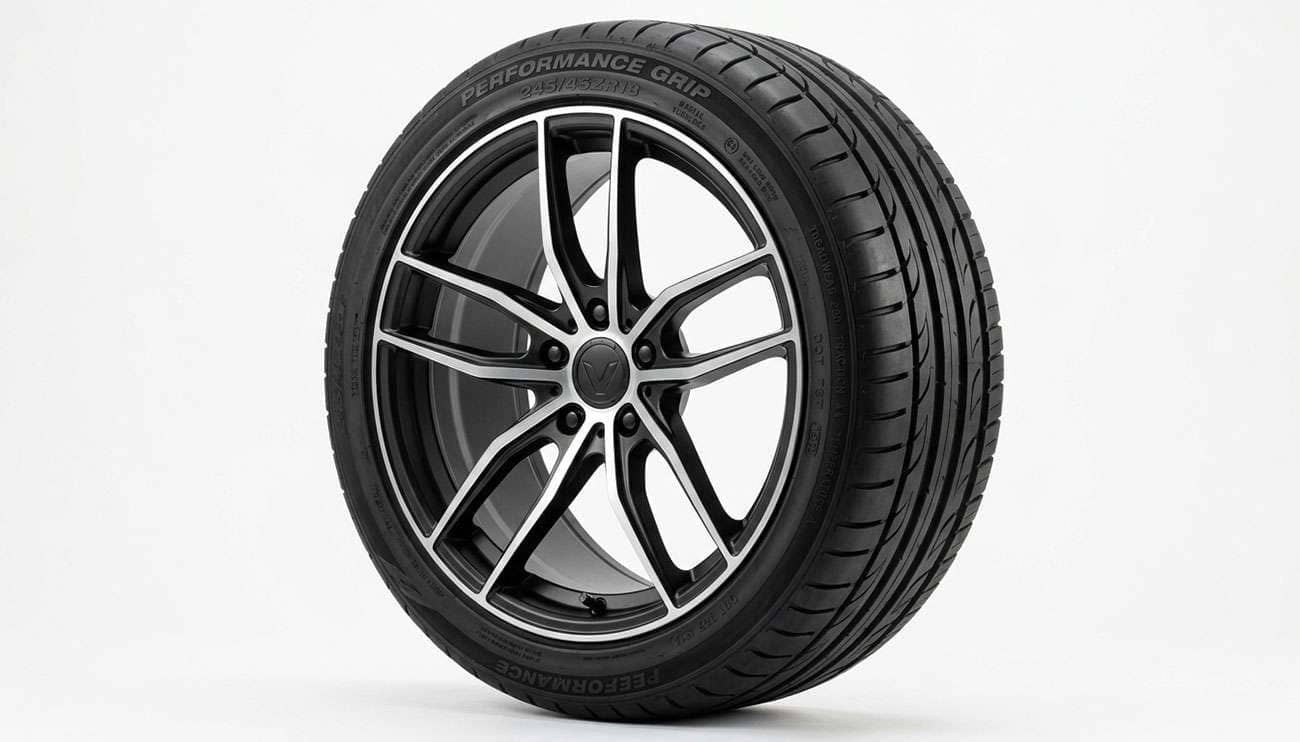
A 245/45R18 tire stands about 26.7 inches tall (26.68 inches, or 677 mm), measures roughly 9.6 inches wide (245 mm) across the tread, and rides on a sidewall about 4.3 inches tall. It wraps an 18-inch wheel, turns 756 times per mile, and belongs on rims 7.5 to 9.0 inches wide. It is a low-profile, 45-series size, and you will find it under a whole lot of sport sedans and luxury cruisers.
I have been fitting tires at Performance Plus for more decades than I care to count, and this is a size I quote all the time. Folks want to know how tall it really is, whether their car can wear it, if a 245 is going to look too wide, and what a set is going to set them back. So let me lay it all out the way I would across the counter, plain and straight.
Here is the whole size broken down into inches and millimeters. These are the industry-standard figures. Real-world numbers wander a hair between brands, but you can bank on these.
Measurement |
Inches |
Millimeters |
|---|---|---|
Overall diameter (height) |
26.68 in (about 26.7 in) |
677 mm |
Section width (tread) |
9.65 in (about 9.6 in) |
245 mm |
Sidewall height |
4.34 in (about 4.3 in) |
110 mm |
Circumference |
83.8 in |
2126 mm |
Wheel (rim) diameter |
18 in |
457 mm |
Approved rim width |
7.5 to 9.0 in |
191 to 229 mm |
Revolutions per mile |
756 |
470 per km |
In flotation shorthand, the kind of code you see on trucks, a 245/45R18 works out to about a 26.7x9.6R18. Twenty-seven inches tall give or take, a hair under ten inches wide, on an eighteen. That is a proper sport-sedan footprint.
That string on the sidewall is not random. Each piece tells you something, and once you can read it you can read any tire on the rack. If you want the full rundown, we keep a plain-English guide to reading tire numbers, but here is the short version.
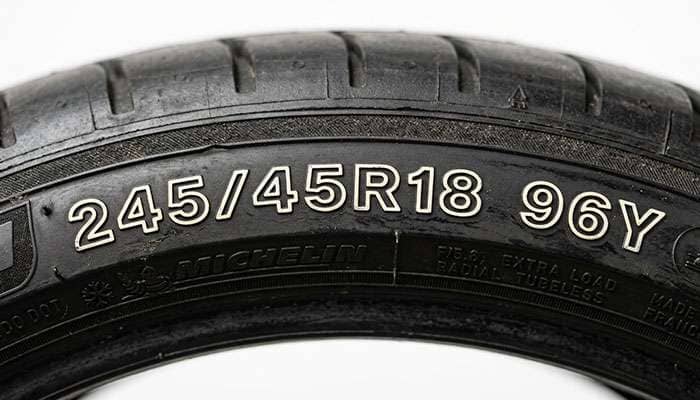
245 is the section width in millimeters, sidewall to sidewall. Divide by 25.4 and you get about 9.6 inches. 45 is the aspect ratio, meaning the sidewall is 45 percent as tall as the tire is wide. R stands for radial construction. 18 is the wheel diameter in inches, and that number has to match your wheel exactly.
Yes. Anything with an aspect ratio of 45 or lower we call low-profile. That shorter sidewall gives you crisper steering and a more planted, sporty feel, which is exactly why carmakers spec it on sport and luxury sedans. The trade-off is a firmer ride and a little less protection against potholes than a taller sidewall. If you want to go deeper on that middle number, we broke down the tire aspect ratio separately.
This one trips people up, so here is the straight answer. The size is identical. The only difference is the speed rating. When you see ZR, that Z is an older high-performance designation that flags a tire built for sustained high speeds, typically a W or Y rating (168 to 186 mph). A plain R with a speed letter after the load index, like 96H or 96V, is the standard modern way of writing it. So a 245/45ZR18 and a 245/45R18 are the same physical size. The ZR just tells you it is a higher speed-rated tire. Always match or exceed the rating that came on your car. We cover this in full in our piece on whether ZR or R tires are better.
This is a bread-and-butter size for sport and luxury sedans, which is exactly why so many folks ask about it. If your car came from the factory with a little attitude, there is a good chance it rolled out on a 245/45R18. Common fitments include:
Bottom line, if it is a sporty sedan on 18-inch wheels, check the door jamb. Odds are good this is your size. And because it is so common, you are never short on choices from budget to premium.
The golden rule when you swap sizes is to stay within about 3 percent of your original overall diameter. Go past that and your speedometer lies to you, and on a modern car you can upset the ABS and traction control. Here is how the 245/45R18 stacks up.
Size |
Overall Diameter |
Difference vs 245/45R18 |
Notes |
|---|---|---|---|
245/45R18 |
26.7 in |
Baseline |
Your size |
235/45R18 |
26.3 in |
About -1.4% |
Safe swap, slightly narrower |
255/45R18 |
27.0 in |
About +1.3% |
Safe swap, a bit wider and taller |
225/45R18 |
25.9 in |
About -3.0% |
Right at the edge of the safe window |
245/40R18 |
25.7 in |
About -3.7% |
Just outside the safe window |
A 245 is on the wider side of mainstream, but it is not extreme. At 9.6 inches of section width it is 20 millimeters, or about eight-tenths of an inch, wider than a 225. That extra rubber gives you more grip and a more aggressive stance, which suits the sport sedans that wear it. The trade-off is a touch more road noise and a hair more rolling resistance. We laid out the full picture in our piece on the disadvantages of wider tires.
A 245/45R18 is approved for rim widths from 7.5 to 9.0 inches, with 8.0 to 8.5 inches being the sweet spot. Run it on a rim narrower than 7.5 and the tread bulges and rounds off; run it wider than 9.0 and you stretch the sidewall too thin. Stay in that range and you are fine. If you are changing wheel or tire sizes, run your numbers first with our plus-sizing guide.
Yes, in most cases. Dropping from a 245/45R18 to a 235/45R18 takes you 10 millimeters narrower and only about 1.4 percent smaller in diameter, well inside the safe window. You lose a small amount of grip and gain a touch of ride comfort and often a lower price. Just make sure the 235 still suits your rim width, since going narrower on a wide wheel has its own limits.
Because this size lives on premium cars, prices run a bit higher than average. A solid value tire starts around 170 dollars each. Mainstream and premium all-season tires land in the 200 to 250 dollar range. Flagship performance and all-weather tires climb to 370 dollars and up. What you pay comes down to the type of tire and the name on the sidewall. Here are a few honest picks from our shelves across that range.
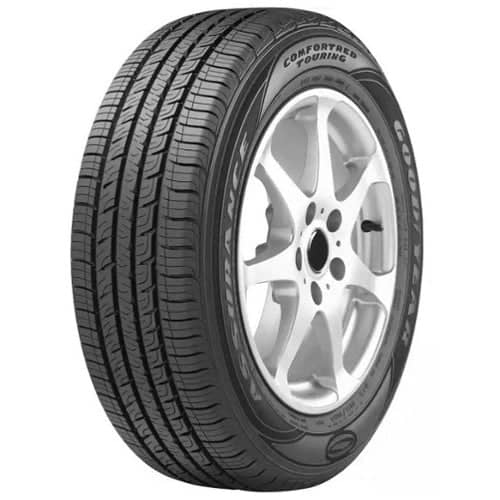
Goodyear Assurance ComforTred Touring (around 172 dollars). The comfort and value play. A quiet, smooth-riding all-season for the daily driver who is not chasing lap times.
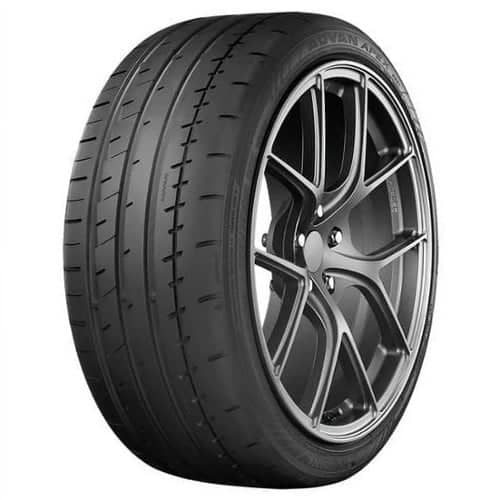
Yokohama Advan Apex V601 (around 223 dollars). Real summer performance for a fair price. A great match for a sport sedan that gets driven with intent.
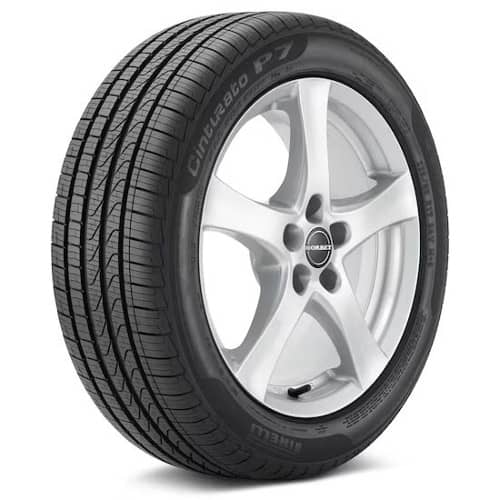
Pirelli Cinturato P7 All Season Plus 2 (around 233 dollars). A premium all-season with a real performance pedigree. Long-wearing, quiet, and sure-footed in the wet.

Michelin CrossClimate+ (around 311 dollars). The do-it-all choice. A true all-weather tire with the 3-peak mountain snowflake rating, so it handles light winter without a dedicated snow tire.
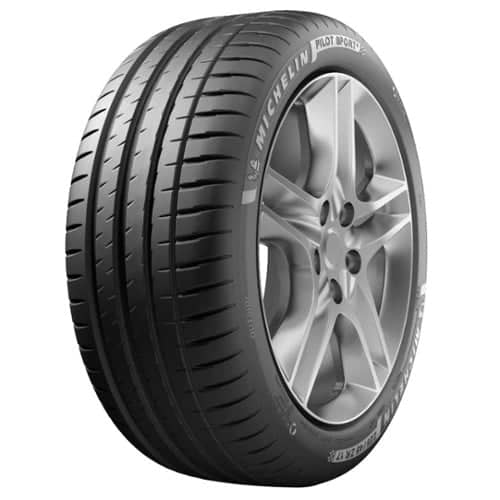
Michelin Pilot Sport 4 (around 373 dollars). The benchmark summer performance tire. If your car has real sporting intent and you want the best, this is where I point people.
Want to see the full lineup and check prices for your car? Shop every 245/45R18 tire we carry here.
The 245/45R18 is one of those sizes that has earned its keep on the sport-sedan crowd. Low sidewall, wide tread, quick steering, and a deep menu of tires at every price point. Now you know how tall it is, what it fits, whether a 245 is too wide, and what a set should run you. Match at least your factory speed rating, stay inside that 3 percent window if you ever swap sizes, and buy the best tire your budget allows. Any questions, that is what we are here for. Come see us at Performance Plus.
A 245/45R18 is about 26.7 inches tall (26.68 in, or 677 mm). It is 9.6 inches wide with a 4.3-inch sidewall, has an 83.8-inch circumference, and turns 756 times per mile.
It is a common sport and luxury sedan size, found on cars like the BMW 3 and 5 Series, Mercedes-Benz C and E-Class, Audi A4 through A6, Chrysler 300, Dodge Charger and Challenger, and Lexus IS and GS. Check your door-jamb placard to confirm.
Value tires start around 170 dollars each, mainstream and premium all-season tires run 200 to 250 dollars, and flagship performance and all-weather tires climb to 370 dollars and up.
The size is identical. The only difference is the speed rating. ZR is an older high-performance designation flagging a W or Y rated tire built for higher sustained speeds, while a plain R with a speed letter is the standard modern format.
Yes. An aspect ratio of 45 or lower is considered low-profile. The shorter sidewall gives sharper handling and a sportier look, with a firmer ride than a taller-sidewall tire.
A 245 is on the wider side of mainstream but not extreme. At 9.6 inches of section width it is about 0.8 inch wider than a 225, giving more grip and an aggressive stance with slightly more noise and rolling resistance.
A 245/45R18 is approved for rim widths of 7.5 to 9.0 inches, with 8.0 to 8.5 inches ideal. Narrower than 7.5 makes the tread bulge, and wider than 9.0 stretches the sidewall too thin.
Yes, in most cases. A 235/45R18 is 10 millimeters narrower and only about 1.4 percent smaller in diameter, well within the safe 3 percent window. Confirm the narrower tire still suits your rim width.



