
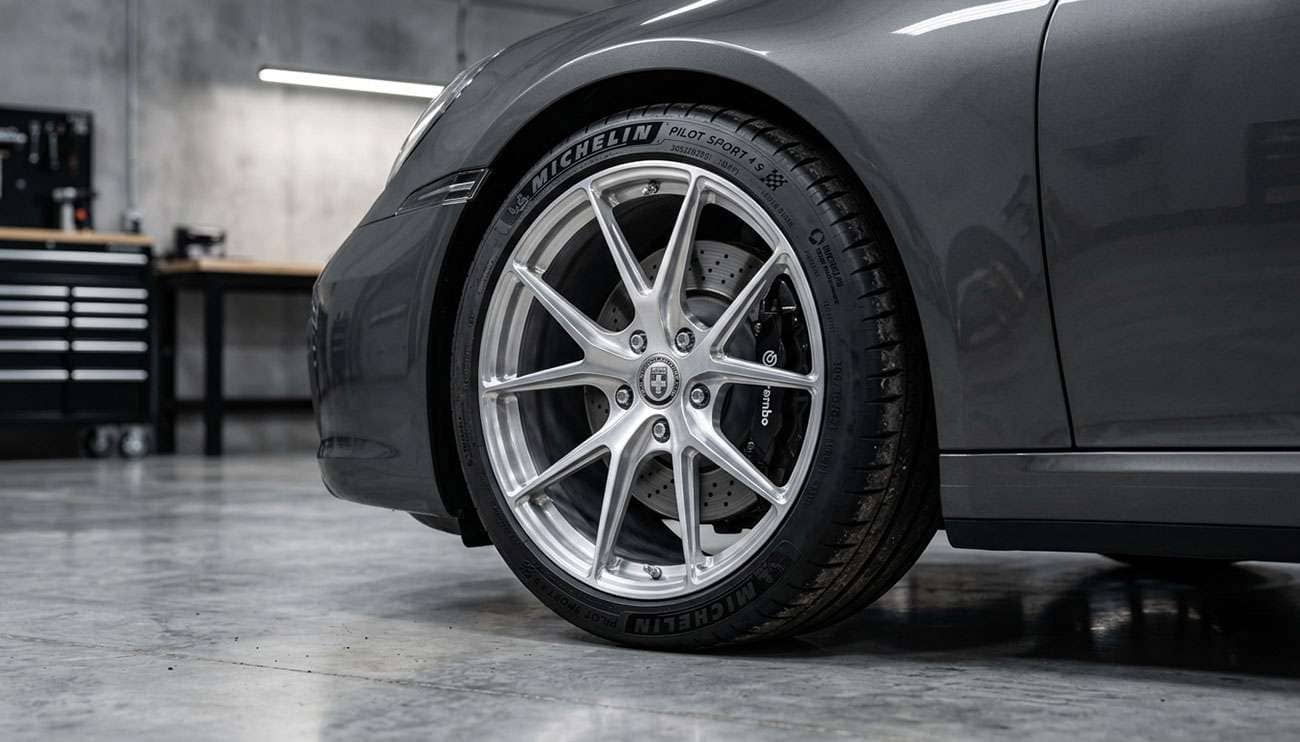
Low profile tires look great — no argument there. Wrapped tight around large-diameter alloy wheels, they give any vehicle an aggressive, performance-ready stance that commands attention. But looks are only part of the story. If you're seriously considering a switch to low profile rubber, you owe it to yourself — and your wallet — to understand exactly what you're signing up for before you spend a dollar. This guide breaks down the real pros and cons, explains the key specs you need to nail, walks you through how to match the right tire to your vehicle and driving style, and delivers concrete product recommendations built on real-world performance data. By the time you finish, you'll have everything you need to buy with confidence.
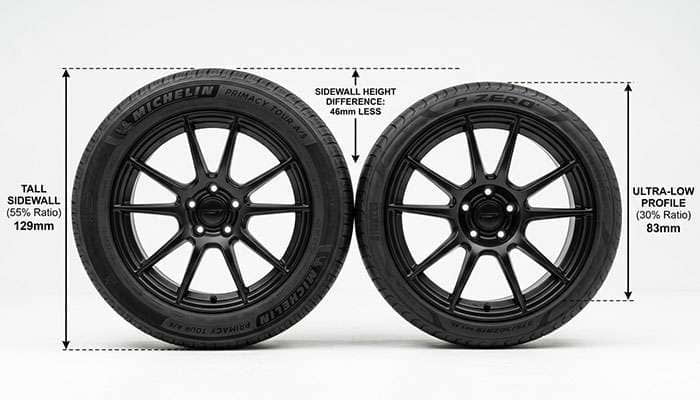
You can't evaluate low profile tires intelligently until you understand what actually separates them from conventional tires. "Low profile" refers specifically to the aspect ratio — the sidewall height expressed as a percentage of the tire's section width. Standard passenger tires typically run aspect ratios between 60 and 75. Low profile tires clock in at 55 or lower, and ultra-low profile tires drop to 35 or even 25. That seemingly small number difference has a profound effect on how your tire looks, handles, rides, and holds up over time. The short sidewall that defines a low profile tire is simultaneously its greatest strength and its most significant weakness — understanding that tension is what separates a smart buy from an expensive mistake.
Reading a tire sidewall can feel like decoding a foreign language, but with low profile tires, getting these numbers right really matters. Take a tire marked 245/40R18: the section width is 245mm, the aspect ratio is 40 (meaning the sidewall height is 40% of 245mm, or just 98mm), and it mounts on an 18-inch rim. Now compare that to a 245/65R17 — a conventional touring size — where the sidewall height is 65% of 245mm, roughly 159mm. That's more than 60mm of additional cushioning between your wheel and the road. Rim diameter typically climbs as aspect ratio drops, which is why low profile tires almost always appear on 17-inch, 18-inch, 19-inch, or larger wheels. This "plus-sizing" approach is engineered to keep the overall tire diameter close to your original equipment (OE) specification — preserving accurate speedometer readings and maintaining proper drivetrain clearance.
The table below summarizes how aspect ratio affects sidewall height across a common section width of 245mm:
Aspect Ratio |
Sidewall Height (245mm width) |
Profile Type |
Typical Rim Size |
|---|---|---|---|
65 |
159mm (~6.3 in) |
Standard / Touring |
16–17 inch |
55 |
135mm (~5.3 in) |
Low Profile (entry) |
17–18 inch |
45 |
110mm (~4.3 in) |
Low Profile |
18–19 inch |
35 |
86mm (~3.4 in) |
Ultra-Low Profile |
19–20 inch |
25 |
61mm (~2.4 in) |
Extreme Low Profile |
20–22 inch |
The most common mistake buyers make is choosing a low profile tire purely for looks without accounting for local road conditions. If you drive pothole-pocked urban streets, an aspect ratio of 35 or 40 gives you almost no cushion between the rim and the road — and that's where real, expensive damage happens. A pothole that a 65-series tire absorbs with a firm thump can bend a rim or crack a sidewall on a 35-series tire outright. The second big mistake is neglecting inflation. Low profile tires run at higher pressures — typically 35 to 44 PSI — and because the sidewalls are so stiff, they don't visually bulge when underinflated the way a standard tire does. It's easy to unknowingly run low, which accelerates wear and compromises handling in ways you won't see coming. Check your pressures at least monthly. The third mistake is skipping the load rating check. Moving up in wheel diameter and down in aspect ratio changes your load-carrying capacity. Always confirm your replacement tires meet or exceed the load rating on your OE tires — especially if you drive a heavier vehicle or regularly carry passengers and cargo.
Beyond aspect ratio, the rim diameter in your tire size is the number most buyers overlook when switching to low profile fitments. Upsizing your wheel by one inch — say from 17 to 18 — while dropping the aspect ratio by roughly 10 points keeps overall diameter close to stock. That's the foundation of the "plus-one" and "plus-two" sizing strategies used by performance fitment specialists. A plus-one fitment increases wheel diameter by one inch and reduces aspect ratio to compensate; plus-two goes two inches larger on the rim. The goal in both cases is to keep the loaded radius within about 3% of your OE specification. Stray outside that window and you start affecting ABS calibration, traction control thresholds, and speedometer accuracy. You can verify any fitment using our Tire Size Comparison Calculator before you buy.
Choosing the right low profile tire isn't as simple as grabbing the lowest aspect ratio you can find. The right fitment depends on your vehicle's weight class, suspension geometry, intended use, and the roads you actually drive every day. A sports coupe on smooth highways has completely different requirements than a crossover splitting time between city streets and mountain weekend runs. The good news: once you understand the variables, building a shortlist of strong candidates is straightforward — and when you get the fitment right, the performance payoff is genuinely impressive.
Sports cars and performance sedans with firm, short-travel suspension are engineered to work with low profile tires. The reduced sidewall flex complements stiff chassis tuning, and the wider contact patches these tires run deliver the lateral grip those suspensions are designed to exploit. For these vehicles, an aspect ratio in the 40–45 range typically hits the sweet spot between outright grip and daily drivability. Crossovers and SUVs are a different equation. Plenty of owners want the visual upgrade of larger wheels and lower profiles — and it's achievable — but you should generally stay at 50 or above for any vehicle with a raised ride height, softer suspension tuning, or significant load requirements. Dropping below 45 on a full-size SUV introduces real rim damage risk on uneven surfaces and noticeably harsher ride quality for your passengers. For trucks, especially those used for towing or hauling, prioritize load rating above everything else when considering a low profile fitment, and cross-reference the vehicle's load specs carefully.
If you regularly push your car — track days, canyon carving, aggressive on-ramp exits — a low profile high performance tire will reward you with sharper steering response, reduced body roll, and higher lateral g-forces before the tires give up. The stiffer sidewall is doing real dynamic work. If, on the other hand, your commute means 45 minutes of stop-and-go on deteriorating city streets before you even reach the highway, be honest with yourself. The ride harshness and pothole vulnerability may not justify the aesthetic and handling gains at everyday speeds. A 50-series tire on a stylish 18-inch wheel delivers much of the low-profile visual benefit with significantly more real-world durability than a 40-series on the same roads. Climate matters too. In regions with harsh winters, low profile summer or performance tires are a genuine liability. Pairing high-performance tires with a dedicated winter tire set on steel wheels is a smarter seasonal strategy than running a year-round all-season in an ultra-low profile fitment that compromises both winter traction and ride quality.
Ultra-performance low profile tires cost more — sometimes significantly more. A set of 245/35R20s from a premium brand can run $250–$400 per tire, putting a full set at $1,000–$1,600 before installation — and that's before you factor in the larger, pricier rims that ultra-low profiles demand. Budget-friendly options from reputable value-tier brands can bring that per-tire cost down to $100–$160 in common sizes, making the look achievable without a track-day budget. The real trade-off with budget tires in low profile sizes shows up in wet grip and tread life. Lower-tier compounds often carry a UTQG traction rating of B or C compared to A or AA on premium tires, and treadwear ratings range from 300 on aggressive performance compounds up to 600 on longer-wear performance touring tires. Pay close attention to those UTQG numbers, especially if you log high annual mileage. If spreading the cost helps, we offer flexible options through our tire financing programs.
Specs and selection criteria only take you so far — at some point you need specific tires. The recommendations below cover the three most common buyer profiles: daily commuters who want a performance look with reasonable comfort, dedicated performance drivers who prioritize grip and response above all else, and budget-conscious buyers who want quality rubber without the premium price tag. These picks are based on actual compound technology, real-world owner feedback, and the specific strengths that matter most in each category.
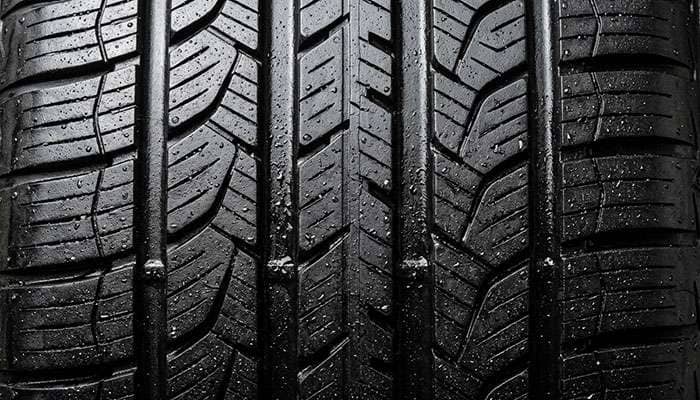
If you want the low profile look with genuine day-to-day livability, the Bridgestone Potenza RE980AS is one of the most balanced tires in the segment. It's an all-season ultra-high performance tire that delivers sporty handling in both dry and wet conditions while staying livable on rough pavement. The RE980AS carries a UTQG treadwear rating of 500 — excellent for a UHP tire — so you're not replacing it every 20,000 miles. Bridgestone's Nano Pro-Tech compound technology delivers consistent grip across temperature ranges, and the M+S rating gives you a real margin of safety on light snow or wet autumn roads. For commuters in performance-oriented sedans or coupes driving mixed conditions, this is the tire that delivers both the look and the livability without making you choose between them.
When outright performance is the priority, the Michelin Pilot Sport 4S consistently sets the benchmark in the summer ultra-high performance category. Available in aspect ratios as low as 25 and rim diameters up to 21 inches, the PS4S is purpose-built for vehicles where handling precision is non-negotiable. Its dual-compound tread — softer on the outer shoulder for lateral grip, harder on the inner tread for straight-line wear — is a genuine engineering achievement. The Dynamic Response Technology belt structure reduces crown deformation at high speed for consistent steering feel from on-ramp to apex. Independent testing consistently places the PS4S at or near the top in both dry braking and lateral grip benchmarks. If you drive a sports car, a performance-tuned sedan, or take your vehicle to track days, this is the tire your wheels deserve. It's not the cheapest option — but in performance tire terms, you get exactly what you pay for.
For drivers who want maximum performance at a slightly lower price point, the Continental ExtremeContact Sport delivers exceptional dry and wet grip through SportPlus Technology that channels water away from the contact patch efficiently. It's a particularly strong wet-weather performer — an area where some ultra-performance tires fall short — and it comes in a wide range of low profile fitments from 40 down to 30 series.
The budget low profile tire market has improved dramatically over the past decade, and you can now find value-tier options that deliver genuinely acceptable performance without the premium price. The Hankook Ventus V12 evo2 stands out in this category — priced meaningfully below the premium European brands while delivering dry handling and wet braking that approaches the segment leaders in independent testing. It carries a UTQG treadwear rating of 340 and is available in a broad range of low profile fitments, making it a consistently reliable choice for buyers who want real performance without the flagship price tag. At the entry level, brands like Nankang and GT Radial offer low profile sizes in common fitments at sub-$100 per tire — but expect a UTQG traction rating of B and treadwear in the 240–300 range. That's a reasonable trade-off for lower-mileage drivers, but not a strong long-term value proposition for anyone logging serious miles.
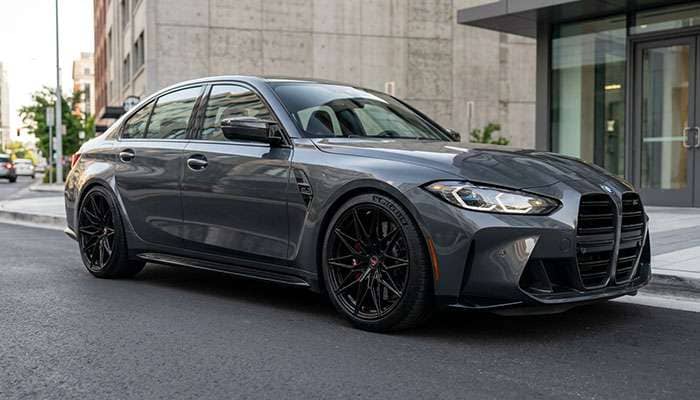
Low profile tires deliver real, measurable benefits — sharper steering, higher cornering limits, and a visual impact that's immediately noticeable. But the trade-offs are equally real if you go in without your eyes open. The same short sidewall that makes them so capable in corners also makes them more vulnerable to pothole damage, more sensitive to underinflation, and noticeably harsher on rough pavement. That's not a reason to avoid them. It's a reason to choose your aspect ratio thoughtfully, match your tire to your actual driving conditions rather than your aspirational ones, and invest in quality rubber that delivers both the grip and the durability your driving demands.
For most performance-oriented drivers on reasonably maintained roads, a 45-series or 50-series low profile tire in a plus-one or plus-two fitment is the sweet spot — you get the visual upgrade, real handling gains, and enough sidewall to handle real-world surfaces without treating every expansion joint like an obstacle course. If you drive on smooth roads with performance-tuned suspension, going lower makes complete sense, especially with a tire as capable as the Michelin Pilot Sport 4S or the Continental ExtremeContact Sport in your corner. Whatever your category, browse our full tire selection at Performance Plus Tire for competitive pricing, free shipping, and expert guidance to get your fitment right the first time.
Have questions about a specific fitment or vehicle? We're here to help you sort it out before you buy, not after.
Here's what you need to lock in before you make a purchase decision on low profile tires.
• Aspect ratio is everything: Low profile tires are defined by an aspect ratio of 55 or below — the lower the number, the shorter the sidewall, and the more pronounced the handling and comfort trade-offs become.
• Handling improves, ride harshness increases: The stiffer sidewall in a low profile tire reduces flex in corners for sharper steering response and higher lateral grip, but transmits more road vibration and impact into the cabin on rough surfaces.
• Pothole vulnerability is a real concern: With less cushioning between the rim and the road, low profile tires — especially those in the 35–40 series range — are significantly more susceptible to sidewall damage and rim bending on sharp impacts. Your local road conditions should directly influence your aspect ratio choice.
• Inflation monitoring is non-negotiable: Low profile tires don't visually sag when underinflated because the sidewalls are so stiff. Check your tire pressure monthly to avoid accelerated wear, compromised handling, and potential blowouts.
• Match the tire to your real driving, not your ideal driving: A 35-series ultra-performance summer tire is a brilliant choice on a sports car driven on good roads. On a crossover navigating city streets in a northern climate, it's a recipe for frustration and frequent replacements — a 50-series all-season in a plus-one fitment will serve you far better.
Any tire with an aspect ratio of 55 or lower qualifies as low profile. Tires at 45 and below are firmly in low profile territory, while those at 35 or below are classified as ultra-low profile. For context, standard touring and all-season tires typically run aspect ratios of 60 to 75.
Yes — and the effect gets more pronounced the lower the aspect ratio goes. The shorter sidewall carries less air volume to absorb road impacts, so more of that energy transfers directly to the wheel and into your suspension. On well-maintained roads, the difference is manageable for most drivers. On rough or broken pavement, a 35- or 40-series tire delivers noticeably more harshness than a 60-series tire on the same vehicle.
Significantly worse. With less sidewall between the rim and the road, a sharp pothole edge can cause a pinch flat — where the tire sidewall compresses so sharply between the rim and road surface that the inner liner punctures — or actually bend or crack the wheel. The risk climbs as aspect ratio drops. If you drive in an area with frequent pothole hazards, staying at a 45- or 50-series rather than dropping to 35 or 40 can save you serious repair costs.
Technically yes, but not every vehicle benefits from the trade-offs. Sports cars and performance sedans with firm suspension are engineered to take advantage of low profile tires and handle reduced compliance well. Trucks, larger SUVs, and vehicles with soft suspension tuning tend to suffer more from ride harshness while gaining less handling benefit. Any fitment change should keep the overall tire diameter within approximately 3% of the OE specification to maintain proper ABS and speedometer calibration.
Wear rate depends more on the tire's compound and UTQG treadwear rating than on the aspect ratio itself. Many low profile tires use performance-oriented compounds, and those softer, grippier formulas do wear faster than the harder compounds in standard touring tires. An ultra-high performance summer tire might carry a UTQG treadwear rating of 200–300, while a performance touring tire in a low profile fitment can reach 500–600. If tread longevity matters to you, prioritize tires with higher UTQG treadwear ratings within the low profile category rather than assuming all low profile tires wear quickly.



