
Looking for last year's guide? See our 2025 run-flat tires guide.
Run-flat tires give drivers the ability to keep moving up to 50 miles at speeds up to 50 mph after a complete puncture — a meaningful safety advantage that eliminates roadside tire changes in dangerous locations. Reinforced sidewall construction supports the vehicle's weight without any air pressure, which is the entire engineering value proposition. The trade-offs are equally real: run-flat tires typically cost 25-100% more than equivalent conventional tires, wear out approximately 6,000 miles sooner according to J.D. Power data, produce a noticeably harsher ride due to the stiffer sidewall construction, and usually can't be repaired after a puncture (meaning full replacement rather than the $20-30 patch that fixes a regular tire).
The decision between run-flat tires and conventional tires depends on three factors: whether your vehicle was originally equipped with run-flats (BMW, certain Mercedes-Benz models, MINI, Lexus, and some Toyota applications use run-flats as OE), whether you primarily drive in urban or rural environments (urban drivers benefit more from avoiding roadside changes; rural drivers benefit less from technology that requires service infrastructure), and whether you prioritize safety convenience or ride quality and total cost economics. This guide breaks down exactly what makes run-flat tires different at the engineering level, presents the specific pros and cons honestly, decodes the sidewall markings, and recommends five specific run-flat tires across categories.
Every run-flat tire referenced is in current stock at Performance Plus Tire. Click any tire to verify sizes, run-flat designation, and current pricing for your specific application.
Question |
Answer |
Detail |
|---|---|---|
Are run-flat tires worth it? |
Depends on use case |
Strong for urban luxury; weak for rural budget-conscious |
How far can you drive on a flat run-flat? |
50 miles at 50 mph |
Industry standard maximum after complete air loss |
How much more do run-flats cost? |
25-100% premium |
Typically $150-$500 per tire vs $100-300 conventional |
Do run-flats wear out faster? |
Yes, ~6,000 fewer miles |
J.D. Power data — affects total cost meaningfully |
Can run-flats be repaired? |
Usually no |
Most shops require replacement after any puncture |
Do run-flats ride harsher? |
Yes, 15-25% increased impact harshness |
Stiffer sidewalls reduce ride compliance |
Can I mix run-flats with regular tires? |
No |
All four tires must match for safety |
Do I need TPMS for run-flats? |
Yes, required |
Cannot tell run-flat is punctured without TPMS |
The decision framework: If your vehicle came with run-flats from the factory (BMW 3-Series/5-Series/7-Series, Mercedes-Benz S-Class certain trims, MINI, Lexus LS, Toyota Sienna AWD), keeping run-flats preserves the chassis tuning the manufacturer engineered around. If you're considering retrofitting run-flats to a vehicle that didn't come with them, the trade-offs typically don't justify the premium except for specific use cases. The technology is genuinely valuable for some drivers and genuinely unnecessary for others — the goal of this guide is helping you figure out which group you're in.
Two distinct technologies enable run-flat operation, and the engineering choice affects how the tire behaves both during normal driving and after a puncture.
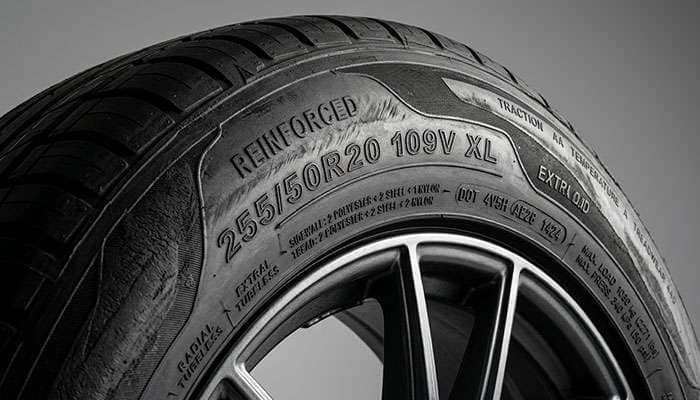
Self-supporting sidewall (SSS) technology. The dominant run-flat design uses reinforced sidewall construction with additional rubber reinforcement layers, stronger internal cap plies, and specially engineered bead reinforcement. These reinforcements allow the tire to support the vehicle's weight even with zero air pressure — the rigid sidewall structure handles the loads that air pressure normally carries. Self-supporting sidewall technology is used by Bridgestone (RFT), Michelin (ZP — Zero Pressure), Pirelli (RFT), Goodyear (ROF, RunOnFlat), Continental (SSR — Self Supporting Run-flat), Dunlop (DSST — Dunlop Self Supporting Tire), Yokohama (ZPS — Zero Pressure System), and most other major run-flat manufacturers. The advantage is simplicity — the tire is a single unit that doesn't require special wheels or auxiliary support components. The disadvantage is the heavier weight (typically 15-25% more than equivalent conventional tires) and the harsh ride that the stiffer sidewall construction produces.
Support ring (auxiliary) technology. The less-common alternative uses a hard rubber or composite support ring mounted to a special wheel inside the tire cavity. When the tire loses air pressure, the support ring inside the tire supports the vehicle weight rather than the tire sidewalls. Support ring technology is used by Michelin PAX system (mostly discontinued) and a few other niche applications. The advantage is potentially smoother ride characteristics during normal operation (because the tire sidewalls can be more flexible since they don't need to carry weight during punctures). The disadvantage is requiring special wheels engineered for the support ring — meaning you can't easily switch back to conventional tires without changing wheels, and tire-and-wheel cost economics are substantially worse.
Both technologies achieve the same fundamental result: 50 miles of driving at speeds up to 50 mph after complete air pressure loss. The 50-mile, 50-mph standard isn't arbitrary — it represents the industry-validated distance and speed combination that allows drivers to reach service infrastructure safely without inducing structural failure that could create secondary safety risks. Driving faster than 50 mph or longer than 50 miles on a deflated run-flat exceeds the engineering envelope and risks tire failure that the run-flat technology was supposed to prevent.
Tire Pressure Monitoring Systems (TPMS) are mandatory for run-flat operation because the reinforced sidewall construction means you can't visually identify a deflated run-flat tire — the tire continues to look approximately normal even at zero PSI. Without TPMS alerting the driver to the pressure loss, drivers would continue operating the tire indefinitely until the run-flat capability is exhausted, which then produces the catastrophic failure that run-flats specifically prevent. For deeper TPMS context, see our TPMS and run-flats cautionary guide.
Run-flat tires deliver five genuine engineering advantages over conventional alternatives.
1. Eliminate dangerous roadside tire changes. Every three to four days, someone in the United States is killed or seriously injured while changing a tire on the roadside. Run-flat tires eliminate the need for roadside changes by letting drivers reach service infrastructure safely. For drivers who commute on freeways, drive through unsafe areas regularly, or travel in conditions where stopping creates real safety risks, the value of avoiding roadside changes is genuine and meaningful — not theoretical.
2. No spare tire required. Most modern vehicles equipped with run-flat tires eliminate the spare tire entirely, freeing up approximately 30-50 pounds of vehicle weight and 2-4 cubic feet of cargo space. The weight reduction modestly improves fuel economy (typically 0.5-1.0% range) and the cargo space gain is meaningful for daily-driver vehicles where every cubic foot of trunk capacity matters. For EVs specifically, the weight reduction matters more — every 30 pounds of unnecessary weight translates to approximately 0.3-0.5% range loss.
3. Better safety during blowouts. When a conventional tire experiences a catastrophic blowout at highway speed, the sudden air loss combined with the deformed tire can produce loss-of-control events. Run-flat tires maintain their shape during blowouts due to the reinforced sidewall construction, which preserves vehicle stability and gives the driver time to slow safely and pull off the road. The handling characteristics during a blowout event are meaningfully better with run-flats than with conventional tires — a real safety benefit that comes from the same engineering that produces the harsher ride.
4. Preserves OE chassis tuning on equipped vehicles. BMW, Mercedes-Benz, MINI, Lexus, and Toyota engineers calibrated suspension, steering, and stability control specifically for run-flat tire characteristics on the vehicles that came with them. Switching to conventional tires on a BMW 5-Series or Mercedes-Benz S-Class that came with run-flats changes the chassis behavior in ways the manufacturer didn't intend — typically softer steering response, modified turn-in characteristics, and altered stability control thresholds. For drivers who value the OE chassis tuning, run-flats preserve the experience the manufacturer engineered.
5. Reduced anxiety on long trips. The peace of mind from knowing a puncture doesn't strand you isn't quantifiable engineering data, but it's a real value to drivers who travel long distances, drive in unfamiliar areas, or simply prefer the reduced anxiety. For some drivers, the peace of mind alone justifies the premium pricing — particularly drivers in metropolitan areas where tire service is widely available and the 50-mile run-flat capability easily reaches help. For others, the peace of mind doesn't justify the trade-offs. Personal priority weighting matters here.
Run-flat tires create five real disadvantages compared to conventional alternatives. These are engineering realities, not marketing concerns.
1. 25-100% higher purchase cost. Run-flat tires typically cost 25-100% more than equivalent conventional tires of the same size. Premium UHP summer applications can run $300-500 per tire versus $200-350 for conventional alternatives. Touring applications run $180-300 per tire versus $130-220 conventional. For a complete set of four tires, the price premium typically adds $400-800 to the initial purchase compared to comparable conventional tires.
2. Faster wear (~6,000 fewer miles). Run-flat tires wear out approximately 6,000 miles sooner than conventional tires on average, according to J.D. Power consumer data. The harder compound chemistry required to achieve run-flat capability produces faster wear than typical conventional touring tires. The wear difference means more frequent replacement, which compounds the initial cost premium over the vehicle's ownership period — keeping a vehicle 5-7 years could easily produce one additional set of run-flat tire replacement compared to conventional alternatives.
3. Usually can't be repaired after puncture. Most tire shops won't repair a punctured run-flat tire because of potential hidden sidewall damage that occurs during low-pressure operation. The reinforced sidewall structure can be compromised during run-flat operation in ways that aren't visible from outside inspection — meaning the tire could fail catastrophically later even after a successful patch. Full replacement is typically required after any puncture, which adds $200-400 to each puncture event versus the $20-30 patch that fixes a regular tire. Over typical ownership periods, the puncture-cost difference adds meaningful expense.
4. Harsher ride quality. Run-flat sidewall construction is 15-25% stiffer than conventional sidewall construction, which produces a measurably harsher ride. The increased impact harshness shows up most noticeably on rough roads, potholes, expansion joints, and broken pavement — exactly the conditions where ride compliance matters most. For drivers in areas with poor road conditions, the ride quality penalty can be substantial. Some drivers describe run-flats as "harder than they should be" on conventional vehicles where the OE chassis wasn't tuned around run-flat characteristics.
5. Limited tire selection and service infrastructure. Run-flat tires are available in fewer sizes than conventional tires, and not all sizes have multiple manufacturer options. Replacement in remote areas can require waiting for shipping from regional warehouses since not all tire shops stock run-flats in popular sizes. For drivers in rural areas or those who travel through regions with limited tire service infrastructure, the convenience advantage that run-flats theoretically provide can be undermined by replacement difficulty when issues actually occur. Performance Plus Tire stocks deep run-flat inventory specifically to address this issue.
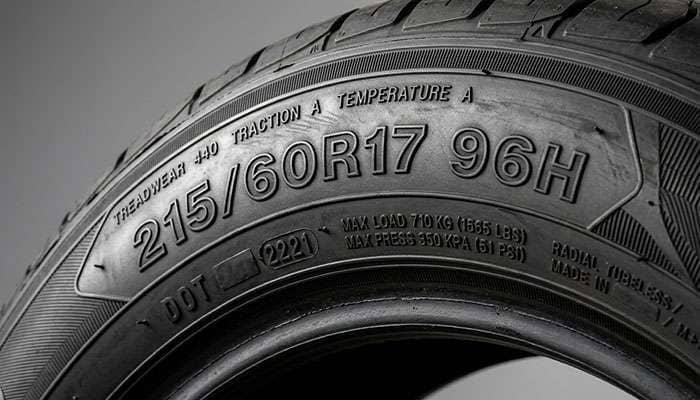
Different manufacturers use different markings to indicate run-flat capability. Knowing which marking means what makes shopping easier and helps verify replacement tires match your specific vehicle's specification.
Marking |
Manufacturer |
What It Means |
|---|---|---|
RFT |
Bridgestone, Pirelli, Hankook |
Run-Flat Tire — generic industry designation |
ZP |
Michelin |
Zero Pressure — Michelin's run-flat designation |
SSR |
Continental |
Self Supporting Run-flat |
ROF |
Goodyear |
Run-On-Flat (also EMT — Extended Mobility Tire) |
EMT |
Goodyear |
Extended Mobility Tire (older designation, still used) |
DSST |
Dunlop |
Dunlop Self Supporting Technology |
ZPS |
Yokohama |
Zero Pressure System |
MOE |
Various (Mercedes OE) |
Mercedes Original Equipment specification |
★ (star) |
Various (BMW OE) |
BMW Original Equipment specification (can be run-flat or conventional) |
Snail icon |
Generic industry symbol |
Reduced-speed run-flat capability indicator |
When replacing run-flat tires, match the OE specification — if your vehicle came with Bridgestone RFT, you can typically replace with any run-flat manufacturer (Michelin ZP, Continental SSR, Goodyear ROF, etc.) without compatibility issues. The MOE and ★ (star) markings indicate specific Mercedes-Benz and BMW OE specifications respectively — these tires meet the manufacturer's specific load, speed, and chassis tuning requirements. For Mercedes-Benz applications requiring MOE specification, sticking with MOE-marked tires preserves the OE chassis behavior. For BMW applications with ★ marking, the star can appear on either run-flat or conventional tires, so verify the specific designation matches your vehicle's requirement.
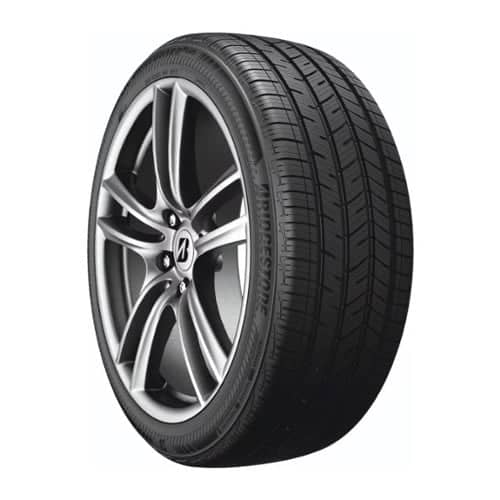
Category: Grand Touring All-Season Retrofit Runflat • Best For: Drivers wanting run-flat capability without OE run-flat requirement • Typical Price: $180-280 per tire
The Bridgestone DriveGuard Plus Runflat is the standout option for drivers who want run-flat capability on vehicles that didn't come with run-flats from the factory. Most run-flat tires require run-flat-specific OE chassis tuning to deliver acceptable ride quality, but DriveGuard Plus was specifically engineered to work on virtually any modern passenger vehicle — including vehicles that came with conventional tires. The Cooling Fin Technology dissipates heat that builds up during low-pressure operation, extending run-flat capability while maintaining tire integrity.
The 60-mile run-flat capability at speeds up to 50 mph exceeds the industry-standard 50-mile baseline that most run-flat tires deliver — meaningful for drivers who might need additional range to reach service infrastructure. The tread compound delivers balanced grand touring performance with strong wet braking and competitive tread life (typically 65,000-70,000 miles, which is actually competitive with conventional grand touring alternatives — the wear premium that affects other run-flats is less pronounced on DriveGuard Plus). For drivers who want run-flat safety advantages on Toyota Camry, Honda Accord, Hyundai Sonata, Nissan Altima, and similar mid-size sedan applications, DriveGuard Plus is the rational answer.
The trade-off versus OE-tuned run-flat applications is ride quality — DriveGuard Plus delivers acceptable ride on conventional chassis tuning but doesn't match the OE-tuned smoothness that BMW or Mercedes-Benz applications achieve with manufacturer-specific run-flat tires paired with manufacturer-tuned suspension. Browse Bridgestone DriveGuard Plus sizes.
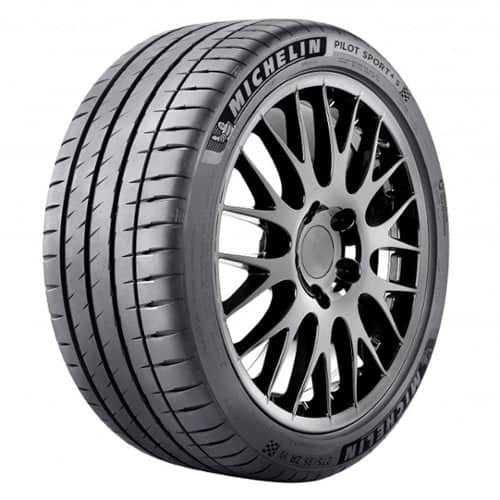
Category: Max Performance Summer Runflat (ZP) • Best For: BMW M-Sport, AMG, and similar premium performance applications • Typical Price: $340-450 per tire
The Michelin Pilot Sport 4 S Runflat brings Michelin's premium UHP engineering to the run-flat category specifically for BMW M-Sport, Mercedes-AMG, and similar premium performance vehicles that came with run-flat OE specification. The ZP (Zero Pressure) construction maintains 50 miles of operation at 50 mph after complete air loss while preserving approximately 92-95% of the conventional PS4S's peak grip characteristics — a meaningful achievement that lets performance-oriented drivers maintain run-flat safety without giving up too much dry braking and cornering performance.
The Variable Contact Patch 3.0 technology and Bi-Compound construction work the same way they do on the conventional PS4S, delivering the chassis tuning and performance behavior that BMW and Mercedes-Benz engineers calibrated their suspension around. For BMW 3-Series M-Sport, 5-Series M-Sport, 7-Series M-Sport, Mercedes-Benz C63 AMG, E63 AMG, S-Class AMG, and similar premium performance applications, the PS4S Runflat preserves both the run-flat safety advantage and the performance characteristics that justify these vehicles' premium pricing. For deeper PS4S analysis (conventional version), see our PS4S vs PZ4 comparison. Browse Michelin PS4S Runflat sizes.
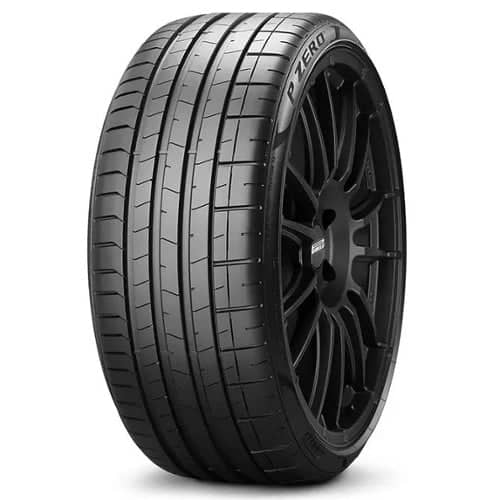
Category: Max Performance Summer Runflat • Best For: European performance vehicles with Pirelli OE specification • Typical Price: $310-410 per tire
The Pirelli PZero PZ4 Sport Runflat brings European-engineered UHP performance to the run-flat category with slightly different handling character than the Michelin PS4S Runflat. Pirelli tunes the PZ4 Sport for sharper turn-in response and more communicative steering feel at the cost of marginally less peak grip at the absolute limit. For European performance vehicles where Pirelli is the OE specification — BMW M3, BMW M5, BMW X5 M, Audi RS-line, Porsche Macan, certain Mercedes-AMG applications — the PZ4 Sport Runflat preserves the OE chassis tuning that switching to Michelin or Goodyear alternatives doesn't.
The run-flat construction uses self-supporting sidewall technology with reinforced cap plies optimized for the high-performance applications that demand peak grip alongside run-flat safety. Pirelli's Run-Flat technology delivers the industry-standard 50 miles at 50 mph after complete air loss while preserving the brand's signature performance characteristics. For drivers building European performance vehicles with Pirelli OE specification who want to maintain that specification while preserving run-flat capability, the PZ4 Sport Runflat is the correct answer. Browse Pirelli PZ4 Sport Runflat sizes.
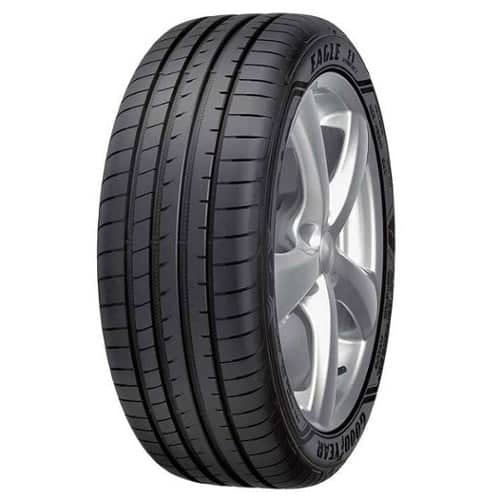
Category: Max Performance Summer Runflat (ROF) • Best For: Performance applications wanting value-tier UHP run-flat • Typical Price: $250-340 per tire
The Goodyear Eagle F1 Asymmetric 3 RunFlat delivers UHP summer performance in run-flat construction at meaningfully lower pricing than premium Michelin and Pirelli alternatives. Goodyear's ROF (RunOnFlat) technology uses self-supporting sidewall construction with the brand's compound chemistry tuned for both performance and run-flat capability. The Asymmetric tread design with three-zone tread pattern delivers strong dry grip, competitive wet performance, and acceptable tread life for the UHP run-flat category.
What gives the F1 Asymmetric 3 RunFlat its position is value pricing — typically 15-25% below comparable Michelin PS4S Runflat at equivalent sizes while delivering approximately 88-92% of the peak performance. For BMW, Mercedes-Benz, Audi, and similar performance vehicles where the buyer wants run-flat safety with strong UHP performance but doesn't need absolute peak grip, the F1 Asymmetric 3 RunFlat delivers strong economics. The OE specification on certain BMW and Mercedes-Benz applications makes it a direct replacement option in many cases. Tread life typically lands in the 25,000-30,000 mile range, competitive with UHP run-flat alternatives. Browse Goodyear F1 Asymmetric 3 RunFlat sizes.
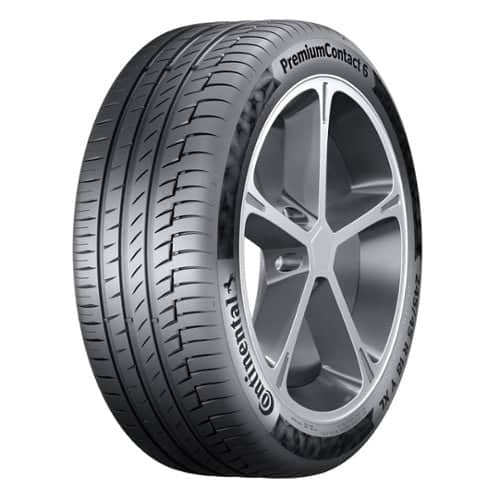
Category: Grand Touring Summer Runflat (SSR) • Best For: Luxury sedans wanting balanced comfort and run-flat capability • Typical Price: $210-310 per tire
The Continental ContiPremiumContact 6 SSR delivers Continental's premium grand touring engineering in run-flat construction. The SSR (Self Supporting Run-flat) technology uses reinforced sidewall construction tuned for the comfort-oriented luxury sedan market — typically softer-riding than UHP run-flat alternatives while maintaining genuine 50-mile, 50-mph run-flat capability. The Sport Performance compound delivers competitive dry and wet performance with the Black Chili compound chemistry that Continental uses across its premium tire portfolio.
For BMW 5-Series and 7-Series in non-M-Sport trim, Mercedes-Benz E-Class and S-Class in non-AMG configurations, Lexus LS, Audi A6 and A8, and similar premium luxury sedans where comfort matters alongside run-flat safety, the ContiPremiumContact 6 SSR delivers the strongest comfort-to-performance balance in the run-flat category. Tread life typically runs 50,000-60,000 miles — competitive with grand touring alternatives despite the run-flat construction. For drivers who prioritize luxury sedan ride quality alongside run-flat capability rather than maximizing UHP performance, the ContiPremiumContact 6 SSR is consistently the right answer. Browse Continental ContiPremiumContact 6 SSR sizes.
In most cases, no — and the engineering reason matters. When a run-flat tire experiences a puncture, the driver typically continues operating the vehicle until reaching service infrastructure (which is the entire engineering value of run-flat technology). During that low-pressure operation, the reinforced sidewall construction works as designed but can experience internal damage that isn't visible from external inspection. The damage might include internal cap ply separation, bead area compromise, or sidewall structural degradation — none of which are detectable from outside the tire but all of which could cause catastrophic failure later if the tire is patched and returned to service.
Most tire manufacturers and most tire service shops require run-flat tire replacement rather than repair after any puncture for this reason. The conservative approach reflects genuine safety considerations rather than profit-motivated requirements — repairing a run-flat that subsequently fails catastrophically creates substantially more liability than simply replacing the tire after any puncture event.
Some exceptions exist. If the puncture occurs in a location where the driver immediately stops without operating on the deflated tire (a nail puncture noticed before any extended driving on it, for example), some shops will inspect the tire carefully and patch the puncture if no internal damage is detected. The conservative approach still favors replacement — repair acceptance varies by shop, manufacturer, and specific damage assessment. Performance Plus Tire's service department can inspect run-flat tires after punctures and provide honest assessment of whether replacement or repair is appropriate for your specific situation.
The economic impact: each puncture event on a run-flat typically means $200-400 in replacement cost (one new tire) versus $20-30 for patch repair on a conventional tire. Over a typical 5-7 year vehicle ownership period with average puncture frequency, the difference adds approximately $200-800 to total tire ownership costs.
Profile |
Run-Flats Make Sense |
Run-Flats Don't Make Sense |
|---|---|---|
Driving environment |
Urban commuter with widespread tire service |
Rural driver with limited tire service infrastructure |
Vehicle OE specification |
Vehicle came with run-flats (BMW, MB, MINI, Lexus) |
Vehicle came with conventional tires (most non-luxury) |
Driving distance |
Daily-driver short-distance commute |
Long-distance highway driver crossing remote areas |
Cost sensitivity |
Budget allows 25-100% tire price premium |
Tight budget where conventional alternatives matter |
Ride quality priority |
OE chassis tuned around run-flat characteristics |
Driver values ride compliance over safety convenience |
Safety priority |
High-anxiety driver, freeway commuter, unsafe area driver |
Low-anxiety driver comfortable with traditional spare tire |
Vehicle has spare tire |
No spare tire (most modern luxury vehicles) |
Full-size or compact spare with floor jack and lug wrench |
The pattern: run-flat tires make most sense for urban luxury vehicle drivers whose vehicles came with run-flat OE specification and who value safety convenience and OE chassis tuning preservation alongside acceptable cost. Run-flat tires make least sense for rural budget-conscious drivers who travel long distances on conventional vehicles and prioritize ride compliance over the safety convenience benefits. Most drivers fall somewhere between these extremes, and the decision depends on individual priorities. For broader run-flat vs conventional analysis, see our run-flat vs regular tires comparison and our self-sealing puncture-resistant tires guide.
The economic comparison between run-flat tires and conventional alternatives requires looking at the complete ownership cost rather than just initial purchase price.
Cost Category (5-year ownership) |
Run-Flat Tires |
Conventional Tires |
Difference |
|---|---|---|---|
Initial purchase (set of 4) |
$720-1,200 |
$520-880 |
+$200-320 |
Replacement sets (assumes 50k vs 56k typical wear) |
1.5 sets over 5 yrs ($1,080-1,800) |
1.0 sets over 5 yrs ($520-880) |
+$560-920 |
Average puncture events (1-2 over 5 yrs) |
$200-400 per (replacement required) |
$20-30 per (patch repair) |
+$200-700 |
5-year total cost difference |
$2,000-3,400 |
$1,060-1,790 |
+$940-1,610 |
Over a typical 5-year ownership period, run-flat tires cost approximately $940-1,610 more than conventional alternatives — a meaningful difference that doesn't include the harder ride quality cost (which is real but not quantifiable in dollars). Whether the safety convenience justifies the cost depends on individual driving patterns. For urban commuter drivers covering 12,000-15,000 miles per year in safe service infrastructure areas, the additional $200-300 annual cost is modest insurance against roadside changes. For drivers with different priorities, the math may not work.
Tire |
Category |
Designation |
Best For |
|---|---|---|---|
Bridgestone DriveGuard Plus |
Grand Touring All-Season Retrofit |
Runflat (60-mile capability) |
Aftermarket retrofit on conventional vehicles |
Michelin Pilot Sport 4 S |
Max Performance Summer |
ZP (Zero Pressure) |
BMW M-Sport, Mercedes-AMG premium performance |
Pirelli PZero PZ4 Sport |
Max Performance Summer |
RFT |
European performance with Pirelli OE |
Goodyear Eagle F1 Asymmetric 3 |
Max Performance Summer |
ROF |
Value UHP run-flat for performance applications |
Continental ContiPremiumContact 6 |
Grand Touring Summer |
SSR |
Luxury sedans comfort-focused run-flat |
Industry-standard run-flat tires deliver 50 miles of operation at speeds up to 50 mph after complete air pressure loss. The 50-mile, 50-mph standard represents the engineering envelope that allows drivers to reach service infrastructure safely without inducing structural failure that could create secondary safety risks. Some run-flat tires (Bridgestone DriveGuard Plus, for example) extend this to 60 miles. Driving faster than 50 mph or longer than 50 miles on a deflated run-flat exceeds the engineering envelope and risks catastrophic tire failure. The technology is designed for "get to safety" capability, not "ignore the puncture indefinitely" — drivers should plan their route to the nearest tire service location and replace the tire promptly after the run-flat event.
It depends on your driving environment, vehicle OE specification, and personal priorities. Run-flat tires make most sense for urban commuter drivers whose vehicles came with run-flats from the factory (BMW, Mercedes-Benz, MINI, Lexus, certain Toyota applications), who value safety convenience and OE chassis tuning preservation, and whose budget can absorb the 25-100% pricing premium. Run-flat tires make least sense for rural budget-conscious drivers covering long distances on conventional vehicles who prioritize ride compliance over safety convenience and want repair-rather-than-replace puncture handling. Over a typical 5-year ownership period, run-flats cost approximately $940-1,610 more than conventional alternatives — meaningful but potentially justified for the right driver profile. The decision is genuinely personal rather than universal.
In most cases, no — and the engineering reason matters. When a run-flat tire operates at low pressure during the post-puncture distance to service infrastructure, the reinforced sidewall construction can experience internal damage that isn't visible from external inspection. Internal cap ply separation, bead area compromise, or sidewall structural degradation could cause catastrophic failure later if the tire is patched and returned to service. Most tire manufacturers and most tire service shops require run-flat tire replacement rather than repair after any puncture for liability reasons. Some exceptions exist — if the puncture is noticed immediately and the tire was never operated at low pressure, some shops will inspect carefully and patch the puncture. Conservative approach favors replacement. Each puncture event typically costs $200-400 in replacement versus $20-30 for patch repair on conventional alternatives.
BMW chassis engineering calibrates suspension, sound insulation, and structural acoustics specifically for run-flat tire characteristics on the vehicles that came with them from the factory. The stiffer sidewall construction of run-flat tires actually transmits some specific noise frequencies that BMW's acoustic engineering accounts for — replacing run-flats with conventional tires can produce different noise characteristics that the chassis wasn't tuned around. The conventional tires aren't necessarily louder overall, but they produce different noise patterns that the chassis acoustics weren't engineered to manage. Drivers report "different" rather than "louder" — but the difference can be perceptually significant. For drivers who prioritize the OE acoustic engineering, staying with run-flat replacement preserves the experience BMW engineers calibrated.
No. All four tires on the same vehicle should match — either all run-flat or all conventional. Mixing tire types produces inconsistent handling characteristics (because run-flat and conventional tires have different cornering compliance, braking response, and acceleration traction), creates safety risks (because the vehicle's stability control was calibrated for consistent tire characteristics), and can void manufacturer warranties on the run-flat tires. If you experience a puncture and need to temporarily run on a non-matching tire, the practice is acceptable for short distances at reduced speeds to reach permanent replacement. As a permanent setup, mixed tires create real problems that aren't worth the modest cost savings. Replace all four tires when switching between run-flat and conventional categories.
ZP stands for "Zero Pressure" — Michelin's designation for run-flat tires. The ZP marking appears on Michelin's run-flat product line including the Pilot Sport 4 S Runflat, Pilot Sport A/S 4 Runflat, Primacy MXM4 Runflat, and other Michelin run-flat models. ZP construction uses reinforced self-supporting sidewall technology that allows the tire to operate at zero air pressure for 50 miles at 50 mph after a puncture. The designation is functionally equivalent to other manufacturer run-flat markings — Bridgestone RFT, Pirelli RFT, Continental SSR, Goodyear ROF/EMT, Dunlop DSST, and Yokohama ZPS all denote run-flat capability through similar reinforced sidewall construction. When replacing Michelin ZP tires, you can typically replace with any run-flat manufacturer equivalent without compatibility issues.
Not all BMW vehicles use run-flat tires, but a significant portion of the BMW lineup specifies run-flats as original equipment. BMW 3-Series, 5-Series, 7-Series, X-series (X3, X5, X7), and similar premium models typically come with run-flat OE specification, while certain M-Sport and M-line variants may use conventional tires depending on the specific application. The BMW star (★) marking on tire sidewalls indicates BMW OE specification but can appear on either run-flat or conventional tires — verifying the specific designation (RFT, ROF, ZP, SSR, etc.) on your existing tires tells you whether your vehicle requires run-flats. Performance Plus Tire's tire fitment lookup can confirm OE specification for your specific year, make, model, and trim level.
Run-flat tires deliver specific safety advantages that conventional tires don't: elimination of dangerous roadside tire changes (where someone is killed or injured every 3-4 days in the United States), better vehicle stability during blowout events (because the reinforced sidewall maintains tire shape), and the ability to reach service infrastructure safely after a puncture rather than being stranded. Conventional tires offer different safety considerations: better ride compliance and predictability on rough roads, generally better wet performance margins because compound chemistry can be optimized for grip rather than balancing grip with run-flat capability, and meaningful safety margin from a properly-functioning full-size spare tire (when equipped). Neither tire type is universally safer — the specific safety priorities matter. For drivers prioritizing roadside change elimination, run-flats are clearly safer. For drivers prioritizing ride compliance on rough roads, conventional tires may be safer.



