
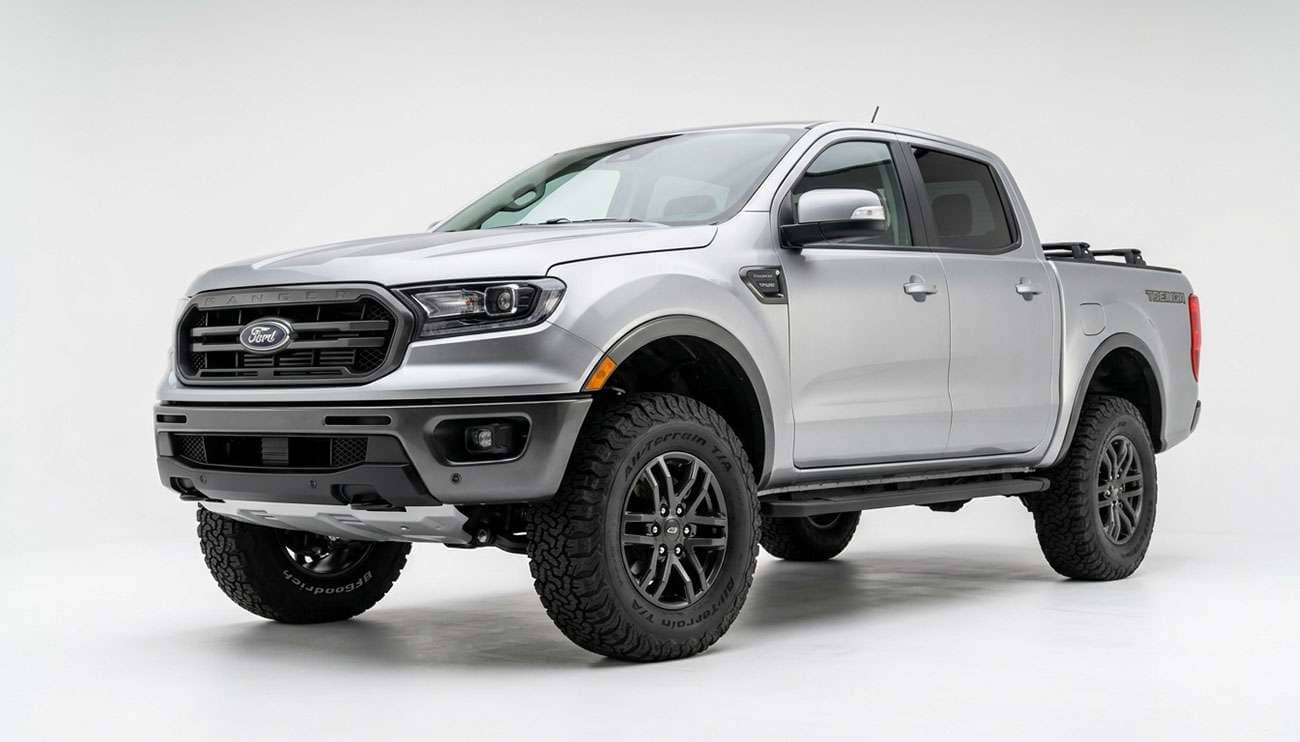
Short answer: on a PRO-4X, usually yes with some trimming. On an S or SV, it is a much bigger job than anyone tells you, because those trucks leave the factory a full inch shorter on tire than a PRO-4X does. That one inch has been sitting in the Frontier lineup since 2009 and it decides this question more than your model year does. And the tire most folks buy as a "33" measures 32.8 inches, which is not a 33.
I have been fitting tires to Frontiers since the second generation was new on the lot, and I will tell you the thing that makes this question so slippery. Somebody rolls in and says his buddy put 33s on his Frontier with nothing but a liner trim, and it worked, so why is his truck rubbing the paint off?
Because they are not the same truck. They both say Frontier on the tailgate. One of them started an inch taller on tire than the other one did, straight from the factory, and neither owner ever knew it.
Let us clear this up before anything else, because half the confusion in Frontier fitment comes from here.
When a Frontier owner says he is going to 33s, nine times out of ten he means a 285/75R16 or a 285/70R17. Those are the two sizes the internet hands you. Run the numbers on them:
Size |
Actual Diameter |
Section Width |
What It Really Is |
|---|---|---|---|
285/70R17 |
32.7 inches |
11.2 inches |
A wide 32.7, sold as a 33 |
285/75R16 |
32.8 inches |
11.2 inches |
A wide 32.8, sold as a 33 |
33x12.50R17 |
33.0 inches |
12.5 inches |
A true 33, and very wide for this truck |
255/85R16 |
33.1 inches |
10.0 inches |
A true 33, and the narrowest way to get there |
255/80R17 |
33.1 inches |
10.0 inches |
A true 33 on the PRO-4X wheel size |
285/75R17 |
33.8 inches |
11.2 inches |
Closer to a 34 than a 33 |
Read that table twice. The two sizes everybody calls a 33 are not 33s, and the sizes that genuinely measure 33 inches are the skinny ones nobody talks about.
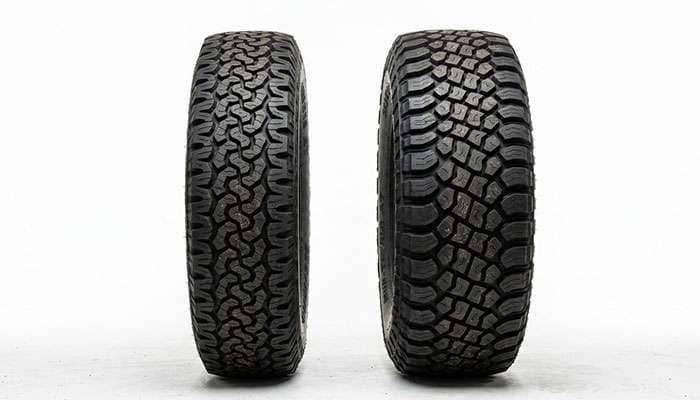
That matters on a Frontier more than it would on a full-size truck, because this is a narrow truck with a narrow wheel well. The 255/85R16 and the 255/80R17 are two full inches narrower than a 285 and still taller. On a Frontier that trade is almost always the right one. You get more real diameter, you get a tire that tucks instead of poking, and you cut a whole lot less plastic to make it happen. Old boys running skinny tall tires on narrow trucks figured this out decades ago and it still works.
This catches out folks cross-shopping midsize trucks, too. The same nominal 33 behaves differently depending on what it is going under, which is why our companion piece on whether 33s fit a stock Tacoma lands on a different set of answers than this one does. Same tire, different truck, different job.
Here is the part that almost nobody puts in front of you, and it is the whole ballgame.
Nissan has never sold one Frontier. It has sold a street Frontier and an off-road Frontier, and they do not start from the same place. Look at what actually came on the truck from the factory:
Generation and Trim |
Factory Tire |
Factory Diameter |
Jump to a True 33.1 |
|---|---|---|---|
2005-2021 S and SV |
265/70R16 |
30.6 inches |
Up 2.5 inches, 1.25 inches of radius |
2005-2021 SL |
265/60R18 |
30.5 inches |
Up 2.6 inches, 1.3 inches of radius |
2009-2021 PRO-4X |
265/75R16 |
31.7 inches |
Up 1.4 inches, 0.7 inches of radius |
2022-present S and SV |
265/70R16 or 265/65R17 |
30.6 inches |
Up 2.5 inches, 1.25 inches of radius |
2022-present PRO-4X and PRO-X |
265/70R17 |
31.6 inches |
Up 1.5 inches, 0.75 inches of radius |
Look down that last column. Going to a true 33 on an S or SV is nearly double the jump it is on a PRO-4X. Not a little more. Nearly double.
And notice something else while you are in there. That one-inch gap between the base trims and the off-road trim holds in 2010, and it holds in 2025. The generation change did not touch it. So when a guide tells you "the 2022 and up Frontier fits 33s easier," it is answering a question nobody asked. The year on your title is not what is deciding this. The badge on your fender is.
Clearance lives in radius, not diameter, because only half the tire is trying to get into the wheel well. Three quarters of an inch of extra radius on a PRO-4X is a trim job. An inch and a quarter on an SV is a different conversation, and on a truck with a narrow well it is often the difference between cutting plastic and cutting into the steel behind it.
Now we can actually answer it, because now the question has the right number of parts.
Your Truck |
Tire Choice |
Realistic Outcome at Stock Height |
|---|---|---|
PRO-4X or PRO-X |
255/80R17 or 255/85R16, narrow true 33 |
The easiest fit there is. Light liner trim, mud flaps off, and most trucks are done |
PRO-4X or PRO-X |
285/70R17, the 32.7 sold as a 33 |
Fits with liner trim and air dam work. The width causes the trouble, not the height |
PRO-4X or PRO-X |
33x12.50, true 33 flotation |
Needs a wider wheel and pushes the tire outboard. Expect real cutting |
S, SV or SL |
255/80R17 or 255/85R16, narrow true 33 |
Doable, but you are trimming more and you will rub at full stuff. A small level helps a lot |
S, SV or SL |
285/75R16 or 285/70R17 |
The combination that generates most of the complaints. Height and width both working against you |
Any trim |
285/75R17, the 33.8 |
Not a stock-height tire on this truck. Plan on suspension |
If you want the short version: a narrow true 33 on a PRO-4X is a Saturday morning. A wide "33" on an SV is a project. Same question, two very different answers, and the only thing separating them is which Frontier you bought.
One note on wheels. Every Frontier from 2005 on runs a 6x114.3 bolt pattern on roughly a 66.1 mm hub bore, with factory offset around +30 mm. Dropping offset pushes the tire away from the liner and does buy clearance, but it loads the wheel bearing harder, and under +10 mm is where I start telling people to slow down. Same goes for stacking spacers to chase clearance you should have gotten by picking a narrower tire. Our guide on the 6x114.3 bolt pattern covers what else shares it, and the piece on using wheel spacers to stop tire rubbing covers when a spacer is the right call and when it is a band-aid.
You will read that the 2022 Frontier is an all-new truck with more room for tires. Half of that is right.
The body is new. The frame is not. Nissan kept the same full-boxed ladder frame the Frontier has used since 2005, with the same wheelbase, and said so plainly when the truck launched, describing it as the same frame with years of running updates rather than a clean sheet. The front end is still an independent double-wishbone setup and the rear is still a solid axle on leaf springs. Those are the parts that decide where your tire goes when the suspension moves, and they carried over.
What did change affects the compression story, not the static one. The 2022 truck got urethane jounce bumpers, hydraulic cab mounts, a 36 mm front stabilizer bar and a rear stabilizer bar the old truck did not have at all. Jounce bumpers and a fatter front bar govern how far the front suspension compresses before something stops it, so the newer truck behaves a little differently at full stuff even though the geometry underneath is familiar.
The practical upshot: fitment knowledge from a 2015 PRO-4X mostly transfers to a 2023 PRO-4X. That is unusual and it is useful. Do not let anyone tell you the 2022 redesign reset the rules, and do not let anyone tell you a 2022 SV fits tires like a 2022 PRO-4X either.
Contact happens in an order on this truck, and knowing the order tells you how far down the road you are.
First, the front mud flap. If your truck still has the factory flaps, this is what you hear before anything else, usually backing out of a driveway with the wheel turned. Two bolts and they are gone. Plenty of Frontier owners think they solved their rubbing problem here. They postponed it.
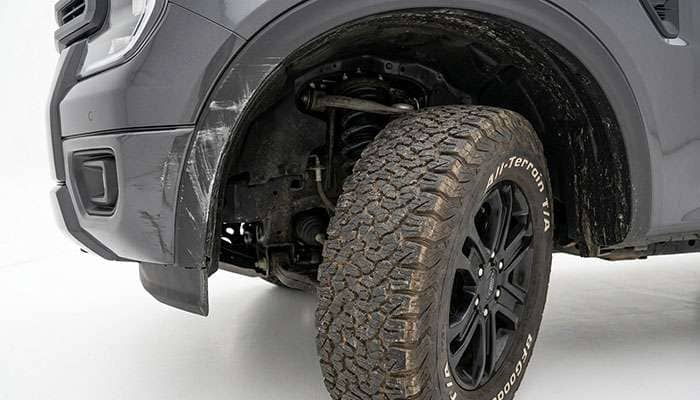
Second, the leading edge of the front fender liner. This is the real one, and it is where most of the work happens. At full lock the tire swings forward and into the plastic. Trimming here is normal and does not hurt anything structurally. A heat gun to reshape the liner often does as much as cutting it.
Third, the lower front valance, the air dam under the bumper. This one gets skipped in nearly every guide I read, and on a Frontier it matters. It hangs low and forward, right where a taller tire wants to be. Trimming or removing it costs you nothing but a little highway fuel economy.
Fourth, the pinch weld along the inner wheel well. Now you are at metal, not plastic. Folding it flat is a known fix and it works, but this is the point where the job stopped being a trim and started being bodywork.
Fifth, the lower control arm and sway bar area at full compression. If a wide tire is sitting too far inboard, this is what it finds when the suspension stuffs. This one is a sign the tire is too wide for the offset you picked, not that it is too tall.
If you are hearing contact and cannot place it, our walkthrough on why your tires are rubbing covers how to find the spot before you start cutting.
Here is another one where the honest answer depends on your truck, and where you will find guides confidently telling you both things.
Off-road shops that build these trucks land on roughly 3.69 gears for a 33-inch tire behind an automatic, and around 4.10 behind a manual. Hold that thought and look at what your Frontier came with.
The 2022 and newer trucks run a 3.692 final drive from the factory. Every one of them. So if you have a 2022 or newer Frontier with the automatic and you fit 33s, you already have the gear ratio the shops would put in it. There is nothing to buy. That is a genuinely nice piece of news and I have never once seen it written down.
The 2005 to 2021 trucks are a different story, because Nissan used several ratios across that run depending on drivetrain and package, from the low 3.1 range up to 3.69. A 4x4 automatic sitting on 3.13 gears with 33-inch tires is meaningfully under-geared. You will feel it as a truck that hunts for gears on grades and never quite wakes up. That truck is a real re-gear candidate.
Now the part that catches people out, and it is specific to Nissan. The front differential in these trucks is the R180A, a compact unit shared across the Nissan midsize family. Gear sets exist for it in the 4.08 and 4.10 neighborhood, so a moderate re-gear is a normal job. But when owners start chasing deeper ratios than that, the shops that do this work recommend swapping the R180A out for the larger M205 front differential from a Titan or Armada, because it is stronger and comes with beefier CV axles to match the added torque. Front and rear ratios have to match, so you cannot just do the rear and call it done.
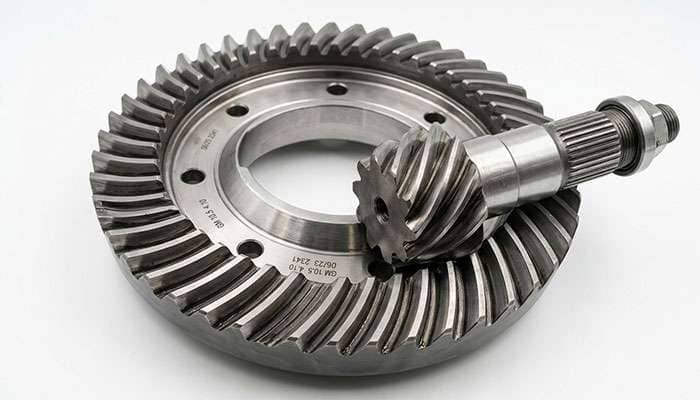
Translation: on a Frontier, "just re-gear it" is a reasonable sentence up to about 4.10. Past that it quietly becomes a front axle swap, and the budget changes shape. For 33s that is not usually where you end up, which is the good news. Our piece on when to re-gear after fitting bigger tires lays out how to tell whether you actually need it.
While you are in here, sort your speedometer out. Going from a 30.6-inch factory tire to a 33.1 puts you reading roughly eight percent slow, so an indicated 60 is closer to 65. That is a ticket waiting to happen and it throws your odometer and service intervals off too. The fix is a simple recalibration and our guide on how bigger tires affect your speedometer covers it.
Nobody's tire fails the week they put it on. It goes in steps, and each one sets up the next.
It starts as noise. A scuff on turn-in, a squeak backing up. Easy to live with, easy to ignore, and most people do.
Then the liner starts working on the sidewall. That cut edge of plastic is sharper than it looks, and the sidewall is the thinnest, hardest-working part of the tire. Tread scuffs are cosmetic. Sidewall abrasion is not, because there is very little rubber between that surface and the cords doing the work. Once the casing underneath is disturbed, that tire is living on borrowed time whether it looks bad or not. Our guide on whether sidewall damage is safe to drive on shows how to tell a scuff from something structural.
Then the truck starts paying for the weight. A Frontier is not a big truck. Nissan rates it around 6,012 pounds gross with payload between 1,160 and 1,480 pounds depending on configuration. Four tall light-truck tires add real unsprung weight to a chassis that was not carrying it before, and you feel it in braking and in the front end.
Then the driveline gets loud about it. An under-geared truck on tall tires works the transmission harder, runs hotter, and puts more twist through a front differential sized for a smaller tire. That is the slow, expensive end of the ladder, and the one nobody connects back to the tire purchase.
Every stage of that has the same fix and it is cheaper at the top than the bottom: pick the right width, trim where it actually touches, and get the gearing and speedometer sorted.
Twenty minutes in the driveway will tell you more about your truck than any chart will, mine included.
Once you know your trim and the size you are after, you can see what actually fits your specific truck on our Nissan Frontier wheel and tire fitment page.
Will 33s fit a stock Nissan Frontier? On a PRO-4X or PRO-X, yes, and a narrow true 33 like a 255/80R17 is close to a bolt-on with some liner trimming. On an S, SV or SL, you can get there, but you are asking for nearly double the clearance because those trucks left the factory an inch shorter on tire, and that is the fact that turns one owner's easy afternoon into another owner's headache.
The other thing worth carrying away is that the tire most people buy as a 33 measures 32.8 inches and is two inches wider than it needs to be. On a narrow truck with a narrow wheel well, a skinny tall tire beats a fat short one almost every time. You end up taller, you cut less, and the truck looks like it meant to be that way.
Check your door placard first. It settles which of the two Frontiers you own, and everything else follows from there.
On a PRO-4X or PRO-X at stock height, a narrow true 33 such as a 255/80R17 or 255/85R16 is the practical ceiling with light fender liner trimming and the mud flaps removed. On an S, SV or SL, the same tire is doable but takes more trimming, and many owners stop at a 32-inch size like a 265/75R16 instead. Width is usually what stops you before height does.
Usually yes. The PRO-4X starts on a 31.6-inch factory tire, so a true 33 only adds about three quarters of an inch of radius. Most owners get there with a trim of the front fender liner's leading edge, removal of the factory mud flaps, and often some work on the lower valance under the front bumper. A wide 33x12.50 is a different story and generally needs more cutting and a wider wheel.
It depends on the trim, not the year. A 2022 PRO-4X or PRO-X starts at 31.6 inches and takes a 33 about as easily as the older PRO-4X did. A 2022 S or SV starts at 30.6 inches and faces nearly double the jump. The 2022 redesign kept the same frame, wheelbase and suspension layout as the 2005 to 2021 truck, so fitment experience from the older generation mostly still applies.
Nearly always some. The usual sequence is removing the front mud flaps, trimming or heat-reshaping the leading edge of the front fender liner, and trimming or removing the lower valance beneath the front bumper. Going further means folding the pinch weld along the inner wheel well, which is where the job changes from trimming plastic to working on metal. How far you go depends heavily on tire width and your trim's starting height.
Not if you have a 2022 or newer automatic. Those trucks come with a 3.692 final drive, which is the ratio off-road shops typically recommend for a 33-inch tire behind an automatic. Older 2005 to 2021 trucks came with a range of ratios, and one sitting on 3.13 gears will feel noticeably under-geared on 33s. Check what your truck actually has before deciding either way.
Factory offset is around +30 mm on a 6x114.3 pattern with roughly a 66.1 mm hub bore. Coming down toward +10 to +20 mm pushes the tire outboard and away from the fender liner, which buys clearance at full lock. Going much below +10 mm increases the load on the wheel bearings and tends to create as many problems as it solves. On this truck, picking a narrower tire is usually a better answer than chasing clearance with offset or spacers.



