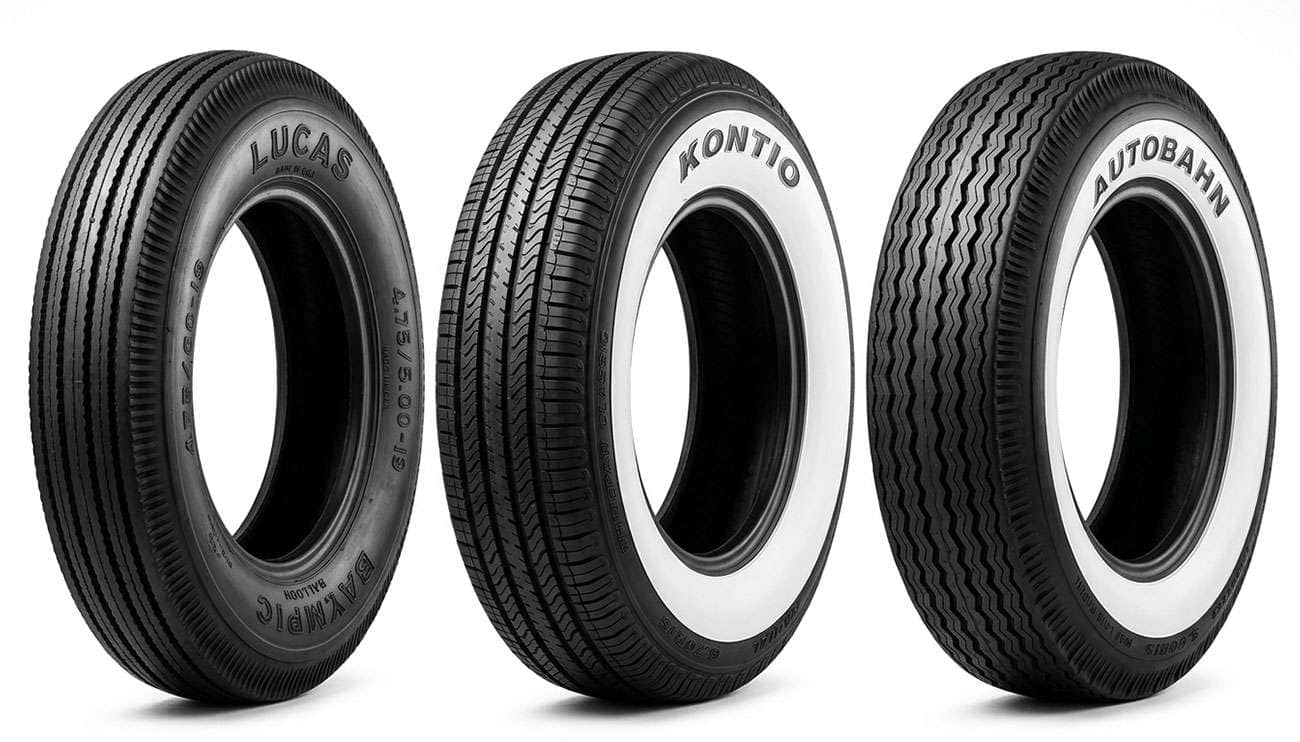
Vintage car tires come from three kinds of makers. Original brands that still build their own classic lines, like Michelin, Pirelli and Vredestein. Specialists that license a famous name and own the molds, like Coker Tire for Firestone, BFGoodrich and U.S. Royal, and Kelsey Tire for Goodyear's collector tires. And specialty houses with brands of their own: Lucas Classic Tires, Kontio Tyre and Autobahn. You'll hear "it depends on your car." What it depends on is which of those three layers your car actually needs.
I'm Hank Feldman. I've been selling wheels and tires since my family opened our doors in 1971, and earlier this year I bought Lucas Classic Tires. Lucas owns Kontio Tyre, and we hold the U.S. exclusive on Autobahn. So three of the names in this article are now under my roof. I'll tell you which ones, and I'll tell you straight when somebody else's tire is the right call for your car. Start by finding your car below.
Your Car |
What It Wore New |
Who Builds It Today |
Start Here |
|---|---|---|---|
Brass era through the 1920s |
Clincher, beaded-edge and straight-side bias tires, tube-type |
Lucas, Excelsior, Universal |
|
Ford Model A and early 1930s cars |
4.50-21 and 4.75/5.00-19 bias blackwalls and whitewalls, tube-type |
Lucas, Firestone (built by Coker) |
|
Late 1930s to 1950s American cars |
6.00-16 and 6.70-15 bias-ply whitewalls |
Firestone, BFGoodrich and U.S. Royal (Coker), Goodyear (Kelsey), Kontio bias-look radials |
|
1960s cruisers and customs you drive often |
14 and 15 inch whitewalls, now built as radials |
Kontio WhitePaw Classic, Diamond Back, BFGoodrich Silvertown Radial |
|
1964 to 1974 muscle cars |
F70-14 and G60-15 redline and raised white letter bias tires |
Goodyear Collector Series (Kelsey), Firestone Wide Oval (Coker), BFGoodrich Redline |
|
1950s to 1970s European sports and GT cars |
Period metric radials like 165R15 and 185/70VR15 |
Michelin, Pirelli, Vredestein, Avon, Dunlop |
|
Air-cooled VWs and early Porsches |
5.60-15 and 5.00-16 bias-ply |
Autobahn (U.S. exclusive to us), Excelsior |
That table answers "who." The rest of this article answers what "makes" actually means when your tire carries a name from 1955.
Here's the part nobody puts in front of you. On most vintage tires, three different outfits can be involved: the company whose name is on the sidewall, the company that owns the mold, and the plant that actually cures the rubber. Sometimes they're the same company. Often they aren't. Which one matters depends on what you do with your car.
Firestone, BFGoodrich, U.S. Royal and Goodyear don't run their vintage bias-ply lines themselves anymore. They license the name, the sidewall script and the tread design to a specialist. Coker Tire in Chattanooga holds the rights for Firestone, BFGoodrich and U.S. Royal vintage tires. Kelsey Tire builds the Goodyear Collector Series. When you buy a Firestone Deluxe Champion whitewall today, you're buying a licensed reproduction, and that's exactly how it should work. The license is what keeps the name, the lettering and the tread pattern correct.
A tire mold carries every detail a judge looks at: the tread pattern, the raised sidewall lettering, the whitewall width, even the little ribs and decorative bands. Coker restores original molds or cuts new ones from original drawings. Pirelli keeps the original drawings for its Collezione classic line through the Pirelli Foundation. What's inside the tire is a different story. The rubber compound and the cord are modern, which is good news for wet grip and for how long the tire lasts. You get the 1957 look over 2026 materials.
The mold decides how the tire looks. The construction decides how your car drives. A bias-ply tire stacks layers of cord that cross each other at an angle, so the sidewall and the tread flex together as one unit. That's the period feel: it follows grooves in the road, it flat-spots overnight, and it looks exactly right. A radial runs its cords straight across from bead to bead and puts steel belts under the tread. The tread stays flat on the road, the steering gets lighter, and the tire lasts a lot longer.
Then there's the middle ground: a bias-look radial. It's a radial carcass cured in a mold that copies the period tread and sidewall, sized in the old inch-style numbers like 5.60R15 or 6.70R15. From ten feet away it reads as 1955. On the freeway it drives like a modern tire.
Whitewalls have their own process. On a traditional whitewall, a layer of white rubber gets built into the sidewall under a thin black veneer, and that veneer is ground off after curing to reveal the white. Any reproduction sold for highway use also has to meet the federal safety standard for its construction, FMVSS 109 for bias-ply passenger tires or FMVSS 139 for radials, and carry a DOT code. Here's how the construction types line up with who builds them.
Construction |
How It Drives |
Who Builds It |
Example Model |
Starting Price |
|---|---|---|---|---|
Beaded-edge and clincher |
Show and tour use on brass-era rims, tube-type |
Excelsior, Universal, Lucas |
$240 |
|
True bias-ply reproduction |
Period feel, follows road grooves, correct for judging |
Coker (Firestone, BFGoodrich, U.S. Royal), Kelsey (Goodyear), Lucas |
$246 |
|
Bias-look radial |
Radial ride and wear with a period sidewall |
Kontio, Autobahn, Coker, American Classic |
$289 |
|
Modern radial whitewall |
Modern ride, metric sizing, whitewall look |
Kontio, Diamond Back, BFGoodrich Silvertown Radial |
$149 |
|
Period radial from the original maker |
Correct for European classics, sharp handling |
Michelin, Pirelli, Vredestein |
$204 |
I do. Performance Plus Tire bought Lucas Classic Tires earlier this year. Stan Lucas and I were competitors for decades. Two Long Beach tire guys chasing the same collectors. Stan spent 70 years in the antique and classic car hobby, and before he passed in 2025, he wanted me to take Lucas over. That's what we're doing, and we're keeping it the way he built it.
Lucas runs as its own company with its own name inside the Performance Plus Tire family. What changes is depth: more stock on the shelf, better fill rates on oddball sizes, and more ways to order online.
Lucas traces its history back to 1957. It started as Lucas Automotive Engineering, building hard-to-find tires for antique car collectors around the world, and grew into Lucas Classic Tires. Today Lucas has its own tire lines, the Lucas Classic range and the Wards Riverside range, plus Custom Classic Tubes, inner tubes made for period-correct applications. Lucas is also the exclusive distributor for select classic size ranges under the Bedford, Royalton and General names, and it carries vintage Michelin and Pirelli, Coker products and more.

The Lucas Olympic blackwall covers the Model A sizes that fill up my phone every spring, and Lucas also offers Dunlop-pattern tires like the Super 90 in 32x4.5 for the early cars that wore them.
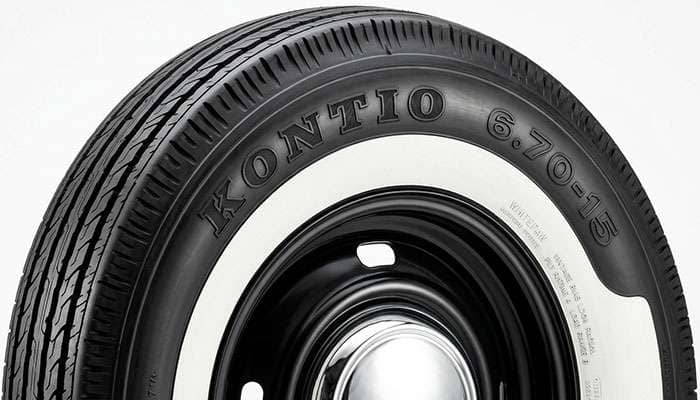
Kontio Tyre comes out of Nokia, Finland, and Lucas owns it. The WhitePaw Classic is a radial whitewall in the 13, 14 and 15 inch metric sizes that most cruisers, customs and 1960s cars run today. It comes in narrow and wide whitewall versions, with widths across the line from about 1-1/2 to 3-1/4 inches. The WhitePaw Vintage is Kontio's bias-look radial, built in 6.00-16 and 6.70-15, two of the most common American sizes of the 1940s and 1950s.
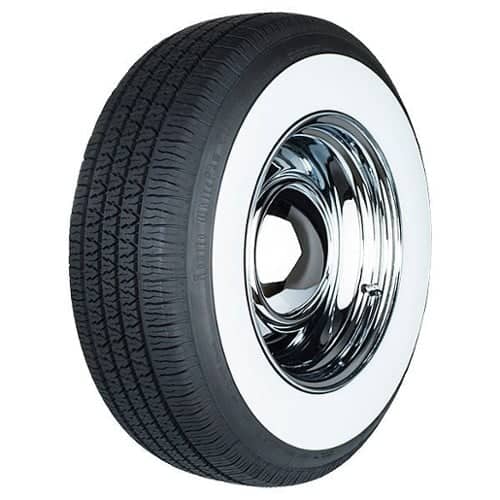
Here's why Kontio sells: a whitewall radial has always been an expensive tire, and the WhitePaw Classic starts at $149 in the narrow version and $214 in the wide. For a driver that sees freeway miles every weekend, that's a lot of whitewall for the money.
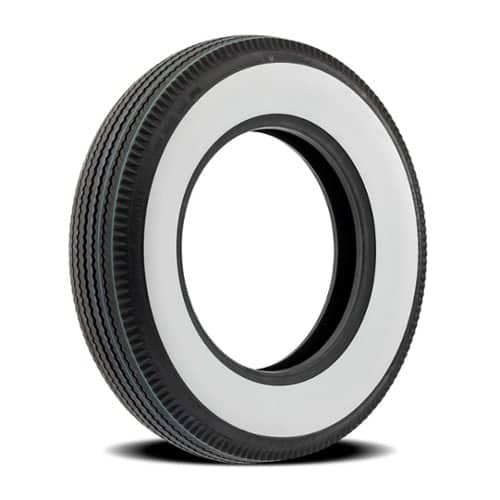
Autobahn tires are designed and manufactured by Garage Vintage, and we're the exclusive distributor of Autobahn in the United States. The line is all bias-look radial, built in 5.00-16, 5.60-15 and 6.40-15. You can get it in blackwall, wide whitewall or narrow whitewall. Autobahn gives skinny-tire cars the period profile without the period wander.
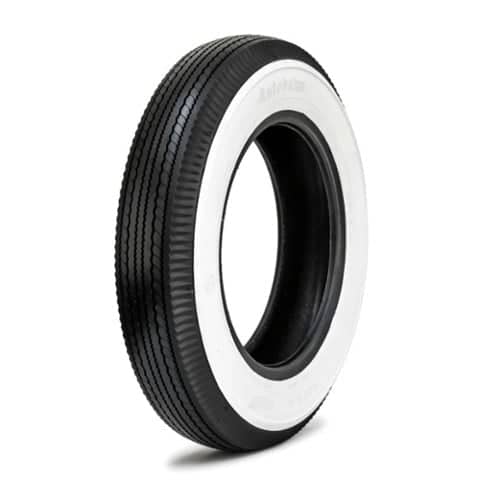
Tire |
Built For |
Construction |
Size Shown |
Price |
|---|---|---|---|---|
1928 to 1929 Ford Model A |
Bias-ply, tube-type |
4.40/4.50-21 |
$119 |
|
1930 to 1931 Ford Model A |
Bias-ply, tube-type |
4.75/5.00-19 |
$119 |
|
Early cars that wore Dunlop treads |
Bias-ply, tube-type |
32x4.5 |
$299 |
|
1960s cruisers and drivers |
Radial whitewall |
215/75R15 |
$179 |
|
1950s and 1960s customs |
Radial whitewall |
205/75R15 |
$253 |
|
Mid-1950s American cars |
Bias-look radial |
6.70R15 |
$289 |
|
Air-cooled VWs and small European classics |
Bias-look radial |
5.60R15 |
$329 |
|
Early 16 inch European cars |
Bias-look radial |
5.00R16 |
$334 |
Pre-war is where the maker list gets short, and the reason is the rims. Brass-era cars ran clincher and beaded-edge rims, where the tire's hardened bead hooks into the rim lip. Later cars moved to straight-side rims, then to the drop-center wheels of the late 1920s and 1930s. Each one needs a tire built for that rim, and a tire built for the wrong one won't seat safely.
For beaded-edge rims, the makers you'll see are Excelsior and Universal. The Excelsior Beaded Edge starts at $240, and Universal builds ribbed, smooth, all-gray and all-white tires in sizes like 30x3 and 30x3.5, starting at $184 for the Universal Ribbed. Lucas covers sizes like 32x4, 33x4 and 34x4 with the Olympic, and builds Dunlop-pattern tires for the cars that wore them.
The Model A is the biggest single pre-war market, and it's where Lucas has lived for decades. The Olympic in 4.40/4.50-21 and 4.75/5.00-19 starts at $119. Firestone's balloon bias-ply tires, built by Coker, cover 17 to 20 inch drop-center sizes starting at $349. If your old sidewall is stamped in a size you can't decode, our guide to antique tire sizes walks through every format from 30x3.5 to 6.00-16.
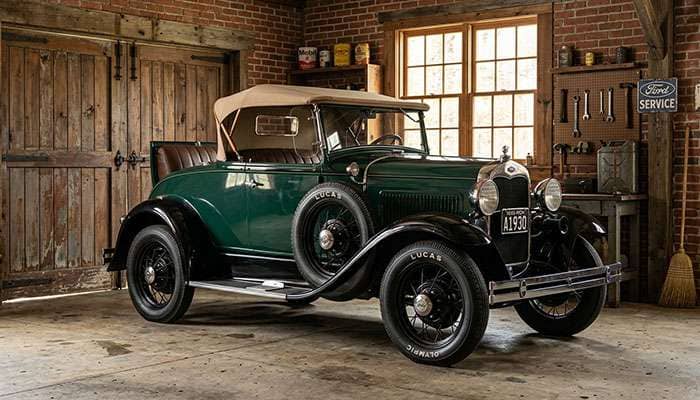
Almost every pre-war tire runs a tube, which is why Lucas makes Custom Classic Tubes. Standard industry practice, the kind the Tire Industry Association teaches in its technician training, is a new tube with every new tire, sized to match. If you're not sure whether your wheels need tubes at all, read up on tube-type vs. tubeless classic wheels before you order.
This is the busiest corner of the vintage tire world. Your two real choices are a true bias-ply reproduction with a famous name on it, or a bias-look radial with the same profile and a modern ride.
Coker builds the Firestone Deluxe Champion, the BFGoodrich Silvertown bias-ply and the U.S. Royal lines. The Deluxe Champion starts at $246, and in 5.60-15 it runs about $303. Kelsey builds Goodyear's Custom Super Cushion whitewall, starting at $295 in 7.50-14. If your car gets judged, these carry the right name, tread and sidewall script. Browse the Firestone whitewall tires if you want the name most 1950s cars actually wore.
For a 1940s or 1950s car you drive on the freeway, a bias-look radial is the smarter buy. The Kontio WhitePaw Vintage in 6.70R15, the size a lot of mid-1950s cars wore, is $289. The Coker Classic Radial / Bias Look starts at $216.78, and the American Classic Wide Whitewall Bias Look Radial starts at $324.
Whichever maker you pick, get the whitewall width right. A 1950 sedan and a 1959 sedan wore very different whitewalls, and the wrong width is the first thing anybody notices at a show. Our whitewall width guide matches widths to years.
Once a car moves to 14 and 15 inch metric sizes, the whitewall radial takes over. This is the tire for 1960s cruisers, customs and any classic that sees real miles. Three makers build it three different ways.
Kontio builds the WhitePaw Classic as a complete whitewall radial, narrow or wide, in 13, 14 and 15 inch sizes. It's the value pick in this category, and it's the one I put on more drivers than anything else.
Diamond Back works differently. It starts with a new radial from a major tire maker and vulcanizes a custom sidewall onto it, built to order in the USA, starting around $219. That lets you pick the casing and the stripe: whitewall, redline, goldline or blueline. We covered the process in detail in are Diamond Back tires any good.
The BFGoodrich Silvertown Radial, built by Coker under the BFGoodrich name, comes in narrow and wide whitewall versions. The Silvertown Radial Wide starts at $307. If you want a famous name on a radial whitewall, this is it.
Muscle car owners care about the name more than anybody, because the name was part of the option sheet. A car that left the factory on Goodyear Polyglas GTs should wear Goodyears at a show. Here's who builds them today.
Kelsey Tire builds Goodyear's collector tires, including the Polyglas GT, Speedway Wide Tread and Custom Wide Tread lines. The raised white letter Polyglas GT starts at $440 in F60-15. For NCRS judging and other marque-club shows, this is the line people reach for.
Coker builds the Firestone Wide Oval bias-ply, starting at $376 in D70-14, in whitewall, red stripe and raised white letter versions. The BFGoodrich Redline Silvertown Radial starts at $329 and gives you the redline look on a radial carcass. U.S. Royal redline bias-ply rounds out the list. For which tire came on which car, our breakdown of factory muscle car tires goes model by model.
European classics are the one corner of this world where the original maker usually still builds the tire. Michelin and Pirelli build their own classic lines, so the tire you buy comes from the same company that supplied the car.
Michelin builds its classic range itself in small runs: the X, XAS, XWX, ZX, XZX and TRX. The XAS starts at $204 in 165R14, and the XWX, the high-speed radial of the late 1960s GT era, starts at $396. Lucas has carried vintage Michelin for years, and so do we.
Pirelli's Collezione range covers classic fitments like the Cinturato CN36 and CA67, with the original drawings kept by the Pirelli Foundation and modern compounds inside for better wet grip. Pirelli builds the CN36 for cars like the Fiat 124 Sport Spider and the Mercedes-Benz W113 Pagoda. The Pirelli Cinturato CN36 starts at $237.
Vredestein's Sprint Classic is the budget-friendly period radial for small European cars, starting at $95.18 in 145/80R10. Avon keeps the Turbospeed in production for British classics, starting at $339, and Dunlop builds the Sport Classic starting at $258. For older European cars on tall 16 to 19 inch wheels, the Excelsior Stahl Sport Radial starts at $299.
Air-cooled cars have their own tire problem. They wore skinny inch-sized tires like 5.60-15 well into the 1970s, and the earliest cars ran 5.00-16. Modern metric sizes change the stance and the speedometer, and true bias-ply in these sizes drives like it's 1958 because it is.
Autobahn is the answer I give most air-cooled owners, and yes, it's ours. The Autobahn Bias Look Radial comes in 5.60R15 starting at $289 in blackwall and $329 in narrow or wide whitewall, plus 5.00R16 at $334 and 6.40R15. You get the correct period profile on a radial carcass. Shop the Autobahn whitewall tires if you want the stripe.
If you need true bias-ply for judging, the Firestone Deluxe Champion and U.S. Royal both come in 5.60-15, and the American Classic Wide Whitewall Bias Look Radial comes in 5.60-15 at $324. For 16 inch cars that want a period radial, the Excelsior Stahl Sport Radial in 5.00R16 runs $413.
The wrong tire doesn't cost you all at once. It costs you in steps, and each one costs more than the last.
Wrong whitewall width, wrong lettering, a radial where the judge expects a bias-ply. On a driver, that's an eyesore. On a judged car at an AACA, NCRS or marque-club show, the tires get looked at like everything else, and the wrong type or width can cost you points before the judge opens the hood.
Collector cars don't wear out tread. They wear out rubber. NHTSA notes that tires break down with age whether or not they're used. Read the last four digits of the DOT code on the sidewall: the first two are the week, the last two are the year. Cracks in the sidewall or between the tread blocks mean that tire is done. Here's what to look for in tire sidewall damage.
A radial tire that runs a tube needs a tube made for radial use, because a radial sidewall flexes more. A bias tube inside a radial tire, or an old tube in a new tire, chafes and fails. That's a flat on the shoulder at best.
Bias-ply on one axle and radials on the other makes the car behave differently front to rear, and it shows up at the worst time: a quick lane change or a hard stop. Run the same construction on all four corners.
An aged bias-ply that separates at 60 mph doesn't just ruin a tire. It takes the fender lip, the paint, sometimes the quarter panel with it. One fender on a restored car costs more than four new tires from any maker in this article. That's the math. Buy the tire.
Here's the same process we run with every customer who calls Performance Plus Tire or Lucas.
Who makes vintage car tires? A short list of companies doing very specific jobs. Michelin and Pirelli build their own classics, Coker and Kelsey keep the old American names alive under license, and Lucas, Kontio and Autobahn cover antique sizes, radial whitewalls and bias-look radials, now under one roof.
The name you want depends on whether your car gets judged or driven, and what era it came from. Get those two answers and the maker picks itself. Browse every classic and antique line we carry in our whitewall tires section, or call us and we'll match the right tire to your car.
The short version for anyone shopping vintage tires:
Coker Tire builds Firestone's vintage tires under license, including the Deluxe Champion, Wide Oval and balloon bias-ply lines. Coker uses restored original molds or new molds cut from original drawings.
Kelsey Tire builds the Goodyear Collector Series, which includes the Polyglas GT, Speedway Wide Tread, Custom Wide Tread and Custom Super Cushion. It's the go-to line for judged muscle car restorations.
Yes. Performance Plus Tire bought Lucas Classic Tires in 2026, and Lucas keeps operating under its own name in Long Beach, California, with its Lucas Classic and Wards Riverside tire lines and Custom Classic Tubes.
Kontio Tyre is a brand from Nokia, Finland, owned by Lucas Classic Tires. Its WhitePaw Classic is a radial whitewall in narrow and wide versions, and its WhitePaw Vintage is a bias-look radial in 6.00-16 and 6.70-15.
Yes. Reproduction bias-ply tires are still built for classic and antique cars under names like Firestone, BFGoodrich, U.S. Royal, Goodyear and Lucas. Tires sold for highway use must meet FMVSS 109 and carry a DOT code.
Yes. Michelin builds its own classic range in small production runs, including the X, XAS, XWX, ZX, XZX and TRX, for European and other classic cars that wore them from the factory.