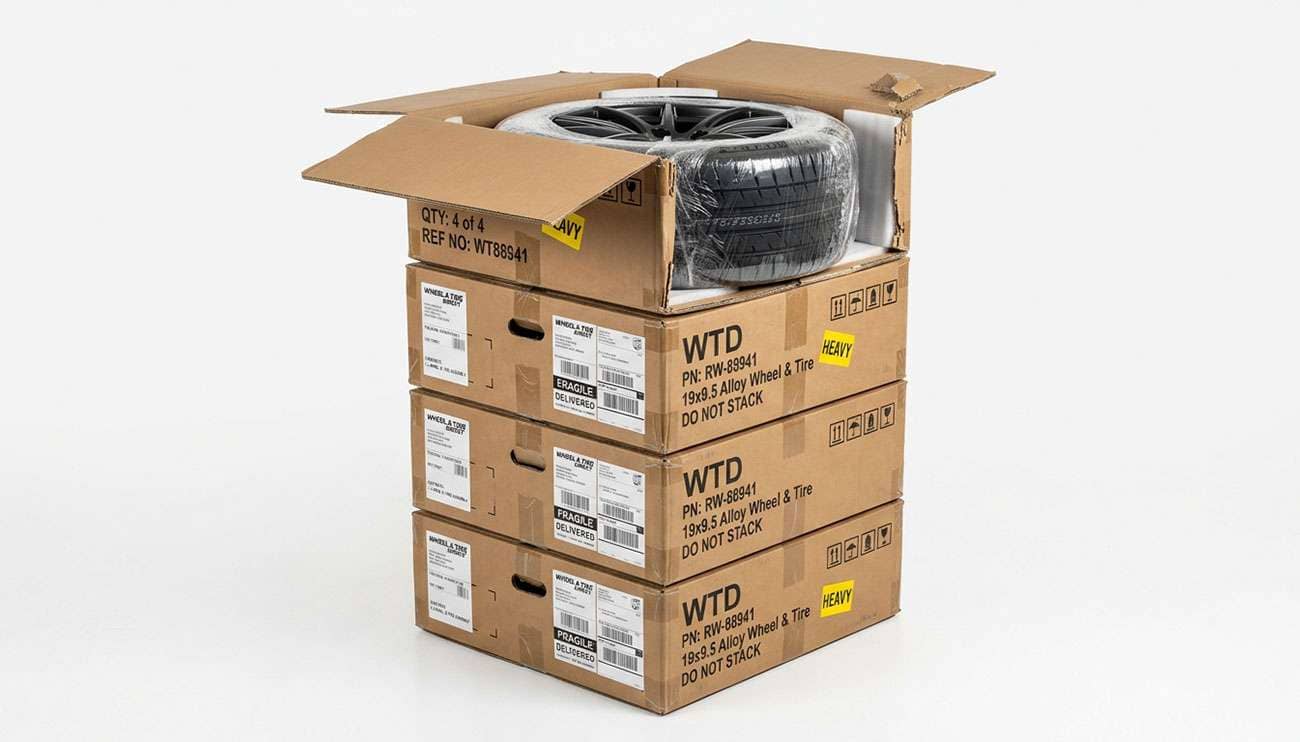
There's a real thrill to it. The truck pulls away, and there on your porch is a stack of boxes with your new wheels and tires inside, already mounted, already balanced, ready to roll. That's the whole beauty of a package, the hard part is done before it ever reaches you. But I've learned over the years that the half hour right after delivery is where a smooth experience is either made or lost. So before you tear into those boxes like it's Christmas morning, let me walk you through doing this right.
None of this is hard. It's the same routine I'd run in the shop, just on your own driveway. If you want a refresher on what should have come in the box in the first place, our guide on what is included in a wheel and tire package is a good companion to keep handy.
Wheels and tires get shipped as freight, and freight gets handled, a lot. So the very first thing, ideally before the driver leaves if you're signing for it, is a look at the boxes. Count them. A four-wheel package should be four boxes, and if one's missing you want to flag that right away, not three days later.
Then look at the condition. Crushed corners, punctures, a box that's been obviously dropped, note it. If something looks bad enough that you're worried about what's inside, it's fair to write "damaged" when you sign, or to open and check on the spot. Catching freight damage at delivery makes any claim a whole lot easier than discovering a gouged lip after you've recycled the packaging. The wheels themselves are tough, but a hard enough hit in transit can mark a finish or worse, and you want that on record from minute one.
Once the boxes are open, slow down and actually check what's in front of you against what you ordered. Right wheels, right finish, right tires, right sizes. It sounds obvious, but it's a lot easier to sort out a mix-up now, with everything clean and unmounted on the car, than after you've driven on them.
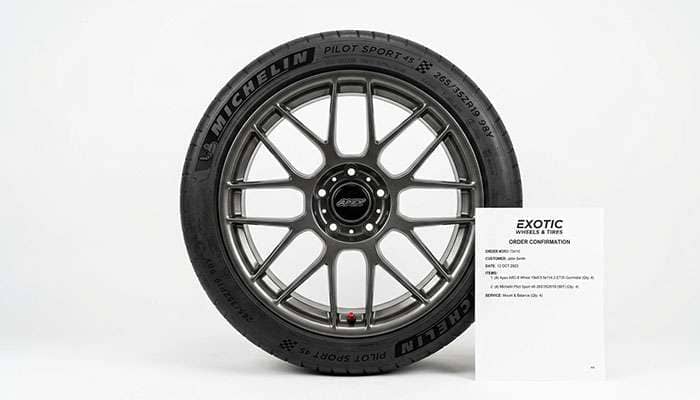
Pull out your order confirmation and match it up. Look at the wheel for the size and offset stamping, check the tire sidewall for the size, and make sure any hardware you ordered, lug nuts, locks, hub rings, is actually in the box. While you're at it, give each wheel a once-over for finish flaws, and run a hand around the lips. This is also the moment to confirm the set looks balanced and ready, our guide on whether wheel and tire packages are balanced explains what's already been done for you. If anything's off, that's a call to us before anything goes on the car, not after.
Here's the one that catches folks. If your vehicle's a 2008 or newer, it almost certainly has a tire pressure monitoring system, and those sensors don't ride along automatically. Depending on how you ordered, your new wheels may already have sensors installed, or they may not, and either way the vehicle usually needs a relearn so it recognizes the new set.
So before you bolt anything on, know where you stand. If you ordered sensors, confirm they're in the wheels. If you didn't, understand that the dash light is going to come on until that's handled. Our guide on TPMS sensors for aftermarket wheels explained covers the options, and the relearn procedure varies by vehicle, some you can do yourself, some want a tool. Sorting this out in your head now beats a surprise warning light on the first drive.
Now the honest question: are you bolting these on yourself, or driving the set to a shop? A pre-mounted package is genuinely one of the more do-able home jobs, because the hardest parts, mounting and balancing, are already finished. What's left is essentially swapping wheels, which plenty of folks handle in the driveway with a good jack, jack stands, and a torque wrench.
That said, be honest with yourself. If you don't have proper jack stands, if you're not comfortable getting under or around the car safely, if the TPMS relearn needs a tool you don't have, or if anything about the fitment looks off, there's no shame in handing it to a shop. The cost of a mount-up swap is small next to the cost of a wheel that came off because it wasn't torqued right. Our guides on how to prepare for a wheel installation and how to install new rims on your own car will tell you pretty quickly whether this is a job you want to take on.
If you're doing it yourself, here's the routine. Park on level ground, chock the wheels you're not lifting, and use jack stands, never just the jack. Take the old wheel off and, before the new one goes on, wipe the hub face clean. A little rust or grime on the mounting surface throws off how the wheel seats, and a clean hub is one of the easiest things to get right.
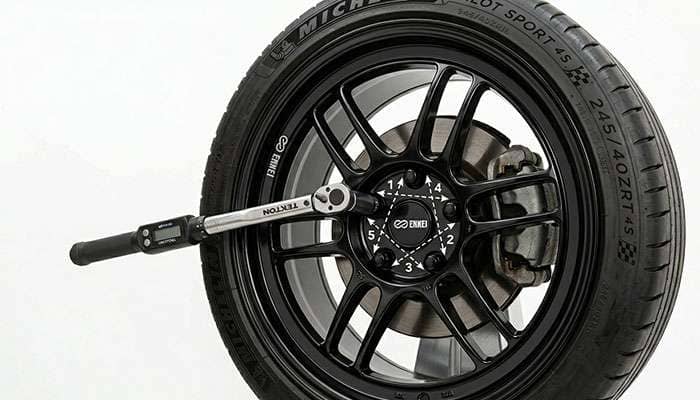
Set the wheel on, and if it uses hub-centric rings, make sure they're seated so the wheel centers properly, our piece on hub-centric vs lug-centric wheels explains why that matters for a vibration-free ride. Hand-thread every lug nut first so you don't cross-thread anything, then snug them in a star or crisscross pattern, not around the circle, so the wheel pulls down evenly. Final torque comes with the wheel back on the ground, using a torque wrench set to your vehicle's spec. I'm not going to print a number here because it varies by vehicle, get yours from the owner's manual or your shop, and our guide on how to torque lug nuts perfectly walks through the technique. Tighten in that star pattern to spec, and you're set.
This is the step everybody forgets, and it's the most important one. After you've driven a short distance on the new set, somewhere in the range of 50 to 100 miles, you need to re-check the lug torque. Fresh wheels seat in slightly as they're driven, and lug nuts that were perfect in the driveway can end up a touch loose once everything settles. Come back to them with the torque wrench and bring any that moved back to spec.
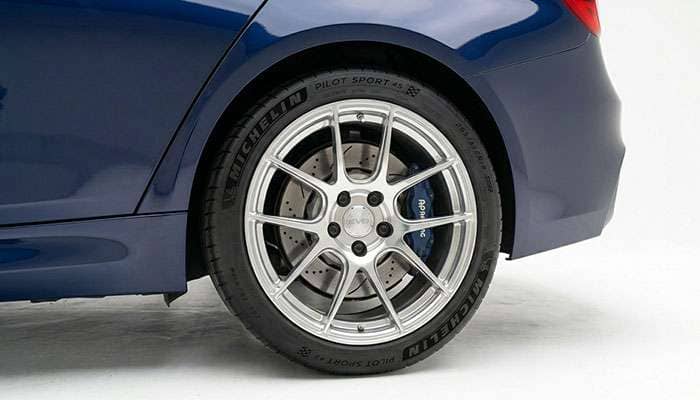
On that first drive, just pay attention. The set should feel smooth and quiet. A shimmy in the steering wheel, a vibration that wasn't there before, or any odd noise is worth stopping for, not driving through. Most of the time it's nothing, or it's a centering issue that's easy to chase down, but a brand-new package should drive like a brand-new package. Trust your gut, and if something feels wrong, give us a call.
Don't be in a hurry to flatten those boxes. Hang on to the packaging and your paperwork at least until the wheels are on, the first drive is done, and you're happy. If a return or a freight claim comes up, the original boxes and your order confirmation make the whole thing painless, and tossing them early is the one regret I hear most.
And don't forget your old set. If they're decent wheels and tires, they're worth keeping for a winter or spare setup, or selling on. If you're storing them, do it right so they're good next season. The bottom line is simple: a few minutes of care at delivery and a re-torque after the first drive is all that stands between a package on the porch and a set that looks and drives exactly the way you hoped.
A wheel and tire package takes the hard work off your plate, but the smart move is to treat the delivery like the shop would: inspect the boxes, confirm you got the right set, sort out the TPMS, decide honestly whether it's a driveway job, install with a clean hub and a torque wrench in a star pattern, and come back for the re-torque after the first drive. Do that and you'll be grinning every time you walk up to the car. When you're ready for your next set, build one from our Wheel and Tire Packages, pick your Custom Wheels and Modern Tires, and lean on us for anything that comes up at the door.
Count the boxes and inspect them for freight damage before signing or recycling packaging. Then open them and match the wheels, finish, tires, sizes, and any hardware against your order, and look each wheel over for finish flaws. Catching a problem now is far easier than after installation.
Often yes, because the mounting and balancing are already done. With a proper jack, jack stands, and a torque wrench, swapping the wheels is a manageable home job. If you lack the tools, aren't comfortable working under the car, or the TPMS relearn needs equipment you don't have, it's reasonable to take the set to a shop.
Yes. After the first 50 to 100 miles, re-check the lug torque with a torque wrench set to your vehicle's spec. Wheels seat in slightly as they're driven, and lugs that were correct in the driveway can loosen a touch once everything settles.
It depends on how you ordered. Sensors may or may not be installed in the new wheels, and most 2008-and-newer vehicles also need a relearn so the system recognizes them. Confirm where you stand before installing so a dashboard warning light doesn't surprise you on the first drive.
Keep them until the wheels are on, the first drive is done, and you're satisfied. The original packaging and your order confirmation make any return or freight claim much simpler, and recycling them too early is a common regret.