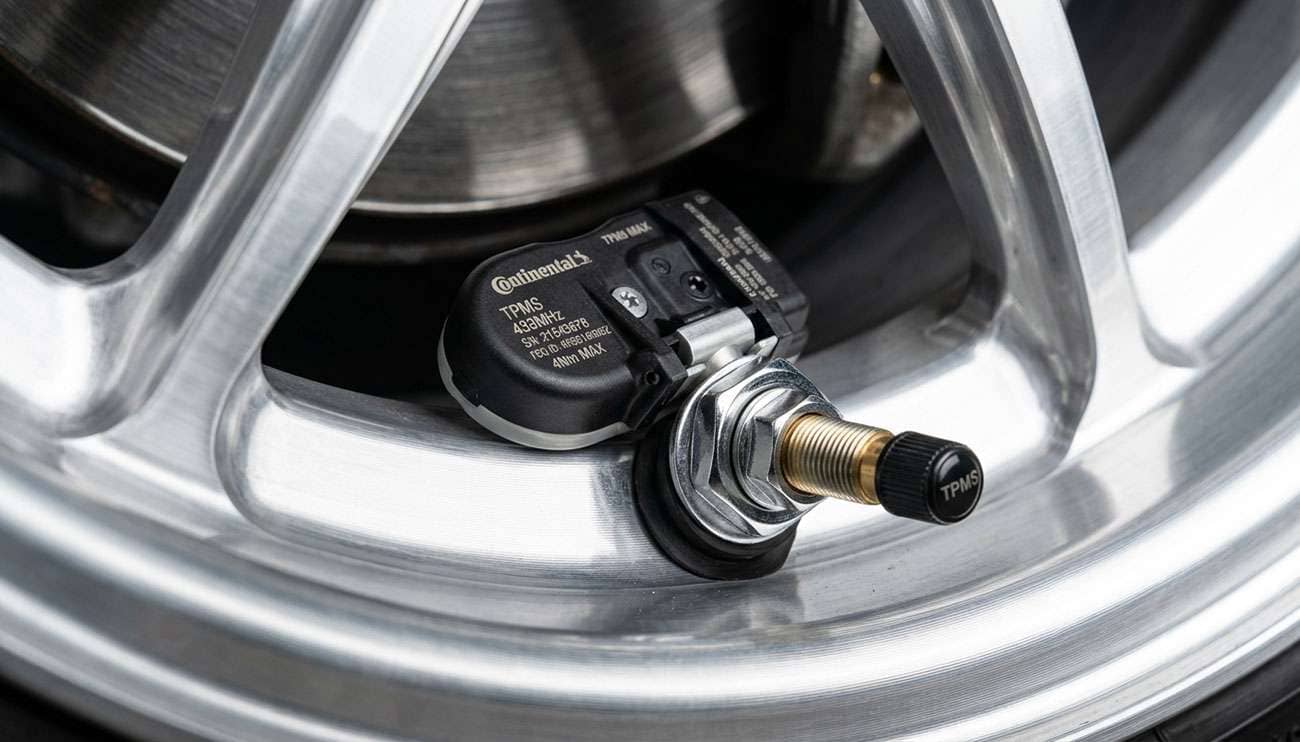
Your new aftermarket wheels look perfect, the fitment is dialed in, and you're ready to hit the road — then the dashboard throws a TPMS warning light and the excitement grinds to a halt. If you've been through this before, or you're smart enough to plan ahead, this guide is exactly what you need. Tire Pressure Monitoring System (TPMS) sensors are one of the most misunderstood pieces of any wheel upgrade, and getting it wrong costs you time, money, and real headaches.
Since 2008, federal law has required every passenger vehicle sold in the United States to come equipped with a direct TPMS system. Your vehicle was built expecting sensors inside each wheel — so when you swap to aftermarket wheels, you have to address those sensors. Your options are to transfer your originals, buy new compatible sensors, or program quality universal replacements. This guide walks you through every step so you know exactly what you're dealing with before you spend a dime.
The short answer is yes — if your vehicle came with TPMS from the factory, you need functioning sensors in every wheel you drive on public roads. That applies whether you're running your new custom wheels year-round or swapping in a dedicated seasonal set. Ignoring TPMS doesn't just trigger a warning light; it strips your vehicle of real-time tire pressure monitoring, and that's a genuine safety risk. NHTSA data puts tire-related crashes at approximately 11,000 per year in the U.S. — most of them linked to underinflation. Understanding how TPMS works and what your options are is the foundation for making the right call.
Every TPMS sensor transmits on a radio frequency, and in North America that frequency is standardized at 433 MHz. But frequency alone doesn't determine compatibility. Each sensor communicates with your vehicle's ECU using a specific protocol, and different automakers use different protocols. Ford, GM, Toyota, Honda, BMW, Mercedes-Benz — they each use proprietary communication standards. That's why a sensor that works perfectly on a Silverado won't necessarily work on a Camry, even though both vehicles run at 433 MHz.
Beyond frequency, pay close attention to the sensor's pressure range — typically 0–87 PSI for passenger vehicles — along with its operating temperature range, battery life (most quality sensors last 5–10 years), and whether it uses a snap-in rubber valve stem or a clamp-in metal valve stem. Clamp-in sensors are more durable and often required for performance and low-profile fitments. Snap-in versions are lighter and easier to install. The sensor's housing must also fit correctly within your wheel's valve hole diameter: typically 8.3mm for rubber stems and 11.3mm for metal clamp-in stems. These numbers matter — get them wrong and the sensor won't physically fit.
The most common mistake is assuming your factory sensors will transfer straight to new aftermarket wheels without any issues. Often they will — but only if the valve hole diameter and stem type are compatible with the new wheel. Some aftermarket wheels, particularly forged or deep-drop designs, have valve hole placement or angle requirements that simply won't accept the original sensor body. Always confirm valve stem specs with the wheel manufacturer before attempting a direct transfer.
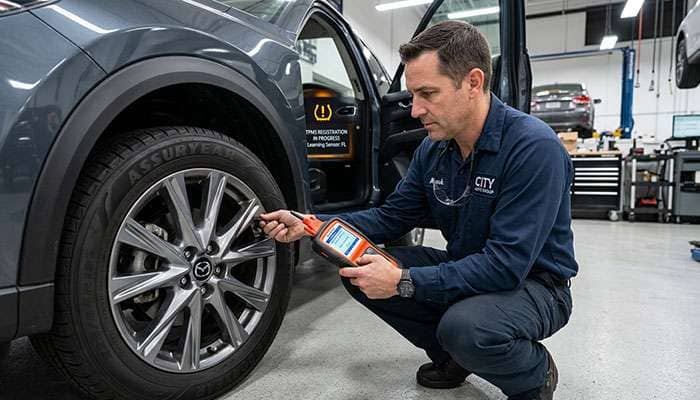
The second most common mistake is buying the cheapest universal sensor available without verifying programming compatibility. Budget sensors from unknown brands often lack support for your vehicle's specific protocol, leaving you with a sensor you can't program and a warning light that won't clear. A third pitfall: skipping the relearn procedure. Even a perfectly compatible sensor won't communicate with your vehicle until it's been registered through a stationary procedure, a drive-cycle procedure, or a dedicated TPMS programming tool. No relearn, no function — it's that simple.
When you pull up a TPMS sensor listing, you'll typically see the frequency (433 MHz), a compatible vehicle list, and sometimes an OEM part number cross-reference. That vehicle compatibility list is the most critical piece of data on the page. A sensor listed as compatible with your specific year, make, and model has been verified to use the correct communication protocol and can be programmed to your ECU. If your vehicle isn't on that list, don't assume it'll work — contact the seller or check the manufacturer's fitment database directly. Also pay attention to whether the sensor is "pre-programmed" (configured for a specific vehicle right out of the box) or "programmable" (requires a TPMS tool before use). Pre-programmed sensors are convenient but inflexible. Programmable sensors work across nearly any vehicle but require the right equipment to set up.
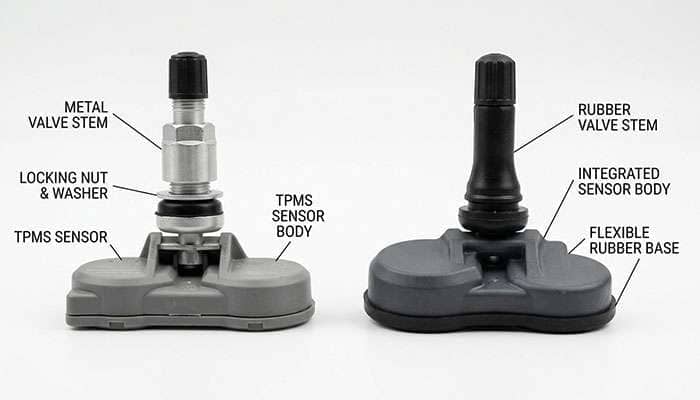
Choosing the right TPMS sensor for your aftermarket wheels comes down to three core factors: your vehicle's specific requirements, how and where you drive, and what you're willing to spend. Nail all three and you'll never think about your TPMS system again — which is exactly how it should be. Miss any one of them and you're looking at returns, reprogramming fees, or a persistent warning light that can mask a genuinely dangerous pressure drop when you least expect it.
Start with your vehicle's year, make, model, and trim. Trim level matters more than most buyers realize — some manufacturers used different TPMS protocols across trim levels within the same model year. Once you have that information, use the sensor manufacturer's compatibility tool or cross-reference by OEM part number. Truck and SUV owners should also confirm load range requirements, since heavy-duty applications sometimes need sensors rated above the standard 87 PSI ceiling. If you're shopping for truck tires and upgrading your wheels at the same time, make sure your sensors are rated for the pressures you'll actually run — especially if you're towing or hauling heavy loads regularly.
Daily drivers and performance enthusiasts have different demands from a TPMS sensor. Running a dedicated winter wheel set? You need sensors that maintain reliable battery performance in the cold — most quality sensors are rated down to -40°F, but cheaper options often aren't. Performance drivers who track their cars need sensors built for high-temperature extremes and capable of handling rapid pressure changes. Some high-performance sensors update pressure readings every few seconds rather than the standard 60-second interval, giving you real-time data when you're pushing the limits. If you're mounting high performance tires on a set of track-day wheels, that faster update rate can make a meaningful difference in how quickly you catch a problem.
TPMS sensor pricing covers a wide range — from around $15 per sensor for budget universal units to $80–$120 per sensor for OEM replacements or premium programmable options. The table below breaks down what you can expect at each price tier.
Price Tier |
Typical Cost Per Sensor |
Best For |
Key Trade-offs |
|---|---|---|---|
Budget Universal |
$15–$30 |
Basic daily driving, older vehicles |
Limited vehicle compatibility, shorter battery life, may need a programming tool |
Mid-Range Programmable |
$30–$60 |
Most aftermarket wheel applications |
Wide compatibility, 8–10 year battery, requires TPMS tool or shop programming |
OEM Replacement |
$60–$120 |
Exact factory replacement, plug-and-play |
Highest compatibility, may not fit all aftermarket valve holes, highest cost |
Premium Multi-Protocol |
$50–$80 |
Performance drivers, multi-vehicle households |
Covers 98%+ of vehicles, fast update rates, programmable for future vehicle changes |
For most buyers upgrading to aftermarket wheels, a mid-range programmable sensor from a reputable brand hits the sweet spot. You get broad compatibility, solid battery life, and the flexibility to reprogram the sensor if you ever change vehicles. A full set of four sensors at this tier runs $120–$240 — a smart investment relative to what you've already put into new wheels.
With the fundamentals covered, let's get specific. A handful of brands consistently dominate the TPMS sensor market for compatibility, reliability, and ease of programming: Schrader, VDO (Continental), Autel, and Huf. All four manufacture sensors to OEM standards and supply parts directly to major automakers. Here's how they break down by use case.
For everyday driving on a standard passenger car or crossover, the Schrader EZ-sensor and the Continental/VDO SE10004 are the top choices among tire professionals — and for good reason. Both are multi-application programmable sensors covering the vast majority of vehicles on the road. They're available in clamp-in metal stem and rubber snap-in configurations, and they're compatible with the TPMS programming tools most shops already own. Battery life on both is rated at 10 years under normal use, and programming is straightforward at any shop equipped with a TPMS relearn tool. For a daily driver where reliability and simplicity are the priority, either sensor will serve you well for the life of the wheel.
Performance applications demand more from a TPMS sensor. The Autel MX-Sensor 433MHz in metal clamp-in configuration is the standout choice — it's a fully programmable universal sensor with one of the widest vehicle compatibility databases available, covering over 98% of vehicles on the market. It supports rapid pressure update intervals and handles the temperature extremes of serious track use. For drivers running ultra high performance tires and pushing their vehicles hard, pairing the Autel MX-Sensor with the Autel TS608 programming tool gives you the most complete solution available. You can program, diagnose, and relearn sensors entirely in-house — no dealer trip required. The upfront tool cost is higher, but if you're swapping wheel setups frequently, it pays for itself fast.
Working with a tighter budget? The Mobiletron TX-S105 and value-tier sensors from Huf can be found for $20–$30 per sensor and deliver solid compatibility across many domestic and Asian import vehicles. The trade-off is narrower vehicle coverage and a shorter rated battery life of around 5–7 years. These sensors work well in straightforward applications — just verify vehicle-specific compatibility before you buy. Another smart budget move: ask your tire shop whether your factory sensors can be transferred directly to the new wheels. If the valve hole specs match, you eliminate sensor cost entirely and keep your existing sensors registered to the ECU without any reprogramming. You can browse the full selection of aftermarket wheels at Performance Plus Tire and reach out with your vehicle information — we're happy to advise on sensor compatibility before your order ships.
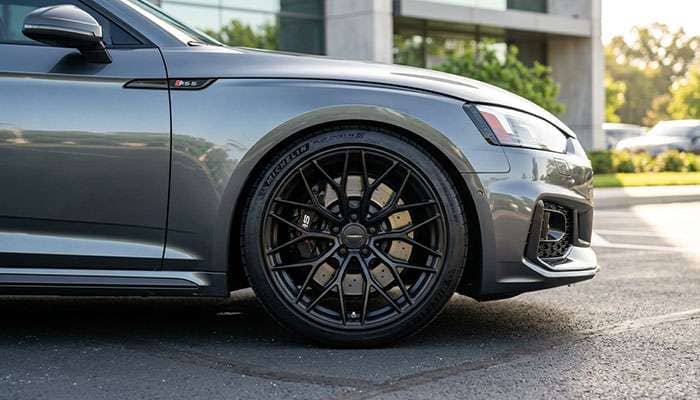
TPMS sensors aren't the most glamorous part of a wheel upgrade, but they're one of the most important. Getting this right means your vehicle's safety system works as intended, your dashboard stays clear, and you're not revisiting the problem six months later when a warning light reappears. Do the homework upfront — confirm your vehicle's protocol, choose a sensor with verified compatibility, and make sure programming and relearn steps are completed properly by a qualified shop or with the right tool in hand.
Whether you're upgrading to custom wheels for looks, building a dedicated winter setup for safety, or putting together a performance package for the track, there's a clear TPMS answer for your application. The sensor market has matured significantly — quality programmable options covering nearly every vehicle on the road are available at prices that won't break the budget. Don't treat TPMS as an afterthought. Address it as part of your wheel selection process and you'll have one less thing to worry about once the tires are mounted and you're ready to drive.
Ready to find the right aftermarket wheels for your build? Performance Plus Tire carries an extensive inventory across every category, and our team has the expertise to guide you through fitment, sensor compatibility, and everything in between. Visit our wheels catalog or reach out directly — we'll make sure your upgrade goes smoothly from start to finish.
Here's what you need to remember about TPMS sensors and aftermarket wheels:
• TPMS is federally required: All U.S. passenger vehicles from 2008 onward require functioning TPMS sensors in every wheel driven on public roads — aftermarket wheels are no exception.
• Frequency and protocol both matter: North American vehicles use 433 MHz sensors, but each automaker uses a proprietary communication protocol — always verify compatibility by year, make, model, and trim before purchasing.
• You have three main options: Transfer your factory sensors (if valve hole specs allow), buy OEM replacement sensors, or use quality programmable universal sensors — mid-range programmable sensors work best for most aftermarket applications.
• Programming is not optional: Even a perfectly compatible sensor must be registered to your vehicle's ECU through a relearn procedure — skipping this step will leave your TPMS warning light on.
• Budget accordingly: Expect to spend $120–$240 for a complete set of four quality programmable sensors, plus installation and programming labor — a worthwhile investment relative to the cost of the wheels themselves.
Not necessarily. If your factory sensors are compatible with the valve hole diameter and stem type of your new aftermarket wheels, you can often transfer them directly — no new sensors required. But many aftermarket wheels have different valve hole specs than OEM wheels, making a direct transfer impossible. In those cases, you'll need new sensors: either OEM replacements or quality programmable universal sensors. Confirm compatibility before you decide which route to take — it's a quick check that can save you a lot of time and money.
Sensor cost depends on the type you choose. Budget universal sensors run $15–$30 each, mid-range programmable sensors cost $30–$60 each, and OEM replacements range from $60 to $120 each. For a full set of four, budget $120–$480 for the sensors alone, plus $20–$50 per vehicle in labor at most shops for programming and relearn procedures. Mid-range programmable sensors from brands like Schrader, Autel, or VDO deliver the best combination of performance, compatibility, and value for most aftermarket wheel applications.
Yes — universal TPMS sensors work well for most vehicles, as long as you choose a reputable brand with verified compatibility for your specific year, make, model, and trim. Quality programmable universal sensors from Schrader, Autel, or VDO cover 95–98% of vehicles on the road. They require programming with a TPMS tool before use and must be registered to your vehicle's ECU through a relearn procedure. Steer clear of very cheap no-name sensors — they frequently lack proper protocol support and can be difficult or impossible to program correctly, leaving you with a warning light that won't go away.
Driving without functioning TPMS sensors triggers a persistent warning light on your dashboard and strips your vehicle of real-time tire pressure monitoring. Without that monitoring, a gradual pressure loss from a slow leak or temperature change won't alert you — and chronically underinflated tires dramatically increase your blowout risk, reduce fuel efficiency, and accelerate tire wear. In some states, a TPMS warning light can also cause your vehicle to fail inspection. Keeping functioning sensors in your aftermarket wheels is both a safety requirement and a legal one.
Programming TPMS sensors for aftermarket wheels involves two steps: configuring the sensor itself, then registering it to your vehicle's ECU. For programmable universal sensors, you need a TPMS programming tool — such as the Autel TS508 or MaxiTPMS TS601 — to assign the correct vehicle protocol to the sensor. Once the sensors are installed in the wheels and the wheels are mounted on the vehicle, you complete a relearn procedure. Depending on your vehicle, that's either a stationary procedure using the tool, a drive-cycle-based auto-relearn, or a combination of both. Most tire shops have the tools to complete the entire process in 15–30 minutes.