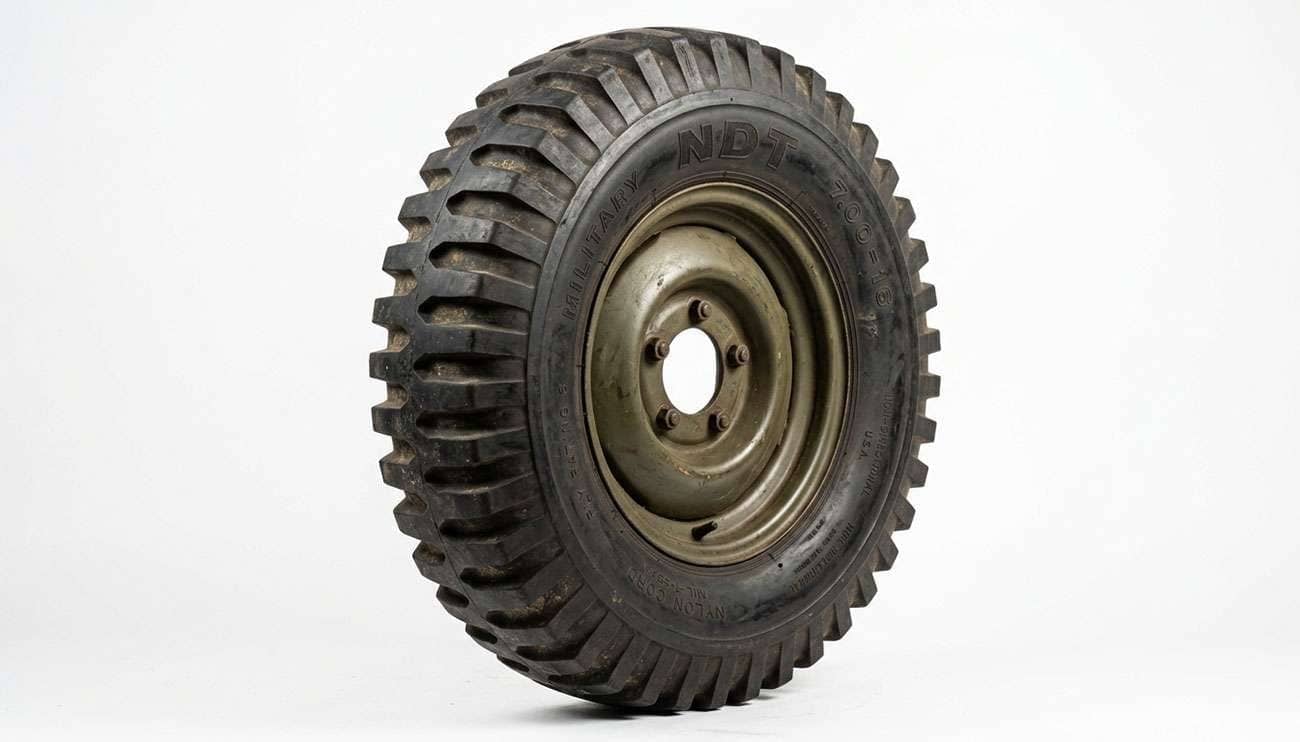
If you've ever stood next to a restored World War II Jeep or an old deuce-and-a-half, you've seen the tire I'm talking about. Big, chunky bars of rubber marching across the tread, no fancy siping, no swoopy directional arrows — just an honest, no-nonsense pattern that looks like it could climb a barn wall. Folks have been asking me for years what that tire is actually called, so let's set the record straight: it's a non-directional tread tire, NDT for short, and a lot of old-timers know it by its nickname, the bar-grip.
It's one of the most iconic treads in motoring history, and there's more to it than nostalgia. Understanding what an NDT tire is — how it works, where it earns its keep, and where it falls flat — tells you whether one belongs on your project. So pull up a stool and I'll walk you through it.
Let's start with the name, because it tells you most of what you need to know. "Non-directional" means the tread has no preferred direction of travel. A directional tire is built to rotate one way — you'll see arrows on the sidewall, and it has to be mounted on the correct side of the vehicle to work right. An NDT tire doesn't care. It grips the same whether you're rolling forward or backward, and you can mount it in any wheel position without thinking twice.
For a military vehicle, that was a godsend. A field mechanic could grab any tire off the truck, slap it on any corner, and get rolling — no sorting, no left-and-right, no fuss. That simplicity is the whole reason the pattern existed, and it's why the design has aged so gracefully. If you want the bigger picture on how tread patterns earn their shapes, I get into that in my piece on why tires have tread.
The bar-grip pattern was developed back in the 1930s as an early answer to the question every off-road vehicle faces: how do you keep moving when the ground turns to soup? By the time the Second World War rolled around, NDT had become the standard military tread, and it stayed that way for decades. It rode on everything from the little Willys Jeeps right up to the thunderous heavy haulers and armored cars.
It held that crown for a long time. Eventually, through the 1970s, newer tread and construction designs came along that did more things well — better manners on pavement, longer wear, more refined handling — and the old bar-grip slowly fell out of favor, largely disappearing from new military fleets by the 1990s. But it never died. It became iconic exactly because of the machines that made it famous, and today it lives on under restored military rigs and classic working trucks. If you enjoy this kind of thing, my history of the tire covers more of where these designs came from.
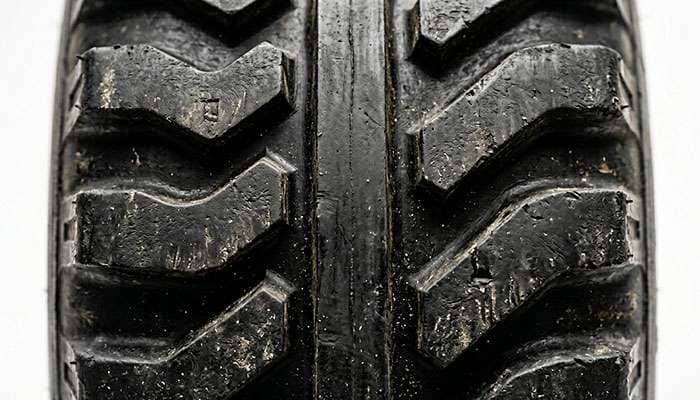
Look closely at a bar-grip tire and the design is beautifully simple. There's a solid rubber strip running around the center of the tread, and off of that center, big solid cleats fire out alternately to either side, each one spanning the full width of the tread. No little sipes cut into the rubber, no busy blocks — just those big, aggressive bars.
That layout does a couple of clever things. The wide, deep cleats dig into soft, loose ground and give you bite where a street tire would just spin. And because the bars are spaced out with big open gaps between them, mud and muck get flung clear as the tire rotates instead of packing in and turning the tread into a slick. That self-cleaning action is the secret to why these tires keep clawing forward in conditions that stop lesser rubber cold. Worth knowing, too: these are bias-ply tires, built the old-school way with crisscrossed plies and tough, stiff sidewalls — exactly the construction that suits a heavy, slow-moving rig in the rough.
Here's where I have to be honest with you, the way I'd be with any customer leaning on my counter. An NDT tire is a specialist, and you've got to use it for what it's good at.
Where it shines: mud, loose dirt, sand, and broken ground. Those big self-cleaning bars are made for exactly that, and they'll pull a heavy truck through slop that would leave a modern highway tire helplessly spinning. They also look dead-on correct on a restoration, which for a lot of folks is half the point.
Where it doesn't: wet pavement and road manners. Because there are no sipes and no fine tread elements to channel water and grip smooth surfaces, an NDT tire offers limited traction on wet roads. It's also loud as a freight train at speed and rides rough. So if your rig is going to spend most of its life on the highway, you'll want to think hard about that. The durability and grip that make NDT special off-road matter a lot less on pavement — the same trade-off I talk through in my guide to off-road tire tread life.
People often ask me whether a modern mud or all-terrain tire would just be "better." The honest answer is: better at different things. A modern off-road tire wins on pavement, in the wet, on noise, and on tread life. The NDT wins on period-correct authenticity and that classic deep-bar dig in soft ground. If you want a rundown of how today's tread categories sort out, my breakdown of how to decode tire tread patterns lays it out.
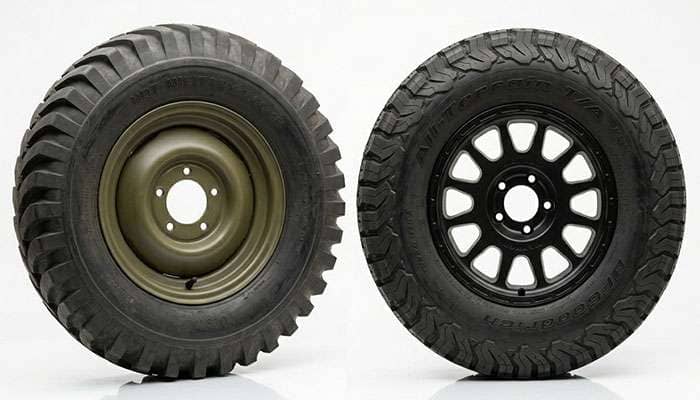
Here's the short version side by side:
Feature |
NDT (Bar-Grip) |
Modern Off-Road Tire |
|---|---|---|
Tread design |
Large alternating bars, no sipes |
Siped blocks, varied elements |
Construction |
Bias-ply |
Mostly radial |
Mud / loose ground |
Excellent, self-cleaning |
Very good |
Wet pavement |
Limited |
Good |
Road noise / ride |
Loud, rough |
Quieter, smoother |
Best for |
Restorations, off-road duty |
Daily and mixed use |
NDT tires come in the old-school sizing that throws a lot of people, because it doesn't look like the metric sizes on your daily driver. You'll see numbers like 600-16, 700-16, 750-16, 750-20, and 900-16. That first number is roughly the tire's section width in inches and the second is the rim diameter — a holdover from the era these tires come from. If that style of sizing has ever stumped you, my guide to antique tire sizes decoded breaks down exactly how to read it.
What do they fit? Mostly the vehicles they were born on and their civilian cousins: restored military Jeeps, weapons carriers, deuce-and-a-halfs, and a range of vintage and classic light and heavy trucks. The key, as always, is matching the tire size and load rating to your rig and rims. With these older fitments, it pays to confirm the exact size your vehicle calls for before you order, because there's a fair bit of variety across the years and models.
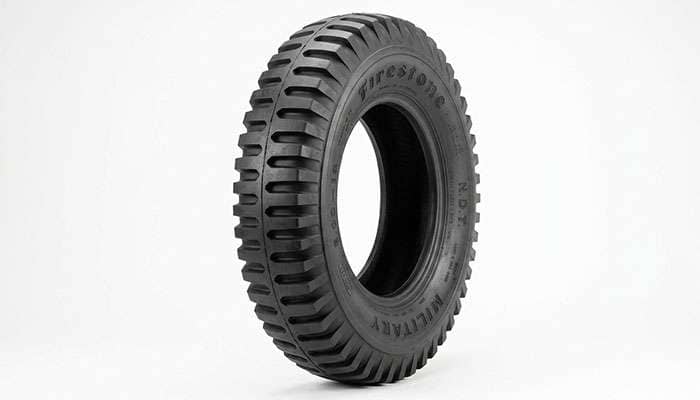
The good news for restorers is that you don't have to hunt down crusty old surplus rubber. Authentic-pattern NDT tires are still made, with correct tread designs and sidewall markings, so you can get the right look and fresh, safe rubber at the same time.
A few I'd point you to: the Firestone NDT Military is a classic choice and comes in those staple sizes like 600-16, 700-16, 750-16, and 900-16. The Goodyear NDT Military in 600-16 is another period-correct option. If you're working a build that calls for a companion pattern, the Firestone NDCC Military covers the non-directional civilian-style fitments, and the Speedway Military line spans a good range of sizes and ply ratings from 600-16 up to heavy 750-20. You can browse the full lineup on our military tires page, and if your project is a broader classic restoration, our classic tires and American classic tires collections are worth a look too.
One last note: if you're weighing NDT against the modern run-flat tires that today's military actually runs, those are a completely different animal built for a different job. I covered that side of the house in are military tires any good, and are they really worth the money.
So, what is a non-directional tread tire? It's the original bar-grip — a simple, tough, no-arrows pattern that grips the same in any direction, developed in the 1930s, made famous on WWII military vehicles, and still earning its keep today on restorations and classic trucks. It's a specialist: unbeatable character and serious dig in the mud, but limited on wet pavement and loud on the road. Match it to the right rig and the right job and there's nothing else like it. When you're ready to find the correct size and pattern for your build, our military tires lineup has the authentic NDT rubber to do it right.
NDT stands for non-directional tread (sometimes called non-directional tire). It refers to the classic military bar-grip pattern that grips equally in either direction of travel, so it can be mounted in any wheel position.
Because the tread is made up of large, solid bars (cleats) that fire out from a center strip and span the full width of the tread. Those bars are what give the tire its aggressive grip in soft ground, and they're the most recognizable feature of the design.
Not especially. With no sipes and large open bars, NDT tires offer limited traction on wet pavement and are loud and rough-riding at speed. They're built for mud and loose terrain, so they're best on vehicles that don't spend most of their time on the road.
Historically, WWII-era military vehicles from Jeeps to heavy trucks and armored cars. Today they're used mainly on restored military vehicles, deuce-and-a-halfs, and various vintage and classic light and heavy trucks where the period-correct look and off-road bite are wanted.
Yes. Authentic-pattern NDT tires are still manufactured with correct tread designs and sidewall markings in classic sizes such as 600-16, 700-16, 750-16, 750-20, and 900-16, from makers including Firestone, Goodyear, and Speedway.