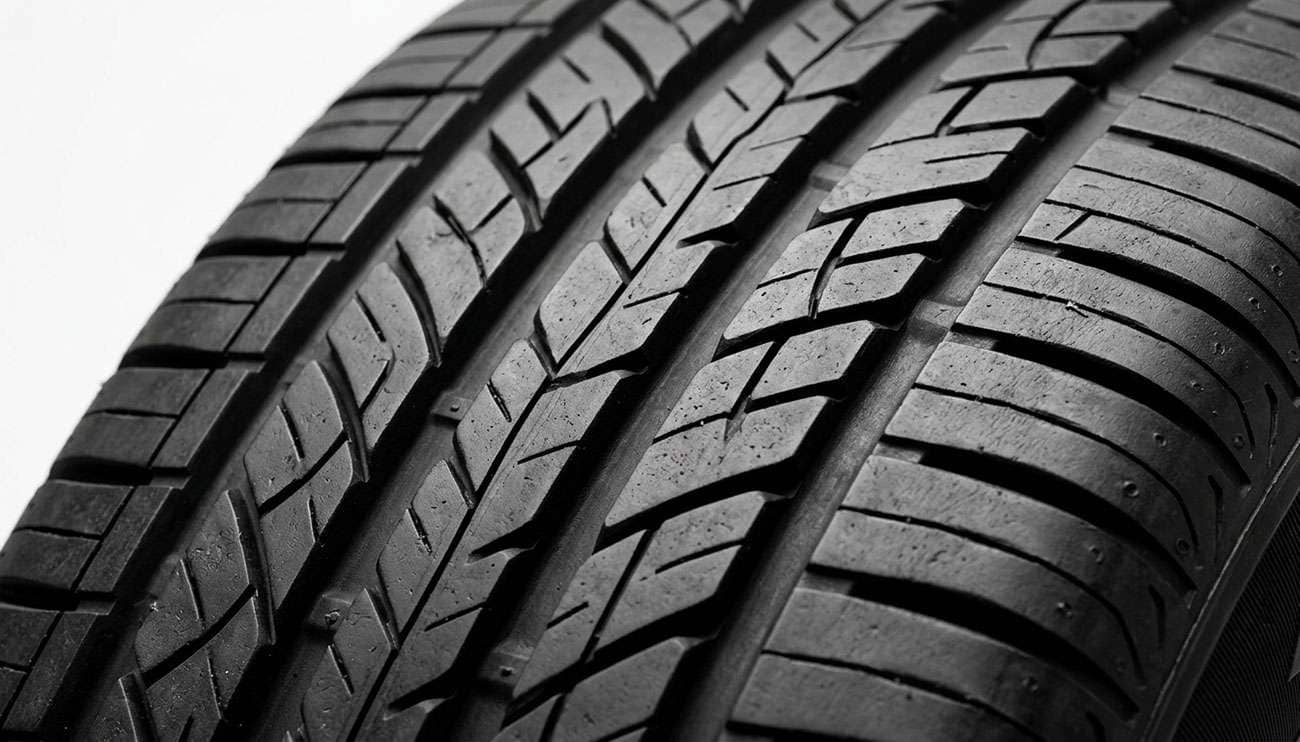
Here's a question I get from the kids hanging around the shop more than you'd think: "Hank, what are all those grooves in a tire actually for?" Most folks assume the tread is what grips the road. The surprising truth is closer to the opposite. On clean, dry pavement, a perfectly smooth tire grips better than a grooved one, because more rubber is touching the ground. So if grip on dry roads comes from smooth rubber, why does every street tire you can buy have tread cut into it? Pour yourself a coffee, because the answer is one of the better stories in this trade.
Tires have tread to keep you in control when the road isn't perfect. The grooves carved into the rubber give water, snow, and mud somewhere to go, so the tire can keep biting into the surface instead of skating across the top of it. Tread is the price you pay, in dry-road grip, to have a tire that works in the rain, on a dirt road, and in the snow. For 99 percent of us driving in the real world, that's a trade worth making every single day.
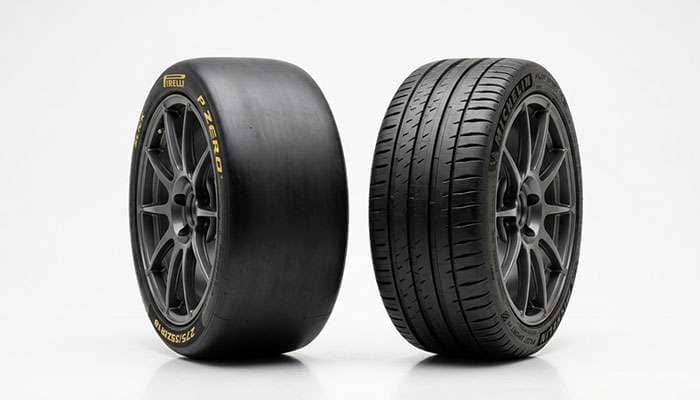
Watch a road-racing car on a dry track and look at the tires. Smooth as a baby's cheek, not a groove in sight. Those are slicks, and they're smooth on purpose. Grip on dry pavement comes from rubber contact, and a slick puts every square inch of its face on the road. Cut grooves into it and you've removed some of that contact, which is why a treaded tire technically gives up a little dry grip to a slick.
So tread isn't there to help you on a sunny day. It's insurance for everything else. The moment that track gets wet, the same slick that was hooked up a second ago turns into a hockey puck, because there's nowhere for the water to escape. That's why race teams run grooved rain tires the instant the skies open up. Think of it this way: you can almost picture a knobby tire as a slick with the rubber carved away in strategic spots, leaving the high points to roll on pavement and the gaps to clear away whatever the road throws at you. For a daily driver that has to handle a downpour on the freeway and a dirt driveway in the same week, those carved-away gaps are everything.
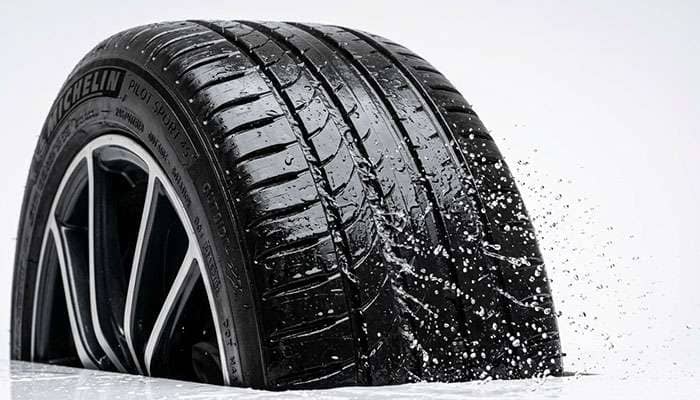
The single most important job tread does is get rid of water. When you drive over a wet road, the tire has to push that water out of the way fast enough to keep rubber on pavement. The grooves are channels that route the water out from under the contact patch and fling it off to the sides. Lose that ability and the tire rides up on a film of water instead of the road, which is the dangerous slide we call hydroplaning. If you've never read up on it, our breakdown of what hydroplaning is and how to prevent it is worth five minutes.
Beyond water, tread does a few other things at once:
When you really look at a tread, it's not just random grooves. Every piece has a name and a job:
Part |
What It Is |
What It Does |
|---|---|---|
Tread blocks (lugs) |
The raised chunks of rubber that touch the road |
Carry the contact patch and bite into loose surfaces |
Grooves (voids) |
The channels between the blocks |
Evacuate water, snow, and mud out from under the tire |
Ribs |
Rows of blocks running around the tire's circumference |
Provide straight-line stability and steering response |
Sipes |
Tiny slits cut into the tread blocks |
Create extra biting edges for wet and winter grip |
Wear bars |
Raised ridges hidden in the grooves |
Show you when the tread is worn out and the tire needs replacing |
There's a balance at work here that the engineers call the tread-to-void ratio, which is just the proportion of rubber to grooves. More rubber on the road, fewer grooves, leans toward dry grip and quiet highway manners. More grooves, less rubber, leans toward clearing water, mud, and snow. Every tire is a compromise picked for a purpose, and that's exactly why no single pattern fits every job.
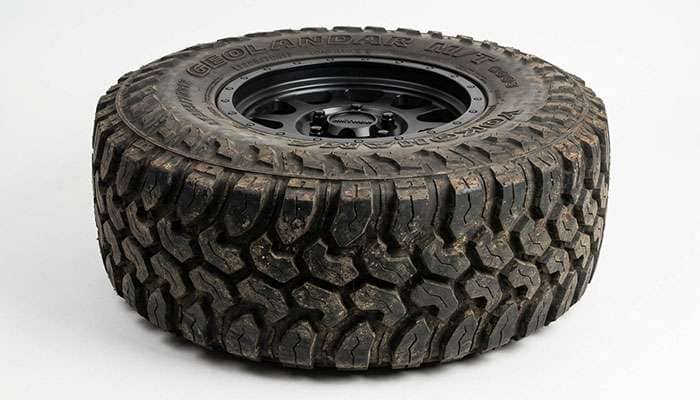
Walk into any tire shop and you'll see dozens of patterns, and that's not marketing. A quiet highway tire for a sedan wants lots of rubber on the road and modest grooves for the occasional rainstorm. A winter tire is loaded with sipes for snow and ice. An aggressive off-road tire has big chunky lugs and wide-open voids so it can claw through mud and sling it back out instead of packing up solid. Each one is tuned for where it spends its life.
If you want to get into reading those patterns yourself, our guide on how to decode tire tread patterns breaks down what the different designs are telling you, and for the dirt crowd, how to choose off-road tire tread patterns covers the chunky stuff.
Tread does its job only as long as it has depth. As those grooves wear down, they can't move as much water, and the tire's ability to resist hydroplaning falls off well before it's technically bald. That's why a worn tire feels fine in the dry and then scares you half to death in the first hard rain. The old penny trick still works fine for a quick check, which I covered in our piece on the penny rule for tires, and our guide to tread depth and when to replace tires tells you where the real cutoff is.
Don't ride them to nothing, either. A slick street tire isn't a race slick, it's just a worn-out tire with no way to deal with water, and the consequences of bald tires are exactly what you'd expect on a wet road.
The way I explain it to those kids in the shop is this: tread is your tire's bad-weather plan. On a perfect dry road you'd be better off with a slick, but you don't get to pick the weather on your way to work. The grooves are what let one set of tires handle a dry morning, a wet commute home, and a snowy driveway in between. So the next time somebody asks why tires have tread, tell them the real answer, that it's not about gripping the road on a sunny day, it's about still gripping it when the road turns against you.
Tires have tread mainly to deal with water and loose surfaces. The grooves channel water, snow, and mud out from under the tire so it can keep contact with the road instead of skating across the top. A smooth tire works fine on a dry road but loses grip dangerously the moment conditions turn wet or loose.
On clean, dry pavement, yes. A smooth tire puts more rubber on the road, which is why race cars run slick tires on dry tracks. But on wet or loose surfaces a slick has no way to move water or bite into the ground, so it loses grip fast. That is why street tires use tread as a real-world compromise.
The most important job is evacuating water. The grooves route water away from the contact patch so the tire stays on the road and resists hydroplaning. Tread also provides bite on snow, dirt, and mud, and the small slits called sipes add extra edges for wet and winter grip.
The main parts are tread blocks or lugs (the raised rubber that touches the road), grooves or voids (the channels between them that clear water), ribs (rows of blocks around the tire), sipes (tiny slits that add biting edges), and wear bars (raised ridges in the grooves that show when the tire is worn out).
Because each pattern is tuned for a different job. Highway tires use more rubber and modest grooves for quiet, dry-weather manners; winter tires are loaded with sipes for snow and ice; and off-road tires use big lugs and wide voids to bite into and shed mud. The pattern matches where the tire is meant to spend its life.