
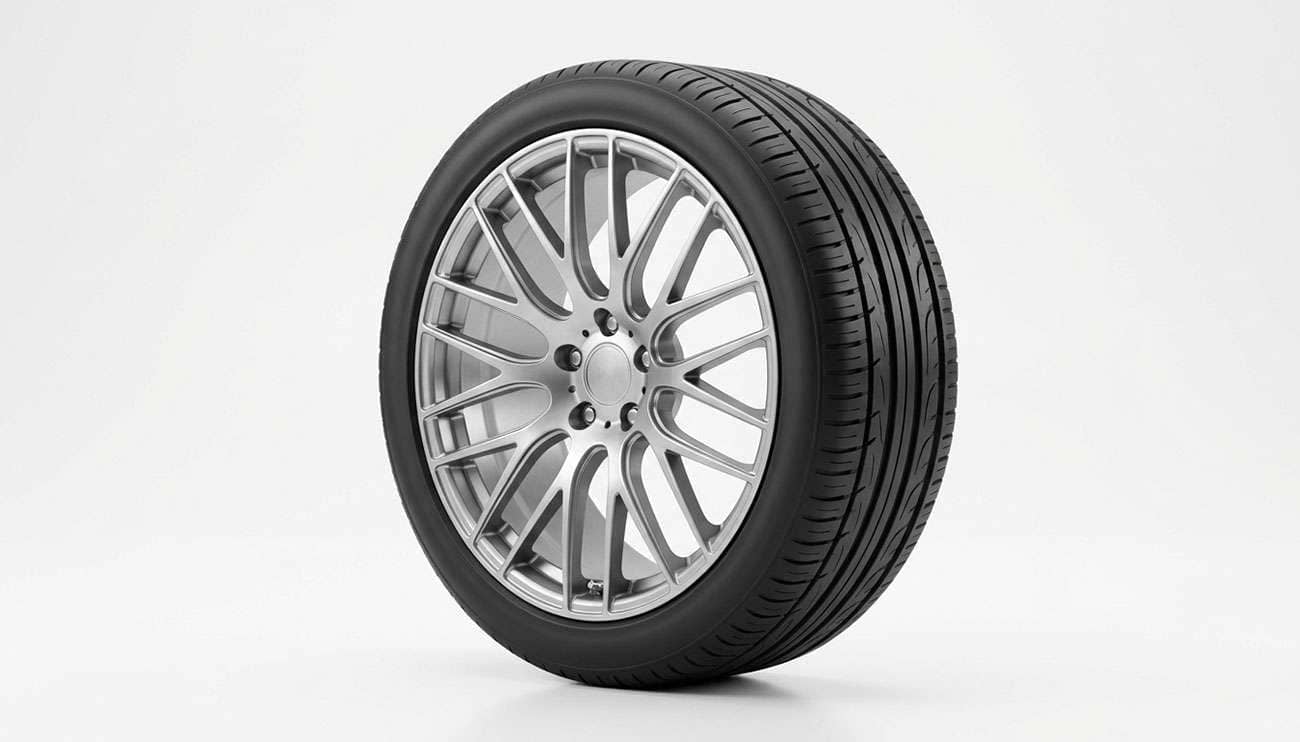
The short answer: 235/40R18 exists to hold a 25.4-inch rolling diameter on an 18-inch wheel. That is the job. It lets a car run a bigger wheel and a bigger brake package without changing its gearing or lying to its speedometer. But what the size is for on your car depends on the load index molded next to it. A 95 XL is built to carry a Mercedes. A 91 SL is built to carry a hot hatch. They are not the same tire and they are not interchangeable.
I have been fitting tires at this shop for a long time, and 235/40R18 is one of the sizes I get asked about most by people who are not entirely sure why their car has it. So let me answer it the way I would across the counter.
Every car is engineered around a rolling diameter. The transmission gearing, the final drive ratio, the speedometer calibration, the ABS wheel speed sensors and the stability control system all assume the tire turns a specific number of times per mile. Change that number and you change all of it at once.
A 235/40R18 stands 25.4 inches tall. Multiply the 235 millimeter width by the 40 percent aspect ratio and you get a 94 millimeter sidewall, which is 3.70 inches. Two sidewalls plus an 18-inch wheel gives you 25.4 inches, and that works out to about 794 revolutions per mile.
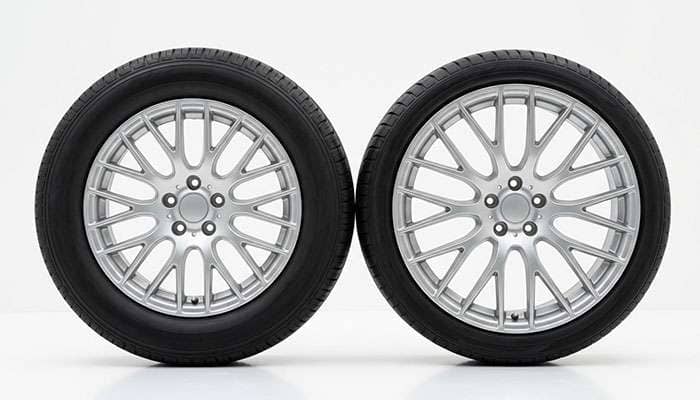
Now look at what else stands roughly 25.4 inches tall:
Size |
Sidewall Height |
Overall Diameter |
Where It Sits in the Chain |
|---|---|---|---|
225/45R17 |
3.99 in |
25.0 in |
Common starting point |
235/45R17 |
4.16 in |
25.3 in |
Wider starting point |
225/40R18 |
3.54 in |
25.1 in |
Narrow plus-one |
235/40R18 |
3.70 in |
25.4 in |
The subject of this article |
245/40R18 |
3.86 in |
25.7 in |
Wider plus-one |
245/35R19 |
3.38 in |
25.8 in |
Plus-two from the same family |
Every one of those is within an inch of the others. That is not an accident. That is the plus-sizing ladder, and 235/40R18 is one of its busiest rungs. The size was created so a car that left the factory on 17-inch wheels could move to 18s, gain the clearance for a larger front rotor and caliper, gain some contact patch, and keep its speedometer honest.
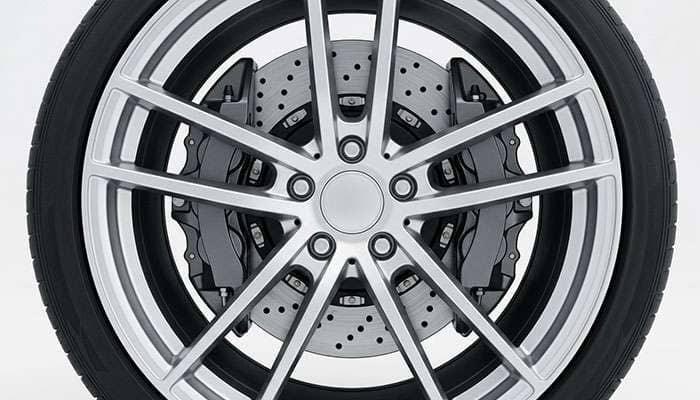
If you want to walk that math yourself, our plus-size wheels and tires calculator guide lays out the arithmetic and what changes in the ride when you do it.
So that is the mechanical answer. The size is for holding diameter while gaining wheel. But it does not tell you what your specific set is for, and that is the part most people never get told.
Here is the thing that surprises people. 235/40R18 is built in two very different load ratings, and the industry has an extremely lopsided opinion about which one this size is for.
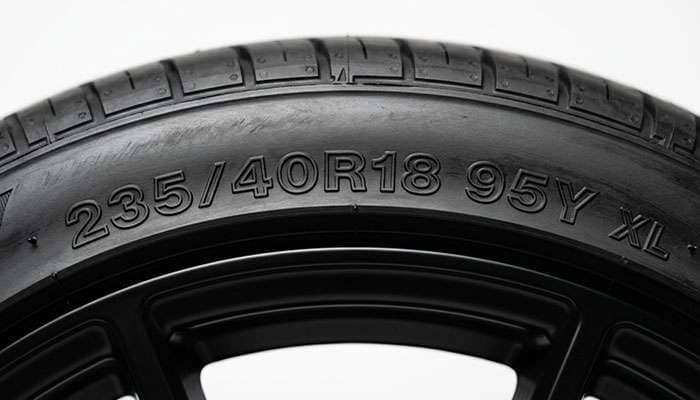
Load index 91 carries 1,356 pounds per tire. Load index 95 carries 1,521 pounds. That is 165 pounds per corner and 660 pounds across the axle set, and it is a bigger gap than you find in most sizes. Roughly eight in ten 235/40R18 tires in current production are built as 95 XL, which is the extra load construction with a reinforced casing and a higher maximum inflation pressure.
That ratio tells you what the size is for better than any spec sheet. When four out of five tires in a size come out of the mold as extra load, the manufacturers are telling you plainly that this size lives under heavy cars driven quickly. The 91 SL versions are the exception, built for the lighter hot hatches and the older European fitments.
Your Placard Reads |
Capacity Per Tire |
What You Can Fit |
What This Tells You About the Car |
|---|---|---|---|
91 (SL) |
1,356 lb |
91 or 95. Moving up to 95 XL is fine. |
Lighter chassis, roughly 3,000 lb curb weight or under |
95 (XL) |
1,521 lb |
95 XL only. A 91 is 660 lb short across the set. |
Heavier sedan or all-wheel drive, or a car with real power |
Placard says a different size entirely |
Read the placard load index, not the size |
Match or exceed the placard number in your new size. |
You are plus-sizing. The load requirement did not change. |
Missing or unreadable |
Assume 1,521 lb |
95 XL. It covers both cases. |
Guessing low on a load calculation is the wrong side to guess on |
The rule is the one I give everybody: match or exceed, never go under. Going from a 91 up to a 95 is fine and often an improvement. Going from a 95 down to a 91 because it was cheaper is the mistake I see land cars back in my bay eight months later. If you want the full explanation of how an extra load casing differs from a standard load one, read SL vs XL tires and which you should really choose.
About 143 models across 42 manufacturers use 235/40R18 from the factory, which is a very wide spread for an 18-inch performance size. The list divides into two camps, and those two camps are exactly why the load index split exists.
The hot hatch and sport compact camp. Volkswagen Golf GTI and Golf R, Honda Civic Si and Civic Sport Touring, Subaru WRX, Ford Focus ST and Focus Titanium, Volkswagen Jetta GLI, Hyundai Elantra N Line, Acura Integra A-Spec. These are lighter cars where the size is doing a handling job. Many of them run the 91 rating.
The luxury and sport sedan camp. Mercedes-Benz CLA 250 4Matic, C-Class and E-Class, Audi A4 Quattro including the Avant and Cabriolet, Volvo S60 and C70, Acura TL and TL Type-S, Volkswagen Passat and CC, Pontiac GTO. These are heavier, frequently all-wheel drive, and they are why four out of five tires in this size are extra load.
It is also an extremely popular aftermarket size. A Civic on 18x8 wheels, a Mk7 GTI on the wider summer setup, a Mazda3 or a Camry that has been plus-sized off the factory 17s. In every one of those cases the door placard still describes the original size, and this is where people trip. The placard's load index is still your floor even though the size printed next to it no longer matches what is on the car. Read the number. Ignore the size.
235 millimeters is 9.25 inches of section width. In the passenger car world that is moderately wide. It is not narrow and it is not extreme.
For context: 195 and 205 are economy car widths. 215 and 225 are the mainstream sedan and compact range. 235 is where sport sedans and hot hatches live. 245 and 255 are performance territory. Anything from 265 up is either a serious sports car, a truck or an SUV.
So 235 is wide enough to matter and narrow enough to behave. You get meaningful dry braking and cornering grip without the two penalties that arrive as you keep going wider. The first is tramlining, where the tire chases grooves and ruts in the pavement and the steering wheel tugs at your hands. The second is hydroplaning, because a wider contact patch has to push more standing water out of the way per unit of load. At 235 you are still comfortably on the good side of both. The neighbors on either side of this size behave much the same way, which we covered in 225/40R18 low profile and the 245/40R18 low profile tire.
One thing worth saying plainly: section width is not tread width. The 235 measurement is the widest point of the inflated tire, sidewall bulge included. The actual tread that touches the road is narrower, usually by three quarters of an inch or so, and it varies by model. Two 235s from different manufacturers can put noticeably different amounts of rubber on the ground.
Yes. Forty series is solidly low profile, and 235/40R18 sits right in the meat of that category with its 3.70-inch sidewall.
The general dividing line is around 50. At 55 and above you are in standard or touring territory. From 50 down through 45 and 40 you are in low profile. At 35 and below you are into ultra low profile, where the sidewall is short enough that wheel damage becomes a routine risk rather than a rare one.
What the aspect ratio number actually describes is a ratio, not a fixed height, and that trips people up constantly. Forty percent of 235 millimeters is 94 millimeters. Forty percent of 275 millimeters is 110 millimeters. Two tires can both say 40 and have sidewalls almost three quarters of an inch apart. The number only means something once you multiply it by the width. That relationship is worth understanding properly, and we broke it down in tire aspect ratio decoded.
What a 3.70-inch sidewall buys you is steering response. There is less rubber between the wheel and the road to flex and delay your input, so the car changes direction the instant you ask it to. What it costs you is everything the sidewall used to absorb. That trade is the whole point of the size, and it is also the source of every complaint I hear about it.
I am going to answer this differently than you might expect, because "best" in this size is not a single tire. This size is unusual in the industry: nearly four in ten of them are summer tires, which is a far higher share than almost any other mainstream 18-inch size. The manufacturers built it that way because of who drives it. So the honest answer starts with what your winter looks like, not with a brand.
Your Situation |
Category to Buy |
Speed Rating to Look For |
What to Verify Before You Order |
|---|---|---|---|
Never below 45 degrees, car gets driven hard |
Max performance summer |
Y or W |
Load index matches placard. Accept short tread life. |
Cold snaps and occasional rain, no real snow |
Ultra high performance all-season |
W or Y |
Load index, and that the tread pattern is not a summer carryover |
Long commute, want the set to last |
Grand touring all-season |
V or H |
That dropping to H is acceptable for your car's original rating |
Real snow and ice every winter |
Dedicated winter set, swapped seasonally |
T, H or V |
That the lower speed rating is intentional and understood |
Track days plus street driving |
Extreme performance summer |
Y |
Treadwear grade near 200 and your tolerance for replacing them |
Within any one of those rows, the strong names in this size are the ones you would expect. Michelin, Continental, Pirelli, Goodyear, Bridgestone, Yokohama, Toyo, Hankook and Falken all build 235/40R18 in depth, and the summer offerings in particular go all the way from street-biased grand touring rubber up to genuine track compounds. If your car came from the factory on a summer tire and you are shopping all-season to avoid a second set of wheels, understand what you are trading first, because summer versus all-season tires is a bigger difference on a 40-series sidewall than it is on a taller one.
The one thing I will not do is hand you a single name without knowing your placard. In a size where four out of five tires are extra load and four in ten are summer, "best" without context is how people end up with the wrong tire twice.
Nobody mentions this part when you are looking at a set of 18s and thinking about how good they will look. So let me.
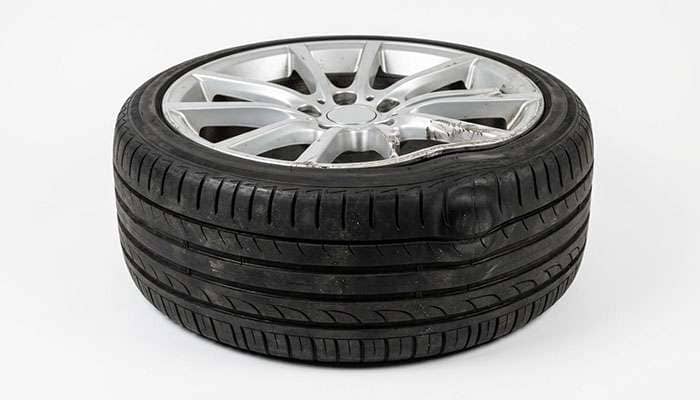
A 3.70-inch sidewall does not absorb impacts. It transmits them. On a 65-series tire, hitting a pothole compresses the sidewall and the rubber eats most of the energy. On a 40-series there is not enough sidewall to compress. The tire pinches between the pavement edge and the wheel rim, and the energy has to go somewhere. It goes into the wheel.
What that looks like in practice. A bent inner rim lip that you cannot see without pulling the wheel. A slow leak that shows up two weeks later and gets blamed on a valve stem. A pinch bulge in the sidewall where the internal cords have separated, which looks like a small blister and means the tire is finished. That last one is not repairable at any price, and it will not warn you before it lets go. If you find a bulge in a sidewall, do not drive on it, and read tire sidewall damage and whether it is safe to drive before you make a decision about it.
The load index version of the same story. Fit a 91 where a 95 belongs and nothing happens the first month. Then the shoulders start wearing ahead of the center, because the casing is flexing further than it was designed to on every corner. The steering goes vague and the car starts to feel like it wanders, and most people pay for an alignment that will not fix it. Somewhere past that, the repeated over-flex works heat into the belt package, and heat is what breaks the bond between the steel belts and the rubber. That is the mechanism behind most highway-speed tread separations, and it is why the National Highway Traffic Safety Administration treats load rating as a safety specification and not a preference.
None of this is an argument against the size. It is an argument for running the correct pressure, buying the correct load index, and slowing down for the bad stretch of road you already know about. I have customers who have run 40-series for a decade without a single wheel problem, and the thing they have in common is that they respect the pavement.
We stock the full range of this size at the shop in Long Beach at 3910 Cherry Avenue and we ship nationwide. You can see every summer, all-season and winter option in the size, with load index and speed rating listed on each one, on our 235/40R18 tires page. If you are not sure what your car needs, call us with the year, make, model and trim and we will pull the original specification before you spend a dime.
What is 235/40R18 for? Mechanically, it is for holding a 25.4-inch rolling diameter on an 18-inch wheel so a car can wear a bigger wheel and a bigger brake without confusing its own speedometer. That is the engineering answer and it is true for every car that wears the size.
Practically, what it is for on your car is written in the two characters after the size. A 95 XL is built to put 1,521 pounds per corner under a Mercedes or an Audi at speed. A 91 SL is built to put 1,356 pounds under a Golf or a Civic. Four out of five tires in this size are the former, which tells you where the industry thinks this size lives.
Read the placard. Then pick your season. Then pick your brand. In that order, every time, and this size will do exactly what it was designed to do.
It holds a 25.4-inch rolling diameter on an 18-inch wheel, which lets a car run a larger wheel and brake package without changing its gearing or speedometer calibration. On your specific car, what it is for depends on the load index next to it. A 95 XL carries 1,521 pounds per tire for heavier sedans, and a 91 SL carries 1,356 pounds for lighter hot hatches.
About 143 models across 42 manufacturers, including the Volkswagen Golf GTI and Jetta GLI, Honda Civic Si and Sport Touring, Subaru WRX, Ford Focus ST, Hyundai Elantra N Line, Mercedes-Benz CLA 250 and E-Class, Audi A4 Quattro, Volvo S60 and C70, and Acura TL and Integra. It is also one of the most common aftermarket plus-one sizes from 17-inch wheels.
Moderately wide. At 9.25 inches of section width it sits above the mainstream 215 and 225 sedan range and below the 245 and 255 performance range. It gives strong dry grip without the tramlining and hydroplaning penalties that increase as tires get wider. Note that section width includes sidewall bulge, so the actual tread contact is narrower.
Yes. The low profile range runs from about 50 down to 40, with 35 and below considered ultra low profile. On a 235 width, a 40 series aspect ratio gives a 3.70-inch sidewall. Remember the number is a percentage of width, not a fixed height, so a 40 series on a wider tire has a taller sidewall.
Start with category rather than brand, because nearly four in ten tires in this size are summer tires. Choose max performance summer if you never see cold, ultra high performance all-season for mixed conditions, grand touring all-season for commuting, or a dedicated winter set for real snow. Then confirm the load index matches your placard before comparing manufacturers.
No. A 91 carries 1,356 pounds per tire against the 1,521 a 95 carries, leaving you 660 pounds short across the axle set. The casing flexes beyond its design range, which causes early shoulder wear and vague steering first, then works heat into the belt package. Going up from 91 to 95 is fine. Going down is not.
Use the pressure on your door placard, not the maximum molded into the sidewall. XL tires in this size carry a higher cold maximum than standard load versions, and cars specifying XL generally call for a placard pressure in the high 30s. Running an XL at standard load pressure gives back the load capacity the reinforced casing was built to deliver.



