
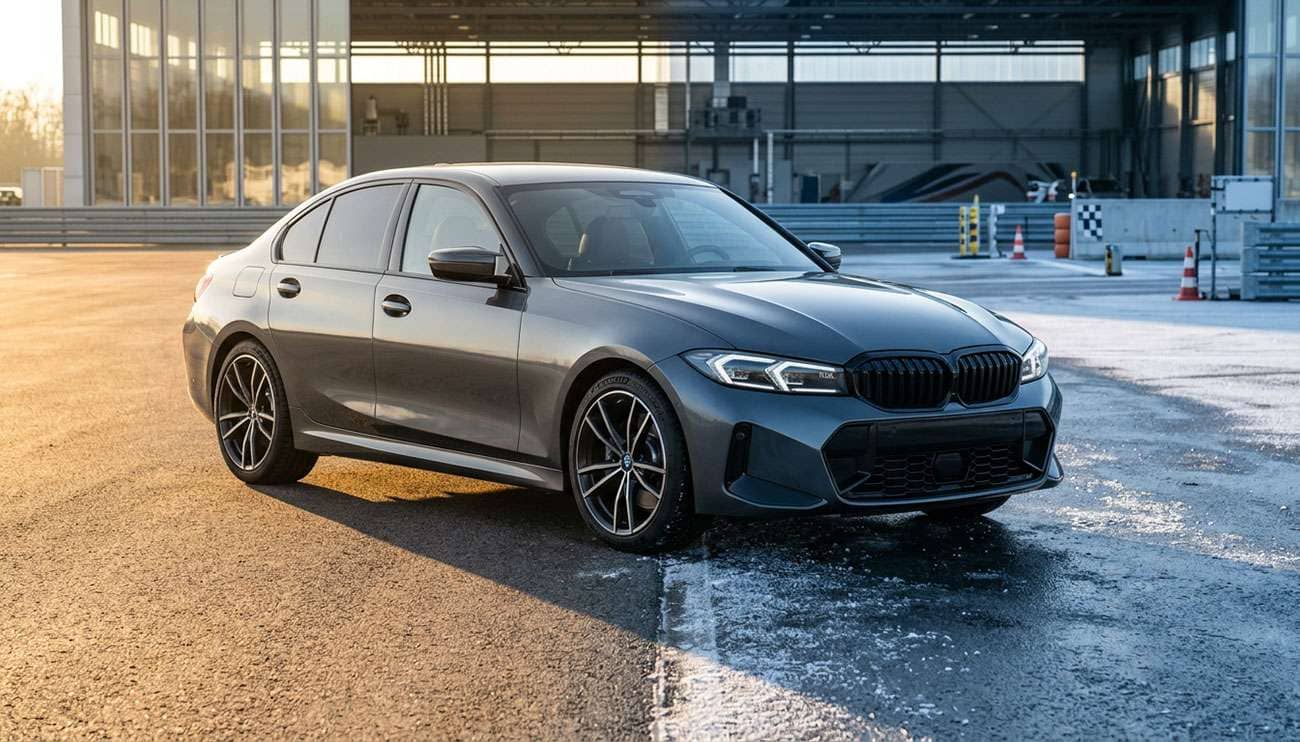
The 45°F (7°C) ambient temperature threshold is the entire decision between summer and all-season tires. Above 45°F, summer tires deliver measurably better dry braking, wet braking, and cornering grip than comparable all-season tires — independent testing from Tire Rack and similar sources consistently shows 10-20% shorter braking distances and meaningfully higher cornering speeds. Below 45°F, the equation reverses completely: summer tire compounds stiffen, lose road conformity, and produce dangerous grip degradation exactly when you need traction most. All-season tires use compound chemistry tuned to remain functional from approximately 20°F through summer heat, but never fully optimize for either extreme.
The result is a clear decision framework based on climate. Drivers in regions that regularly see sub-45°F temperatures from November through March face a binary choice: all-season tires year-round, or a two-set approach using summer tires from spring through fall and dedicated winter tires through the cold months. Drivers in warm climates where sub-45°F temperatures are rare can run summer tires year-round and get peak warm-weather performance without compromising cold-weather safety. Drivers in mild transition climates (Pacific Northwest, mid-Atlantic, southern Mountain West) need to evaluate carefully — even brief cold spells create real safety problems on summer-only rubber.
This guide breaks down exactly what separates the two tire categories at the engineering level, presents the specific performance data from independent testing, introduces the UHP All-Season "third path" that splits the difference for drivers wanting performance characteristics with year-round capability, and recommends 12 specific tires across all three categories that are in current stock at Performance Plus Tire.
Driving Scenario |
Best Choice |
Why |
|---|---|---|
Sun Belt year-round (Phoenix, Miami, Houston) |
Summer UHP |
Peak performance, sub-45°F rare or never |
Mixed-climate commuter (Mid-Atlantic, Pacific Northwest) |
All-Season Touring |
Handles occasional cold without seasonal swap |
Severe winter region (Northeast, Upper Midwest) |
Two-set: Summer + Winter |
Peak summer + dedicated winter is the rational choice |
Performance vehicle in warm climate |
Summer UHP |
Chassis was engineered around summer tire compound |
Performance vehicle, mixed climate, want one set |
UHP All-Season |
The third path — performance with light winter capability |
Family vehicle, mixed climate, mileage priority |
All-Season Touring |
Longest tread life, lowest cost per mile |
EV in warm climate |
Summer UHP (EV-spec preferred) |
Higher torque benefits from peak grip compound |
EV in mixed climate |
All-Season Touring or UHP All-Season |
Higher EV curb weight needs year-round predictability |
The single most important question: does your area regularly see temperatures below 45°F from November through March? If yes, summer tires aren't a viable year-round solution — you need either all-season touring tires or a two-set seasonal swap approach. If no, summer tires work year-round and deliver real performance advantages. Everything else is detail.
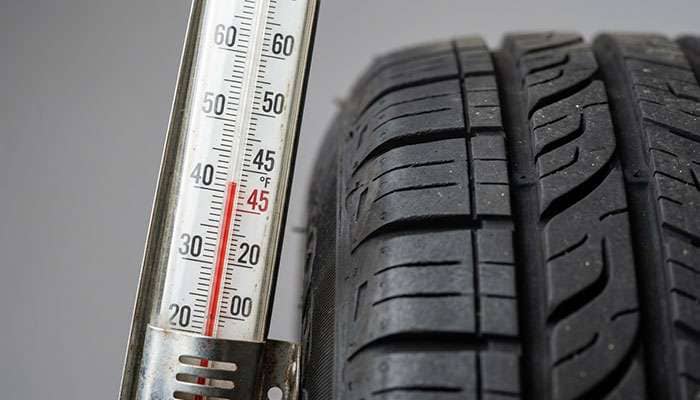
The 45°F threshold (approximately 7°C) isn't an industry marketing convention — it's the temperature at which summer tire compound chemistry transitions from optimal to non-functional. Above 45°F, summer tire compounds remain pliable, generate appropriate friction against road surfaces, and deliver the grip that the tire was engineered to produce. Below 45°F, the same compounds begin a phase transition where the rubber stiffens progressively as temperature drops further. By 32°F (freezing), summer tires deliver dangerously reduced grip — typically 30-40% of their warm-weather performance, with substantially longer stopping distances and unpredictable handling at the limit.
All-season tire compounds use different polymer blends designed to remain functional across a wider temperature range — typically from 20°F through summer heat. The trade-off is that all-season compounds never reach the peak grip that summer compounds deliver at warm temperatures. The engineering decision is breadth versus depth: summer tires excel in their narrow operating range, all-season tires deliver acceptable performance across a broader range without excelling at either extreme.
Three industry rating systems indicate seasonal capability at a glance. The M+S designation (Mud and Snow) appears on all-season and winter tires but not on summer tires. The 3-Peak Mountain Snowflake (3PMSF) rating appears on tires that meet specific winter traction standards — typically dedicated winter tires and some "all-weather" tires like the Michelin CrossClimate2. The UTQG temperature grade (A, B, C) measures heat resistance at high speeds rather than cold weather capability — summer tires earn A ratings because their compounds dissipate heat efficiently, but this doesn't indicate cold-weather capability. Summer tires carry the M+S designation never, the 3PMSF rating never, and a temperature rating of A (the highest) almost universally.
For deeper analysis of the temperature threshold specifically, see our what temperature is too cold for all-season tires guide.
Four engineering choices separate summer tires from all-season tires.
Tread compound chemistry. Summer tires use silica-rich compounds with functionalized polymer chains optimized for warm-temperature grip. Heat keeps the compound pliable, allowing the rubber to deform around road surface imperfections and generate friction through mechanical interlocking. Below 45°F, the same compound stiffens and loses this mechanical conformity. All-season tires use compounds with carbon-black and silica blends tuned for wider temperature stability — the rubber remains functional from approximately 20°F through summer temperatures but doesn't reach the peak grip that summer compounds achieve at warm temperatures.
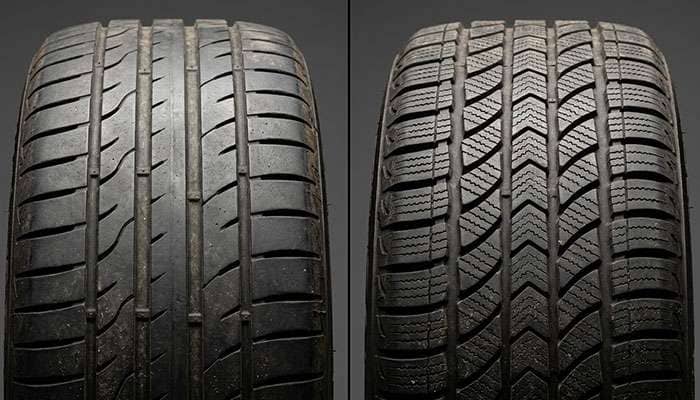
Tread pattern geometry. Summer tires use larger continuous tread blocks with shallow grooves and minimal siping. The geometry maximizes contact patch — the actual rubber area touching the road at any moment — which produces peak dry braking, cornering grip, and steering response. Wet performance comes from the directional or asymmetric channel pattern that evacuates water from the contact patch at speed. All-season tires use smaller tread blocks with deeper grooves and extensive sipe networks (the small slits cut into each tread block). The geometry sacrifices some peak dry grip in exchange for snow and slush capability, and the deeper grooves and more aggressive sipe networks bite into snow that summer tires would just slide across.
Sidewall construction. Summer tires often use stiffer sidewall construction with reduced sidewall flex, which improves steering precision and cornering response. All-season tires typically use more compliant sidewall construction that prioritizes ride comfort and absorbs impact loads better. The construction difference is most noticeable in performance driving where steering feel separates the two categories meaningfully.
Tread depth. Summer tires typically use shallower starting tread depths (around 8-9/32") because deeper tread doesn't help warm-weather performance and adds rolling resistance. All-season tires use deeper starting tread depths (around 10-11/32") because the additional depth is required for snow and slush evacuation. The depth difference produces longer tread life expectations for all-season tires — typically 60,000-80,000 miles versus 20,000-30,000 miles for performance-focused summer tires.
Independent testing from Tire Rack, Auto Express, ADAC, and similar sources produces consistent patterns across direct summer vs all-season comparisons.
Performance Test |
Summer Tire (warm) |
All-Season Tire (warm) |
Summer Advantage |
|---|---|---|---|
Dry braking 60-0 mph (75°F) |
105-115 feet |
120-135 feet |
~12-15% shorter |
Wet braking 50-0 mph |
85-95 feet |
95-110 feet |
~10-15% shorter |
Skidpad lateral grip |
0.95-1.05g |
0.80-0.92g |
~12-15% higher |
Slalom speed |
67-72 mph |
62-67 mph |
~5-8% faster |
The reverse-condition data tells the other half of the story. Below 45°F, summer tire performance degrades dramatically while all-season tires maintain acceptable function.
Cold Performance Test |
Summer Tire (35°F) |
All-Season Tire (35°F) |
Risk Level |
|---|---|---|---|
Dry braking 60-0 mph |
145-170 feet |
130-145 feet |
Summer dangerously degraded |
Snow stopping (31 mph on packed snow) |
~52 yards |
~38 yards |
14-yard difference — meaningful |
Snow stopping vs dedicated winter |
~52 yards |
~38 yards (vs 26 winter) |
Summer 26 yds longer than winter |
Cold ice grip |
Near zero |
Acceptable for typical driving |
Summer dangerous on any ice |
The 26-yard stopping distance penalty on snow — summer tires versus dedicated winter tires at just 31 mph — represents approximately 78 feet of additional stopping distance. That's the difference between stopping safely and colliding with the vehicle ahead in real-world emergency scenarios. The data answers the question definitively: summer tires are not a viable option in any conditions where temperatures regularly drop below 45°F or where snow and ice are possible.
The summer vs all-season decision feels binary, but the UHP All-Season category — Ultra High Performance All-Season — splits the difference meaningfully. UHP all-season tires use compound chemistry that captures most of summer tire's warm-weather grip (typically 85-90% of summer tire peak performance) while maintaining functional performance through cold weather and light snow conditions. The category emerged specifically to address performance-vehicle owners in mixed-climate regions who want one-set ownership without giving up too much summer performance.
The Continental ExtremeContact DWS06 Plus is the benchmark UHP All-Season tire — independent testing typically shows the DWS06 Plus delivering 85-90% of premium summer tire dry braking and cornering grip while maintaining 3PMSF rating for severe winter conditions. The Michelin Pilot Sport All Season 4 uses Michelin's premium compound technology in an all-season tread design. The Goodyear Eagle Exhilarate brings Goodyear's UHP engineering to the all-season category with strong wet performance and acceptable winter capability.
The trade-off compared to dedicated summer tires is real but acceptable for many drivers. UHP All-Season tires sacrifice approximately 10-15% of summer tire's peak dry braking and cornering grip, but gain functional capability at temperatures below 45°F and in light snow conditions. For Tesla Model 3 owners in Maryland, BMW M3 owners in Oregon, Mustang GT owners in Colorado, and similar mixed-climate performance vehicle scenarios, the UHP All-Season category often delivers the most rational single-set solution. For broader UHP coverage, see our 15 best high-performance tires for 2026.
Five summer UHP tires deliver peak warm-weather performance for warm-climate operation or two-set seasonal swap approaches.
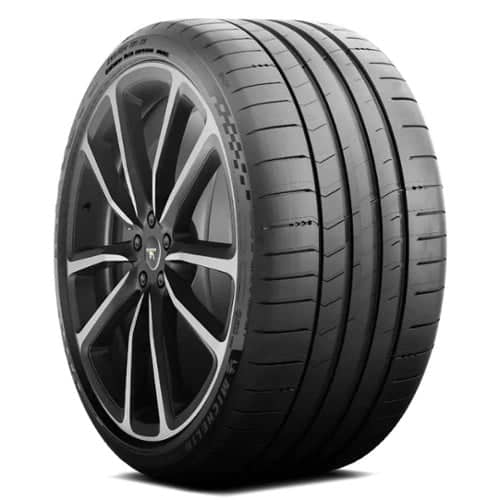
Category: Max Performance Summer • Best For: Track-day capable street performance, high-end sports cars • Typical Price: $310-450 per tire
The Pilot Sport S 5 represents Michelin's current peak summer UHP engineering — a tire developed jointly with Porsche for the 911 GT3 RS and validated across virtually every premium performance vehicle platform. The compound technology delivers exceptional dry braking and cornering grip while maintaining acceptable wet performance for warm-weather operation. The trade-off versus older PS4S construction is slightly higher pricing and shorter tread life (typically 18,000-25,000 miles). For serious performance applications where peak grip is the priority, the PS S 5 is the current Michelin benchmark.
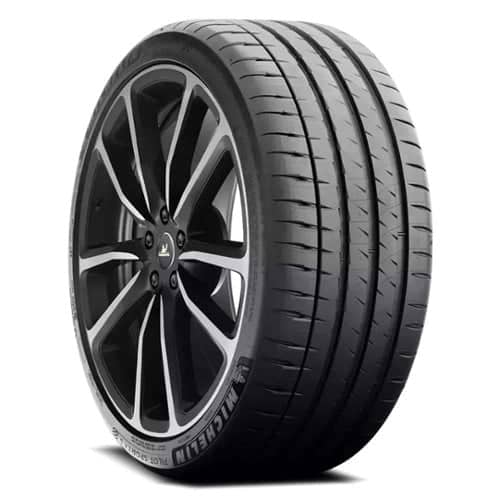
Category: Max Performance Summer • Best For: Daily-driven sports cars and performance sedans • Typical Price: $295-340 per tire
The Pilot Sport 4S remains one of the most popular UHP summer tires in the market and the right answer for most performance vehicle owners who want premium-tier grip without paying for absolute peak performance. Tread life typically lands 25,000-30,000 miles — meaningfully longer than the PS S 5 — while peak grip is approximately 90-95% of the PS S 5. For Mustang GT, BMW 3-Series M-Sport, Audi S4, Lexus IS-F, and similar daily-driven performance applications, the PS4S is consistently the right choice in the premium summer UHP tier. For the PS4S vs Pirelli PZ4 detailed head-to-head, see our PS4S vs PZ4 head-to-head.
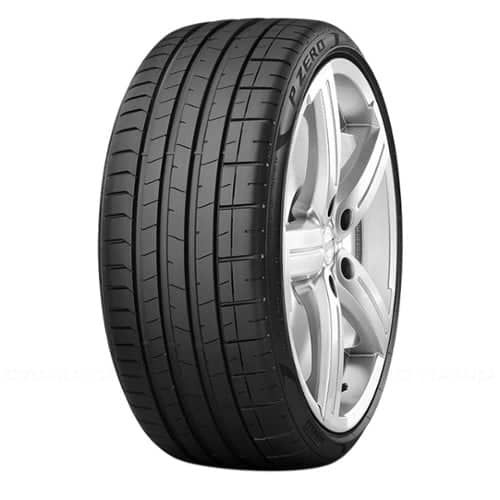
Category: Max Performance Summer • Best For: European sports cars with Pirelli OE specification • Typical Price: $280-340 per tire
The Pirelli P Zero PZ4 is the European-engineered alternative to the Michelin PS4S, delivering comparable peak performance with slightly different handling character. Pirelli tunes the PZ4 for slightly sharper turn-in response and more communicative steering feel at the cost of marginally less peak grip at the absolute limit. For Ferrari, Lamborghini, Audi RS, BMW M, and similar European performance vehicles where Pirelli is often the OE specification, the PZ4 maintains factory chassis tuning that switching to alternatives doesn't preserve.
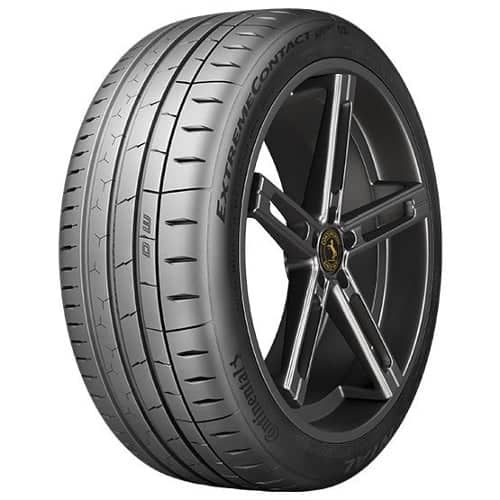
Category: Max Performance Summer • Best For: Performance applications prioritizing wet performance and value • Typical Price: $230-310 per tire
Continental's ExtremeContact Sport 02 delivers premium-tier dry and wet performance at meaningfully lower pricing than Michelin or Pirelli equivalents. The compound technology produces exceptional wet braking performance — typically class-leading or near-class-leading in independent testing — while maintaining strong dry grip and acceptable tread life (typically 25,000-30,000 miles). For drivers who prioritize wet performance alongside dry grip and want premium-tier UHP at value-oriented pricing, the ESC02 delivers strong economics.
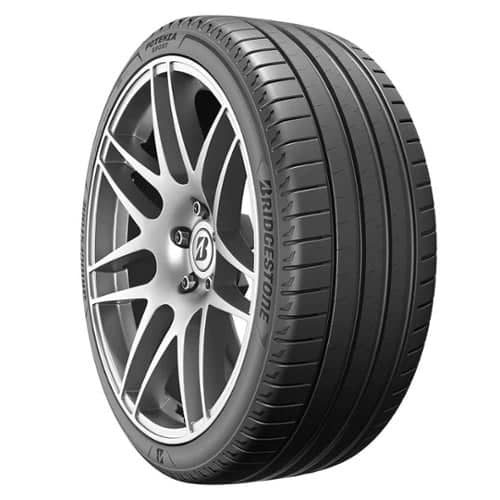
Category: Max Performance Summer • Best For: Performance sedans and sports cars with Bridgestone OE preferences • Typical Price: $250-310 per tire
The Bridgestone Potenza Sport completes the premium summer UHP lineup with Japanese engineering. The compound technology balances dry grip, wet performance, and handling response in a way that some testers prefer over the Michelin or Continental alternatives. Tread life typically runs 20,000-28,000 miles. For BMW M3, Corvette, Porsche 911, and Toyota Supra applications where Bridgestone is often the OE specification, the Potenza Sport maintains factory chassis tuning. Browse the full Summer Tires lineup.
Four all-season touring tires deliver year-round capability with long tread life for typical commuter and family vehicle applications.
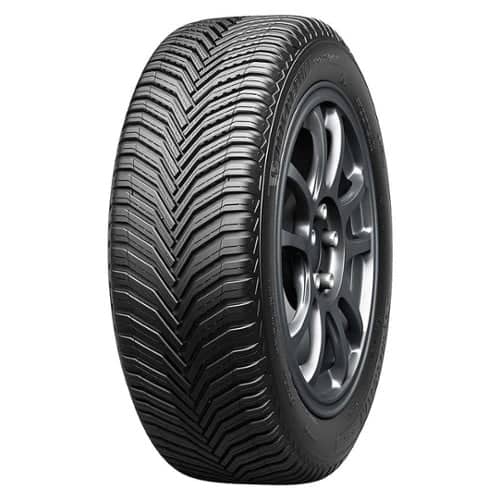
Category: All-Weather Grand Touring (3PMSF rated) • Best For: Severe-rain and severe-winter climate drivers wanting single-set ownership • Typical Price: $170-230 per tire
The Michelin CrossClimate2 carries the 3PMSF rating — meaning it qualifies as a true winter-capable tire while delivering all-season touring performance. The V-Formation directional tread design with Thermal Adaptive compound delivers premium wet braking (38.53 meters from 60 mph in independent testing — meaningfully shorter than typical all-season alternatives) while maintaining functional winter performance. For drivers in severe-winter regions who want one-set year-round capability rather than seasonal tire swaps, the CrossClimate2 is the right answer.
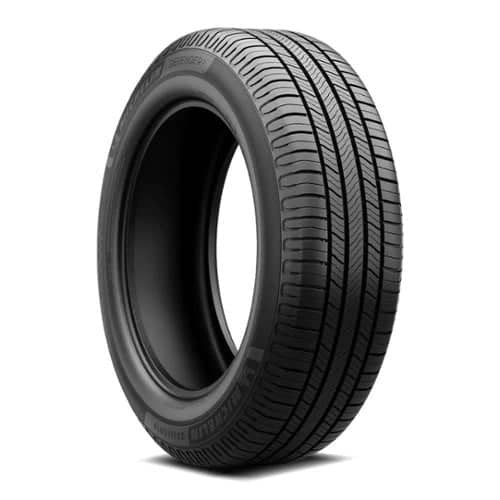
Category: Standard All-Season Touring • Best For: High-mileage drivers prioritizing tread life economics • Typical Price: $130-175 per tire
The Michelin Defender 2 leads the all-season category on tread life with 800 UTQG treadwear rating and 80,000-mile typical service life. MaxTouch construction and Michelin's silica-rich Helio+ compound deliver consistent performance across the tire's full service life. For high-mileage drivers (25,000+ miles per year) where tread life economics matter most, the Defender 2 is the most rational choice. The trade-off versus the CrossClimate2 is the lack of 3PMSF rating — the Defender 2 handles light winter conditions acceptably but isn't validated for severe winter weather.
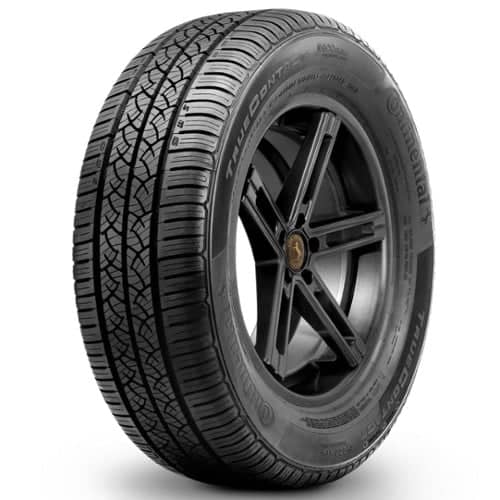
Category: Standard All-Season Touring • Best For: Balanced performance with strong wet capability • Typical Price: $135-180 per tire
Continental's TrueContact Tour delivers premium-tier wet braking performance with EcoPlus Technology, balanced dry handling, and competitive tread life (typically 60,000-80,000 miles depending on size and driving). For drivers who prioritize wet weather safety alongside year-round capability, the TrueContact Tour delivers stronger wet performance than the Defender 2 at similar pricing. Less aggressive than the CrossClimate2 in winter conditions but stronger in pure wet performance. For comparative analysis with the CrossClimate2 specifically, see our Michelin CrossClimate2 vs Continental all-season.
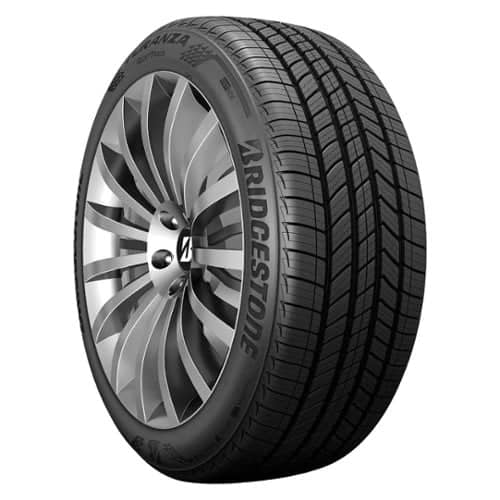
Category: Grand Touring All-Season • Best For: Comfort and quietness-focused luxury vehicle applications • Typical Price: $145-210 per tire
The Bridgestone Turanza QuietTrack is the comfort and noise specialist of the all-season category. Bridgestone's QuietTrack tread design uses optimized pitch variation to minimize the resonant frequencies that produce cabin noise — the result is one of the quietest all-season tires available at typical highway speeds. Tread life typically lands 70,000-80,000 miles. For luxury sedans, premium crossovers, and drivers prioritizing cabin quietness above all other characteristics, the QuietTrack delivers the strongest combination of refinement and longevity. Browse the full All-Season Tires lineup.
Three UHP All-Season tires deliver the third path — performance-tier grip with year-round capability for mixed-climate drivers wanting one-set ownership.
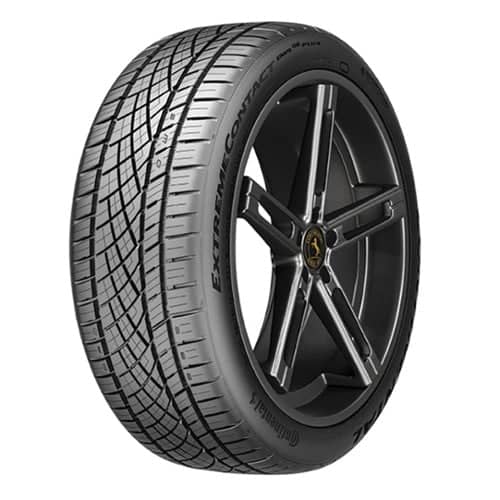
Category: UHP All-Season • Best For: Performance vehicle owners in mixed climates wanting single-set capability • Typical Price: $190-260 per tire
The Continental ExtremeContact DWS06 Plus is the benchmark UHP All-Season tire and the one I recommend most often for performance vehicle owners in mixed climates. Continental's SportPlus+ Technology with asymmetric tread design delivers approximately 85-90% of premium summer tire dry and wet grip while maintaining functional snow performance (the tire carries 3PMSF rating). Tread life typically runs 50,000 miles with the matching mileage warranty (25,000 for staggered rear fitments). For Tesla Model 3 Performance, BMW M-Sport applications, Audi S-line, and similar performance vehicles in mixed-climate regions, the DWS06 Plus is the right answer for most buyers.
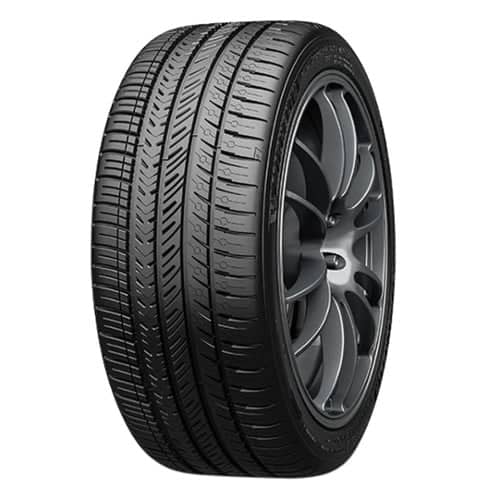
Category: UHP All-Season • Best For: Premium performance vehicles wanting Michelin-tier engineering year-round • Typical Price: $230-310 per tire
Michelin's Pilot Sport All Season 4 brings the Pilot Sport family's engineering DNA to the all-season category. The compound technology and tread design carry over from Michelin's UHP summer offerings, tuned for all-season operation. Wet performance is exceptional — typically class-leading in independent testing — while dry performance comes within 10% of the Pilot Sport 4S in warm conditions. Winter capability is acceptable but not 3PMSF-rated, meaning the PSAS4 isn't validated for severe winter weather. For drivers in mild-winter regions where premium dry and wet performance matter most and winter conditions are light, the PSAS4 delivers Michelin tier engineering in a single-set solution.
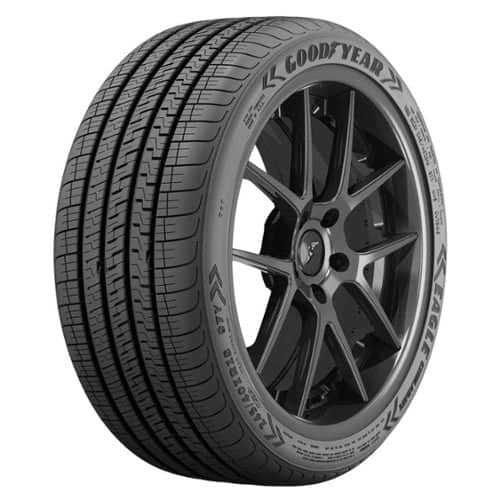
Category: UHP All-Season • Best For: Value-conscious performance vehicle owners • Typical Price: $170-240 per tire
The Goodyear Eagle Exhilarate completes the UHP All-Season recommendations with strong value at slightly lower pricing than the Continental DWS06 Plus and Michelin PSAS4. Goodyear's compound technology delivers acceptable performance across both dry and wet conditions with functional snow capability. Tread life typically lands 45,000-55,000 miles. For value-conscious performance vehicle owners who want UHP All-Season capability without paying premium-tier pricing, the Eagle Exhilarate delivers strong economics with acceptable performance trade-offs.
Match your region to the right tire category.
Climate Type |
Example Regions |
Recommended Path |
|---|---|---|
Hot year-round (sub-45°F rare) |
Phoenix, Miami, Houston, Las Vegas, San Diego |
Summer UHP year-round (peak performance) |
Mild winter (occasional cold, rare snow) |
Southern California, Atlanta, Charlotte, Dallas |
All-Season Touring or UHP All-Season |
Transition climate (variable cold and rain) |
Pacific Northwest, mid-Atlantic, San Francisco Bay |
All-Season Touring (3PMSF preferred) |
Moderate winter (regular cold, occasional snow) |
Mid-South, Tennessee, Kentucky, Virginia |
All-Season Touring (Defender 2 or CrossClimate2) |
Severe winter (deep snow, ice, sub-20°F) |
Northeast, Upper Midwest, Mountain West |
Two-set: Summer UHP + Dedicated Winter |
Severe winter + single-set preference |
Same as above, but wanting one-set ownership |
CrossClimate2 (3PMSF all-weather) |
Two key principles emerge from this framework. First, summer tires are only viable as a year-round solution in genuinely hot climates where sub-45°F temperatures are rare. Anywhere else, summer-only ownership creates real safety risks during cold spells that the driver may not anticipate. Second, the two-set seasonal swap approach (summer + dedicated winter) delivers peak performance in both seasons but creates ownership complexity — tire storage, mounting/dismounting costs, and the discipline to actually swap on time. For most mixed-climate drivers, all-season touring or UHP all-season tires deliver more rational total cost of ownership than seasonal swaps.
The economic decision between single-set ownership (all-season or UHP all-season) and the two-set approach (summer + winter) depends on annual mileage, climate severity, and how the driver values storage and swap logistics.
Ownership Approach |
Total Cost (5 years) |
Annual Logistics |
Best For |
|---|---|---|---|
All-Season Touring single set |
$550-900 (1 set lasting 70k+) |
None |
Most mixed-climate drivers |
UHP All-Season single set |
$680-1,040 (1 set lasting 50k) |
None |
Performance vehicles, mixed climate |
Summer UHP year-round |
$1,180-1,810 (2 sets at 25k each) |
None |
Hot climates only |
Summer + Winter two-set |
$1,180-1,710 (1 summer + 1 winter) |
Storage + 2 swaps/year ($80-200) |
Severe-winter performance vehicle owners |
Two-set with wheels |
$1,800-2,800+ (tires + winter wheels) |
Storage + 2 swaps/year (cheaper, ~$40) |
Severe-winter performance vehicles, long-term ownership |
For most mixed-climate drivers, the all-season touring single-set approach delivers the strongest combination of low cost and zero logistical complexity. For performance vehicle owners in mixed climates, the UHP All-Season single-set approach delivers peak available performance without seasonal swap complications. For severe-winter performance vehicle owners who prioritize peak summer and peak winter performance separately, the two-set seasonal swap approach delivers the best performance outcomes at higher cost and ownership complexity. The two-set approach with dedicated winter wheels typically pays back over 3-4 years through reduced mounting/dismounting costs, making it the rational long-term choice for severe-winter performance vehicle owners.
Category |
Warm Performance |
Cold Performance |
Tread Life |
Best For |
|---|---|---|---|---|
Summer UHP |
Peak (10/10) |
Dangerous below 45°F |
20,000-30,000 mi |
Hot climates, performance peak |
UHP All-Season |
Strong (8.5/10) |
Acceptable, some 3PMSF rated |
45,000-55,000 mi |
Performance in mixed climates |
All-Season Touring |
Acceptable (7/10) |
Functional through 20°F |
60,000-80,000 mi |
Mixed climates, mileage priority |
All-Weather (3PMSF) |
Acceptable (7/10) |
True winter capability |
50,000-60,000 mi |
Severe winter, single-set preference |
Dedicated Winter |
Poor wear above 45°F |
Peak (10/10) in winter |
30,000-40,000 mi (winter only) |
Severe winter, two-set approach |
Summer tires use silica-rich compound chemistry optimized for temperatures above 45°F, with larger tread blocks, shallower grooves, minimal siping, and stiffer sidewall construction. The result is peak dry and wet grip in warm conditions — typically 10-20% shorter braking distances and 12-15% higher cornering grip than comparable all-season tires. All-season tires use different compound blends that remain functional from approximately 20°F through summer temperatures, with smaller tread blocks, deeper grooves, and extensive sipe networks for light snow capability. The trade-off is that all-season tires never reach summer tire's peak grip in warm conditions but maintain function across a wider temperature range. Below 45°F, summer tire compounds stiffen dangerously while all-season compounds maintain functional grip — the temperature threshold is the entire decision between the two categories.
Summer tires work year-round only in genuinely hot climates where sub-45°F temperatures are rare. Examples include Phoenix, Miami, Las Vegas, Houston, and parts of Southern California where winter temperatures rarely drop below 50°F. In any climate where temperatures regularly fall below 45°F from November through March, summer tires create real safety risks — compound chemistry stiffens at low temperatures, producing dangerously reduced grip exactly when traction matters most. For mixed-climate drivers wanting one-set ownership, all-season touring tires or UHP all-season tires deliver the rational year-round solution. For severe-winter regions, summer tires require a two-set seasonal swap approach paired with dedicated winter tires through the cold months.
45°F (7°C) is the threshold below which summer tire compounds begin transitioning from optimal to non-functional. Above 45°F, summer tires deliver peak grip; below 45°F, the silica-rich compound chemistry begins stiffening, losing road conformity, and producing progressively reduced grip as temperature drops further. By 32°F (freezing), summer tires typically deliver only 30-40% of their warm-weather performance with substantially longer stopping distances and unpredictable handling. By 20°F, summer tires are essentially non-functional for typical driving and create dangerous grip degradation. The threshold isn't a soft transition — once temperatures drop below 45°F consistently, summer tires should be replaced with all-season alternatives or paired with dedicated winter tires for two-set seasonal swap operation.
For performance vehicle owners in mixed climates, UHP All-Season tires are typically the most rational single-set solution. Tires like the Continental ExtremeContact DWS06 Plus, Michelin Pilot Sport All Season 4, and Goodyear Eagle Exhilarate deliver approximately 85-90% of premium summer tire dry braking and cornering grip while maintaining functional cold-weather and light snow capability. The trade-off is real but acceptable — 10-15% less peak warm-weather grip in exchange for year-round usability without seasonal tire swaps. For severe-winter regions where dedicated winter tires are required regardless, the UHP All-Season category may not justify itself versus a two-set summer + winter approach. For mild to moderate winter regions where cold weather is occasional but real, UHP All-Season delivers the strongest combination of performance and practicality.
Yes, in warm conditions. Independent testing from Tire Rack, Auto Express, and similar sources consistently shows summer tires delivering 10-20% shorter dry braking distances at 75°F compared to comparable all-season tires. A premium summer tire like the Michelin Pilot Sport 4S typically stops in 105-115 feet from 60 mph in warm dry conditions; a comparable premium all-season tire stops in 120-135 feet. Wet braking shows similar advantages of 10-15% in summer tires' favor. The differences are real, measurable, and consistent across testing sources. Below 45°F, the equation reverses completely — summer tires lose grip dangerously while all-season tires maintain function. The performance advantage is real but conditional on temperature.
The Michelin CrossClimate2 is classified as an all-weather Grand Touring All-Season tire with 3PMSF rating. The 3PMSF (Three-Peak Mountain Snowflake) rating qualifies the CrossClimate2 as a true winter-capable tire while maintaining all-season touring characteristics — a category sometimes called "all-weather" to distinguish it from standard all-season tires that handle only light winter conditions. Michelin's Thermal Adaptive compound and V-Formation directional tread design produce strong wet braking (38.53 meters from 60 mph in independent testing), acceptable dry handling, and meaningful snow capability. For severe-winter climate drivers wanting single-set year-round ownership without a seasonal swap, the CrossClimate2 is the rational choice. The trade-off versus pure summer or pure all-season alternatives is some compromise in each individual performance category in exchange for year-round capability.
Summer UHP tires typically deliver 20,000-30,000 miles of service life depending on the specific model and driving conditions. Premium Max Performance Summer tires like the Michelin Pilot Sport S 5 typically run 18,000-25,000 miles; the Pilot Sport 4S typically runs 25,000-30,000 miles; the Pirelli P Zero PZ4 typically runs 20,000-28,000 miles. The shorter tread life compared to all-season alternatives reflects the softer compound chemistry and shallower tread depth that produce peak performance. UHP All-Season tires deliver longer service life (typically 45,000-55,000 miles) at the cost of some peak performance. All-Season Touring tires deliver the longest service life (60,000-80,000 miles) with the lowest peak performance. The trade-off between performance and longevity is fundamental to tire engineering.
Summer tires aren't legally required for performance cars but are typically the OE specification on serious performance vehicles for good engineering reasons. Modern performance cars are tuned around summer tire compound characteristics — suspension geometries, brake systems, and stability control calibrations all assume the grip characteristics of summer tires. Switching to all-season tires on a performance car produces noticeably degraded handling, longer braking distances, and reduced cornering grip in warm conditions. For warm-climate performance vehicle owners, staying with summer tires (matching OE specification or upgrading) preserves the chassis tuning. For mixed-climate performance vehicle owners, the UHP All-Season category delivers most of the OE summer tire performance with year-round capability — a meaningful compromise that maintains 85-90% of the performance experience while gaining practical year-round usability.



