
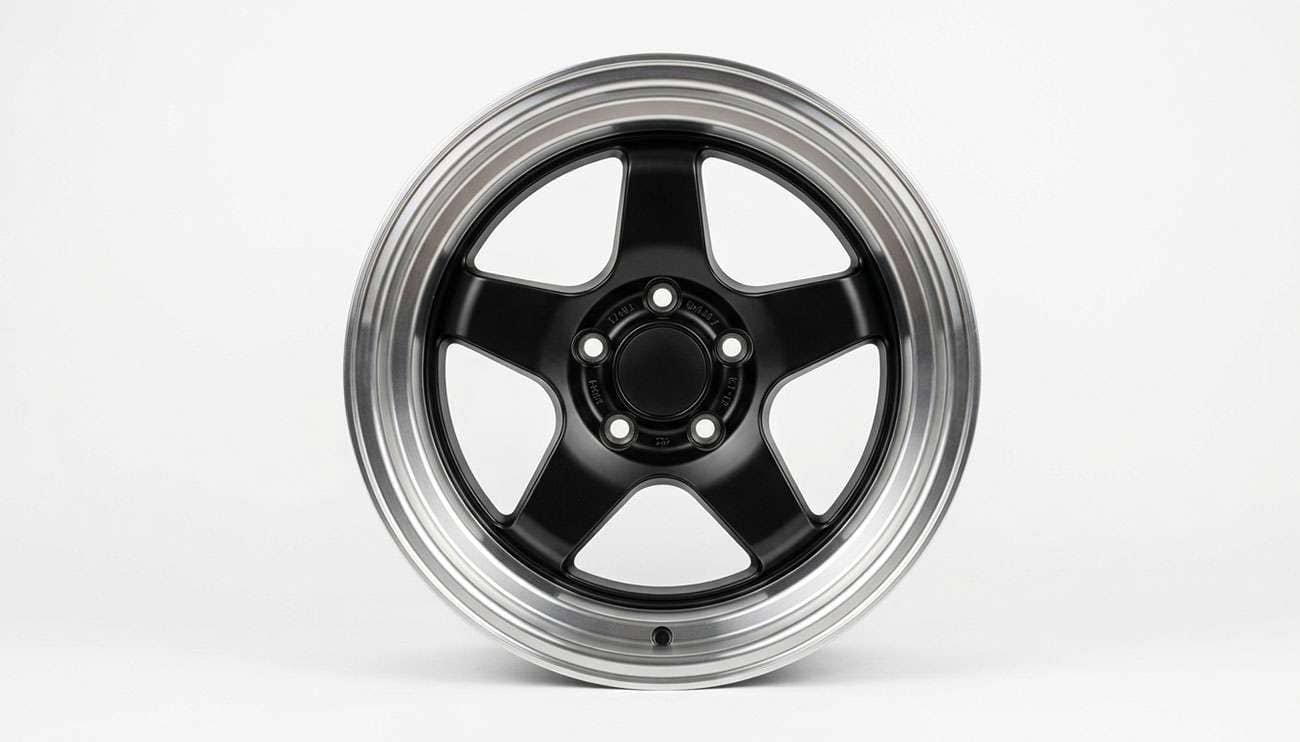
17x9 means a 17-inch wheel diameter and a 9-inch wheel width, both measured at the bead seats. But those two numbers are only half of what decides whether the wheel fits your truck. The number that actually decides it is offset, and 17x9 tells you nothing about it. Across the 7,239 in-stock 17x9 wheels in our catalog, offset ranges from -127mm to +63mm. Two wheels both stamped 17x9 can sit more than three inches apart on the same hub.
That is the part almost nobody says out loud. Search this question and you will get five pages explaining that 17 is the diameter and 9 is the width, then a paragraph saying offset "varies depending on your vehicle" before moving on. One of the pages ranking near the top for this exact query states that a 17x9 rim "typically" carries a 25 to 30mm offset. Our own inventory says otherwise. Offsets of +25mm or higher account for 6.5 percent of the 17x9 wheels we stock. The single most common 17x9 offset on the market is -12mm, and it accounts for 34.6 percent of them by itself.
So if you walked away from a forum thread or a product page thinking 17x9 was a size, you have the wrong mental model. It is a bead-seat dimension. The fitment lives in the third and fourth numbers. Here is all of it, in order.
The first number is diameter: 17 inches, measured across the wheel through the center point, at the bead seats where the tire actually seals. The second number is width: 9 inches, measured as the inside distance between those same two bead seat faces.
The bead seat detail matters more than it sounds. Both measurements deliberately ignore the outer flanges, which is where most people put a tape measure and get a confusing answer. The Tire and Rim Association standard adds roughly half an inch of flange per side, so a wheel stamped 9 inches wide measures close to 10 inches from outer lip to outer lip. When you are trying to work out whether a wider wheel will clear a strut, an upper control arm, or the inner fender liner, you need to plan around 10 inches of real estate, not 9. This is the single most common reason a build that "penciled out" ends up rubbing at full lock.
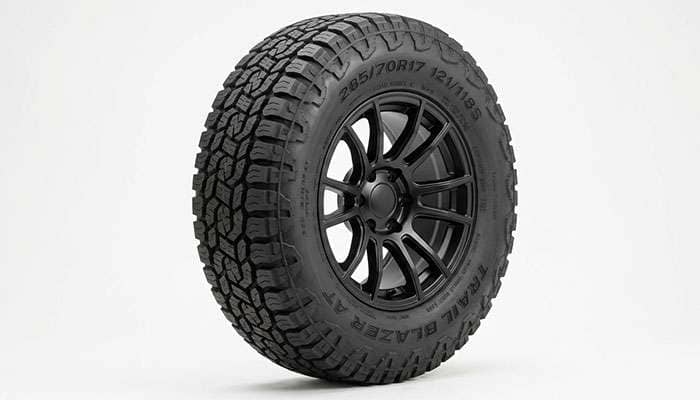
Diameter works the same way. A 17-inch wheel is 17 inches at the bead seat, which is exactly the number printed on your tire sidewall after the R. That is why a 265/70R17 tire and a 17-inch wheel are a matched pair, and why no amount of tire shopping will get a 17-inch tire onto an 18-inch wheel. The same logic scales down through the smaller sizes, and if you want to see how the notation behaves on a shorter, wider classic setup, our breakdown of what 15x8 wheels mean walks the same two numbers through a different application.
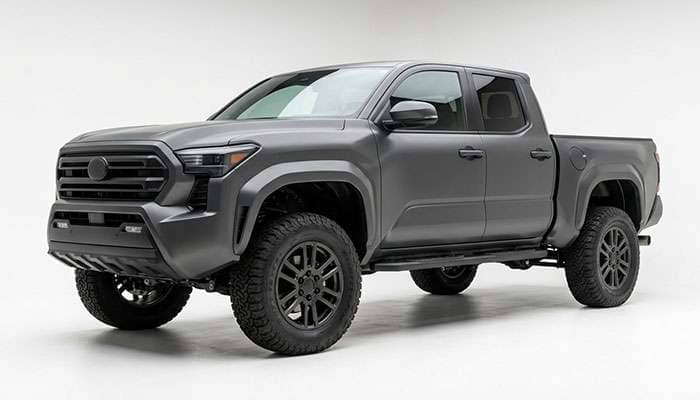
Nine inches is a genuinely useful width. It is wide enough to carry a 33-inch tire with full shoulder contact and narrow enough to stay under most factory fender lines with the right offset. That combination is why 17x9 has become the default aftermarket size for the Jeep Wrangler JL, the Ford Bronco, the Toyota Tacoma and 4Runner, the Ram 2500, and most half-ton and three-quarter-ton pickups running an all-terrain tire.
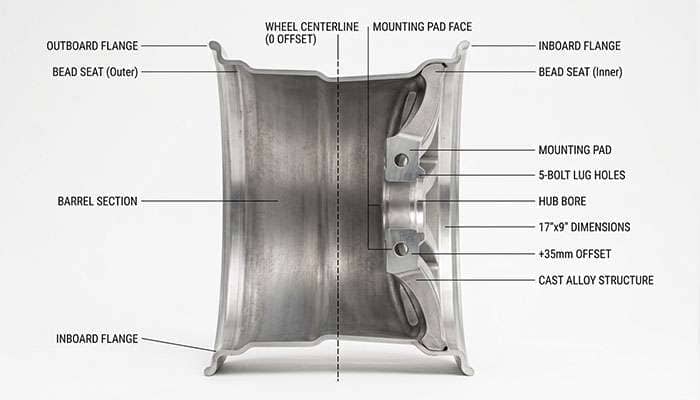
Offset is the distance in millimeters from the wheel's true centerline to the mounting pad that bolts against your hub. Positive offset pulls the wheel inboard, toward the suspension. Negative offset pushes it outboard, toward the fender. Zero offset means the mounting pad sits exactly on the centerline.
When a listing reads 17x9 +38, the +38 is telling you the mounting pad sits 38mm inboard of centerline. When it reads 17x9 -12, the pad sits 12mm outboard. That is a 50mm difference, just under two inches, between two wheels that carry the same size stamp. Bolt them to the same truck and one tucks under the fender while the other pushes the tire nearly an inch past it.
Here is what the real spread looks like. These are the priced, in-stock 17x9 wheels in our catalog as of this writing, grouped by offset, with mounting-face position measured against a +18mm reference wheel:
Offset Stamped |
Backspacing |
Position vs a +18mm 17x9 |
Typical Application |
Share of Our 17x9 Stock |
|---|---|---|---|---|
-38mm |
3.50 in |
2.2 in further out |
Wide-stance lifted trucks, flares required |
4.3 percent |
-24mm to -13mm |
4.06 to 4.49 in |
1.2 to 1.7 in further out |
35s on a lifted truck, aggressive poke |
3.1 percent |
-12mm |
4.53 in |
1.2 in further out |
The off-road default: JL, Bronco, Tacoma, 33s |
34.6 percent |
0mm |
5.00 in |
0.7 in further out |
Leveling kit, 33s, mild stance |
16.0 percent |
+1mm to +12mm |
5.04 to 5.47 in |
0.2 to 0.7 in further out |
Near-flush on trucks with wide factory fenders |
20.5 percent |
+13mm to +24mm |
5.51 to 5.94 in |
Within 0.25 in of reference |
Closest to factory geometry on many half-tons |
10.2 percent |
+25mm and up |
5.98 in and deeper |
0.3 to 1.8 in further in |
Tucked fitment, unibody SUVs and crossovers |
6.5 percent |
Read that table once and the 17x9 question answers itself. The width is fixed. Everything that determines whether the tire clears the upper control arm on the inside and the fender lip on the outside is in column one. The spread between the extremes we stock, -127mm to +63mm, works out to 190mm of mounting-face travel. That is seven and a half inches.
Note also how lopsided the distribution is. Nearly half of all 17x9 wheels sold are negative-offset, because the size exists mostly to serve trucks and off-road builds that want the track widened. If you are shopping a 17x9 for a vehicle that came from the factory with a +45mm wheel, you are shopping in the thin end of the pool and you need to filter on offset before anything else. For a full treatment of how offset, backspacing, and bolt pattern interact, see our guide to wheel offset, backspacing, and bolt patterns. If your build is specifically an off-road stance project, Hank covers the negative-offset side in depth in the 17x9 off-road truck setup that just works.
There is no single answer, and any page that gives you one is guessing. Backspacing on a 17x9 is a direct function of offset, so it moves across the same range: from 3.50 inches at -38mm out to 6.77 inches at +45mm.
What you can rely on is the formula. Backspacing is the distance from the mounting pad to the inboard flange, measured in inches:
Backspacing = (wheel width divided by 2) + 0.5 + (offset in mm divided by 25.4)
For any 9-inch wheel, the first two terms are fixed. Half of 9 is 4.5, plus the 0.5-inch flange allowance, gives a 5.00-inch baseline. So on a 17x9 specifically:
Backspacing = 5.00 + (offset divided by 25.4)
A zero-offset 17x9 has exactly 5.00 inches of backspacing. Every 25.4mm of offset moves it a full inch. Every 6mm moves it roughly a quarter inch. We ran that formula against every 17x9 in the catalog and it matched the manufacturer-published backspacing on all of them, including the odd ones: -12mm returns 4.53 inches, +18mm returns 5.71 inches, -38mm returns 3.50 inches, +45mm returns 6.77 inches. Those are the published figures, not approximations.
Which figure should you actually be looking for? For most lifted trucks running 33s, 4.5 inches of backspacing is the sweet spot, which is why -12mm dominates the category. Drop below about 4 inches and you are pushing the tire far enough outboard that it will throw debris and likely need flares to stay street-legal in states that require full tread coverage. Go past about 5.5 inches and you start crowding the inner suspension components and the brake caliper, which is the failure that bites people who buy on looks alone.
Every tire size has an approved rim width range published by the Tire and Rim Association in North America and ETRTO in Europe. The range is not a suggestion. Federal Motor Vehicle Safety Standard 110 requires that a vehicle's rims be listed as suitable for the tires fitted to them, and tire manufacturers use the same standards tables to define their warranty coverage. Mount a tire outside its published range and you are outside the standard, whatever the tire looks like when it is aired up.
For a 9-inch rim, the working answer is 245mm through 285mm for standard metric sizes, and 12.50-inch flotation sizes for truck fitments. Here is how the common 17-inch widths behave on a 9-inch rim:
Tire Section Width |
Common 17-Inch Sizes |
Is 9.0 Inches Inside the Approved Range? |
What You Get on a 9-Inch Rim |
|---|---|---|---|
235mm |
235/45R17, 235/65R17, 235/80R17 |
At the absolute top edge, and outside it on some LT versions |
Squared-off contact patch, shoulder pulled taut, faster shoulder wear |
245mm |
245/45R17, 245/70R17, 245/75R17 |
Yes, at the wide edge |
Sharp turn-in, firmer ride, minimal sidewall bulge |
255mm |
255/70R17, 255/75R17, 255/80R17 |
Yes, upper middle |
Balanced profile, good compromise, safe default |
265mm |
265/70R17, 265/65R17 |
Depends on whether the tire is LT or passenger-rated |
See the next section, this one has a catch |
275mm |
275/70R17, 275/65R17, 275/60R17 |
Yes, near the top of a 7.0 to 9.0 inch range |
Full shoulder contact, close to factory profile |
285mm |
285/70R17, 285/75R17, 285/65R17 |
Yes, at the narrow edge of roughly 7.5 to 9.5 inches |
Slight sidewall bulge, the most popular 33-inch pairing |
295mm to 305mm |
295/70R17, 305/70R17, 305/65R17 |
At or just under the narrow edge, size-dependent |
Pronounced bulge, sidewall sits proud of the rim flange |
12.50-inch flotation |
33x12.50R17, 35x12.50R17, 37x12.50R17 |
Yes, narrow edge of roughly 8.5 to 11.0 inches |
Rounded crown, excellent for airing down on the trail |
The mechanism behind the range is worth understanding, because it explains why the edges matter. A tire's belt package is built to a specific measuring rim width. Mount it narrower than designed and the sidewalls pull inward, the tread crown domes up, and the center of the tread carries a disproportionate share of the load. Mount it wider and the opposite happens: the sidewalls pull outward, the crown flattens, and the shoulders take the load. That is why a tire on a wide rim turns in more sharply and rides harder, and why the same tire on a narrow rim rides softer and rolls over more in a corner. Neither is wrong inside the published range. Outside it, the belt edges take stress they were not designed for, and belt edge separation is a slow failure that starts long before you can see it. Our companion piece on choosing tire size for wheel width takes the sizing side of this further.
Yes, but the honest answer has a condition attached that almost nobody states: it depends on whether your 265/70R17 is passenger-rated or LT-rated.
The passenger-rated version of 265/70R17, which includes both plain metric and P-metric tires, generally carries an approved rim width range of 7.0 to 9.0 inches. Nine inches sits exactly at the top of that range, which means the fitment is legal, in spec, and covered by the manufacturer's warranty.
The LT-designated version of the same size generally carries a narrower range, typically 7.0 to 8.5 inches. On a 9-inch rim, that tire is a half inch past the top of the published range.
This is not a hypothetical distinction. Of the 265/70R17 tires we currently stock, LT-designated versions outnumber the passenger-rated ones. If you are buying a 265/70R17 for a 17x9, the odds favor you landing on an LT unless you specifically filter for it, because LT is what most all-terrain and mud-terrain lines offer in that size. Tire and Rim Association build guidelines do allow a 265/70R-17 up to a 9-inch wheel, and manufacturers including BFGoodrich publish a narrower recommendation of 7.0 to 8.5 inches for their LT versions. Both statements are true at once, and that is exactly why four tire shops will give you four different answers.
What actually happens when you mount an LT 265/70R17 on a 9-inch rim: the shoulder is stretched slightly taut, the tread crown flattens, the contact patch squares off, and the sidewall sits closer to vertical with less protective bulge over the rim flange. On pavement, plenty of trucks run this for the life of the tire with no drama. Off pavement, the consequences are more real. Less sidewall bulge means the rim flange is more exposed to rock strikes, and airing down flattens the tread faster because the crown has less arch to give up. If you are running trails, that half inch is not academic.
The clean fix, if you already have the 17x9: step up to 275/70R17 or 285/70R17. Both put 9 inches comfortably inside the published range, both are a closer diameter match to what your truck expects, and 285/70R17 is the single most common 33-inch-class pairing for this wheel width. If you want the full dimensional picture on the size you are leaving behind, we break down what a 265/70R17 measures in inches in detail.
The general rule the industry works from is that a tire's section width should land roughly 1 to 2 inches wider than the rim it sits on. Nine inches converts to 228.6mm, so the arithmetic gives you a target band of about 254mm to 279mm, with the practical edges stretching to 245mm on the narrow side and 285mm on the wide side.
That rule is a starting point, not a fitment. Two things override it.
The first is aspect ratio. The published rim range for a tire depends on its full size designation, not just the section width. A 265/70R17 and a 265/40R17 share a section width and have completely different approved ranges, because the shorter sidewall on the 40-series changes how the casing loads. Always look up the specific size, not the width.
The second is the load designation, which is the LT-versus-passenger issue from the previous section. It applies across the board, not just to 265s. LT-designated tires are built with stiffer casings and heavier belt packages for higher inflation pressures, and their published rim ranges are frequently a half inch narrower on the wide end than the passenger-rated tire wearing the same numbers.
So the working answer for a 17x9: 245mm through 285mm in standard metric, and 12.50-inch sizes in flotation, with the size-specific range confirmed before you buy. Sizes in the 33-inch class such as 285/70R17 and 33x12.50R17 are the most common pairings and the ones most likely to fit without argument.
Smaller diameter, at a fixed overall tire diameter. The variable is sidewall height, not wheel size, and the two are inversely linked.
Hold the overall tire diameter at roughly 31.6 inches and watch what happens to sidewall as you go up in wheel diameter:
Wheel Diameter |
Equivalent Tire Size |
Sidewall Height |
What It Does Well |
What It Costs You |
|---|---|---|---|---|
16 inch |
265/75R16 |
7.8 in |
Softest ride, best impact absorption, cheapest tires |
Will not clear the brakes on most trucks built after 2010 |
17 inch |
265/70R17 |
7.3 in |
Near-maximum sidewall that still clears modern calipers |
Fewer flush-fitment options on cars and crossovers |
18 inch |
265/65R18 |
6.8 in |
Sharper steering response, widest OE fitment coverage |
Noticeably firmer over expansion joints and potholes |
19 inch |
265/60R19 |
6.3 in |
Best steering precision and body control on pavement |
Harsh over broken surfaces, high rim damage exposure |
Going from a 16 to a 19 under the same overall diameter costs you an inch and a half of sidewall. That inch and a half is your entire suspension of last resort, the part that absorbs the sharp-edged impacts your springs and dampers are too slow to catch.
There is a second variable most people miss: rim width relative to the tire's measuring rim. A tire mounted toward the narrow end of its approved range rides softer, because the sidewalls sit at a slight angle and have more room to flex. Mount that same tire toward the wide end and the sidewalls stand up straighter and flex less. On a 17x9 specifically, a 285/70R17 sitting near the narrow edge of its range will ride noticeably softer than a 245-width tire stretched to the top of its range, even though both are legal fitments on the same wheel. Our testing writeup on how rim size affects ride quality goes into the measured differences.
It depends on where you drive, and the variable is surface quality rather than preference.
Seventeen wins on rough pavement, unpaved roads, and anything resembling a trail. The extra inch of sidewall does three jobs a 19 cannot: it absorbs sharp impacts before they reach the suspension, it lets you air down for traction without unseating a bead, and it puts rubber between a rock and your rim. Seventeen-inch tires are also cheaper to replace, more widely available in all-terrain and mud-terrain compounds, and lighter as a complete assembly, which reduces unsprung mass and improves how quickly the suspension can react.
Nineteen wins on smooth pavement and in the driveway. Less sidewall flex means less body roll and more immediate steering response. Brake package clearance improves. Visually, the larger wheel fills the arch and reads as more modern, which is why nearly every manufacturer defaults to 19s and 20s on trim levels above base.
The costs are real in both directions. A 19-inch wheel and tire package is heavier, more expensive to replace, and dramatically more vulnerable to pothole damage, because the shorter sidewall reaches full compression against the rim flange sooner. Nineteen-inch all-terrain tire selection is a fraction of what is available in 17. For the full cost breakdown on that swap, see our piece on 17 versus 19 inch wheels.
The short version: if your truck ever leaves pavement, or if your commute involves roads that get plowed in winter, 17 is the right answer. If it never does, 19 gives up almost nothing that matters.
For most vehicles built in the last fifteen years, this one is decided for you by brake clearance rather than preference.
A 16-inch wheel gives you more sidewall than a 17, softer ride quality, and cheaper tires. On paper it is the more comfortable choice. In practice, modern brake packages have grown to the point that a 16-inch wheel physically will not clear the front caliper on most trucks and full-size SUVs built after roughly 2010. That is why 17 has become the practical floor: it is the smallest diameter that still clears the brakes while leaving maximum sidewall. That constraint, not fashion, is what pushed 15s and 16s off new trucks.
Where 16 still makes sense: older half-tons, compact and mid-size pickups from the 1990s and 2000s, Jeeps running smaller brake packages, and dedicated winter wheel sets where you want the cheapest possible tire and the most sidewall you can get. Sixteen-inch winter packages remain a genuinely smart buy if your vehicle clears them.
Where 17 wins: modern brake clearance, dramatically better tire selection in all-terrain and light truck compounds, and load ratings that match what current trucks weigh. The 17x9 wheels in our catalog carry load capacities from 2,200 to 3,700 pounds per wheel, with 2,500 pounds being the most common rating. That headroom matters on a three-quarter-ton truck in a way it did not on a 1998 half-ton.
Check your caliper clearance before you commit either direction. It takes five minutes with a straightedge and saves a return shipment.
A 17x9 with the wrong offset does not fail on the drive home. It fails gradually, in a specific order, and every stage costs more than the last.
Weeks one through four: rubbing. Too far outboard and the tire contacts the fender liner at full lock or full compression. Too far inboard and it contacts the strut, the upper control arm, or the inner wheel well. The first symptom is a scuffing sound in parking lots. The first cost is a shredded liner and, on the inboard side, a chafed brake line or ABS sensor wire.
Months one through six: bearing load. This is the one that gets expensive. Wheel bearings are engineered around a specific scrub radius set by the factory offset. Push the wheel outboard and you lengthen the lever arm between the tire's contact patch and the bearing centerline. Every bump, every pothole, every cornering load now arrives at the bearing multiplied. A wheel bearing designed for 150,000 miles at factory offset can start howling well before 60,000 with a significant negative-offset change. Steering feel goes vague first, then you get a hum that changes pitch when you sway the vehicle side to side.
Months three through twelve: uneven wear. A changed scrub radius changes how the tire loads through a corner and through a bump. You get shoulder feathering on one edge, sometimes on one side of the vehicle only. Alignment will not fix it, because the alignment specs assume factory offset. You will pay for the alignment anyway before someone figures it out.
Year one and beyond: the compounding bill. Bearings, a set of tires killed at half life, a liner, possibly a control arm bushing that wore early under the changed load path. The math almost always ends up worse than buying the correct wheel the first time.
None of this is an argument against negative offset. It is an argument against guessing. A -12mm 17x9 on a Wrangler JL is a proven, widely run setup with a suspension geometry that tolerates it. The same wheel on a vehicle that came with +45mm from the factory is a 57mm change, and that is a different conversation entirely.
17x9 means a 17-inch diameter and a 9-inch width at the bead seats. Those two numbers tell you the tire will mount and roughly what widths it will carry. They tell you nothing about whether the wheel will fit your vehicle, because that answer lives entirely in offset, and 17x9 wheels ship across a 190mm offset range.
The practical shortcut is this: treat 17x9 as a filter, not a spec. Once you have narrowed to the size, the next question is not which finish you like. It is what offset your vehicle needs, and after that, whether the tire size you want lists 9 inches inside its approved rim width range. Get those two right and the finish question takes care of itself.
Ready to filter by offset instead of guessing? Shop wheels at Performance Plus Tire and sort by your exact fitment, or call our team with your year, make, model, and suspension setup and we will confirm the offset before you order.
It means a 17-inch wheel diameter and a 9-inch wheel width, both measured at the bead seats where the tire seals rather than at the outer flanges. Because of the flange allowance, a 9-inch-wide wheel measures roughly 10 inches from outer lip to outer lip. The size stamp does not include offset, which is the measurement that determines whether the wheel actually fits your vehicle.
Section widths from 245mm to 285mm in standard metric sizes, plus 12.50-inch flotation sizes such as 33x12.50R17 and 35x12.50R17. The exact limit depends on the full size designation and load rating, not just the width number, so confirm the approved rim width range published for your specific tire before buying.
If the tire is passenger-rated, yes, 9 inches sits at the top of its typical 7.0 to 9.0 inch approved range. If the tire is LT-designated, 9 inches is usually a half inch past the published 7.0 to 8.5 inch range. Since most all-terrain and mud-terrain lines offer this size only in LT, check the sidewall before you assume. Stepping to 275/70R17 or 285/70R17 puts you comfortably inside the range on a 17x9.
It varies with offset, from 3.50 inches at -38mm to 6.77 inches at +45mm. Calculate it as 5.00 inches plus offset in millimeters divided by 25.4. A zero-offset 17x9 has exactly 5.00 inches of backspacing, and the most common 17x9 offset of -12mm produces 4.53 inches.
Tires with a section width roughly 1 to 2 inches wider than the rim, which puts the target band at about 254mm to 279mm, with practical edges at 245mm and 285mm. Aspect ratio and load designation both shift the published range, so a 265/70R17 and a 265/40R17 have different approved rim widths despite sharing a section width.
The smallest diameter your brakes will clear, because sidewall height is what absorbs impacts and sidewall shrinks as wheel diameter grows at a fixed overall tire diameter. On a 31.6-inch tire, a 16-inch wheel gives 7.8 inches of sidewall and a 19-inch wheel gives 6.3 inches. Mounting a tire toward the narrow end of its approved rim range also softens the ride slightly.
Seventeen for rough roads, unpaved surfaces, and any off-road use, because the extra sidewall absorbs impacts, allows airing down, and protects the rim. Nineteen for smooth pavement, where less sidewall flex sharpens steering response and body control. Nineteen-inch packages are heavier, more expensive to replace, and far more vulnerable to pothole damage.
Brake clearance usually decides it. A 16-inch wheel gives more sidewall and cheaper tires, but will not clear the front caliper on most trucks and full-size SUVs built after roughly 2010. Seventeen is the smallest diameter that clears modern brake packages while leaving maximum sidewall, which is why it has become the practical floor for truck fitments.



